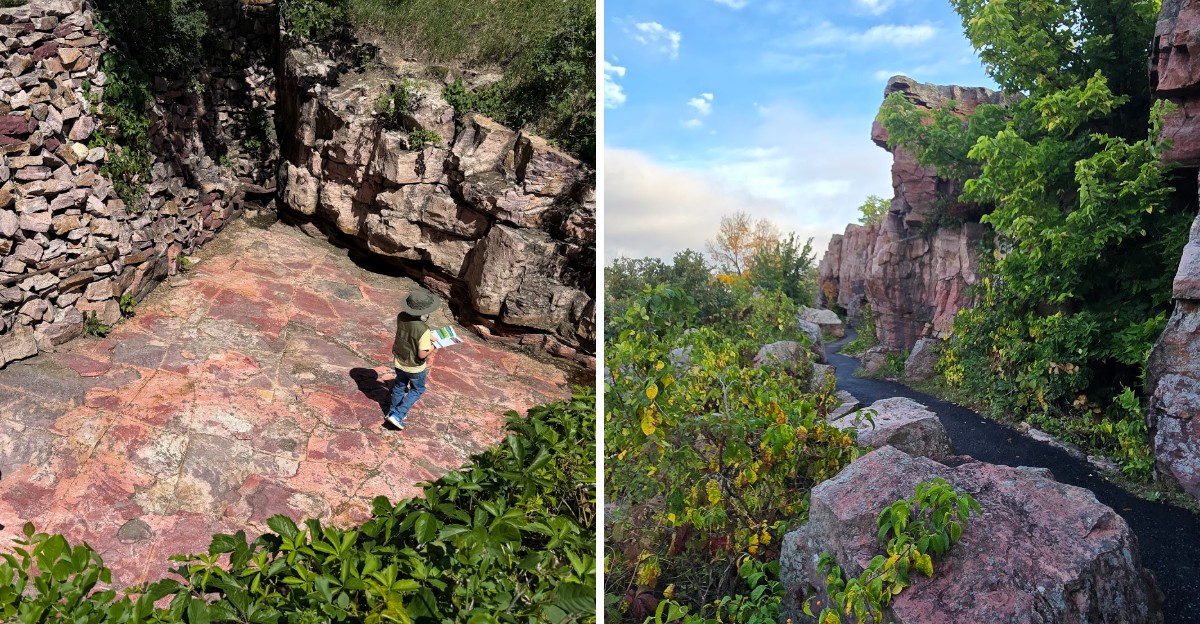
Rock doesn’t usually come with thousands of years of stories attached, yet this particular stretch of ground somehow holds exactly that. Quarries here have been worked for generations, the soft red stone pulled carefully using techniques passed down rather than modernized away over time.
Visitors can watch the process happen in person too, craftspeople demonstrating methods that connect directly back to traditions stretching centuries into the past within this quiet corner of Minnesota.
Preserving a practice this significant takes real commitment most historic sites never manage, letting living tradition continue rather than freezing everything behind glass. This monument keeps that connection active, treating the stone as something still being shaped.
History rarely stays this alive and hands-on anywhere else. Minnesota holds onto a story here that’s still being written, one carved piece of stone at a time.
A Red Stone With Deep Roots
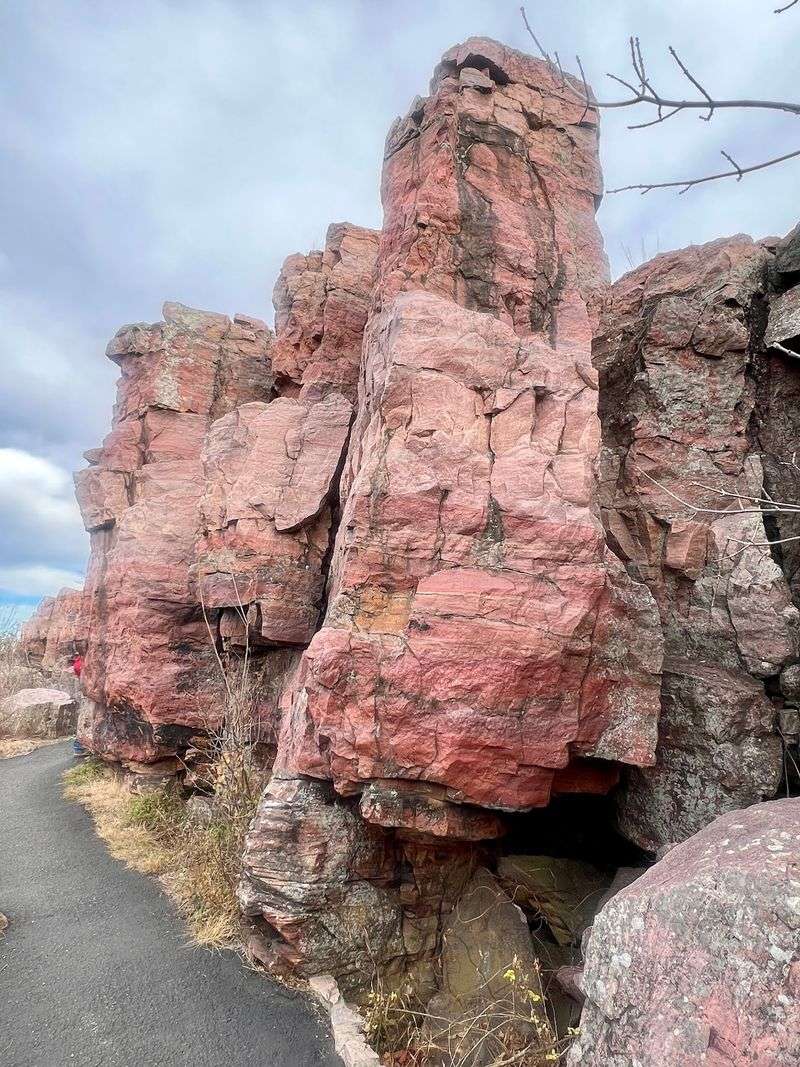
My hands were still dusty when the ranger explained what I was holding. The red stone is called catlinite, a soft clay rock that formed from ancient mud pressed between layers of much harder quartzite. Its color ranges from pale pink to deep brick red, and some pieces have tiny speckles.
Soft is the key word. Carvers can shape it with simple tools, which is why people have used it for pipes, small figures, and sacred objects for thousands of years. Pieces made from this quarry have turned up at sites far across North America, which shows how far trade routes once reached.
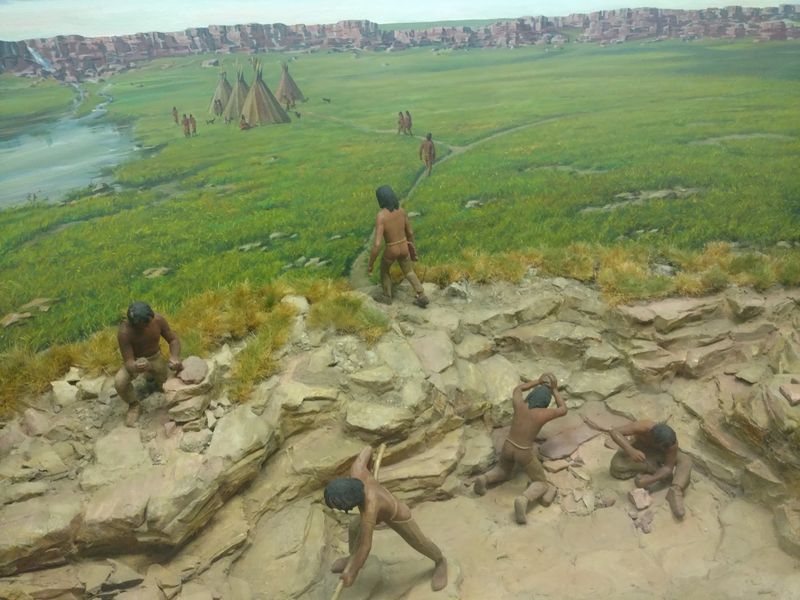
Here is the surprising part. The layer of pipestone is usually thin, often only about a foot or so, and it sits under many feet of tough quartzite that must be cleared away by hand. That takes real patience.
Before heading out to the trail, spend a few minutes at the visitor center exhibits. Seeing the layers explained first makes the quarries outside make so much more sense. Trust me, the rock looks different once you know its story.
Carvers at Work Inside the Visitor Center
A soft scraping sound pulled me across the room before I even saw where it came from. At a workbench, an artisan was slowly shaping a block of red stone, brushing away fine dust between every few strokes.
Demonstrations by American Indian carvers are a regular part of the visitor center experience, and the artists are often happy to chat about their methods, tools, and family traditions. Ask questions politely, then mostly listen. You will learn more in ten minutes than any sign could teach.
Watch how they file, sand, and polish. The stone starts dull and chalky, then turns glossy and rich as it is finished, almost like a magic trick in slow motion.
Many of the finished pieces are sold in the shop nearby, often with information about the artist who made them. Buying directly connected to a real person felt meaningful to me. Even if you only browse, take time to notice the detail.
An Easy Loop Called the Circle Trail
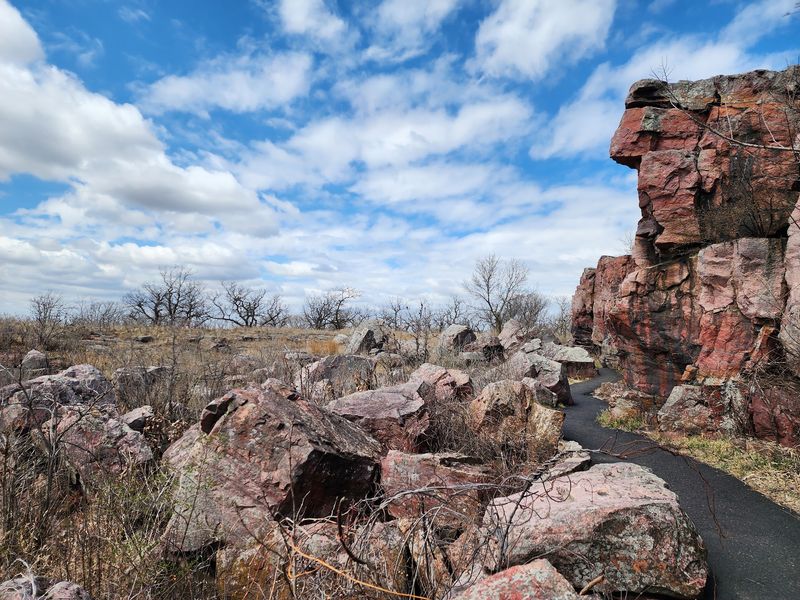
Comfortable shoes, a water bottle, and maybe a hat. Honestly, that is all the gear needed for the Circle Trail, a paved loop of roughly three quarters of a mile that starts right behind the visitor center.
The path is mostly flat, which makes it friendly for kids, grandparents, and anyone who just wants a relaxed stroll. A few short side spurs climb rocky steps near the falls, but those are easy to skip if stairs are not your thing. Some spots can get slick after rain, so watch your footing.
Part of the loop runs through open prairie with little shade. On hot days that stretch can feel longer than it really is, so mornings or early evenings are the sweet spot. Sunset here glows pink on the stone.
Numbered markers along the way match a trail guide from the visitor center, explaining what you are seeing at each stop. I loved having it in hand. Plan on about an hour if you like to pause, read, and soak it all in.
Winnewissa Falls Steals the Show
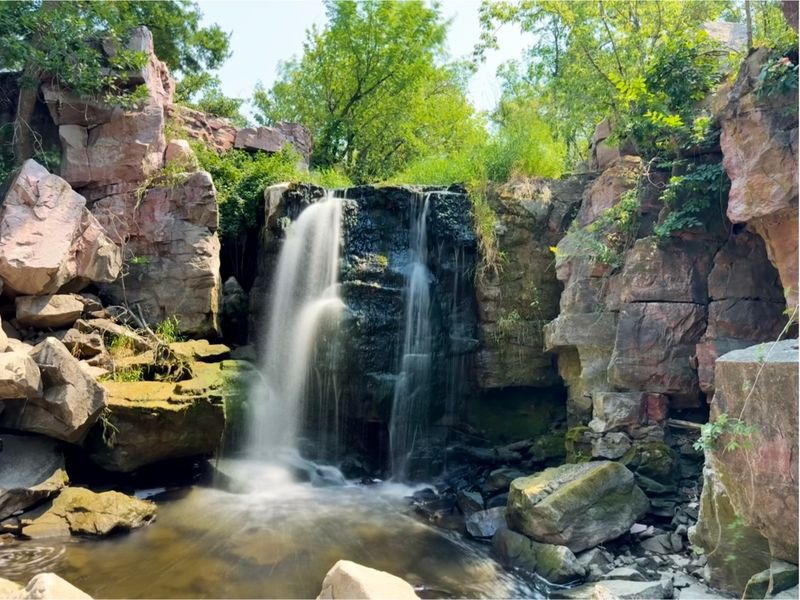
Nobody warned me there would be a waterfall. Then the trail curved, the sound got louder, and there it was, spilling over pink quartzite into a shady pool like it had been waiting just for us.
Winnewissa Falls is the star of the Circle Trail. Pipestone Creek drops over a ledge of hard Sioux quartzite, the same rock that sits on top of the softer pipestone layers. After a rainy spell the flow gets strong and frothy.
A small bridge and a few rocky steps let you see it from different angles. The view from above shows how the creek cut through the stone over a very long time. From below, the cool mist feels amazing on a warm afternoon.
Photographers, take note. Soft morning light keeps the rock from looking washed out, and the trees frame the falls nicely. Just admire the water rather than drinking or wading in it.
Find a spot on the railing, breathe slowly, and let the sound do its thing for a while.
Faces Hidden in the Quartzite Cliffs
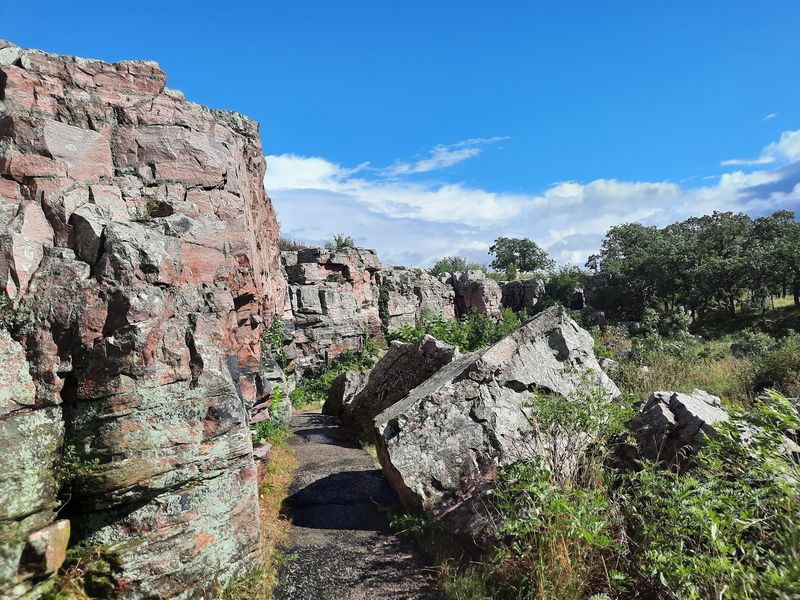
Squint a little. That was my best advice to myself while hunting for the Old Stone Face, a natural profile in the cliffs that looks surprisingly like a person gazing out over the land.
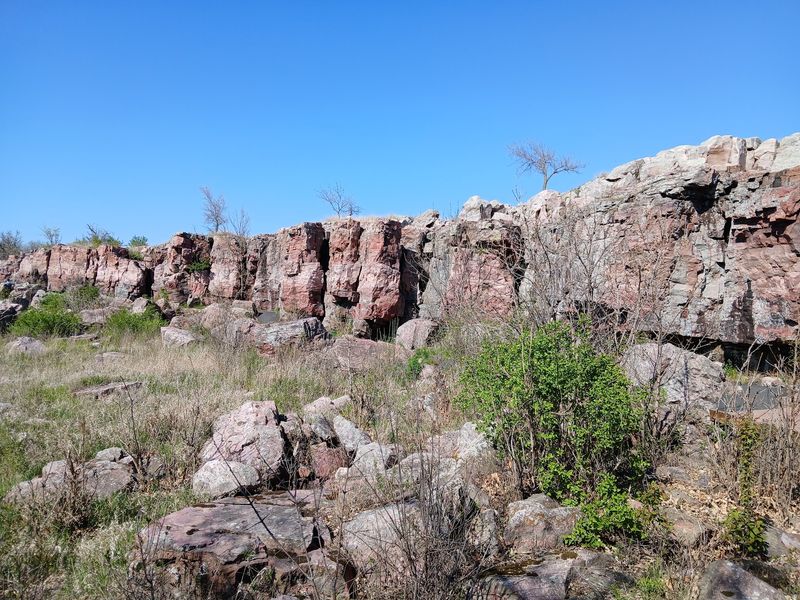
The quartzite walls along the trail are full of cracks, ledges, and curves shaped by weather over ages. Some formations have names, like the Oracle, a rock that resembles a face and holds a place in local stories. Spotting them feels a bit like a treasure hunt for grown-ups.
Kids especially love this part. Turn it into a game and see who finds a face first, then compare what everyone sees, because no two people describe it the same way.
The cliffs themselves deserve attention too. Up close, the rock shows thin bands and ripple marks from ancient water, a reminder that this was once a very different place. Lichen adds splashes of orange and green to the pink stone.
Light changes everything here, so a face that hides at noon might pop out clearly in late afternoon shadows.
Quarries That Are Still Worked by Hand
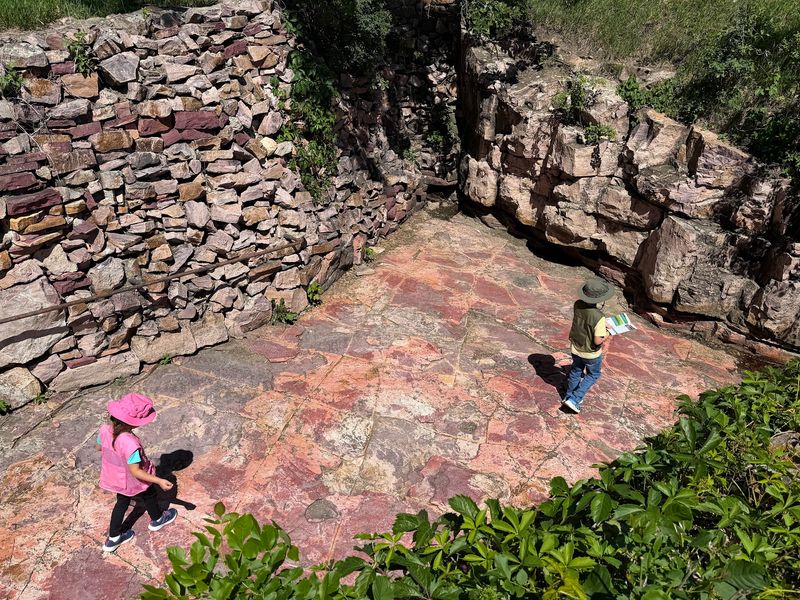
Two people were deep in a pit when I walked past, lifting chunks of rock one heavy piece at a time. No machines. No noise except the clink of metal tools and the occasional deep breath.
Quarrying here is not just history, it is happening right now. Enrolled members of federally recognized tribes can receive permits to dig, and they must use hand tools only. That rule keeps the work close to how it was done for generations.
Removing the hard quartzite above the pipestone can take weeks or even months of steady effort. Seeing the piles of broken rock beside each pit gives a real sense of how much labor goes into a single small stone.
Please stay on the trail and keep a respectful distance from anyone working. These are personal spaces as much as work sites. A quiet nod is plenty.
Signs along the quarry line share details about the process and the families connected to it. Reading them while hearing tools ring in the background made the whole place feel alive, not like a museum display behind glass.
Prayer Ties and a Living Sacred Site
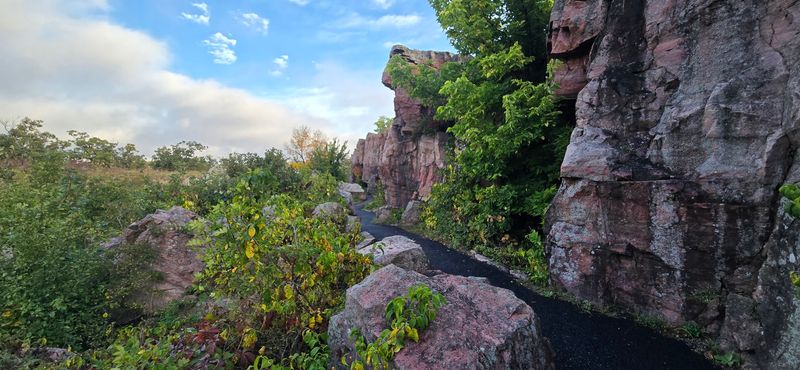
Small bundles of colorful cloth fluttered from tree branches near the trail, and I slowed down without really meaning to. These offerings, often called prayer ties, are a gentle reminder that this ground is sacred to many American Indian nations.
For countless generations, people traveled long distances to reach these quarries. Stories passed down tell of the land as a place of peace, where groups set aside differences to gather stone. The pipes made from it carry deep spiritual meaning in many ceremonies.
What struck me most was how present it all felt. People still come to pray, leave offerings, and connect with ancestors here today.
Visitors play a part in keeping that respect intact. Leave the ties and any offerings exactly where they are, avoid touching them, and skip close-up photos of personal items. Speaking softly near these spots feels right too.
Treat the quieter sections of the trail almost like the inside of a place of worship.
Tallgrass Prairie and Surprise Wildlife
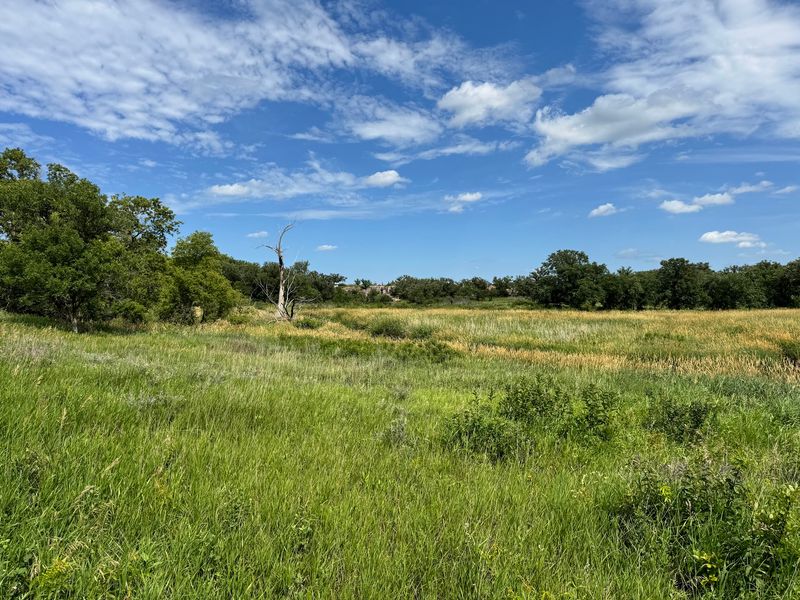
Something rustled in the grass. A pheasant burst out, wings whirring, and I nearly dropped my water bottle. Not my most graceful moment, but definitely a memorable one.
Much of the monument is restored tallgrass prairie, a type of landscape that once covered huge parts of the Midwest and is now rare. In summer the grasses grow tall and wildflowers pop up in purple, yellow, and white. By fall everything turns a warm gold that matches the rock.
Wildlife sightings are common for anyone who moves quietly. Deer, wild turkeys, ground squirrels, ducks, hawks, and plenty of songbirds call this place home.
Binoculars are a smart thing to pack. Early morning and late evening tend to bring out the most animals, especially along the prairie edges near the visitor center. Look closely at the ground too, since tiny insects and butterflies are busy everywhere.
The park also uses careful burns to keep the prairie healthy, so some areas may look blackened at times.
Hiawatha Lake and a Shady Picnic Pause
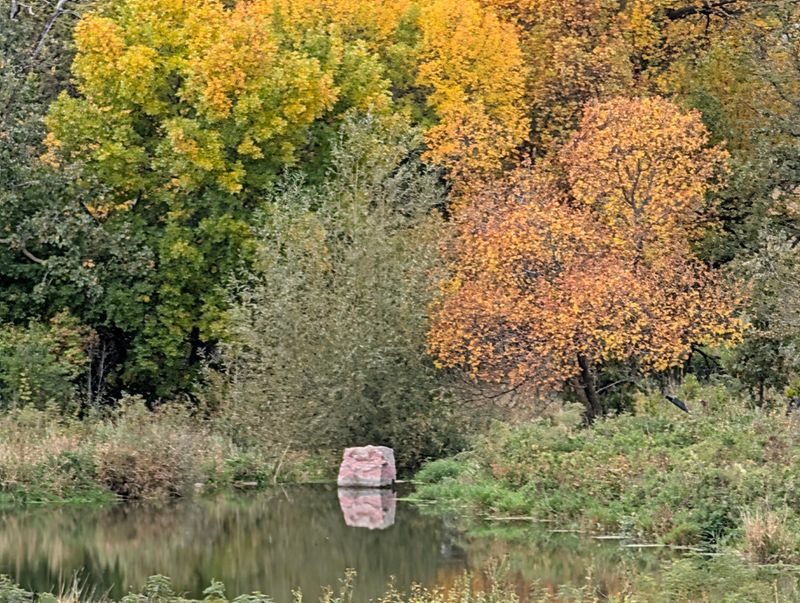
Turtles. Lots of them, stacked on logs like they were waiting in line for the best sunny seat. Watching them at Hiawatha Lake turned into one of the funniest parts of the day.
The small lake sits along the trail near the falls and was created long ago by damming Pipestone Creek. Its name connects to Henry Wadsworth Longfellow, whose famous poem The Song of Hiawatha mentions the pipestone quarry.
Nearby, a picnic area offers tables and a bit of shade, making it a great spot to refuel after the loop. Pack sandwiches, fruit, and plenty of water, since food options right at the monument are limited.
Slow down here and listen frogs croak, dragonflies zip past, and the breeze carries the smell of grass and wet stone. Families with little ones will appreciate the chance to rest tired legs. Please keep snacks to yourself though, because feeding the ducks or turtles is not good for them.
A lazy lunch by the water was the perfect pause before heading back inside.
Smart Tips for a Smooth Visit
Timing made a bigger difference than I expected. The visitor center is open daily from 8:30 am to 4:30 pm, so arriving early leaves room for exhibits, carvers, and the trail without feeling rushed.
Missed the hours? No worries. The trails and restrooms stay accessible beyond center hours, and the passport cancellation stamp is usually kept in a case outside the building for collectors.
Kids can grab a Junior Ranger booklet inside, packed with activities for different ages.
Leashed dogs are welcome on the trail, which made me happy. Bring sunscreen for the open prairie stretch, and maybe a light jacket in spring or fall, since the wind out here can be brisk.
The monument sits about half an hour off the interstate, but the detour is easy and the roads are calm. Set your GPS to Pipestone National Monument, 36 Reservation Ave, Pipestone, MN 56164, and give yourself at least an hour or two to let this ancient red rock share its story.
