The Midwest has a reputation for being polite, predictable, and full of casseroles. But dig a little deeper, and Minnesota reveals a delightfully strange side.
It’s the kind of place where a giant fish statue is a source of civic pride and a museum dedicated to canned meat is considered a cultural institution.
Away from the lakes and the cabin retreats, roadside oddities compete for attention. There’s a park filled with giant sculptures made from salvaged junk and an off-road park built on a reclaimed mining landscape.
It’s a state that embraces its quirks, where a vintage store can double as an art gallery and a small town can be a national hub for the wonderfully weird.
These places aren’t trying to impress, that’s exactly what makes them so wonderful. Minnesota’s weird side is a reminder that the best discoveries are often the most unexpected ones.
1. The Jolly Green Giant Statue in Blue Earth
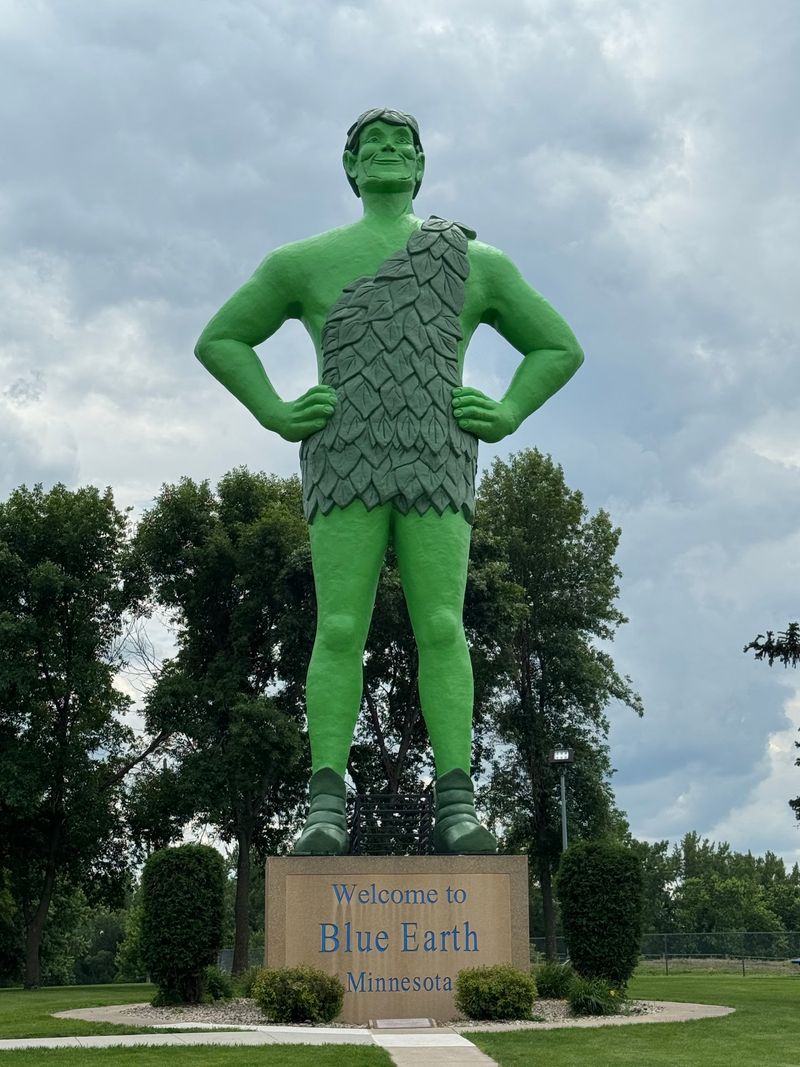
Most roadside statues are forgettable, but the Jolly Green Giant in Blue Earth is the kind of thing that makes you pull over without even thinking. This bright green giant looms over the town with an expression that is oddly cheerful for something so enormous.
You can spot it from the highway before you even see the exit sign.
Blue Earth is a small town in southern Minnesota, and the statue has been a local landmark since 1979. It was built to celebrate the Green Giant Company’s connection to the region, where canned vegetables were once a major industry. The surrounding area still feels tied to that agricultural history.
There is a small park around the base where families take photos and kids try to figure out the scale. The giant’s feet alone are bigger than most people’s living rooms. It is goofy, proud, and oddly endearing. If you are driving through on I-90, skipping this stop feels almost like a mistake.
Minnesota loves its oversized roadside art, and this one set the tone for everything that came after on my weird Midwest tour.
2. Munsinger and Clemens Gardens, St. Cloud
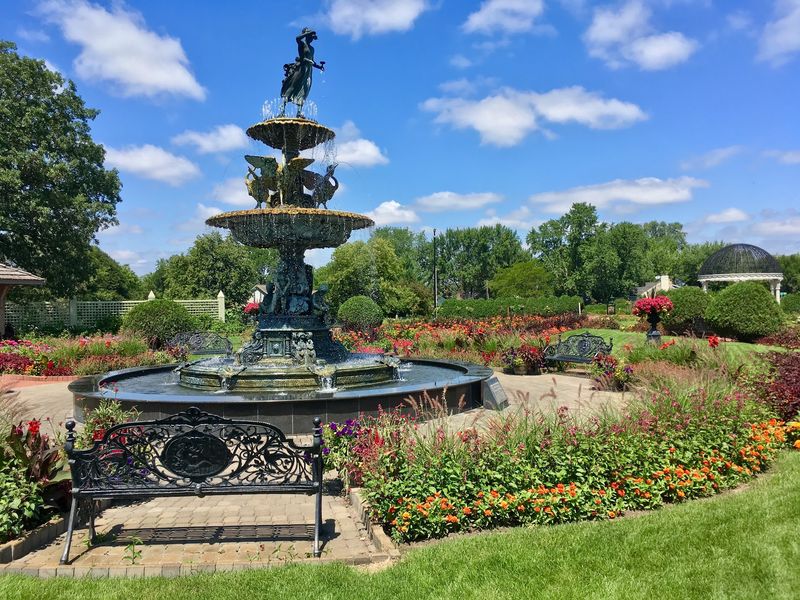
Right along the Mississippi River in St. Cloud, there is a garden that feels genuinely out of place in the best possible way. Munsinger and Clemens Gardens are formal, lush, and surprisingly grand for a mid-sized Midwestern city.
The combination of river views and sculpted flower beds creates an atmosphere that is almost surreal.
Munsinger Garden has been around since the 1930s and carries that old-world charm with shaded paths and perennial plantings that look different depending on the season. Clemens Garden, added later, leans into a more structured European style with fountains and geometric beds.
Together, they feel like two chapters of the same beautiful story.
What makes this place genuinely weird in a delightful sense is how unexpected it is. You are driving through central Minnesota, surrounded by strip malls and flat prairie, and then suddenly you turn a corner and find yourself in what looks like a scene from a period drama.
It is not spooky strange, it is just wonderfully out of context. I found myself slowing down and actually reading the plant labels, which is not something I usually do. The gardens are free to visit, which makes the whole experience feel even more like a hidden gift.
3. Forestville Mystery Cave State Park, Preston
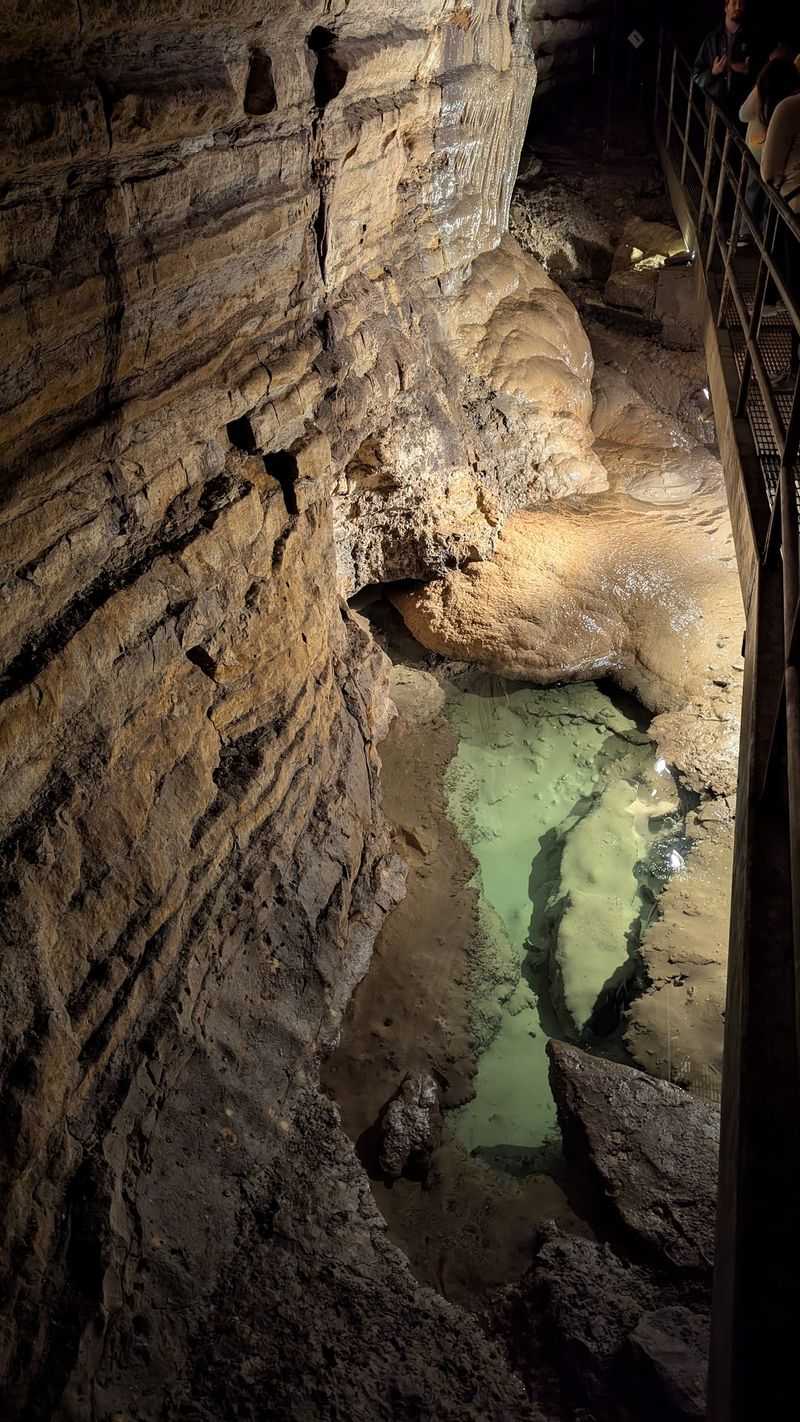
Underground Minnesota is a different world entirely. Mystery Cave near Preston is the longest cave system in the state, stretching over 13 miles of tunnels carved out by water moving through ancient limestone.
The temperature stays around 48 degrees year-round, which hits you like a wall the moment you step inside.
Guided tours take you through chambers filled with stalactites, stalagmites, and pools of water so still they look like mirrors. Some formations took thousands of years to grow just a few inches.
There is something genuinely humbling about standing in a space that old, surrounded by geology that predates almost everything humans have ever built.
The cave sits inside Forestville Mystery Cave State Park, which also includes a restored 1800s ghost town called Historic Forestville. That combination alone makes this one of the strangest and most layered stops in the state.
You can walk through a preserved 19th-century village and then go underground into prehistoric rock formations, all in the same afternoon. It sounds like something from a fantasy novel, but it is very real and very much worth the drive to the southeastern corner of Minnesota.
Address: 21071 County 118, Preston, Minnesota
4. The Spam Museum, Austin
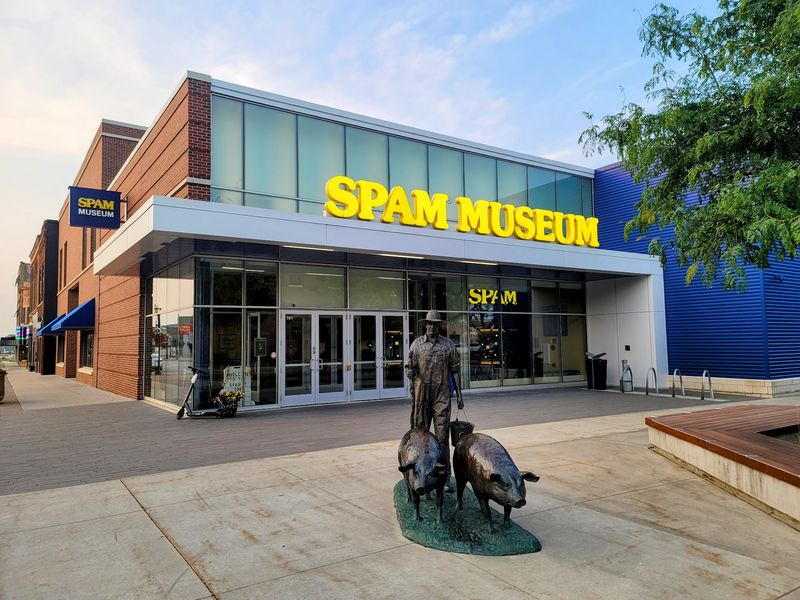
There is an entire museum dedicated to canned meat in Austin, Minnesota, and it is genuinely one of the most entertaining stops in the state.
The Spam Museum celebrates the iconic product that has been made in Austin since 1937, and it does so with a level of enthusiasm that is completely disarming. You walk in expecting kitsch and come out actually impressed.
The exhibits cover everything from Spam’s role in World War II rations to its cultural presence in Hawaii, where it is considered a beloved staple rather than a joke. Interactive displays let you learn about the manufacturing process.
What makes the museum genuinely fun is that it leans into the absurdity without being embarrassed by it. The staff are enthusiastic, the exhibits are well-designed, and the gift shop is predictably chaotic in the best way. I went in with low expectations and stayed for almost two hours.
Austin is a small town, but the Spam Museum gives it a personality that you cannot find anywhere else.
Address: 101 3rd Avenue NE, Austin, Minnesota
5. Kensington Runestone Museum, Alexandria
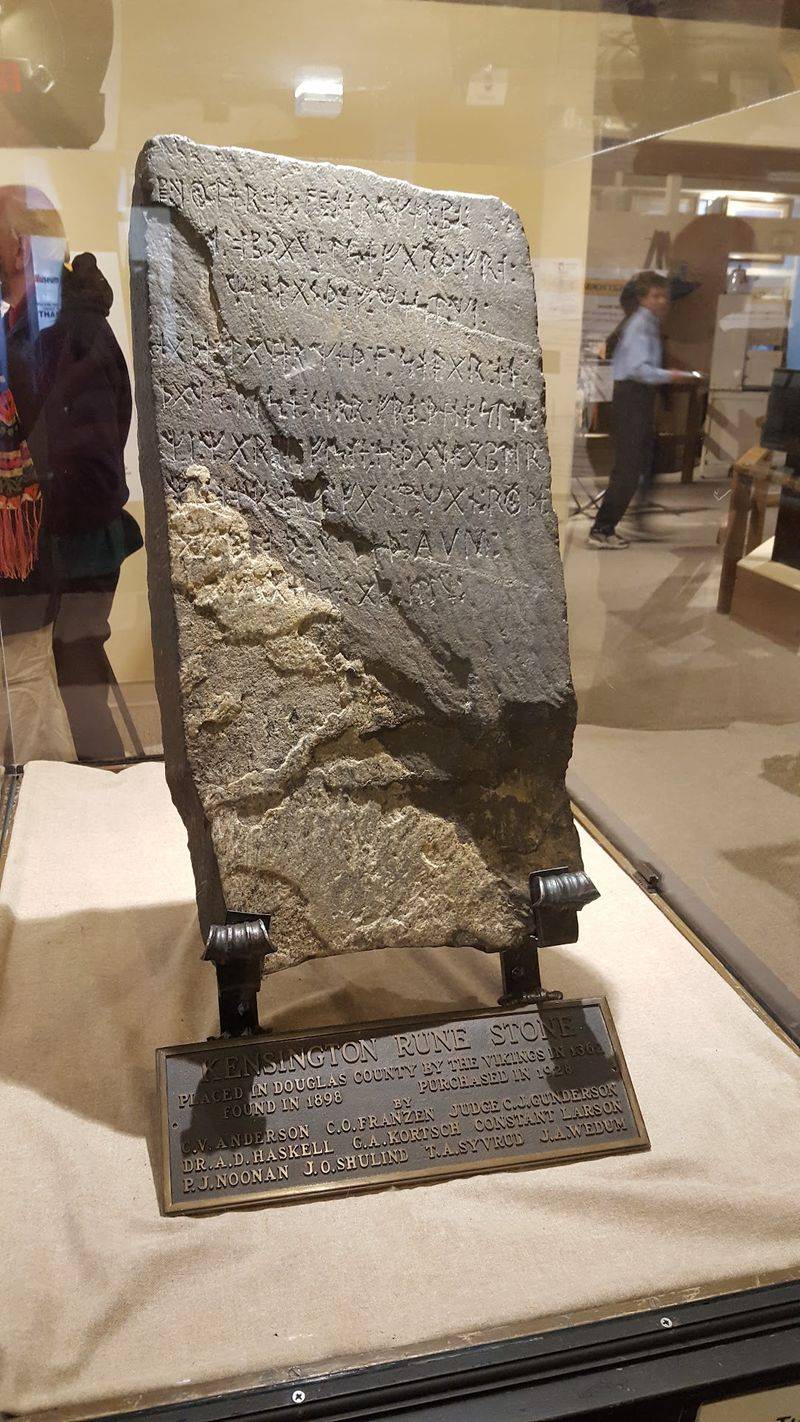
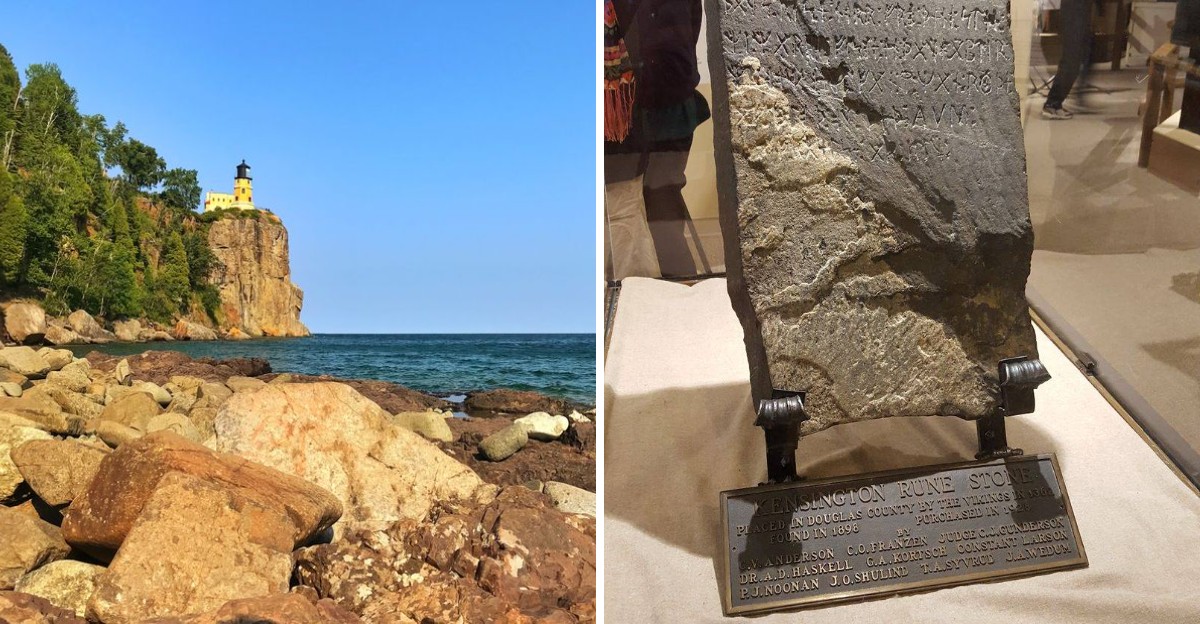
Few artifacts in American history have sparked as much argument as the Kensington Runestone. Discovered in 1898 by a Swedish immigrant farmer near Alexandria, the stone is inscribed with runic text that appears to describe a Norse expedition into the Minnesota interior in 1362.
That is more than a century before Columbus arrived in the Americas.
Historians and archaeologists have been fighting about its authenticity ever since. Some believe it is genuine evidence of pre-Columbian Norse exploration. Others are convinced it is a clever 19th-century hoax.
The debate has never been fully resolved, which is part of what makes visiting the museum so fascinating. You can look at the actual stone and form your own opinion.
The Kensington Runestone Museum in Alexandria presents both sides of the argument honestly, which feels refreshing. There are exhibits on Norse history, local Indigenous context, and the long history of the controversy itself.
Outside the museum, a giant Viking statue named Big Ole keeps watch over the town, adding another layer of regional personality. Alexandria has fully committed to its Norse identity, and whether the runestone is real or not, the town has built something genuinely interesting around the mystery.
Address: 206 Broadway, Alexandria, Minnesota
6. Lindstrom, the Swedish Capital of Minnesota
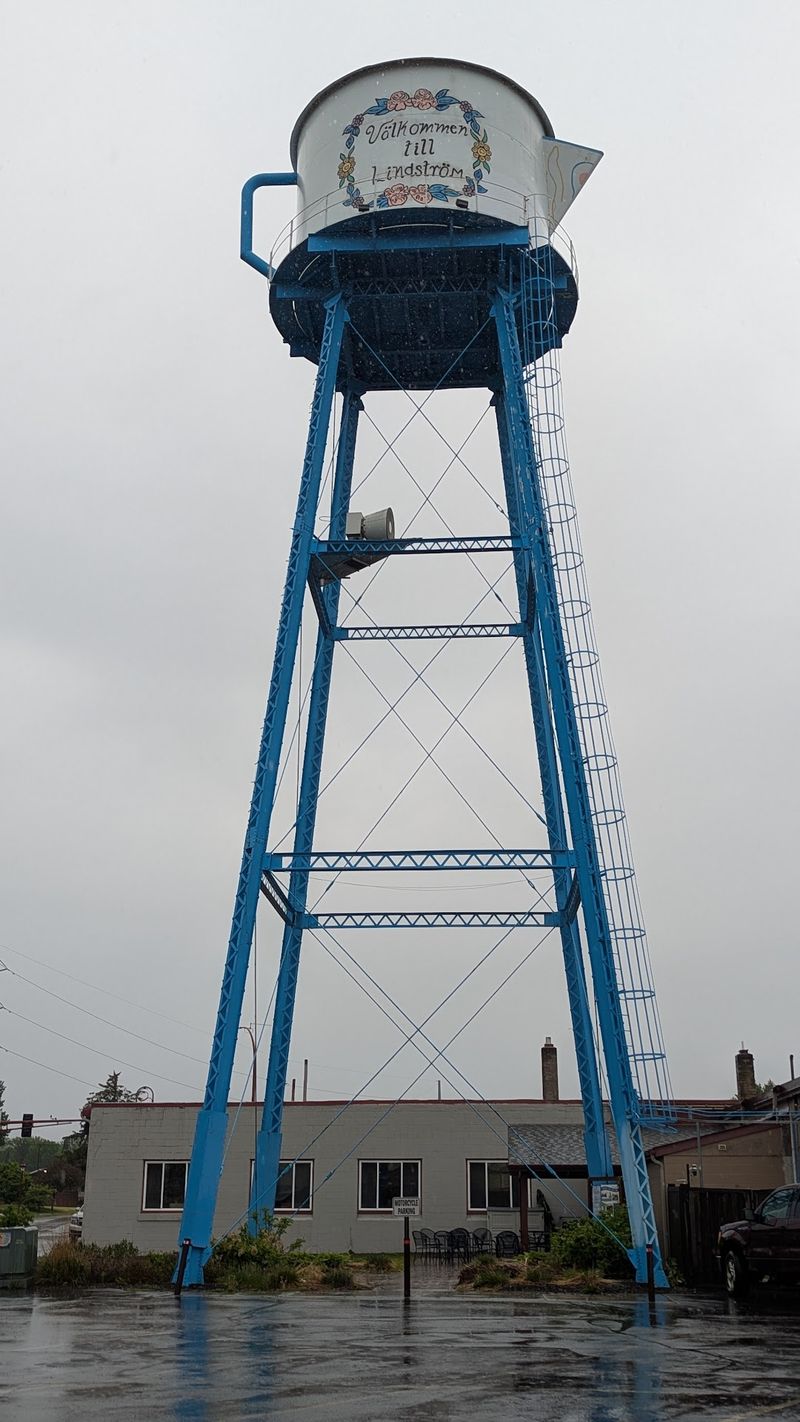
Lindstrom calls itself the Swedish Capital of Minnesota, and it commits to that identity in ways that are genuinely charming and a little surreal. The water tower is painted to look like a traditional Swedish coffeepot. Street signs are written in both English and Swedish.
The whole town feels like someone took a small Scandinavian village and transplanted it to the middle of Chisago County.
The area was settled heavily by Swedish immigrants in the mid-1800s, and that heritage never faded. Author Vilhelm Moberg used this region as the setting for his famous emigrant novels, and there is a statue of two of his fictional characters in town.
The books were later adapted into a beloved Swedish film series, so the connection runs deep.
What strikes you most is how organic it all feels. This is not a theme park version of Swedish culture. It is a community that genuinely maintained its roots across generations.
Local shops carry Scandinavian goods, seasonal festivals celebrate Swedish traditions, and the overall vibe is quietly proud rather than performative. If you have any Scandinavian ancestry, this place might hit differently than you expect.
7. Jeffers Petroglyphs, Comfrey
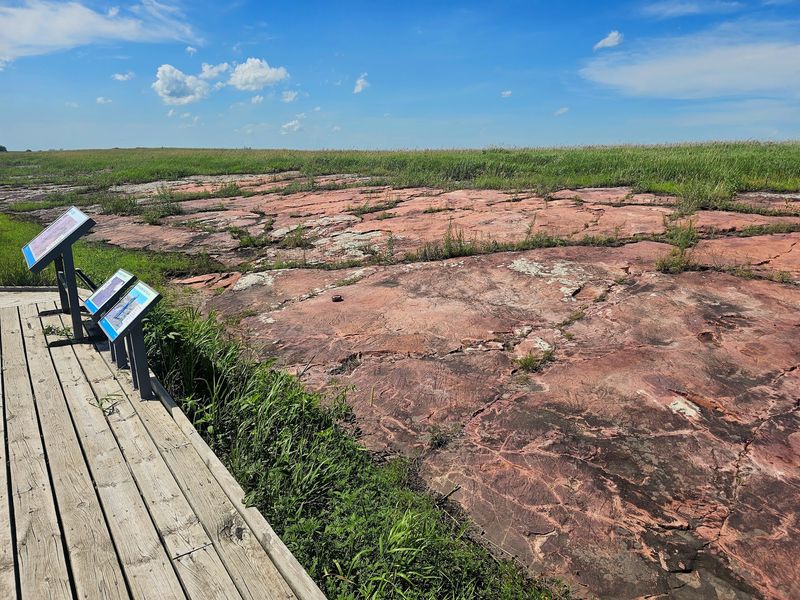
Out on the open prairie near Comfrey, there is a stretch of exposed red quartzite rock covered in carvings made by Indigenous peoples over thousands of years.
The Jeffers Petroglyphs site contains more than 2,000 individual images, including figures of humans, animals, and symbols that researchers are still working to fully understand. Some of these carvings are estimated to be over 7,000 years old.
The site is managed by the Minnesota Historical Society, and walking through it feels like moving across a timeline. Older carvings sit alongside more recent ones, representing different cultures and different centuries all layered onto the same rock surface.
The prairie around the site adds to the atmosphere. There are no trees blocking the sky, and the wind moves constantly, making the whole place feel ancient and alive at the same time.
Visiting is a slow experience, and that is exactly the point. You are encouraged to walk carefully and look closely rather than rush through. Interpretive signs help explain what is known about the images, but they also acknowledge what remains uncertain.
That honesty makes the experience richer. This is not a polished attraction with easy answers. It is a genuine archaeological site that asks you to sit with complexity and wonder.
Address: 27160 County Road 2, Comfrey, Minnesota
8. Largest Ball of Twine, Darwin
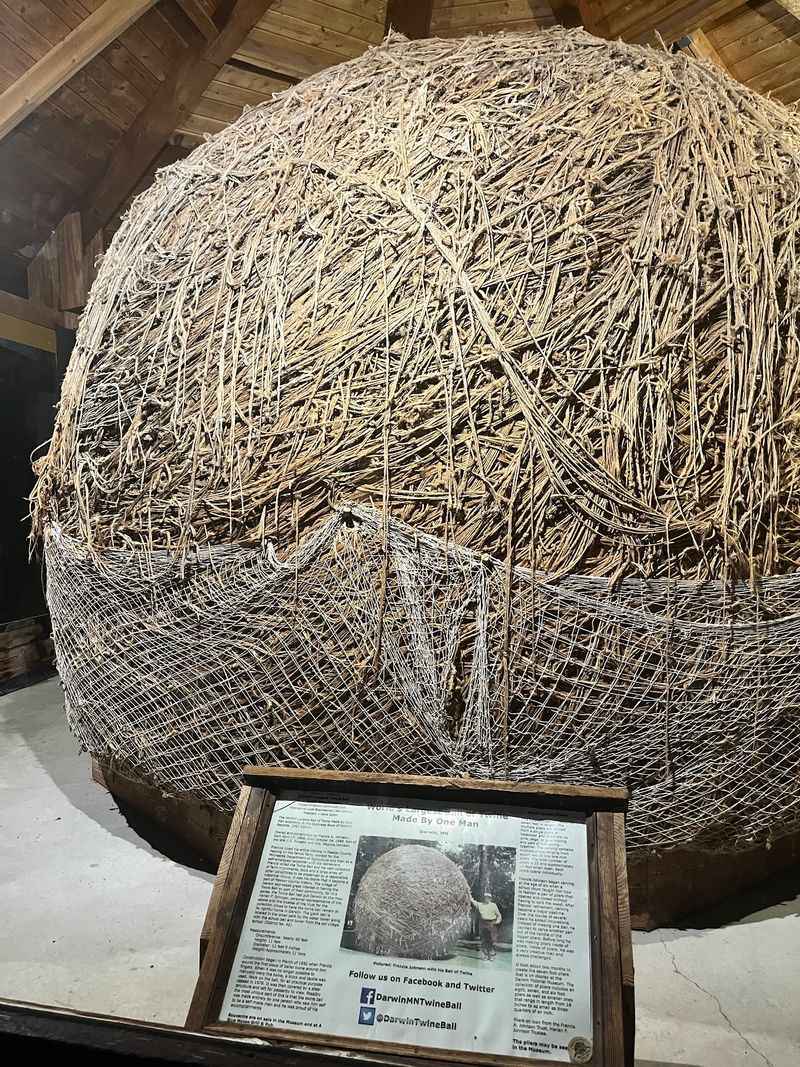
Darwin, Minnesota is home to what was once certified as the world’s largest ball of twine made by a single person. Francis Johnson spent 29 years wrapping twine around that ball, working four hours every day.
By the time he was done, it weighed nearly 17,000 pounds and stood over 12 feet tall. That is a level of commitment that is hard to wrap your head around.
The ball now lives in a gazebo right in the center of Darwin, protected from the elements and permanently on display.
A sign nearby documents its dimensions and history, and there is usually at least one other car pulled over when you visit because this thing has a gravitational pull on road trippers. It is bizarre. It is also kind of beautiful in its own obsessive way.
Johnson never tried to make the ball famous. He just kept wrapping. The town eventually built the gazebo to preserve his life’s work, and Darwin now celebrates it with an annual Twine Ball Days festival.
There is something genuinely moving about a community honoring one person’s strange dedication so fully.
9. Split Rock Lighthouse, Two Harbors
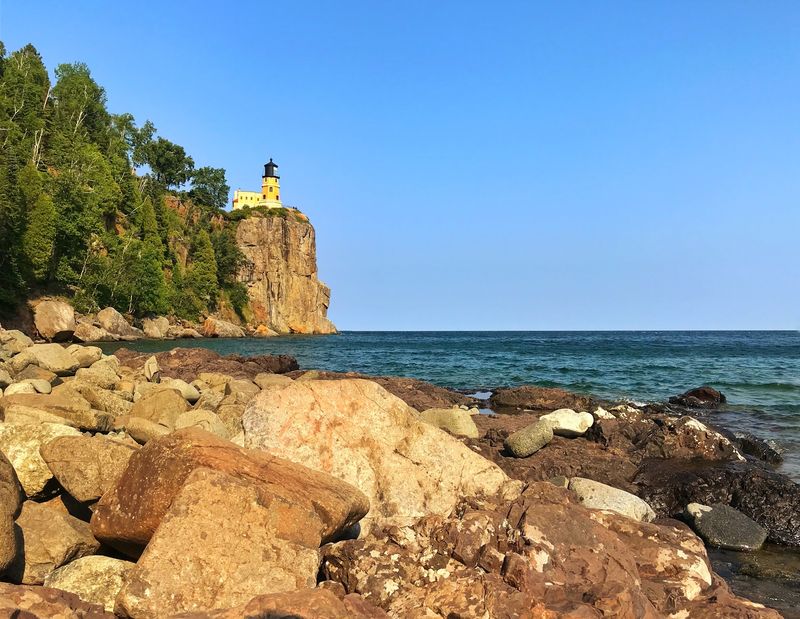
Perched on a sheer 130-foot cliff above Lake Superior, Split Rock Lighthouse is one of those places that looks almost too dramatic to be real. The structure was built in 1910 following a brutal November storm that wrecked dozens of ships on the lake’s north shore.
The setting alone is enough to make you stop and just stare for a while.
Lake Superior is not a gentle body of water. It is enormous, cold, and historically dangerous for shipping. The lighthouse was built to guide iron ore freighters safely through treacherous conditions, and for decades it did exactly that.
The site is now a state historic park managed by the Minnesota Historical Society, and the buildings have been carefully preserved.
Tours take you inside the lighthouse tower and the keeper’s house, which is restored to look exactly as it did in the early 20th century. The views from the cliff edge are spectacular in every direction.
On foggy days, the whole scene takes on an almost ghostly quality that fits the lighthouse’s history perfectly. I found myself thinking about the sailors who depended on that light during violent storms, and the keepers who maintained it through brutal winters.
Address: 3713 Split Rock Lighthouse Road, Two Harbors, Minnesota
10. Chanhassen Dinner Theatres, Chanhassen
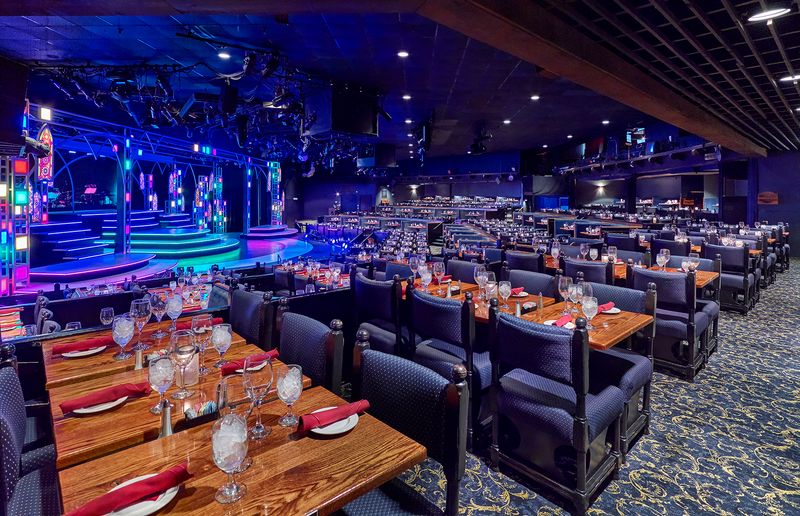
Dinner theater sounds like something from a 1970s time capsule, but Chanhassen Dinner Theatres has been pulling off the format so well that it has become the largest professional dinner theater in the country. That is not a small claim.
The complex seats over 600 people and has been running continuously since 1968, staging everything from Broadway musicals to original productions.
What makes the experience genuinely strange is the combination of elements. You are eating a full meal while professional actors perform a full-scale musical production on a real stage with real sets and real costumes.
The logistics alone are impressive. The fact that it actually works and feels enjoyable rather than chaotic is a minor miracle of event planning.
The productions here are not amateur community theater. The casts are made up of professional performers, and the production values are high. Shows change throughout the year, so there is almost always something new running.
The crowd on any given night is a fascinating mix of date-night couples, family groups, and theater regulars who have been coming for decades. Chanhassen has built something that should feel outdated but somehow keeps feeling relevant.
Address: 501 West 78th Street, Chanhassen, Minnesota
11. Pipestone National Monument, Pipestone
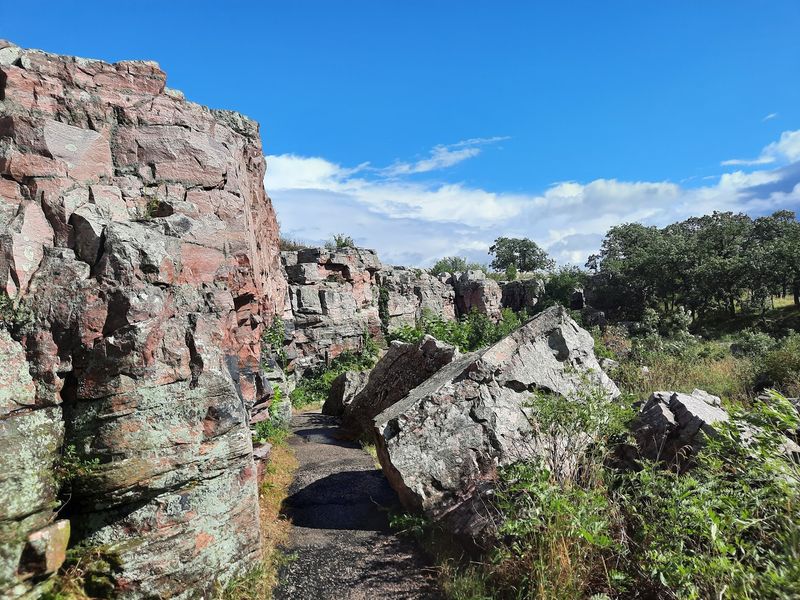
The red stone quarried at Pipestone National Monument has been sacred to Indigenous peoples for centuries. The soft red catlinite rock found here was used to carve ceremonial pipes, and the site was considered neutral ground where different tribal nations could come to quarry without conflict.
That history gives the place a gravity that is hard to fully articulate.
The monument is one of the few places in the National Park system where a traditional cultural practice is still actively protected and carried out.
Native American artisans who are enrolled members of specific tribes have the legal right to quarry pipestone here, continuing a tradition that stretches back far longer than the United States has existed. Watching that process, if you are fortunate enough to witness it, is quietly profound.
The visitor center explains the geological and cultural history of the site in detail, and a short trail loops past the active quarries, natural prairie, and a small waterfall called Winnewissa Falls.
The landscape is open and windswept, very different from the forested lake country most people associate with Minnesota. Pipestone feels like a different state entirely, both geographically and emotionally.
Address: 36 Reservation Avenue, Pipestone, Minnesota
