In one tiny river village, the historic district still has no street signs or house numbers. Visitors find their way using an 1853 plat map and a little old-fashioned patience.
That detail stopped me cold. Down the road, a general store has been ringing up customers since 1870. Another town put its entire 12-block downtown on the National Register back in 1975.
Minnesota is full of places like this. Limestone storefronts, clock towers, and old logging streets still stand right where they started. You can stroll them on a Saturday and be home by dinner.
1. Mantorville
Saving one old building is nice, but this town saved twelve whole blocks. In 1975, Mantorville placed its entire downtown on the National Register of Historic Places.
That move kept the village looking a lot like it did in the 1800s. Honey-colored limestone buildings line the streets, and they feel solid enough to outlast us all.
Mantorville sits in Dodge County in southeastern Minnesota. About 1,100 people live here, so the pace stays slow and easy.
Two landmarks deserve your attention first. The Hubbell House dates to 1854, which makes it older than the state of Minnesota itself.
Then there’s the Mantorville Opera House, built in 1918. Just think about the folks who climbed those steps for a show over 150 years ago.
The best way to see the town is on foot. Historic walking tours are available, and the public streets stay open year-round.
Wear comfortable shoes and give yourself time to look up. Old stone carvings, window frames, and rooflines tell a story if you slow down.
Getting here is simple, too. Minnesota State Highway 57 runs right through, so you won’t need a map from 1853.
Pair your visit with a scenic drive through the nearby countryside. Southeastern Minnesota has rolling farmland that makes the trip half the fun.
Spring and fall are lovely times to wander the downtown blocks. Winter visits can feel extra storybook if snow dusts the limestone.
2. Lanesboro
Count the stoplights in Lanesboro and you’ll finish fast. The answer is zero, and honestly, that’s part of the appeal.
Roughly 720 people call this Fillmore County town home. It sits in the Root River Valley, part of southeastern Minnesota’s Driftless Area.
The commercial center is listed on the National Register of Historic Places. Its brick and stone storefronts date back to the 1800s and stand in a neat, unbroken row.
Bikes might be the smartest way to arrive. The paved Root River State Trail runs straight through town on an old railway grade.
That trail links Lanesboro to other small communities in the valley. You can pedal for miles, then roll back into town for a snack break.
Prefer a seat over a saddle? The Commonweal Theatre stages a season of professional productions in a downtown theater that opened in 2007.
Old Order Amish families farm the surrounding countryside. Tours and shops in the area offer handmade goods, so keep some room in your trunk.
Please drive slowly on country roads, since horse-drawn buggies share them. A little courtesy goes a long way out here.
Minnesota State Highway 16 leads you in along the Historic Bluff Country National Scenic Byway. The views of limestone bluffs make the drive feel like a postcard.
Plan for a full day, or better yet, an overnight. Lanesboro rewards people who aren’t in a hurry.
3. Marine on Saint Croix
Forget your GPS for a minute here. The historic district preserves the village’s 19th-century character, and visitors can explore its landmarks using a historic walking tour map.
Marine on Saint Croix began in 1838 as home to Minnesota’s first commercial lumber mill. The Marine Mill ran from 1839 to 1895.
Today you can explore its stone foundations along the river. Interpretive signs explain how the mill helped launch a whole industry.
Next, swing by the Marine General Store. It has operated since 1870 and is known as the oldest continuously operating general store in the state.
Grab a snack and browse the shelves like folks did generations ago. It’s a tiny time machine with a cash register.
The Stone House Museum is another stop worth making. A Swedish stonemason built it in 1872, and it once served as the town hall and jail.
Now it holds crafts, photographs, and items about St. Croix Valley history. Check ahead for open hours before you go.
The Marine Village Hall, built in 1888, still hosts local government business. That makes it the oldest village hall in Minnesota still used that way.
Around town, white Greek Revival and clapboard homes sit under a leafy canopy. About 680 residents keep the mood calm and quiet.
Minnesota State Highway 95, the St. Croix Valley Scenic Byway, brings you right in. Fall color season makes the drive especially pretty.
4. Taylors Falls
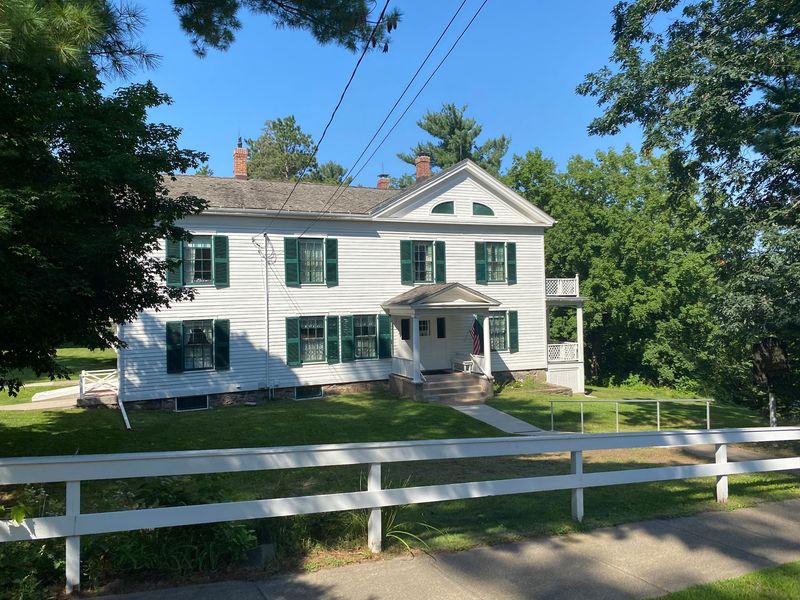
Glaciers carved the scenery here, and settlers handled the rest. Taylors Falls perches on the rugged basalt cliffs of the Dalles of the St. Croix.
About 1,050 people live in this Chisago County river town. It grew up during Minnesota’s early logging days, and it still shows.
Head uphill to the Angel’s Hill Historic District. It preserves an 1850s village with a strong New England style.
You’ll spot white-frame churches and Greek Revival homes along the way. Older commercial buildings from the mid-1800s round out the scene.
Self-guided tours make exploring easy. Go at your own pace and stop whenever a porch or steeple catches your eye.
Nature gets equal billing in town. Interstate State Park, established in 1895, is Minnesota’s second-oldest state park.
Its glacial potholes are famous, with over 400 visible examples. Some are deep enough to make you wonder how water managed it.
Trails lead past old lava flows and tall cliffs above the river. Scenic boat tours also leave from the park and point out formations like the Old Man of the Dalles.
Bring sturdy shoes, because the rock can be uneven. Your sneakers will thank you later.
US Highway 8 and Minnesota State Highway 95 both lead into town. Visitors are welcome year-round, though summer opens up the most river activities.
5. Lindstrom
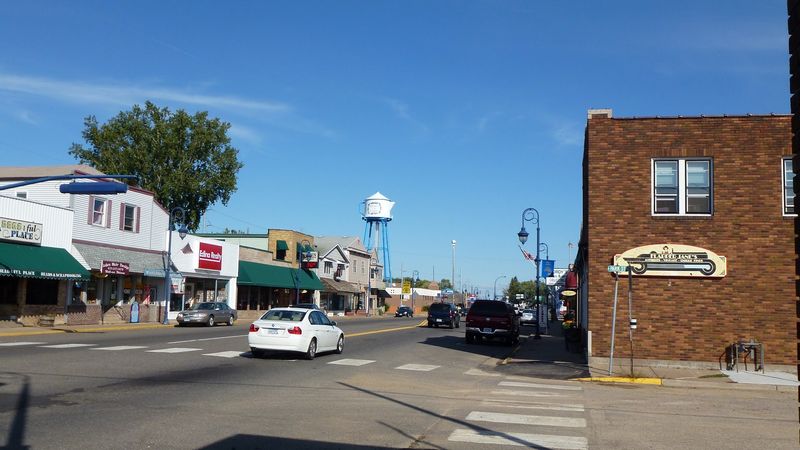
Yes, that water tower really is a giant coffee pot. Lindstrom painted its landmark tower to look like a Swedish coffee pot, and it’s impossible to miss.
The town calls itself America’s Little Sweden. Swedish immigrants settled here in the 1850s, and their influence never left.
Book lovers, take note. This area served as the setting for Vilhelm Moberg’s famous Emigrants novels about Swedish settlers.
Around 4,800 people live in Lindstrom today. Lakes surround the town across Chisago County, so water views pop up often.
Downtown keeps historic wooden Swedish architecture in place. The main street is walkable, so park once and wander.
Antique shops give you plenty of reasons to linger. You might leave with a treasure, or at least a good story about one.
Traditional bakeries are another big draw. A pastry and a stroll under that coffee pot tower feel like the right combo.
Snap a photo of the tower for friends back home. Few towns let you say you saw a coffee pot taller than most buildings.
Getting here is easy, too. Lindstrom sits just off US Highway 8, not far from the Twin Cities.
Pair it with a stop in Taylors Falls, which is close by on the same highway. Two old-fashioned towns in one day sounds like a smart plan.
6. Henderson
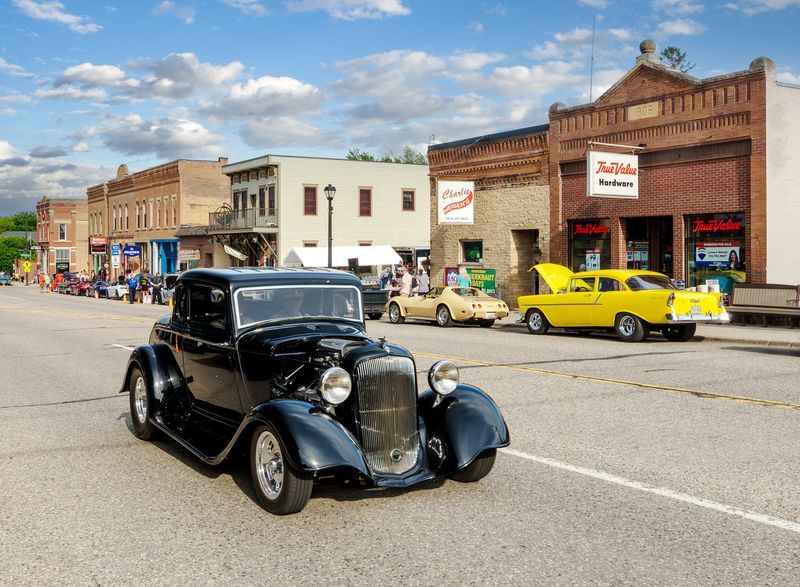
Red brick is the star of the show in Henderson. The downtown Henderson Historic District sits on the National Register of Historic Places.
Its 19th-century facades stand along a main street that still feels rural and unhurried. About 900 people live here, so crowds aren’t a big worry.
Henderson ranks among Minnesota’s oldest organized towns. It was founded in 1852, before Minnesota even became a state.
Picture that timeline for a second. These streets were laid out when the area was still a territory.
The town sits in Sibley County along the Minnesota River. River valley bluffs frame the area and add a scenic backdrop.
Take your time walking the downtown blocks. Look closely at the brickwork, window arches, and old signs on the buildings.
Photographers will find plenty to shoot. Morning light on red brick looks especially rich and pretty.
The drive is part of the treat. Minnesota State Highways 19 and 93 lead into town along the Minnesota River Scenic Byway.
That byway follows the river through farmland and small towns. It’s a relaxing route if you like slow roads and big sky.
Henderson works well as a half-day trip from the Twin Cities. Add a stop in New Ulm farther down the valley for a fuller day.
Bring a camera, a curious mind, and no strict schedule. This town rewards people who wander.
7. Pipestone
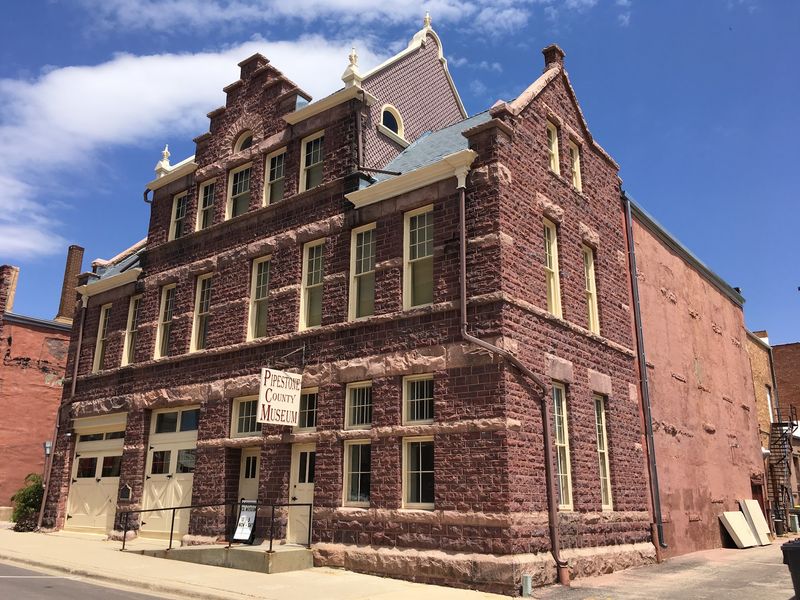
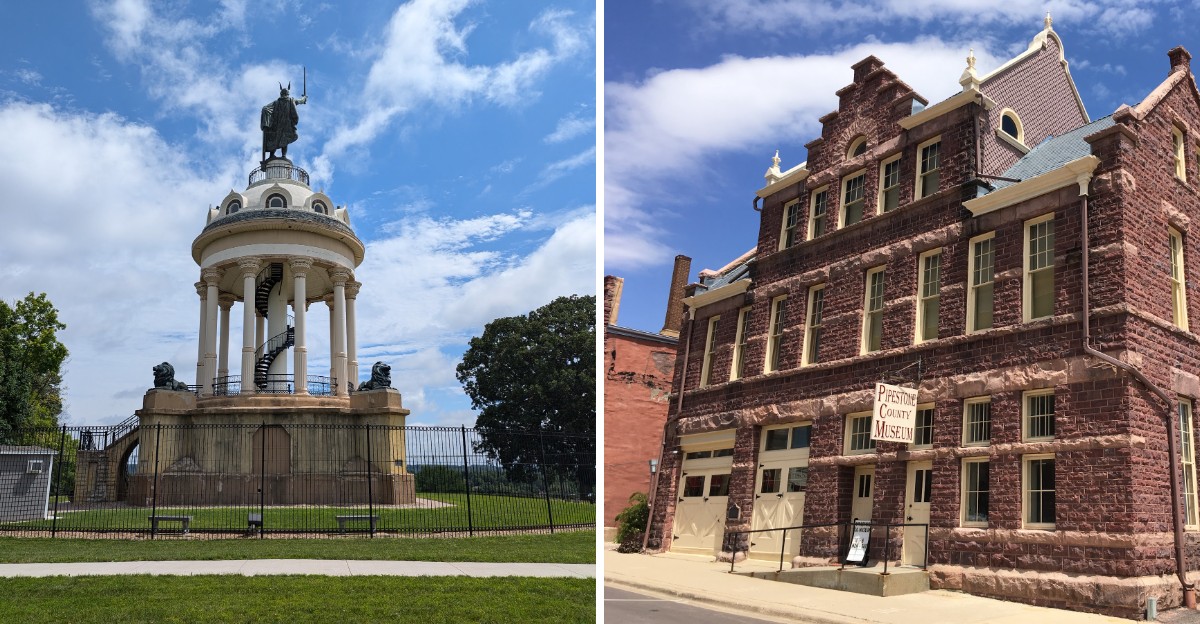
Pink buildings on the prairie aren’t something you see every day. In Pipestone, the historic downtown is built from locally quarried pink Sioux Quartzite.
Those turn-of-the-century structures glow in the sun. They give this southwestern Minnesota town a look all its own.
About 4,200 people live here, surrounded by wide-open countryside. The setting feels spacious, quiet, and far from the city rush.
The town borders Pipestone National Monument. This site is sacred to many American Indian tribes.
For over 3,000 years, Indigenous people have quarried red pipestone here. They craft pipes used in prayer and ceremony, and that tradition continues today.
Congress established the monument in 1937 to protect these quarries. Please treat the grounds with respect during your visit.
A paved trail leads you past active quarries and tallgrass prairie. You’ll also reach Winnewissa Falls, a lovely spot to pause.
The walk is fairly easy for most visitors. Bring water and a hat, since prairie sun can be strong.
Afterward, head back into town for a closer look at the quartzite buildings. Their rosy color changes with the light throughout the day.
US Highway 75 and Minnesota State Highway 30 both lead to Pipestone. It’s a long drive from the Twin Cities, so consider staying overnight.
8. New Ulm
Set your watch by the Glockenspiel, because it chimes every quarter hour. The 45-foot tower holds 37 bells in downtown New Ulm.
At set times, animated figures from the city’s history roll out and move to music. From April to October, shows happen at noon, 1, 3, 5, and 6 p.m.
Winter visitors get shows at noon, 3, and 5 p.m. Plan your coffee break around one, and you’re golden.
New Ulm was founded in 1854 by German immigrants. That heritage still shapes the town of about 14,000 people.
Intact brick commercial rows line the downtown streets. They keep the 19th-century Bavarian character strong.
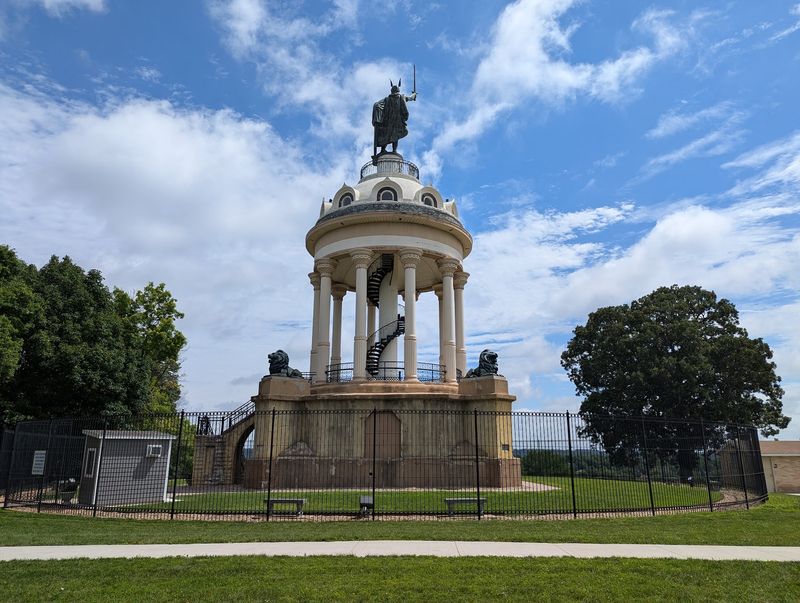
Up on a hill, the Hermann Heights Monument dates to 1897. The statue honors Hermann the Cheruscan, an ancient German hero.
The monument grounds are open, but climbing inside is currently closed for maintenance. You can still admire the view from the park.
New Ulm also has historic sites, walking tours, and festivals throughout the year. Check the city calendar before you visit.
The town sits where the Minnesota and Cottonwood rivers meet in Brown County. That river setting adds pretty views to your stroll.
US Highway 14 and Minnesota State Highway 15 get you here. Arrive before noon so you catch the first Glockenspiel show.
9. Excelsior
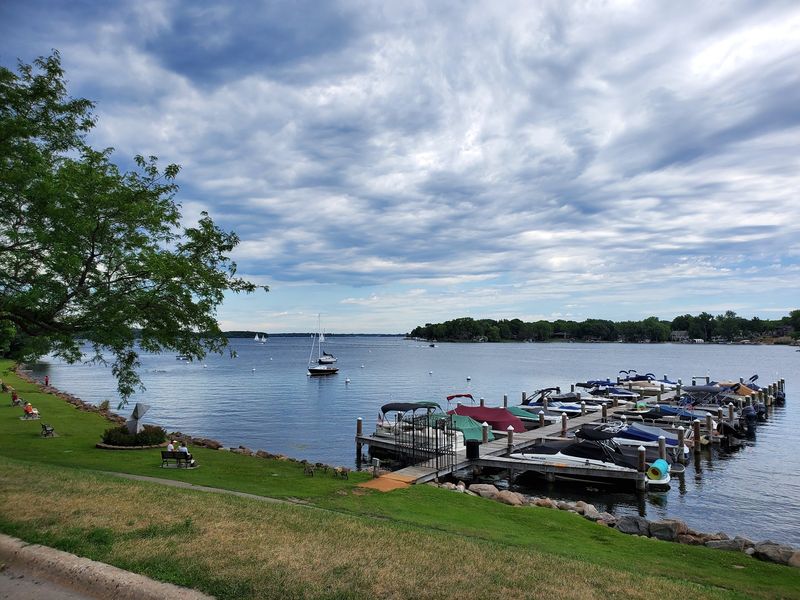
A 1906 steamboat docked in town sets the tone fast. The restored Steamboat Minnehaha once carried passengers on Lake Minnetonka, but it has been out of service since 2019 while preservation advocates work to secure a new launch site.
The town sits on the South Shore of Lake Minnetonka. About 2,350 people live in this lakeside community in western Hennepin County.
Excelsior was founded in 1853. Its Water Street Historic District keeps Victorian commercial buildings looking sharp.
Stroll Water Street and you’ll find antique shops worth a peek. Vintage ice cream parlors also make the walk extra sweet.
Grab a cone and wander down toward the docks. Few things feel more classic than lake views on a summer day.
The downtown streets are friendly for pedestrians. Park once and explore on foot without much fuss.
Lake docks are open daily, so you can soak up the shoreline anytime. Sunsets over the water are worth sticking around for.
One perk here is location. Excelsior sits just off Minnesota State Highway 7, close to the Twin Cities.
That makes it an easy half-day escape. You can feel decades away without a long road trip.
Summer is the busiest and liveliest season. Fall offers calmer streets and colorful trees along the lake.
Bring sunscreen, comfortable shoes, and an appetite for ice cream. Excelsior handles the old-fashioned charm.
10. Ely
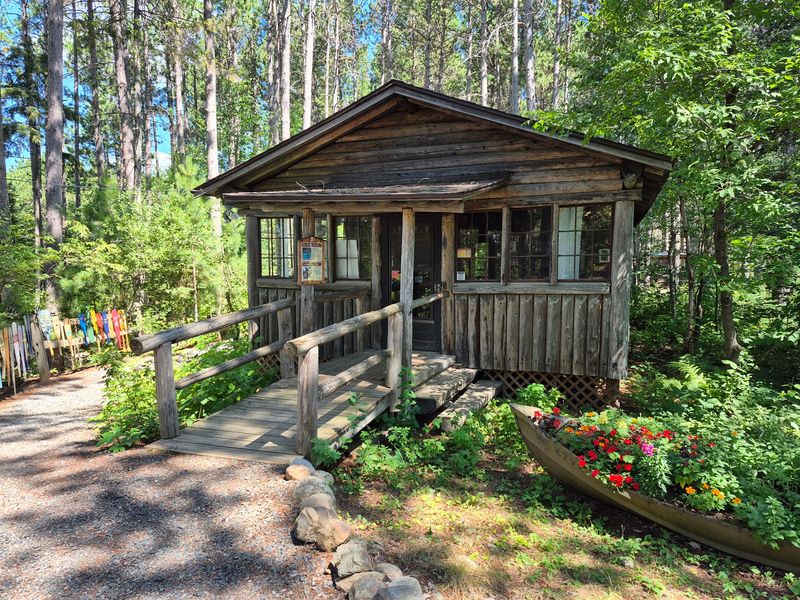
Out where the pavement meets the pines, Ely still feels like a frontier outpost. The town sits on the edge of the wilderness in northeastern Minnesota.
Ely developed in the late 1800s as an iron-mining town, with logging also playing an important role in its early economy. That rugged past still shapes its look and mood.
About 3,200 people live here in St. Louis County. Many visitors pass through on the way to outdoor adventures.
Sheridan Street is the heart of town. Vintage outfitters line the road, ready to gear up paddlers and hikers.
You’ll also spot heritage lodges and historic log structures. They give the street an early 20th-century Northwoods feel.
Plan to browse even if you aren’t heading into the woods. Outfitter shops are fun places to dream about your next trip.
The drive itself is gorgeous. Minnesota State Highway 1 and Highway 169, part of the Superior National Forest Scenic Byway, lead you here.
Expect thick forests, lakes, and plenty of quiet roads. Keep an eye out for wildlife along the way.
Ely welcomes travelers year-round. Summer brings paddling season, while winter turns the town snowy and still.
Pack layers no matter when you go. Northern weather can change its mind quickly.
Give yourself at least a weekend. Ely feels best when you slow down to the speed of the woods.
