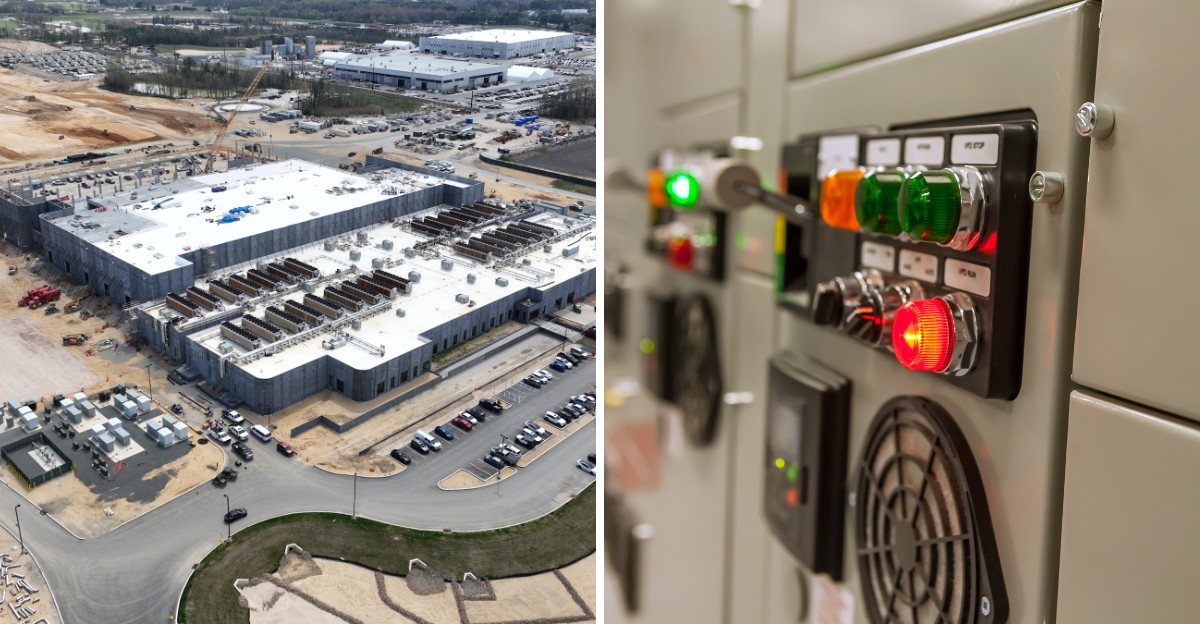
AI may live in the cloud, but the buildings powering it are very much on the ground.
New Jersey is preparing for more data centers as demand for artificial intelligence, cloud computing, and digital services keeps growing.
These facilities can look surprisingly ordinary from the road, yet inside, rows of servers work around the clock and require enormous amounts of electricity.
And whew, that appetite for power has gotten people talking.
State leaders have introduced new rules addressing energy costs, water use, and the effects of future development on local communities.
Data centers promise investment and infrastructure, but they also bring questions about where the power comes from and who pays for upgrades.
The AI boom suddenly feels a lot less invisible when its physical footprint starts appearing closer to home.
The Quiet Boom Nobody Put On A Map

Drive past enough industrial parks in the Garden State and a pattern shows up. Low buildings, few windows, rows of cooling units on the roof and a security gate out front.
More than 80 data centers are operating or under development across New Jersey, with additional projects being proposed. That gives New Jersey a substantial data center presence, even though many of these buildings carry little signage a passerby would recognize.
What makes the location work is simple geography. New Jersey sits beside one of the world’s biggest financial and media hubs, and short distances mean faster connections for the companies renting server space.
The newest wave is different from the old one, though. Traditional data centers supported cloud computing, storage, websites and other digital services, while many newer projects are being designed for artificial intelligence workloads that demand far denser, more power-intensive hardware.
So the hum is the same. What is behind the walls has changed completely.
Why AI Changed The Whole Equation
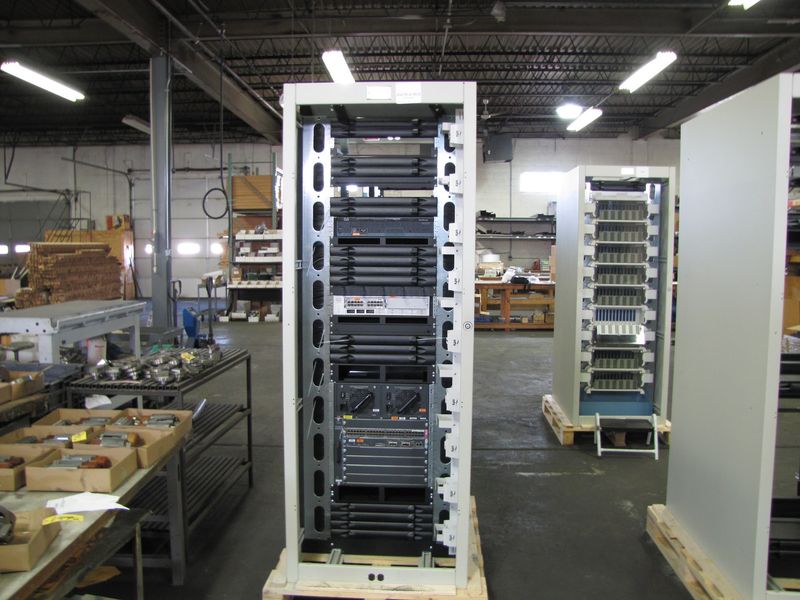
Here is the part that clicked for me. A normal web search or email barely taxes a server, but training and running artificial intelligence models chews through processing power at a completely different scale.
That gap helps explain the construction spree. AI hardware can require far greater power and cooling capacity, meaning older facilities may need major upgrades while developers also pursue purpose-built projects.
PJM Interconnection, the regional grid operator covering New Jersey and a dozen other states, has flagged rising demand from data centers and AI as a real strain on the electric system. When a grid operator starts talking publicly about one industry, that industry has gotten big.
I find the ripple effect fascinating. Software people wanted smarter chatbots, and the result is poured concrete, new substations and heavy equipment humming along roads people drive every day.
Demand created steel. Not the order most of us would expect.
Kenilworth Trades One Kind Of Innovation For Another
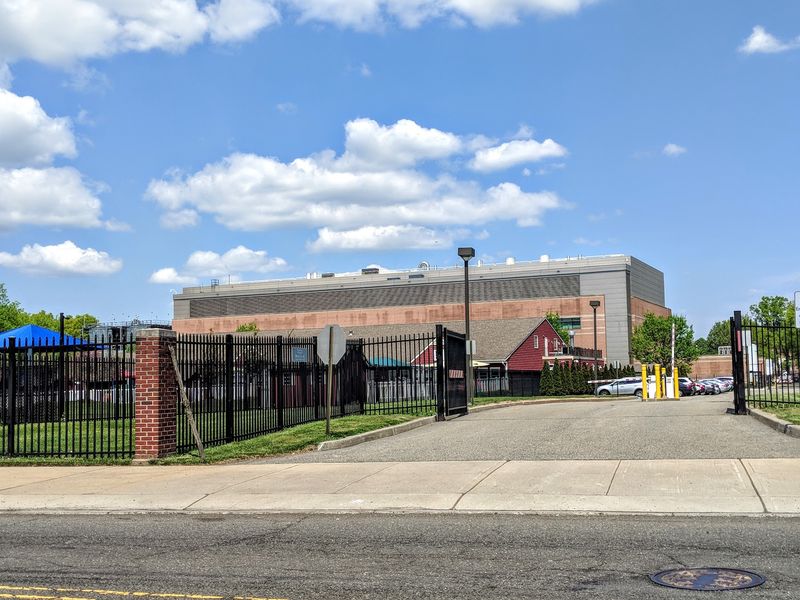
Kenilworth is a small borough in Union County, the kind of place with a main street you can walk end to end. It is also home to one of the biggest artificial intelligence investments the state has seen.
CoreWeave is putting roughly 1.8 billion dollars into an AI data center on part of the former Merck campus there. The facility covers about 392,600 square feet, built for the high-density computing that modern AI models require.
There is something fitting about the site itself. That campus spent decades as a center of pharmaceutical research, and now it hosts a different flavor of laboratory work, one measured in processors instead of test tubes.
Local reaction has not been uniformly enthusiastic, and residents have raised questions about noise, power and what a project of this size means for a compact borough. Those conversations are ongoing.
Big change, small town. The tension is understandable.
Vineland Builds Its Own Power Instead Of Borrowing It
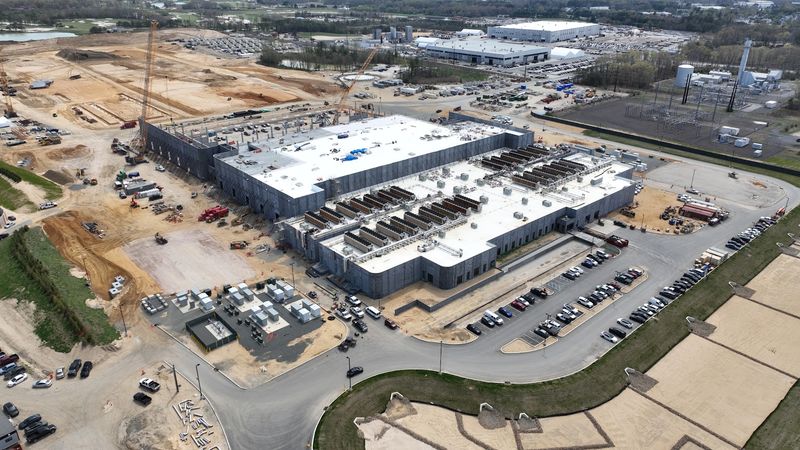
South Jersey rarely gets mentioned in tech conversations, which makes Vineland an interesting exception. In Cumberland County, DataOne and Nebius, a Dutch AI infrastructure company, are developing a large AI-focused campus.
The project is under construction, with the AI facility expected to become operational in 2027. The project is tied to Nebius’ roughly $17.4 billion AI infrastructure agreement with Microsoft.
The detail I keep coming back to is the power setup. Rather than relying entirely on the regional grid, the project is designed to use on-site Bloom Energy fuel cells to generate nearly all of its electricity.
Cooling matters too.The facility is designed with a closed-loop cooling system intended to minimize water consumption.
Vineland is farmland country, known for produce and packing houses. Watching a global AI project take shape there is a genuinely odd and interesting mix.
Old ground, new purpose.
Secaucus, Where The Internet Already Lives
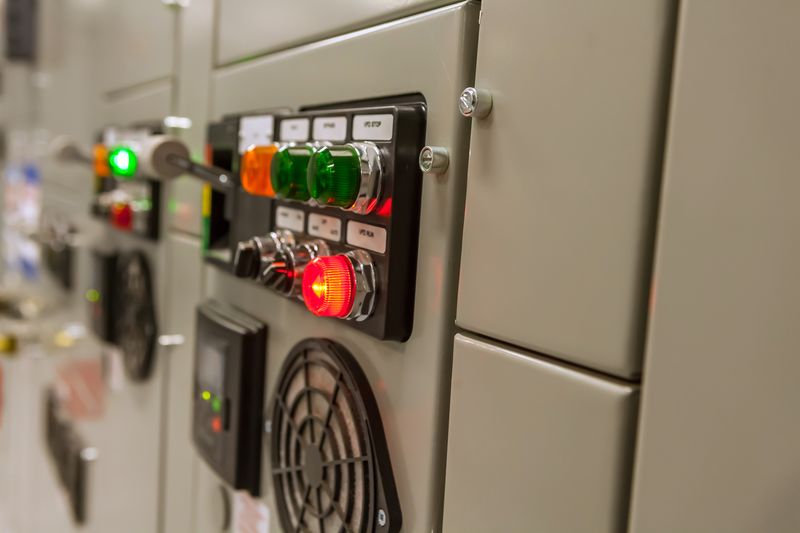
Most people know Secaucus for outlet shopping and the swampy views along the Turnpike. Fewer know how much internet traffic passes through its industrial blocks every second.
CoreSite already runs a data center on Enterprise Avenue there, and the town is reviewing a proposal for a second AI-focused facility that would reuse a vacant building at 215 County Avenue. The proposal would repurpose an existing vacant building rather than construct the facility on an undeveloped site.
Proximity is the real draw. Secaucus sits minutes from Manhattan, and for financial firms and AI companies alike, shaving milliseconds off a connection has genuine value.
I like that the town leaned into what it already was. It did not reinvent itself so much as upgrade.
The Electricity Bill Behind The Buzz
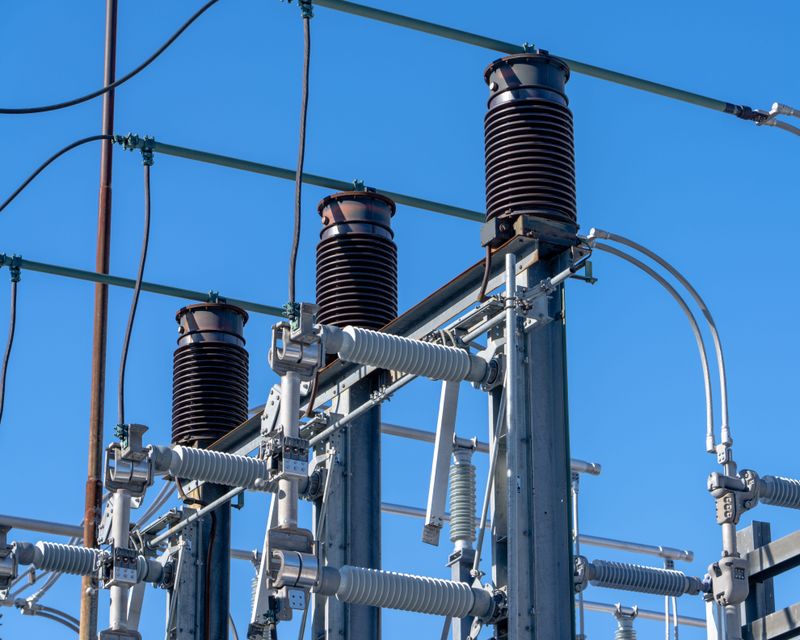
Numbers help make the abstract feel real. A typical large AI data center can use about as much electricity as 100,000 households, putting its power demand on the scale of a mid-sized city.
A New Jersey Policy Perspective analysis projects that data centers could account for nearly 10 percent of the state’s electricity use by 2030. That figure reshapes how planners think about generation, transmission and long-term capacity.
Across the wider PJM Interconnection territory, the same pressure shows up. Grid operators plan years ahead, and a sudden surge of enormous new customers complicates every forecast they have made.
For residents, the practical concern is straightforward. When demand climbs faster than supply, electricity costs tend to follow, and that is exactly what has driven many of the public conversations happening around these projects.
None of this makes the technology bad. It just means the tradeoffs are worth understanding clearly.
Water Is The Quieter Resource Question
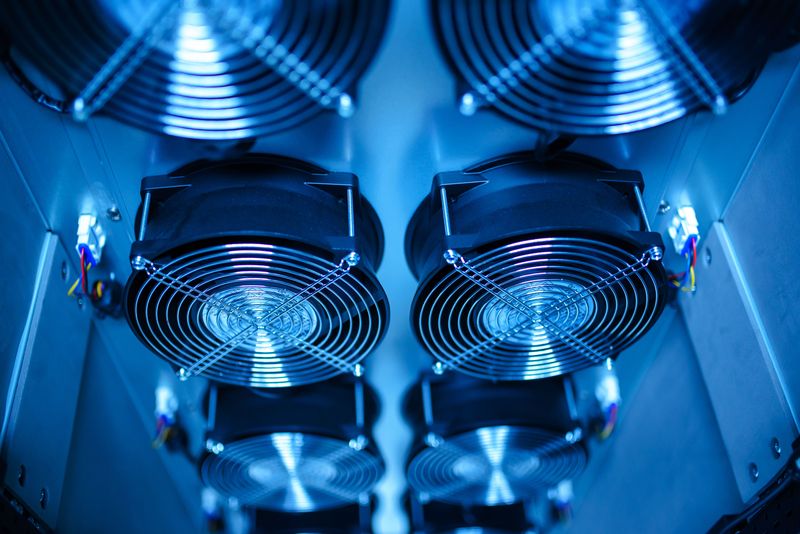
Electricity gets the headlines. Water flies under the radar, and it probably should not.
Servers generate serious heat, and many cooling systems rely on water to carry that heat away. One estimate cited by New Jersey Policy Perspective projects that water consumption by large U.S.
AI data centers could roughly double between 2024 and 2028.
That is why closed-loop cooling, like the system used at the Vineland facility, matters more than it sounds. Instead of continuously drawing fresh water and losing it to evaporation, the same water circulates through the building repeatedly.
Design choices like that are receiving greater scrutiny as states and communities pay closer attention to data centers’ water consumption.
For a state with dense population and shared aquifers, the distinction is not academic. Where the water comes from and how much returns to the system shapes whether a project sits comfortably in its community.
Small engineering detail. Big local consequence.
Neighbors Are Showing Up To The Meetings
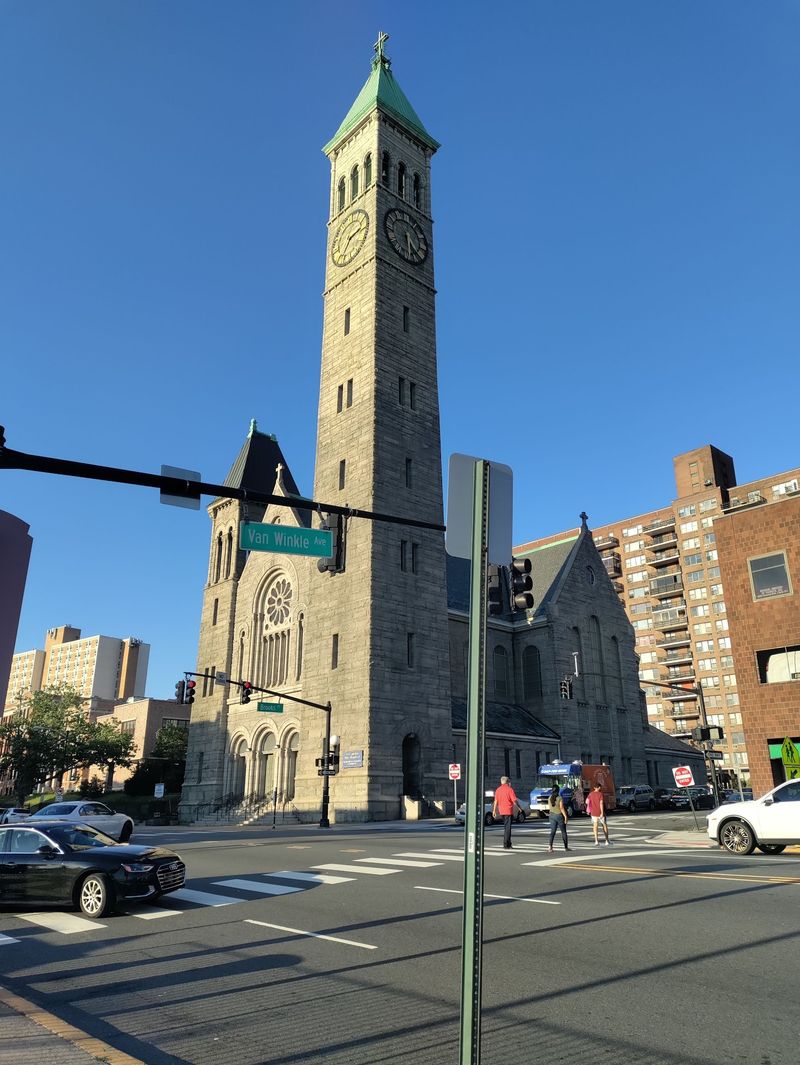
Planning board meetings are not glamorous, and yet they have become where a lot of this gets decided. Residents in several towns have raised concerns about electricity costs, noise from cooling equipment and pressure on local roads and utilities.
Those objections are not abstract complaints. Cooling systems run constantly, and a facility sited near homes changes the background sound of a neighborhood in ways plans on paper do not fully convey.
State leaders have adopted new rules addressing energy costs, water and electricity use, and the effects of future development on local communities.
What I appreciate is the direction of the conversation. Rather than a flat yes or no, the debate has shifted toward terms, conditions and accountability.
Data-center development continues across the state even as some municipalities push back or tighten local rules. How it happens is still being written, and ordinary people asking pointed questions are part of that.
What Towns Actually Get Out Of It

A fair question comes up at every hearing. If these buildings employ relatively few people, what does the town actually gain?
Tax revenue is the honest headline answer. Supporters often point to property-tax revenue and relatively limited day-to-day traffic compared with some other large commercial uses.
Construction is where the job numbers spike, since building a facility of several hundred thousand square feet takes electricians, pipefitters, steelworkers and equipment operators for a long stretch. Permanent staffing afterward is smaller but skilled, covering technicians, security and facilities engineering.
There is also a less visible benefit. Companies choosing New Jersey for AI infrastructure tend to bring related business with them, from contractors to network providers.
Whether that balance feels worthwhile depends heavily on the specific site and the terms negotiated. Some towns have embraced it, others have pushed back hard, and both positions come from reasonable places.
A State Rewiring Itself In Plain Sight
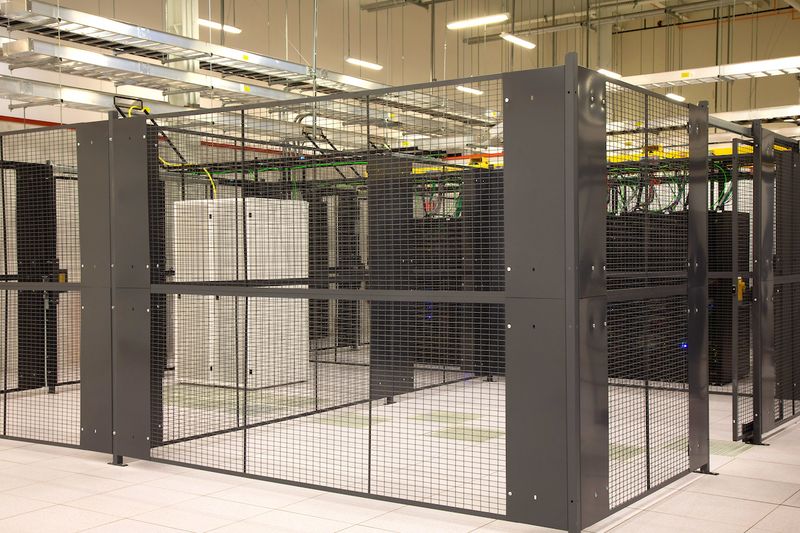
Step back from any single project and the larger picture is hard to miss. New Jersey is positioning itself as a serious hub for artificial intelligence infrastructure, and the buildings going up now will shape the state’s economy and energy profile for decades.
The appeal makes sense. Fiber routes, proximity to major markets, available industrial land and an existing cluster of facilities all reinforce each other.
Challenges travel alongside the opportunity, and resource use plus local impact will keep driving debate. New state laws and guidance show that New Jersey intends to manage data-center growth while requiring developers to address energy, resource and community impacts.
Next time you pass a long windowless building humming behind a chain-link fence, you will know what it probably is. The digital world has an address, and a good portion of it is here.
