Warm asphalt and ancient tar drift across the grass, a smell like a road on a summer day. Following it leads to a dark lake where bubbles pop slowly through the water, steady as breathing.
Life-size mammoth statues stand half sunk near the edge, and staring longer than expected is unavoidable. City buses roll past behind, and joggers with coffee cups pass by, completely used to living next to the Ice Age.
More than three million fossils have been pulled out of this sticky ground, including a mammoth so complete that scientists gave him a name. The tar still bubbles up through the water, and the past feels close enough to touch.
The plan was a quick look, but the afternoon disappeared instead. Going back tomorrow would be easy.
California keeps this kind of wonder right in the middle of a busy city, and it never stops surprising.
A Bubbling Lake That Smells Like Summer Pavement
My nose found the Lake Pit before my eyes did. The air carries a heavy, tarry scent, and once you get close to the fence, it gets even stronger.
Some people love it, and some wrinkle their faces, but everyone notices it.
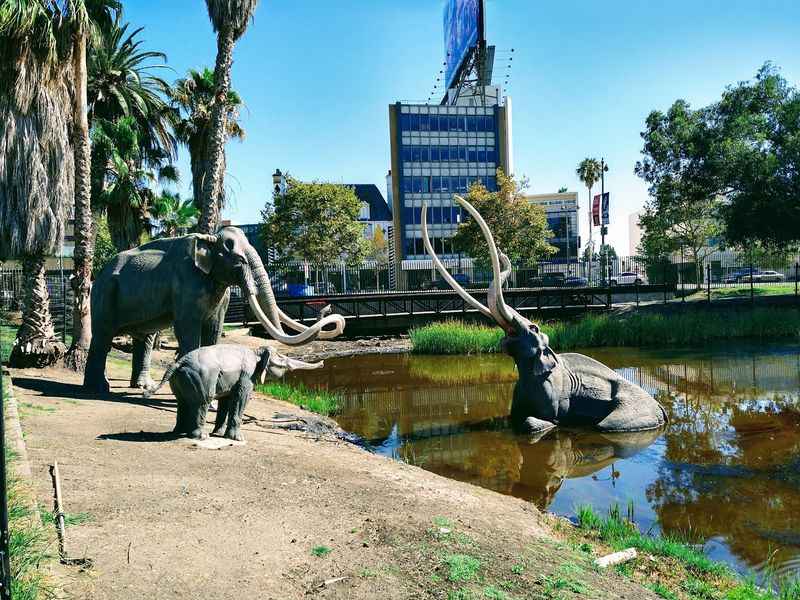
The Lake Pit sits right at the front of Hancock Park, and it is the easiest spot to start your visit. The water on top looks calm at first, and then a bubble rises, then another.
Those bubbles come from gas and asphalt pushing up from deep underground, the same natural process that has been going on for more than 50,000 years.
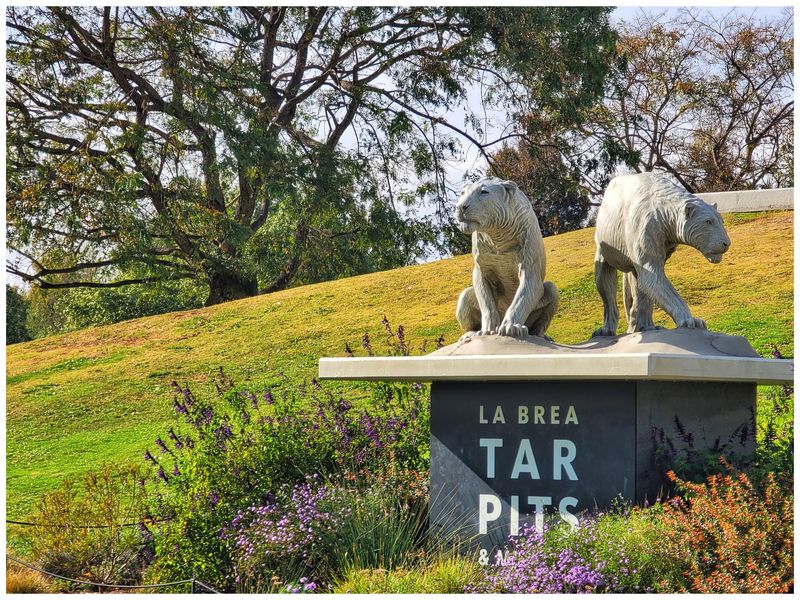
Along the edge, a family of mammoth statues tells a sad little story. One is stuck in the tar while the others watch from the shore.
A nearby sign explains that the scene is not totally accurate, since lone males were the ones most often trapped, which I found kind of fascinating.
The outdoor grounds are free to walk through, so you can linger here as long as you like. Try visiting after a rain, when water covers the tar and the bubbles look even clearer.
Just keep a close eye on small kids, because the path gets busy and the fence is the only thing between you and a very sticky mess.
How Sticky Oil Became a Giant Time Capsule
Here is the strange part. Nobody built these pits, and no one dug them on purpose.
Crude oil slowly leaked up from underground reserves, and over time the lighter parts of that oil evaporated into the air, leaving behind thick, gooey asphalt.
Picture a thirsty horse or bison thousands of years ago. It spots a puddle covered with leaves and dust, steps in, and suddenly its feet will not move.
The more it struggles, the deeper it sinks, and predators hoping for an easy meal often got stuck right beside it.
Over many centuries, the asphalt soaked into the bones and kept them from rotting away. That is why the fossils here are so well preserved, often dark brown and shiny instead of stone gray.
Plants, seeds, insects, and even tiny snails got trapped too, giving scientists a full picture of the ancient world.
You can still see the process happening today. Little blobs of tar ooze through the grass all over the park, marked by orange cones.
I thought the cones were for construction until I read the warnings printed on them, and then I watched my step very carefully. Wear old shoes, because tar is extremely hard to scrub off.
Meet Zed, the Mammoth Found Under a Parking Garage
In 2006, construction crews were digging an underground parking garage for the Los Angeles County Museum of Art next door. Instead of just dirt, they hit something amazing.
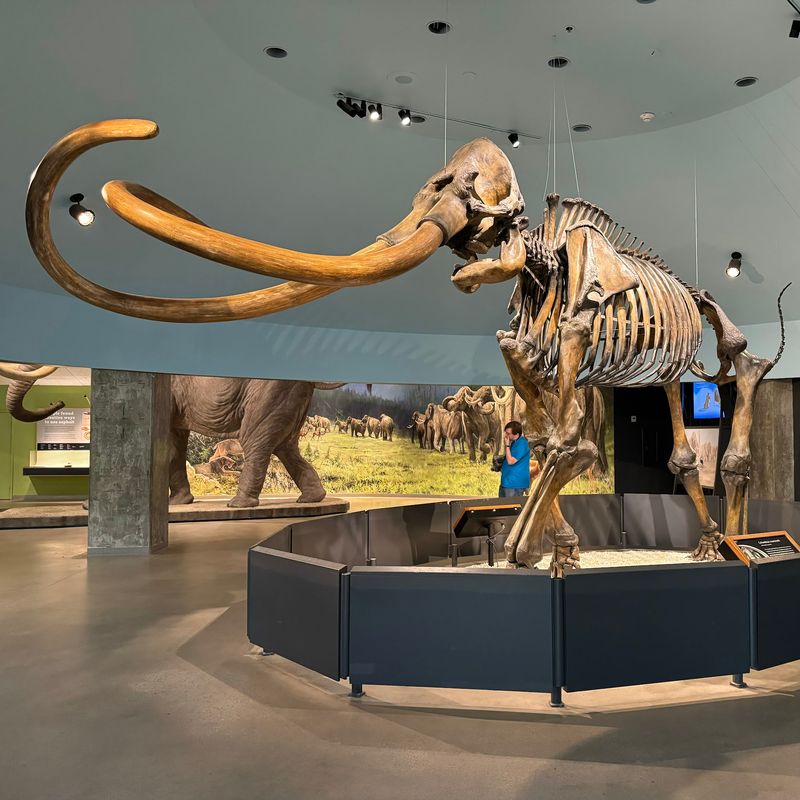
Among 16 fossil deposits, they uncovered a Columbian mammoth that scientists nicknamed Zed.
Zed was an adult male, and his skeleton is about 80 percent complete, which is very rare for this site. Most animals here were found as scattered, jumbled bones.
Zed, though, came with his skull and two intact tusks that stretch around 10 feet long, which is longer than most living room couches.
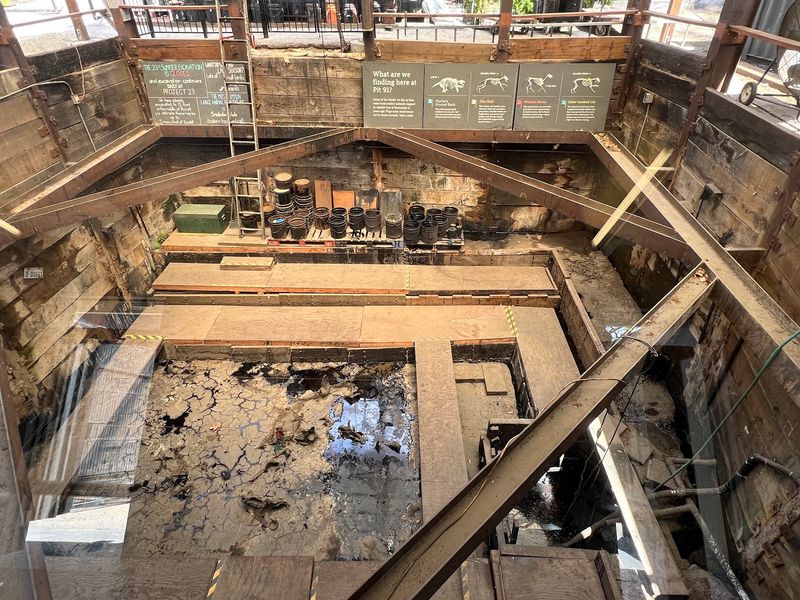
Rather than stop construction for years, the team boxed up the deposits and moved them to the tar pits. The effort became known as Project 23, and it included 327 buckets of extra fossil material.
Researchers are still working through all of it, piece by piece.
I loved knowing that one of the biggest finds in Los Angeles history showed up because someone needed more parking spaces. It feels like such a perfectly LA story.
Parts of Zed, including his tusk, are sometimes visible inside the museum, and there are plans to show him standing tall as a full skeleton for the first time since the Ice Age.
Counting to 3.5 Million, One Bone at a Time
Try to imagine counting to 3.5 million. It would take you weeks without sleeping.
That is roughly how many fossils were in the collection by a 1992 census, and digging here started all the way back in 1913.
The number is only part of the story. The fossils represent over 650 species, including mammals, birds, reptiles, amphibians, and fish.
Add in countless plants and insects, and you get what experts call the richest Ice Age fossil site on the entire planet.
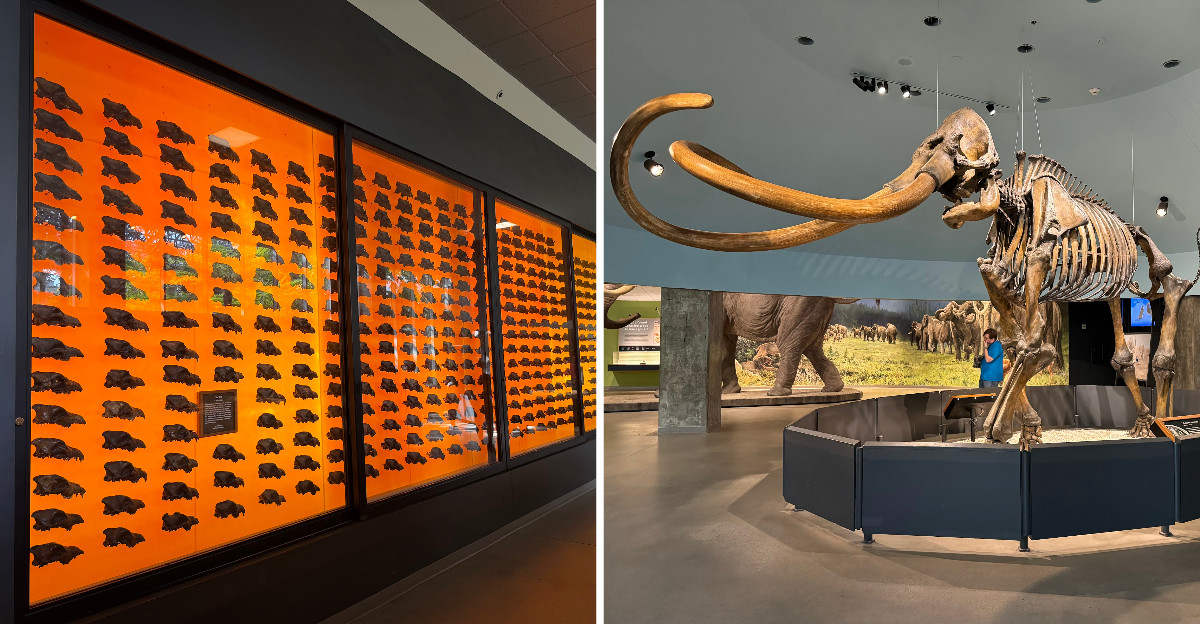
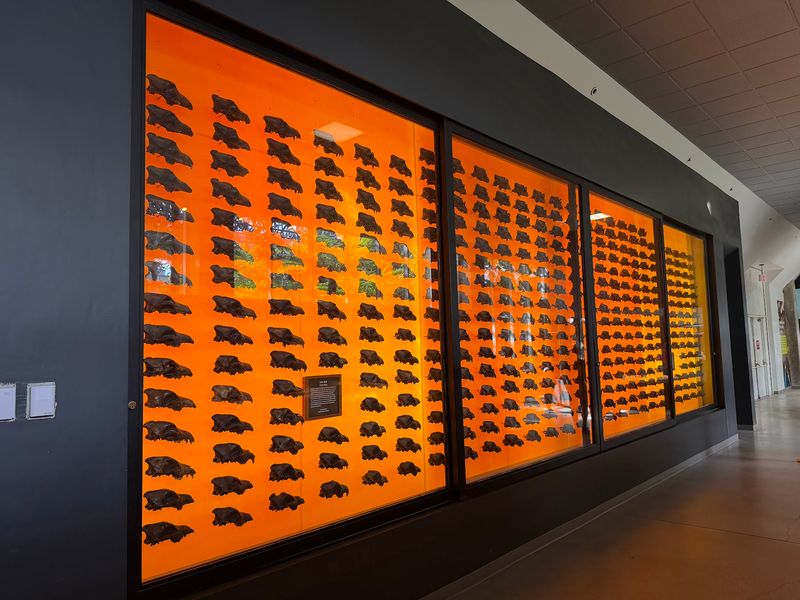
Inside the museum, one display really drove this home for me. A glowing wall is packed with hundreds of dire wolf skulls lined up in neat rows, all staring out at you.
It looks a little spooky and very cool, and it shows just how many animals got stuck over time.
Scientists use this huge collection to study how the climate and landscape of Los Angeles changed over the last 50,000 years. Because there are so many samples, they can compare animals across time and spot patterns.
If you enjoy big numbers, spend a few extra minutes reading the signs near the displays. Each case feels like a tiny chapter from a very, very long history book.
Saber-Toothed Cats, Dire Wolves, and a Sloth the Size of a Car
Forget lions and bears for a moment. The real stars of ancient Los Angeles had giant fangs and claws you would not want to meet on a hike.
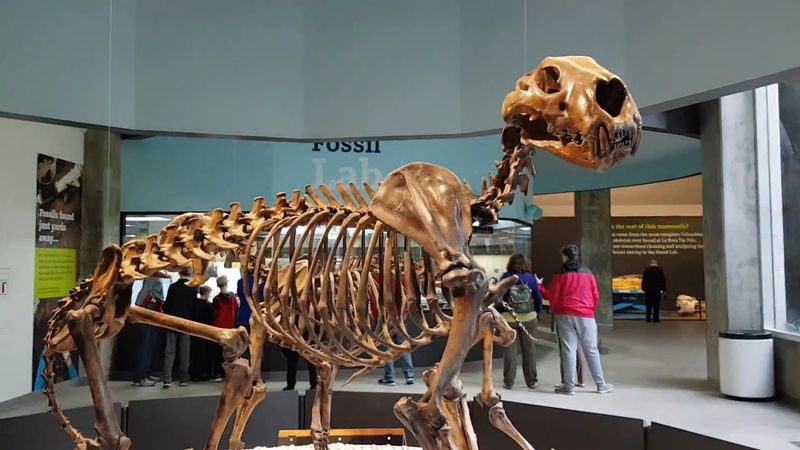
Saber-toothed cats, the official state fossil of California, are one of the most famous animals found here.
Standing close to a skeleton, I kept looking at those long curved teeth and trying to picture them in action. Dire wolves are everywhere in the collection too, and they were bigger and stockier than modern gray wolves.
Scientists think packs may have rushed toward trapped animals and then gotten stuck themselves.
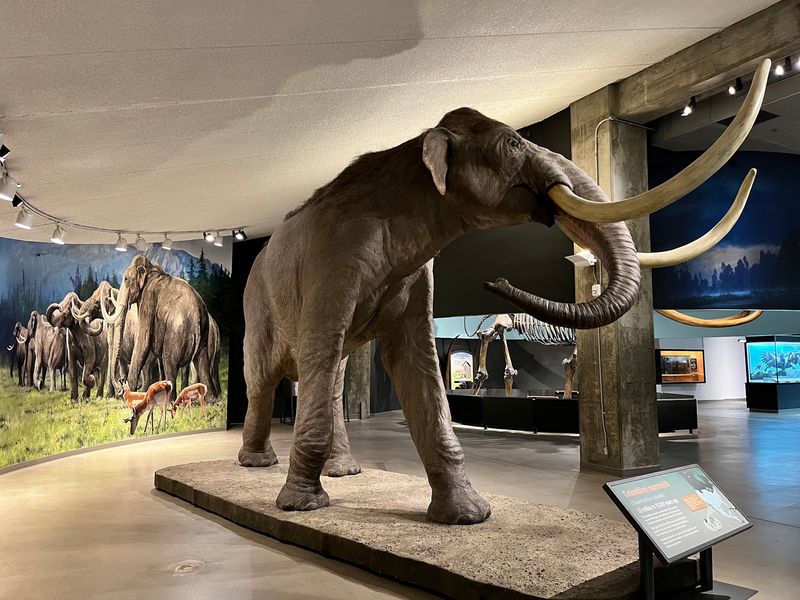
The gentler giants are just as impressive. Mastodons, ancient bison, and western horses once wandered this area, grazing on plants that grew in a cooler, wetter climate.
Harlan’s ground sloth is especially well represented, and some of these sloths were about as heavy as a small car.
A fun tip for families is to pick a favorite animal before going inside. Then make a game out of finding every display that features it.
Kids tend to choose the saber-toothed cat, of course, but I found myself rooting for the sloth. Something about a huge, slow, shaggy plant eater just seemed friendly to me.
Peeking Through the Glass at the Fossil Lab
Some of my favorite minutes at the museum were spent with my face near a big glass window. On the other side, scientists and volunteers bent over tables covered in dark bones.
They used tiny brushes, dental picks, and microscopes, moving so carefully that I held my breath without meaning to.
The Fossil Lab sits right inside the George C. Page Museum, and it is working space, not a staged show.
Fossils fresh from the pits get cleaned of asphalt, repaired, and identified here. Some pieces are as big as a leg bone, while others are smaller than a grain of rice.
Tiny fossils matter just as much as the huge ones. Seeds, insect parts, and little rodent teeth help researchers figure out what the weather and plants were like long ago.
So if you see someone sorting what looks like dust, they might be holding clues about ancient California.
My advice is to visit more than once during the day, since the work changes. You might catch someone piecing together a skull, or you might spot a chunk of Zed on the table.
It made the science feel real and alive, and it was a nice reminder that discoveries here are still happening right now.
A Museum Tucked Under a Grassy Hill
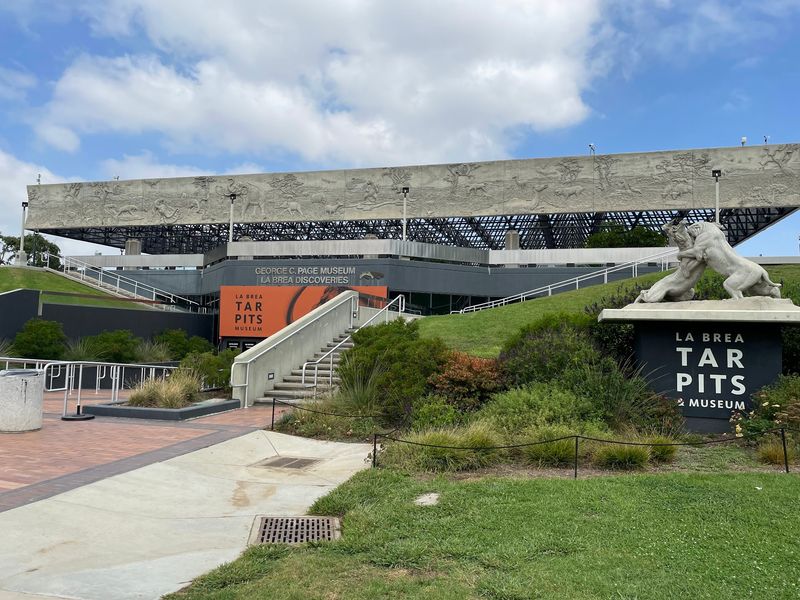
From a distance, the George C. Page Museum barely looks like a building at all.
Its sloping walls are covered in grass, so it seems to rise gently out of the park like a hill. Kids love running up to it, and honestly, I was tempted too.
The museum opened in 1977 and was designed this way to protect the look and feel of Hancock Park. Inside, you will find skeletons, models, and exhibits about how the tar pits formed and what lived here.
There is also a 3D theater that brings the Ice Age to life on screen.
For a real surprise, catch Ice Age Encounters, a live show featuring a life-size saber-toothed cat puppet. The way it moves, stretches, and looks around feels almost real.
Younger visitors usually gasp, and plenty of grown-ups do the same.
Look for the signs that say please touch, because some displays let you handle fossil replicas and feel how tar pulls at your hands. That hands-on stuff makes a big difference.
After exploring, the gift shop is worth a peek, since purchases help support the museum and the ongoing research. Leave time for the Pleistocene garden outside, too, since it offers shady green space and plants inspired by ancient Los Angeles.
Making the Most of a Day at Hancock Park
Plan on staying longer than you think. I figured an hour would be enough, and I was very wrong.
Between the pits, the museum, and the park, the hours slipped by fast.
The grounds open early and stay open late, so morning walks are a nice option. Chubby squirrels dart across the lawns, and the trees throw patches of shade over the paths.
Several smaller tar pits are scattered around the park, each with its own fence and sign, so wander a bit instead of sticking to one spot.
The site carries serious honors. In 1964 it became one of the first National Natural Landmarks, and in 2022 it was named one of the first 100 global Geological Heritage Sites.
That is a big deal for a spot surrounded by apartments and office towers.
Since the Los Angeles County Museum of Art is right next door, it is easy to pair both visits in one day. Bring snacks, wear sneakers you do not mind getting a little dirty, and check the official website for show times and hours before heading over.
The area is also planning a big reimagining, so there may be even more to see soon.
Address: 5801 Wilshire Blvd, Los Angeles, CA 90036
