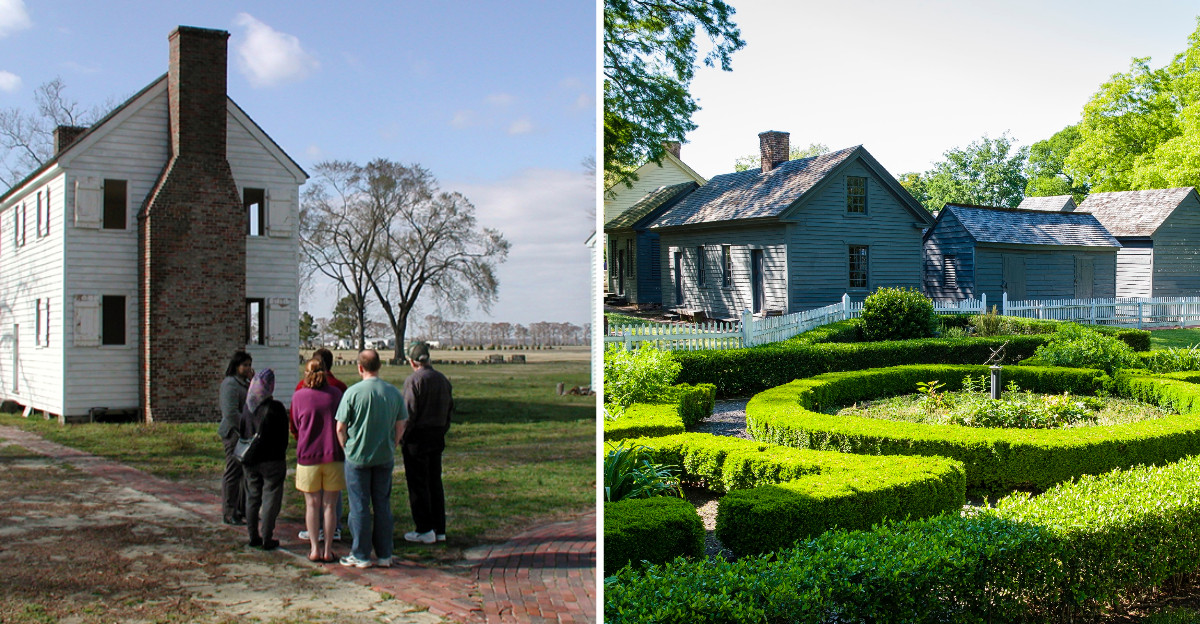
A road that feels like it is running out of world can suddenly open into a wide lawn and cypress trees so big they make you feel like a kid again. That is what happened on a drive through North Carolina, and the destination turned out to be something badly underestimated.
More than 100,000 acres once spread beside a lake here, with over fifty buildings crowded along the water’s edge. Today only seven of those original 19th-century structures still stand.
Wandering between them slowly, reading every sign, it is hard to picture the noise and motion that used to fill the space between. What stayed most was how quiet it is now, and how loudly that quiet speaks.
History that asks something of you rather than just entertaining you is rare, and this place delivers exactly that. The cypress trees still stand watch, and the lawn stretches wide where so much once happened.
Even the emptiest corners seem to carry traces of that past.
The Collins Family Home and Its Long Shadow
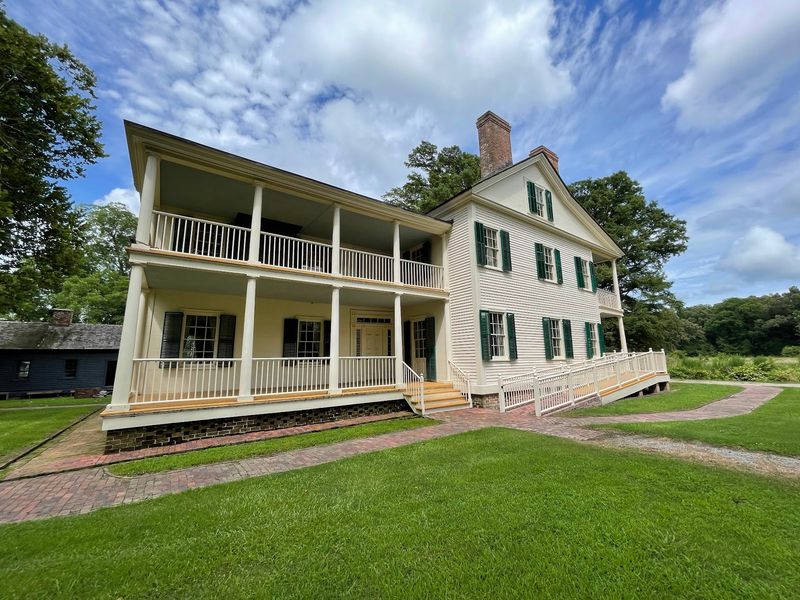
Built around 1830, the main house is the first thing your eyes land on, and it sets the tone for everything else. It is big, white, and startlingly plain in places, more practical than palatial.
I expected marble and gold. Instead I found sturdy wood, tall windows, and rooms arranged for airflow in swampy summer heat.
The Collins family owned Somerset Place from 1785 until 1865, and their home is one of the seven original 19th-century buildings still standing on the site. Inside, the layout tells you a great deal about how they lived, where guests were received, where children slept, and how carefully the family separated their own quarters from the working spaces of the estate.
Guided tours take you through the interior, and I would strongly recommend that over wandering alone. The staff know which details matter.
What struck me was the contrast waiting just a short walk away. The house feels comfortable, almost ordinary by modern standards, yet its comfort was built entirely on the labor of hundreds of enslaved people who lived within sight of its windows.
Counting the Missing, Where Fifty Buildings Once Stood
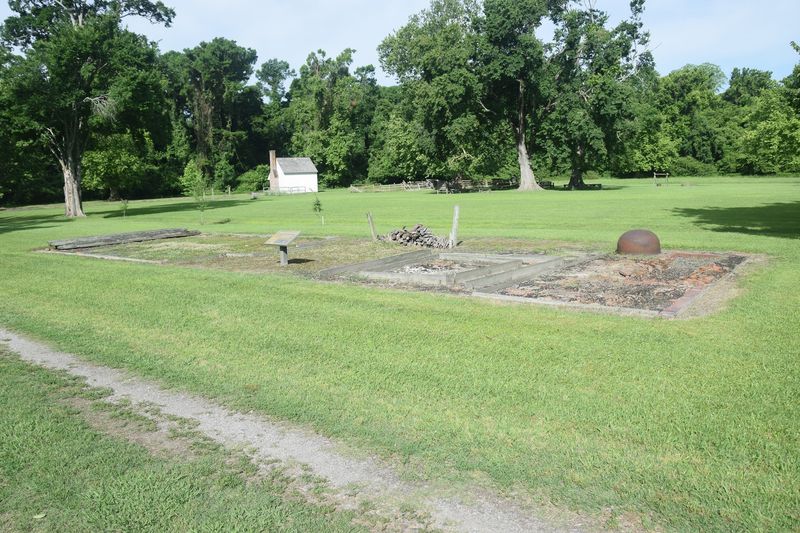
Here is the number that reframed my whole visit: by the mid-1800s, more than 50 buildings lined the northeast rim of Lake Phelps. Barns, sawmills, gristmills, stables, an Episcopal chapel, a hospital, a kitchen complex, and 26 houses for the enslaved community.
Standing on the lawn, I tried to mentally rebuild it. I failed, repeatedly.
Most of that village is simply gone now, lost to fire, weather, neglect, and the long decades after the plantation era ended. What remains is grass, shade, and interpretive signage marking absences.
Honestly, the empty space does something a full reconstruction never could. You feel the scale of the loss rather than just reading about it.
Somerset Place was among the largest plantations in the Upper South by 1860, which means the missing buildings represent an enormous working community, not a handful of sheds. Overseers, tutors, ministers, free Black residents, and white employees all had structures here.
Walk the open areas slowly. Read the markers.
The gaps between the surviving buildings are part of the story, and they are worth your attention as much as the walls that still stand.
The Seven Survivors You Can Actually Touch
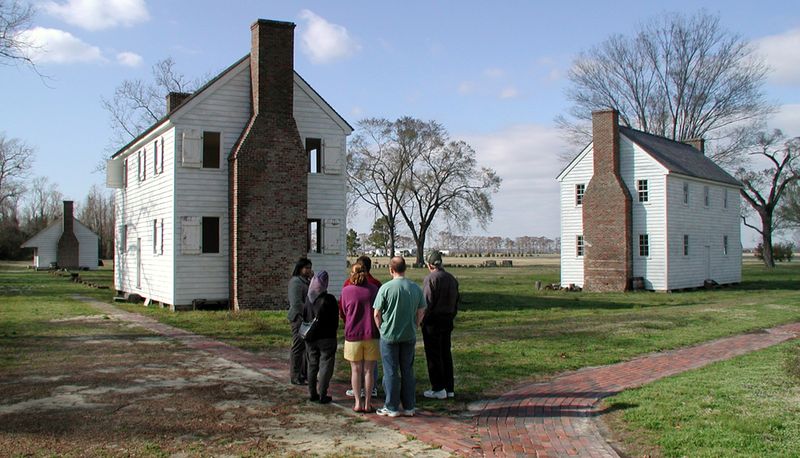
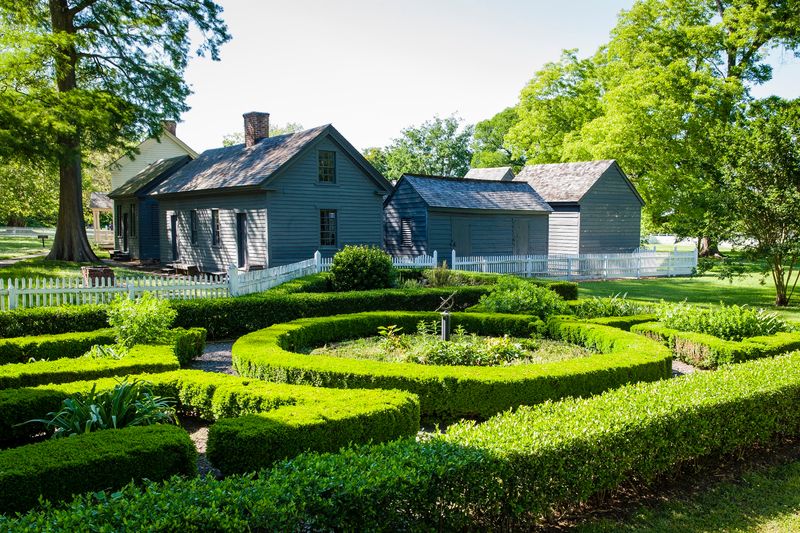
Seven original 19th-century buildings survive at Somerset Place, and I made a point of finding every single one. The main house, the dairy, the kitchen and laundry building, the kitchen rations building, the smokehouse, and the salting house all count among them.
They are small. Some you can take in fully from the doorway.
The dairy surprised me most, a modest structure built for keeping milk and butter cool, which meant constant work for someone every day of the year. The kitchen and laundry building sits apart from the main house, a common arrangement meant to keep heat and fire risk at a distance.
Food preservation gets its own dedicated spaces here. The smokehouse and salting house explain how a community of hundreds ate through winter without refrigeration.
What makes these seven special is authenticity. Reconstructions are useful teaching tools, but original timber carries a different weight when you are standing beside it.
Give yourself time with each one instead of rushing between them. I spent nearly an hour on this cluster alone and would happily have stayed longer, camera in hand.
Reconstructed Homes of the Enslaved Community
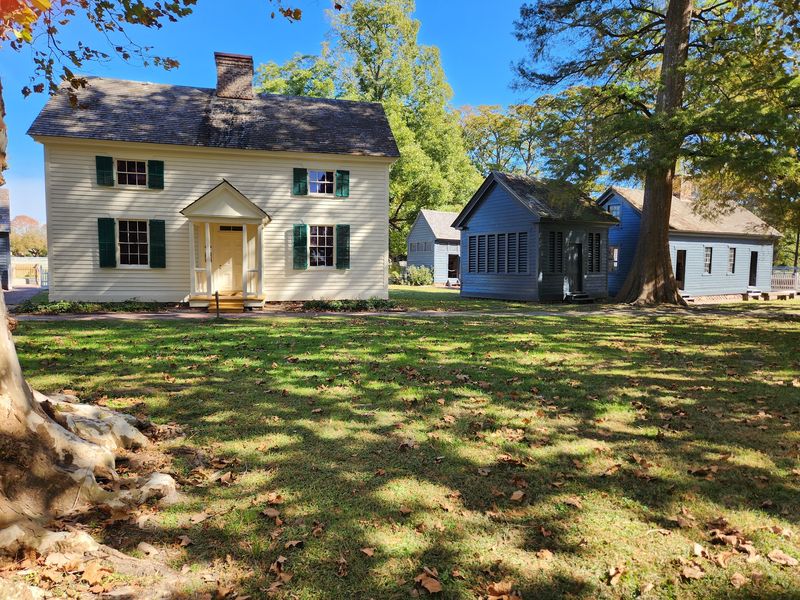
Over Somerset Place’s eighty-year history, more than 861 enslaved people lived and labored here. That number is not an abstraction once you step inside the reconstructed dwellings built to represent their homes.
One-room and four-room houses stand near the working buildings, researched carefully and deliberately unglamorous. There is no softening of what you see.
I walked from the main house to these dwellings in under two minutes, which is exactly the point. The physical closeness of wealth and bondage is impossible to miss when you cover the distance on foot.
Families lived in these spaces, raised children, cooked, rested, and returned to fields and sawmills before dawn. Twenty-six such houses once stood on the estate.
The site’s interpretation puts these lives at the center rather than treating them as a footnote, and I appreciated that enormously. Tours cover work, food, health, family separation, and resistance with real specificity.
Bring patience and an open mind here. This part of the visit is not comfortable, and it should not be, but it is the reason Somerset Place feels genuinely important rather than merely scenic or picturesque.
A Rare Plantation Hospital, Rebuilt
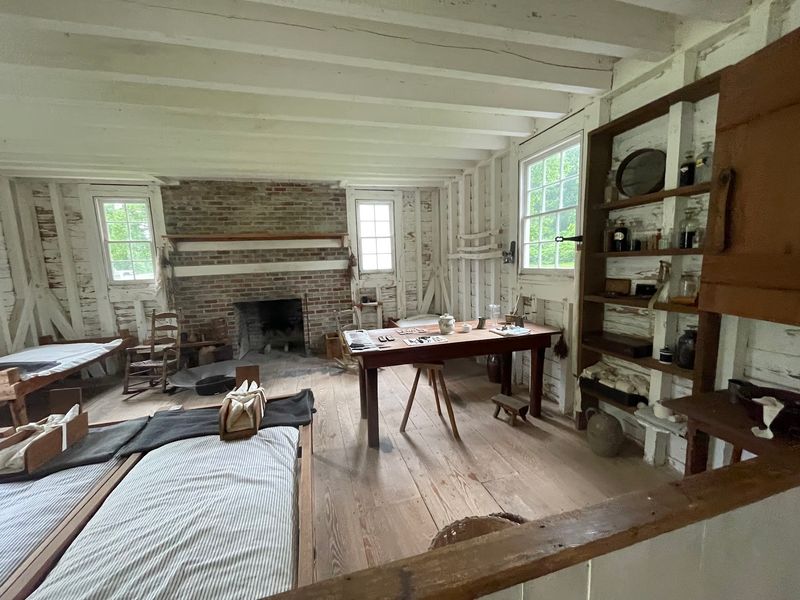
Of all the reconstructions on the grounds, the plantation hospital caught me off guard. I had visited other historic sites before and never seen one interpreted this way.
Illness was a constant on a swampy estate of this size. Malaria, injuries from sawmill work, childbirth, and exhaustion all needed somewhere to go.
The rebuilt hospital gives visitors a window into 19th-century medical practice, which was often a mix of genuine care, harsh remedies, and economic calculation. Keeping workers alive was tied directly to the plantation’s profits, and the building quietly reflects that uncomfortable logic.
Alongside it, the reconstructed Overseer’s House explains the chain of command that ran daily operations. Together the two structures fill in gaps the original seven cannot.
I found myself asking more questions here than anywhere else on the site, and the staff had answers. That is one more reason to take the guided tour rather than reading signs alone.
Somerset Place produced rice, corn, oats, wheat, beans, peas, and flax, plus huge volumes of lumber. Understanding the human cost of that output really requires seeing where the sick and injured were sent.
Lake Phelps, the Reason Any of It Existed
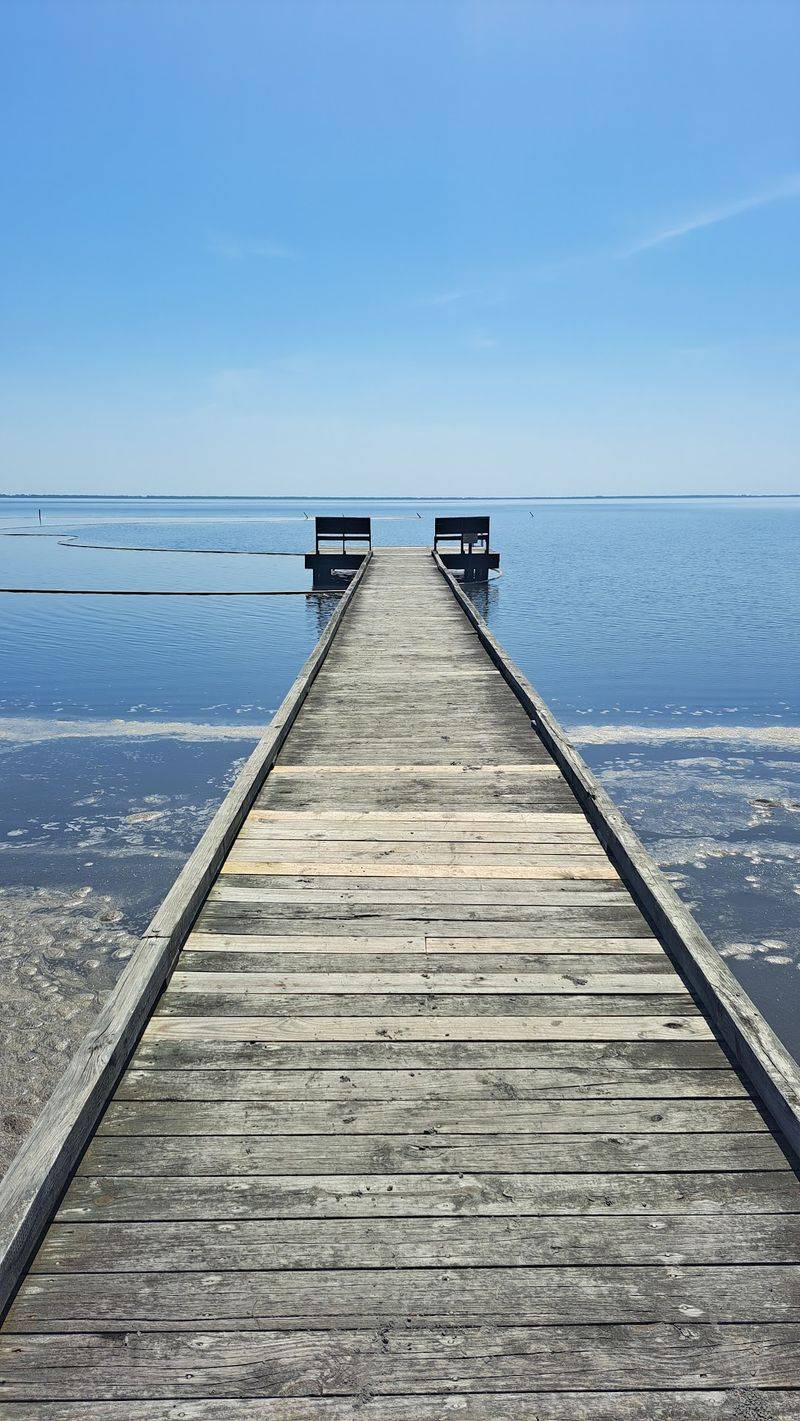
Follow the path toward the water and the whole estate suddenly makes sense. North Carolina’s Lake Phelps is enormous, still, and almost eerily peaceful, and it was the engine behind everything Somerset Place ever did.
Canals dug by enslaved laborers drained the surrounding swamp into workable fields. That work was brutal and it reshaped the land permanently.
There are benches along the shoreline where I sat far longer than planned, watching light move across the surface. Swimming is not permitted, but the view alone earns the walk.
Massive sycamores and bald cypresses grow near the water, some of them genuinely humbling in size. Several visitors come mostly for the trees, and I understand why.
The trail also connects to Pettigrew State Park at the back of the property, so you can stretch a one-hour history visit into a half-day outing with a proper woodsy walk. Bring bug spray in warmer months and sturdy shoes after rain.
Sitting there, it was easy to forget the lake was once ringed with sawmills and shouted orders. The contrast between then and now is the strangest souvenir I took home.
Planning Your Own Visit Without Rushing It
Practical stuff first, because it genuinely improves the day. Somerset Place is open Tuesday through Saturday from 9 AM to 5 PM and closed Sunday and Monday, so plan around that before driving out.
Admission to the grounds is free. Guided tours carry only a small fee and are absolutely worth it.
I met visitors who wandered independently and enjoyed it, and others who said the tour completely changed their understanding of the site. My vote goes to the tour, because the staff here know the research cold and answer questions with real depth.
Two hours is a comfortable minimum, and three lets you add the lake trail. Buildings are small and doorways narrow, though visitors with mobility needs can still see interiors and hear guides from the entrances.
Somerset Place sits quietly in the landscape, unhurried and unpolished, and that is exactly its strength. It stays in your head for weeks afterward.
Give yourself time to linger, read the signs, notice the smaller details, and absorb the setting rather than rushing through just to check it off.
Address: 2572 Lake Shore Road, Creswell, North Carolina
