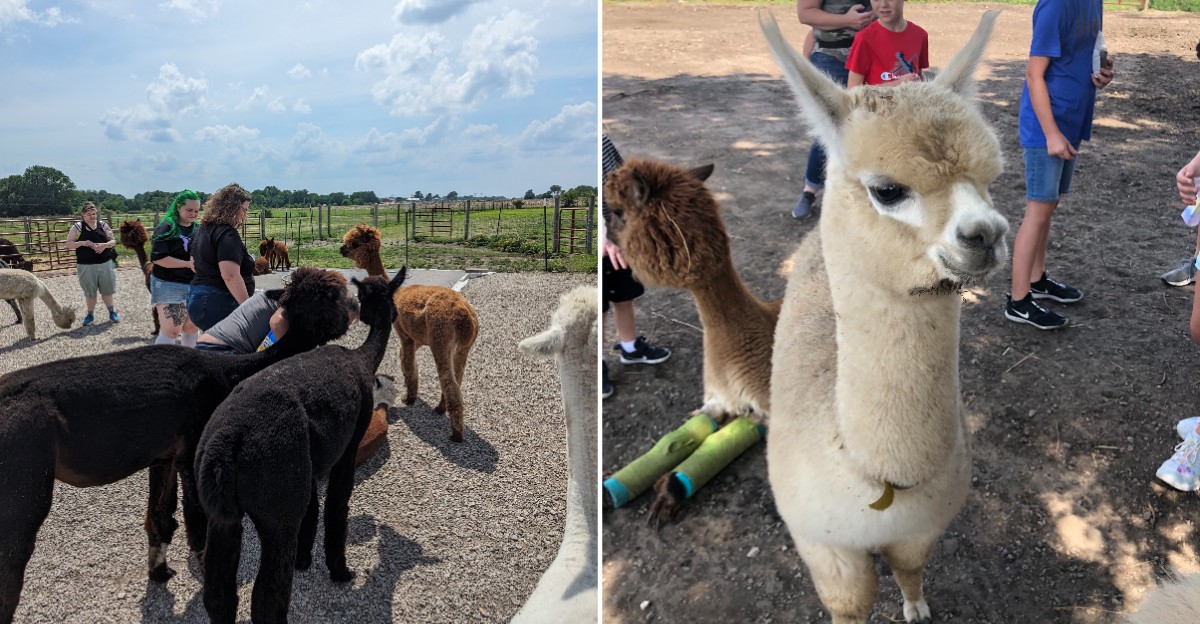
It is hard not to smile when an entire field of alpacas starts looking back at you. This Missouri farm turns that into a full visit, with guided tours that let guests feed, pet, photograph, and learn about the herd up close.
The farm is home to around sixty alpacas, each with its own personality, so the experience feels a lot more personal than simply watching animals from behind a fence.
Tours also explain how their fleece is turned into useful products, adding a little behind-the-scenes detail to the fun.
There is a small farm shop to browse afterward, and the whole outing stays relaxed and easygoing. For animal lovers, families, or anyone who thinks alpacas are impossible to resist, this Missouri stop makes a pretty convincing day trip.
The Farm That Started This Whole Idea
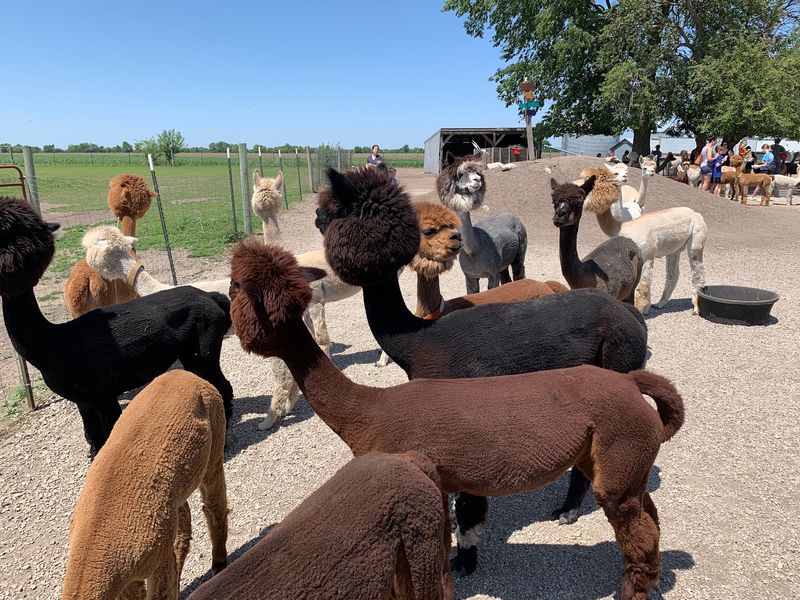
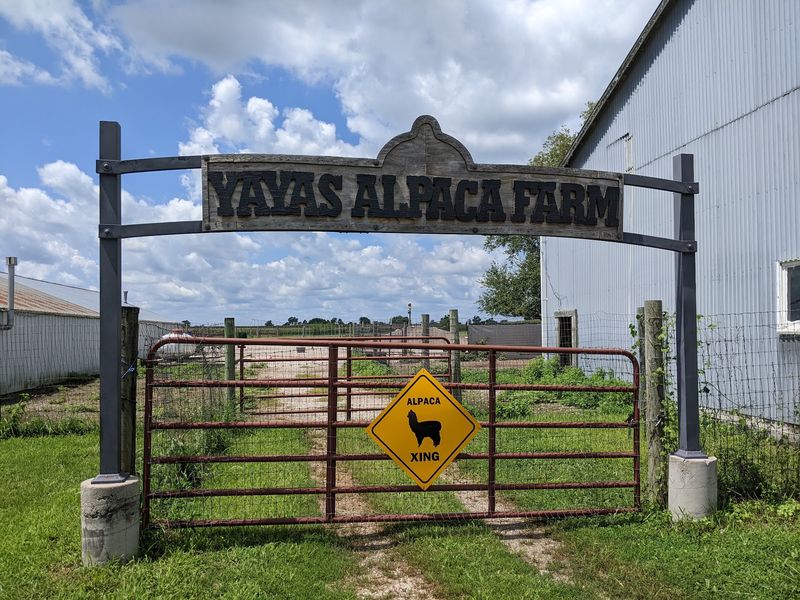
I was scrolling around looking for something that was not a museum or another shopping trip, and this place popped up almost by accident. YaYa’s Alpaca Farm is a real working farm in Missouri, which means the animals are not there as props for tourists.
The alpacas live there, they get fed there, they get sheared there, and visitors just happen to be welcome to come see how all of it works. That distinction matters more than you would think, because the whole visit feels like being let into somebody’s daily routine rather than walking through an attraction.
What surprised me most is how big the herd actually is, since more than sixty alpacas is a genuinely large group of animals to be standing near at one time. You are not looking at two or three animals in a pen and calling it a day.
The farm sits in the western part of the state, out where the land opens up and the roads get quiet, and that setting is a big part of the appeal. If you have ever wanted to see what a real fiber farm looks like without pretending to be an expert, this is about as approachable as it gets anywhere around here.
How To Actually Find The Place
Getting there is honestly the easy part, which is nice because I know how you feel about complicated directions. The address is 30200 E. 275th St., Garden City, MO 64747, and once you plug that in, the drive is mostly wide open country roads with very little traffic to worry about.
It sits a short drive south of the Kansas City area, so you can make it a half day trip without feeling like you committed your whole weekend to it.
I would say plan for the drive itself to be part of the fun, because western Missouri out that way has that rolling farmland look where you pass barns and grain bins and not much else. Cell service can get spotty on rural routes like that, so pulling up your directions before you leave town is just smart.
Once you turn off the main road, the gravel and the fencing make it pretty obvious you have arrived in farm territory. Wear shoes you do not mind getting a little dusty, because you are going to be walking on real ground rather than pavement.
Bring water too, especially in warmer months when the sun sits right on those open fields.
Sixty Plus Fluffy Neighbors In One Pasture
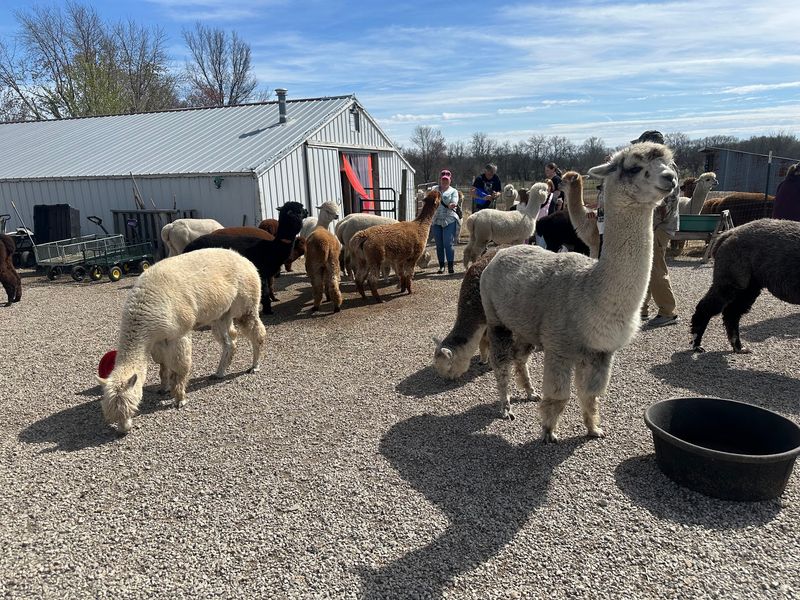
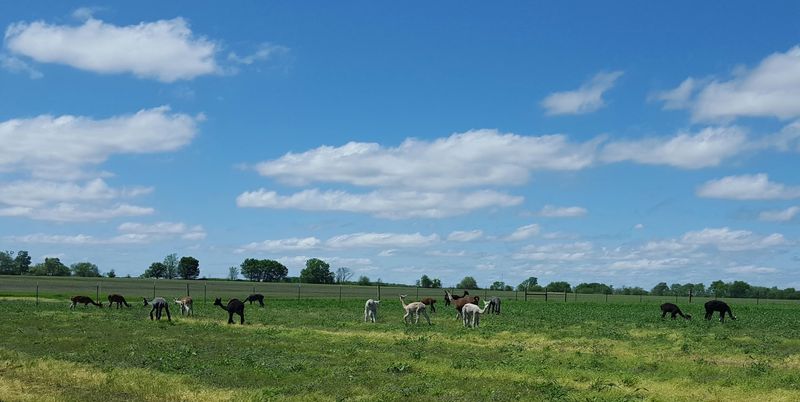
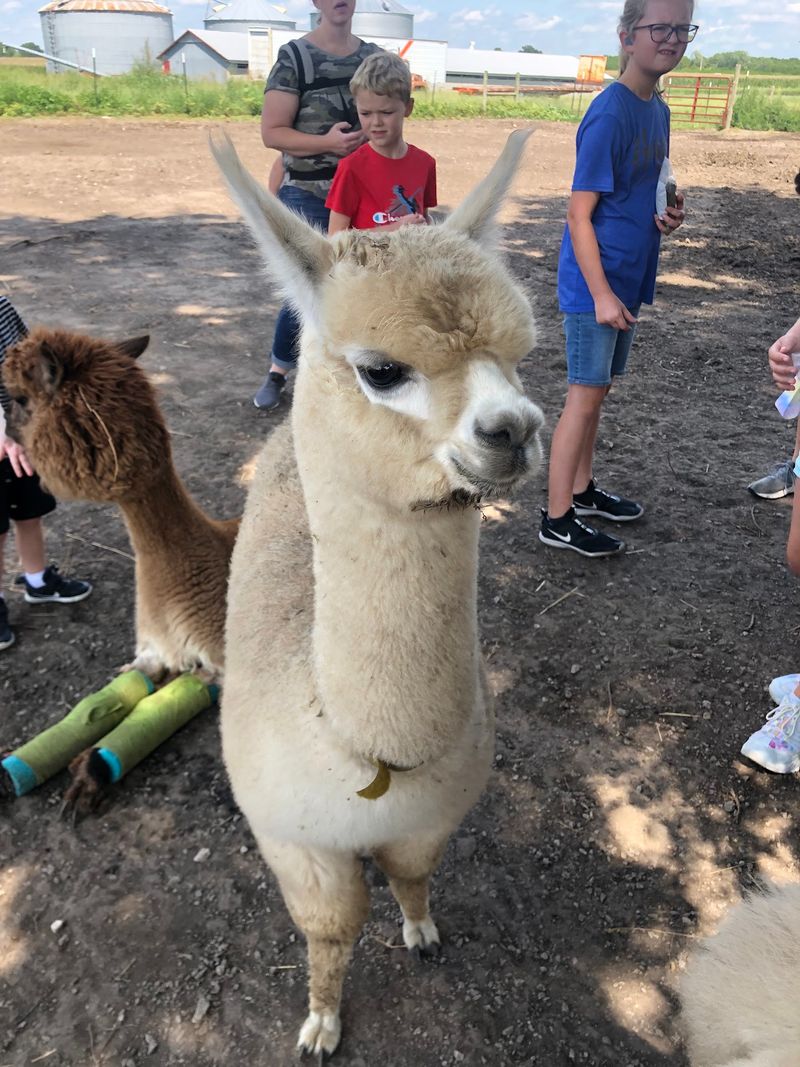
Picture more than sixty alpacas all turning to look at you at the same time, ears up, faces tilted, completely unbothered. That is apparently the standard greeting here, and I cannot stop thinking about how funny that must look in person.
A herd that size gives you something you do not get from a petting zoo with a couple of animals, because you start noticing how differently each one behaves.
Some alpacas are bold and walk right up to the fence, while others hang back near the middle of the group and watch everything from a safe distance. The farm says each animal has its own personality, and with a herd that large, you can actually sit and observe those differences instead of taking their word for it.
They come in different colors too, from creamy white to deep brown to almost black, which makes the pasture look like somebody scattered a bag of fluffy marbles across the grass.
Alpacas are herd animals by nature and genuinely do not like being alone, so a big group like this is closer to how they would live naturally. Watching them move together, all kind of drifting in the same direction, is weirdly relaxing in a way I did not expect.
Feeding Them Right Out Of Your Hand
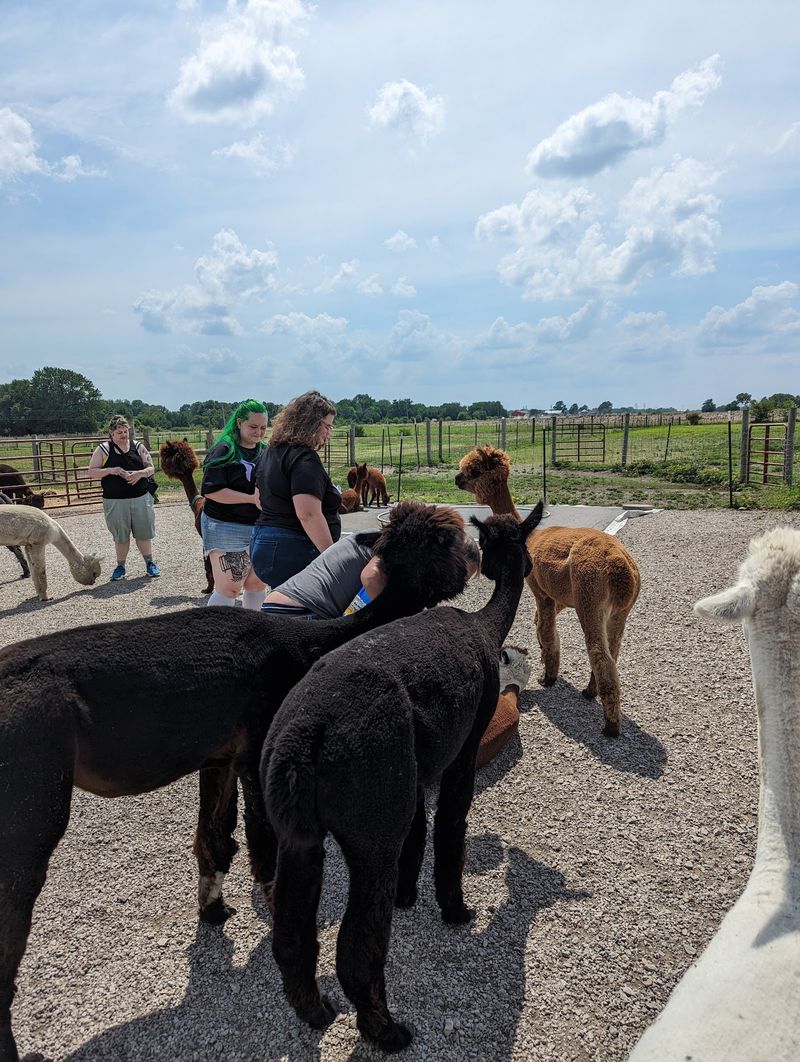
Here is the part that sold me completely: during the guided tour, you get to feed the alpacas by hand. Not through a machine, not from across a fence line, but actually holding food out while they come over and take it.
Alpacas do not have top front teeth, which means the whole experience is more of a soft nuzzle than anything sharp or startling.
You also get to pet their fleece, and everybody who talks about alpacas mentions this because the texture really is different from sheep wool. It is denser and smoother, almost like touching a cloud that has opinions about where it wants to stand.
The guides walk you through how to approach them without spooking anyone, since alpacas are curious but also cautious animals who prefer to make the first move.
My advice would be to stay calm and let them come to you rather than reaching out too fast, because patience gets you a lot further with these animals. Keep your voice low, keep your movements slow, and you will probably end up with a few of them hovering around you the whole time.
That kind of quiet interaction is really the whole point of going.
Photos You Will Absolutely Send To Everyone
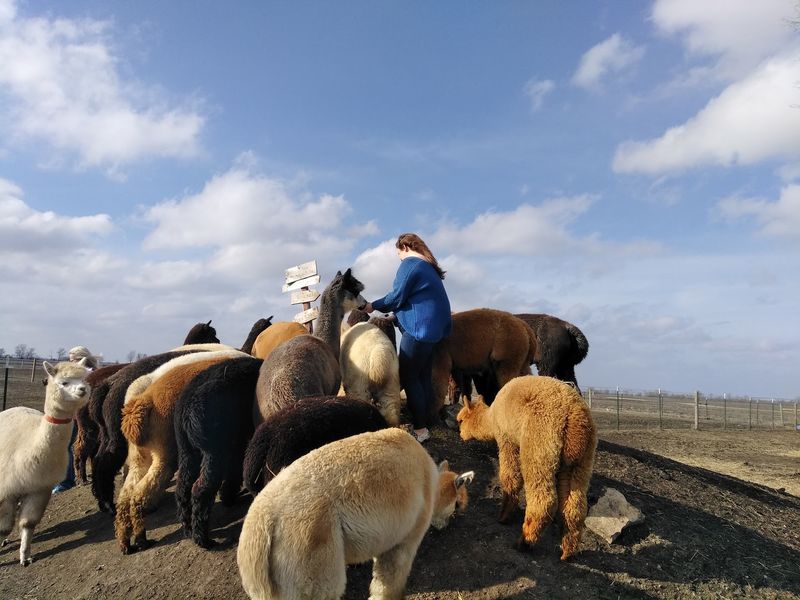
You already know I am going to take three hundred pictures, so let me just say it up front. The tours here actually encourage photos with the alpacas, which is not always the case at farms, and that changes how relaxed the whole visit feels.
Alpacas have those long eyelashes and slightly goofy expressions that make basically every single shot look intentional.
Natural light in an open pasture does most of the work for you, so you do not need fancy equipment to come away with something worth keeping. Late afternoon tends to be the softest light of the day, and the animals are usually more active when it is not blazing hot out.
Crouching down to their eye level makes a huge difference in how the photo turns out, because shooting from above flattens out all that fleece texture.
Be ready for some of them to lean in a little closer than expected, since curious animals and cameras are a funny combination. I would also suggest turning your flash off entirely, both to keep the animals comfortable and because it washes out their coloring.
Honestly, the candid shots where they are mid-chew are the ones you will keep coming back to.
The Farm Store And All That Soft Stuff
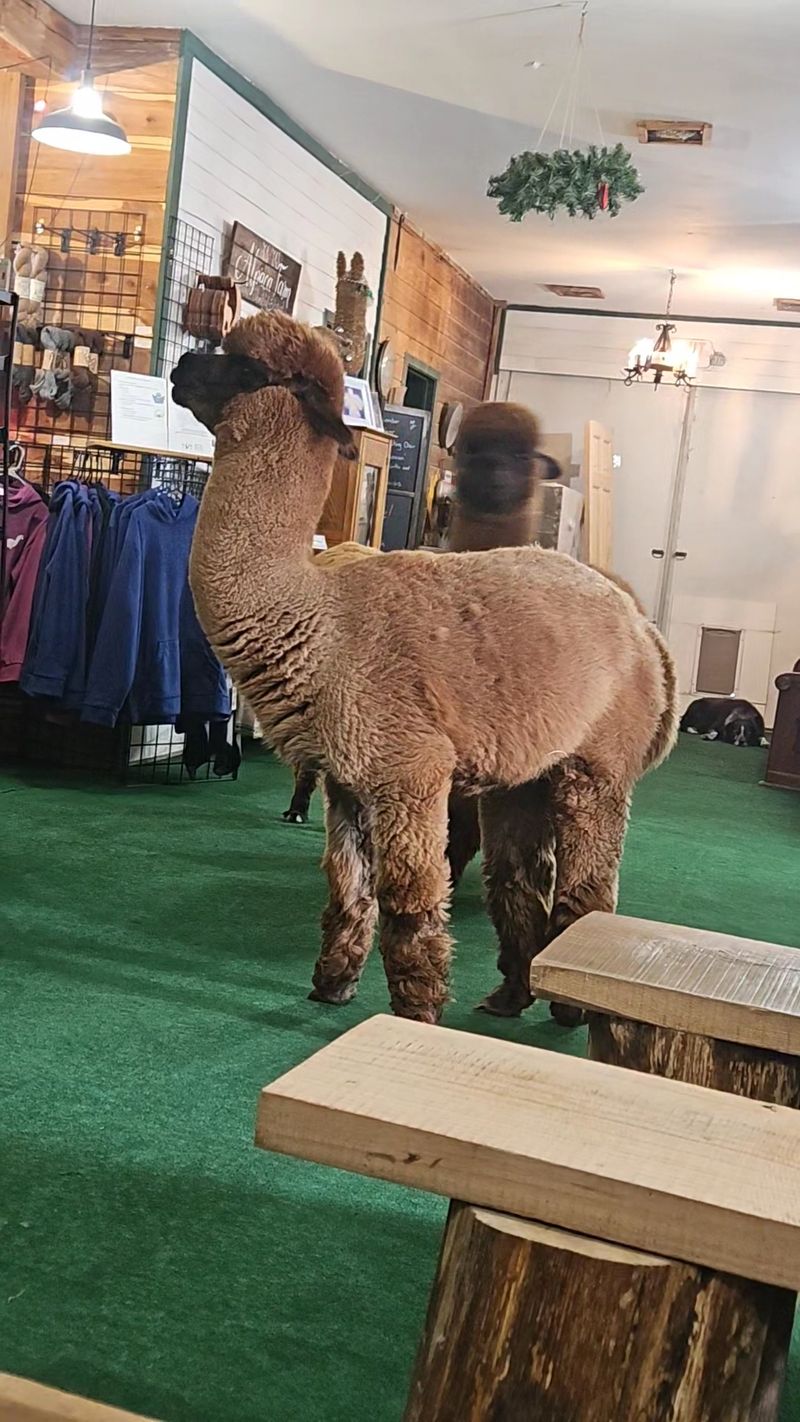
After you are done with the pasture, there is a farm store, and I have a feeling this is where our money disappears. They sell things made from alpaca fleece, including scarves, socks, hats, and stuffed animals that look like tiny versions of the real thing.
Alpaca fiber is naturally hypoallergenic because it does not contain lanolin the way sheep wool does, which is why people who cannot wear regular wool often do fine with it.
The socks are the thing I keep hearing about, since alpaca fiber holds warmth really well without feeling heavy or scratchy against your skin. If you have ever pulled on a wool sweater and immediately regretted it, this is a completely different sensation.
Sometimes the farm runs demonstrations showing how raw fleece gets cleaned, spun, and turned into finished products, which is genuinely interesting to watch.
Seeing the animal and then seeing what comes from the animal in the same afternoon connects the whole thing in a way a store shelf never could. I would grab something small even if you are not a shopper, just because it is a decent souvenir that you will actually use.
Cold Missouri winters make those socks a pretty practical purchase.
Booking Ahead Is Not Optional
Quick heads up before you get too excited and just drive out there. You have to book a tour in advance, and you can do it online, but showing up unannounced is not going to work at a place like this.
The tours run about an hour and a half, usually a couple of times a day, six days a week, which keeps the groups small enough that everybody actually gets time with the animals.
That scheduling setup exists for a reason, since a working farm has feeding, shearing, and animal care happening on its own timeline. Booking ahead also means the guides know how many people to expect and can plan the whole walk-through accordingly.
Weekend slots tend to fill up faster, so if your schedule is flexible, a weekday visit might get you a smaller group and more one-on-one time.
I would check the farm’s website before locking in travel plans, because hours and availability on farms shift with the seasons and the animals’ needs. Give yourself a buffer on the drive too, since arriving late to a timed tour is nobody’s idea of a good start.
Plan it once, plan it right, and the rest takes care of itself.
Why This One Sticks With You
Some trips you forget about in a week, and some you keep bringing up at dinner for years. My hunch is that this one lands in the second category, mostly because it asks you to slow way down instead of racing through a checklist.
There is something about standing in a quiet field with a bunch of calm animals that resets your brain a little.
Alpacas do not bark, they do not charge at you, and they make these soft humming sounds when they are content, which apparently is most of the time. That soundtrack alone is worth the drive out there.
You come away having learned something real about fiber animals, having touched fleece that feels like nothing else, and having spent a couple of hours without looking at your phone constantly.
Missouri has plenty of well-known stops, but a working alpaca farm you can walk through with a guide is a different kind of day out entirely. Bring a friend, bring your camera, bring some patience for the shy ones in the back of the herd.
Then go home with warm socks and a genuinely good story to tell.
