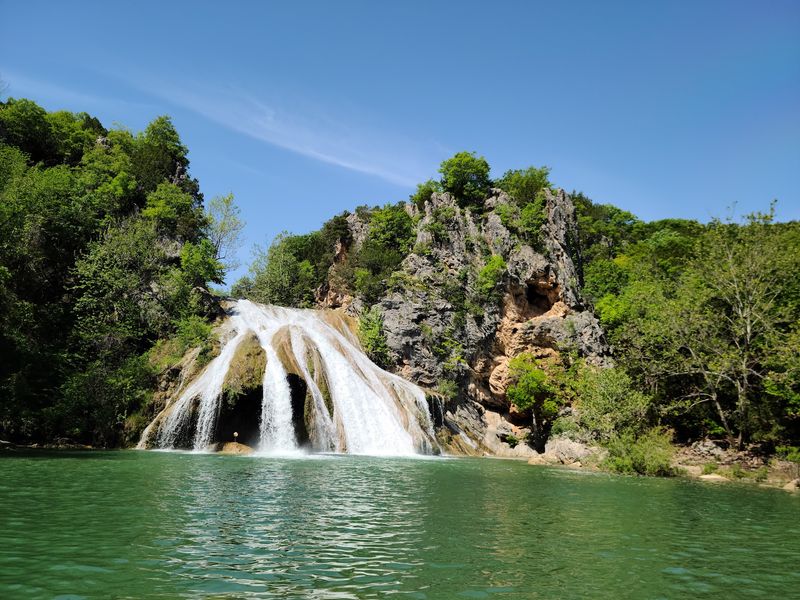
I only planned to stop for gas and a snack somewhere in southern Oklahoma, nothing fancy. Then a curve in the road showed me rugged hills, a roaring sheet of water, and an old stone building clinging to the rocks above a creek.
It felt like finding a secret room in a house I thought I knew by heart. If you have ever zipped past those exits without a second look, here is why you might want to slow down next time.
A Mountain Escape Right Off the Interstate
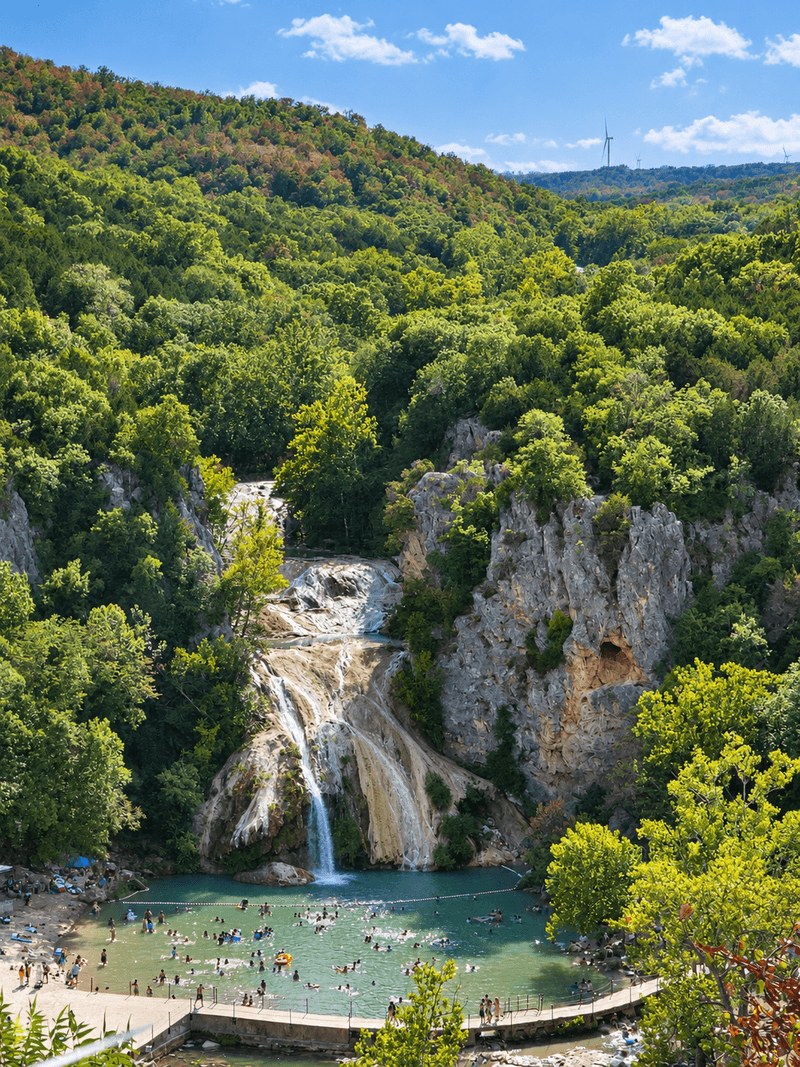
Picture a stretch of highway where the land suddenly buckles into rocky ridges. That is the moment travelers heading south through Oklahoma enter the Arbuckle Mountains, and tucked into those hills sits Turner Falls Park.
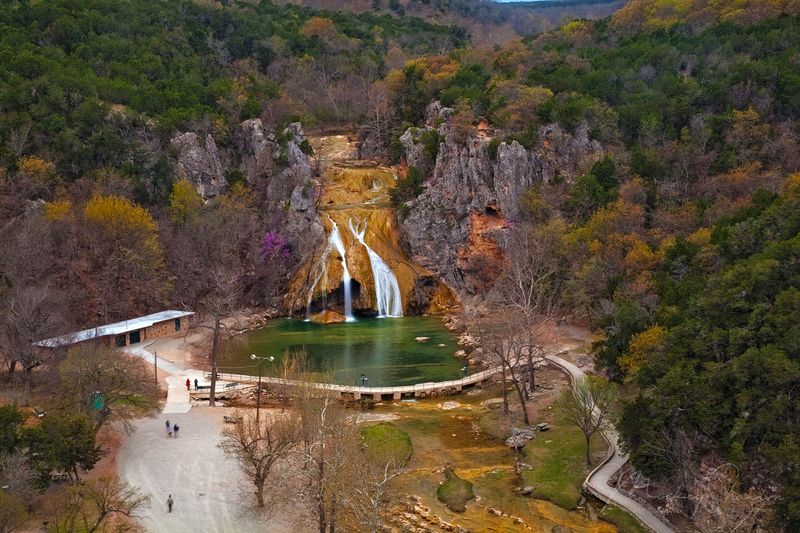
The headline act is a 77-foot waterfall, often called one of the tallest in the state. Honey Creek, fed by natural springs, spills over the ledge and lands in a wide pool before winding through the canyon.
Above it all, a quirky stone castle peeks out from the hillside like something borrowed from a storybook.
The park covers roughly 1,500 acres, which surprises plenty of first-timers. Beyond the falls, you will find swimming holes, natural rock slides, hiking trails, caves, cabins, and campsites.
A zipline even sails over parts of the park.
Families from Oklahoma City, Ardmore, and the Dallas area treat it as an easy day trip. Some visitors say they stumbled onto it by accident while driving between states, then lingered far longer than planned.
That reaction is common here.
Think of it as a place where natural beauty and odd local history share one canyon. Each part deserves its own look, so the sections below take them one at a time, starting with the ground beneath your feet.
Ancient Hills With Billion-Year Roots
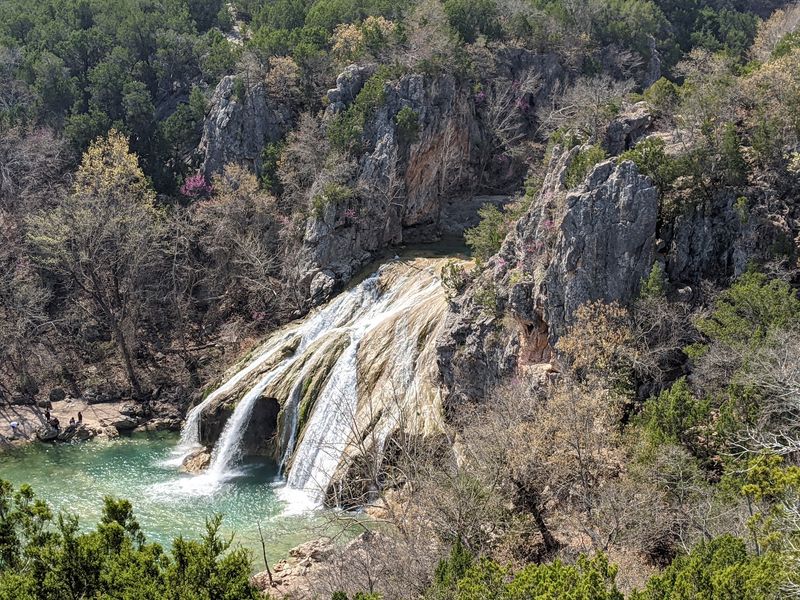
Geologists get excited about the Arbuckles, and for good reason. These worn, rolling hills rank among the oldest known formations in the United States, with core granite and gneiss rocks dating back roughly 1.3 to 1.4 billion years.
Time has sanded them down from towering peaks into gentle ridges and deep valleys. What remains is sometimes described as a geological window into the planet’s past.
Drive the stretch near the park and you can spot tilted rock layers jutting from the road cuts, almost like pages of a giant book flipped on their side.
Inside the park, that ancient stone shapes nearly everything. It forms the cliff the waterfall pours over, the slick slides kids zoom down, and the hollow caves tucked along the creek.
Even the castle was built from native stone quarried nearby.
Kids who love rocks will have a field day. Parents may find themselves pointing out swirls and stripes in the cliffs and wondering out loud how long they took to form.
Fun fact for the car ride: these hills were already old long before anything walked on land. Not many weekend outings come with a backstory that stretches back over a billion years.
Chickasaw Land and the Turner Family Story
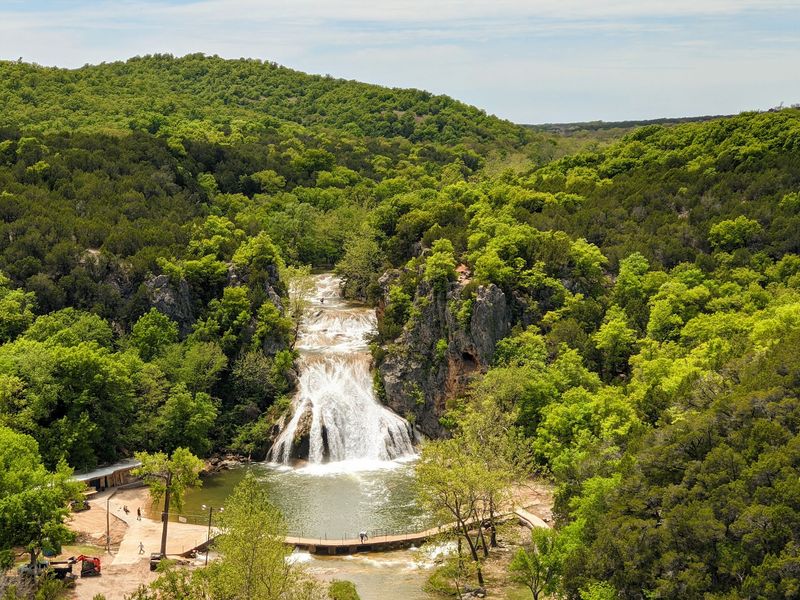
Long before ticket booths and parking levels, this canyon belonged to the Chickasaw Nation. The land was part of Pickens County within the Chickasaw Nation, and its story is tied closely to Chickasaw families who lived here.
In 1878, a Scottish immigrant farmer named Mazeppa Thomas Turner came upon the falls. He had settled in the area with his Chickasaw wife, Laura Johnson, on her tribal land allotment.
The waterfall eventually took on his family name, and it has carried it ever since.
People were gathering here for recreation even earlier, with use dating back before 1868. That history is why Turner Falls is often called the oldest park in Oklahoma.
The City of Davis acquired the park in 1919, and it has managed the property since 1978. So when you pay at the gate, you are supporting a city-run park rather than a big corporate resort.
For travelers who enjoy heritage stops, pairing a visit here with time at nearby Chickasaw cultural sites makes for a richer weekend. The Chickasaw story is living culture in this part of the state, and the canyon is one small chapter of it worth honoring.
The 77-Foot Falls Up Close
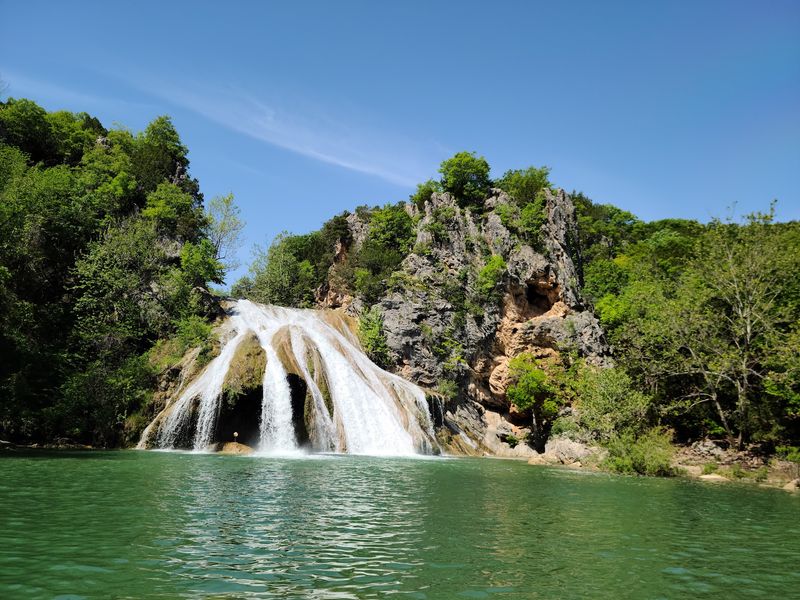
Sound arrives first. Before you even round the bend, you can hear Honey Creek thundering over the edge, a steady roar that makes conversation a little louder.
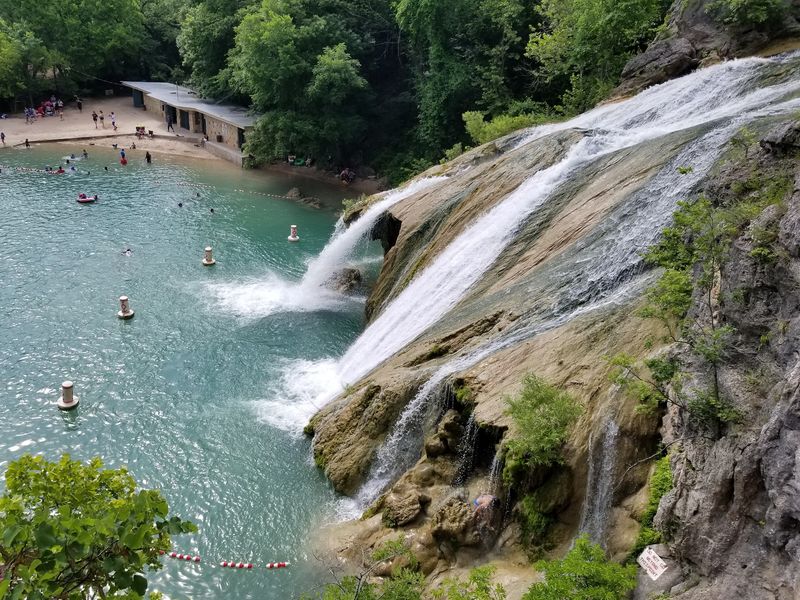
Then the falls come into view, dropping 77 feet down a mossy rock face into a broad pool. On a sunny afternoon, the spray catches the light and the water below can glow in shades of green and blue.
Visitors who came during the first week of July describe plenty of water flowing, which helps the falls look their fullest.
One change longtime fans mention is that swimming right around the base of the falls is now restricted. You can still admire it from nearby and swim in the surrounding pools, but do not plan on paddling right under the curtain of water.
Photographers have options. The falls make a natural backdrop for family pictures, and early mornings tend to bring softer light and fewer people in the frame.
For a broader look, the Turner Falls Overlook along the highway gives a sweeping view of the falls, the mountain, and the canyon. Guests often call that view one of the most beautiful parts of the whole trip, and it costs nothing extra to enjoy.
Collings Castle, a Professor’s Stone Retreat
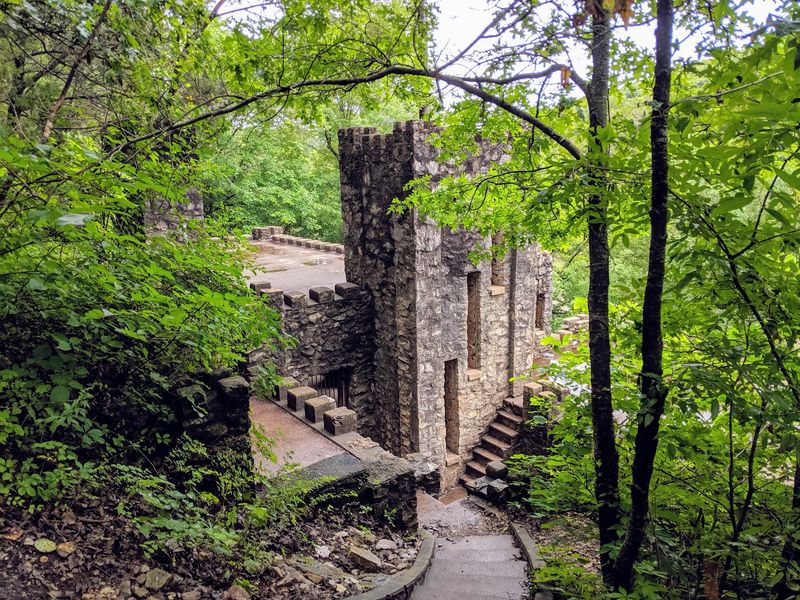
Here is the twist most people do not expect: the castle is not medieval at all. Dr. Ellsworth Collings, a University of Oklahoma professor, built it in the 1930s as a private summer home.
He chose an Old English, medieval-inspired style, using native brick and stone quarried nearby. The result feels like a puzzle box.
Rooms twist into one another in a maze-like layout, ceilings sit low, and slim windows frame little slices of the canyon below.
Today, visitors can wander through the ruins and climb between its levels. Families mention spotting stone benches and small rooms, then imagining what the place looked like when it was new.
Kids tend to treat it like a real-life fort, darting from doorway to doorway.
Reaching it takes a short uphill hike, and the footing can be uneven. Sturdy shoes make the trip far more comfortable than flip-flops.
Guests say staff can sometimes be seen tidying the castle grounds, which helps keep it pleasant to explore. Perched high above the falls, it offers one of the more memorable vantage points in the park and gives the whole canyon a touch of mystery.
Swimming Holes, Rock Slides, and the Blue Hole
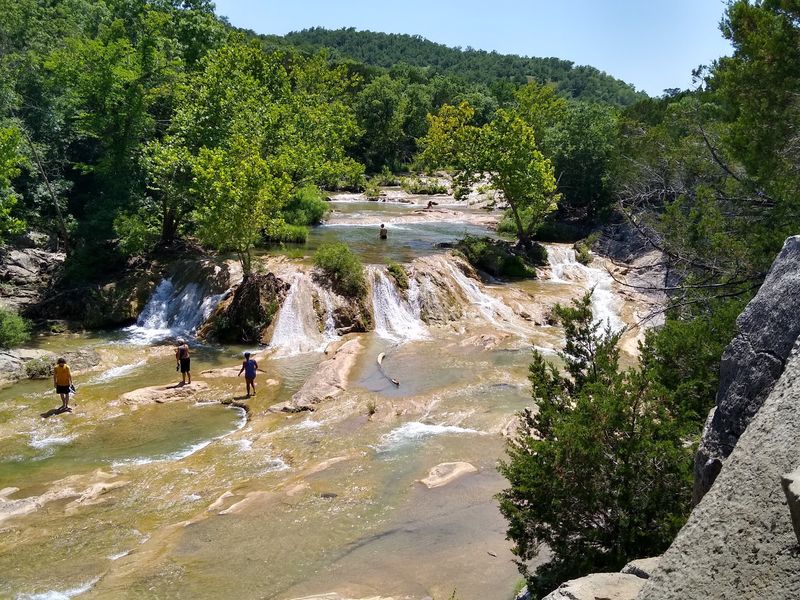
Ask any kid what they remember most, and the answer is usually the water. Honey Creek stays refreshingly cool, and on a hot Oklahoma afternoon it can feel like nature’s air conditioning.
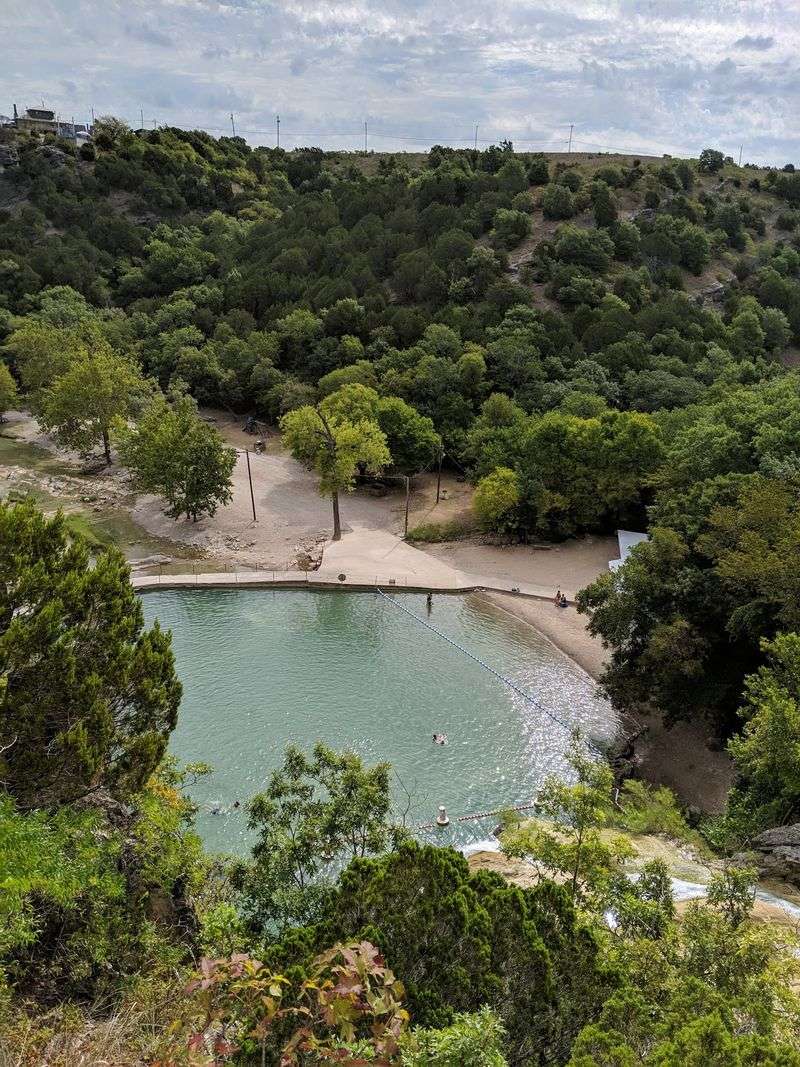
The Blue Hole is the best-known swimming area, but plenty of families wander up and down the creek hunting for their own quieter pools. One parent described their kids having a blast discovering little dipping spots along the way.
Some visitors even find the creek water cleaner and clearer than the Blue Hole itself.
Natural rock slides, worn smooth by the current, are a favorite. There is also a diving board that regulars talk about, and lifeguards have been spotted on duty in swimming areas.
Water clarity can vary. A few guests mention murky spots or floating debris on busy days, so expectations may depend on timing and weather.
Rules matter here. Children 12 and under must wear a Coast Guard certified flotation device in the water.
The rocks are famously slippery, so water shoes are strongly recommended. Some swimmers also bring nose clips, a smart move with fresh water.
A park store sells life vests and water shoes if you forget them, though prices may be higher than at home.
Three Caves Along the Creek
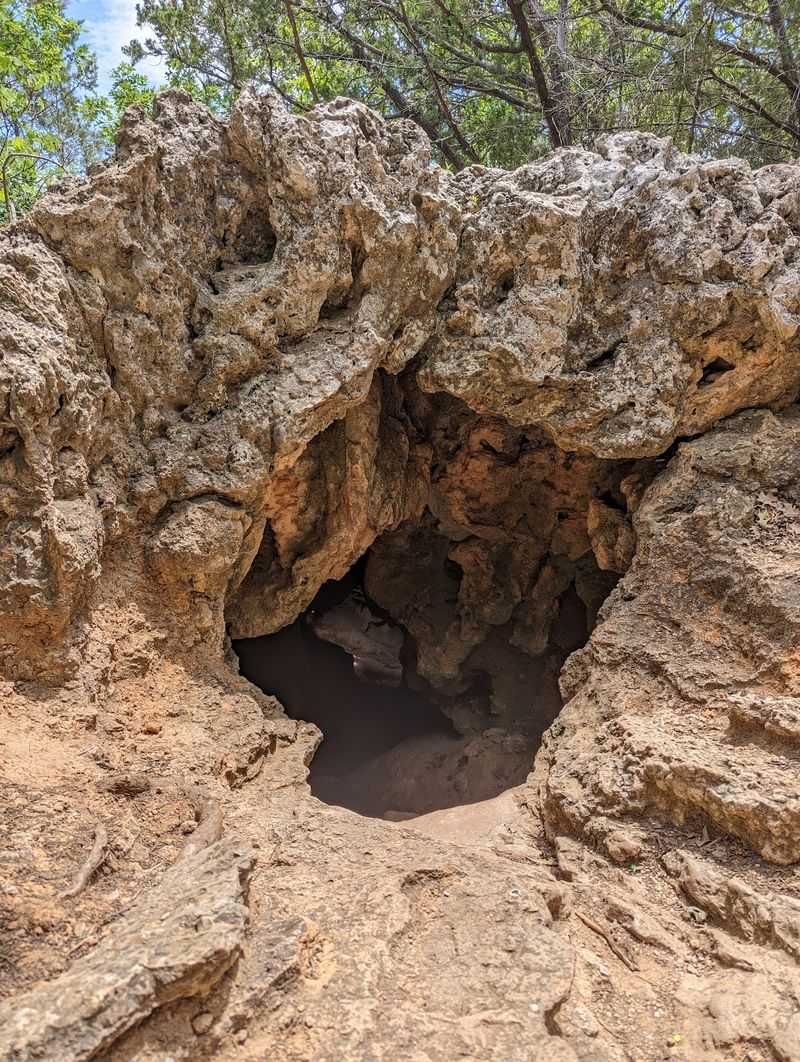
Flashlights are not a bad idea for this part. The park holds three natural caves, adding a little spelunking spirit to an ordinary swim day.
They are not clearly marked, which some guests find charming and others find frustrating. One family said that even without signs, the caves were easy enough to locate and gave the trip an extra spark of adventure.
Their kids apparently loved them as much as the castle.
Other visitors, especially those searching for Robbers Cave, reported a harder time finding the right path. A downloaded map or a quick question to staff can save some wandering.
A handy tip from regulars: parking in Level 2, Lot A, lets you climb down toward the river and waterfall while passing right through the caves along the way. It turns the walk into part of the fun instead of just a trek.
The caves are modest, not giant caverns with lighted tours. Think cozy rock hollows and short passages, perfect for curious kids and grown-ups who still enjoy poking around.
Expect cool air, rough floors, and plenty of scrambling, so leave the sandals in the car and wear something with grip.
Trails, Wildlife, and Winter Trout
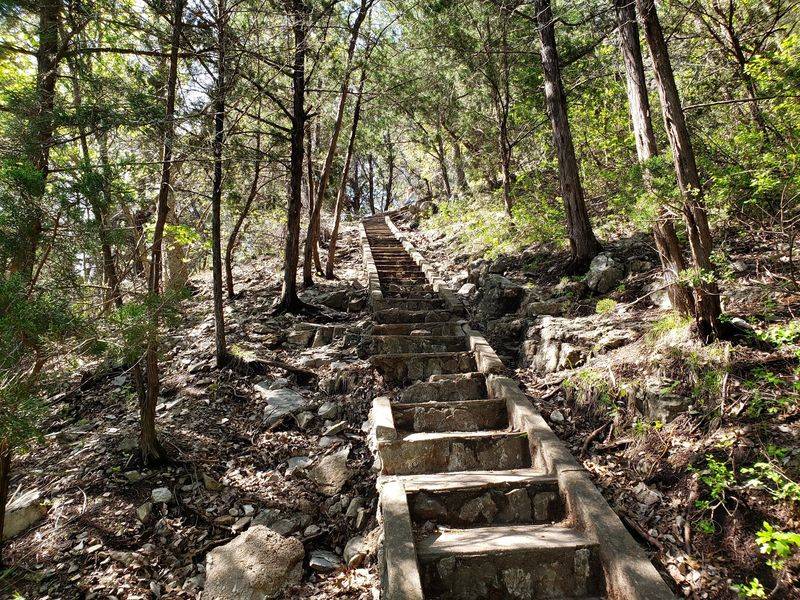
Hiking ranks as one of the most talked-about activities here, maybe even ahead of the falls themselves. Miles of trails wind through the Arbuckle hills, up rocky slopes and along the creek.
Wildlife sightings add to the fun. Deer and wild turkeys often wander into view, especially in quieter morning hours.
Bring patience and a soft voice, and you may get a close look.
Fair warning: trail markings can be thin. Some campers mentioned trouble finding specific paths, so a phone map helps.
The ground is rocky and slick in many spots, which can be tough for anyone with balance issues, walking difficulties, or a pregnancy. One visitor also noticed a copperhead in the stream, a reminder to watch where you step.
Once the weather cools, the creek takes on a new role. From November through March, Honey Creek becomes a trout fishing spot.
Anglers need a valid Oklahoma fishing license plus a park permit.
Seasons reshape the scenery, too. Spring brings wildflowers, fall adds color to the hills, and winter offers a peaceful, uncrowded landscape well suited to exploring the castle and trails without summer heat beating down.
The 777 Zip Over the Canyon
Thrill seekers, this one is for you. The 777 Zip sends riders sailing 777 feet across part of the park, with aerial views of the waterfall and surrounding mountains.
It is popular, drawing plenty of chatter from visitors. Still, set your expectations correctly.
One guest laughed that it was not like zip lines elsewhere, lasting only about a minute. Think quick rush and great view rather than a long canopy tour.
The biggest tip involves money. A family who camped over spring break said the zipline was cash only, and they could not ride after several tries because they did not have bills on hand.
They also found the nearest ATM a couple of towns away. Bring cash before you arrive.
Hours can be unpredictable too. The same family noted that the small store running the zipline was not open during posted hours on some days.
Calling ahead at 580-369-2988 may help you plan.
For kids old enough to ride, it can be the highlight they brag about at school. For nervous parents, watching from below with a camera works just fine.
Either way, seeing the canyon from the air is a fresh perspective.
Cabins, Covered Wagons, and Campsites
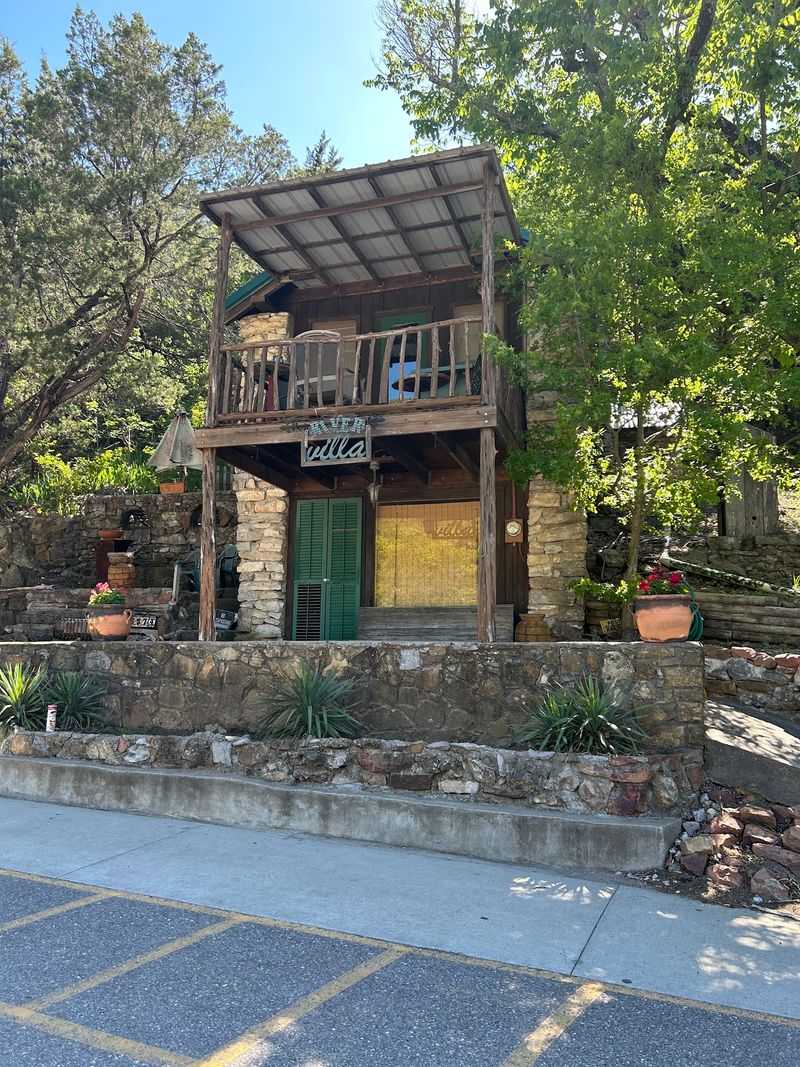
Staying overnight changes the whole feel of the park. Once day crowds thin out, the canyon gets quieter and the stars come out over the hills.
Lodging choices are surprisingly varied. You can pick tent or RV campsites, screened shelters, cabins, covered wagons, or bunkhouses.
The covered wagons are a fun novelty for kids who want a pioneer-style night.
Experiences differ. A spring break family praised well-kept primitive camping grounds and clean, easy-to-reach restrooms and showers.
Tent sites are first-come rather than assigned, so arriving early helps grab a good spot.
Cabin guests describe tidy, well-kept units but sparse furnishings. One parent said you basically need to bring everything, including dish towels, mugs, and basic kitchen items.
Another visitor wished the grills were closer to the cabins and found the on-site store short on ice, so packing a cooler and supplies is wise.
Some campers also noticed portable toilets that could use more frequent cleaning and fewer showers than in years past. Pack a checklist, bring your own comforts, and you will likely enjoy waking up a short stroll from the creek.
A little preparation goes a long way here.
Crowds, Atmosphere, and Who Will Love It
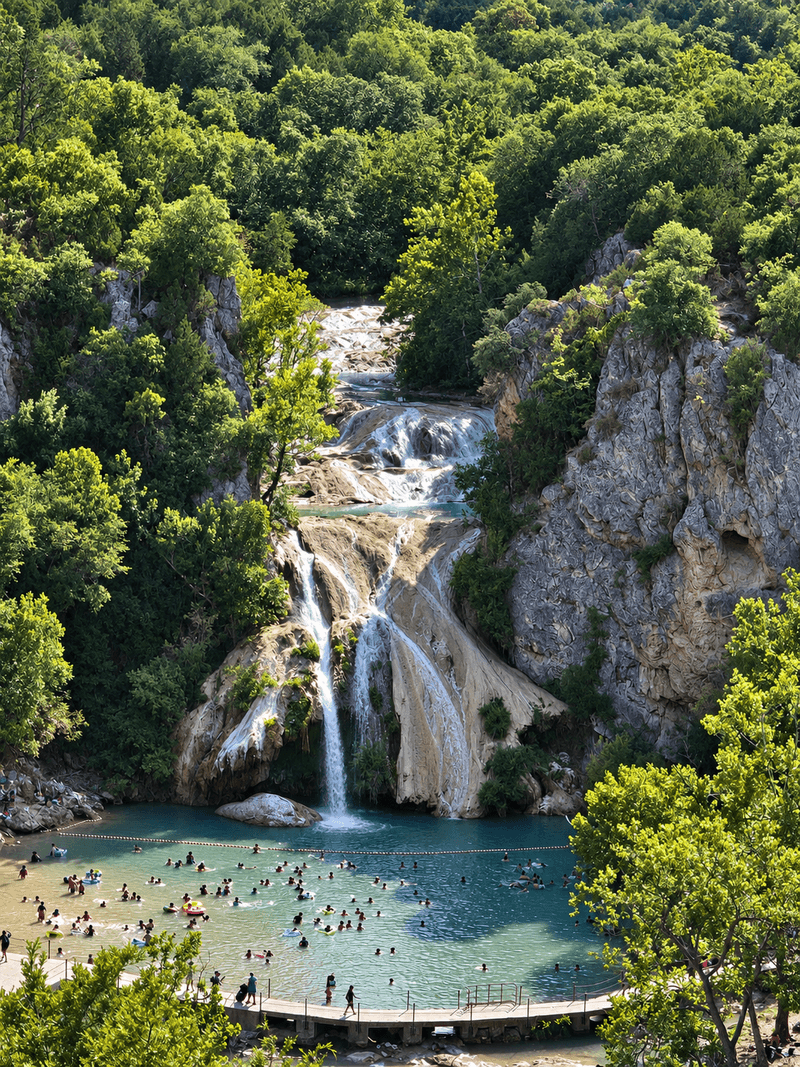
Summer Saturdays here can feel like a small town relocated to a creek bank. Crowding is one of the most common topics guests bring up, and some report long lines of traffic just getting in on peak days.
Weekdays tend to be calmer. One visitor said they would happily return on a summer weekday but found Saturday far too busy.
Off-season trips in spring or fall may offer a gentler pace.
Cleanliness gets mixed reviews. Several longtime fans mention litter in remote corners and worry the park has changed since their childhood.
Others praise tidy grounds and friendly staff, including one parking attendant who went out of his way to share scenic lookout tips with travelers passing through.
So who fits best? Families with energetic kids, groups of friends, and anyone who loves splashing in creeks and scrambling over rocks.
Even one self-described non-outdoorsy guest admitted she had a blast and wants to return for a cabin stay.
Travelers seeking hushed solitude on a July weekend may feel overwhelmed. Pets are not allowed, so plan for them elsewhere.
Packing your own trash bag and leaving your spot cleaner than you found it helps everyone enjoy this beautiful canyon.
Admission, Parking Levels, and Hours
Money talk first, since many visitors are surprised by the total. Summer rates (May 1 through September 30) have typically run around $16 per adult on weekdays and about $20 on weekends.
Winter season, October 1 through April 30, usually costs less.
Separate rates apply for children 6 to 12, seniors 55 and up, and active military. Kids under five get in free.
Prices can change, so checking turnerfallspark.com before leaving home is smart.
Parking is tiered. Level 1, closest to the Blue Hole, falls, and castle, has run around $25 a day.
Level 2 has been about $15, and Level 3 is free. A few guests report paying closer to $20 or $30, so expect variation.
Free parking sits well away from the action, and shuttles connect areas. Campers noted long waits at Area 3, since fewer buses serve it.
Even Level 1 can involve a walk on busy days.
Summer hours generally run 7:00 AM to 10:00 PM, with shorter off-season hours. Large groups should double-check what they are paying for at the booth.
Arriving early helps beat both traffic and heat.
Getting There and a Fair Final Word
Finding the park is refreshingly simple. It sits right where I-35 meets US-77 near Davis, in south-central Oklahoma, roughly an hour and a half south of Oklahoma City and an easy reach from Ardmore or Dallas.
Before heading in, pull over at the Turner Falls Overlook along the highway for a free preview of the falls and canyon. On the way out, the Chickasaw National Recreation Area sits a short drive away, offering more trails and outdoor time.
Inside, picnic areas come with grills, and concession stands plus a trading post sell food and supplies. A packed lunch and cooler can trim costs considerably.
A quick packing list: water shoes, Coast Guard approved life jackets for kids, sunscreen, cash for the zipline, trash bags, and plenty of water for Oklahoma heat. Keep an eye on storm forecasts in spring, since weather here can turn fast.
Is it worth it? For a family that times the visit well, likely yes.
The waterfall, castle, caves, and creek add up to a day unlike anything else along the interstate. Go on a weekday, come prepared, and that exit you used to skip may become a family tradition.
