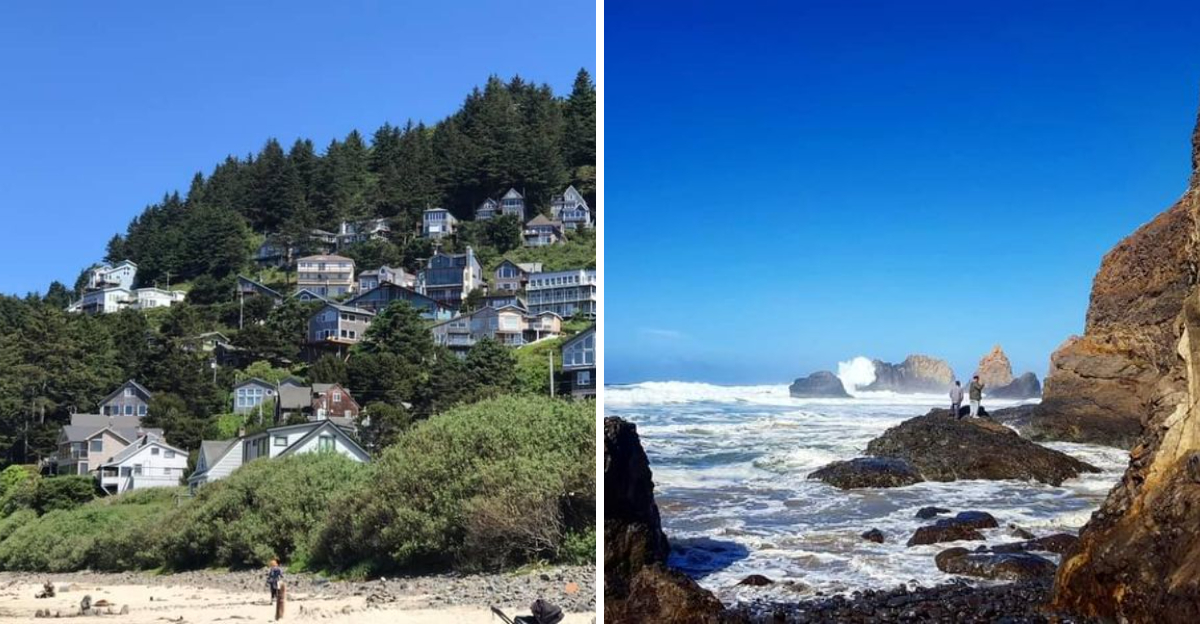
There’s something special about discovering a place that feels like it belongs to a different time. This small Oregon waterfront village has remained beautifully under the radar, tucked away from the busy tourist routes. It’s the kind of place where the pace slows down and you start to breathe deeper.
The charm is subtle, the kind that sneaks up on you. Quiet beaches, dramatic rock formations, and a sense of peace that makes you want to linger. There is a historic tunnel carved through the headland, leading to a secluded cove that feels like your own private discovery.
It’s not about the attractions, it’s about the feeling of being there.
Let the road lead you here and let the quiet settle around you. Oregon’s most enchanting waterfront village is waiting to be discovered.
The Tunnel That Leads To A Hidden Beach
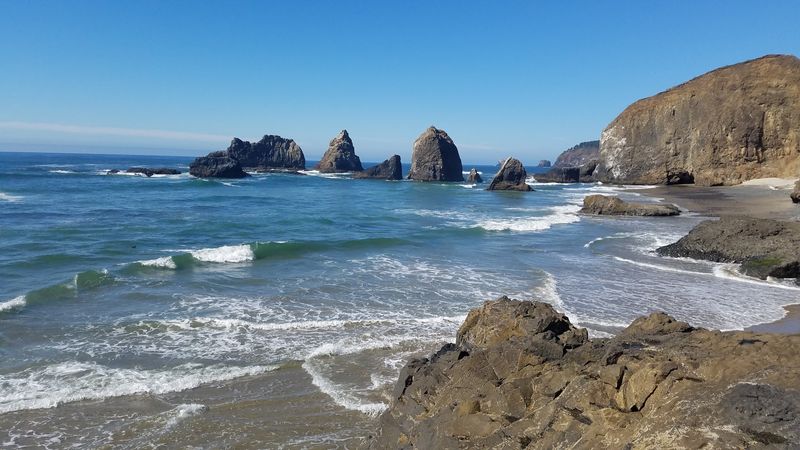
Few beach entrances come with a hand-carved shortcut through solid rock, yet Oceanside has one. At the north end of the main beach, a dim tunnel cuts through Maxwell Point and opens onto a quieter stretch of sand locals call Tunnel Beach.
The passage is short, damp, and slightly uneven, so shoes with grip help. Water drips from the ceiling in a steady rhythm.
Once through, the scenery shifts. Cliffs rise higher, driftwood piles up in tangles, and the crowd thins out to almost nobody.
Timing matters more than anything here. Check the tide chart before heading in, because high water can cover the sand on the far side and make the return trip stressful.
Dating back to the 1920s, the tunnel was reportedly blasted through the headland to give visitors access to the hidden cove, and it has been part of village lore ever since.
Three Arch Rocks Sitting Just Offshore
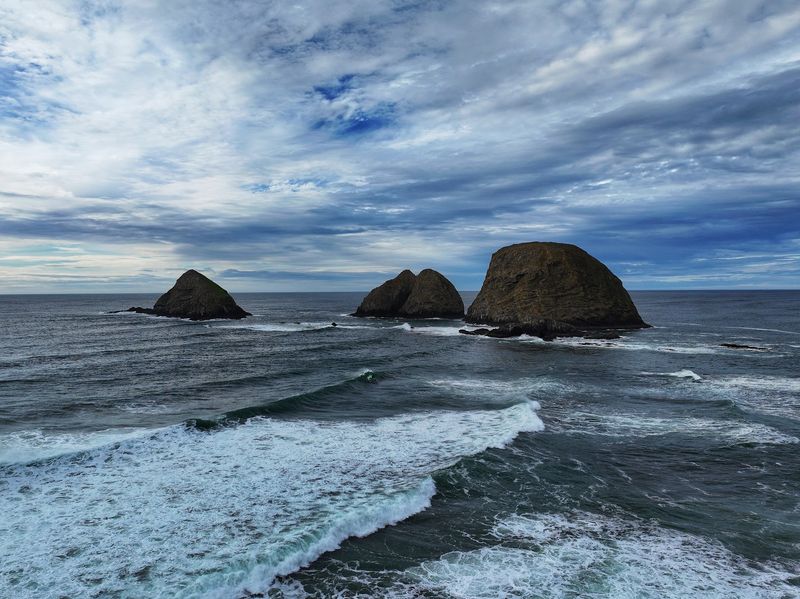
Look offshore and three hulking sea stacks stare back, each one punched through with an arch shaped by centuries of waves.
Three Arch Rocks became a national wildlife refuge in 1907, one of the first on the West Coast, and it still shelters an enormous seabird colony.
Common murres nest there by the thousands. Tufted puffins show up in spring and summer. Steller sea lions haul out on the lower ledges, and on still days their barking carries across the water to the beach.
Binoculars change the whole experience, turning distant specks into busy, squabbling neighbors. Boats are required to stay well back, and landing on the rocks is off limits, which is exactly why the wildlife thrives.
Morning light tends to be softer for photos, while late afternoon puts the arches in silhouette. Spotting a bald eagle cruising past the stacks is not unusual, and the murres react instantly with a panicked swirl.
A Village Small Enough To Walk In Fifteen Minutes
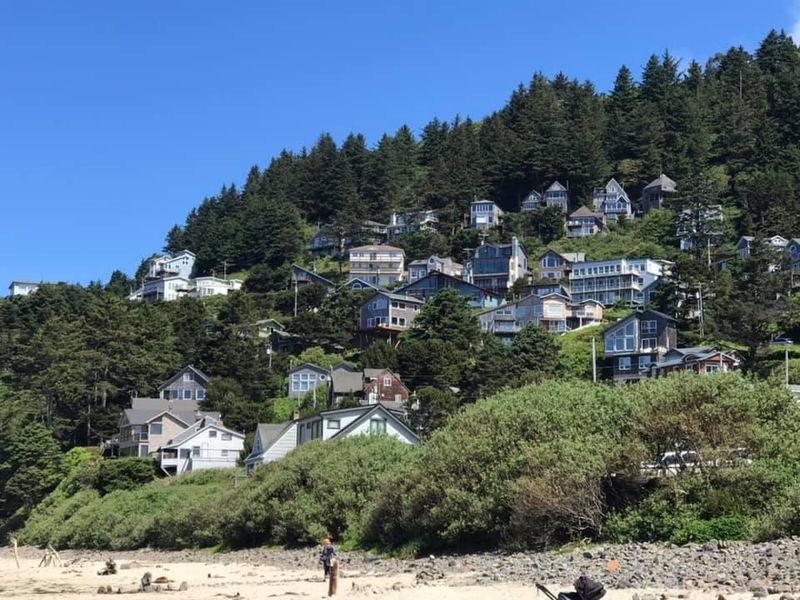
Oceanside barely registers as a town on most maps, with a population that hovers in the low hundreds. Houses cling to a steep hillside above the water, stacked at odd angles so nearly every window catches a piece of the ocean.
Streets are narrow and twisty. Parking takes patience on sunny weekends. There is no stoplight, no chain store, and no boardwalk lined with souvenir shops, which is precisely the appeal.
The community sits at the northern end of Oregon Route 131, just up the road from Netarts, tucked into a pocket of coastline that most highway travelers zip right past. Covering the whole village on foot takes maybe fifteen minutes, though the hills will remind your legs they exist.
Mailboxes, weathered shingles, and gardens full of salt-tolerant plants set the tone. Neighbors wave. Dogs supervise from porches. Many homes serve as vacation rentals now, yet the place still feels lived in rather than staged for visitors.
Come on a weekday in shoulder season and the quiet is almost startling, broken only by surf and gulls. That stillness is the whole point.
Oceanside Beach State Recreation Site
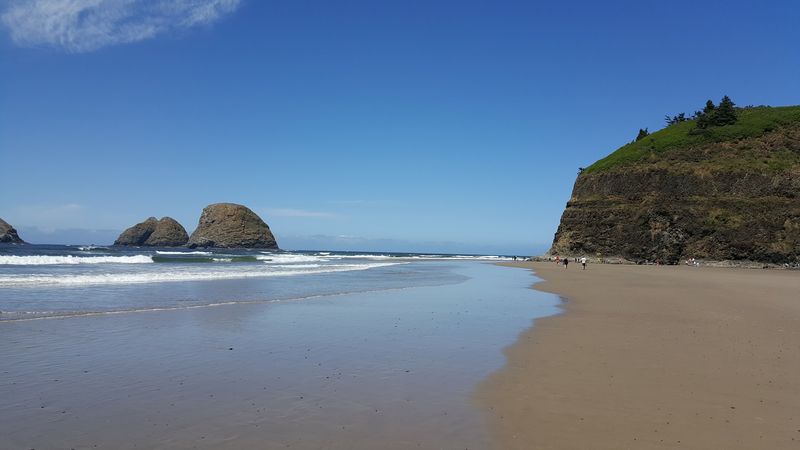
Public access could not be easier, with a parking area, restrooms, and a short ramp dropping straight onto the sand. The beach runs wide and flat at low tide, giving kids room to sprint and adults room to wander without bumping into anyone.
Driftwood logs make natural benches. Kites do well here thanks to steady wind. Sand dollars turn up after storms, usually near the tide line where the foam settles.
Dogs are welcome, and plenty of them arrive with tennis balls and zero interest in going home. Managed by Oregon State Parks, the site stays open year round and never feels overrun the way some coastal beaches do.
Layers matter more than sunscreen most days, since a bright morning can flip to wind and mist within an hour. Fires are subject to local rules, so read posted signs before building one.
Beachcombing improves dramatically in winter, when high surf rearranges everything overnight. Spend an hour barefoot at the waterline and the rest of the trip somehow slows down to match. Bring a towel. The wind dries things fast.
Big Views From Symons State Scenic Viewpoint
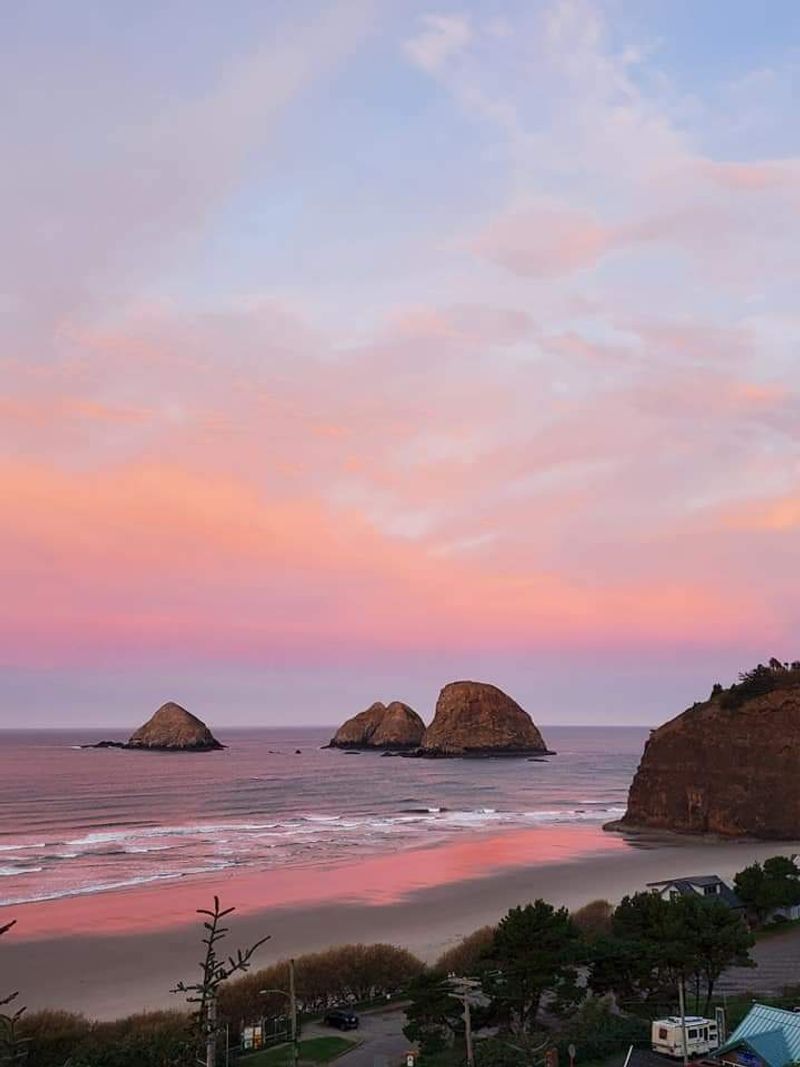
A short pullout along the road hands over one of the best free views on this stretch of coast. Symons State Scenic Viewpoint sits right in Oceanside, perched above the village with a clean sightline to Three Arch Rocks and the long curve of beach below.
Interpretive signs explain the geology and the seabird colony, which helps make sense of what you are looking at. There is no hike involved. Park, step out, look. Wind can be fierce up there, so hold onto hats and loose papers.
Photographers tend to show up near sunset, when the water goes copper and the rocks turn into cutouts against the sky. On clear days, the view stretches north toward Cape Meares and south past Netarts Spit.
Fog days have their own charm, with the sea stacks fading in and out like a slow reveal. Benches make it easy to linger longer than planned.
Binoculars earn their place here too, since sea lions and passing gray whales both show up from this angle. Spring and December are prime migration windows.
Tide Pools, Agates And Low Tide Treasure
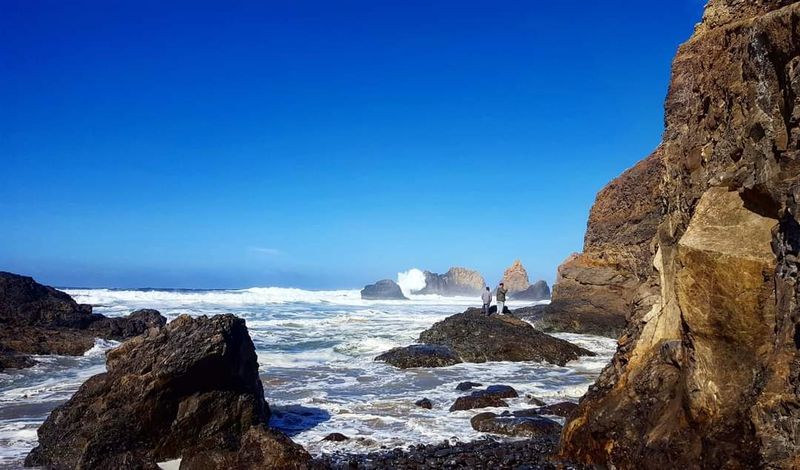
Low tide turns the base of Maxwell Point into a slow-motion treasure hunt. Rock shelves emerge from the water holding green anemones, purple sea stars, hermit crabs, and tiny sculpins darting between pockets. Step carefully. Wet rock and barnacles are unforgiving.
Rubber boots or old sneakers beat sandals every single time. Check a tide table and aim for a minus tide if possible, since that is when the best pools open up. Look, photograph, and leave everything exactly where it sits, because these creatures are fragile and protected.
Agate hunting is the other draw, especially in winter after heavy surf strips sand off the gravel beds. Hold a likely stone up to the light. If it glows, you found one. Jasper, petrified wood, and the occasional fossil also turn up along Tillamook County beaches.
Early morning after a storm gives the best odds, mostly because fewer people have walked the line ahead of you. Watch incoming water while your eyes are down, since sneaker waves are a real hazard here. Never turn your back on the ocean.
Breakfast With A View At Roseanna’s Cafe
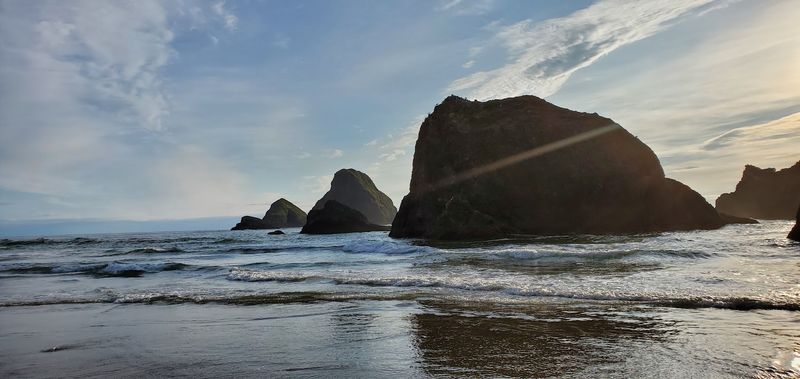
A weathered building near the beach access has been feeding hungry visitors for decades, and it smells like it too. Roseanna’s Cafe sits close enough to the water that window tables come with a full view of the sea stacks.
Seafood is the specialty, with local fish, chowder, and marionberry cobbler that regulars talk about long after leaving. Wait times can stretch on weekends. Put your name in, then walk the beach.
The interior leans cozy and slightly cluttered in the best possible way, with mismatched chairs and art on the walls. Breakfast tends to be calmer than dinner if crowds are not your thing. Hours shift with the season, so a quick check before driving out saves disappointment.
The building reportedly began life as a general store in the early 1900s, which explains the creaky floors. Coffee arrives hot and keeps coming, which matters when the wind outside is doing its thing. Desserts are worth saving room for, even if that means splitting an entree.
Driving The Three Capes Scenic Loop
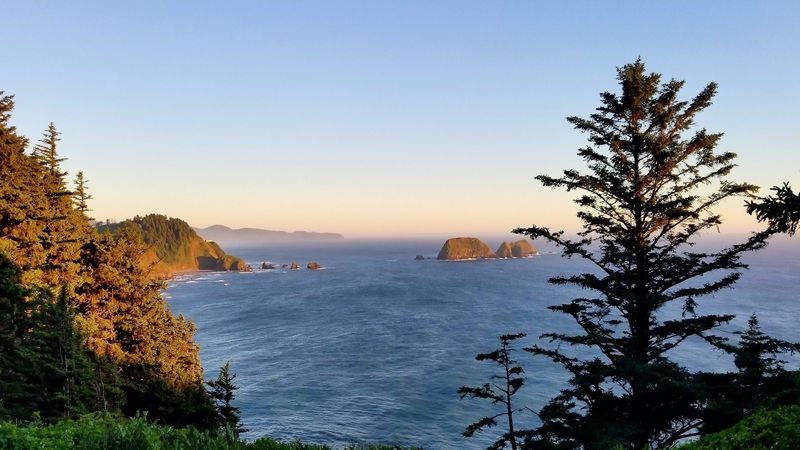
Oregon Route 131 and the roads beyond it form the Three Capes Scenic Loop, a roughly forty mile detour off Highway 101. Cape Meares, Cape Lookout, and Cape Kiwanda anchor the route, with Oceanside and Netarts sitting between them.
The drive is slow by design. Curves, forest, and sudden ocean gaps keep speeds honest. Part of the original loop has been closed by landslides over the years, so check current road conditions before setting out.
Cape Lookout State Park offers a trail along a narrow headland with water on both sides. Cape Kiwanda brings the giant dune and the offshore haystack rock near Pacific City. Netarts Bay, just south of the village, fills with birds at low tide and shallow water good for paddling.
Pack snacks and a full tank, since services thin out once you leave the highway. Half a day covers the basics. A full day lets you actually stop. Cell service drops in places, annoying for navigation and wonderful for everything else.
Cape Meares Lighthouse And The Octopus Tree
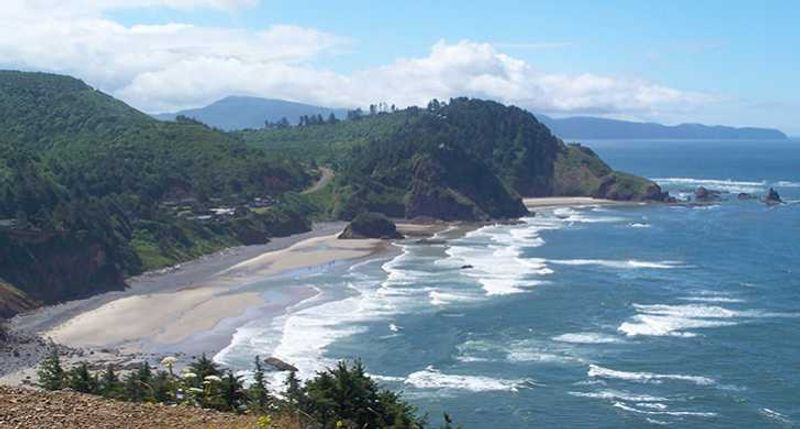
Ten minutes north of the village, a squat white lighthouse stands at the edge of a cliff. Cape Meares Lighthouse is the shortest on the Oregon coast at just thirty eight feet, though it sits high enough that height hardly matters. First lit in 1890, it guided ships for decades before automation took over.
A paved path leads down from the parking area, steep enough on the return that you definitely notice. Volunteers often open the tower seasonally for a look at the Fresnel lens inside. Nearby, the Octopus Tree twists out of the ground with thick trunks spreading in every direction.
The Sitka spruce is hundreds of years old, and its unusual shape has been credited to both wind and Indigenous cultural practices. Short trails connect the lighthouse, the tree, and viewpoints over the water.
Seabirds nest on the cliffs below, and murres blanket the offshore rock in dense clusters through spring. Bring a jacket. Wind on that headland does not negotiate. Pairing this stop with a beach walk makes an easy morning.
Sunsets, Storm Season And Staying The Night
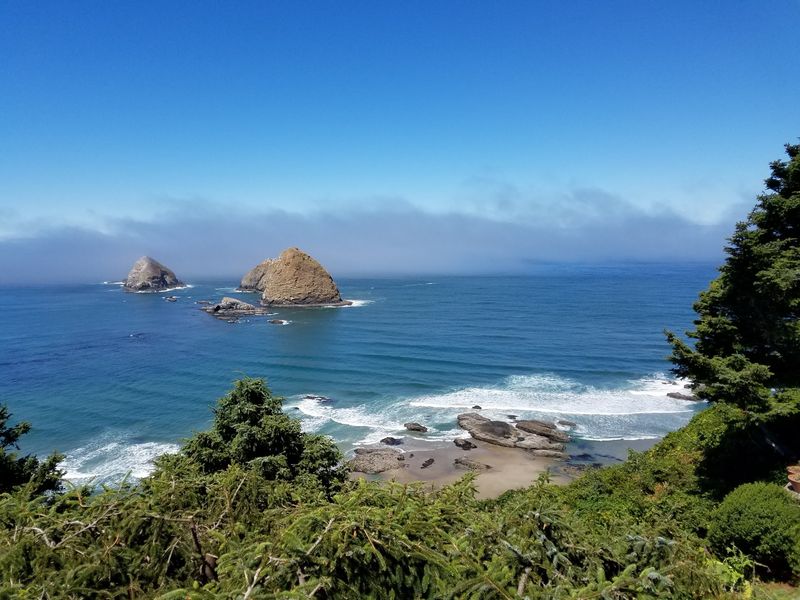
Evenings here have a way of clearing the beach of everyone except the committed. Because the shoreline faces west, sunsets land directly over the arches, and the color can hold for a long stretch after the sun drops. Locals bring folding chairs. Visitors mostly stand around grinning.
Winter changes the mood entirely, with storm watching becoming its own reason to visit. Waves slam the headland, spray shoots up the cliffs, and rain moves sideways past the windows of hillside rentals.
Vacation homes and small inns make up most of the lodging, and many face the water directly. Book early for summer weekends, since the inventory is genuinely small. Nights get dark in a way coastal cities never manage, so stars appear whenever clouds cooperate.
Sleeping with a window cracked means falling asleep to surf, which beats any sound machine. Mornings often start with fog that burns off by ten, revealing the rocks piece by piece. Slow travel suits this village far better than checklists, and one night usually turns into wishing for two.
