Some places in Oklahoma don’t announce themselves at all. You turn off a two-lane road, park on gravel, walk out into a field of tall grass, and slowly realize the gentle green swells around you were shaped by human hands more than a thousand years ago.
This is the only prehistoric Native American site in the state open to the public, and the people who built it ran a trade network that reached the Gulf Coast, the Great Lakes, and the Rocky Mountains. Bring good shoes and a little patience, because what looks like an empty pasture is actually one of the most important archaeological landscapes in North America.
A Quiet Field In Le Flore County
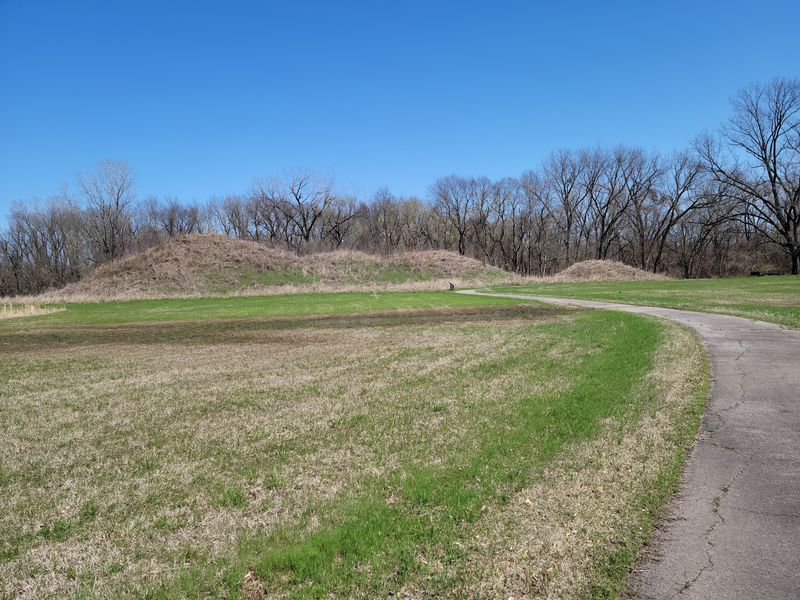
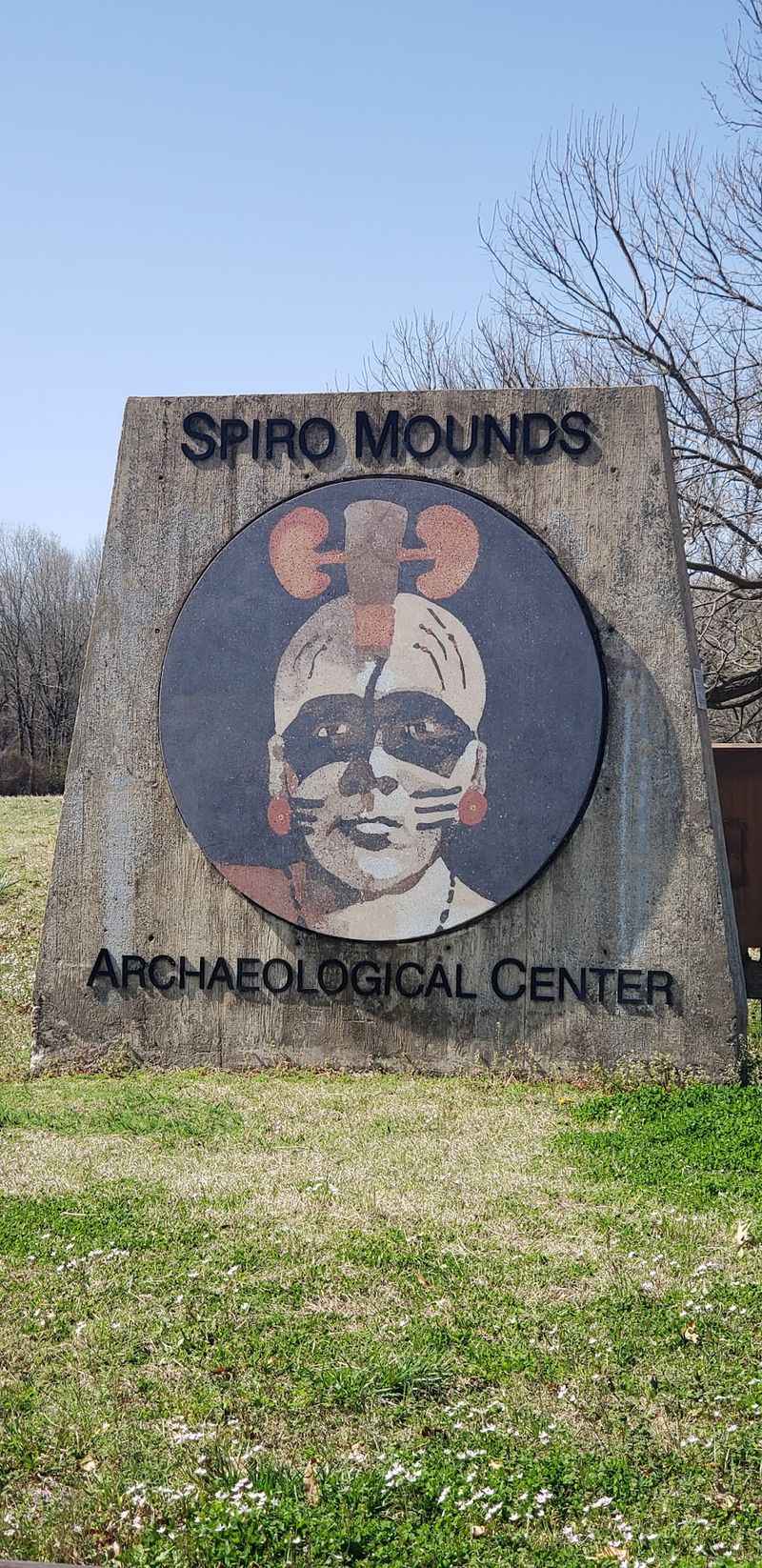
Tucked along the southern bank of the Arkansas River in Le Flore County, the Spiro Mounds Archaeological Center sits on roughly 150 acres of grass, scattered trees, and twelve earthen mounds that most drivers would never notice from the highway.
The address is 18154 1st St in Spiro, though the site itself feels far removed from town. Eastern Oklahoma spreads out flat and green here, with the river doing the same slow work it has done for centuries.
What makes the place unusual is its status: it is the only prehistoric Native American archaeological site in Oklahoma that is open to the public. Everything else of this age and scale in the state stays closed or sits under private land.
Run by the Oklahoma Historical Society, the center pairs a small interpretive building with nearly two miles of trails that thread past the mounds themselves. Visitors often describe the walk as peaceful and unhurried, the kind of outing where you hear wind and birds more than anything else.
It is about a three-hour drive from Tulsa and a bit longer from Oklahoma City, close to the Arkansas line.
The People Who Built The Mounds
Between roughly 800 and 1450 AD, this stretch of riverbank was one of the most powerful places on the continent. Caddoan-speaking people of the Arkansas Valley Caddoan culture, part of the broader Mississippian world, made it a ceremonial, political, and economic center.
Their reach was startling. At its height, Spiro sat at the heart of a confederation that involved more than sixty different tribes, with influence radiating across much of North America.
Picture leaders living atop flat-topped mounds, religious structures raised on others, and a working community below carrying out ceremonies, negotiations, and commerce. None of it required metal tools or wheeled carts.
The mounds were built basket-load by basket-load, with soil carried by hand and packed down over generations. Nine of the twelve were platform mounds that supported the houses of leaders, while two held important religious buildings.
Standing among them today, you get a strange doubling of scale. The rises look modest, almost like natural swells in a pasture, until you do the math on how many trips it took to move that much earth without a single shovel as we know it.
Trade Routes That Stretched Coast To Coast
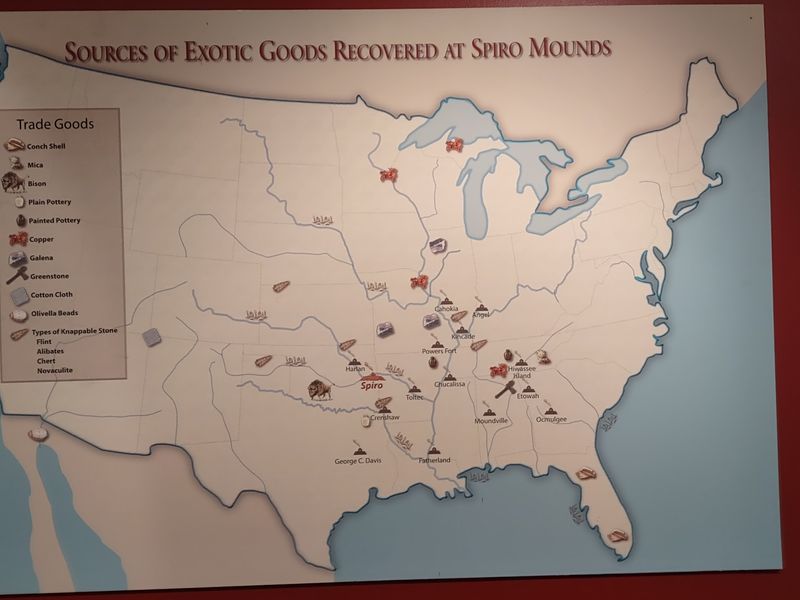
Copper from the Great Lakes. Conch shells hauled up from the Gulf Coast.
Colored flint out of New Mexico, and mica from the Carolinas. All of it ended up here, in eastern Oklahoma, carried by people on foot and by canoe.
The Spiro trade web ran from the Florida Gulf Coast to the Great Lakes, and from the Rocky Mountains clear to the Virginia coast. For a landlocked spot in what is now Le Flore County, that is a remarkable footprint.
Spiro also held a genuine market advantage. Osage orange wood, prized across the continent for making bows, grew mainly in eastern Oklahoma, western Arkansas, and parts of Texas and Louisiana, and the Spiro people controlled much of its distribution.
Think of it as ancient logistics: a river location, a valuable local resource, and relationships with dozens of nations. That combination turned a river terrace into a hub.
Knowing all this before you walk the trail changes what you see. The mounds stop looking like leftover dirt and start looking like the skyline of a place where deals were struck and goods moved constantly.
Craig Mound And Its Extraordinary Contents
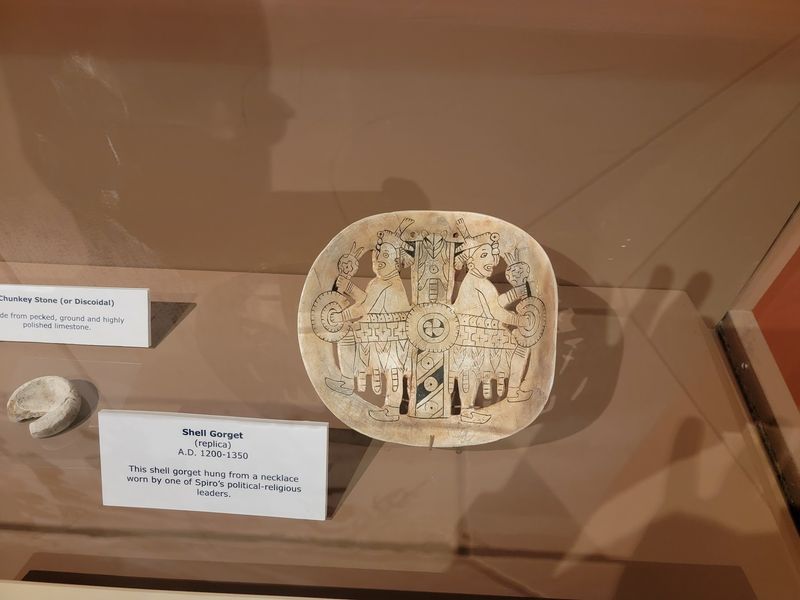
One mound at Spiro earned a nickname that still gets repeated: in 1935, a Kansas City newspaper called Craig Mound the King Tut of the Arkansas Valley. The comparison was not just hype.
Craig Mound was a burial mound, and a dry hollow chamber inside it preserved organic materials that almost never survive in North American sites. Basketry, feather capes, textiles, beaded baskets, large effigy pipes, and engraved shell cups showing mythic figures all came out of it.
The shell cups in particular are astonishing pieces of art, carved with beings and scenes that scholars still study for clues about Mississippian belief systems.
There is a hard chapter too. Between 1933 and 1935, during the Great Depression, the mound was heavily looted, and thousands of objects were sold off to collectors and museums scattered around the world.
Much of what remains at the site today is reconstructed, and some visitors note that portions of the mounds are rebuilt rather than untouched. Even so, walking up to Craig Mound with that history in mind lands differently than reading about it in a book.
Sun Alignments And The Solstice Walks
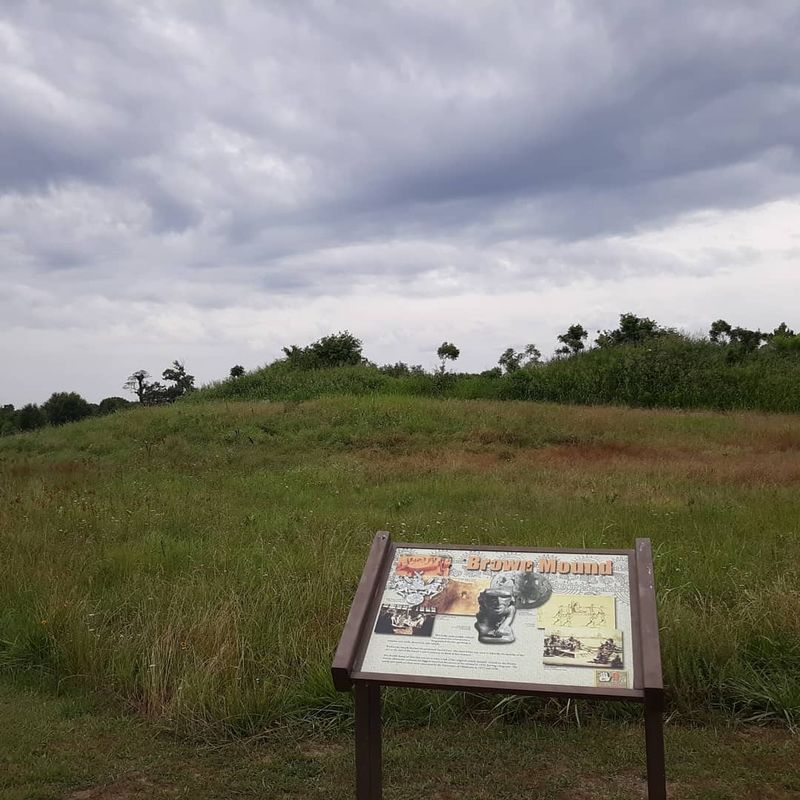
Here is a detail that tends to stick with people: the mounds line up with the sun during the equinoxes, which suggests the whole arrangement doubled as a seasonal calendar.
No written records, no clocks, just careful observation of where the sun rose and set across the horizon, then earth moved to match. For farming people, knowing when seasons turned was not trivia, it was survival.
The center leans into that legacy with guided solstice and equinox programs. Visitors who have joined the winter solstice sunset tour with the site director describe it as genuinely memorable, with plenty of history they never expected to learn in eastern Oklahoma.
Those walks tend to fill a specific niche. You get the landscape at its prettiest, low light raking across the grass, plus someone explaining the astronomy in plain terms.
Dates shift with the calendar and staffing, so calling ahead is the smart move. If your schedule allows, timing a trip to one of those seasonal programs turns an interesting afternoon into something closer to an event.
Inside The Interpretive Center
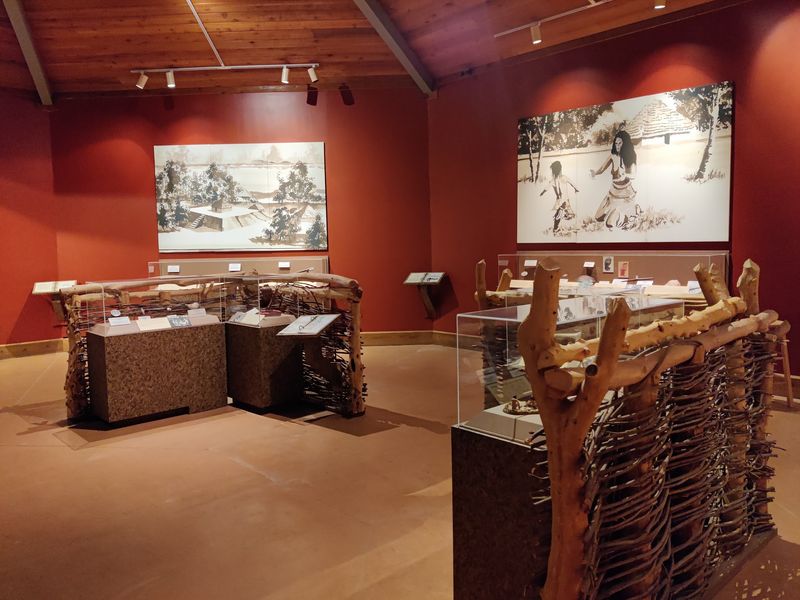
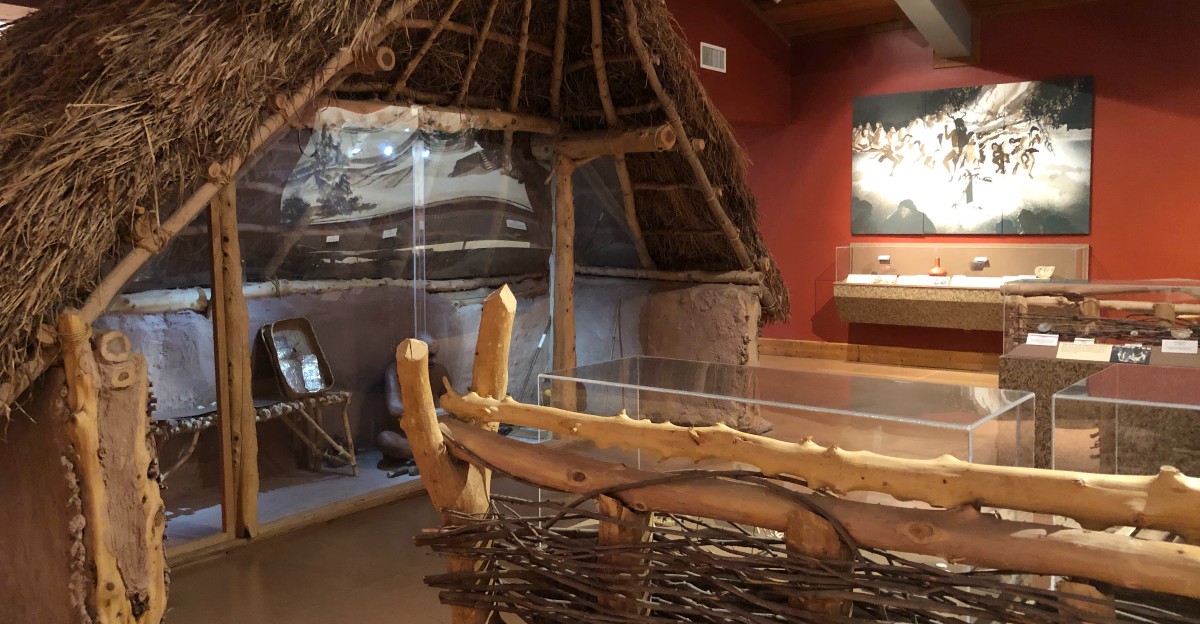
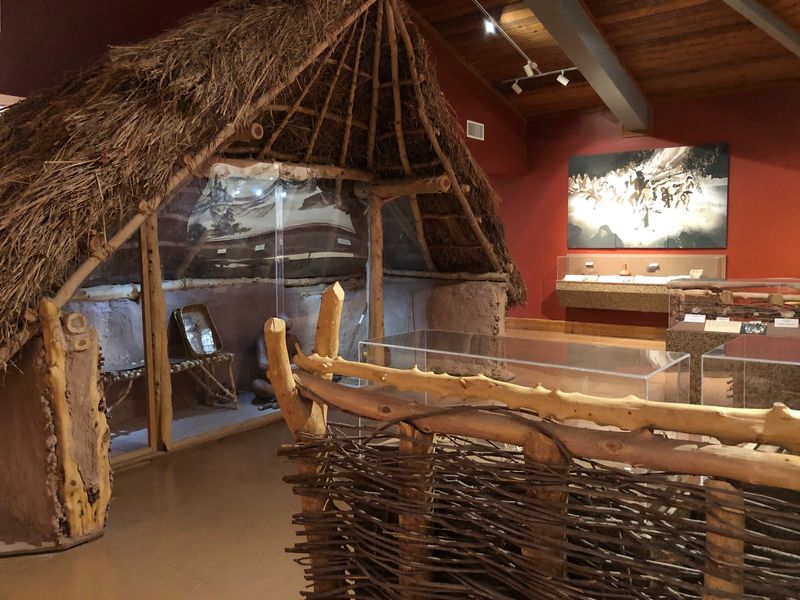
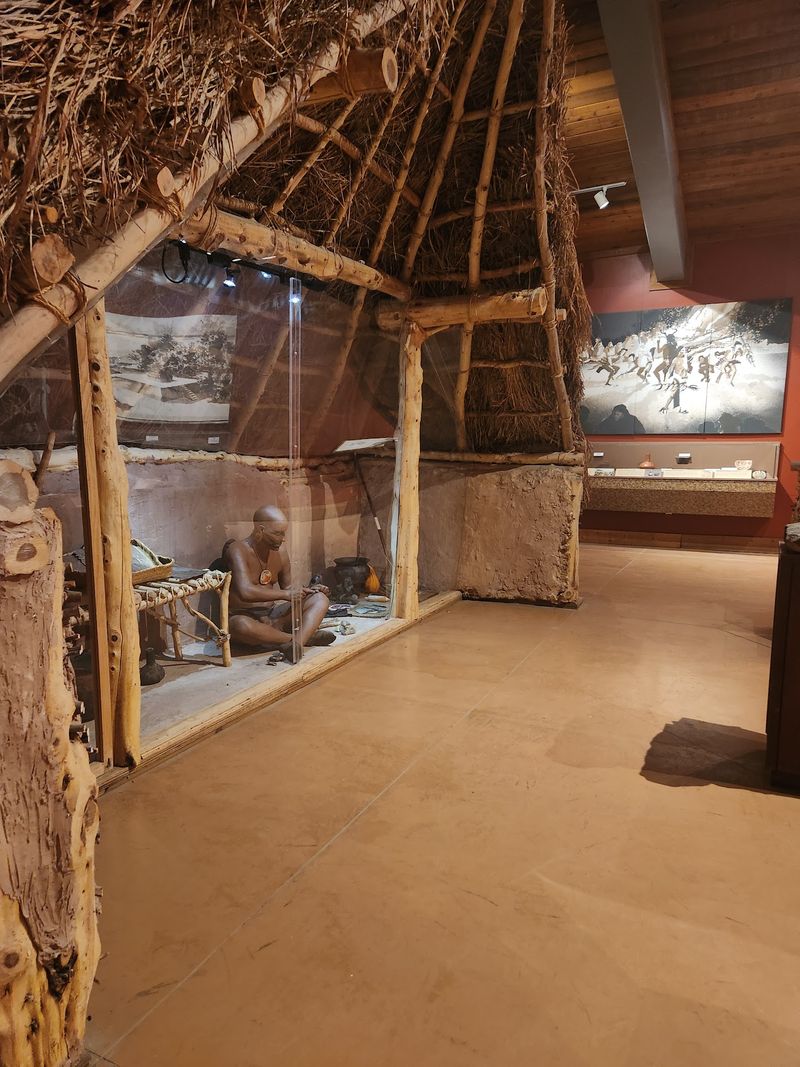
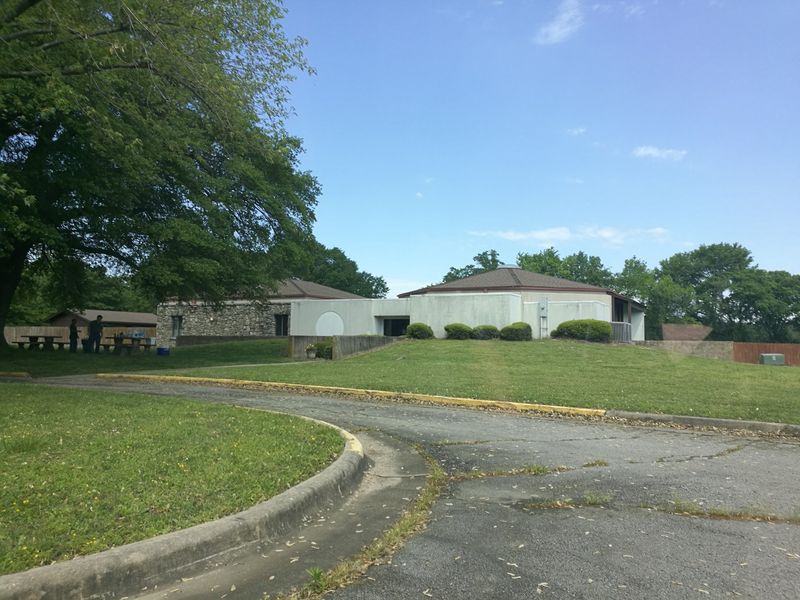
Small, climate controlled, and more substantial than its size suggests, the interpretive center is where most visits begin. There are exhibits, an introductory slide program, and usually a staff member ready to talk.
Guests repeatedly single out the volumes of detailed drawings documenting the engraved shell ornaments. Page after page of them, and for anyone with a curious streak, that alone can eat up an hour.
Staff knowledge is the real draw. Visitors mention the director and guides answering long strings of questions without rushing anyone, and several say those conversations were the best part of the trip.
Be aware of one important thing before you go. Many artifact displays are currently covered due to federal repatriation law, and some guests have arrived expecting full exhibits and left disappointed.
The building also has restrooms that get consistent praise, which matters more than you might think after a two mile walk in Oklahoma sun.
Renovations are underway in 2026 and beyond, so expect some construction noise, temporary gaps in displays, and no gift shop for the moment.
Two Miles Of Trail Through The Grass
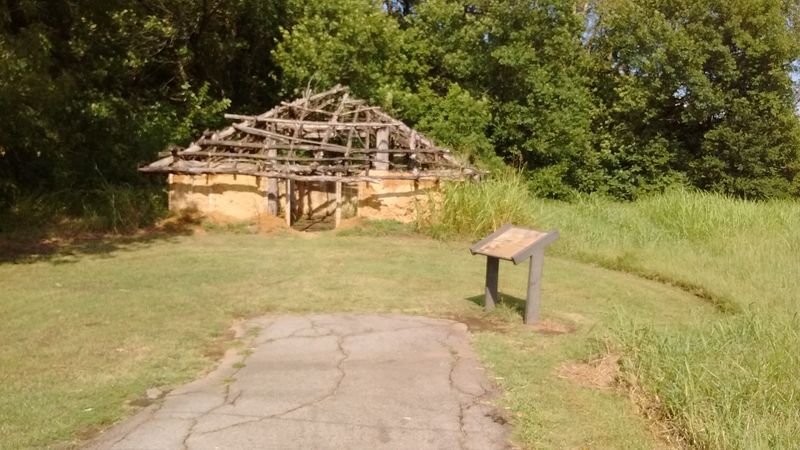
Trails are what most people remember. Nearly two miles of interpretive paths loop through the mound group, with a half-mile nature trail branching off near Craig Mound.
You can do the full circuit at around two miles or cut it down to roughly one, depending on energy and weather. The terrain is easy, mostly level, with a mix of paved sections and packed dirt.
Portions are paved for accessibility, and a golf cart may be available for guests with mobility concerns, though availability can depend on staffing that day.
Interpretive signs along the way explain what you are looking at, from Brown Mound, the temple mound, to the areas where elite houses once stood. Fair warning: several of those signs have faded badly in the sun, and replacements are part of the ongoing upgrade work.
Shade is limited, so summer heat is a genuine factor. Cooler months are lovely out here, and one winter visitor described walking the two mile loop after a snowfall as serene.
Families have brought grandkids out for picnics and a slow walk without trouble.
Living Connections To The Caddo And Wichita Nations
Ancestry here is not a closed chapter. The Caddo Nation of Oklahoma and the Wichita and Affiliated Tribes, which include the Wichita, Keechi, Waco, and Tawakonie, are formally recognized as cultural descendants of the people who built these mounds.
For those nations, Spiro is not a curiosity or a photo stop. It is a sacred ancestral legacy, and that perspective shapes how the site is managed today.
Which brings up the covered exhibits. Federal repatriation law guides how ancestral items are handled and displayed, and while some visitors find the empty cases frustrating, the policy exists to respect descendant communities and their wishes.
Framing matters when you walk in. Approaching the grounds as a place still connected to living people, rather than a ruin, tends to make the visit richer rather than thinner.
Oklahoma is home to 39 federally recognized tribes, and Spiro is one of the deepest windows into the long human story of this land.
Quiet respect on the trail costs nothing and fits the setting perfectly.
Hours, Admission, And Getting There
Plan around the schedule, because it is narrower than most museums. Current listings show the center open Tuesday through Saturday from 9 a.m. to 4 p.m., with Monday and Sunday closed, and published Historical Society hours have sometimes run later or included Sunday afternoons.
The site also closes daily for lunch from noon to 1 p.m. and on state holidays, so a mid-morning or early afternoon arrival works best.
Admission is cash or check only. Adults run $7, seniors 62 and older $5, students ages 6 to 18 $4, and kids 5 and under are free.
A family rate covering up to six people is $18, groups of ten or more pay $5 each, and Oklahoma Historical Society members get in free. Veterans and active military with identification also enter at no charge.
During renovation stretches, some visitors have reported fees waived entirely, though that can change without notice.
Call 918-962-2062 before you drive. With 2026 construction ongoing, a quick check on hours, trail access, and display conditions can save a long trip from ending in disappointment.
Who Will Love It, And Who Might Not
Expectations decide everything at Spiro. Anyone arriving hoping for pyramids, gleaming galleries, or a polished tourist operation will feel let down, and some honest visitors have said exactly that.
Come instead with curiosity about deep history and a willingness to use your imagination, and the place delivers something few Oklahoma attractions can. You are literally walking across a city that thrived here centuries before statehood.
History buffs, homeschool families, teachers, amateur archaeologists, and anyone who likes a calm walk with substance behind it will get the most out of it. Grandparents bringing grandkids for a picnic and a slow loop is a pattern that shows up again and again.
Budget maybe an hour inside and an hour on the trail, longer if the staff gets talking and you let them.
Renovations may leave things rough around the edges for a while, but the upgrades to parking, trails, and signage should pay off.
For under ten dollars a head, a couple of unhurried hours among thousand-year-old earthworks feels like a fair trade. Call first, then go see it.
