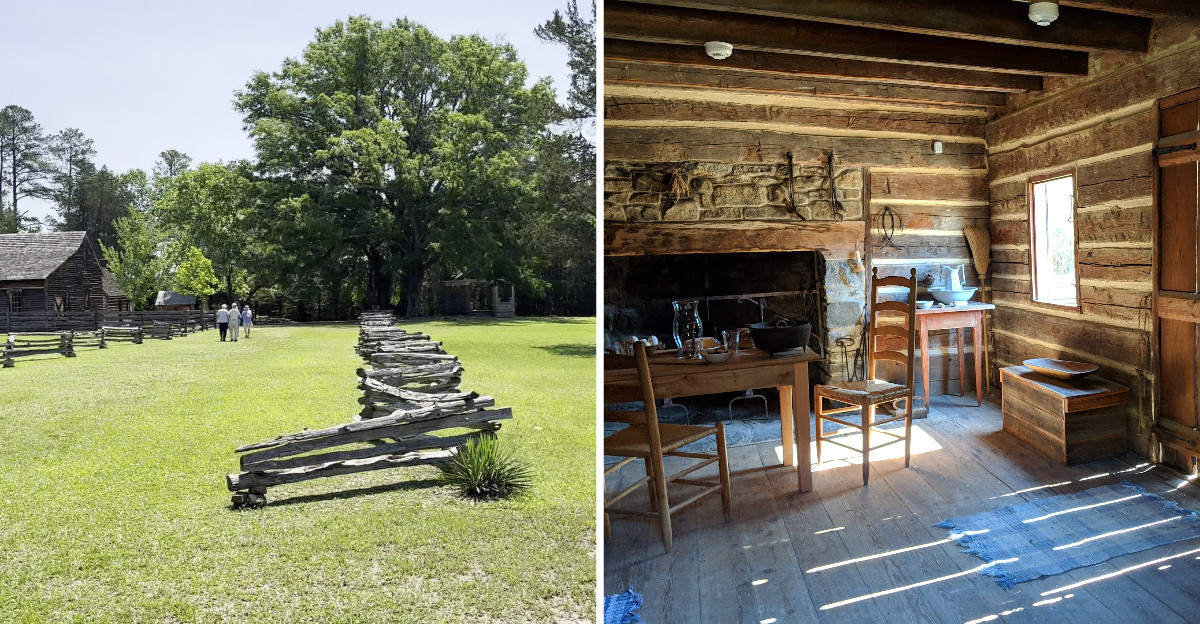
Roughly 89,000 Confederate soldiers were surrendered on a quiet patch of North Carolina land, a number larger than most people realize. I almost drove past the turnoff, which feels ridiculous now that I know what happened there.
A small farmhouse sits behind a quiet neighborhood road, and inside its walls two generals sat down in April 1865 to negotiate the surrender. The two men sat across from each other in a simple room, and the agreement they reached ended the war in the Carolinas, Georgia, and Florida.
I spent an afternoon wandering between the kitchen house, the smokehouse, and the tall stone monument. The whole place felt unusually calm for somewhere so consequential.
The staff talked to me like a neighbor who had stopped by, not a tourist checking off a list. History that sneaks up on you is worth seeking out, and this little farm delivers it.
The Farmhouse Where the War Quietly Ended
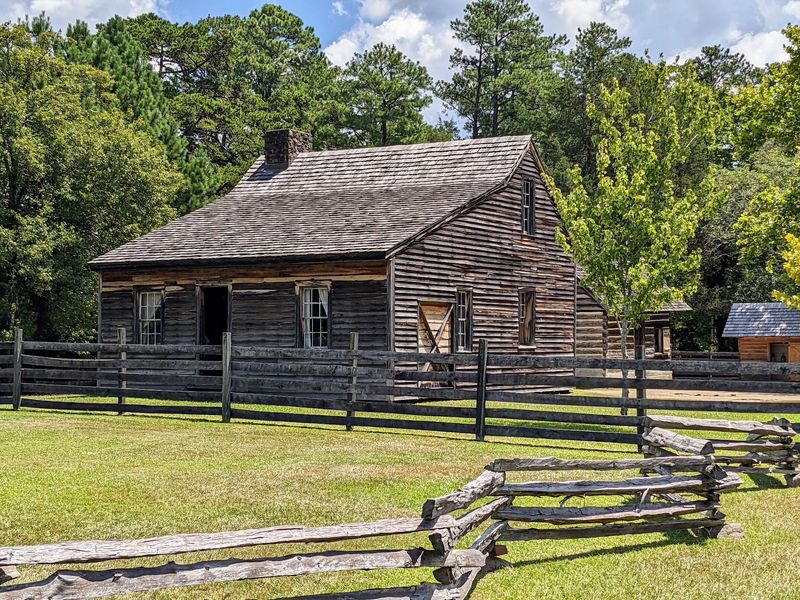
Two men sat in a simple log farmhouse in April 1865 and decided the fate of an army. Union Major General William T.
Sherman and Confederate General Joseph E. Johnston chose the home of James and Nancy Bennett because it sat roughly halfway between their lines.
The building you see today is a careful reconstruction. Fire destroyed the original farmhouse and kitchen in 1921, so the structures were rebuilt to match how the farm looked in 1865.
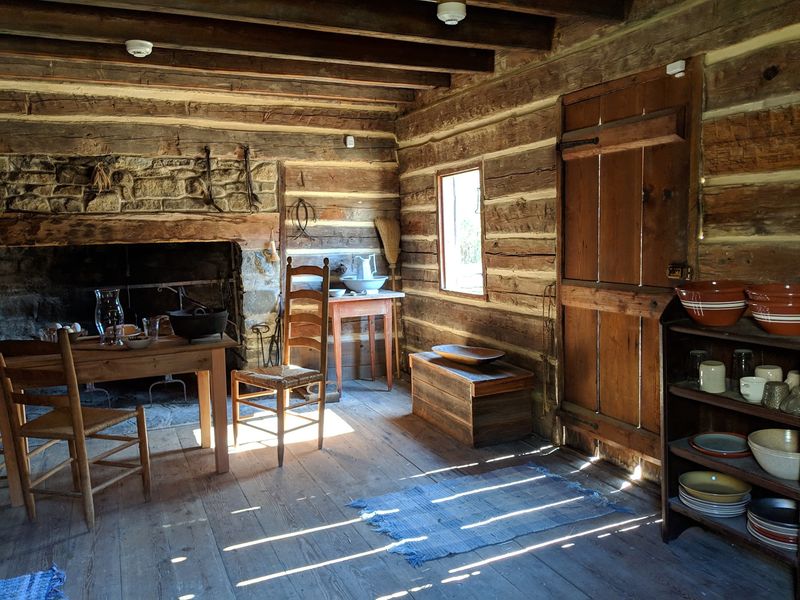
Stepping inside, I was struck by how small the rooms are. There is a sitting area and a bedroom, furnished the way a modest farming family would have lived, with plain wooden furniture and a wide fireplace.
It is honestly hard to picture generals with tens of thousands of men under their command squeezing into a space this humble. That contrast is exactly what makes the visit stick with you.
Guides explain that the Bennett family had to step outside while the negotiations happened. The final agreement was signed here on April 26, 1865, ending fighting across the Carolinas, Georgia, and Florida.
Take a moment on the porch before you move on. The view has not changed much.
Counting the 89,270 Soldiers Who Laid Down Their Arms
Numbers usually bore me, but this one stopped me cold. Around 89,270 Confederate soldiers were included in the surrender signed at this farm, drawn from the Carolinas, Georgia, and Florida.
Appomattox gets the textbooks and the famous paintings. Bennett Place handled roughly three times as many troops, and the war in the eastern theater effectively ended right here.
The path to that agreement was not smooth. Sherman learned of President Lincoln’s assassination while traveling to the meeting, and he came anyway.
A first set of terms was rejected in Washington, which meant the two generals had to meet again under real pressure, with the threat of fighting resuming if they failed. They reached a workable agreement on April 26, 1865.
Inside the visitor center, an informational panel lays out the other Confederate surrenders that followed, which surprised me. I had assumed the war ended in one tidy moment, and it did not.
Reading those details in a quiet room, with farm tools and weapons displayed nearby, gave the whole story a weight that a classroom never managed for me. Give yourself time to actually read them.
Inside the Visitor Center Museum
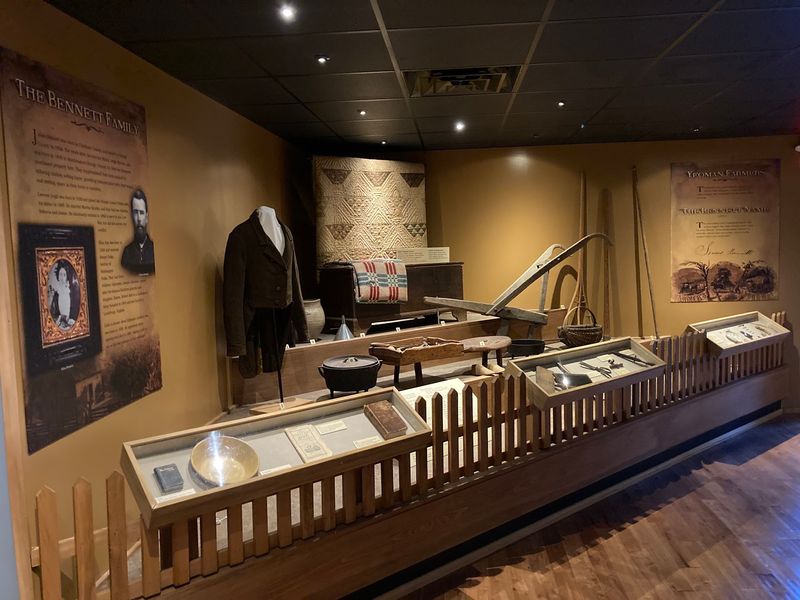
My favorite surprise was how much the museum packs into a compact gallery. Cases hold Civil War artifacts, military weaponry, and period farm tools, along with photographs and placards telling the Bennett family’s story.
Reading everything carefully takes about twenty minutes. That is a fair trade for understanding why a farming family ended up hosting the end of a war.
What I appreciated most was the balance. The exhibits cover the generals and the battlefield strategy, but they also spend time on ordinary life, including what the Bennetts grew, cooked, and lost during those years.
Staff here are genuinely knowledgeable, and several visitors have mentioned long conversations with employees who clearly love the subject. I had one of those chats myself and learned more in ten minutes than I expected to learn all day.
There is a small gift shop with unusual items, and you can pick up a map of other North Carolina battlefields if you want to keep exploring.
Ask questions. The people behind the desk want you to, and the visit gets better the moment you start talking.
Watching Dawn of Peace in the Little Theater
Start here if you can. The orientation film, titled Dawn of Peace, runs roughly fifteen to twenty minutes and sets up everything you are about to see outside.
It walks through the Bennett family, the arrival of the two generals, and why this small farm mattered so much to a divided country.
I sat through it with a handful of other visitors, and the room was quiet in that good way where everyone is actually paying attention. The film does not rush, and it does not oversimplify.
If the theater is not running when you arrive, just ask a staff member. They will happily start it for you.
Watching first made the rest of the visit click. When I later stood in the farmhouse sitting room, I already knew who had been where and what was at stake in those conversations.
Some people prefer to tour the buildings first and save the film for last, and that works too. The site is flexible, and nothing forces you into a set order.
Either way, do not skip it. Twenty minutes buys you a whole afternoon of context.
The Kitchen House, Smokehouse, and Everyday Farm Life
Here is a detail I did not expect to find fascinating. The kitchen sits in its own separate building, away from the main house, and there is a very practical reason for that.
Cooking fires were dangerous. If the kitchen burned, the family still had a place to sleep.
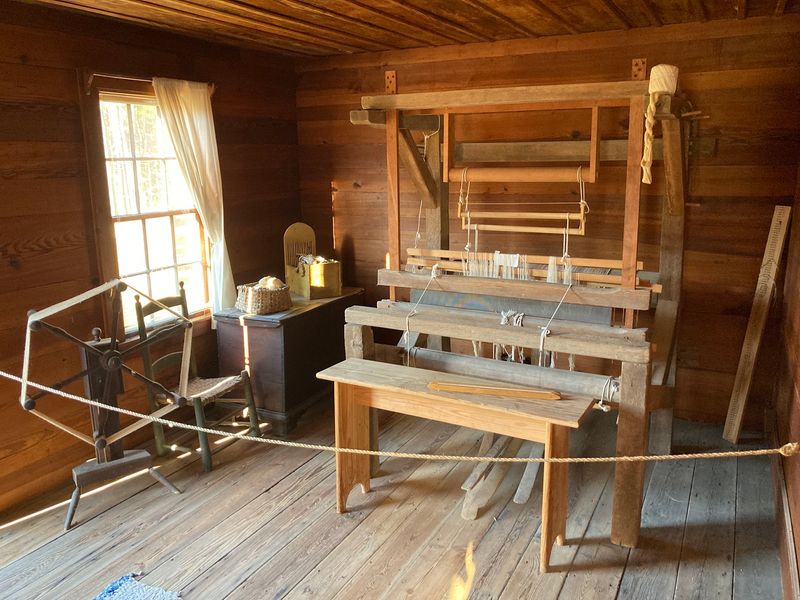
Comparing the two fireplaces makes the logic obvious. The kitchen hearth is noticeably larger than the one in the house, built for heavy daily cooking rather than warmth.
The dining table sits in the kitchen building as well, which means the Bennetts walked outside to eat their meals, rain or shine.
A smokehouse rounds out the little cluster of structures, all furnished as they would have been in the Civil War era. Together they paint a picture of a hardworking family living close to the land.
I found myself more moved by these plain buildings than by the big historical moment. Real people scrubbed pots and hung meat here while armies moved through their state.
Walk between them slowly. The distances themselves tell you something about how daily life was organized back then.
Unity Monument and the Morgan Bench Memorial
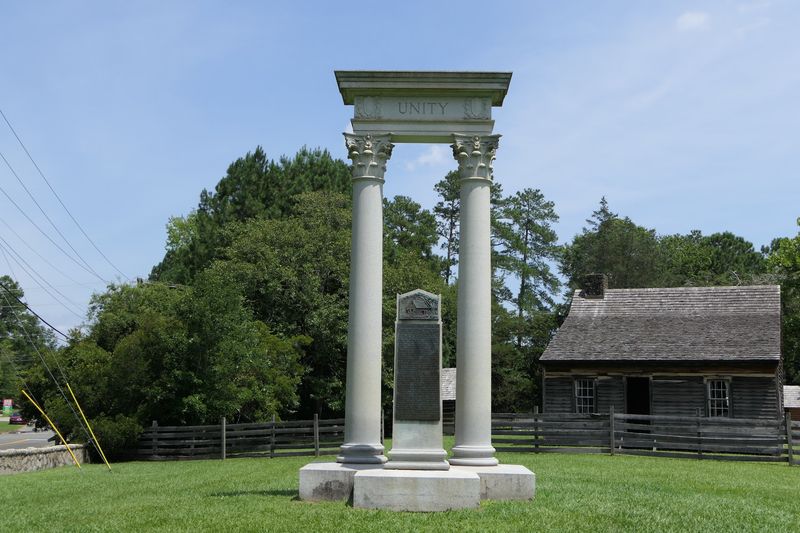
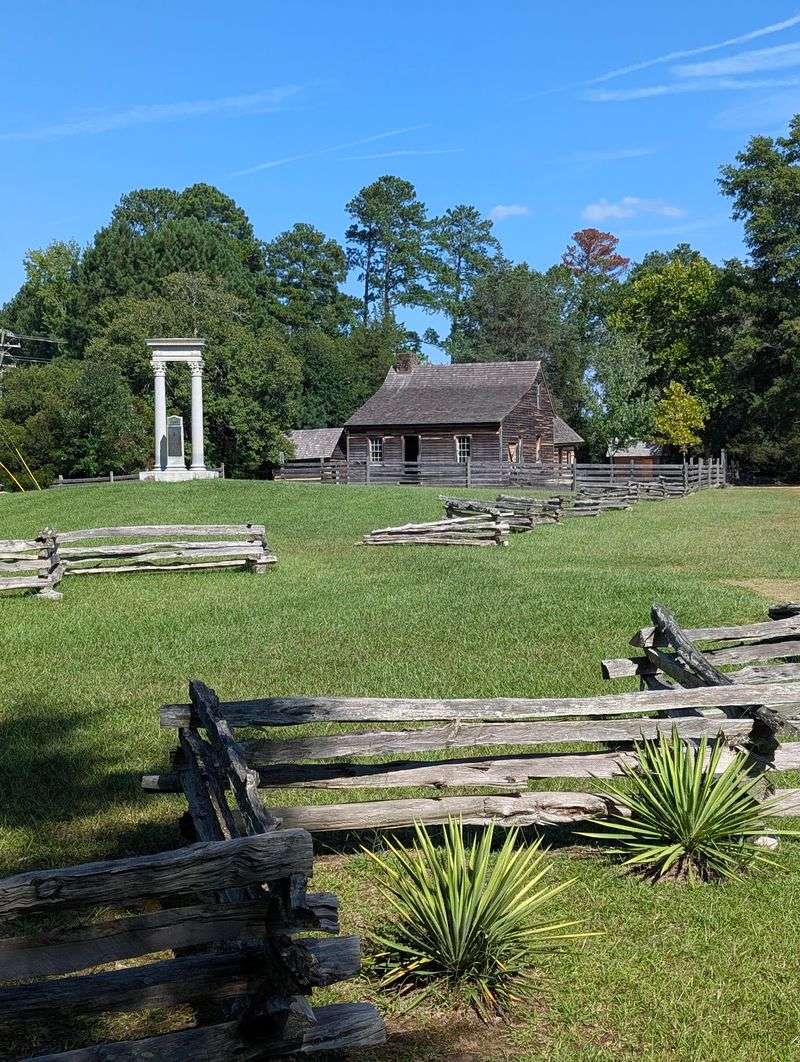
Two tall columns joined by a single stone beam stand near the historic buildings, and the word Unity is carved across the top. Dedicated in 1923, the monument represents peace and the reunification of the country.
The design is simple, and that simplicity does the work. Two separate pillars, one connecting piece.
I ended up circling it a couple of times, partly for photos and partly because it is the kind of thing that keeps pulling your eyes upward. On a clear day, the white stone against the sky is striking.
Nearby sits the Morgan Bench Memorial, which honors the Morgan family for their role in preserving Bennett Place as a historic landmark.
Without people willing to protect a small farm site, none of this would still be here for visitors to walk through. That thought stayed with me.
The lawns around the monuments are well kept and open, and the paths are flat and easy to manage. Visitors have brought family members who cannot walk far or stand long, and the layout works for them.
Sit on the bench for a minute. It earns its place.
Nature Trails, Picnic Spots, and Planning Your Visit
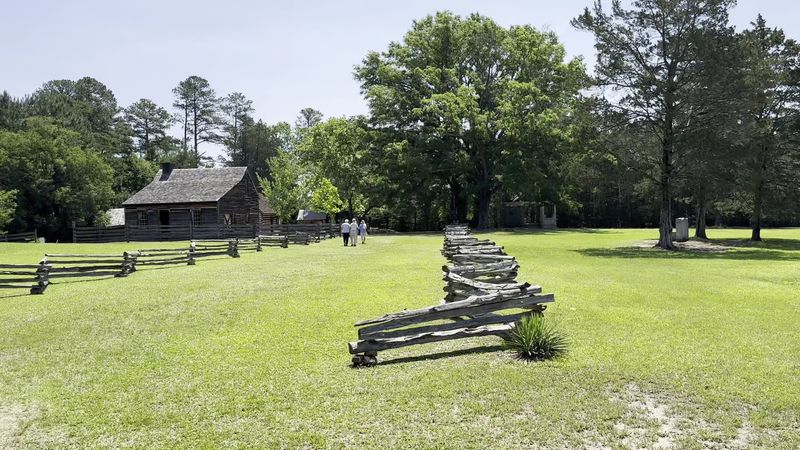
Beyond the buildings, walking trails slip into the surrounding forest, and the noise of Durham fades almost immediately. It is an easy, unhurried stroll rather than a workout.
Picnic tables sit on the grounds too, which makes this a solid stop for families who want history and lunch in the same trip.
Plan around the hours, because they matter here. The site opens Tuesday through Saturday from 9 a.m. to 5 p.m., and it is closed Sundays, Mondays, and most major holidays.
Admission is free, with guided tours available for a small fee and self-guided options always open. There is a donation box, and the site is worth supporting.
I would push you toward the guided tour if your schedule allows. Guides add detail and context that signs simply cannot, and on very hot days afternoon tours may not run, so calling ahead is smart.
Most visitors spend about an hour, though history fans easily stretch that longer. Living history events and reenactments happen throughout the year and are worth timing a trip around.
Address: 4409 Bennett Memorial Rd, Durham, North Carolina 27705.
