Museums in California do not always look like museums. Some are built around old neon signs and mid-century motels.
Others are miniature reproductions of famous American landmarks, dusty and strange, sitting beside a highway. I spent a good chunk of this year tracking down the ones that refuse to behave like the rest, the places that feel more like fever dreams than institutions.
One of them sits off a major road, a tribute to a failed Hollywood idea. Another hides in plain sight, full of taxidermy and oddities that defy easy description.
I mapped a route through the state that jumped between them, from the concrete canyons of the south up to the fog-soaked streets of the north. What ties them together is a stubborn belief that a museum should feel alive, messy, and worth arguing about on the drive home.
These are the California museums that do not hold still, and I think you should see them for yourself.
1. DATALAND, Where the Art Thinks Back
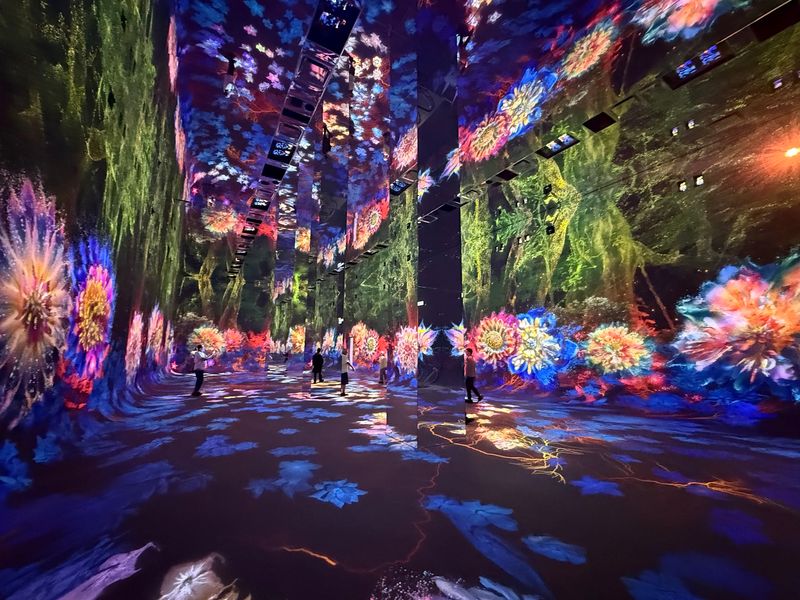
My first reaction was that someone had turned a rainforest inside out and hung it on the walls. The colors move constantly, blooming and folding into each other, and there is no single moment you can point to as the picture.
Billed as the world’s first museum devoted to AI arts, it opens on June 20, 2026, with Refik Anadol Studio steering the artistic direction. The inaugural show, Machine Dreams: Rainforest, spreads across five galleries and roughly 25,000 square feet.
An Infinity Room, a Data Pavilion, and a Latent Gallery let you get close to the actual ecological data feeding the visuals, which I found weirdly moving. You are not just watching output.
You are watching the raw material too.
What sets the place apart is that nothing repeats exactly. The system keeps learning, so a return visit in December will not look like a visit in July.
Practical tip from me: give yourself more time than you think you need, and sit down. Standing and scanning makes the work feel like wallpaper, while sitting lets your eyes settle and the patterns start to make sense.
The experience is less about watching art and more about watching a machine dream in real time, and the longer you stay, the more you realize the rainforest is teaching the algorithm just as much as the algorithm is interpreting it. There is a strange, deep peace in that exchange.
Address: 100 S Grand Ave, Los Angeles, CA 90012
2. Lucas Museum of Narrative Art, Storytelling With the Volume Up
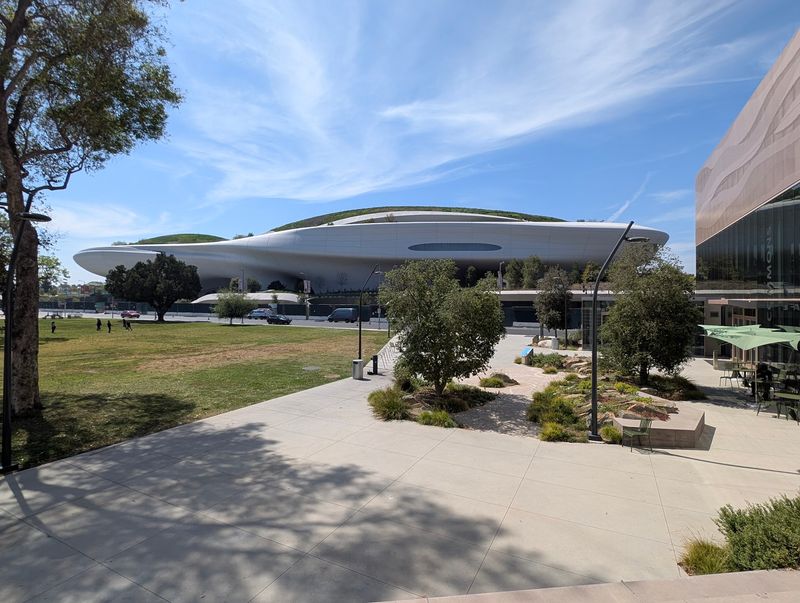
Thirty-five galleries. That number stuck with me long before I ever saw the building, and once I did, the swooping white shape rising over Exposition Park made it feel plausible.
Opening to the public on September 22, 2026, the museum was founded by filmmaker George Lucas and business leader Mellody Hobson around one simple idea: illustrated storytelling is something every culture understands.
The collection runs wider than I expected. Painting, photography, sculpture, comic art, children’s book illustration, science-fiction art, performance, video, and film artifacts including posters, props, models, concept art, and costumes from Star Wars and Indiana Jones.
Instead of dividing rooms by century or country, the galleries carry names drawn from human experience, things like love, family, and adventure. It reframes a Renaissance panel and a comic page as cousins rather than strangers.
Ma Yansong of MAD Architects designed the structure, with gardens by Mia Lehrer of Studio-MLA that tell stories of their own and stay open to anyone, ticket or not.
My advice is to arrive early and wander the landscaping first. It sets a slower pace before the galleries start throwing images at you.
Address: One Lucas Plaza, Los Angeles, CA 90037
3. David Geffen Galleries at LACMA, One Floor, No Rules
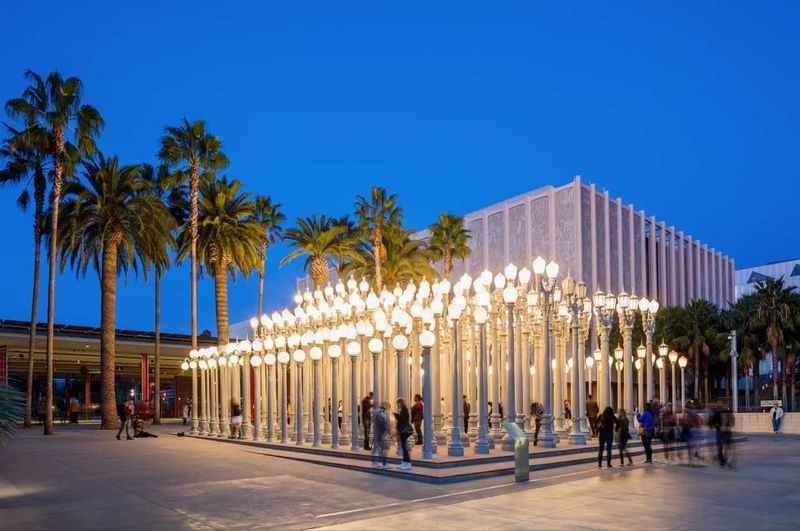
Twenty-six galleries on a single continuous floor. No stairs to climb, no third-floor payoff waiting at the end, just one long ribbon of art stretching about 900 feet across Wilshire Boulevard.
Peter Zumthor designed the 100,000-square-foot glass-and-concrete home for LACMA’s permanent collection, and it officially opens April 19, 2026, with public access starting May 4.
The organizing idea is what got me. Artworks are grouped by their connections to major bodies of water, the Pacific, Indian, and Atlantic Oceans and the Mediterranean, rather than marched through a Western timeline.
That choice produces some genuinely startling neighbors. Objects made continents and centuries apart end up in conversation, and you notice trade routes and shared ideas instead of tidy chapter headings.
Outside, the grounds do real work too. Tony Smith’s Smoke and Alexander Calder’s Three Quintains anchor public spaces, and Auguste Rodin sculptures sit in an 8,000-square-foot garden.
Because there is no prescribed route, I would suggest picking a direction at random and committing to it. Trying to see everything in order is the one strategy guaranteed to make you tired and cranky.
Address: 5905 Wilshire Blvd, Los Angeles, CA 90036
4. KidSTREAM, A Library Reborn as a Playground for Ideas
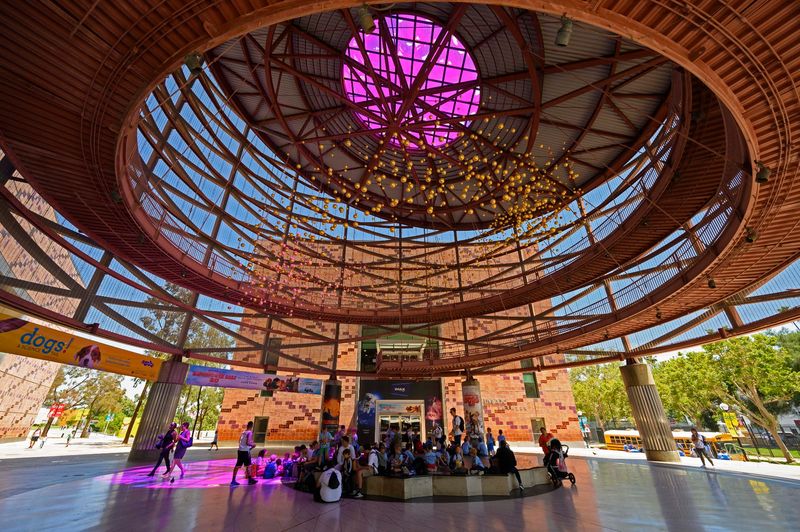
There is something satisfying about a beloved old library getting a second life as a place where kids are actively encouraged to make noise. The former Camarillo Public Library building now holds Ventura County’s newest hands-on museum.
Grand opening lands on May 21, 2026. The focus is STREAM, meaning Science, Technology, Reading, Engineering, Arts, and Math, all delivered through exhibits you touch rather than read about.
Roughly 21,000 square feet of indoor and outdoor exhibits sit within a planned 30,000-square-foot campus, so there is room to spill outside when the weather cooperates, which in this part of California is often.
The agricultural exhibit is the one I keep thinking about. Ventura County grows an enormous amount of food, and giving children a play-based way to understand that work connects the museum directly to the fields just down the road.
Inclusivity is baked into the mission here, with access designed for kids across different physical, developmental, and emotional abilities as well as different family circumstances.
If you are traveling with young kids between Los Angeles and Santa Barbara, this makes a smart mid-route stop where everybody gets to burn off energy.
Address: 3100 E. Ponderosa Dr., Camarillo, CA 93010
5. The Shroud of Turin Immersive Experience, Faith Meets Forensics
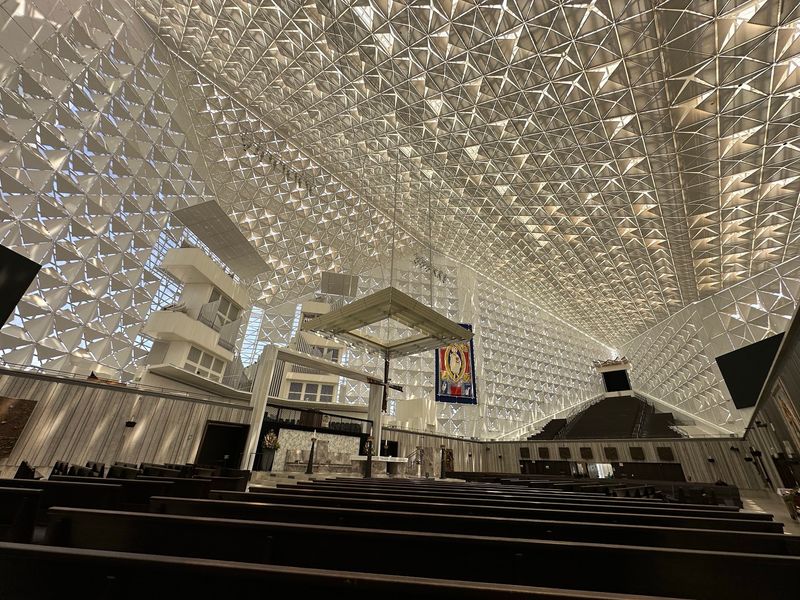
Ten thousand square feet dedicated to a single piece of cloth sounds improbable until you are inside it. The scale makes sense once you realize how many disciplines the exhibition tries to hold at once.
Opened around the turn of 2025 into 2026 and running fully this year, the experience explores the story of the linen said to have wrapped the body of Jesus, sitting right where faith and forensic science overlap.
Groundbreaking 360-degree theaters carry visitors through the Gospel narrative, with 4D recreations of the resurrection that people describe as unusually affecting.
Beyond the theatrical part, the interactive museum section is where I would spend my time. Scripture, historical documentation, and scientific analysis are laid side by side so you can weigh the arguments yourself.
Replicas are on display rather than the original, which stays in Turin and is rarely shown for conservation reasons. Honestly, that fact makes the exhibition more interesting, not less.
Families, school groups, and history buffs all seem to find something here, whether their interest leans devotional or purely investigative. Either way, you leave with questions rather than easy answers.
Address: 13280 Chapman Ave, Garden Grove, CA 92840
6. Miwuk Cultural Center and Museum, Living Legacy in the Gold Country

Angels Camp is Gold Rush territory, all wooden storefronts and steep sidewalks, which makes this museum’s arrival feel like a long-overdue correction to the local story.
Opened in December 2025, the center is devoted to the Miwuk people, particularly the Southern Sierra Miwuk, and to keeping their history, culture, language, and traditions in active use rather than behind glass forever.
The Dr. Cooper basket collection is the centerpiece, and the weaving detail rewards standing there far longer than you planned. Language programs and traditional stories run alongside the displays.
Interactive exhibits let you hear tribal songs, learn which plants become basket materials, and watch video documenting ceremonial dances and ancestral practices such as preparing acorn flour. Some of that footage had never been shared publicly before.
What struck me most was the framing. Care, preservation, and healing are stated goals here, with cultural connection treated as something that supports well-being for Native communities and visitors alike.
It pairs naturally with a slow day in the Calaveras County foothills, and I would recommend visiting before the caverns and the old mining towns rather than after.
Address: 52A South Main Street, Angels Camp, CA 95222
7. OUT Museum, A Rainbow Ribbon in Chinatown
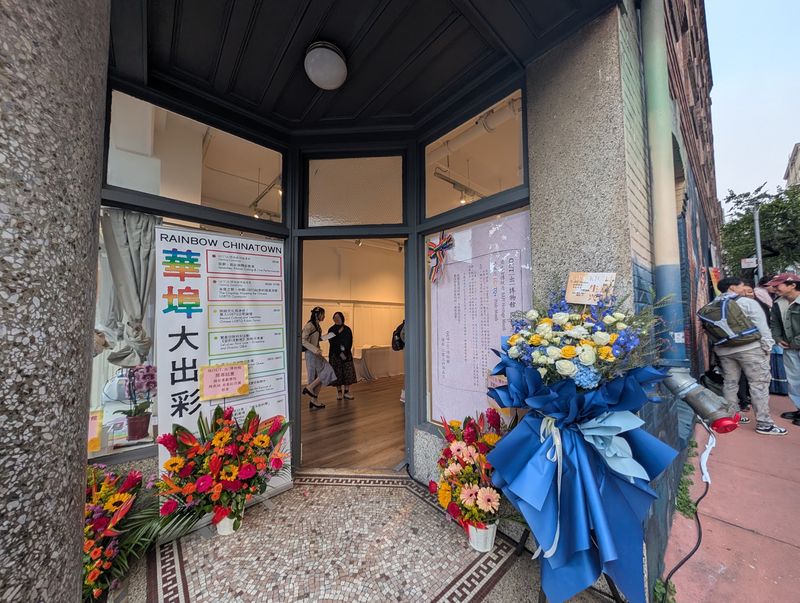
A rainbow ribbon got cut on May 29, 2026, on a Chinatown street already dense with history, and just like that the world had its first Chinese queer museum.
Founder Xiang Qui Chen previously worked for queer visibility in China, and the museum carries that mission forward here: making people visible, connecting a community, and putting Chinese LGBTQ artists and culture front and center.
It operates as showcase and living archive at the same time. Queer art, zines, and personal histories from Chinese-speaking communities are collected and protected rather than left to scatter.
Opening programming mixes visual art, interactive installations, and documentary material tracing how Chinese LGBTQ communities have developed across borders. The documentary pieces are the ones that slowed me down.
Supporters talk about the space as a sanctuary for self-expression, and the location matters enormously. Setting it inside a neighborhood famous for its own layered immigrant history gives the project roots.
Chinatown rewards aimless walking anyway, so build this into a longer afternoon of alleys, bakeries, and temple stairwells. Small museums like this land harder when you arrive on foot.
Address: San Francisco Chinatown, CA
8. Tenderloin Museum, Boxing Gloves, Hotels, and a Comeback
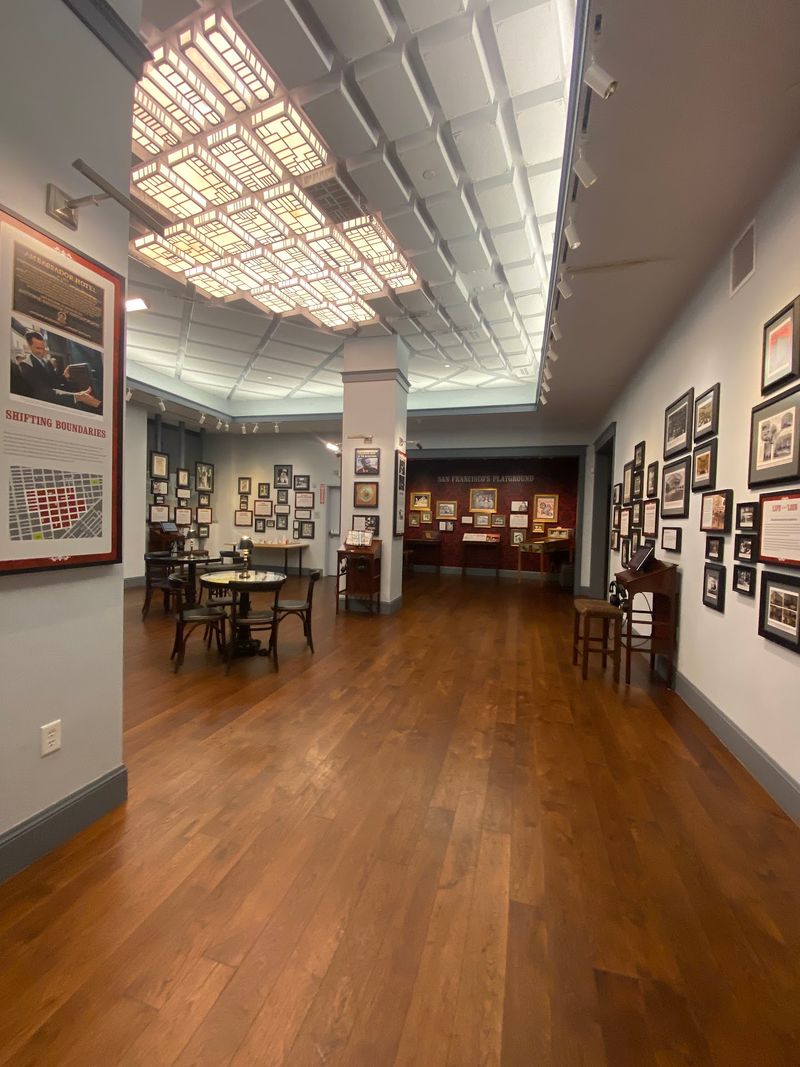
Resilience is not usually a museum’s exhibit label, but it fits this one in 2026. A June water intrusion from the Cadillac Hotel above forced the ground-floor space to close temporarily.
Repairs are underway, fundraising is active, and the goal is a Fall 2026 reopening, complete with a water redirection system so the same thing does not happen twice.
The bigger expansion also continues, delayed but alive, adding over 6,800 square feet by 2028 after breaking ground in 2025.
Two planned exhibitions sound irresistible to me. One digs into San Francisco boxing history, including legends like Muhammad Ali and George Foreman who trained at the former Newman’s Gym that once occupied part of that space.
Another explores the Indian-American hotel legacy woven through the neighborhood.
Even during the closure, the museum kept working. Walking tours continued, and theatrical productions including The Compton’s Cafeteria Riot moved to alternate venues.
The whole institution exists to tell the story of immigrants, artists, activists, and people who refused to fit in. Take the walking tour if the timing works.
The streets are the real exhibit.
Address: 398 Eddy St, San Francisco, CA 94102
9. ICA San Francisco, The Museum That Left Its Building Behind
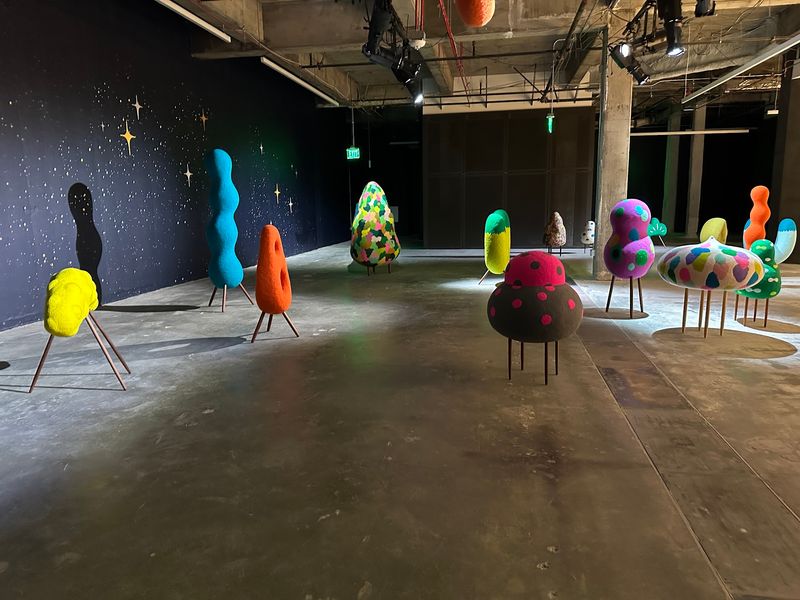
Giving up your address is a bold move for a museum. In December 2025 this one walked away from its fixed home and went fully nomadic across San Francisco starting in early 2026.
No collection, no permanent walls, free admission. The focus is commissioning and producing museum-scale contemporary art wherever a space can be found.
Vacant buildings, public plazas, and notable architectural sites become temporary galleries, which turns a visit into a small treasure hunt through the city. I like that the route changes depending on when you show up.
Early 2026 programming includes partnerships at the Transamerica Pyramid Center, with work by artists including Tara Donovan, plus Lily Kwong’s EARTHSEED DOME, a site-responsive installation built with 3D-printed living soil.
Projects with the Port of San Francisco are being explored, and a public art program at the Dogpatch Power Station is planned for 2027.
Because locations rotate, checking the current schedule before you head out is essential. Do that, and you get something rare: contemporary art that arrives in the middle of ordinary city life instead of waiting behind a ticket desk for you.
