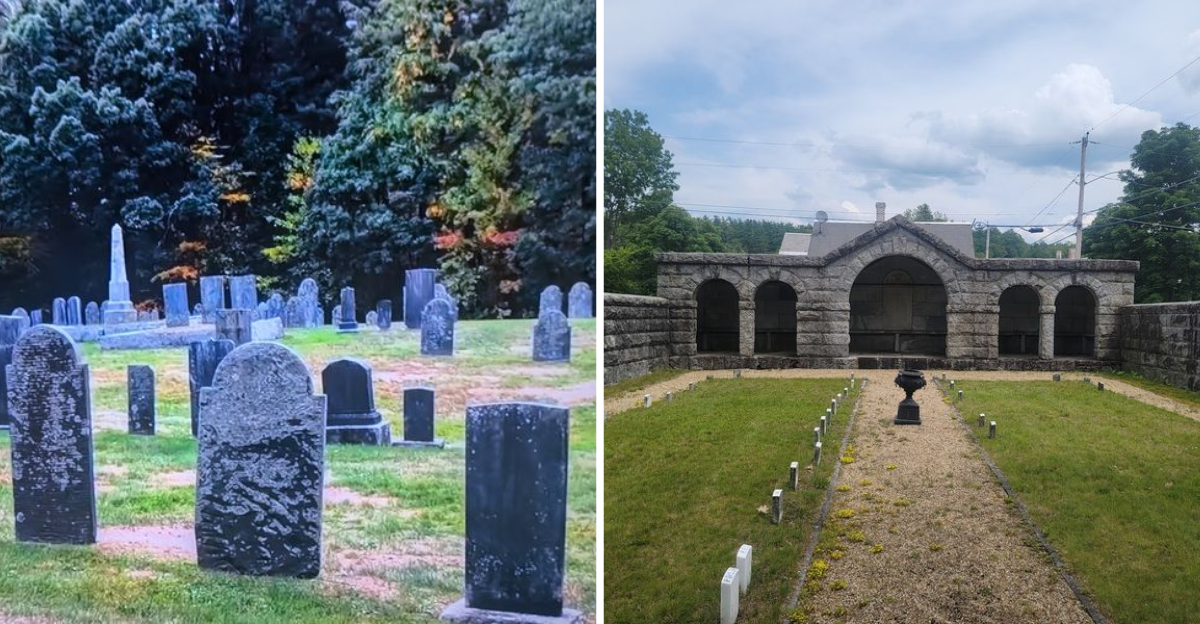
Slate stones, wet grass, and the sound of nothing but wind through old pines. That is how some of my favorite New Hampshire mornings have started.
I never expected burial grounds to become one of my favorite ways to travel this state, but the stories carved into these markers say more about early New England than any museum plaque ever could.
Angry husbands, wandering carvers, shipwreck victims, rebellious farmers, and children gone far too soon all left words behind, and many of those words are still readable after two or three centuries.
I found myself reading one stone that told the story of a woman who outlived three husbands, and another that marked the grave of a child who lived only six days. Each burying ground has its own personality, from tidy village squares to forest clearings barely wider than a driveway.
These places matter because they hold the everyday history that books skip over, and they ask almost nothing of you except respect and a slow pace. Bring sturdy shoes, a curious mind, and plenty of time to read.
1. Elm Street Cemetery, Milford
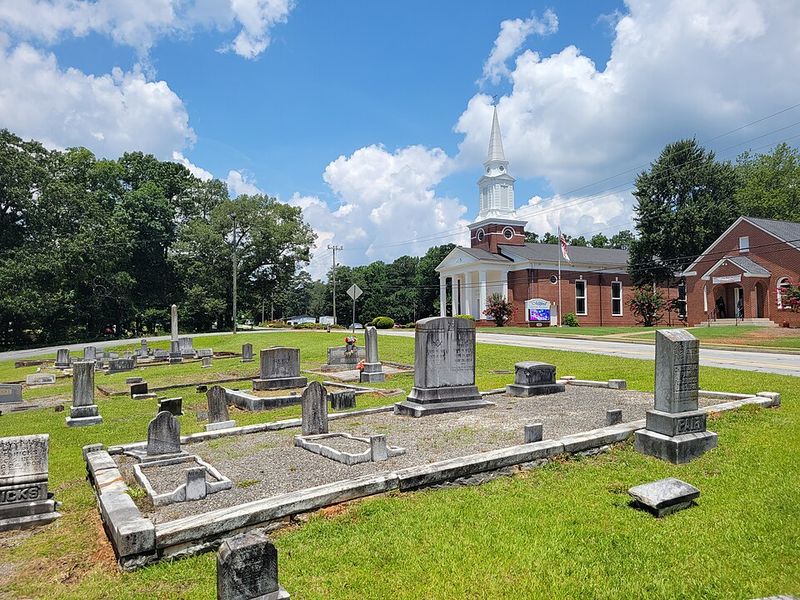
The gravestone that pulled me across the grass here holds roughly 150 words of pure fury. Caroline H.
Cutter’s marker declares she was terminated by the Baptist Ministry and Baptist Churches, accused of lying and condemned without a hearing.
Her husband, Dr. Calvin Cutter, paid for those words, and they still read like a lawsuit carved in stone. According to New Hampshire historian Fritz Wetherbee, the couple was expelled from their church after Calvin pressured members into funding a new building he championed.
The rest of the inscription blames the intentional and malicious destruction of her character and happiness for ending her life.
A short walk away sits a memorial boulder for their daughter, Carrie Cutter, honored as the first female to enter the service of her country in the Civil War and the first to fall at her post.
The burying ground itself dates to 1788, when William Crosby gave the town a one-acre plot, and many of Milford’s earliest residents rest under its shade.
I’d suggest visiting in late morning, when angled light makes shallow lettering far easier to read.
Address: Elm Street, Milford, NH
2. Chester Village Cemetery, Chester
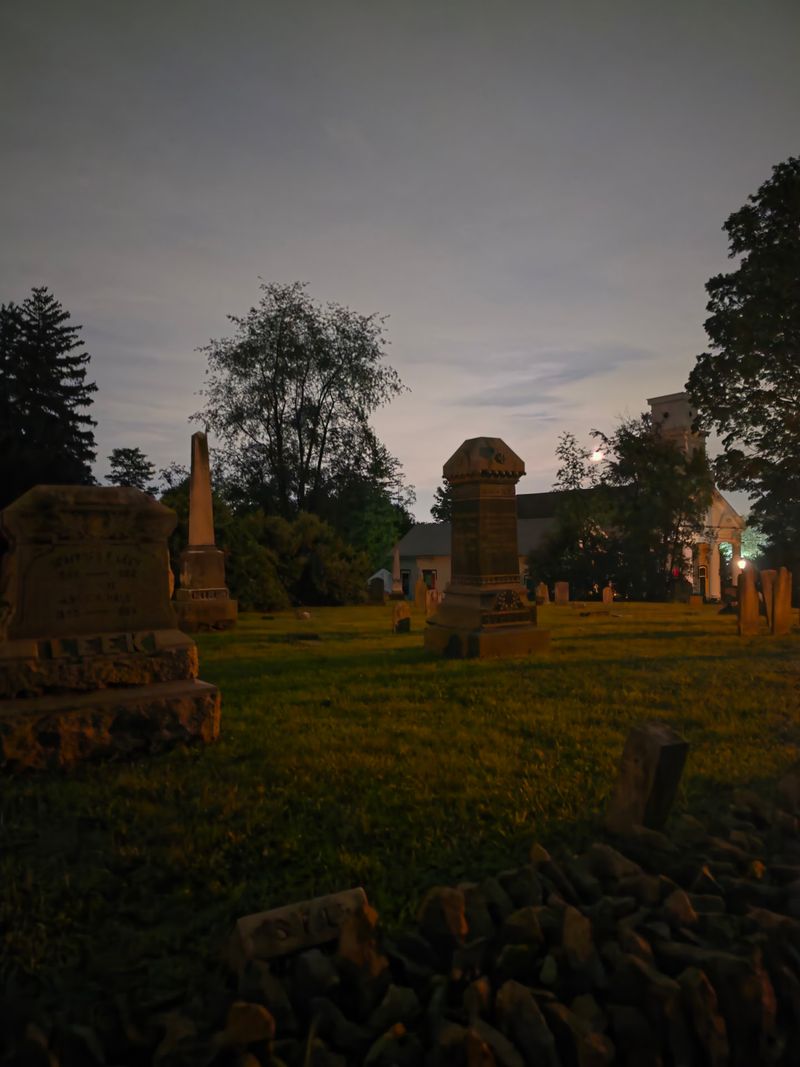
Faces. Dozens of them, some smiling, some clearly unimpressed, all staring out of slate that has weathered since the 1700s.
Local brothers Stephen and Abel Webster carved many of these markers, and the cemetery is unusually rich in stones actually signed by their makers. Theories about those expressions have circulated for generations, with the popular reading being that a smile or frown hinted at the carver’s guess about the person’s chances in heaven.
Here’s the twist I keep thinking about. Abel Webster is buried here too, and his stone, cut by his own brother, shows only a plain funerary urn, leaving Stephen’s private opinion permanently unknown.
Established in 1751, the ground became the town’s main burial place, absorbing graves moved from family plots and churchyards. The oldest portion carries the name Revolutionary Quarter for good reason, and the whole site joined the National Register of Historic Places in 1979.
Two New Hampshire governors, Samuel and John Bell, rest here, along with Chief Justice William Richardson and clockmaker Isaac Blasdel.
Give yourself an hour minimum, because the carving details reward slow wandering rather than a quick loop.
3. Pine Hill Cemetery, Hollis
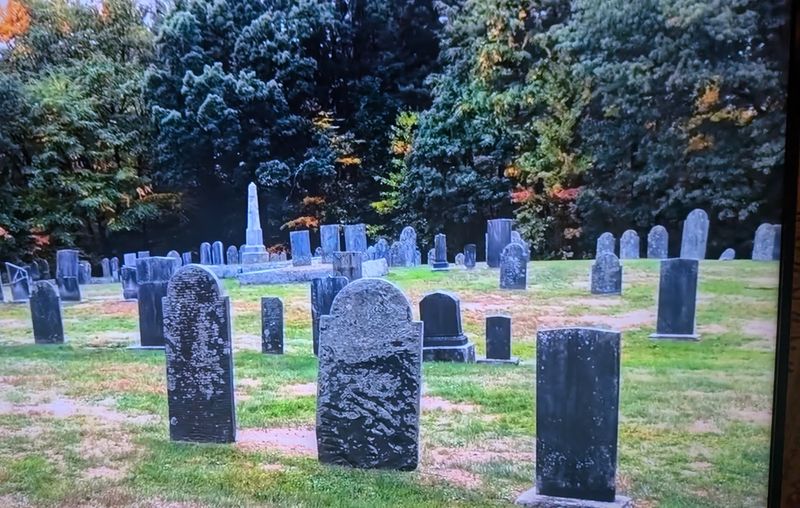
Locals rarely call this place by its real name. Around Hollis it’s simply Blood Cemetery, and the nickname comes straight from a family, not a crime.
Benjamin Parker Jr. donated the land in 1769 for a community burial ground, and roughly 300 people were laid to rest here, though weather has erased some of the earliest markers.
Abel Blood, buried in 1867, is the reason everyone whispers. His stone once showed a carved hand with the index finger pointing upward, and legend insisted that finger flipped downward after dark.
Sadly the original headstone was vandalized or removed years ago, which says plenty about how legends can damage the very thing that made a place special.
Stories multiplied anyway. Teenagers in the 1970s and 80s claimed to see a woman, thought to be Mary Blood, in their rearview mirrors, while newer rumors describe a child darting in front of cars and leaving skid marks behind.
Visitors also report orbs, cold spots, tapping sounds, and shadows among the pines.
Police keep an eye on the grounds now, so visit respectfully during daylight hours only.
Address: Nartoff Rd, Hollis, NH 03049
4. Gilson Road Cemetery, Nashua
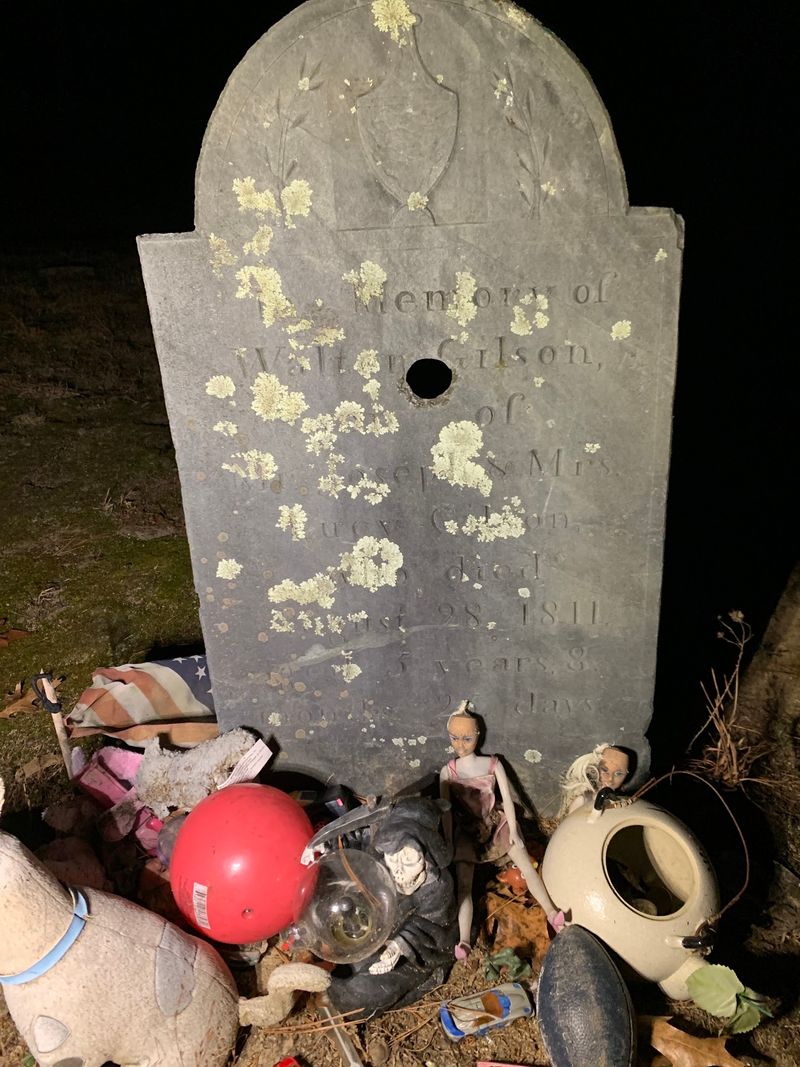
A perfectly round hole, about an inch wide, drilled clean through the middle of a child’s gravestone. That detail stopped me cold.
The stone belongs to Walter Gilson, who passed away in 1811 at just five years old, and nobody knows why the hole exists. Guesses range from a doorway for the soul to a marker pointing toward buried treasure.
This small rural burial ground has lost many of its older markers, and the earliest known grave belongs to Hannah Robbins from the 1790s.
Then there’s the tale of Betty Gilson, said to appear if someone shouts her name and claims to be holding her baby. Records show she lost at least three infants very young, and three small matching stones for unnamed Gilson babies sit nearby, often decorated with toys and candy left by visitors.
Reports here run long: glowing lights, drifting mist, whispers, a hooded figure, and a man in 1800s clothing seated on the stone wall.
I found the toy-covered baby stones far more moving than any ghost story, and I’d rather people leave flowers than shout names into the dark.
Address: Gilson Rd & Tanglewood Dr, Nashua, NH 03064
5. Point of Graves Burial Ground, Portsmouth
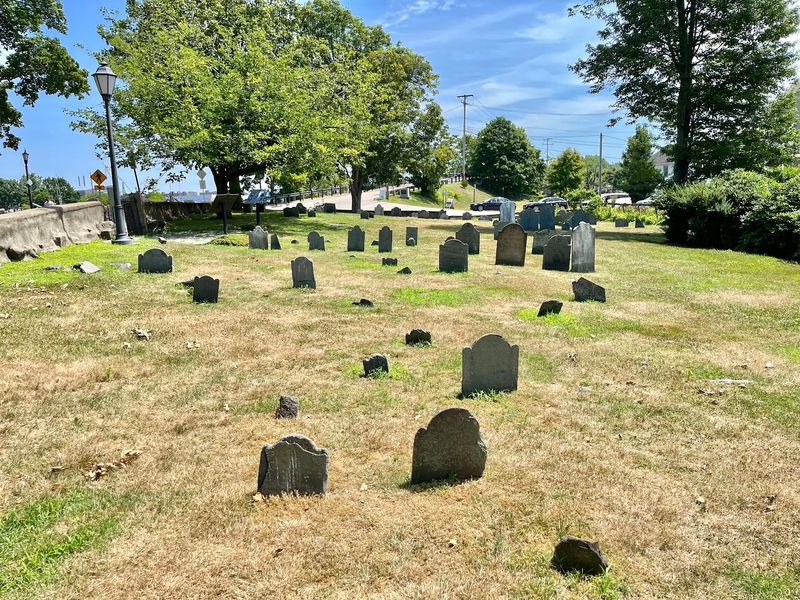
Portsmouth’s oldest surviving cemetery comes with a strange condition attached to its founding. When Captain John Pickering II deeded the land to the town in 1671, he insisted his cattle keep grazing there, and those animals destroyed many early stones before 1682.
The name comes from the original setting on a point of land above the Piscataqua River, and the surviving carvings are some of the finest colonial artistry in New England.
Francis Messer’s 1692 stone, cut by William Mumford, carries the Latin phrase Memento Mori, which was unusual locally. William Button, one of the wealthiest men in the colony, drowned in 1693 and got an elaborate marker from a carver known only as JN.
James Foster’s light-bulb shaped skull appears on Alice Ayers’s 1718 stone, while Obadiah Marshall’s 1746 pumpkin stone shows an oddly oval angel head.
Captain Tobias Lear IV rests beneath lines reading that an honest man’s the noblest work of God.
Elizabeth Elatson passed in a 1704-05 house fire that became America’s first published account of one.
Come early; the harbor light hits these stones beautifully.
Address: Mechanic Street, Portsmouth, NH 03801
6. Pine Grove Cemetery, Hampton
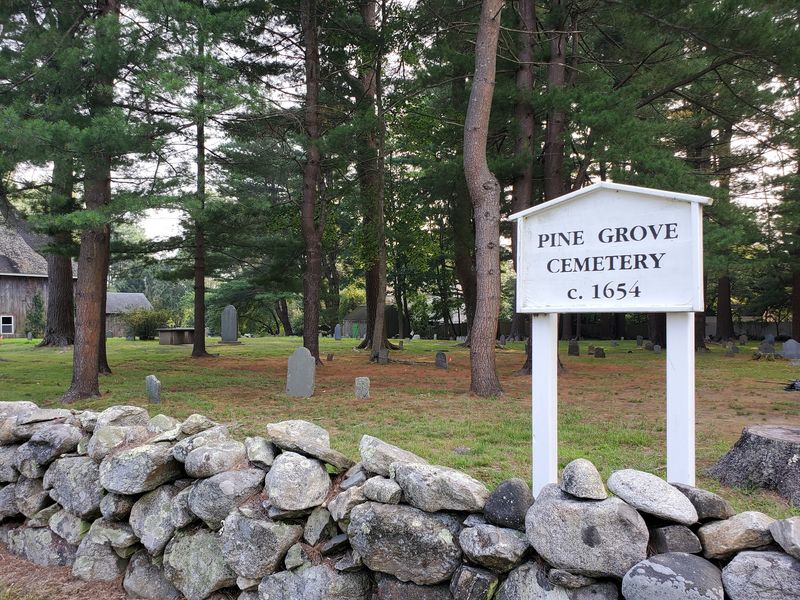
Town records mention a burial lot here as early as 1654, yet the oldest stone markers only date from the 1690s. That fifty-year gap fascinates me, and historians suspect wooden markers or heavy unmarked wolf stones once covered graves to keep animals away.
More than 250 graves fill the grounds, scattered in the haphazard colonial style with no neat family sections.
Edward Gove, who ended in 1692, had a life worth a novel. He took part in Gove’s Rebellion against King Charles II, was convicted of high treason, sentenced to be drawn and quartered, imprisoned in the Tower of London, and somehow made it home to Hampton.
Sally Mace’s 1795 stone delivers the classic warning: Behold and see as you pass by, as you are now, so once was I.
Reverend Ebenezer Thayer, who fell asleep in Jesus in 1792, received a tall monolith paid for by grieving parishioners, complete with a low-browed Boston School angel.
Selectman Henry Dearborn reportedly fell in the road in 1756, and Jonathan Leighton carved his unusual angel.
Bring a notebook. The epitaphs here beg to be copied down.
Address: Winnacunnet Road, Hampton, NH 03842
7. South Cemetery, Portsmouth
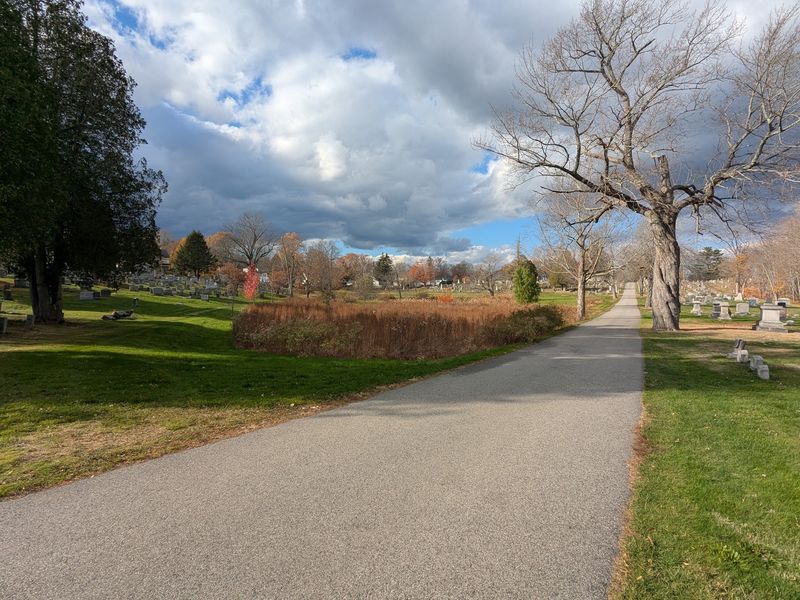
Five cemeteries stitched into one is not what I expected on the edge of Portsmouth. Cotton’s Burying Ground, Proprietors’ Burying Ground, Harmony Grove, Sagamore, and Auburn all flow together across land that once served as pasture for William Cotton, a military training field, and later Minister’s Field for livestock.
Cotton’s Burying Ground was in use by 1721.
The heaviest story belongs to Ruth Blay, the first and only woman publicly executed in New Hampshire, hanged in 1768 for concealing the birth of her stillborn child. Her grave is unmarked, and visitors often describe a thick presence in that corner.
Two victims of the 1873 Smuttynose Island criminals, Karen Christensen and Anethe, lie side by side beneath matching stones reading: A sudden end, a striking call, a warning voice that speaks to all.
The tallest monument belongs to Frank Jones, a hotel owner, former Portsmouth mayor, and congressman.
Hannah Cutt rests here too, as does Major General Napoleon Jackson Tecumseh Dana, badly wounded at Antietam.
Walk the pond loop last, since it softens an emotionally heavy visit.
Address: Corner of South Street and Sagamore Avenue, Portsmouth, NH
8. Vale Cemetery, Wilton
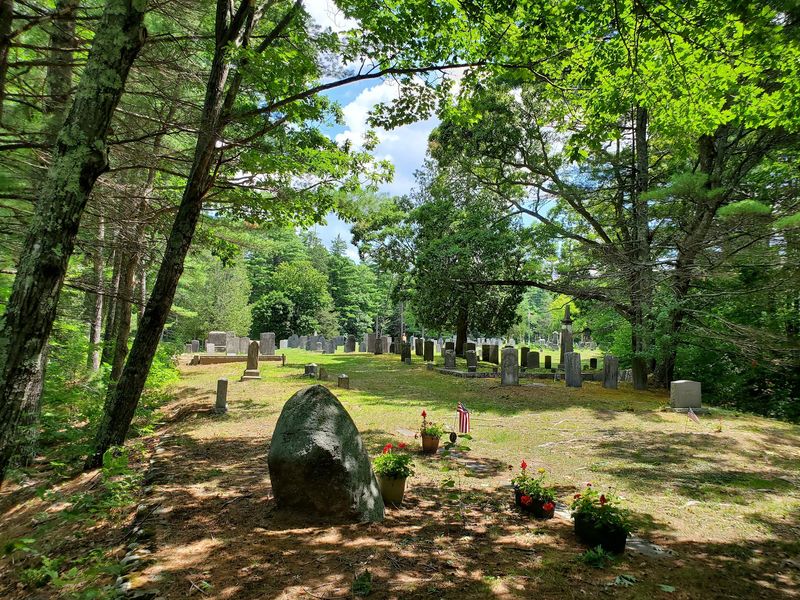
My favorite epitaph of the whole trip sits on a broken stone above a small pond. It praises a woman’s serenity of temper and gentleness of manners, describing a short and peaceful life.
Those words belong to Mary Ritter Spaulding, who passed in 1808 at 35, leaving seven children, and who shares her marker with her husband’s second wife, also named Mary.
Legend turned her into the Blue Lady, appearing as a hazy blue column of light or occasionally a full figure in old-fashioned clothing.
The burial ground began in 1752 with a 19-day-old baby named Phebe Cram, whose grave is now lost. Wilton formally acquired land in 1778, calling it North Yard, and renamed it Vale End in 1871.
Other inscriptions hit hard. Revolutionary sergeant Edward Herrick’s reads: Affliction sore, longtime I bore, physicians were in vain.
John Stiles passed away trying to stop a runaway horse, Captain Samuel Greele was suddenly gone by the fall of a tree, and Major Isaac Frye survived Bunker Hill and the 1773 Wilton Meetinghouse collapse.
Paranormal groups report drained batteries and odd equipment failures.
Address: Wilton, NH 03086
9. Woodland Cemetery, Keene
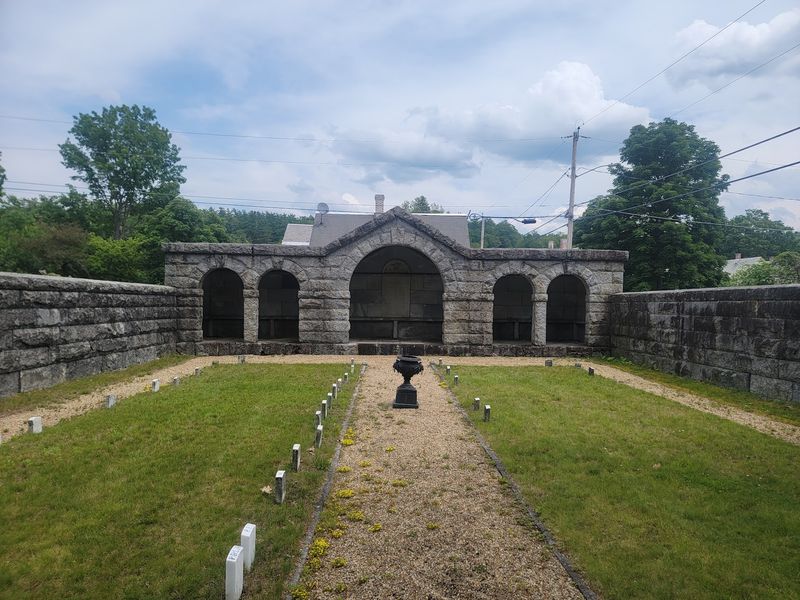
One marble stone here honors a hotel worker, and I found that oddly beautiful. Peter Jeffery, known around town as Old Peter, passed in 1870 at 57 after years as a man-of-all-work for the Cheshire House hotel.
No family could be found, so his friends at the hotel bought the stone themselves.
Established in 1854 on land purchased from Thomas M. Edwards, the grounds swallowed up the old Muster Field on Beaver Street.
Sections range from dark slate and marble to modern granite, and the cemetery once kept free grounds for people who could not afford a plot.
Another early marker states simply: Here lies an honest man. The Eckert monument leans into memento mori territory, nudging readers toward living with purpose.
Naturalist George A. Wheelock rests in the Northeast Division, while Reverend Zedekiah S.
Barstow, pastor for 50 years, carries the line: I have fought a good fight, I have finished my course, I have kept the faith.
A local rumor claims cursing near the chapel earns you a spectral mouth washing, complete with the taste and smell of soap.
Address: Beaver Street, Keene, NH 03431
10. Stark Road Cemetery, Conway
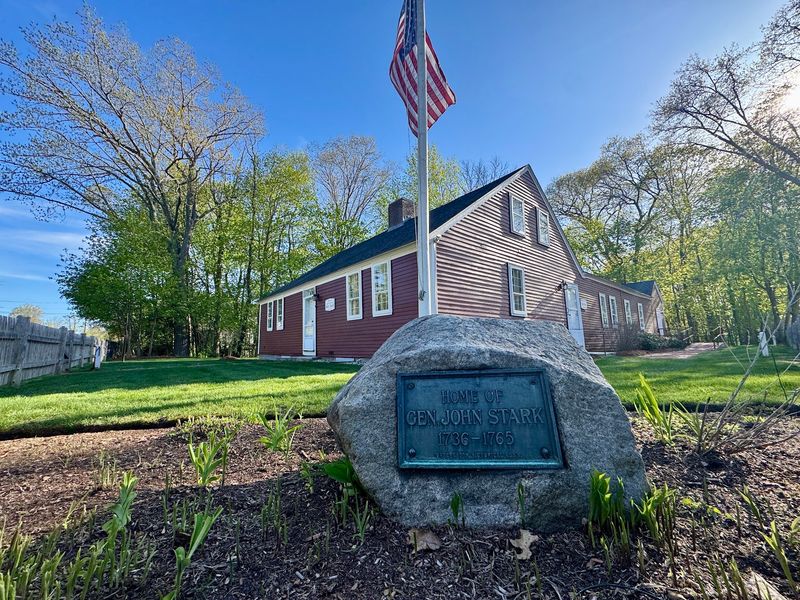
Broken slate patched with cement tells you immediately that this ground has had a hard time. Many markers were damaged by bulldozers during a 1982 road resurfacing project, and the rest have simply weathered badly.
The name honors Revolutionary War General John Stark, whose monument stands here even though he’s actually buried in Manchester. Curiously, the birth and passing away dates on the Conway marker reportedly differ from the ones in Manchester.
His motto, live free or pass, has been the state motto since 1945, and his brother Samuel, also a veteran, rests here.
The unsolved thread involves another brother, William Stark, a decorated French and Indian War veteran granted large tracts of land nearby. Passed over for command during the Revolution, he offered to fight for the British, lost his New Hampshire property to confiscation, and ended at the Battle of Long Island with his burial place still unknown.
Legends of red glowing eyes get pinned on him, or on Melinda Stark, a girl who passed in 1813 at sixteen.
The nearby Samuel Stark house once served as a smallpox pest house.
Address: Stark Road, Conway, NH
11. Pine Ridge Cemetery, Hancock
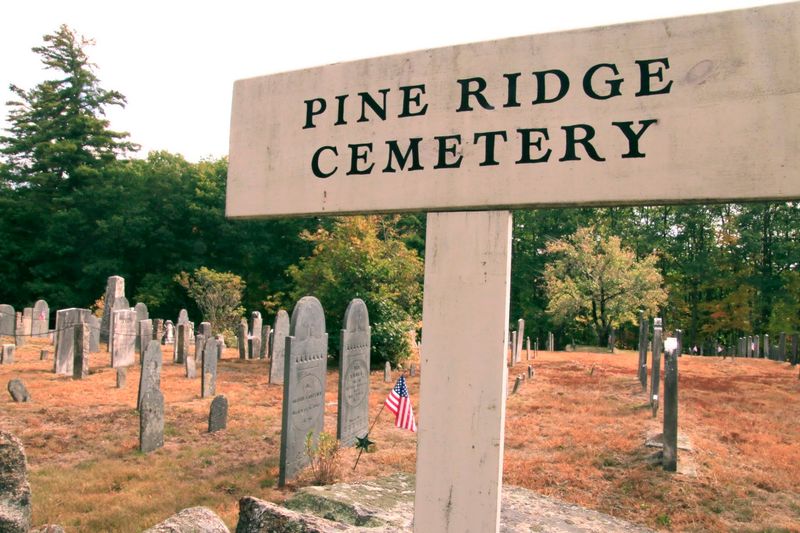
Hancock’s oldest burial ground sits right where two roads meet, which somehow makes it feel like part of daily village life rather than something set apart.
Early residents fill these rows, including veterans of both the Revolutionary War and the Civil War, and small flags mark many of them. Lots are no longer available for purchase, so the grounds stay exactly as generations left them.
What I love about this stop is the paper trail. Back in 1911, someone published a full copy of the inscriptions found in the old cemetery, preserving everything from heartbreaking farewells to quirky little rhymes long before the weather could take them.
Reading transcriptions before visiting completely changes how you look at a faded stone.
The town’s first burying place was established around 1785 on Norway Plain, now Main Street, so this corner has held Hancock’s memory for well over two centuries.
The Hancock Historical Society keeps family surname lists and plot locations, making it a genuinely useful stop for anyone tracing relatives.
End your loop here if you can, because the quiet feels earned after ten other stops.
Address: Intersection of Old Dublin Road and Main Street, Hancock, NH
