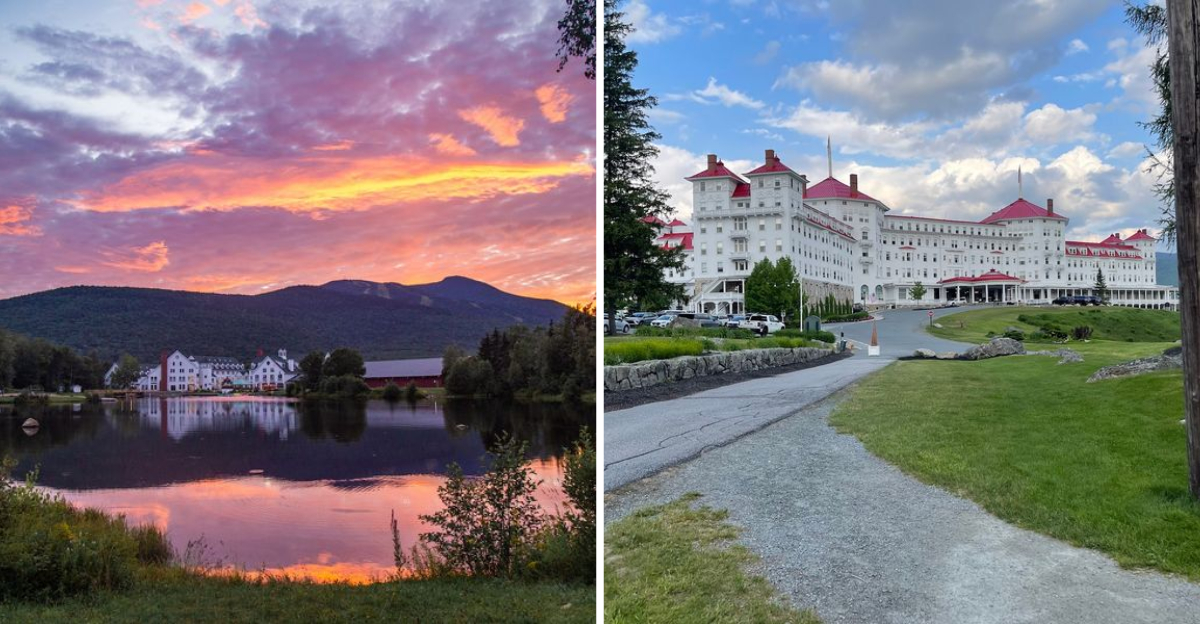
That sudden drop in temperature when you head north into the mountains is the whole reason I keep coming back to this corner of New Hampshire when summer turns sticky everywhere else. Higher ground means cooler mornings, river water that makes you gasp, and evenings where a sweatshirt actually feels good in July.
I have mapped out twelve towns and villages between granite peaks and rushing brooks, each one holding onto that crisp mountain air a little longer than the valleys below. I remember pulling up to a small river town and stepping out of the car into air so cool it felt like I had crossed into a different season entirely.
Some of these places are lively and full of visitors, others are so quiet you can hear the water the moment you roll down your window. For travelers chasing shade, waterfalls, and the kind of breeze that resets your whole mood, these places deliver in ways an air conditioner never could.
The mountains do not just cool the air. They change how you breathe.
1. Jackson, A Covered Bridge and Cascading Falls
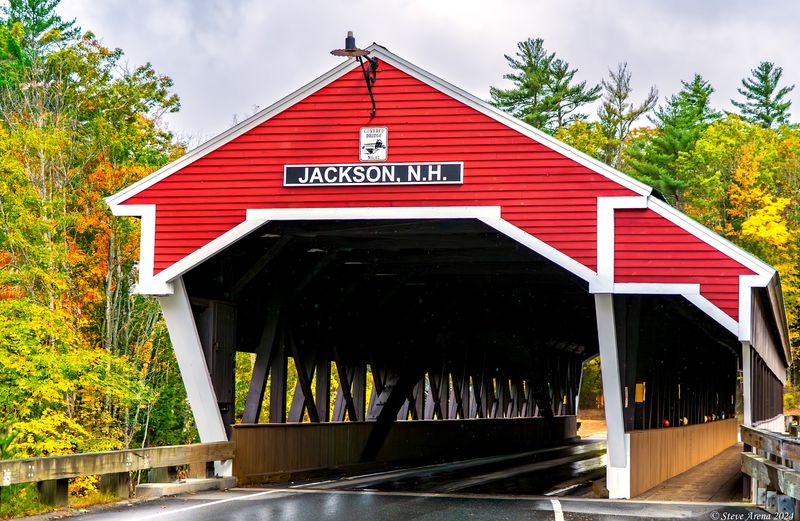
That red covered bridge greets you before anything else, and I always slow down to look at it even though I have crossed it a dozen times. Locals call it the Honeymoon Bridge, and it sets the mood for the whole village.
Beyond it, the roads curve past white clapboard buildings and open fields with mountains stacked behind them. The Wildcat River runs close enough that you hear it while walking around.
My favorite stop on a warm afternoon is Jackson Falls, a long ribbon of cascades where smooth rocks make natural benches. People stretch out to warm up, then slide into water cold enough to make everyone laugh out loud.
Spring brings thundering runoff, while summer stretches the daylight late into the evening.
From here it is a short drive up to Pinkham Notch, which opens the door to bigger hikes and the mossy drop of Glen Ellis Falls. Shade covers most of those trails, so even midday feels manageable.
What keeps pulling me back is how easily the village and the wilderness sit side by side, without either one feeling crowded out.
Address: 1 Carter Notch Rd, Jackson, NH 03846
2. Bartlett, Where the Brook Runs Over Granite Ledges
Bartlett surprised me the first time with how mild its summers stay, with July highs usually hovering around 80 degrees and cooling off fast once the sun drops behind the ridgeline. Tucked into the mountains, it also sits far enough inland that coastal storms rarely reach it.
The town wears its history quietly, with old rail lines and weathered buildings scattered along the valley floor.
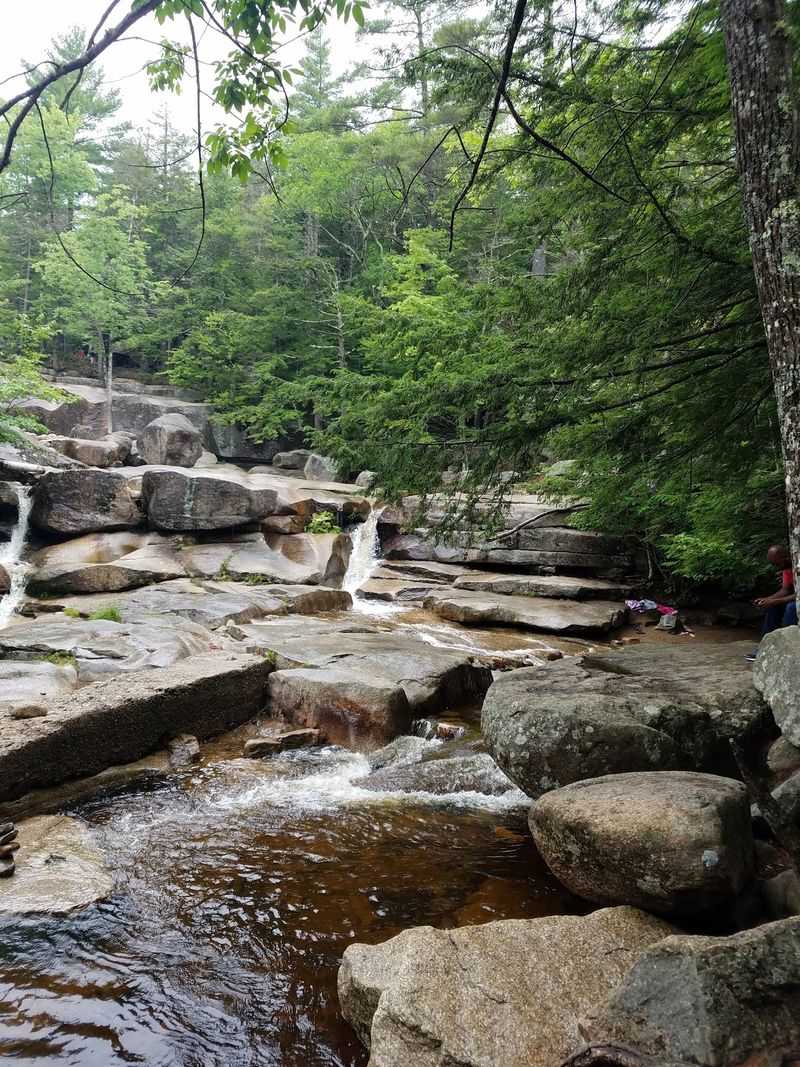
Diana’s Baths is the spot I recommend to anyone visiting for the first time. Lucy Brook spills down a wide staircase of granite, filling shallow pools and carving smooth chutes.
Kids wade, adults perch on the ledges, and the water stays shockingly cold no matter how hot the day gets.
For something more demanding, the climb to White Ledge on Mount Stanton pays off quickly with a wide view over the valley. It is short enough to finish before lunch.
I like Bartlett because it feels unhurried. There is no rush to see everything, and the shaded forest roads make even a slow drive feel like part of the adventure.
Address: 3872 West Side Road, North Conway, NH 03860
3. Franconia, Notch Country With Air Straight Off the Peaks
Few drives in New England beat the stretch through Franconia Notch, where the road threads eight miles between two mountain ranges and the temperature drops noticeably as you go. Dense forest and elevation do the work of any cooling system.
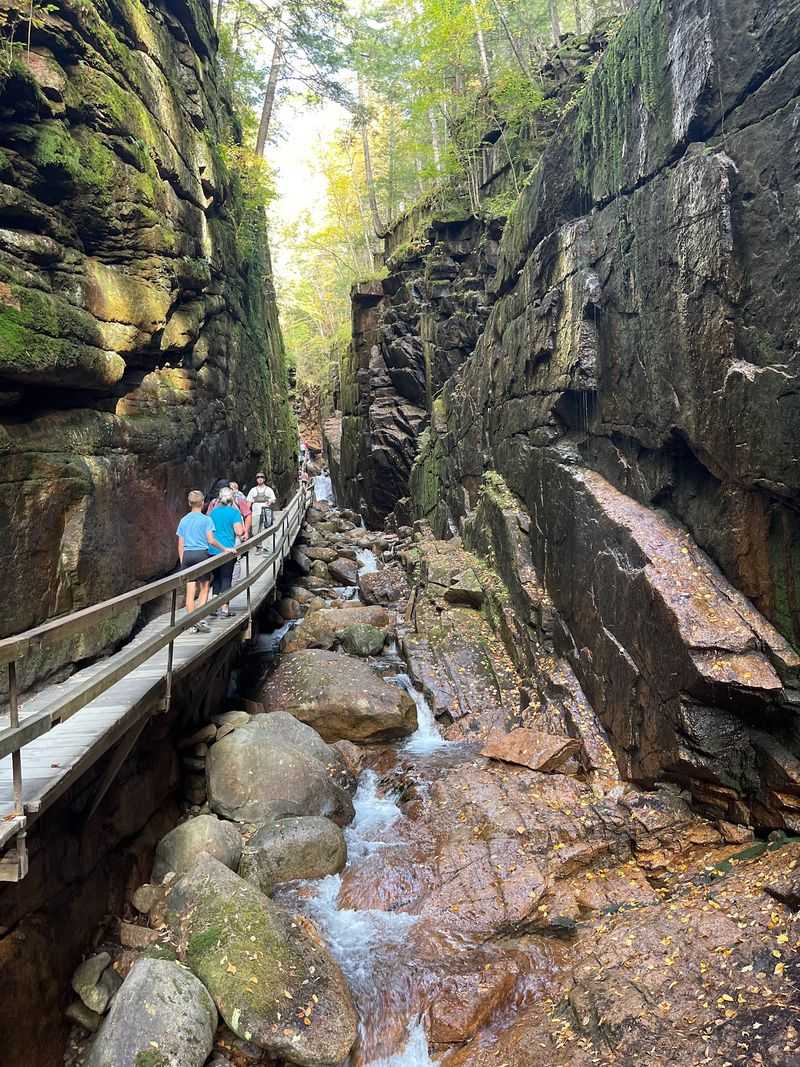
The Flume Gorge is the headliner, a narrow chasm with granite walls climbing as high as 90 feet. A two mile walkway takes you past waterfalls and covered bridges, and the damp air inside the gorge feels almost cold.
I rode the Cannon Mountain Aerial Tramway on a hazy afternoon and still caught views stretching across several states.
At 4,080 feet, the summit had a wind sharp enough that I zipped my jacket in August.
Afterward, Echo Lake Beach makes a fine reward, sitting at 1,931 feet with clear water and Mount Lafayette looming over the far shore. Swimming there with that skyline in front of you is hard to beat.
Franconia itself stays small and unhurried, more of a basecamp than a destination in the loud sense.
Address: 260 Tramway Drive, Franconia, NH 03580
4. Sugar Hill, Purple Fields and Long Ridge Views
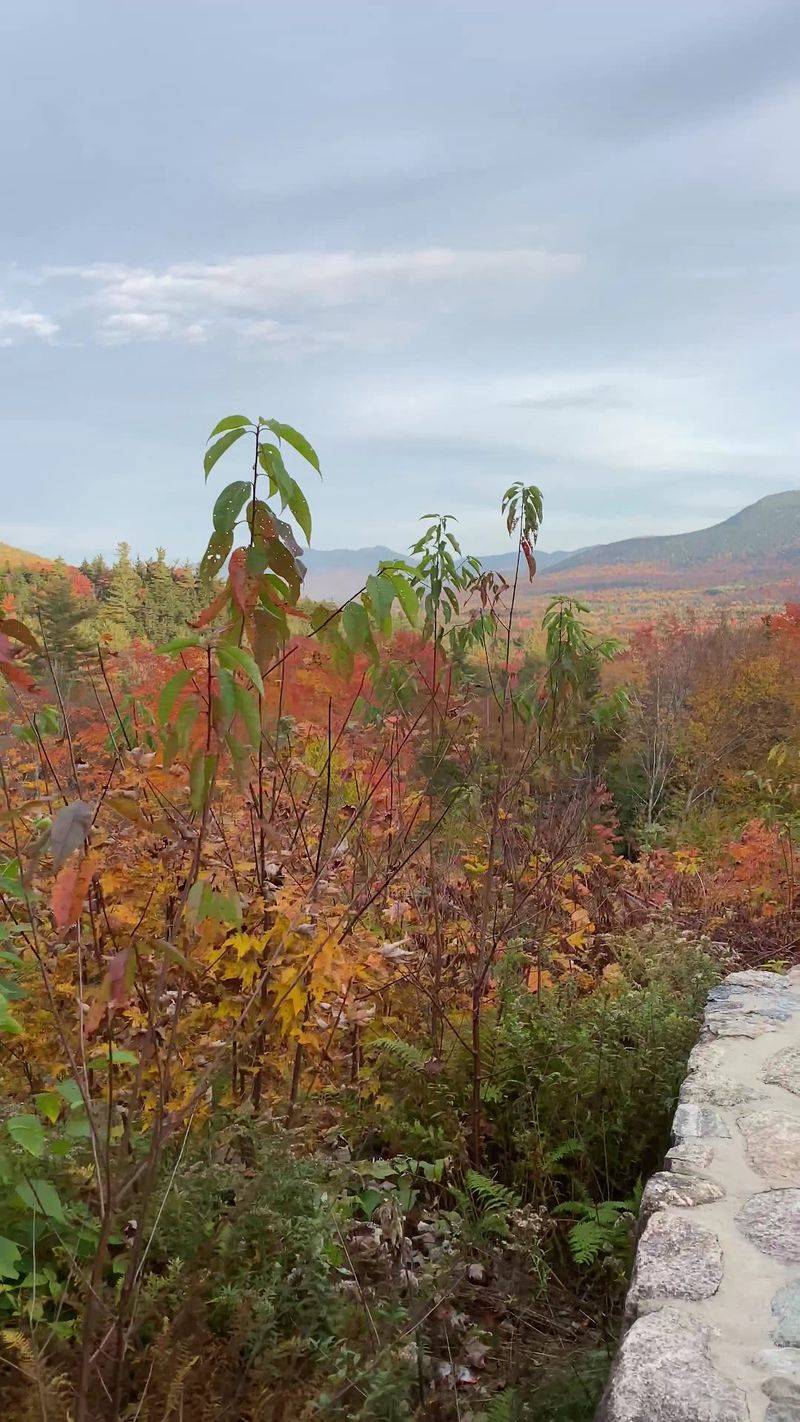
Long before air conditioning existed, city families rode north to Sugar Hill specifically to escape the heat, and honestly, they had the right idea. The village became a fashionable Victorian retreat for exactly that reason.
Perched high on a ridge, it looks out toward the Presidential, Franconia, Kinsman, and Dalton ranges all at once from Sunset Hill.
The name comes from the sugar maple groves that blanket the hillsides, which turn the whole place golden in autumn and shady green in summer. In June, though, the fields explode with purple lupine.
I have watched photographers stand in those meadows for hours, and I understand the obsession.
There is also a quirky bit of history here, since Sugar Hill claims the oldest golf course in the state, dating back to 1897.
Mostly I wander the back roads, stopping wherever the view opens up. The air moves constantly across the ridge, carrying that cool, clean smell of pine and cut grass.
It is the kind of village where nothing demands your attention, so everything gets it.
5. Waterville Valley, A Hidden Pocket in the Sandwich Range
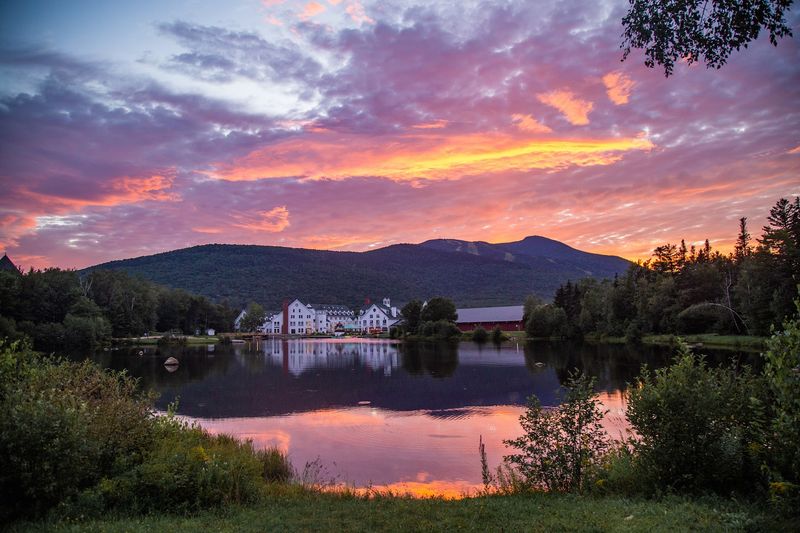
Tucked at the end of a dead end road deep in the Sandwich Range, Waterville Valley feels like a place you have to mean to find. Once you arrive, the mountains close in around you and the noise of everywhere else disappears.
Trails for hiking and biking crisscross the valley floor and climb the slopes above it.
Riding the chairlift at Snow Mountain is an easy way to earn a view without the sweat, and disc golf fills an afternoon nicely. Corcoran Pond sits at the center of everything.
Fed by cold streams, it is good for pedal boating, fishing, or a swim that wakes you right up.
Water is everywhere here, from brooks to alpine ponds to the Mad River itself. Cascades Falls has clear pools worth the walk, and the Waterville Flume has smoothed the granite riverbed into a natural slide when the flow is high.
Evenings bring music to the gazebo in Town Square, and I have spent more than one sunset sitting there with the pond going pink.
6. Lincoln, Gorges, Potholes, and the Kancamagus
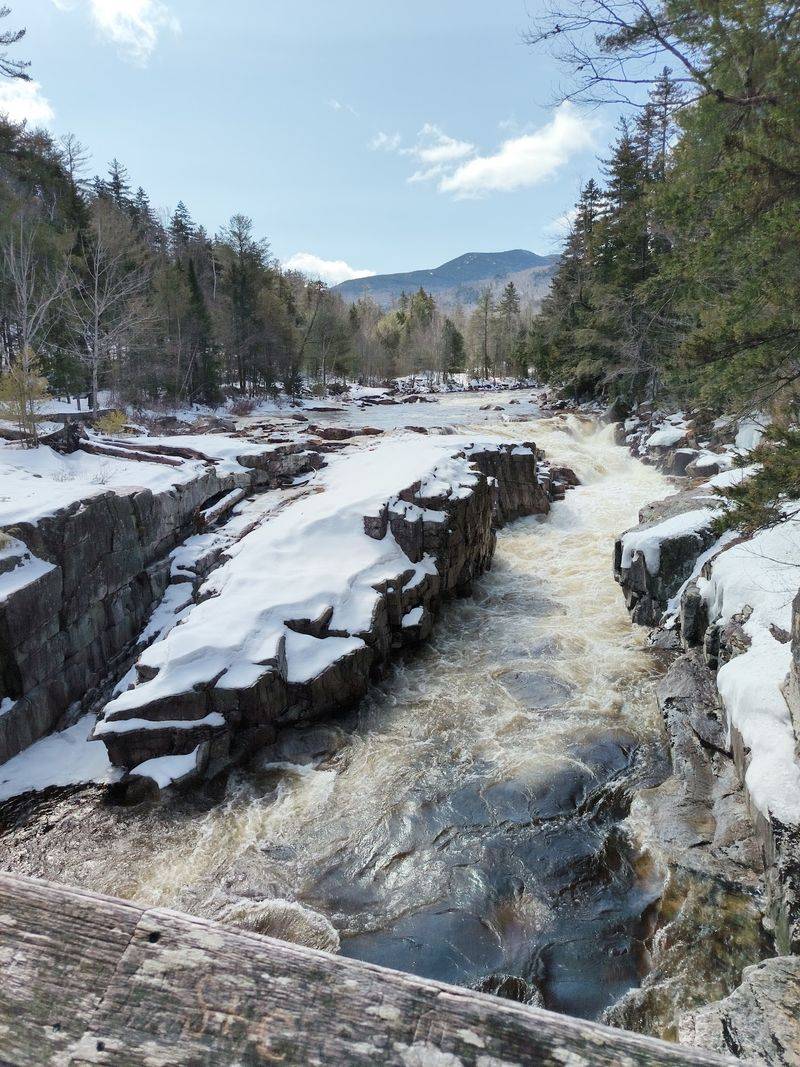
Water has been rearranging Lincoln for thousands of years, and the evidence is everywhere you look. Deep gorges, tumbling falls, and strange scooped rock formations line the landscape.
The Flume Gorge sits at the base of Mount Liberty, an 800 foot granite corridor with walls rising 70 to 90 feet overhead. Inside, the air turns cool and damp, and rushing water follows you the entire way through.
Not far off, The Basin stops most people in their tracks.
It is a glacial pothole about 30 feet across and 15 feet deep, its walls polished smooth by centuries of swirling sand and stone.
Hikers should look at the Falling Waters Trail, which strings together Stairs Falls, Swiftwater Falls, and the tall drop of Cloudland Falls at around 80 feet. Shade covers nearly the whole climb.
The Kancamagus Highway starts nearby, and I never manage to drive it quickly because every pullout tempts me to stop.
Between the gorges and the constant sound of moving water, Lincoln holds its cool even during the hottest stretch of summer.
7. North Conway, Cliffs, Swimming Holes, and Village Bustle
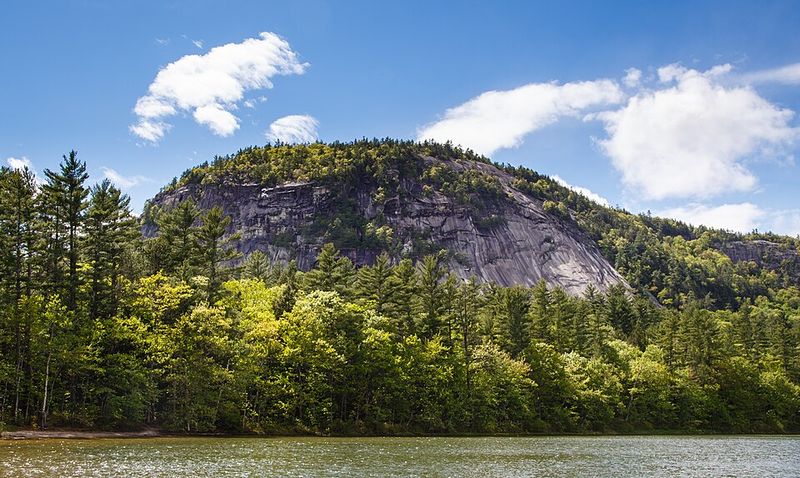
Busier than its neighbors, North Conway hums with energy year round and serves as the front door to the Mount Washington Valley. I like that you can shift from a lively village street to a quiet trail in about ten minutes.
Historic buildings sit alongside a surprising amount of open green space.
Cathedral Ledge and Whitehorse Ledge rise nearby, and their sheer granite faces draw climbers from all over the region. Watching them from below is entertainment enough for me.
When the sun is strong, the Saco River is where everyone ends up, since its swimming holes run cold and clear.
Schouler Park in the village center works well for a picnic, especially with the mountains framing the far side. Just east of town, the Green Hills Preserve offers wide views toward Mount Washington and the Presidential Range.
The village sits around 545 feet, but the peaks surrounding it pull cool air down through the valley, especially after dark.
Mornings here feel fresh in a way I never quite get at lower elevations.
8. Gorham, Trail Town on the Androscoggin
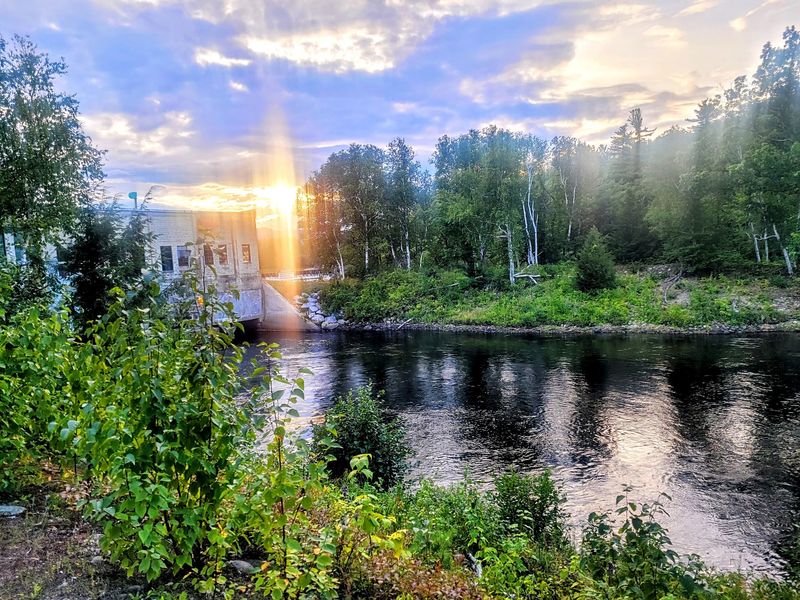
Hikers coming off the Appalachian Trail give Gorham a particular flavor, packs leaned against benches and boots caked in mud. The town holds an official Appalachian Trail Community designation, and it is the last major resupply stop for northbound thru-hikers before the long push toward Katahdin in Maine.
Sitting in the Androscoggin Valley, Gorham has the river running right through it and the northern Presidential Range towering nearby.
Access to the White Mountain National Forest is immediate, which explains why the population roughly triples during summer.
Canoeing and kayaking take up the river, while fishing, hiking, and biking fill everything else. I have found the shaded forest roads around town make for easy afternoon rides when the sun is high.
Dolly Copp Campground sits close by with an old fashioned, rustic feel and tall trees overhead.
What I appreciate most is the practical, unpolished character of the place. People here are genuinely outside all day, and the cool mountain air makes that possible even in the middle of July.
9. Bethlehem, The Village That Cured Summer Sniffles
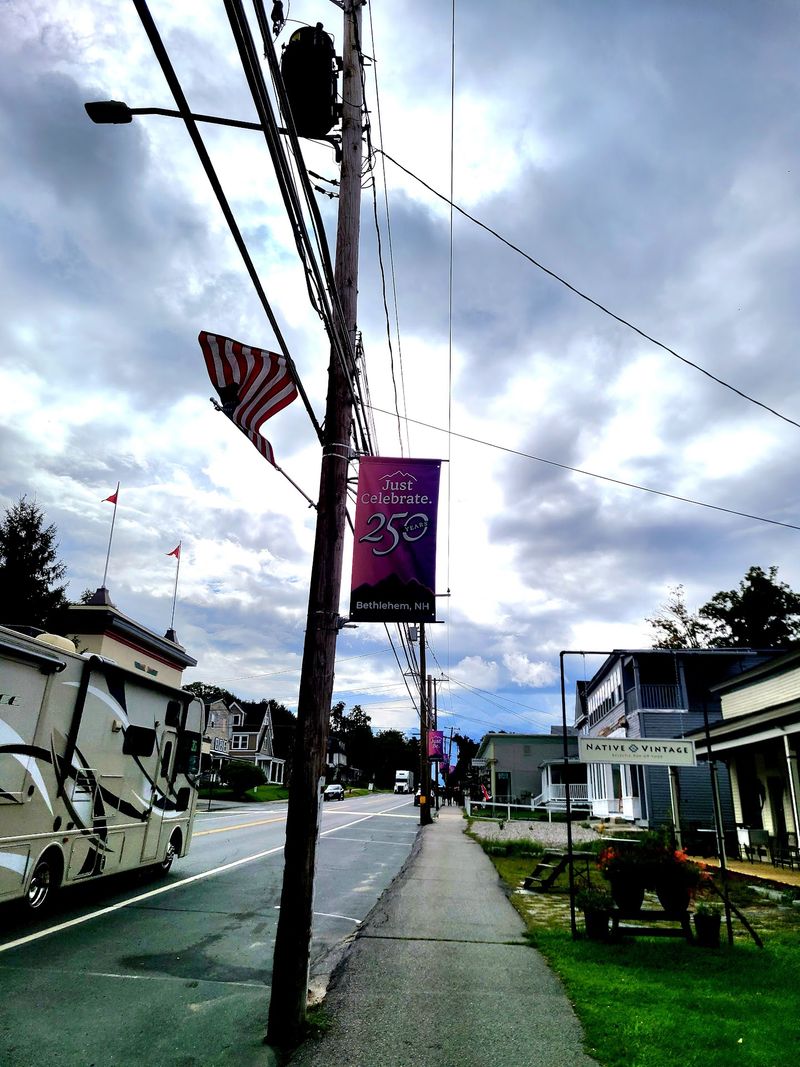
Here is a fun bit of history: Bethlehem once drew crowds of city dwellers desperate for relief from hay fever, thanks to its high elevation and unusually clean air. Word spread, and the village filled with summer visitors looking to breathe easier.
Often described as the highest town in New Hampshire, it still carries that airy, elevated feeling.
The main street is compact and walkable, lined with shops and galleries that show off a real creative streak in the community. I have spent lazy hours browsing without buying much of anything.
Views open up between buildings, reminding you the mountains are always right there.
Trails for hiking and biking wind through the surrounding hills, and the town sits within easy reach of Cannon Mountain and Bretton Woods for anyone chasing snow later in the year.
There is a comfortable, lived-in warmth to Bethlehem that I find rare in mountain towns. Nobody is pushing you toward an attraction.
You can sit on a porch, watch the light change on the ridges, and call that a complete day.
10. Littleton, Riverwalks and Rail Trails
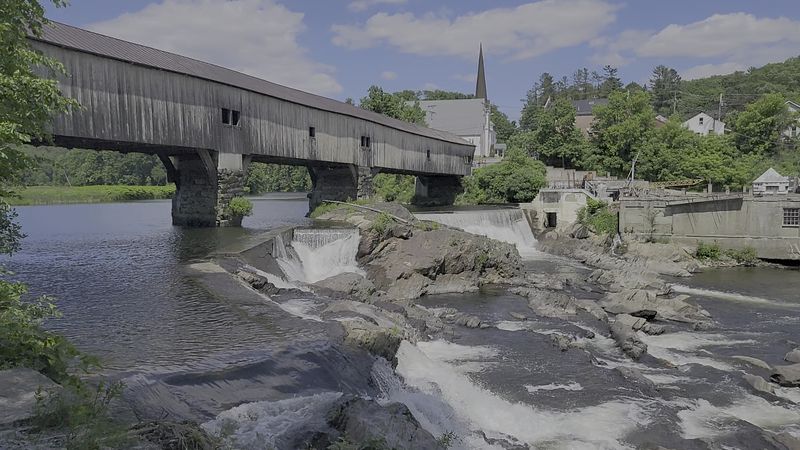
Morning in Littleton means the sound of the Ammonoosuc River, which cuts right through the middle of town and never quite quiets down. I usually start with a walk along the Littleton Riverwalk, a paved path only half a mile long but beloved by locals and visitors alike.
The Riverwalk Covered Bridge stretches 352 feet across the water, built for pedestrians only.
It is the spot everyone stops to take photos, and the river views from the middle are genuinely lovely.
Cyclists have plenty to work with here. The Ammonoosuc Rail Trail runs 19 miles through shaded woods and farmland, flat enough for a relaxed pedal.
For something steeper, the PRKR MTN Trails form a 22 mile network used for hiking, mountain biking, and cross-country skiing, climbing to the 1,905 foot summit of Parker Mountain.
July highs average around 77 degrees, which explains why the town feels so pleasant when the rest of New England is wilting.
Littleton has a real working downtown, and that mix of everyday life and mountain scenery keeps drawing me back.
11. Bretton Woods: Grand Views Beneath Mount Washington
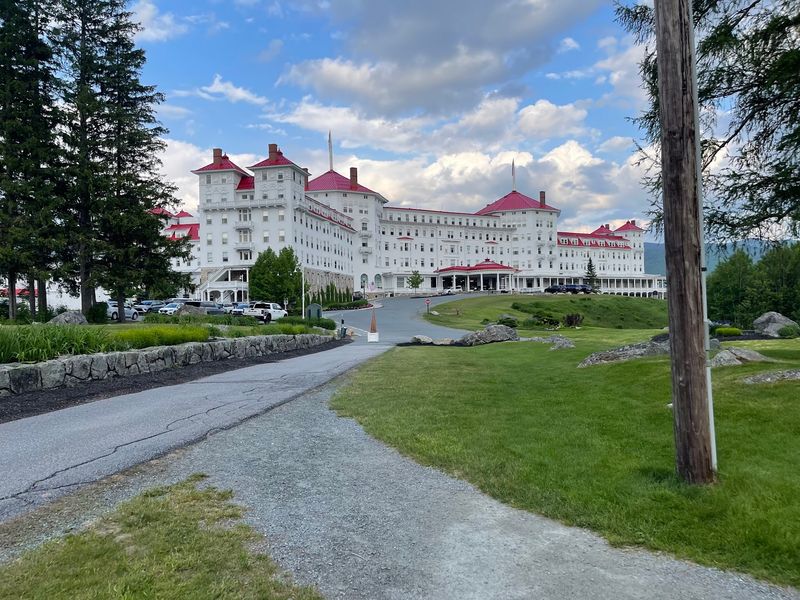
Nothing quite prepares you for the scale of Bretton Woods, wrapped almost entirely by the White Mountain National Forest with Mount Washington and the whole Presidential Range filling the horizon. The air up here feels thinner and noticeably cooler, a straight result of elevation and heavy forest cover.
The historic Omni Mount Washington Resort anchors the area, a grand white hotel that looks like it belongs in another century.
Even from the road, its scale against the mountains is striking.
Summer brings Nordic trails, golf, and mountain biking, and the ski area, the largest in the state with 101 trails, turns into open green slopes worth wandering.
The Mount Washington Cog Railway is the experience I recommend hardest. As the world’s first mountain-climbing cog railway, it hauls passengers up a startlingly steep grade to the summit of the Northeast’s highest peak.
Snow can fall there even in summer, which I found hard to believe until I felt the wind at the top.
Address: 310 Mount Washington Hotel Road, Bretton Woods, NH 03575
12. Whitefield, Quiet Gateway to the North Country
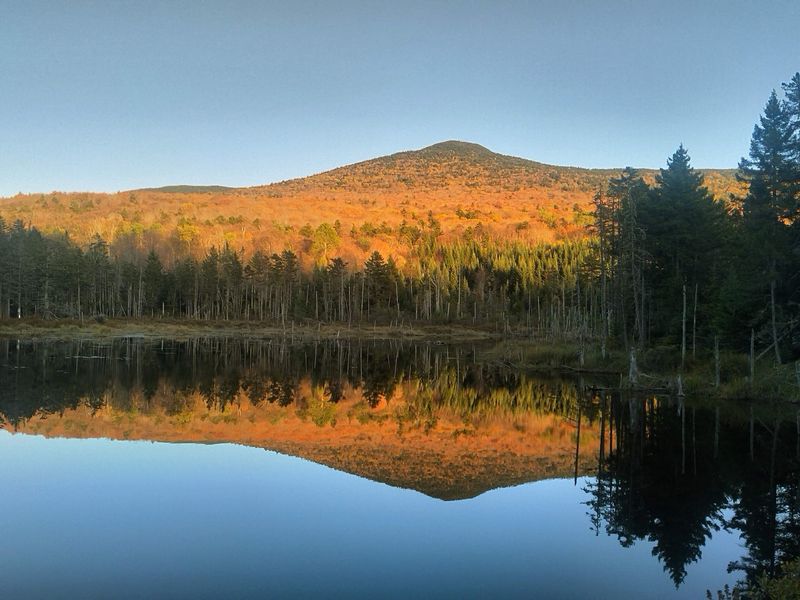
Whitefield gets overlooked, and I suspect the people who live there are fine with that. Classic New England architecture rings the village, and the Johns River slips through town without much fuss.
Peaks sit on the horizon in nearly every direction, a steady backdrop rather than a main event.
Elevation keeps things noticeably cooler here than in the southern half of the state, and evenings turn crisp early.
For the widest views around, Weeks State Park is close by, and its stone observation tower opens up a long look across northern New Hampshire. I climb it every time and never get tired of picking out ranges in the distance.
Forest Lake State Park offers the opposite mood, calm and low key with a sandy beach and still water.
Compact and framed by mountains, it suits families and anyone who just wants to sit near water for a few hours.
Whitefield rounds out this route perfectly, because after all the gorges and summits, a quiet lakeside afternoon in cool air is exactly what the trip needs.
