Pulling off a back road in New Hampshire and finding something completely unexplainable sitting in the trees, that is when I knew my travel plans were about to change.
Between the granite peaks and the short stretch of seacoast, this state has quietly collected rockets, ruins, record-breaking counters, and stone puzzles nobody has fully solved.
I love that none of them try very hard to be famous, which somehow makes them more fun to find. I found a rusted rocket in a field once, standing like it had landed and simply never left.
Another time, I walked into the woods and found a staircase leading nowhere, each step perfectly intact, surrounded by nothing but trees. This route loops through the mountains down to the southern border and out to the Atlantic, and every stop rewires how you picture this state.
For travelers who would rather remember a strange staircase in the woods than another gift shop, these places deliver. Pack good shoes, keep the map handy, and let curiosity pick the turns.
1. A Cold War Rocket Parked on a Village Green
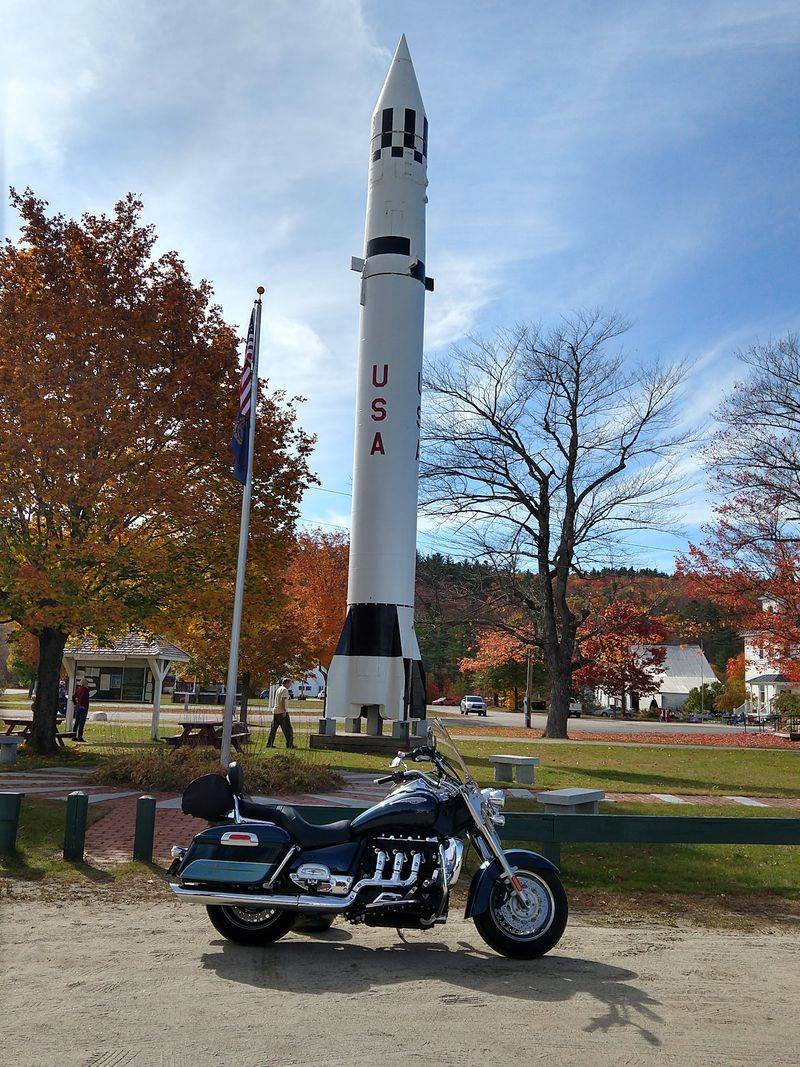
Nothing prepares you for rounding a bend past white clapboard houses and spotting a 70-foot missile aimed at the clouds. I laughed out loud the first time, then stood there for ten minutes reading the plaque.
The rocket is a real decommissioned Redstone ballistic missile, hauled north and installed in 1971 after a determined push by local resident Henry Asselin. It honors Alan Shepard, the New Hampshire native who became the first American in space aboard a similar Redstone.
Designed under Wernher von Braun, the Redstone picked up the nickname Army’s Workhorse because it handled so many different jobs. It also carried the first live nuclear warhead tested over the Pacific, which is a heavy history for such a peaceful patch of grass.
What makes the stop memorable is the contrast. Birds chatter, a church steeple pokes above the maples, and a piece of Space Age engineering just sits there like a very tall neighbor.
Come early and you will likely have the green to yourself. Bring a wide lens, because fitting the whole thing in one photo takes some backing up.
Address: 112 Water Street, Warren, NH 03279
2. Forest Ruins of a Costume Designer’s Party Castle
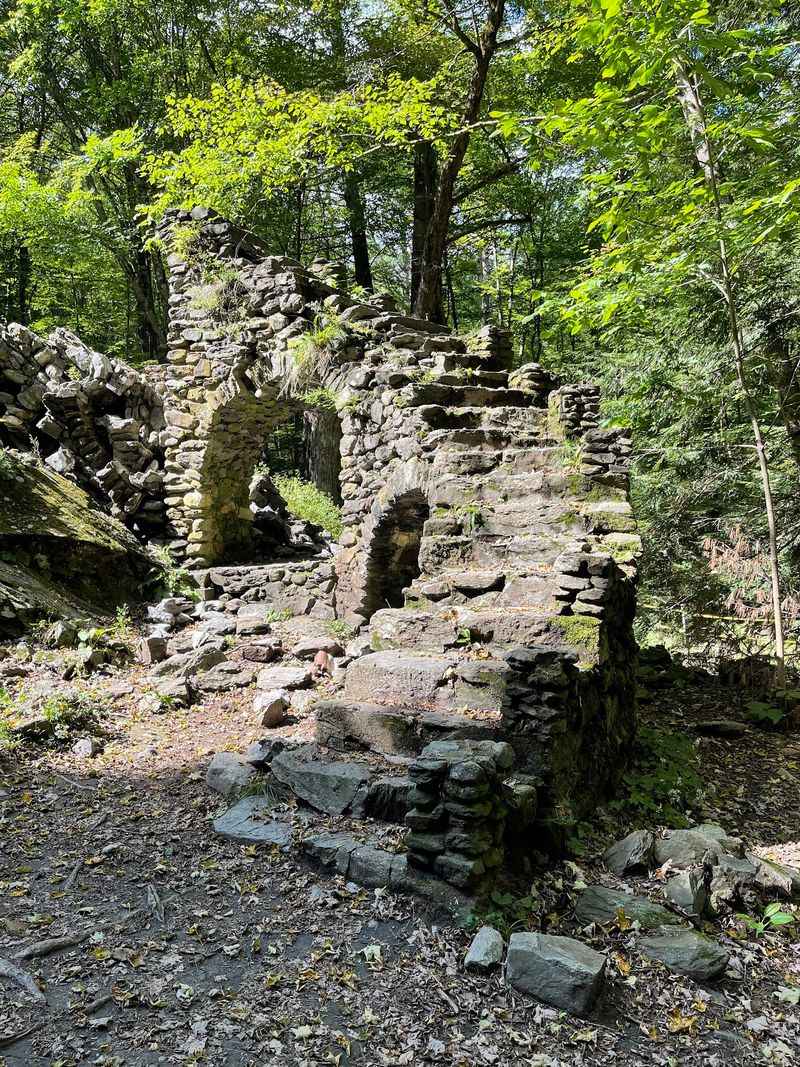
A curving stone staircase rising into empty air, framed by a Roman arch, is the sort of image that sticks with you for years. I found it half-buried in ferns, with nothing above it but treetops.
The staircase belonged to a summer house built in 1930 by Antoinette Bramare, better known as Madame Sherri, a Paris-born costume designer who worked with the Ziegfeld Follies in New York.
Her chateau was never really a home. She lived in a plainer farmhouse nearby and used the stone building purely for entertaining friends who came up from the city.
Neighbors remembered her glamorous style and her chauffeured Packard, which must have looked wonderfully out of place on these dirt roads.
Her fortunes faded, the building was vandalized, and a fire finished it off in October 1962. Foundations, chimneys, and that famous staircase survived.
The upper section of the stairs collapsed in July 2021, so the structure is roped off now. Respect the barriers and enjoy the view from the trail.
The surrounding 513-acre forest has gentle hiking loops and a pond worth circling.
Address: Gulf Road, Chesterfield, NH
3. An Eight-Story Concrete Sentry Above the Surf
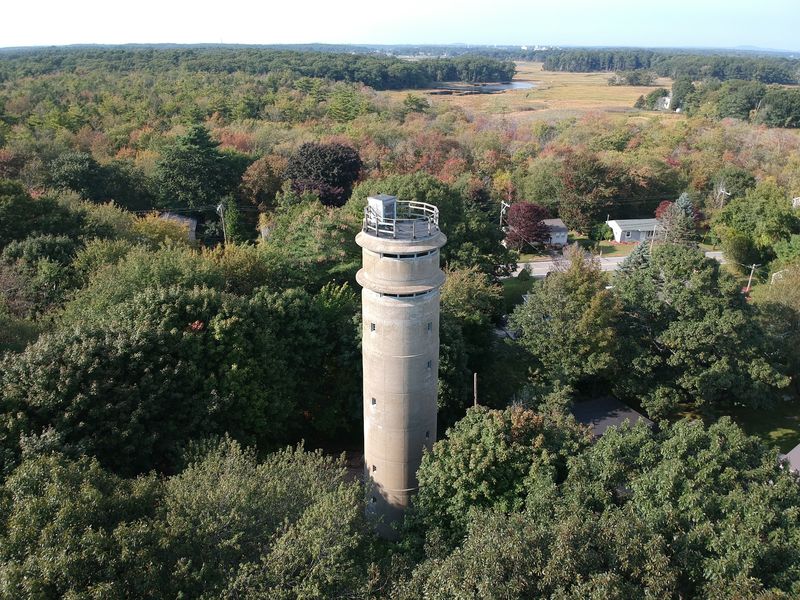
Sea air, crashing waves, and then a blunt gray column of concrete eight stories tall. It does not blend in, and that was always the point.
Built in 1943, this observation tower belonged to the Harbor Defenses of Portsmouth. Soldiers climbed its internal spiral staircase to scan the Atlantic for enemy ships and aircraft, then triangulated positions and radioed coordinates to the gun batteries at nearby Fort Dearborn.
Fourteen similar posts once lined this short coastline. Only this one survives in close to original condition, which is why it landed on the National Register of Historic Places in 2010.
The walls are a foot of reinforced concrete and the whole thing stands 73 feet, so it shrugged off decades of storms. After the war it served the Navy during the Cold War, and later the state Fish and Game Department used it to watch for illegal offshore fishing.
A volunteer group called the Friends of Pulpit Rock Tower now cares for it and opens the doors for occasional tours.
Even from the outside, standing beneath it changes how you see this stretch of shoreline.
Address: 9 Davis Road, Rye, NH
4. A Ruin Built on Purpose in Waterville Valley
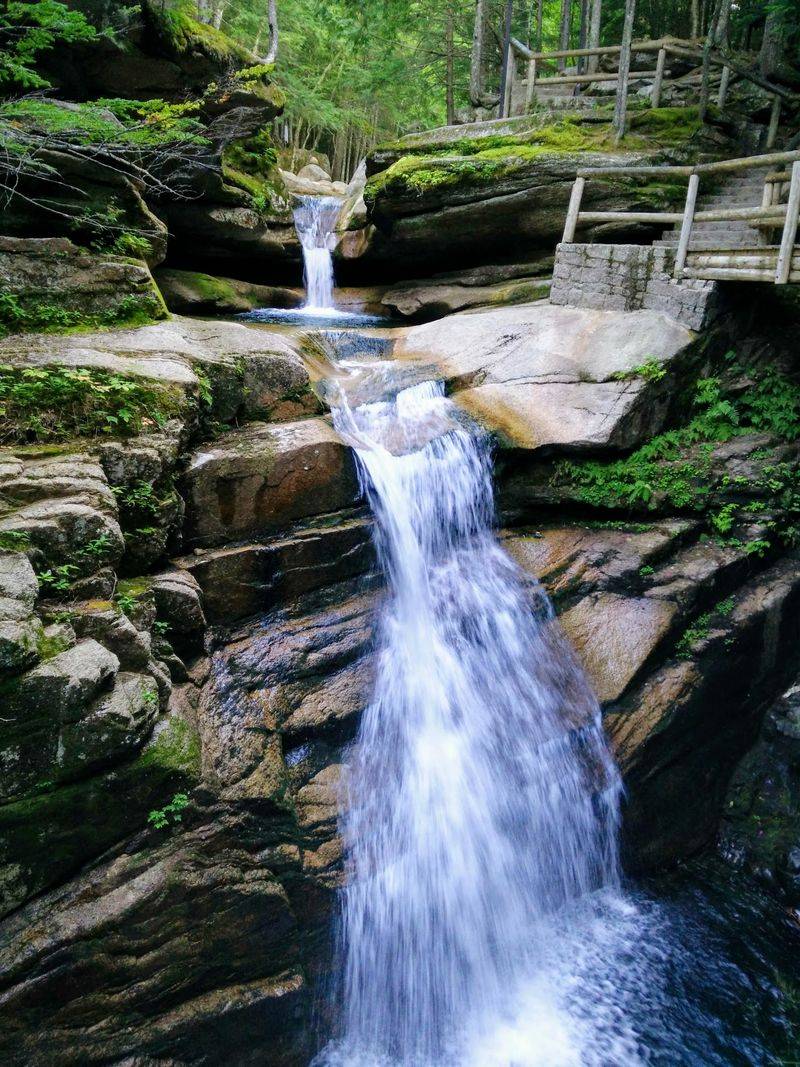
Here is my favorite kind of oddity: a ruin that was never anything else. Someone decided this valley needed one, so he built it.
The Reverend J.M. Buckley, a summer resident, put up this two-and-a-half-story stone tower in 1880.
Local accounts say he felt Waterville Valley had everything except a ruin, and his travels in the Eastern Hemisphere gave him plenty of inspiration.
People sometimes call it a castle turret, which fits. Round, mossy, and slightly crooked, it looks like a page torn from a storybook and dropped among the pines.
Getting there is part of the fun. The Mad River Path starts near Town Square and rolls along easy ground beside the water, so families with young hikers can manage it without drama.
I sat on a rock nearby for a while and heard nothing but the river and a woodpecker. It is a genuinely peaceful place to think about why a person would spend a summer building fake antiquity for no reason other than delight.
Go in autumn if you can. The color overhead makes the gray stone glow.
Address: Stone Tower Lane, Waterville Valley, NH
5. A Giant Stone Frog That Once Drew Carriage Loads of Tourists
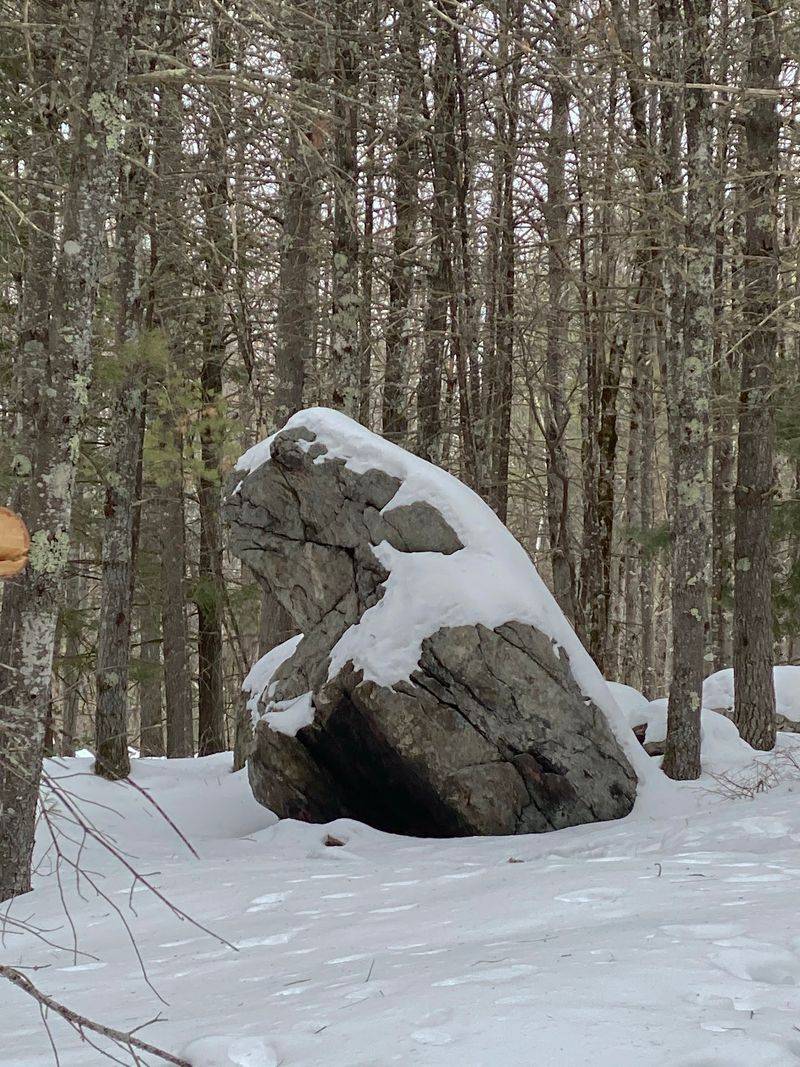
It is hard to imagine a ten-foot-tall boulder being a major tourist attraction, but for a few decades in the 1800s, that is exactly what Frog Rock was. Sitting deep within the Frances Hildreth Towne Memorial Forest in New Boston, this natural oddity looks, from just the right angle, remarkably like a giant frog staring out from the trees.
The rock has been a local landmark since the mid-1800s, when vacationing Bostonians would take horse-drawn carriages from nearby grand hotels to picnic at the site. The Mont Vernon Grand Hotel even advertised it on their promotional materials as “Bullfrog Rock”.
But as the hotels burned down and other attractions captured the public’s imagination, the frog faded from memory.
Today, the forest has reclaimed the once-open field, and there are no signs or markers pointing the way. Finding it takes patience and a willingness to follow vague directions down a logging road.
When you do finally spot it, sitting quietly in a small clearing, it feels like discovering a secret that the trees have been hiding for over a century.
Address: Frances Hildreth Towne Memorial Forest, New Boston, NH
6. Digging for Crystals in the Country’s Oldest Mica Mine
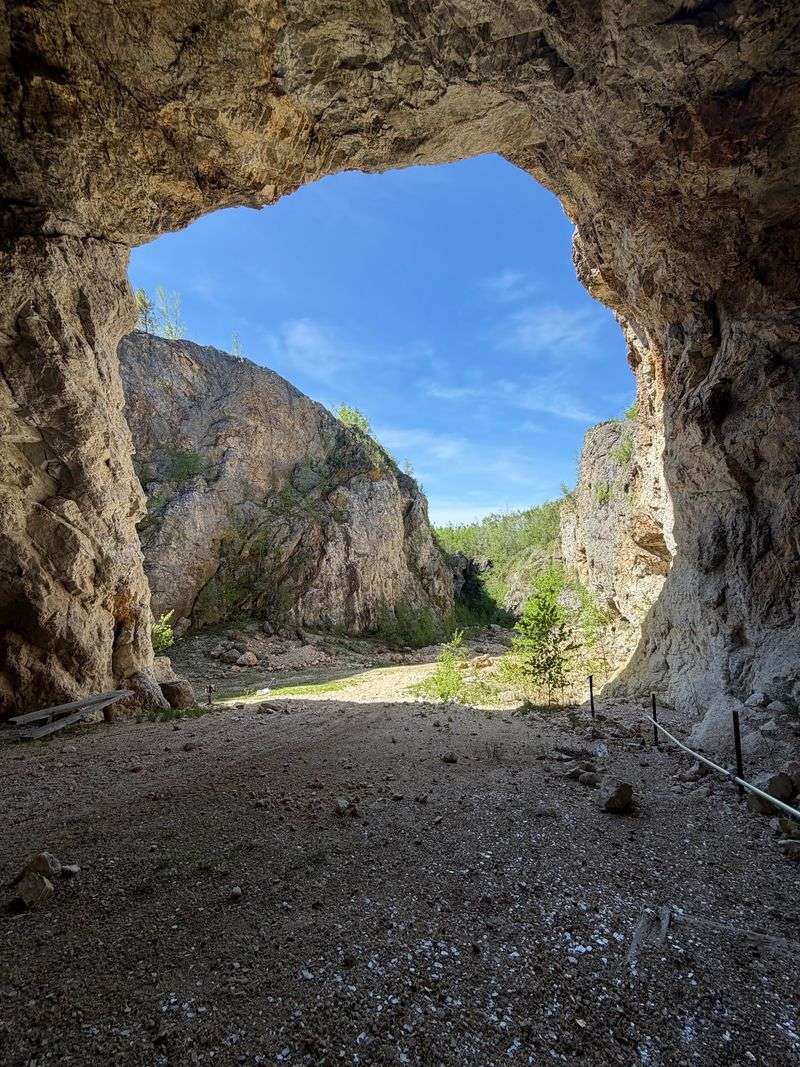
Glittering flakes underfoot, sheer rock walls, and dark tunnel mouths breathing cool air. Grafton’s old mica mine feels less like a tourist stop and more like a doorway into deep time.
Sam Ruggles started working the deposit on Isinglass Mountain around 1805. Mica mattered back then because people needed heat-resistant sheets for lamp chimneys and stove windows.
Mica was only the headline act. Miners also pulled out feldspar, beryl, amethyst, rose and smoky quartz, garnet, and even rare uranium minerals.
Geologists put the age of these deposits somewhere between 350 and 400 million years, which is hard to hold in your head while you are standing in the pit.
The open-pit design means sunlight pours into a bowl ringed by tunnels and chambers, some now filled with still water that mirrors the stone.
Rockhounds have long come here to hunt through the rubble for keepsakes. Commercial mining stopped in 1961, the site became a visitor attraction, closed in 2016, and reopened in 2024 with a small museum explaining the history.
Bring gloves, sturdy boots, and a bag heavier than you planned.
Address: 286 Underhill Rd, Grafton, NH 03240
7. Stone Chambers Nobody Can Fully Explain in Salem
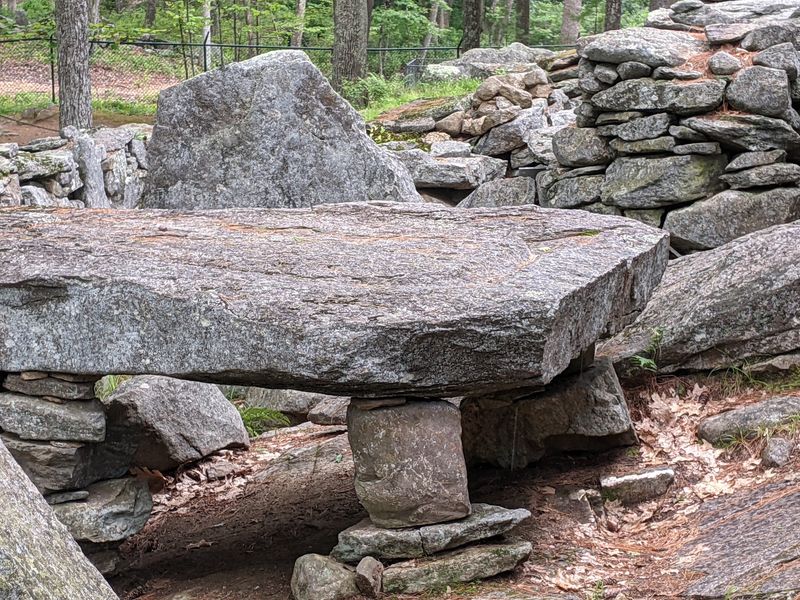
Arguments are half the fun at this one. Cross the granite outcropping in Salem and you will pass low stone chambers, thick walls, and standing stones that line up with the sun on certain days of the year.
Who built it? That question has never been settled.
Theories range from a pre-Columbian European culture, sometimes suggested to be Irish monks, to colonial settlers stacking rock for practical reasons, to Indigenous builders working long before either. Some grooved stone features may simply be drainage channels.
The Stone family acquired the property in 1956 and renamed it America’s Stonehenge, and visitors have been puzzling over it ever since.
An introductory video and self-guided route help you make sense of the layout across roughly one acre, with interpretive signs offering competing readings of what you are seeing. Estimates for the site’s age reach back around 4,000 years.
I came away without a firm opinion and enjoyed that. Few places let you wander among real stone structures and decide for yourself what happened here.
Give yourself an hour, longer if you like reading every sign twice.
Address: 105 Haverhill Rd, Salem, NH 03079
8. The World’s Longest Candy Counter in Littleton
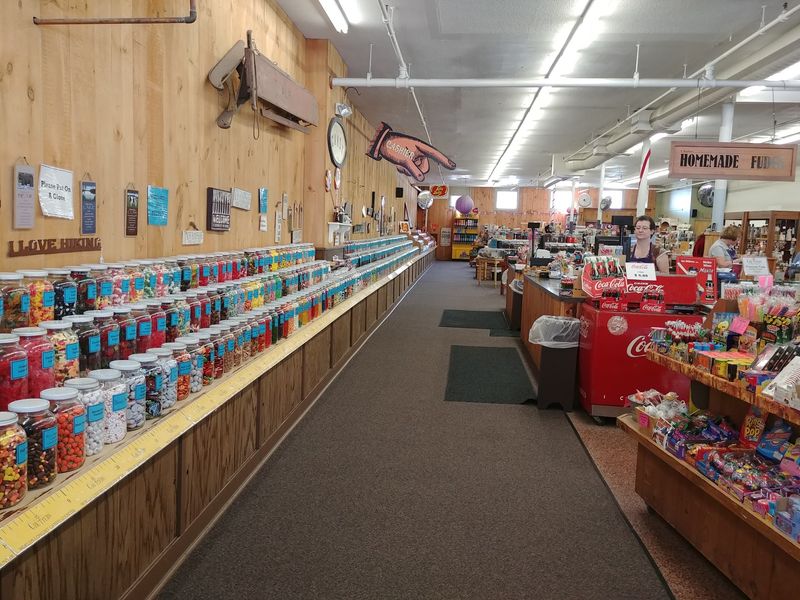
Sugar hits your nose before the door even closes. Then you look left and the counter just keeps going.
Stretching 111 feet and 11 inches, this Littleton landmark holds the Guinness World Records title for the world’s longest candy counter. More than 500 varieties fill the jars, from old penny candy to gummies, jelly beans, licorice ropes, and rows of chocolate.
Choosing takes longer than you think. I watched kids pace the whole length twice before committing, and honestly, I did the same.
The store has been a Main Street fixture for over a century. It was founded by Frederick George Chutter, a Congregational minister who changed course and became a dry goods merchant, which is a career pivot I find oddly charming.
Homemade fudge and baked goods round out the selection, and the wooden shelves and glass jars keep the whole place feeling pleasantly out of step with modern retail.
Littleton itself makes a fine base for the northern part of this route, with the Ammonoosuc River rushing behind the shops. Grab a paper bag and take your time.
Address: 43 Main Street, Littleton, NH 03561
9. A Decades-Old Love Letter Painted on a Roadside Rock
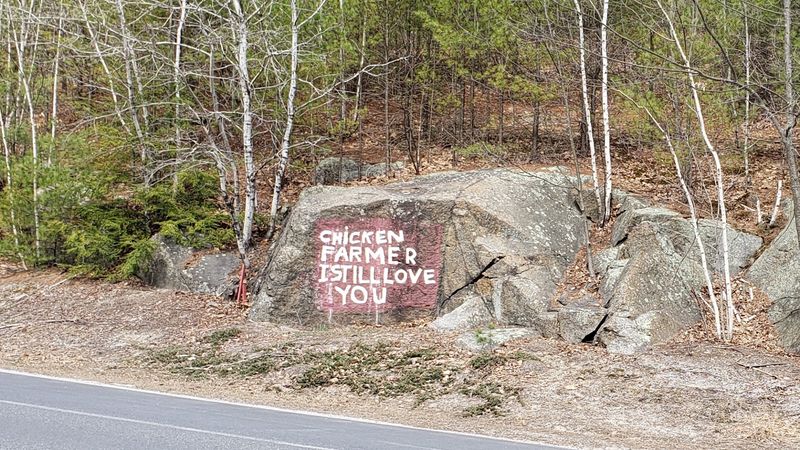
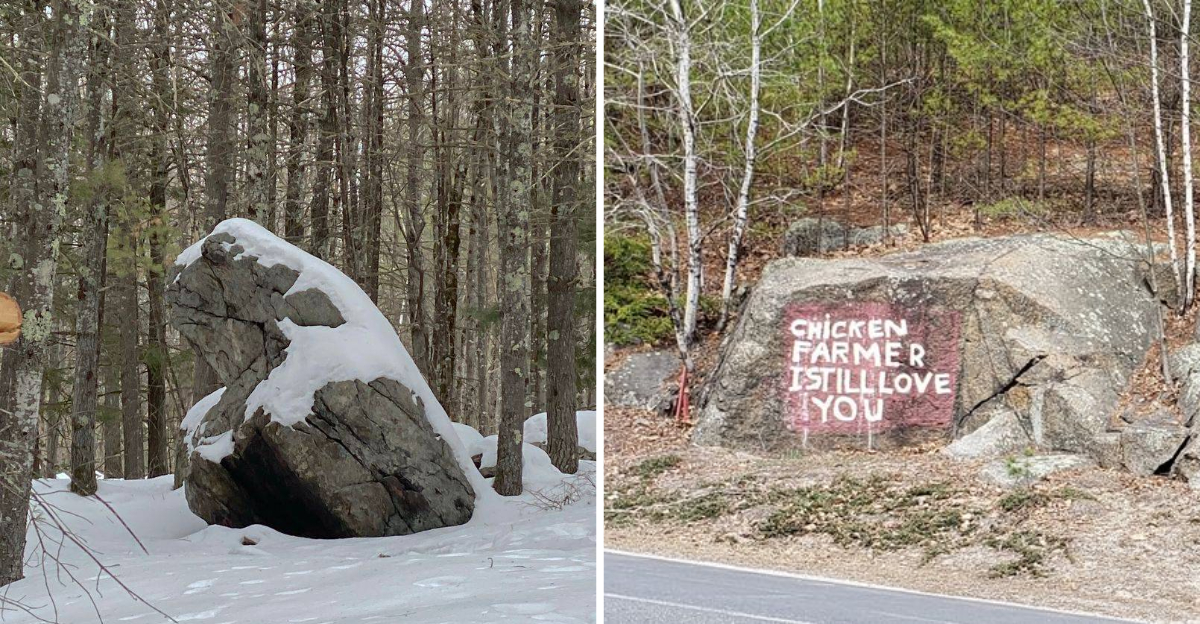
Somewhere along Route 103 in Newbury, a chunk of granite holds one of the most enduring love notes in New Hampshire history. Painted in uneven white letters, the message reads simply: “Chicken Farmer, I still love you”.
The story goes that a shy teenage boy painted the original message, “Chicken Farmer, I love you,” on the rock in the late 1980s or early 1990s. He had his eye on a young schoolgirl who lived on a small chicken farm across the street, but he was too nervous to approach her in person.
So he picked up a paintbrush and declared his feelings on the nearest available canvas.
The sign weathered the seasons and grew into a local institution. People would clear away brush to keep it visible and touch up the letters when they faded.
In 2011, the Department of Transportation painted over it after a complaint, but the blank rock did not stay empty for long. A petition organized by townsfolk ensured the message was restored, and it remains there to this day, a quiet monument to young love and community stubbornness.
Address: Route 103, Newbury, NH 03855
