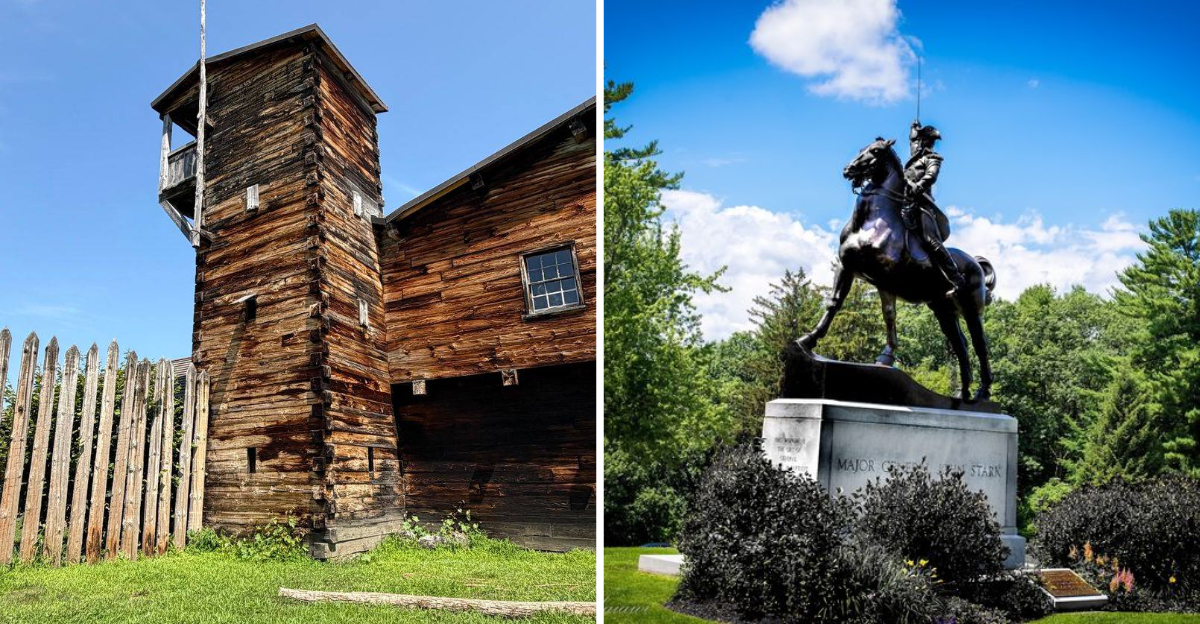
Daring raids on British forts, fiery political debates in packed taverns, and a fierce desire for freedom that still resonates today. That is what I found when I started exploring New Hampshire’s Revolutionary War sites.
I expected dry history lessons, but what I discovered instead were vivid, living places that made the past feel surprisingly close. Each location tells a story of real people facing impossible choices, and standing where they stood changes something in you.
I remember walking through a fort and trying to imagine the cold, the fear, the determination of the soldiers who had been there before me. The Granite State was small, but its role in the American Revolution was anything but minor.
These sites are not just chapters in a book. They are a living, breathing part of the landscape around you.
This journey through ten remarkable locations is your invitation to experience history not as something distant, but as something you can actually feel beneath your feet.
1. Fort Constitution, New Castle, NH
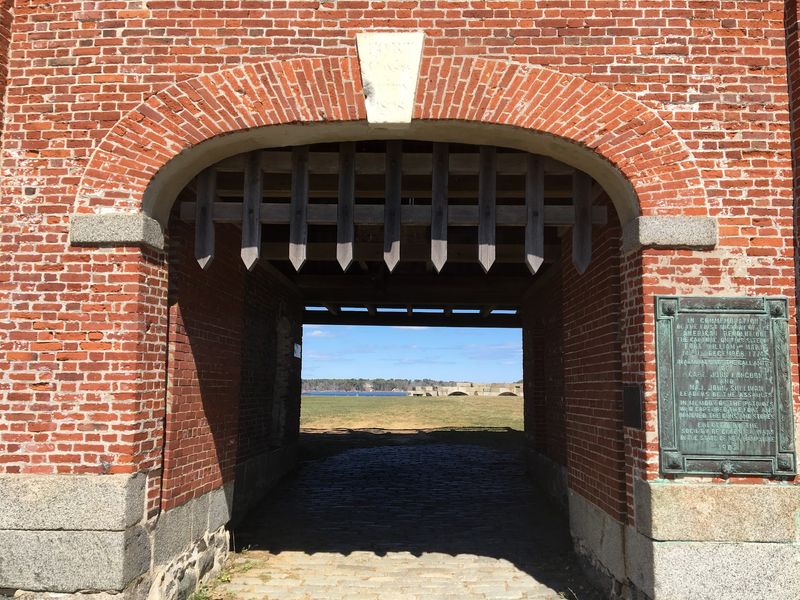
A brisk ocean wind hits you the moment you arrive at Fort Constitution, carrying the sharp scent of salt air and something harder to name, something almost electric, like the memory of old defiance. Originally called Fort William and Mary, this coastal fortification commanded the entrance to Portsmouth Harbor and was one of the most strategically important military posts in colonial New England.
Long before the famous shots at Lexington and Concord, this fort was already at the center of revolutionary action.
In December 1774, local patriots led by Major John Sullivan stormed the fort and seized gunpowder and military supplies from the British garrison. That bold raid is now considered one of the first overt acts of armed rebellion against British rule in all of the colonies.
The courage it took to carry out that mission, months before war was officially declared, is staggering to think about.
Today, visitors can explore the historic grounds, walk among old stone walls, and take in sweeping views of the harbor. An active Coast Guard station operates nearby, adding a quietly poetic continuity to the site’s long history of protecting these shores.
It is a place that rewards slow, thoughtful exploration.
Address: Fort Constitution Rd, New Castle, NH 03854
2. American Independence Museum, Exeter, NH
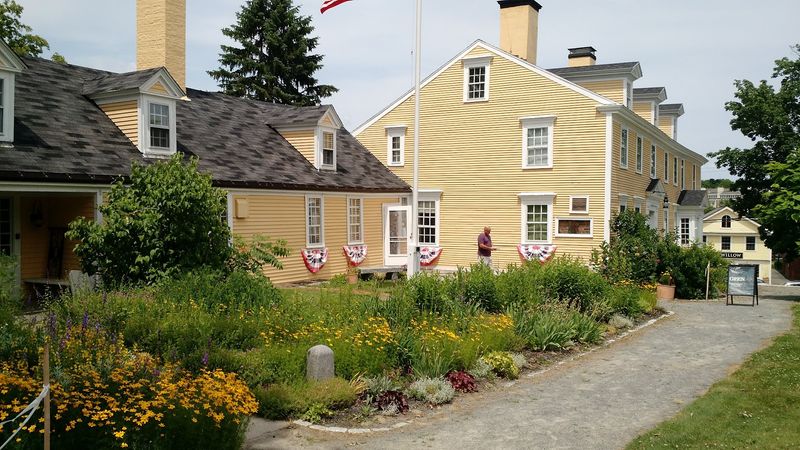
Exeter has a quiet confidence about it, the kind that comes from knowing it played a genuinely central role in shaping a nation. During the Revolutionary War, this town served as New Hampshire’s state capital, and the American Independence Museum sits right at the heart of that legacy.
Housed within the historic Ladd-Gilman House, a National Historic Landmark dating to 1721, the museum holds one of the most astonishing artifacts you will ever see up close.
An original Dunlap Broadside, one of the earliest printed copies of the Declaration of Independence, was discovered right here within these walls. Seeing it in person carries a weight that no photograph can replicate.
The Ladd-Gilman House was home to Nicholas Gilman Jr., a signer of the U.S. Constitution, and the family’s deep ties to the founding era are evident in every room.
The museum also encompasses the Folsom Tavern, another key site from the revolutionary period, and together the two buildings create a rich, layered portrait of colonial New Hampshire. Each year, the museum hosts an American Independence Festival featuring battle reenactments and 18th-century crafts.
It is an experience that brings the founding era to life in a genuinely memorable way.
Address: 1 Governors Ln, Exeter, NH 03833
3. Moffatt-Ladd House, Portsmouth, NH
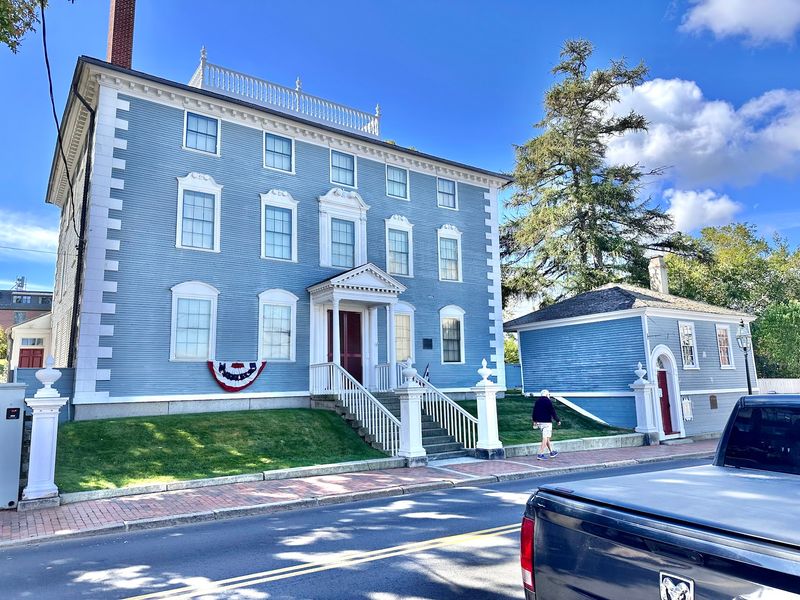
There is a particular kind of grandeur to the Moffatt-Ladd House that stops you in your tracks the moment it comes into view. Built in the mid-18th century by wealthy merchant John Moffatt, this imposing Georgian mansion was later described by John Adams himself as the grandest house in Portsmouth.
That reputation still holds up today, and the building’s scale and elegance offer a fascinating window into the lives of colonial New Hampshire’s most prominent families.
The house became the residence of William Whipple, a signer of the Declaration of Independence and a Brigadier General under George Washington. Whipple hosted notable figures within these walls and brought the pulse of the Revolution directly into this Portsmouth home.
One of the most moving details on the property is a towering 250-year-old horse chestnut tree, said to have been planted by Whipple and his enslaved servant, Prince, a quiet but powerful reminder of the complex human stories embedded in this history.
The museum’s exhibits go beyond the Revolution, exploring the lives of the Moffatt, Whipple, and Ladd families across generations, including the often-overlooked experiences of enslaved people who lived and worked here. It is a beautifully layered site that rewards curious visitors.
Address: 154 Market St, Portsmouth, NH 03801
4. Fort at No. 4, Charlestown, NH
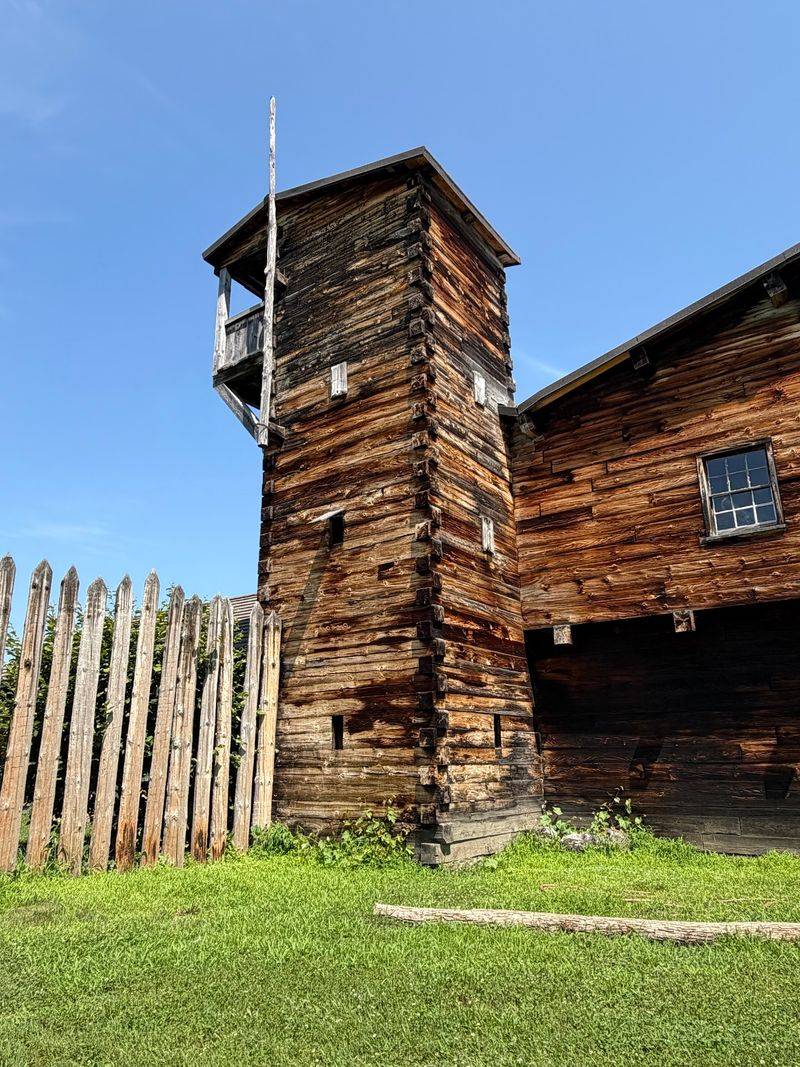
Out in Charlestown, far from the coastal elegance of Portsmouth, the Fort at No. 4 feels like a completely different chapter of New Hampshire history. This reconstructed 18th-century stockade fortification was once the northernmost British settlement along the Connecticut River, and it served as a critical defensive outpost during the French and Indian War.
By the time the Revolution arrived, the fort had already weathered decades of frontier conflict, and its walls carried the memory of hard-won survival.
In 1777, General John Stark used this very location as a muster point, gathering roughly 1,500 New Hampshire militiamen before their march to the pivotal Battle of Bennington. That battle turned out to be a crucial American victory, and it began right here on this stretch of western New Hampshire frontier.
The fort operates as an open-air living history museum, with costumed interpreters portraying settlers and militia members throughout the warmer months.
Climbing the watchtowers and moving through the palisaded compound gives you a visceral sense of what life on the colonial frontier actually felt like. The sense of vulnerability and determination is palpable.
Summer reenactments bring additional drama to the site, making it one of the most immersive Revolutionary War experiences in the entire state.
Address: 267 Springfield Rd, Charlestown, NH 03603
5. Wyman Tavern, Keene, NH
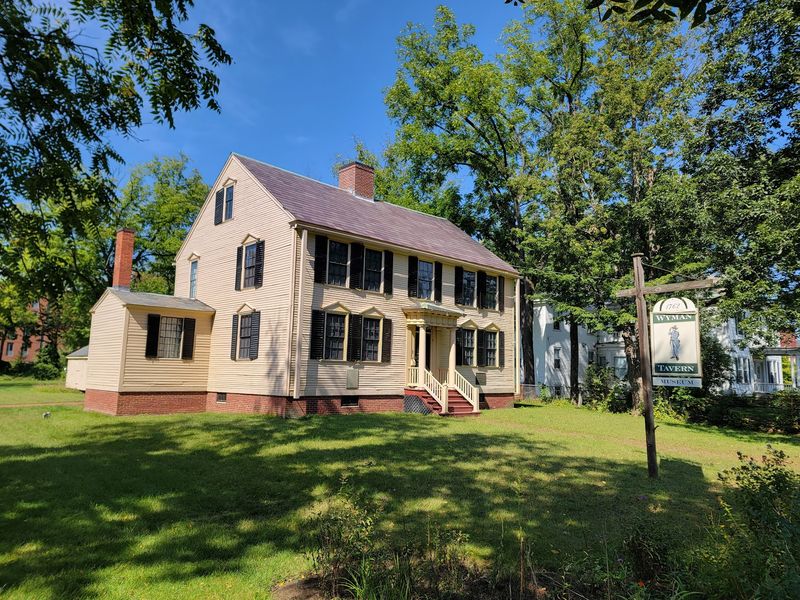
Some places earn their place in history quietly, and Wyman Tavern in Keene is exactly that kind of spot. Built in 1762 by Isaac Wyman, this Georgian-style building served as a bustling public gathering place where news traveled fast and opinions flowed freely.
It is the sort of place where the Revolution was not just discussed in the abstract but actually set into motion by real neighbors making real decisions together.
On April 20, 1775, just one day after the Battles of Lexington and Concord, 29 minutemen gathered here under Captain Isaac Wyman’s command before marching off to join the fight. That single fact gives the building a remarkable urgency.
The speed with which those men responded to the call speaks volumes about the depth of revolutionary feeling in this corner of New Hampshire.
Today the Wyman Tavern operates as a historic house museum, with tours that highlight its original hand-hewn timber framing and Federal period details. The “Grounded in History” outdoor exhibit adds another dimension, using archaeology and archival research to uncover stories of Indigenous peoples, settlers, and revolutionaries connected to this site.
Notably, the trustees of Dartmouth College held their very first meeting here in 1770, adding yet another layer of historical significance to this unassuming building.
Address: 339 Main St, Keene, NH 03431
6. John Paul Jones House, Portsmouth, NH
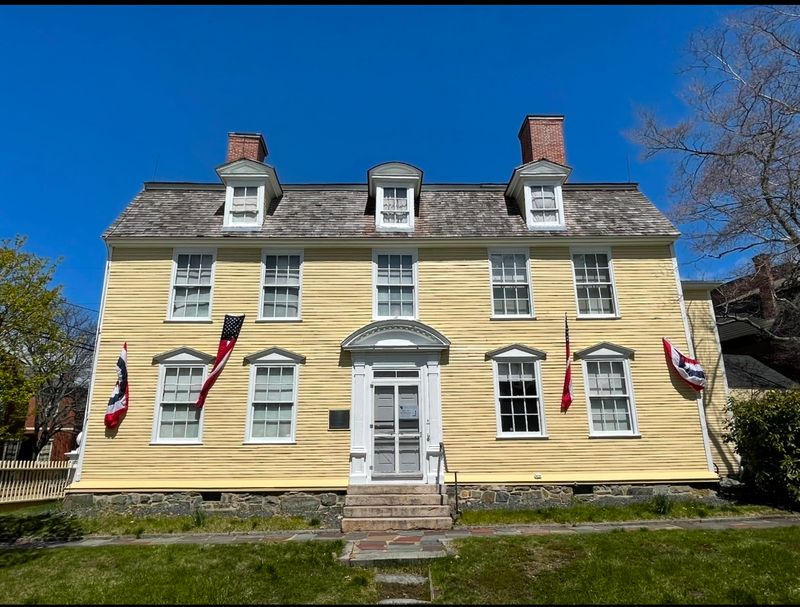
Few figures from the American Revolution cut as dramatic a profile as John Paul Jones, the audacious naval commander who once declared he had not yet begun to fight. The house in Portsmouth that bears his name has a handsome Georgian facade that hints at the maritime history it holds inside.
Jones reportedly stayed here in 1777 and again from 1781 to 1782, during which time he oversaw the construction of the America, the first ship-of-the-line built for the Continental Navy.
Now operated by the Portsmouth Historical Society, the museum houses an impressive collection of locally produced furniture, decorative arts, portraits, ceramics, and textiles. A standout exhibit features a detailed model of the Ranger, Jones’s celebrated warship, which became the first American vessel to capture a British warship in a pitched naval battle.
That moment of naval triumph is brought to life here in a way that makes you appreciate just how much was at stake on the open water during the Revolution.
The “Revolutionary Portsmouth” exhibit is particularly thought-provoking, examining how citizens of the 1760s and 1770s wrestled with questions of loyalty and liberty across different social groups, including women, Indigenous communities, and enslaved people. Audio tours help bring the full picture together in a personal, engaging way.
Address: 43 Middle St, Portsmouth, NH 03801
7. Folsom Tavern, Exeter, NH
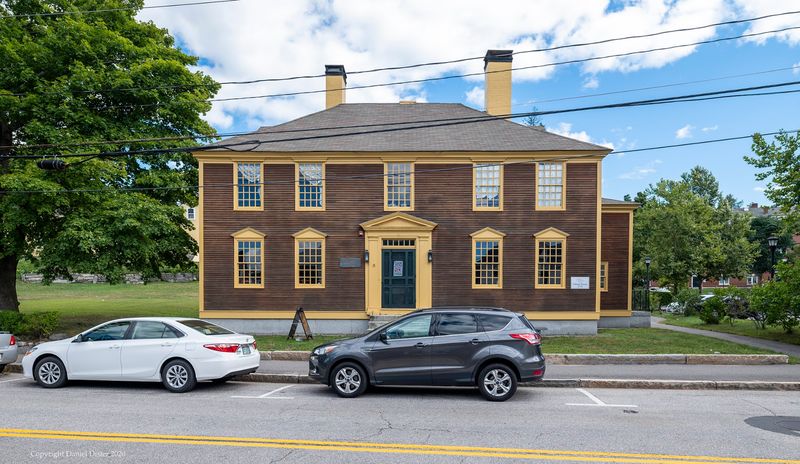
Exeter’s Folsom Tavern has one of those histories that just keeps building on itself, each new chapter more remarkable than the last. Built around 1775 by Colonel Samuel Folsom, this tavern became a nerve center of political life at a time when Exeter was serving as New Hampshire’s revolutionary capital.
The conversations that happened within its walls were not casual chatter; they were the kinds of urgent, high-stakes discussions that determined the direction of a new nation.
In 1783, officers of the Continental Army gathered here to establish the New Hampshire chapter of the Society of the Cincinnati, the oldest patriotic organization in the United States. Then, in 1789, President George Washington himself stopped for breakfast during his tour of the New England states.
The fact that this modest tavern hosted a sitting president adds a layer of history that feels almost too good to be true, yet it is thoroughly documented.
The tavern’s path to preservation was itself dramatic. It narrowly escaped demolition in 1929 and was relocated multiple times before finding its current home as part of the American Independence Museum campus.
Thoughtfully restored to its 18th-century appearance, it now serves as an educational center exploring the grassroots energy that fueled the Revolution from the ground up.
Address: 1 Governors Ln, Exeter, NH 03833
8. Gen. John Stark House, Manchester, NH
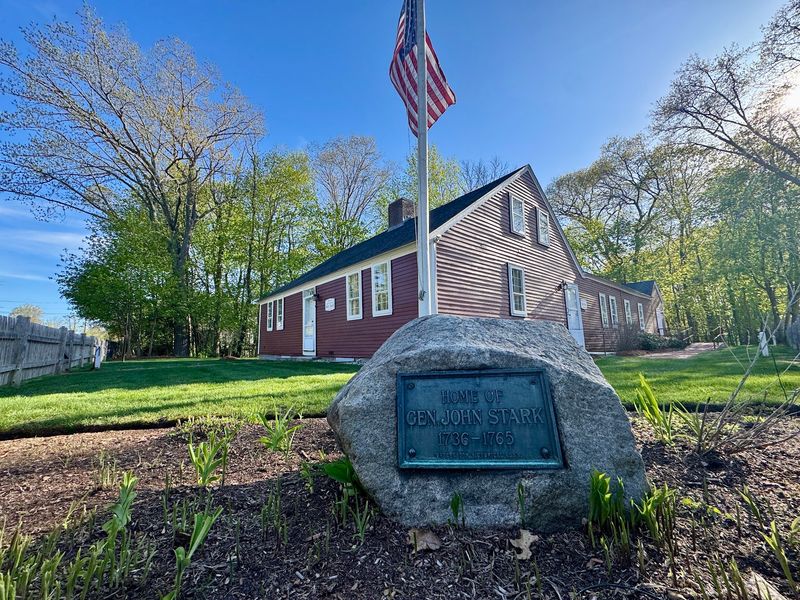
There is something unexpectedly moving about visiting the childhood home of a man whose words became a state motto. General John Stark, the New Hampshire hero who coined “Live Free or Die,” grew up in this modest Cape-style farmhouse, built in 1736 by his father, Archibald Stark.
John lived here from the age of eight until he was 37, bringing his new bride, Molly, home to these very rooms and raising two of their children within its walls.
It is humbling to stand in a space so simple and quiet, knowing it shaped someone who would go on to lead troops at the Battle of Bunker Hill, survive the brutal winter at Valley Forge, and deliver a decisive victory at the Battle of Bennington. The house follows a classic center-chimney plan typical of colonial New England, and its interior retains a genuine historical character that larger, more polished museums sometimes lose.
Maintained by the local chapter of the Daughters of the American Revolution, the house was originally located on Canal Street and moved to its current site in 1968 to ensure its preservation. That act of relocation was itself a small act of devotion to history.
Visiting here feels personal, like getting a glimpse of the private life behind the public legend.
Address: 2000 Elm St, Manchester, NH 03104
9. Stark Park, Manchester, NH
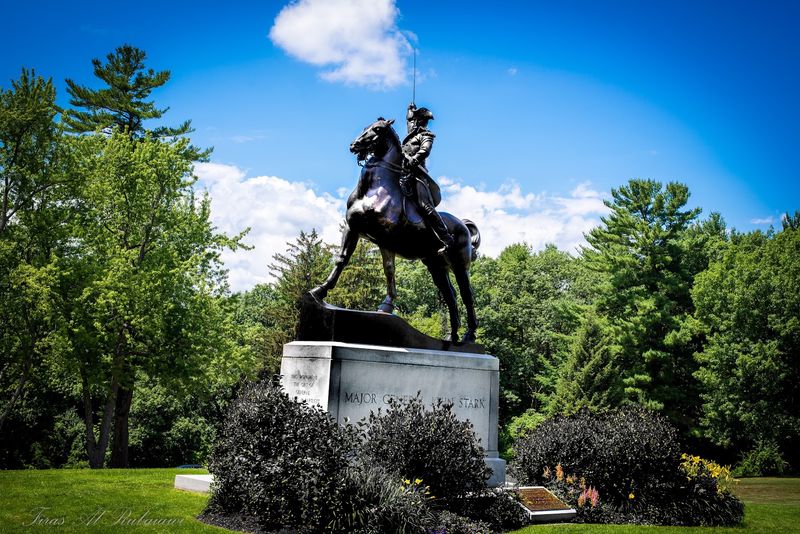
Stark Park in Manchester carries a quiet dignity that you feel the moment you step through its entrance. This 30-acre green space was once part of the sprawling 800-acre farm belonging to General John Stark and his family, and it remains one of the most meaningful Revolutionary War memorials in the state.
The park was dedicated in 1893 and designed in a Victorian style, blending woodlands with open lawns and winding paths in a way that feels both elegant and welcoming.
At the heart of the park stands an impressive bronze equestrian statue of General Stark, a tribute that captures the commander’s resolve and authority. Nearby, a solemn 19th-century obelisk marks the final resting place of Stark, his beloved wife Molly, and other members of their family.
Knowing that the land beneath your feet once belonged to the man memorialized above it adds a rare sense of continuity to the visit.
The park also offers a network of trails that wind through its natural areas, making it a genuinely pleasant place to spend an afternoon. History and nature sit comfortably side by side here.
Whether you come for the monuments, the walking paths, or simply the peaceful atmosphere, Stark Park delivers a reflective experience that lingers well after you leave.
Address: 400 River Rd, Manchester, NH 03104
10. Strawbery Banke Museum, Portsmouth, NH
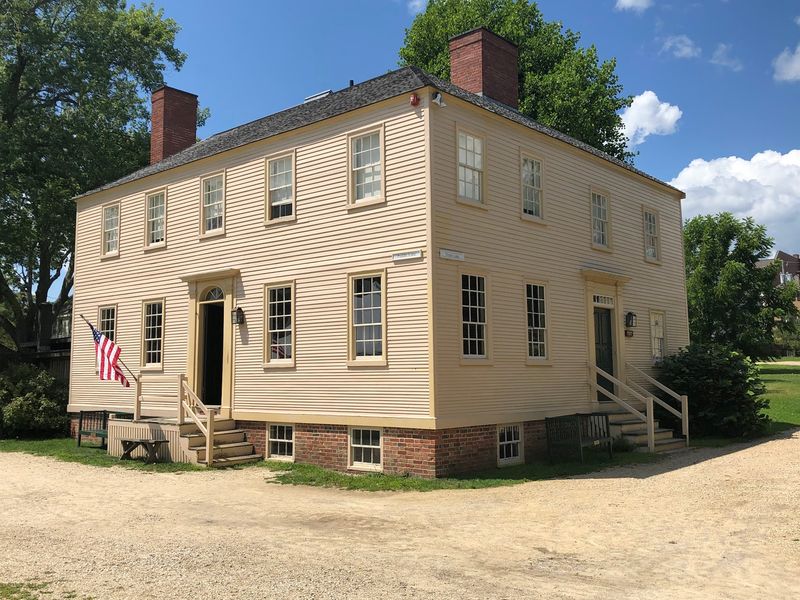
Strawbery Banke Museum in Portsmouth is unlike any other stop on this journey, and that distinction is earned. Spread across nine acres, this living history museum preserves an entire historic neighborhood, with buildings standing on their original foundations and costumed interpreters breathing life into centuries of New England history.
Moving from house to house here feels less like touring a museum and more like wandering through time itself.
The circa-1766 Pitt Tavern is one of the most compelling structures on the grounds, offering a nuanced look at how Portsmouth residents grappled with questions of loyalty and independence during the 1760s and 1770s. The “Revolutionary Portsmouth” exhibition thoughtfully explores who truly gained liberty during this period, asking hard questions about women, Indigenous communities, and enslaved people.
Those questions give the site a depth that goes well beyond a simple celebration of patriotism.
Skilled craftspeople demonstrate traditional practices like hearth cooking, weaving, and barrel making throughout the warmer months, and the “Echoes of Revolution” guided tours take visitors through three historic homes to show how the Revolution reshaped everyday life. The overall effect is immersive and genuinely moving.
Strawbery Banke makes a powerful case that the fight for independence was not just won on battlefields but lived out in kitchens, taverns, and family rooms just like these.
Address: 14 Hancock St, Portsmouth, NH 03801
