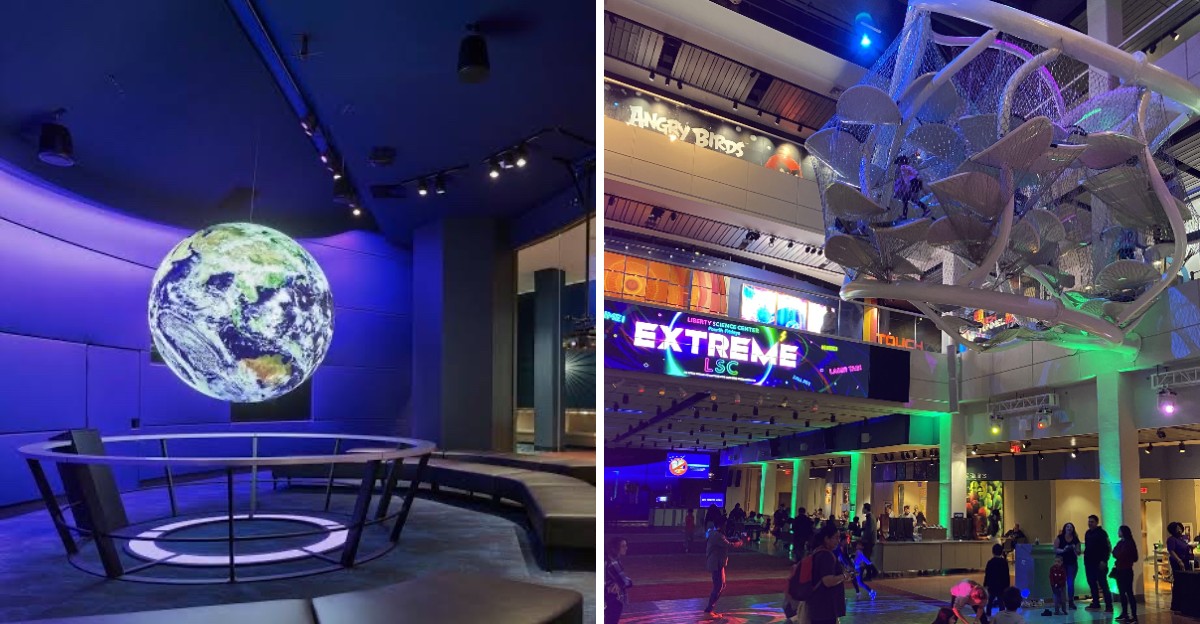
The biggest planetarium in the Western Hemisphere sits under an 89-foot dome in New Jersey. That alone would fill a day trip.
Somehow, it is only one part of the building.
The same place has naked mole rats, cotton-top tamarins, and a school of piranhas. It also has a pitch-black tunnel you crawl through using only touch.
I can’t imagine anyone getting bored there, even grown-ups who claim they’re just tagging along.
There are four floors and twelve exhibition halls to explore. Add wind simulators, a climbing structure, and a dinosaur dig, and the schedule gets crowded fast.
I believe most families would need a second visit just to finish the list.
So how much can you really see in one afternoon? Probably less than you hope, and that’s half the fun.
Twelve Halls Means You Should Pick Favorites Early
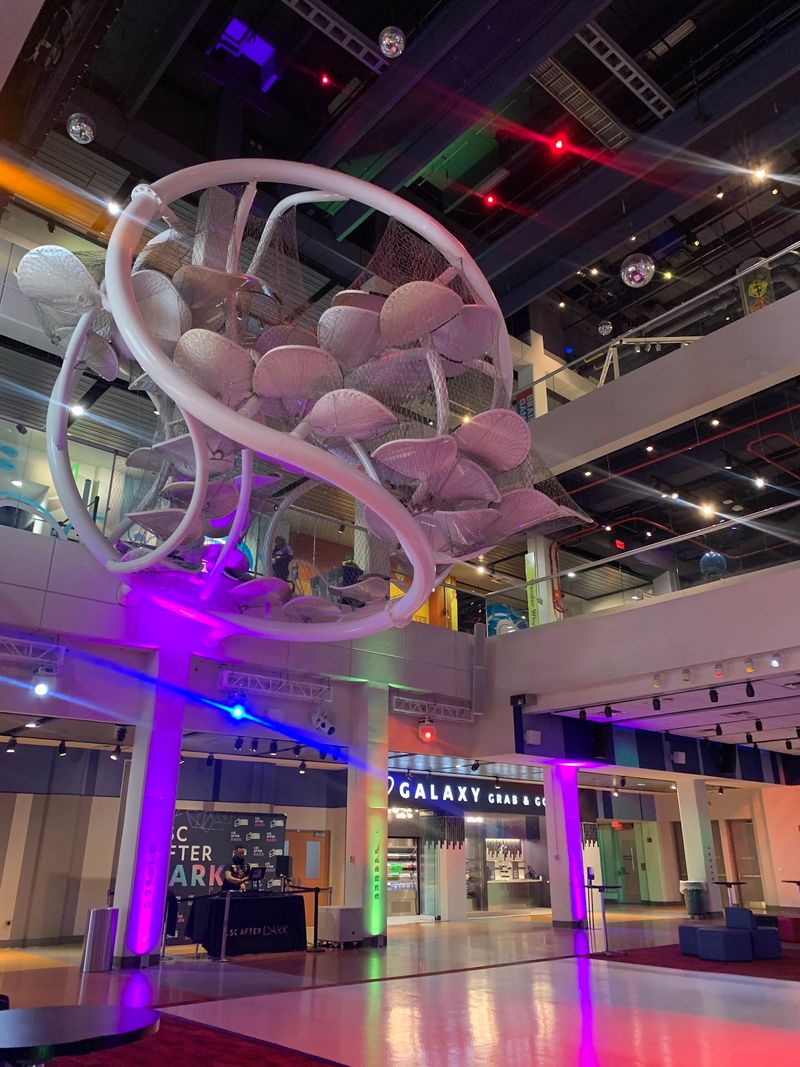
Four floors and twelve exhibition halls add up to a lot of ground. Liberty Science Center fills roughly 300,000 square feet inside Liberty State Park in Jersey City, New Jersey.
That size is the whole reason one afternoon feels short. Hundreds of hands-on exhibits wait across those floors, and nearly all of them invite you to touch something.
A smart plan helps a lot here. Pick two or three must-see areas before you arrive, then let the rest be bonus time.
The building mixes big science topics with playful, kid-friendly spaces. One floor might focus on the Hudson River and wildlife, while another jumps to microbes and trains.
Some extras cost more than general admission, so check what’s included before you go. Nobody enjoys learning that at the door of the coolest room.
The center’s mission is simple and pretty inspiring. It aims to get people of all ages excited about science and technology.
That goal shows in how the halls are built. Learning happens by doing, which keeps restless kids moving and curious adults busy too.
Comfortable shoes are not optional. Your feet will thank you around hour three.
Look Up, Because This Dome Is Seriously Huge
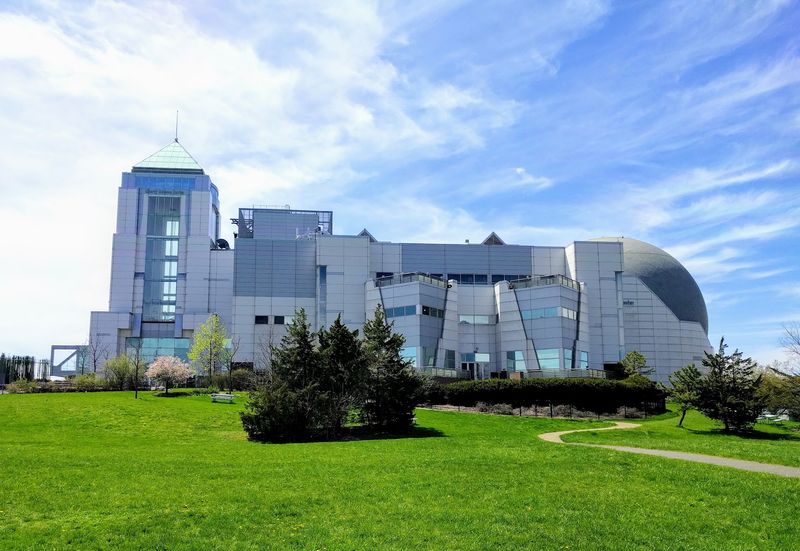
Eighty-nine feet. That’s the width of the dome inside the Jennifer Chalsty Planetarium, the biggest planetarium in the Western Hemisphere.
Sitting under a screen that size changes how a space show feels. The stars stretch beyond the edges of your vision, so the universe seems to wrap around you.
Shows rotate, which gives repeat visitors something new to catch. Younger kids can enjoy One World, One Sky: Big Bird’s Adventure, featuring familiar Sesame Street characters.
Older visitors get plenty too. Programs cover planets, deep space, and current space news in a way that feels more like a trip than a lecture.
Planetarium shows usually require a separate ticket, so plan ahead. Popular times can sell out on busy days, which is a frustrating way to learn a lesson.
Booking your show time early also helps shape the rest of your visit. Explore nearby halls before and after, and you won’t waste steps.
Here’s a tip for little ones. Some kids feel a bit dizzy under giant moving visuals, so sit a little farther back if that’s a concern.
Either way, keep your eyes up. The sky is the main event here.
The Animal Lineup Gets Delightfully Weird
Naked mole rats are not winning beauty contests anytime soon. Still, they might become your kid’s favorite animal at Liberty Science Center.
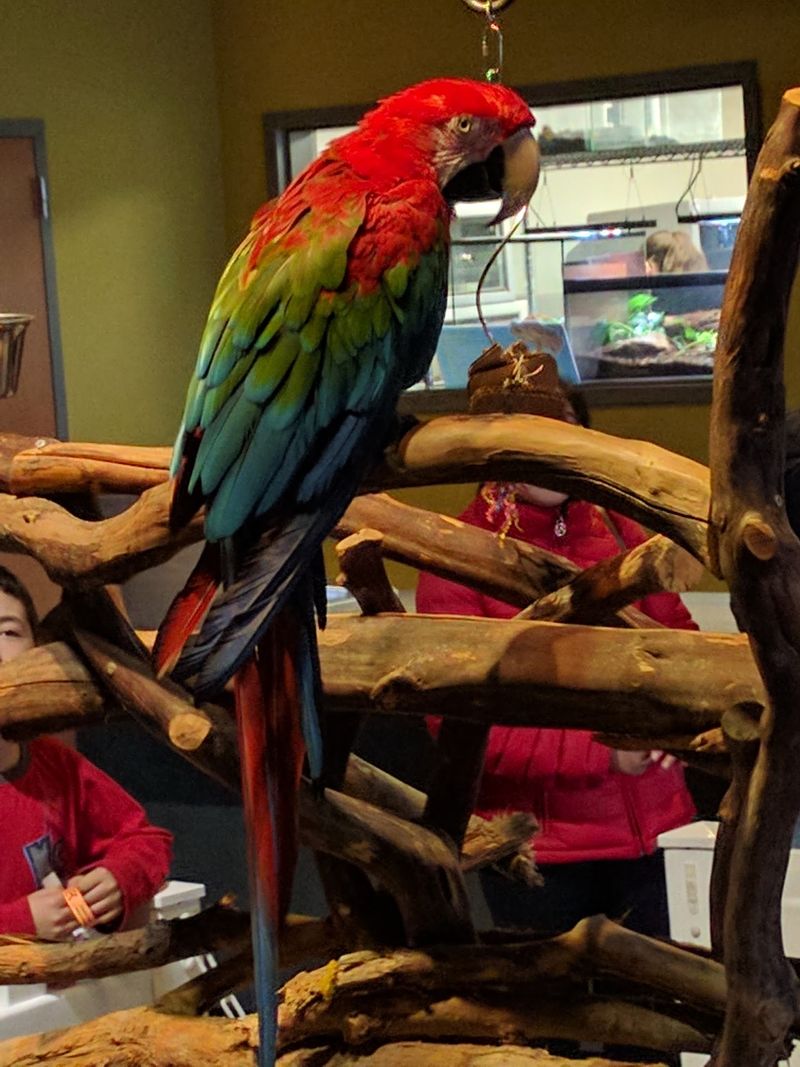
The center houses more than 110 animal species, which surprises many first-time guests. Rockets and robots get the headlines, but the critters steal plenty of attention.
Tiny cotton-top tamarins bring serious cuteness to the mix. A school of piranhas adds a little drama, minus the movie-style chaos.
Aquarium exhibits show off underwater life in calm, colorful tanks. There’s also a touch tank where visitors can gently meet creatures like stingrays and sea stars.
Live animal presentations make the experience even better. Staff share facts about animals up close, and those moments often spark the best questions of the day.
Watching animals is a nice break from button-pushing exhibits. Little legs get a rest, and everyone slows down for a few minutes.
Read the signs by each habitat if you can. Many share oddball facts that make great dinner table trivia later.
Fair warning, though. You may leave with a sudden urge to learn everything about mole rats.
Brave The Dark Tunnel And The Howling Wind
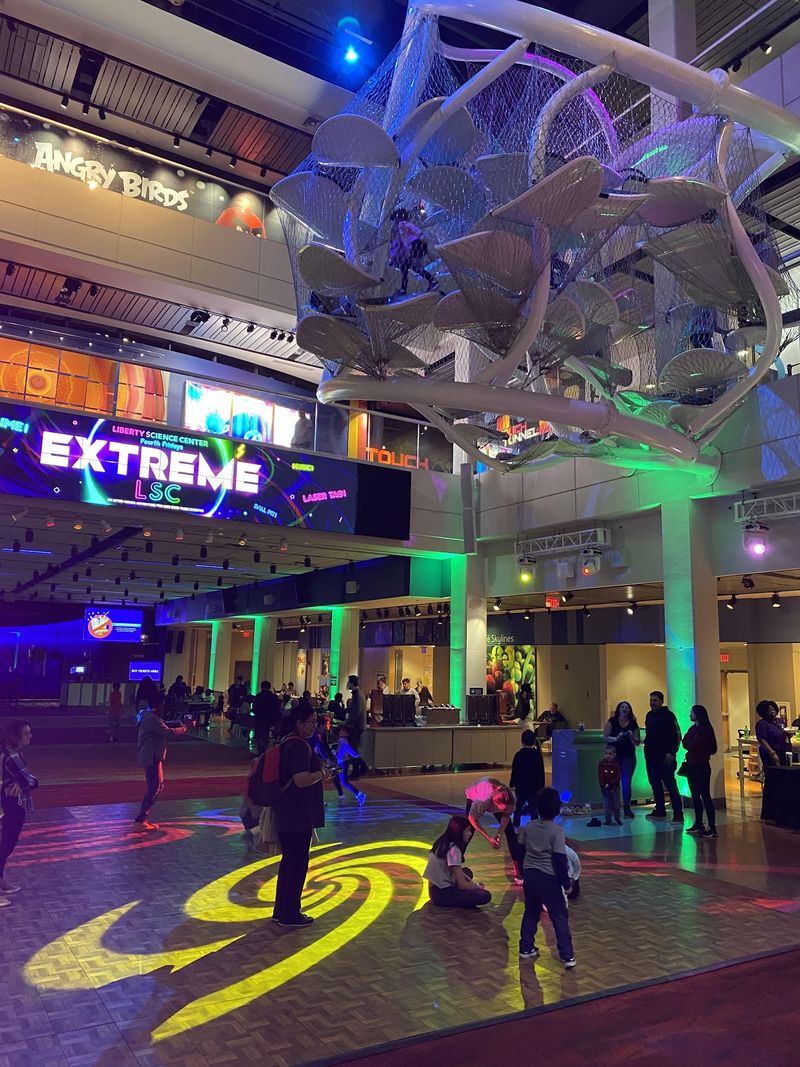
Total darkness, tight turns, and nothing to guide you but your hands. The Touch Tunnel is an 80-foot crawl-through maze, and it’s a legend among visitors.
Getting through means relying on touch and your sense of space. Kids usually find it thrilling, while some adults discover they’re less brave than advertised.
Weather fans get their own thrill too. Wind simulators let you feel hurricane and tornado-force winds, which is a wild way to learn about storms.
Hair will not survive that experience looking neat. Consider that part of the science lesson.
Climbers can head for the 35-foot climbing structure. It’s a fun way to burn energy, and height requirements may apply for some climbing areas.
These hands-on challenges make a great middle stop. Kids who’ve been reading signs for an hour suddenly get to move, crawl, and climb.
Check posted rules before anyone jumps in line. Some features have size limits for safety, especially the tunnel.
Wear clothes you can crawl in comfortably. Skirts and the Touch Tunnel are not best friends.
Honestly, these rooms prove science can be a full-body workout.
Germs, Energy, And The River Next Door
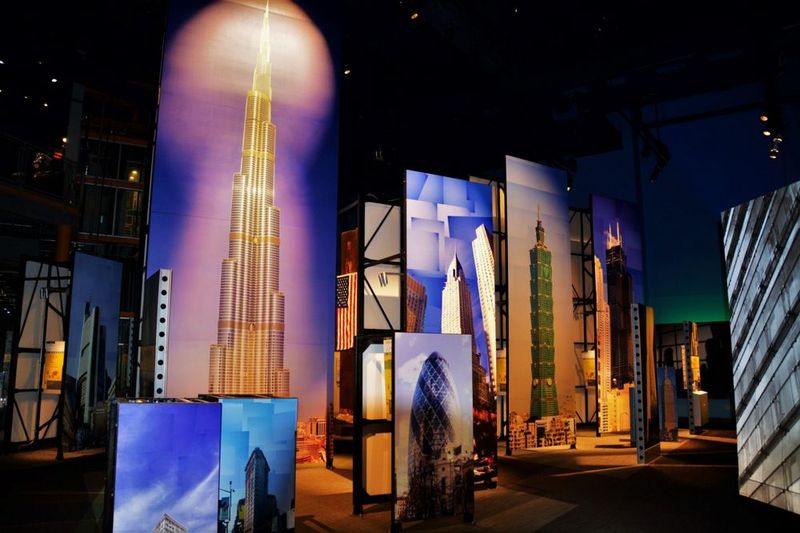
Microbes get a starring role here, and honestly, they deserve it. The exhibit Microbes Rule! shows how tiny living things shape our bodies and the world.
Big science ideas turn friendly when you can poke and test them. That’s the spirit behind Energy Quest, which explores how we power everyday life.
Kids can experiment with ideas about energy sources and choices. Adults might pick up a few facts they missed in school, no shame required.
Our Hudson Home brings things closer to the building itself. It focuses on the Hudson River area, its wildlife, and the local environment.
That local angle feels fitting for a place sitting so near the water. It connects big science topics to the neighborhood right outside.
Free live science shows add even more energy. Demonstrations, like a volcano-style eruption, often draw quick crowds of excited kids.
Check the daily schedule when you arrive. Show times can help you map out the rest of the visit.
Each exhibit works at different levels, too. Toddlers press buttons, while older kids actually read and ask questions.
Everyone learns something, even if nobody admits it.
Little Paleontologists Can Dig For Days
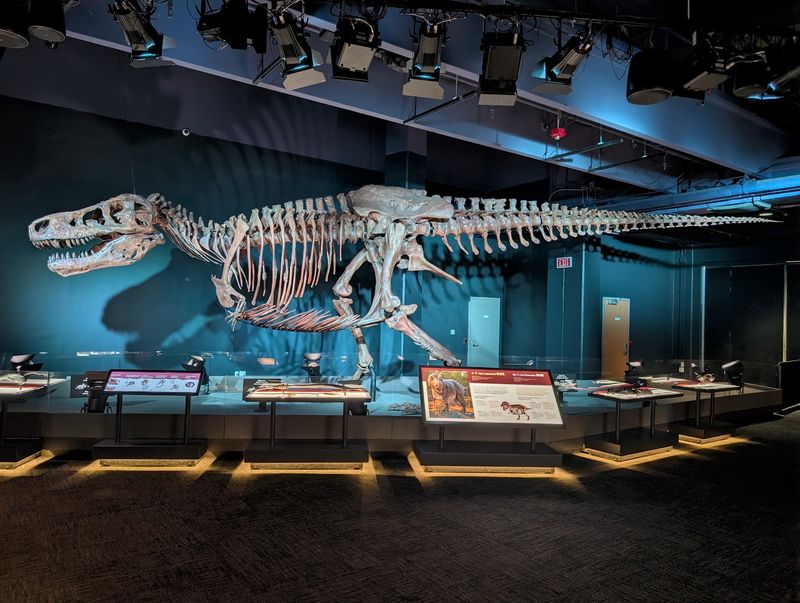
Forty tons of sand is a lot of digging ground. Jack Horner’s Dino Dig gives young fossil hunters a giant sandpit packed with dinosaur fossil casts.
This outdoor area is a summer favorite for families. Kids grab tools, brush away sand, and uncover huge bones like real paleontologists.
Jack Horner is a famous paleontologist, which gives the name some real credibility. His work helped shape how scientists understand dinosaurs.
Plan for sandy shoes and sandy everything. Packing a small towel or wipes is a very smart parenting move.
Toddlers have plenty to enjoy inside the building too. Areas built for young children let the smallest guests explore safely at their own pace.
Younger visitors can find play spaces, train-themed fun, and wobbly rooms that turn balance into a game. These spots give parents a break from chasing kids through busy halls.
Little ones often get tired fast, so mix active zones with calm ones. A snack between the sand and the next exhibit works wonders.
Seasonal attractions can change, so check what’s open before your trip.
Either way, expect a few future scientists to refuse to leave.
Grown-Ups Finally Get Their Own Night
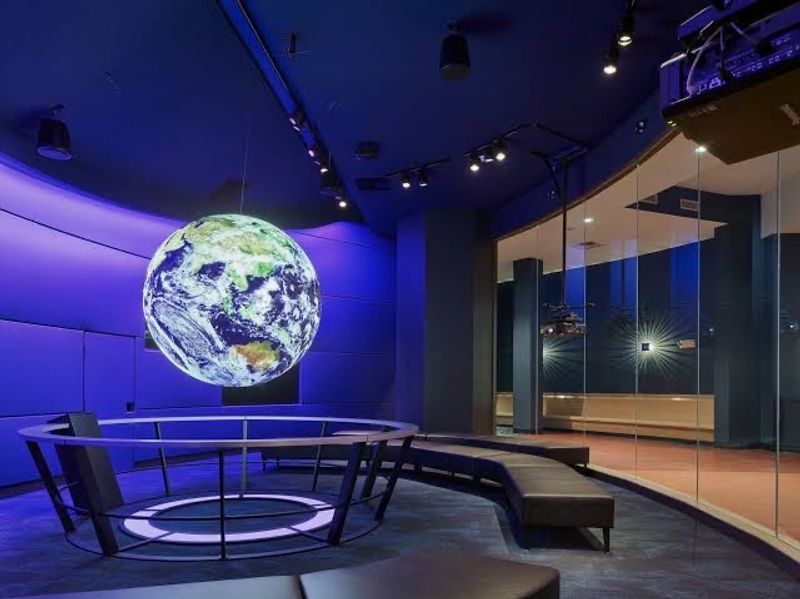
Thursday nights look a little different at Liberty Science Center. LSC After Dark is built for visitors 21 and older, with games, food, and music.
It’s a clever twist for adults who loved science centers as kids. Now you can explore exhibits without waiting behind a line of eager second graders.
Exact themes and activities can change from event to event. Checking the schedule before heading over is the best way to know what’s planned.
Date nights get a lot more interesting with a planetarium nearby. Friends looking for something new will find it beats another evening on the couch.
The evening setting also changes the mood of the building. Exhibits feel fresh when the energy shifts from field trip to night out.
Big projects are on the horizon, too. Project Supernova is the center’s upcoming expansion, with new developments expected around September 2026.
That means there’s even more to look forward to soon. A place this big somehow keeps finding ways to grow.
Bring a valid ID for the adult events.
And yes, you’re allowed to crawl through the Touch Tunnel as a grown-up.
Snack Breaks, Souvenirs, And Easy Logistics

Hungry kids can end a science lesson fast. Luckily, the center has an on-site cafe where families can grab food and recharge.
A seating area with tables also makes lunch easier. Some families bring meals from home, so check current policies before packing a cooler.
Parents with babies get thoughtful support here. A nursing room offers a private, comfortable place for moms to take a break.
Accessibility matters too. The facility is ADA-compliant, helping more guests enjoy the exhibits comfortably.
The gift shop deserves a stop on your way out. You’ll find educational toys and souvenirs that keep the curiosity going at home.
On-site parking is available, which makes the trip simpler for drivers. Expect a parking fee, and check the latest details before your visit.
Entering requires a security check, so give yourself a few extra minutes. Buying timed tickets ahead of time can also save some hassle.
Wristbands may help with reentry if you step outside for a bit. Ask at the entrance to confirm how it works that day.
Small planning steps go a long way here.
Bring A Camera For That Skyline View
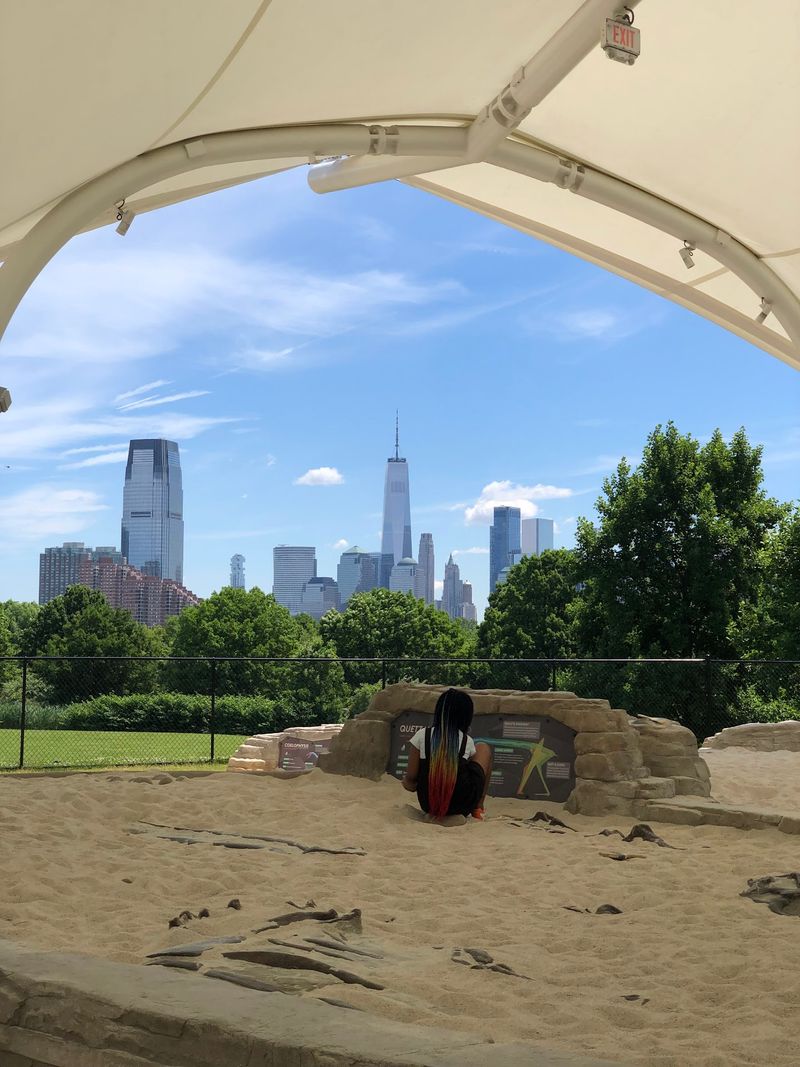
Few science centers come with a view like this one. The New York City skyline and the Statue of Liberty are visible from around the area.
Liberty Science Center sits at 222 Jersey City Blvd, Jersey City, NJ 07305. It’s tucked inside Liberty State Park, one of New Jersey’s best-loved waterfront parks.
That location makes it easy to stretch your day. A walk through the park adds fresh air after hours of indoor exploring.
The center first opened in 1993. Since then, it has grown into New Jersey’s most visited museum.
Millions of people have explored its halls over the years. Many adults who visited as kids now return with their own children.
That kind of loyalty says a lot about the place. It manages to feel familiar while still adding new exhibits and experiences.
Plan for at least three to four hours inside. Even then, you’ll likely leave with a list of things you missed.
Maybe that’s the real secret here. One afternoon barely scratches the surface, so the next visit is already calling.
Your camera roll will be ready.
