The museum building could practically be one of its own exhibits.
Inside this small New Jersey museum, regional history fills an old American Dutch farmhouse with roots stretching back more than two centuries.
The Berry family built the house in 1804, and the museum describes it as the oldest house in southern Bergen County remaining close to its original condition.
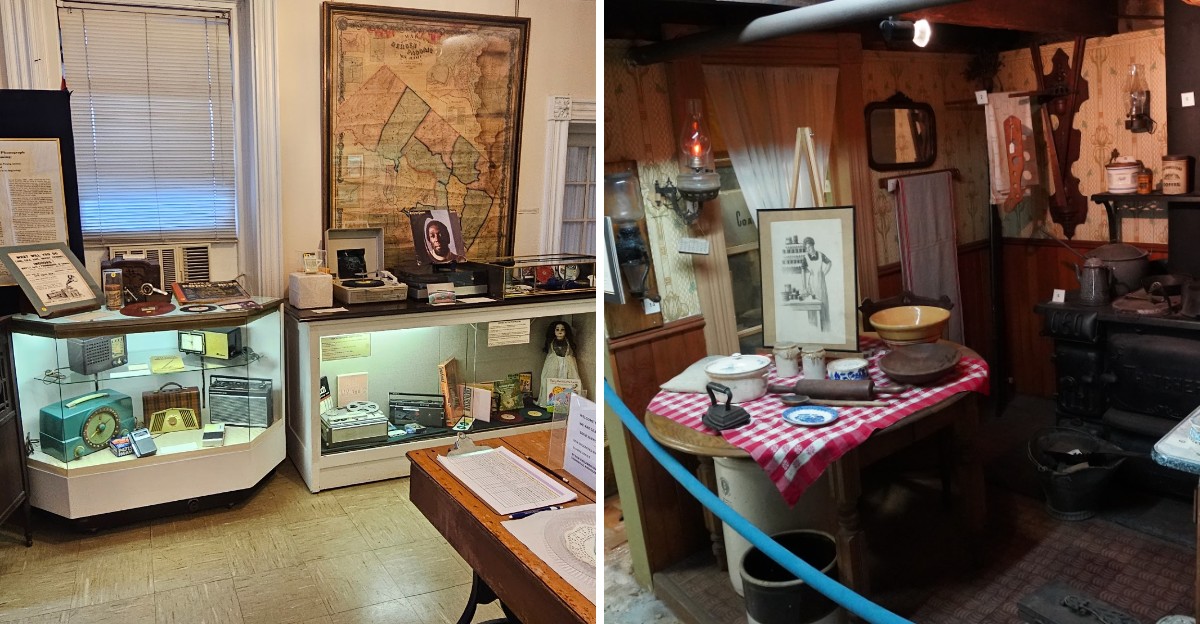
Rooms hold photographs, furniture, textiles, tools, artwork, and exhibits exploring the people and landscape of the Meadowlands. There is even a pre-electric kitchen.
Suddenly complaining about charging the phone feels a little silly.
The intimate setting is what makes the place interesting. Instead of viewing history inside a modern gallery, you are exploring it inside a house that has lived through plenty of history itself.
A Dutch Farmhouse That Refused To Disappear
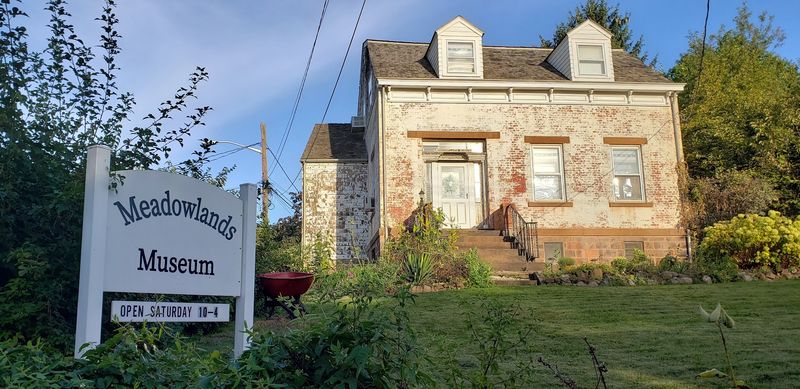
Sandstone walls, a low roofline, and a shape that belongs to a much older version of the state. The Yereance-Berry House was built largely in the early 1800s by the Berry family, early settlers in this corner of Bergen County.
What makes it remarkable is simply that it survived. Highways came through, towns filled in, farmland vanished under pavement, and somehow this house stayed standing while its neighbors did not.
Today it is recognized on both the State and National Registers of Historic Sites, and it also appears in the Bergen County Stone House Survey and the Historic American Buildings Survey. That is a lot of paperwork for one modest farmhouse.
Much of the original woodwork across its three levels is still in place, which you notice in the door frames and trim rather than in any grand display. The Meadowlands Museum took over the property in 1974 and has looked after it since.
Walk the perimeter before you head inside. The building tells half the story on its own.
From A School Project To A Real Collection
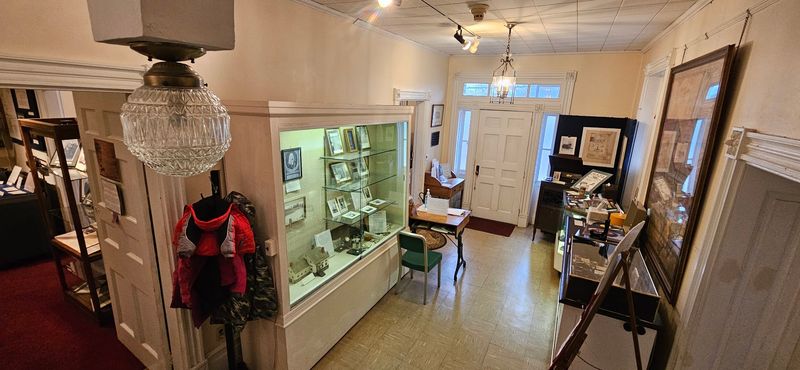
Here is a detail I love. The whole thing started in 1961 as the Rutherford Junior Museum, launched by a group of parents involved with the local Parent-Teacher Association.
Parents wanting kids to have somewhere to see real history led to a collection that now holds more than 5,000 artifacts. Objects, archives, and photographs all live under one farmhouse roof.
That origin still shapes the feel of the place. Nothing is overly polished or designed to impress, and the focus stays on the actual stuff people used, wore, and saved.
Its mission is to serve as a repository for the history of Rutherford and the wider New Jersey Meadowlands region, interpreting that story through displays and educational programs. Volunteers and trustees keep it running.
You can feel that community effort in the small handwritten touches and the way exhibits are arranged room by room. It is local history preserved by locals.
Honestly, that makes it more interesting, not less.
The Poet Who Lived Down The Road
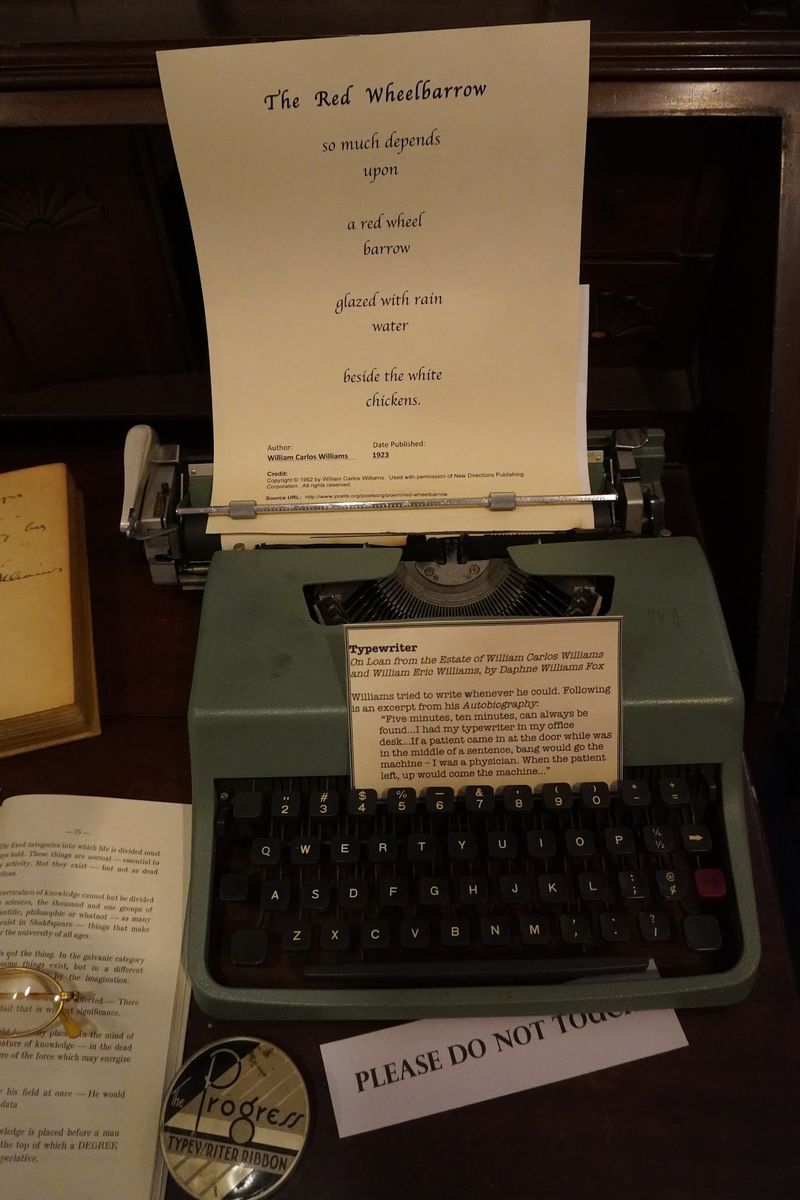
Anyone who read the poem about the red wheelbarrow in school has a reason to stop in this room. The William Carlos Williams Memorial Room honors the poet and physician who spent his life in Rutherford.
He worked as a doctor while writing some of the best known American poetry of the twentieth century, which is an unusual pairing by any measure.
The exhibit gathers his medical equipment, reference materials, and items connected to his personal and family life. Seeing the doctor’s tools beside the writing makes the two halves of his life feel less separate.
Outside on the grounds there is also the William Carlos Williams Poetry Garden, a quiet spot worth a few minutes before or after your visit.
You do not have to care much about poetry to find it interesting. The appeal is watching one person build two full careers in the same small town.
Bring a bit of patience and read the labels slowly.
Cooking Before Anybody Had An Outlet
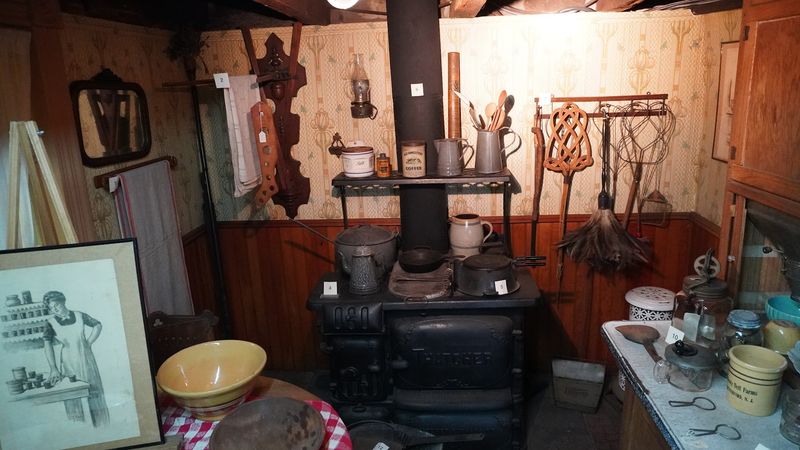
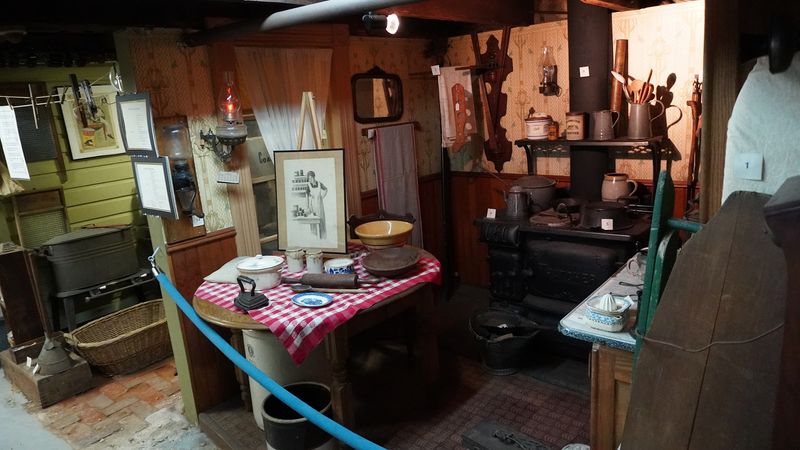
Down in the lower level sits a kitchen arranged to look like one from around 1910, and it is a humbling little room. A coal stove anchors the space, with an ice box, cabinets, and rows of hand tools filling in around it.
Every single one of those objects existed because dinner took real labor. No switches, no dials, no shortcuts.
What struck me most were the implements whose purpose is not obvious at first glance. Half the fun is guessing before you read the card.
The Pre-Electric Kitchen makes an easy favorite for kids, mostly because it looks nothing like the kitchen at home. Adults tend to linger over the ice box.
A laundry setup from the same era sits nearby, along with period tools, rounding out the picture of daily household work.
One practical tip. The lower floor stays noticeably cool, so a light layer is smart even in summer.
Rocks That Glow In The Dark
Fluorescent minerals under ultraviolet light look fake. Bright greens, hot oranges, colors you would swear were painted on, all coming out of plain gray stone.
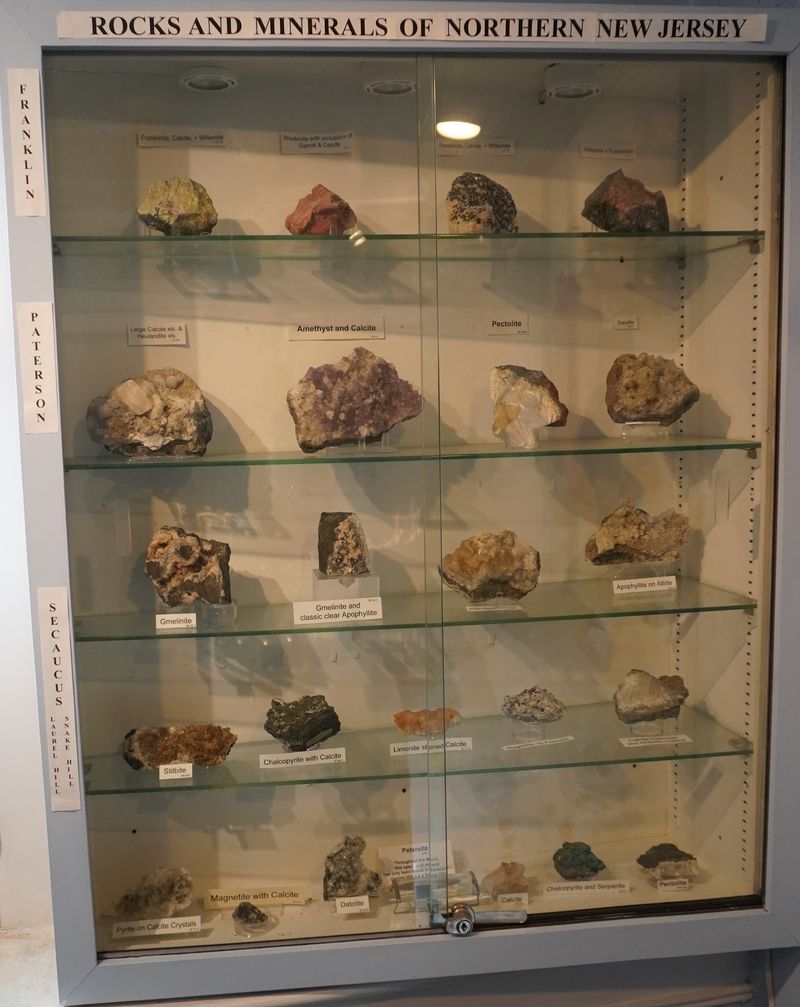
The Geology of the Meadowlands Region exhibit gathers rock and mineral samples from around New Jersey, including crystal formations and those glowing specimens that steal the show.
There is also a relief map of the state marking different geological formations, which quietly explains why the landscape looks the way it does. Hills, marshland, river valleys, all of it has a reason.
A display on the region’s mining industry rounds out the section, connecting the rocks to the people who dug them out.
For anyone traveling with children, this room usually wins. It is colorful, hands-on in feeling, and easier to grasp than dates on a plaque.
Geology never held much of my attention in school. Glowing rocks changed my mind in about four minutes.
Dolls, Toys, And A Slightly Eerie Second Floor
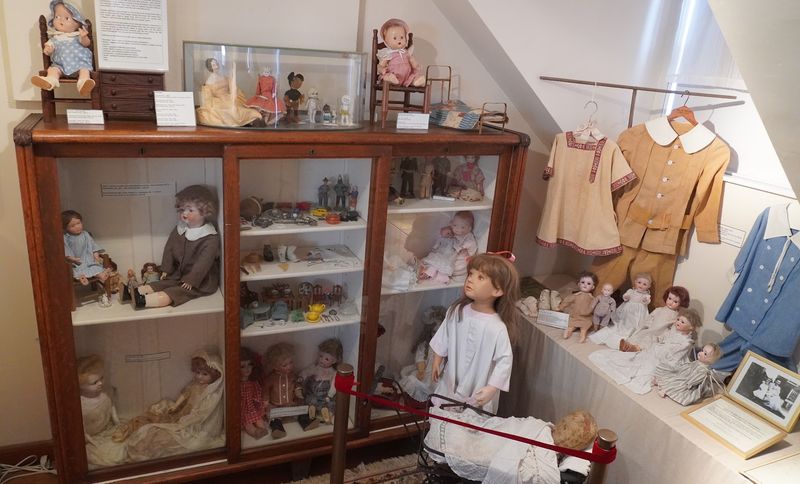
Old dolls have a reputation, and this room does nothing to soften it. Rows of porcelain faces from the 19th and early 20th centuries watch you from behind glass on the second floor.
Creepy or charming depends entirely on your mood that day. Either way you will remember it.
The Historic Dolls and Toys exhibit gathers playthings that were common in Rutherford homes around the turn of the century. Wooden pieces, painted details, hand-stitched clothing.
What gets me is how much care went into objects meant for children who eventually grew up and put them away. Someone saved them anyway.
Nearby, the Homespun Room shifts to household life with spinning wheels, dishes, and clothing from the early to mid 1800s. Together the two rooms cover both work and play.
Give yourself time on this floor. The details reward a slower walk, and the floorboards creak in a way that adds atmosphere for free.
Paintings Of A Landscape That Changed Forever
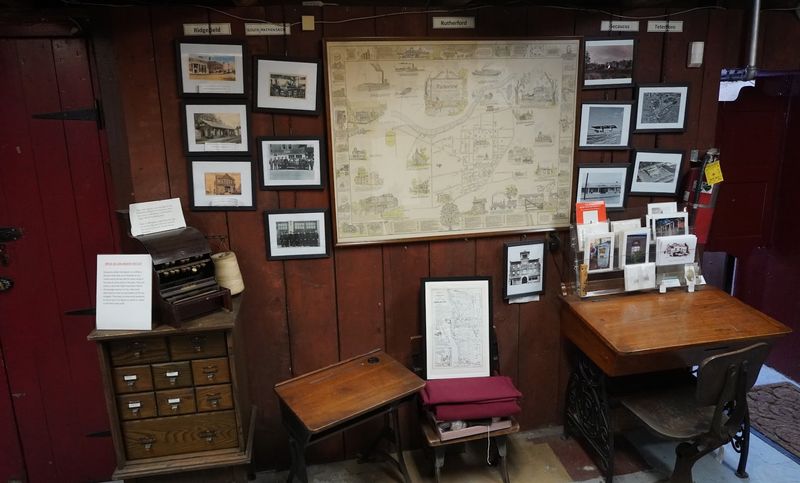
Thirty-one original paintings and drawings hang as part of the Original Artwork of Historic Rutherford and the Meadowlands display, and some date back to the 1800s.
They show historic buildings and the open marsh country before development reshaped it. Wide skies, water, low vegetation, almost no structures in sight.
Comparing those images to what exists now is the real experience here. Roads, warehouses, and stadium-era infrastructure replaced much of what these artists painted from life.
Historic photographs elsewhere in the collection add to that contrast, including views of the region before major highway construction cut through it.
I found myself standing longer in front of these than I expected. Art turns statistics about land use into something you can actually picture.
For travelers who drive through northern New Jersey regularly, this section reframes the whole route. You start noticing the marsh edges that survived.
Take a photo if allowed, then compare it to your own drive home.
Sound Machines From Edison To Your Phone
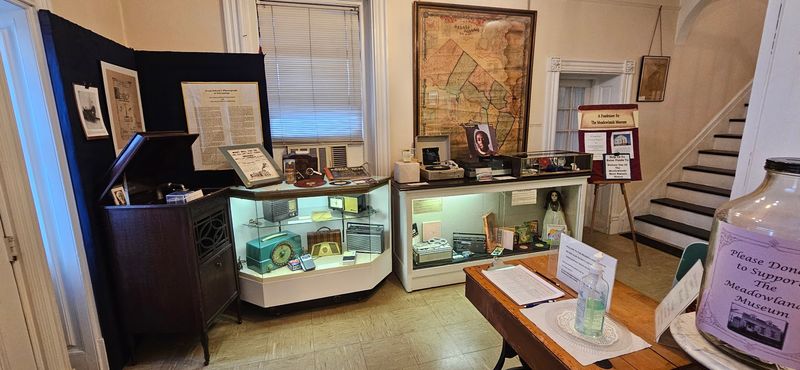
A brass horn the size of a flower vase, a wax cylinder, and a hand crank. That is where recorded sound began, and the museum starts its audio exhibit right there with original Edison phonographs.
From that point the display traces the whole chain forward, through later sound recording and playback devices, all the way to modern streaming.
Edison’s Phonograph to Streaming is a smart concept because it makes progress visible in one room. You can see machines getting smaller while the idea stayed the same.
New Jersey has a genuine claim to this story, given Edison’s laboratories in the state, which makes the exhibit feel especially at home here.
Kids raised on wireless earbuds tend to find the early machines baffling. Watching that reaction is half the entertainment.
It also quietly asks a good question. What will the next version of this display look like in fifty years?
Stories That Deserve More Attention
Among the permanent displays, the Hoage House artifacts carry real weight. They come from the home of the first African-American family to own their house in Rutherford, back in 1868.
Household objects tell that story in a direct, unfussy way. Ownership, permanence, a family putting down roots.
Rotating exhibits have expanded on themes like this, including shows on the history of the Black community in Rutherford and on pioneering women of the Meadowlands region.
Other temporary displays have covered local historic preservation efforts, and one memorable exhibit paired Victorian fashion with mechanical steampunk design. The range keeps repeat visits worthwhile.
Because the schedule changes, what greets you may differ from what greeted the last visitor. That unpredictability is part of the appeal of a small museum.
Permanent sections on colonial home crafts and carpentry tools fill out the practical side of early life here.
Ask at the desk what is currently up. The answer shapes your route through the house.
Planning A Saturday Visit That Actually Works
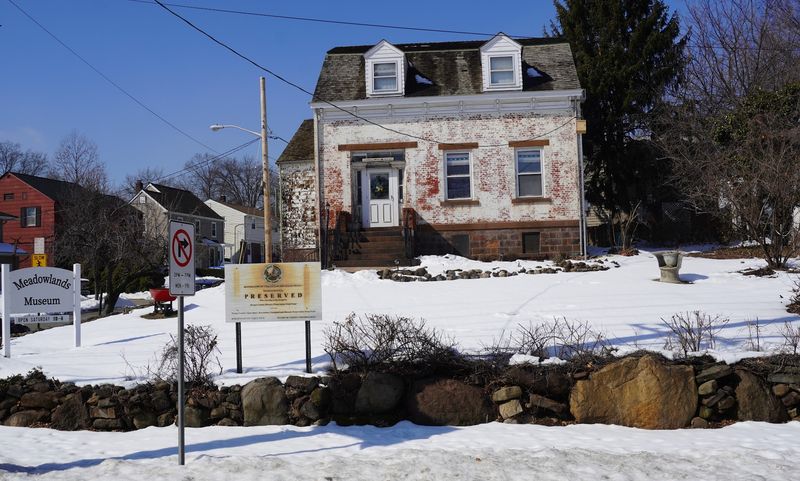
One thing to sort out before you go. The museum keeps limited hours and generally welcomes visitors on Saturdays, so a weekday road trip will leave you standing on the porch.
Plan around that and the rest falls into place easily. Parking on the surrounding residential streets is straightforward.
Budget roughly two hours if you like reading everything, or about half an hour if you are short on time. Rushing through would waste the best parts.
Volunteer guides typically offer a quick orientation, then let you explore each room at your own pace and answer questions as they come up. That balance works well.
Bring a sweater. Those thick stone walls keep the interior cool, especially downstairs where the kitchen exhibit sits.
Pair the visit with a walk through downtown Rutherford afterward for a full, low-key afternoon in this part of New Jersey.
You will find the Meadowlands Museum at 91 Crane Ave, Rutherford, NJ 07070.
