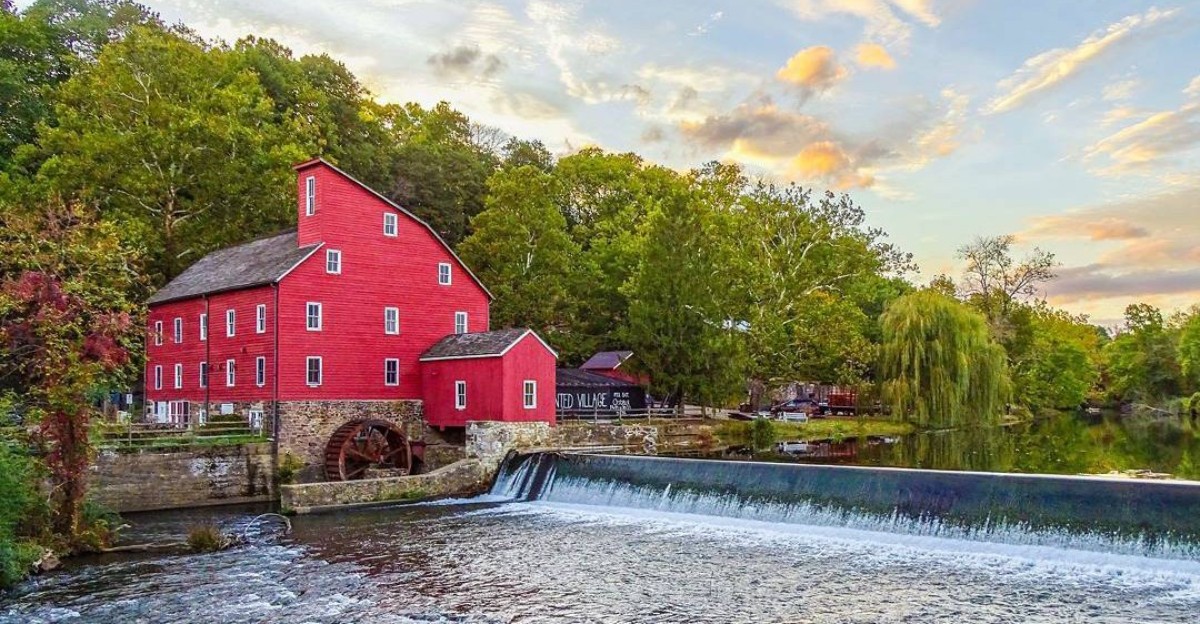
A red mill, a waterfall, an iron bridge, and a downtown small enough to explore without turning the day into a logistical exercise.
No wonder cameras come out so quickly here.
This tiny New Jersey town covers only about 1.3 square miles, yet its postcard appeal punches far above its size.
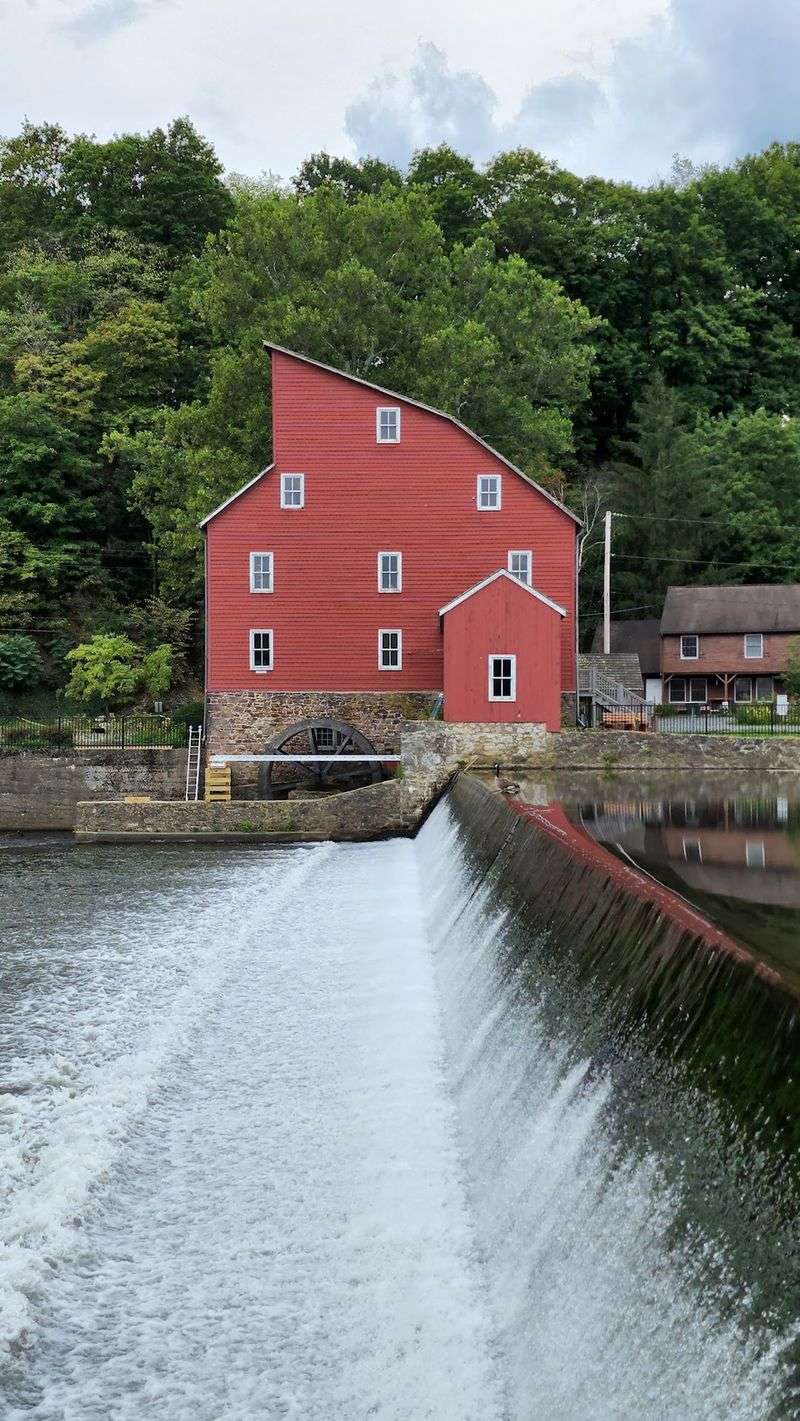
The scene everyone recognizes centers on a historic red mill beside the South Branch of the Raritan River, a landmark long described locally as the state’s most photographed scene.
Cross the bridge and the rest of town keeps the mood going. Historic buildings, independent shops, restaurants, and riverside views sit within an easy stroll of one another.
Fall makes the whole setup particularly unfair to other small towns.
Charge the phone before arriving. That famous red building tends to turn one quick picture into about thirty.
The Red Mill Steals Every Photo
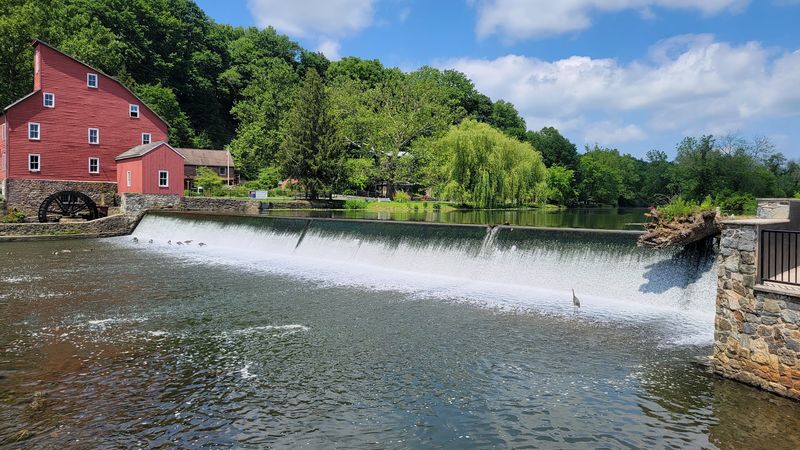
I’ll admit it, the first glimpse of the Red Mill is enough to make anyone slow down. Four stories tall, with bold red walls glowing against green trees and blue water, it looks like it was built for postcards.
Funny enough, it has actually ended up on plenty of them.
The mill is widely known as one of the most photographed buildings in New Jersey. Its image has shown up in magazines, on T-shirts, in oil paintings, and even on the side of a United Airlines Boeing 757.
That is a lot of fame for a building that started out processing wool.
Photographers love it in every season. Spring brings fresh leaves, summer adds bright sunshine, fall wraps the scene in orange and gold, and winter snow makes the red pop even more.
For the best shot, find a spot where the full building and the river fit into one frame. Early morning light tends to be soft and calm.
Bring a little patience, though, because you will probably be sharing the view with other camera fans who had the same idea.
A Mill With Many Names
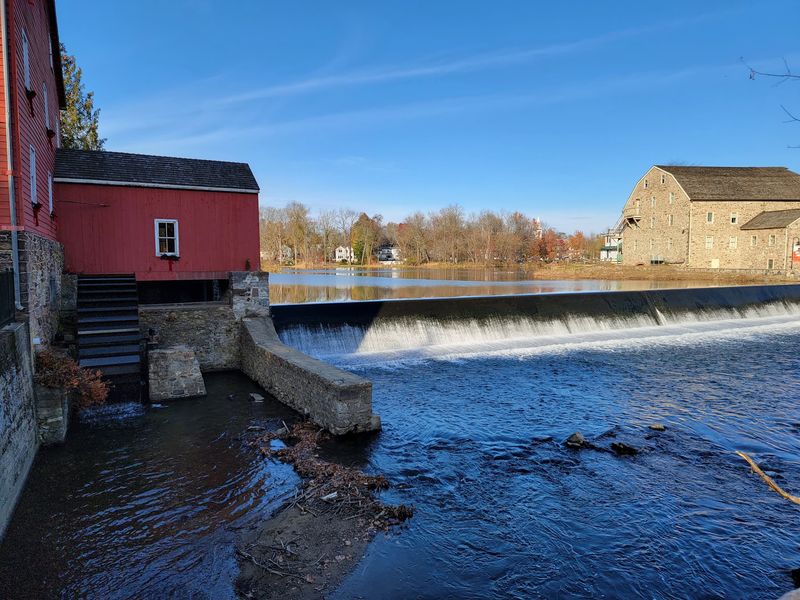
Here’s a fun bit of trivia to share on the drive home. The Red Mill was not always red, and it was not always called the Red Mill either.
The earliest section went up around 1810 to 1812 to process wool, and it became known as Hunt’s Mill. The town itself carried that name too, until it was renamed after Governor DeWitt Clinton in the late 1820s.
Over the years, the mill kept switching jobs. It ground feed, flour, stone plaster, and talc, and it even made peach baskets and produced electricity.
When graphite was processed there, people nicknamed it the Black Mill.
Later, grinding talc earned it the name White Mill. Honestly, it sounds like the building picked a new outfit for every era.
Every color change tells a piece of the town’s working story.
The machines eventually went quiet after the property was sold to the Clinton Water Supply Company. In the 1930s, it found a new purpose as a museum, and the grounds were officially dedicated in 1965.
The name Red Mill Museum Village arrived in 2002.
Sitting Pretty on the South Branch
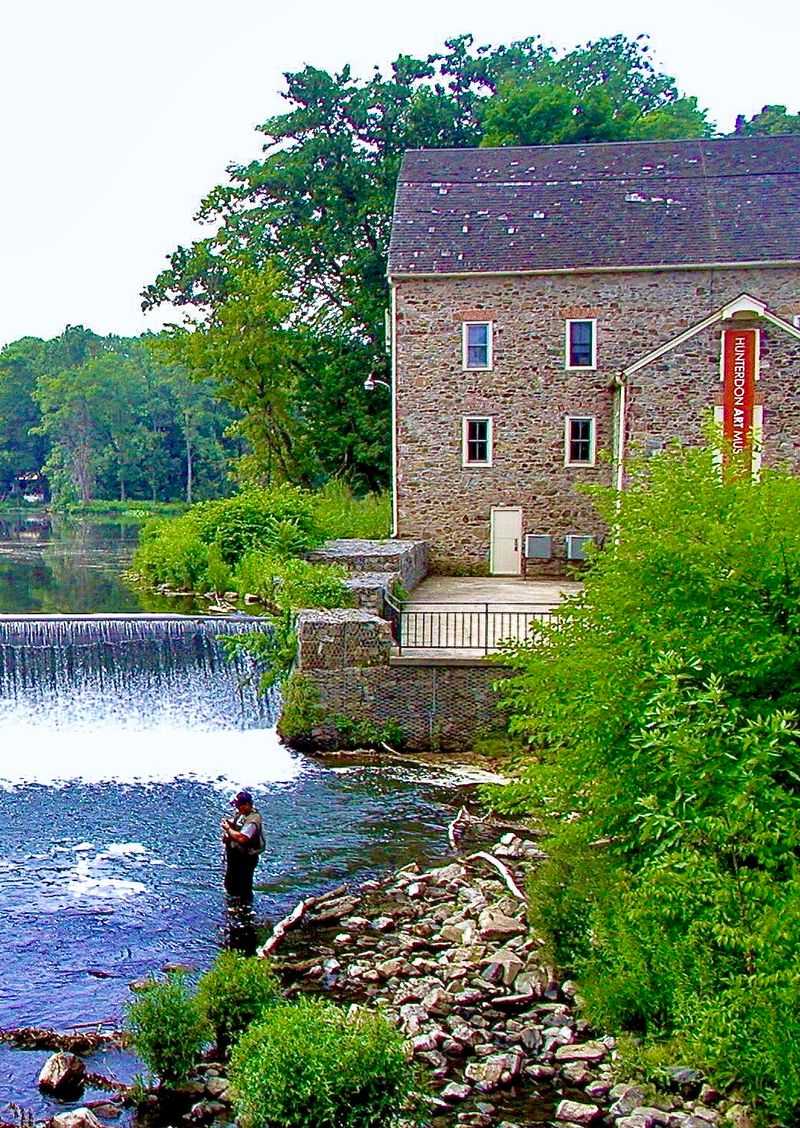
Sound matters here just as much as sight. The South Branch of the Raritan River tumbles right past the mill, and that steady rush of water sets a relaxed mood for the whole visit.
The mill sits on the south bank at the west end of Main Street, which explains why it looks so perfectly placed. Water, stone, and trees all come together in one tidy scene.
No wonder cameras come out so fast.
The river runs straight through the center of town, so it’s easy to enjoy even without a big plan. Some visitors bring canoes, others cast a fishing line, and plenty of people just watch for birds along the banks.
I think the birdwatchers might have the most peaceful job of all.
Pack a light jacket if you visit in cooler months, since the breeze off the water can feel crisp. A pair of comfy shoes helps too, because the best views often come from wandering a little.
Slow down, listen, and let the water do its thing.
Kids usually love spotting ripples and tiny splashes. Grown-ups tend to love the quiet.
Ten Acres of Working History
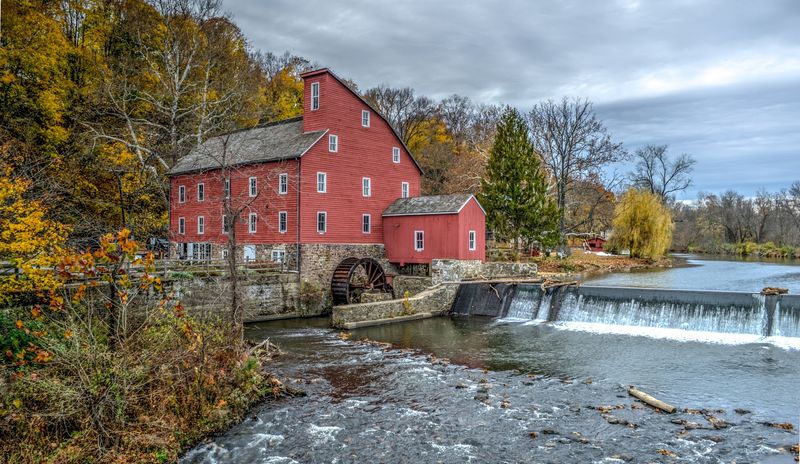
Most people show up for the mill, then realize there’s a whole village waiting behind it. The Red Mill Museum Village spreads across 10 acres, and each corner holds a different slice of everyday life from long ago.
One of the most surprising stops is the old quarry. It comes complete with an office and a stone crusher, giving a real sense of how hard people once worked to pull stone from the ground.
Big rock walls rise up nearby, and they make you feel pretty small.
Scattered around the grounds you’ll also find a carriage shed and a tenant house. Each building offers a peek at how families traveled, stored their things, and lived day to day.
It’s history you can walk right up to.
Inside the mill, exhibits explore local industries like textiles and agriculture, along with Native American artifacts. Other displays show how the industrial revolution changed the community.
It’s a lot to take in, so give yourself time.
My tip is simple. Wear sneakers, grab a map, and move at your own pace.
Class Is in Session at Bunker Hill
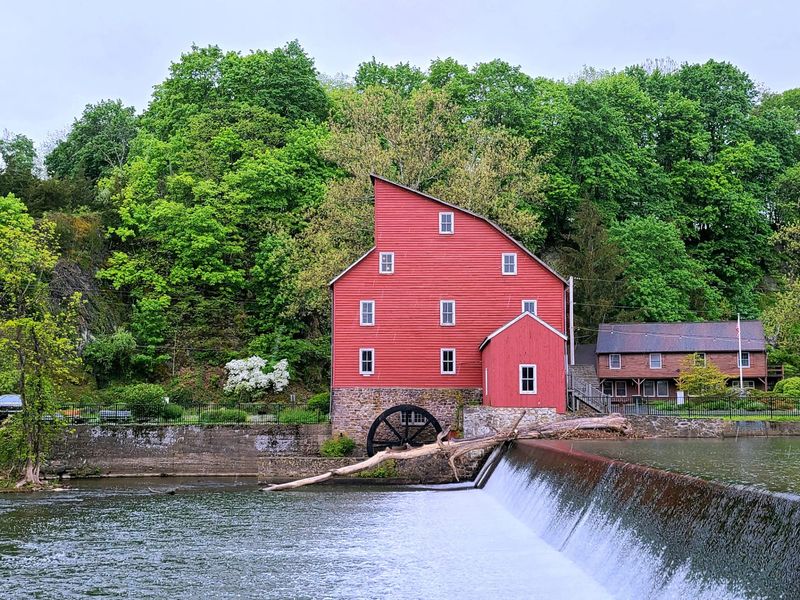
Picture a school day with one room, one teacher, and kids of every age sharing the same space. That’s the world waiting at the Bunker Hill Schoolhouse, a little building dating to around 1860.
The schoolhouse was moved to the museum grounds in 1974, which means it had quite a journey before settling here. Its plain, simple design makes modern classrooms seem downright fancy.
Kids today might be shocked at how basic it all was.
Nearby sits a log cabin, built in 1976. It offers a look at the snug, rustic style of home that early settlers might have known.
Rough wood and a simple shape make it a favorite backdrop for family photos.
For families, these two stops are a great way to spark curiosity. Ask younger kids what they would miss most without tablets or even electric lights.
The answers can be pretty hilarious.
Anyone who enjoys hands-on learning will find plenty to talk about here. Seeing history up close tends to stick better than reading about it in a book.
That’s my theory, anyway.
Hammers, Heat, and the Blacksmith Shop
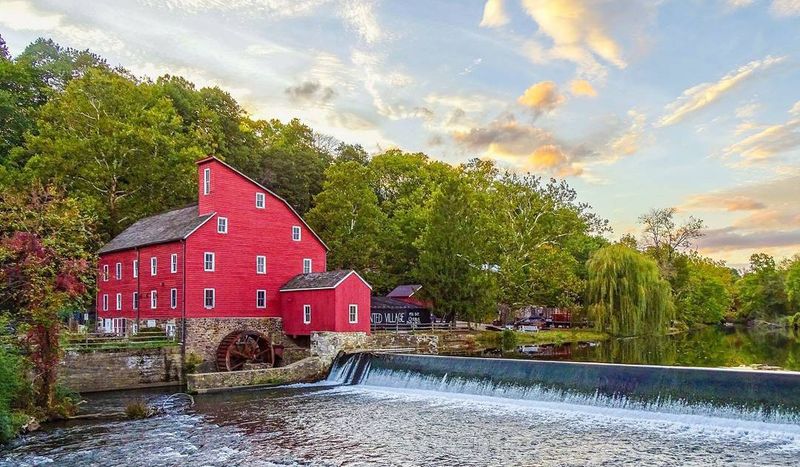
Clang, clang, clang. That ringing rhythm is the sound of history still at work in the village’s operational blacksmith shop.
Few sounds feel so wonderfully old-school.
Long before hardware stores, the blacksmith was one of the most important people in any community. Tools, hinges, nails, and horseshoes all had to be shaped by hand.
Without that skill, farms and mills would have struggled to keep running.
The shop at the museum keeps that tradition visible. When the forge is fired up, watching hot metal glow and bend shows how much strength and care went into everyday objects.
It’s a little mesmerizing, honestly.
Safety tip for families with little ones. Keep a comfy distance from the work area and let kids watch from a good spot.
Sparks are exciting, but nobody wants a singed sleeve.
Think about the hinge on your front door or the nails holding your house together. Once upon a time, every one of those came from a forge just like this.
Pretty wild to imagine.
Crossing the Lowthorp Truss Bridge
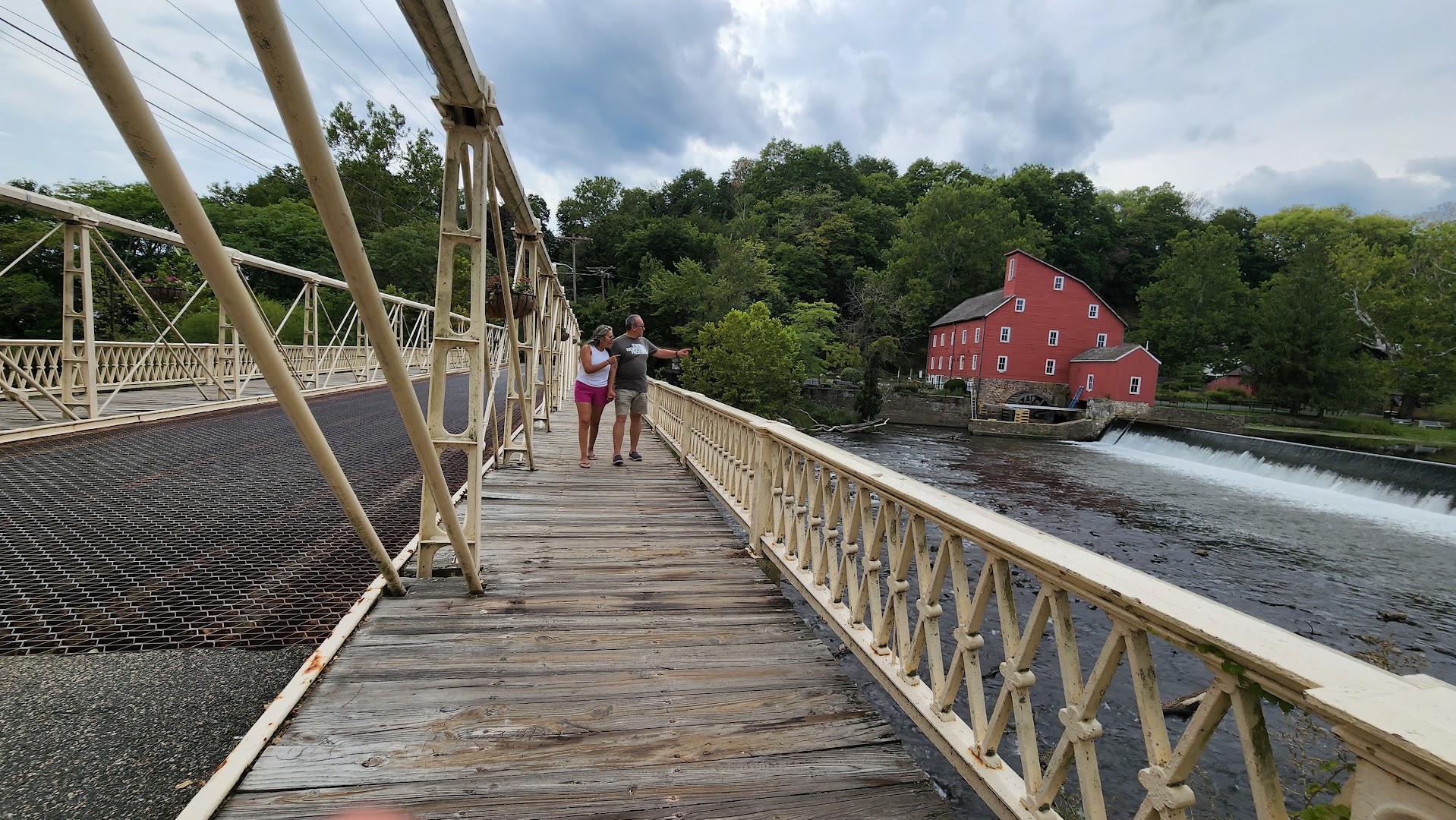
Old iron has a charm all its own, and the Lowthorp Truss Bridge proves it. This 19th-century bridge crosses the South Branch of the Raritan River near the two mills, linking the scenic heart of town.
Truss bridges use a pattern of triangles to spread out weight, which makes them strong without needing tons of material. Once you know that, you start spotting the triangles everywhere.
It’s a small engineering lesson hiding in plain sight.
The bridge also happens to be a fantastic viewpoint. From here, the river stretches out below, and the mills sit on either side like bookends.
It’s one of those spots where you’ll want to pause, even if you only meant to cross.
Try visiting at different times of day. Morning brings a calm, cool feel, while late afternoon light warms up the red paint and the stone walls across the water.
Both are lovely in their own way.
Share the space kindly with other walkers and passing cars, since this is a popular photo spot.
Main Street Charm in the Historic District
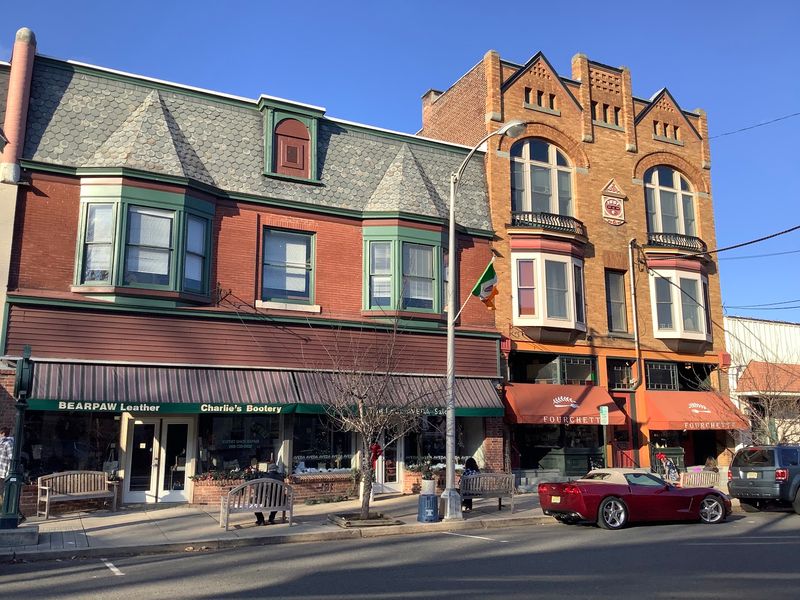
After all that history, a slow stroll through downtown feels just right. Much of Clinton sits within a 175-acre historic district that was added to the National Register of Historic Places in 1995.
That district includes 270 contributing buildings, so there’s a lot of character packed into a small space. Old facades line the streets, and tree-shaded sidewalks invite you to wander without a plan.
I could happily spend an hour just window shopping.
Local shops and restaurants give the downtown its lively feel. Browsing unique stores is a great way to find a gift or a keepsake that doesn’t come from a big chain.
Grabbing a bite to eat afterward rounds out the afternoon nicely.
Clinton is often described as offering a quintessential small town experience, and a quick walk makes that easy to believe. Nothing feels rushed here.
Don’t forget the gift shop on the first floor of the Red Mill, too. It’s a handy spot to pick up something that reminds you of the town’s most famous landmark.
Few souvenirs could feel more fitting.
Festivals, Fresh Air, and One Last Look
A good trip to Clinton doesn’t have to end when the museum doors close. North of town, the Spruce Run Recreation Area surrounds a 1,290-acre reservoir with room for boating, fishing, hiking, and camping.
It’s a nice balance after a day full of history. Wide open water and fresh air help you reset.
Pack a picnic and stay awhile.
Back at the museum village, the event calendar is worth checking before you plan. Craft fairs, art shows, music festivals, and historical reenactments bring extra energy to the grounds.
Timing your visit with one of them adds a fun layer to the day.
Before leaving, I’d suggest one final stop by the riverbank for a last look at the mill. It somehow looks different every time the light shifts.
That’s probably the real secret behind all those photos.
Bring your camera and a little extra time. If you’re ready to see this famous red landmark for yourself, plan a visit to The Red Mill Museum Village, located at 56 Main Street, Clinton, NJ 08809.
