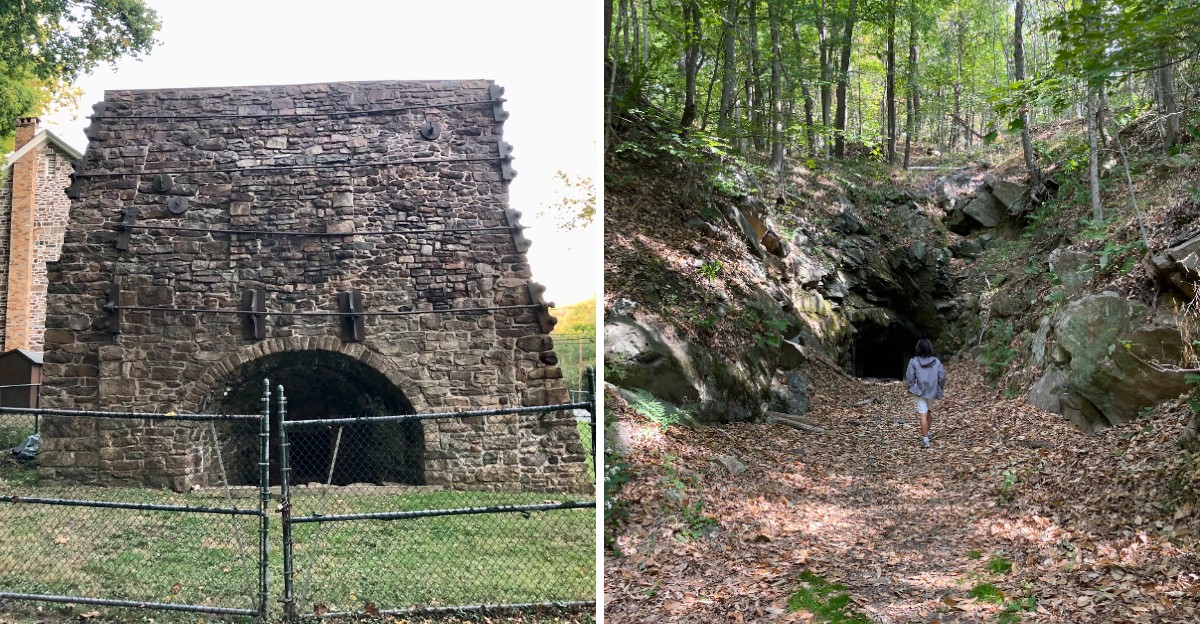
There is a whole other New Jersey hiding beneath your feet.
Long before highways, subdivisions, and shopping centers covered the landscape, miners were digging deep underground for iron, copper, zinc, and other minerals.
Hundreds of those old workings were eventually abandoned, leaving shafts, tunnels, collapsed openings, and forgotten traces scattered across the state.
Some date back centuries.
That alone is enough to make an ordinary patch of woods feel a little different. A quiet hillside may once have echoed with drills, carts, and men working below ground.
Today, many of those mines are sealed, inaccessible, or reduced to ruins, but the history is still there if you know where to look.
Turns out the state has been keeping a few stories underground.
Glowing Walls at Sterling Hill
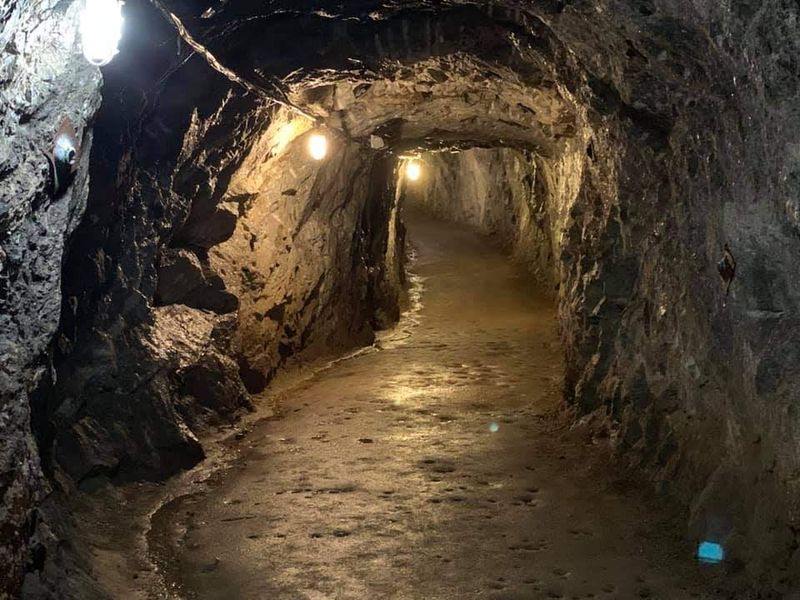
Rocks that glow like neon signs sound made up. At the Sterling Hill Mining Museum, they are very real, and they might be the coolest thing in the whole region.
This zinc mine was the last working underground mine in the state, and it closed in 1986. A few years later, in 1989, it reopened as a museum so visitors could see what miners saw every day.
The guided tour takes you through the first level of the mine, about 100 feet below the surface.
Here is the wild part. The full mine drops nearly 2,700 feet deep, though most of the lower levels are now filled with water.
Just knowing that giant flooded space sits below you makes the tunnel feel extra quiet.
The real star is the fluorescent rock. When ultraviolet light switches on, plain gray stone bursts into bright greens and reds, like someone flipped a magic switch inside the earth.
I honestly think kids and grown-ups react the same way. Lots of gasping.
Bring a light jacket, since mines stay cool all year. Wear closed shoes too, because the floors can be damp and uneven in spots.
Address: Sterling Hill Mining Museum, 30 Plant Street, Ogdensburg, NJ 07439.
A Rainbow Room in Franklin
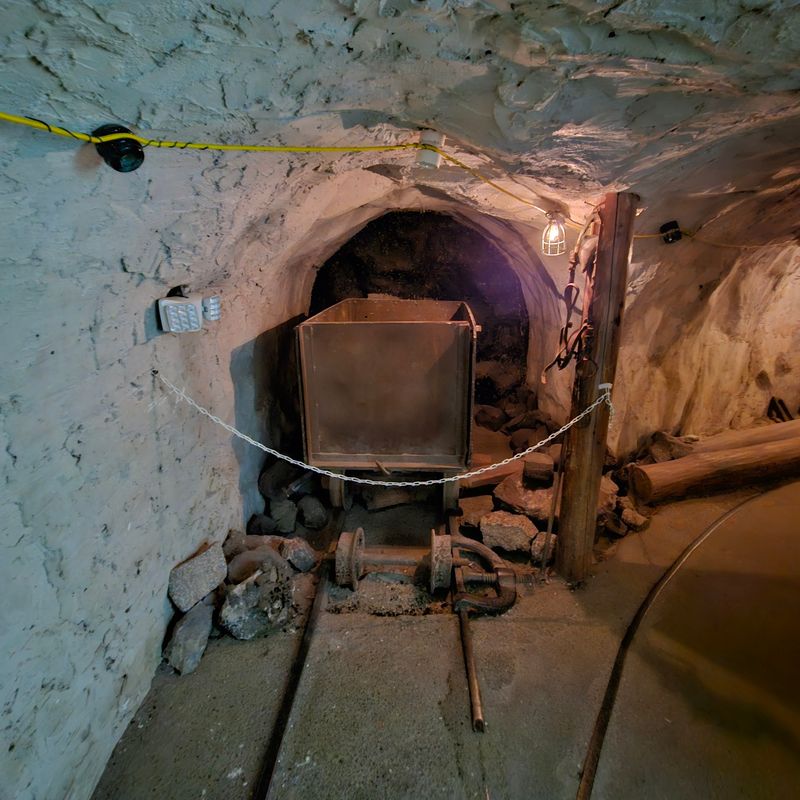
Just a short drive from Ogdensburg, the town of Franklin carries a pretty bold nickname. The State of New Jersey named it the Fluorescent Mineral Capital of the World back in 1968, and the Franklin Mineral Museum Inc shows exactly why.
This nonprofit museum holds more than 5,000 rocks and minerals. Many of them came from the local zinc mines that once kept the town busy.
Each case feels like a tiny window into how the earth builds things over millions of years.
Then comes the Fluorescent Room. The lights dim, the ultraviolet lamps glow, and the shelves suddenly look like a box of melted crayons.
Oranges, greens, and purples shine from stones that seemed boring a second earlier. My favorite moment is that quick hush right before everyone starts pointing.
Families will find plenty to talk about here, even if nobody knows much about geology. The displays are easy to follow, and the colors do most of the teaching anyway.
A smart plan is pairing this stop with Sterling Hill on the same day. Seeing the mine first and the polished collection second helps the whole story click together, from dark tunnel to bright display case.
Address: Franklin Mineral Museum Inc, 32 Evans Street, Franklin, NJ 07416.
Copper Dreams Along a Forest Trail
Some mining stories end in riches. The one along the Pahaquarry Copper Mines trail ends in a shrug, and that is part of its charm.
Tucked inside the Delaware Water Gap National Recreation Area in Hardwick Township, this spot saw people chase copper for centuries. Some stories say Dutch miners dug here before 1650.
Solid records point to mining starting around 1740, with more tries in the 1800s and early 1900s.
The problem? The rock simply did not hold enough copper to make money.
Every attempt fizzled out, leaving behind old buildings and tunnels that nature slowly took back.
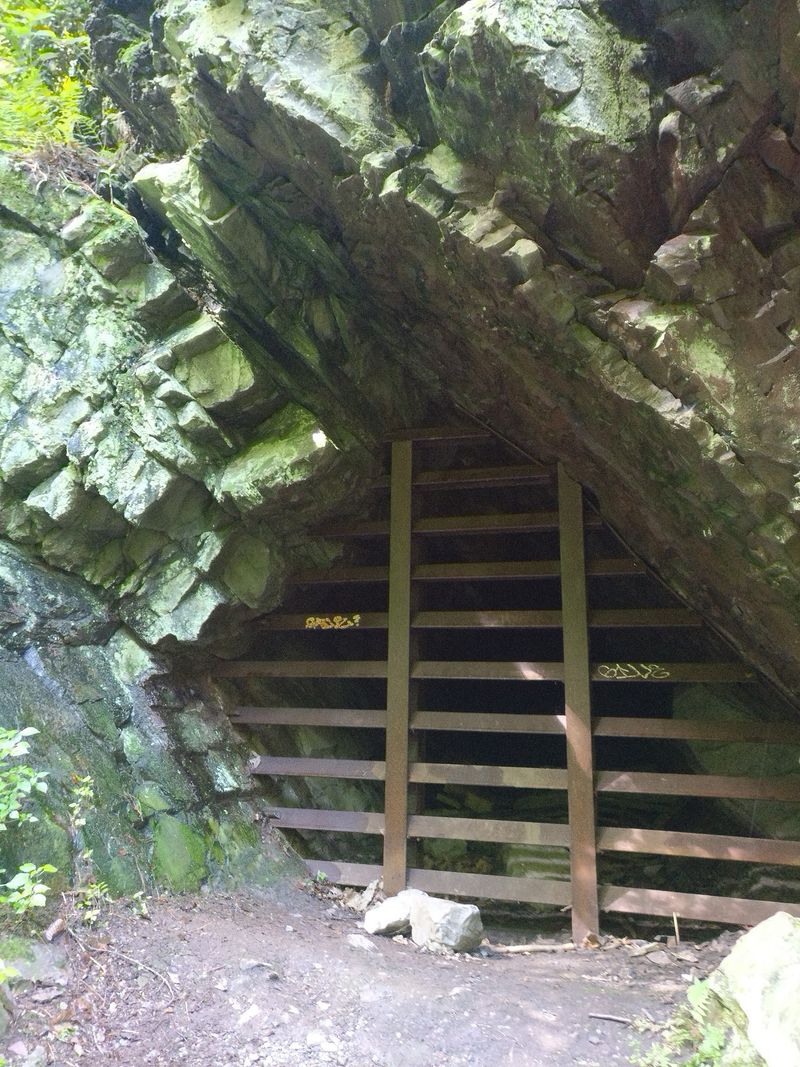
Today the red-blazed Coppermine Trail leads past those ruins, plus pretty little waterfalls that make the climb worth it. You will spot the sealed mine entrances along the way.
They are closed for a great reason, since bats now use them as roosting spots.
Wear sturdy hiking shoes, because the path gets rocky and steep in places. Pack water and snacks, too.
Look for the Copper Mine sign on Old Mine Road to find the parking area. Please stay out of any gated openings and give the bats their peace.
Address: Pahaquarry Copper Mines trail, Old Mine Road, Hardwick Township, NJ 07825.
When Edison Went Mining
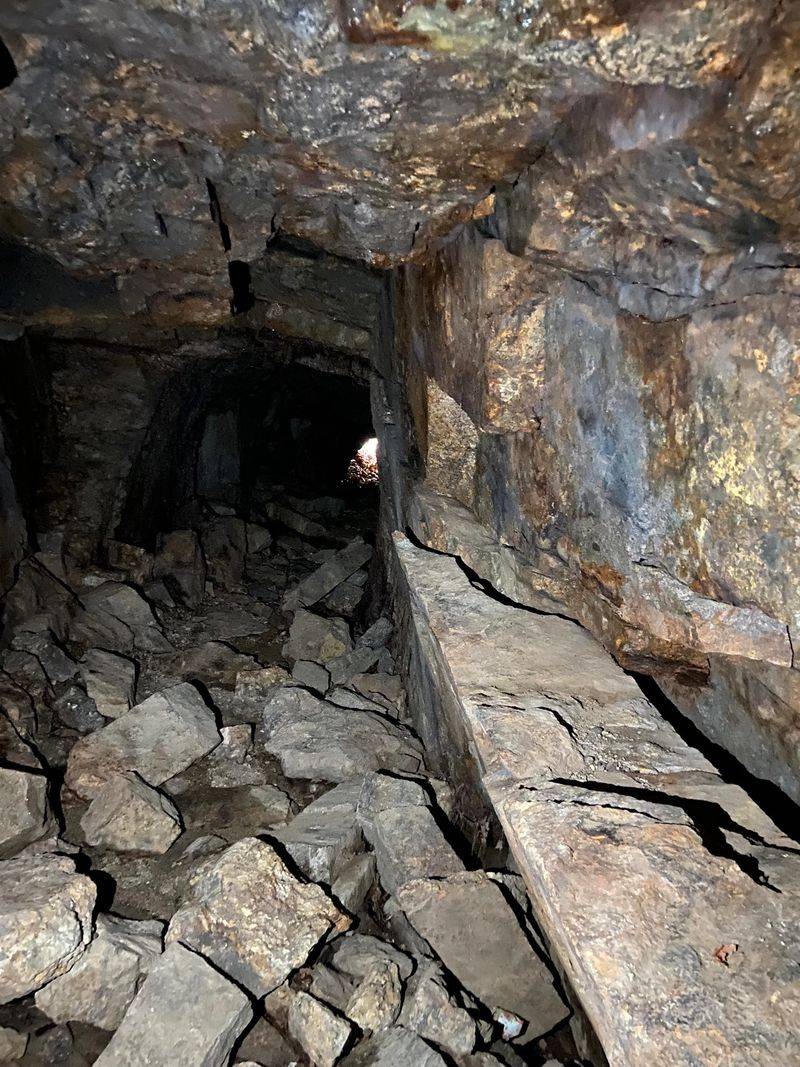
Most folks know Thomas Edison for light bulbs. Fewer know he once tried to change iron mining on a rocky mountain in Sussex County.
In 1891, Edison started the Edison Mines on Sparta Mountain. His big idea was to use powerful electromagnets to pull usable iron out of low-grade ore.
It was clever, modern, and very much his style.
Sadly, the plan did not pay off. Other places were digging up better iron for less money, and the operation shut down by 1900.
Even geniuses have off days, right?
The leftovers still sit quietly in the Sparta Mountain Wildlife Management Area. Hikers can come across old pits, shafts, foundations, and scattered pieces of industrial ruins hidden among the trees.
The woods have grown thick around them, so finding each one feels a little like a treasure hunt.
Since this is wild land and not a museum, plan ahead. Download a trail map before heading out, as phone signal can be spotty.
Stay well away from open pits or shafts, and keep a close eye on younger kids. In hunting season, bright orange clothing is a smart choice for anyone on the trails.
Address: Edison Mine, Edison Road, Sparta, NJ 07871.
Sinkholes and a Miners Church
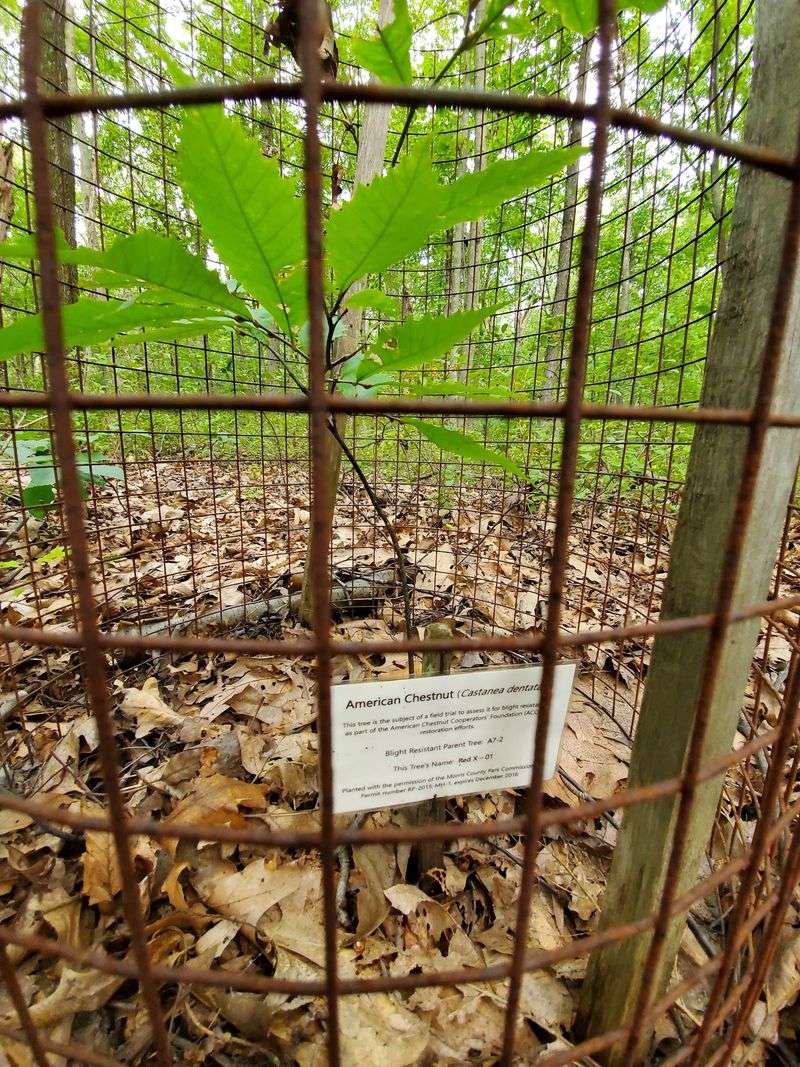
Grassy dips in the ground can look harmless. At Mount Hope Historical Park in Wharton, those dips tell a story that stretches back to 1710.
Iron mining went on here for about 270 years, which is a long time for anything to keep going. Visitors can still see the remains of the Teabo, Allen, and Richard Mines scattered across the rugged park.
The landscape almost reads like a history book with the pages left open.
Those odd hollows are called subsidence pits. They formed when old tunnels below collapsed and the ground sank.
Spotting them gives you a real sense of how big the hidden network underneath once was.
Near the park stands the Mount Hope Miners Church, dedicated in 1868. It served a community made up mostly of Cornish immigrant miners who came a long way for this hard work.
I find it oddly moving that a small church outlasted the mines.
Trails here are rocky, so good shoes help a lot. Spring and fall bring comfortable temperatures and fewer bugs.
Stick to marked paths, since the pits can be steep and loose. A quiet morning visit lets the birdsong fill in where pickaxes once rang.
Address: Mount Hope Historical Park, 75 Teabo Road, Wharton, NJ 07885.
Bats Took Over in Hibernia
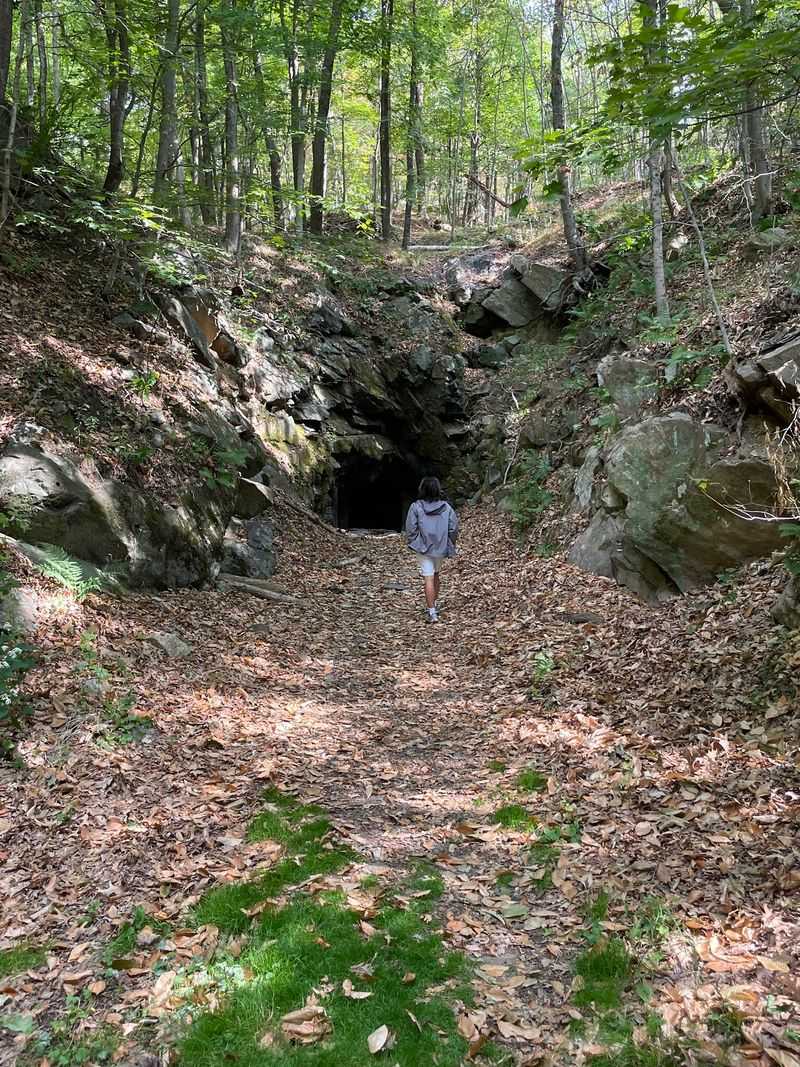
Revolutionary War cannonballs and sleeping bats share a surprising link in Rockaway Township. The Hibernia Mines connect both.
Miners began pulling magnetite iron from this ground as early as 1722. During the Revolution, the nearby Adventure Furnace, later called Hibernia Furnace, made shot and ordnance for the Continental Army.
That makes these hills a quiet piece of the fight for independence.
Work kept going until 1916, and over the years the mines produced millions of tons of ore. That is a staggering amount of rock hauled up by people and machines.
Think about that next time your backpack feels heavy.
Now the old shafts are sealed for safety, and the area has a brand new job. It serves as the largest bat hibernaculum in the state, which is a fancy word for a winter sleeping spot.
Thousands of bats rely on these dark tunnels to rest through the cold months.
So please, no poking around entrances. Disturbing bats in winter can really hurt them.
Instead, enjoy the surrounding trails and imagine the busy mining days. The Hibernia Branch Library makes a handy landmark when getting your bearings in this historic district.
Address: Hibernia Mines historic district, 419 Green Pond Road, Hibernia, NJ 07842.
Fire and Iron in Oxford
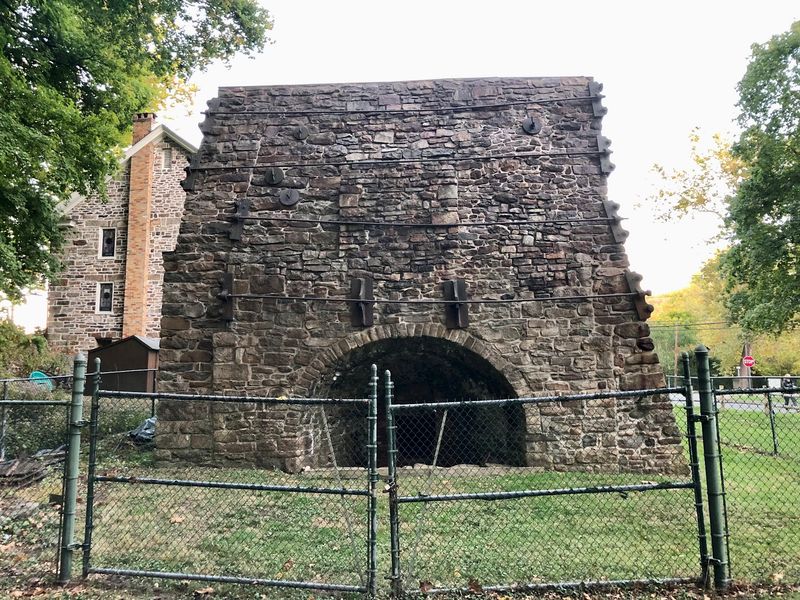
Big, blocky, and built from stone, the Oxford Furnace looks like a castle tower that forgot its castle. It has stood in Oxford, Warren County, since the 1740s.
The furnace made its first pig iron in 1743. It was the third charcoal furnace built in colonial New Jersey, and the very first built right where iron ore was being mined.
That was a smart move, since hauling heavy rock long distances was no fun back then.
Here comes the nerdy highlight. In 1834, this furnace became the first place in the United States to use hot blast technology in a practical way.
Heating the air pumped into the fire made iron production much more efficient.
The furnace kept roaring until it was finally blown out in 1884. That is a seriously long run compared with many furnaces of its time.
Today it is a protected historic site within the Oxford Industrial Historic District. Up close, try picturing the heat, smoke, and workers turning raw ore into useful metal.
The stonework alone is worth a long look. Bring a camera, as the structure photographs beautifully against blue sky.
Address: Oxford Furnace, Washington Avenue near Belvidere Avenue, Oxford, NJ 07863.
Ironmasters of the Ramapo Hills
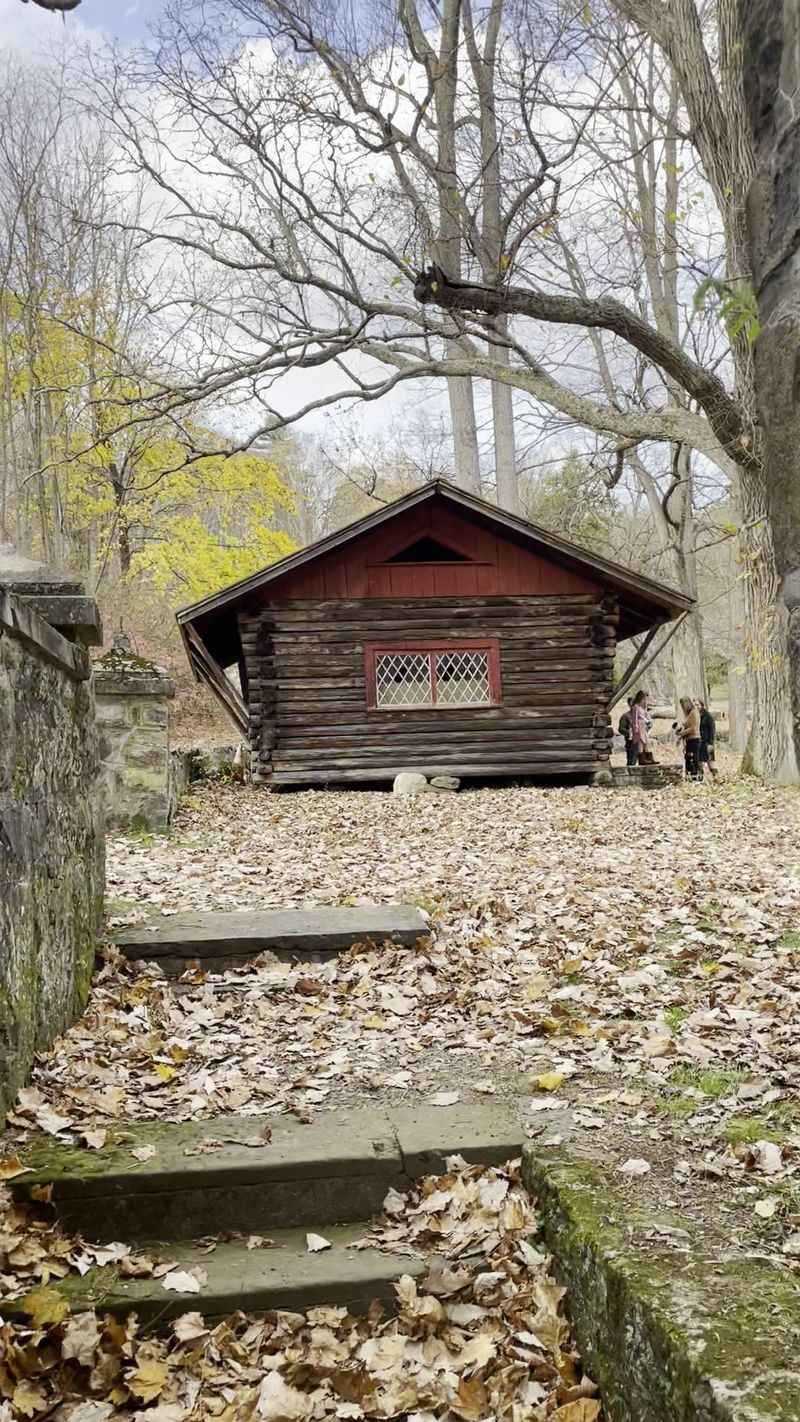
Wandering the lawns of Ringwood State Park feels peaceful today. Centuries ago, though, these Ramapo Mountains rang with the work of iron mining.
The hills here are rich in magnetite iron, and that made the area a major mining and iron center for a very long time. During the American Revolution, Ringwood iron helped supply the Continental Army.
It even played a part in the chain system used to defend the Hudson River, which is a pretty amazing claim to fame.
Mining came and went over the years, finally stopping in 1931. The land still carries that history in its roads, ruins, and shape.
At the center sits Ringwood Manor, now a museum within a National Historic Landmark district. Inside, the story focuses on the ironmasters and the industry that shaped the region.
Outside, gardens and trails make it easy to spend a whole afternoon.
This stop works well for mixed groups. History fans get the manor, while nature lovers get forest paths and open views.
Pack a picnic and comfy shoes. Fall is especially lovely, when the mountain leaves turn gold and red around the old estate.
It is a calm, happy way to end a mining road trip.
Address: Ringwood Manor, 1304 Sloatsburg Road, Ringwood, NJ 07456.
