A ship made of concrete has been sitting off a beach here since 1926, and the ocean is still chewing on it. That alone made me sit up.
Who builds a ship out of concrete?
Then I learned about a safari park where lions once roamed, now buried under poison ivy and brush. There’s also a brick factory in the pines that barely made a single season of bricks.
Trees got the final word.
New Jersey has a reputation for highways and strip malls. I love that it also hides castles, forts, and furnaces that moss and vines are quietly swallowing.
You can walk right up to many of them on public trails.
I picked twelve spots where the woods, dunes, and tides are winning a slow tug-of-war. Some take a real hike.
Others sit by a parking lot. Which one would you visit first?
1. Van Slyke Castle
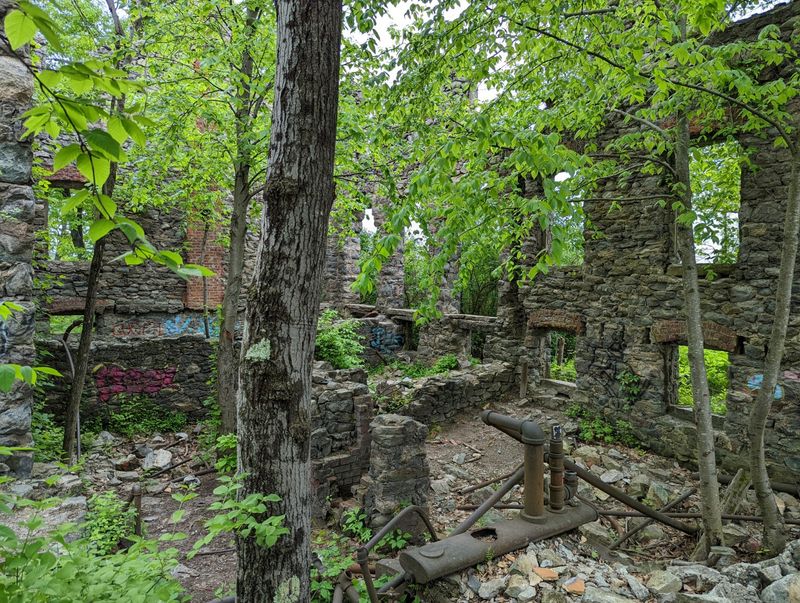
Yes, North Jersey has a castle, and yes, the forest is busy eating it. The stone ruins sit deep in the woods of the Ramapo Reservation, and you can only reach them on foot.
The mansion went up around the turn of the 20th century. It was known as Foxcroft, built by William Porter, before later owners gave it the castle name.
Fire eventually gutted the place, leaving thick stone walls standing open to the sky. Today those walls rise out of the trees like something from a fantasy novel.
Plan for a moderate hike with flat stretches, rocky ground, and a few scrambles. You’ll gain some elevation, so sturdy shoes beat sneakers here.
Close to the ruins, the trails turn seriously overgrown and thorny. Long pants are your friend, unless you enjoy collecting scratches as souvenirs.
The payoff is huge, though. On a clear day, you can spot the New York City skyline far in the distance from the castle grounds.
Kids handle the trip well, and there’s on-site parking to start your trek. Pack water, take your time, and let the old stonework tell its story.
Address: Wanaque, NJ 07465
2. Brooksbrae Brick Factory
Talk about a rough start. This brickworks opened in the Pinelands around 1905 but never really got rolling before trouble shut it down.
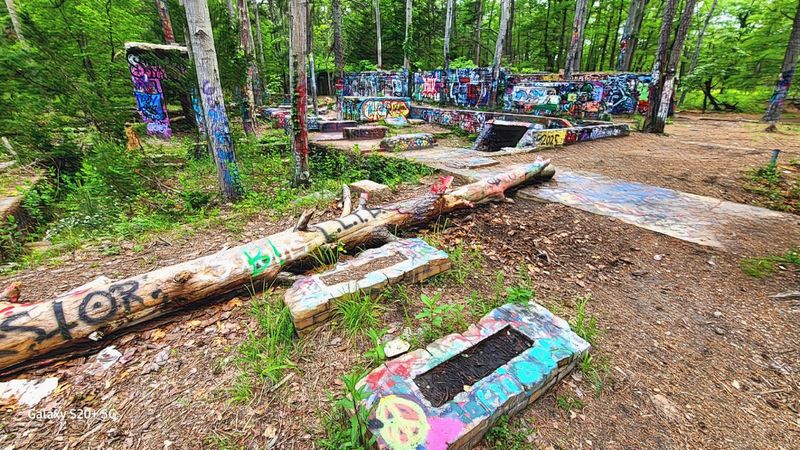
What’s left is a cluster of brick walls, tunnels, and foundations out in the pines. Pine scrub and trees keep creeping closer each year.
The twist is the color. Brooksbrae is one of very few Pinelands ruins covered in graffiti, so bright paint wraps around the old brick.
Some folks call that art, and others call it a mess. Either way, it makes for some of the most striking photos in South Jersey.
You reach the site by forest trails, so expect sandy paths rather than pavement. It’s not a long trek, which makes it an easy add-on to a Pine Barrens day.
Watch your footing around the ruins, since there are no roofs or floors to speak of. Doorways open onto dirt, leaves, and whatever the forest has dropped inside.
Go when the leaves are down if you want clear views of the walls. Summer greenery hides more of the structure, which is kind of the whole point of this list.
Address: VHQ5+X9, Manchester Township, NJ 08759
3. The Deserted Village
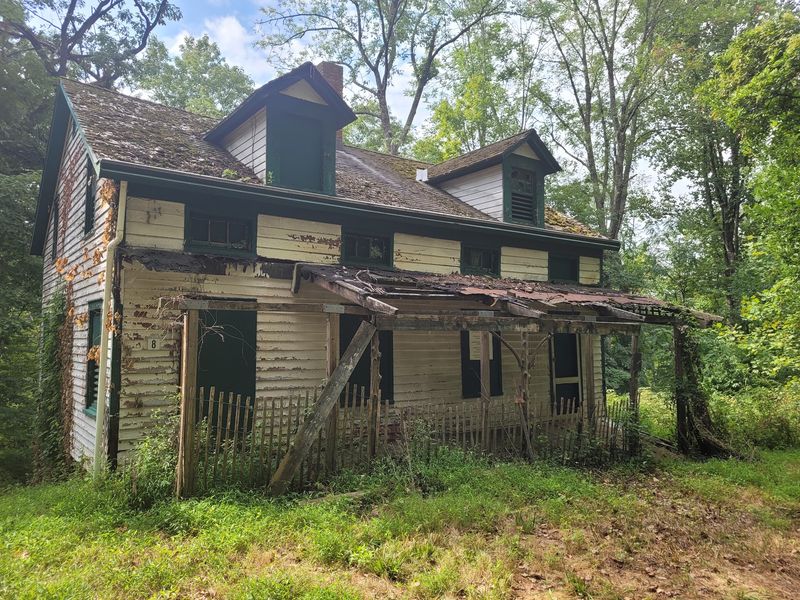
Ghost towns usually belong to the Wild West, but Union County has its own. Tucked in the Watchung Reservation, this village has been through more lives than a cat.
It started as a settlement in the 1700s. In 1845, businessman David Felt turned it into a mill town called Feltville.
Later, it became a summer resort named Glenside Park. Eventually people moved on, and the woods began moving in.
Today you can stroll past old homes and buildings set among the trees. Some have been restored, but many are too rotted and decayed to enter.
Signs along the way explain what happened here during the village’s busy years. You’ll pick up plenty of fun facts without needing a guide.
Wander into the woods behind the village and you’ll find a small cemetery. Hiking trails also branch out into the larger reservation for longer walks.
Families will like the nearby playground and the free parking. Weekdays are the quietest, so that’s your best bet for a spooky, peaceful visit.
Address: 9 Cataract Hollow Rd, Berkeley Heights, NJ 07922
4. Estellville Glassworks
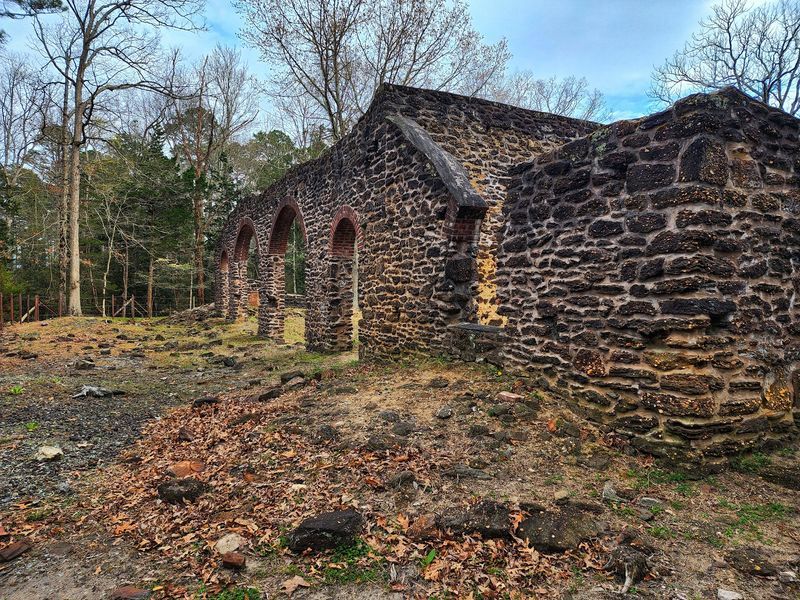
Blink and you’ll miss it, which is honestly part of the charm. The old glass factory ruins sit inside Estell Manor Park, and some visitors stroll right past them.
South Jersey once ran on glass. Sand, wood, and water were plentiful, so glassworks popped up across the region in the 1800s.
This one left behind stone and brick walls that now share space with the forest. Trees and brush have crept in around the old factory foundations.
It’s a quiet, thoughtful kind of stop. You can stand among the walls and try to picture furnaces glowing where leaves now pile up.
The park itself is large, with nature trails that connect to the ruins. Grab a park map so you don’t wander off in the wrong direction.
Head out earlier in the day if you can. Evening light fades fast under the trees, and the ruins are easier to find with the sun overhead.
Free parking makes this an easy outing. Pair it with a longer walk and you’ve got a solid afternoon of history and fresh air.
Address: Mays Landing, NJ 08330
5. Long Pond Ironworks State Park
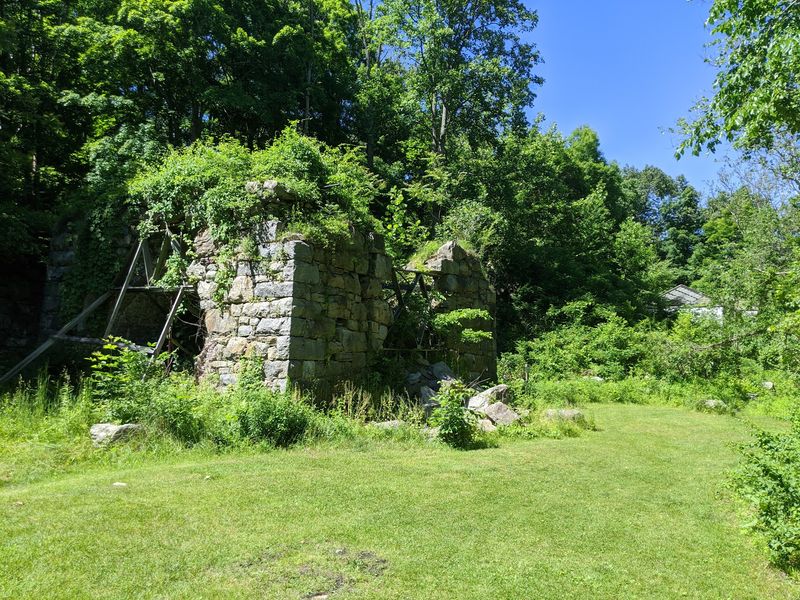
Before New Jersey was famous for diners, it was famous for iron. Long Pond Ironworks dates back to the 1760s, and its ruins still sit along the riverbank.
German ironmaster Peter Hasenclever started the operation before the American Revolution. Later, the works helped supply iron through the 1800s.
Today you’ll find stone furnace remains and the skeletons of old waterwheels. Woods and river growth wrap around them like a slow, green hug.
The park offers historic hiking trails that pass these industrial leftovers. It’s a great way to sneak a history lesson into a weekend walk.
Kids can manage the easier hikes here without much fuss. Leashed dogs are welcome too, so your four-legged hiking buddy can come along.
The park keeps daytime hours Monday through Saturday and closes on Sundays. Plan around that so you don’t show up to a locked gate.
Spring and fall are lovely times to visit. Fewer leaves in early spring also mean better views of the ruins before the forest fills in again.
Address: 1334 County Rd 511, Hewitt, NJ 07421
6. Fort Miles Battery 223
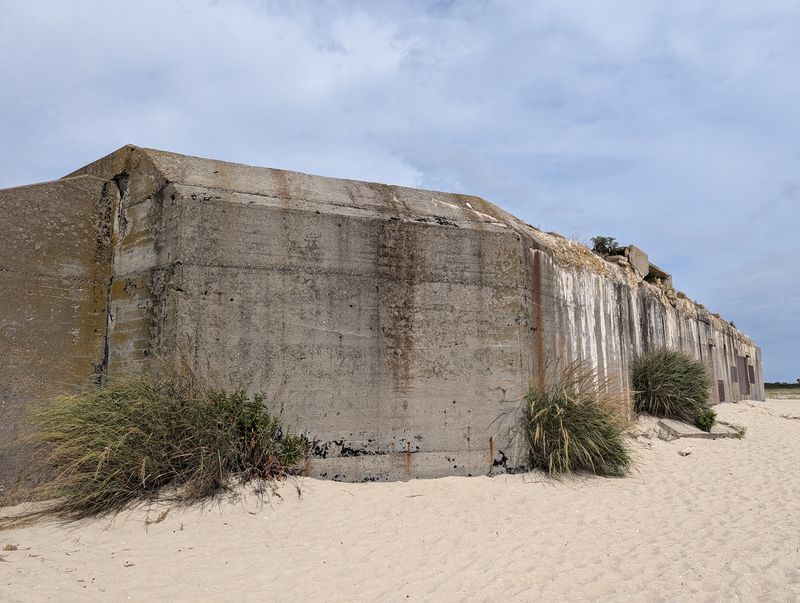
A World War II bunker with a beach view sounds like a strange vacation rental. Battery 223 sits near the sand in Cape May, keeping watch over the water.
Inside, the bunker once held sleeping quarters, a kitchen, a bathroom, and radio rooms. Soldiers needed a full setup to stay ready along the coast.
You can’t go inside these days, but you can walk around the outside. The concrete is old, weathered, and topped with plenty of overgrowth.
That mix of hard gray walls and wild green growth is pretty photogenic. It’s equal parts cool and a little creepy.
Well-kept paths lead around the area, and there are picnic spots nearby. Pack a snack and make an afternoon of it.
Kids usually love poking around a real military bunker. It sparks plenty of questions, so brush up on your WWII facts before you go.
Parking is free, which is a nice surprise near the Jersey Shore. Combine this stop with a beach walk for a classic Cape May day.
Address: Cape May, NJ 08204
7. Wreck of the SS Atlantus
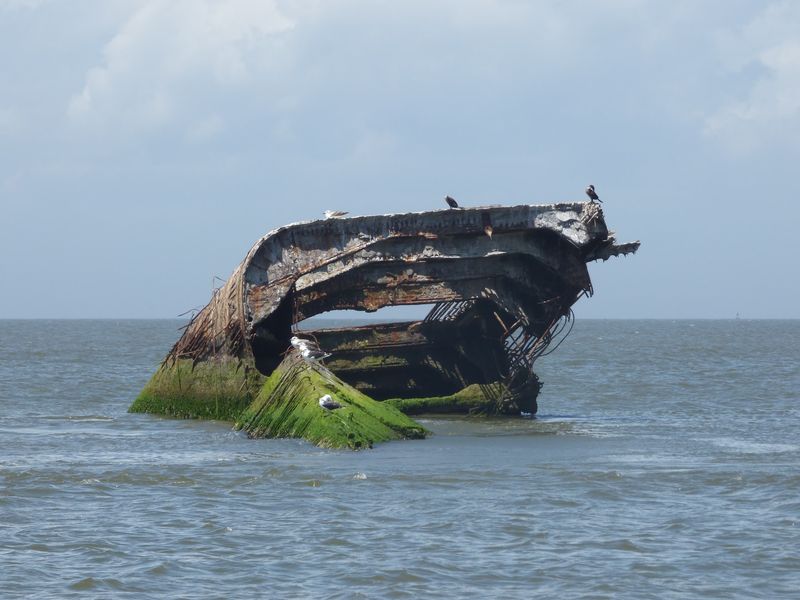
Concrete floats? Apparently, for a little while.
The SS Atlantus was an experimental concrete ship built around the end of World War I, when steel was scarce.
In 1926, it broke loose in a storm and ran aground off Sunset Beach. It has been stuck there ever since.
Over the decades, the ocean has broken much of the ship apart. What’s left pokes out of the water, with waves crashing over its battered hull.
The wreck is the star of Sunset Beach, especially when the sun goes down over the water. It’s one of the rare East Coast spots with a true sunset view.
Summer evenings also bring a flag ceremony honoring veterans. It’s a touching moment that adds real meaning to the view.
The beach is open around the clock, and parking is free. Swimming is at your own risk, so keep an eye on the kids near the surf.
Bring a camera and arrive a bit early to grab a good spot. The Atlantus won’t last forever, so see it while it’s still hanging on.
Address: Sunset Blvd, Cape May, NJ 08204
8. Fort Hancock
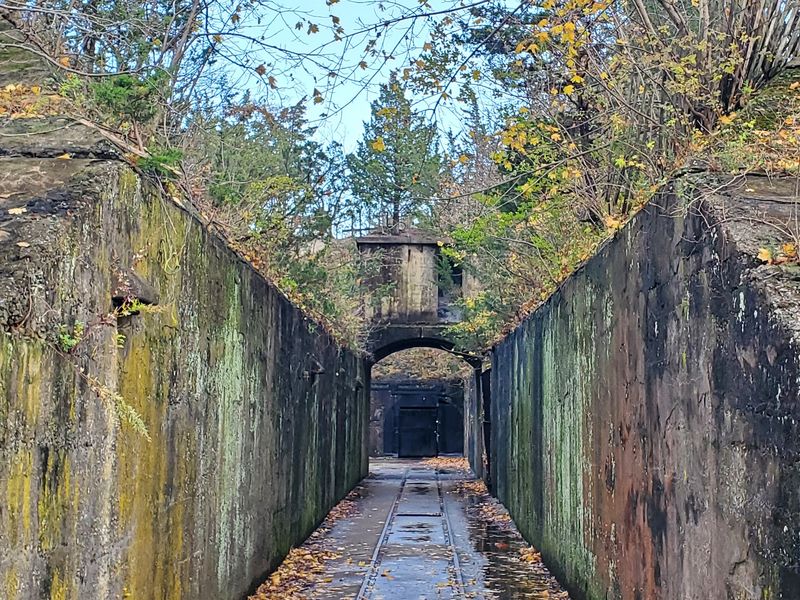
For nearly eight decades, this sandy spit guarded the way into New York Harbor. Fort Hancock served as a coastal defense post from 1895 until 1974.
Now the old gun batteries face wind, salt, and creeping scrub instead of enemy ships. The fort is a National Historic Landmark inside Gateway National Recreation Area.
A museum covers the history of the coastal defenses. Afterward, you can head out to see the hulking batteries for yourself.
One battery has an observation deck with sweeping views toward New York. On a clear day, it’s a jaw-dropper.
Don’t skip the Sandy Hook Lighthouse nearby. You’ll also find walking and bike paths linking the historic buildings and military sites.
Sandy Hook offers beaches, fishing spots, and plenty of wildlife too. It’s easy to turn a quick history stop into a full day.
Gates are open daily from early morning into the evening. Pack sunscreen, since shade can be hard to find among the sandy batteries.
Address: Sandy Hook, NJ 07732
9. Paulinskill Viaduct
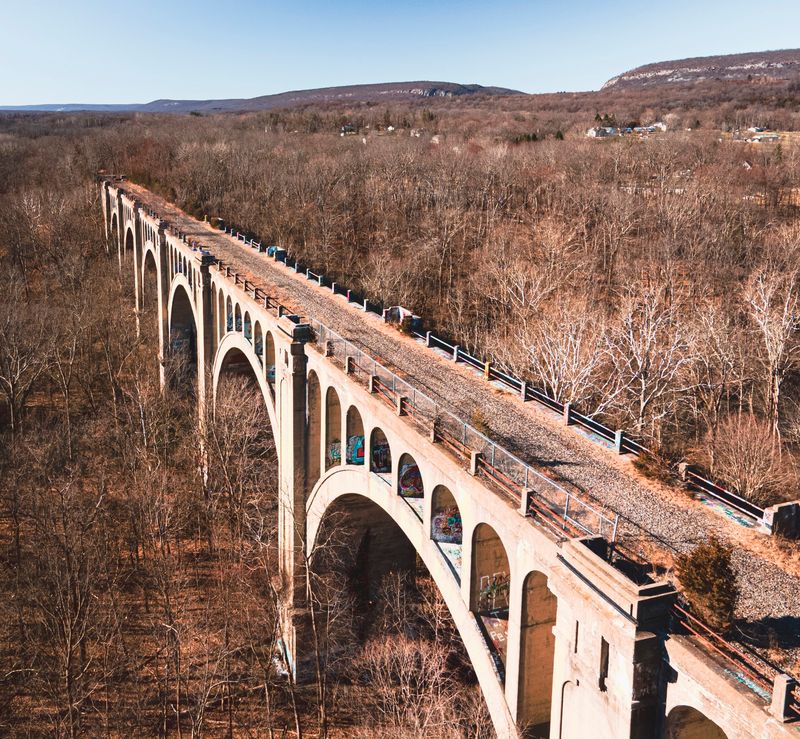
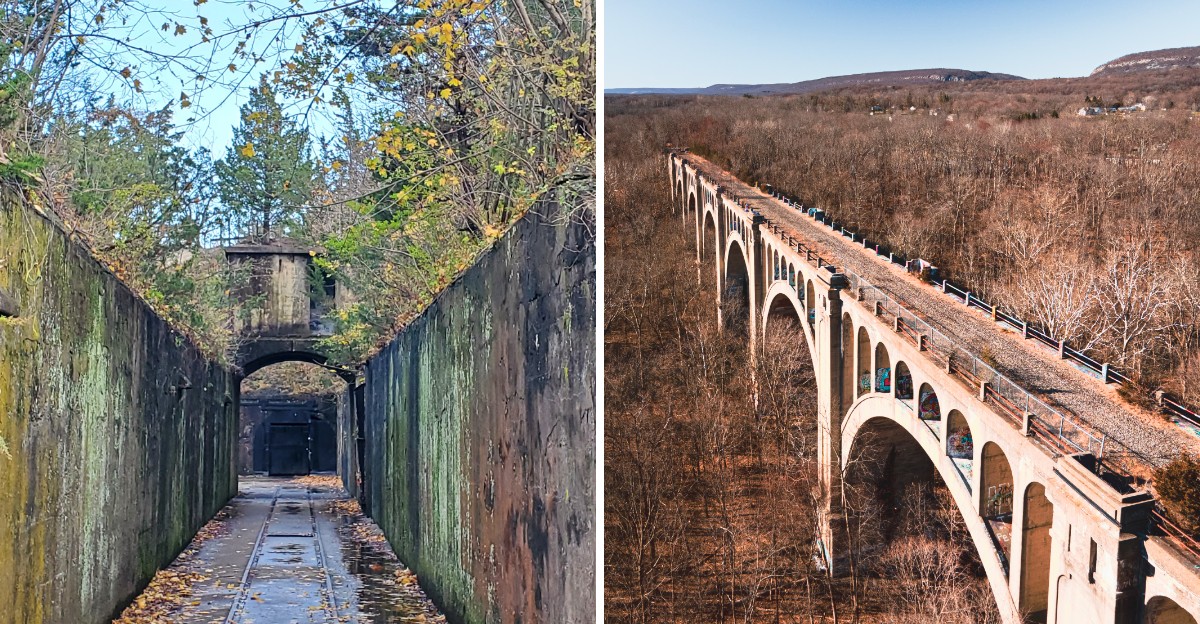
Here’s a bridge that once bragged about being the biggest of its kind. Completed in 1910, the viaduct was celebrated as the largest reinforced concrete structure in the world.
Its giant arches carried trains on the Lackawanna Cut-Off across the Paulins Kill valley. Trains stopped running in 1979, and the tracks came up a few years later.
Since then, the forest has grown up around the towering supports. Ivy and trees now soften the edges of this concrete giant.
Colorful graffiti covers parts of the structure too. Some pieces are pretty elaborate, turning the arches into an outdoor gallery.
The Paulinskill Valley Trail passes nearby, so you can bike or hike to a good viewing spot. Fishing in the river is another popular reason to stop.
Want the best look? Visit in winter, when bare trees reveal the full sweep of the arches.
There’s a free parking area, but no restroom on site. Plan your pit stops ahead, and stick to public trails rather than climbing the structure.
Address: Columbia, NJ 07832
10. Fort Mott State Park
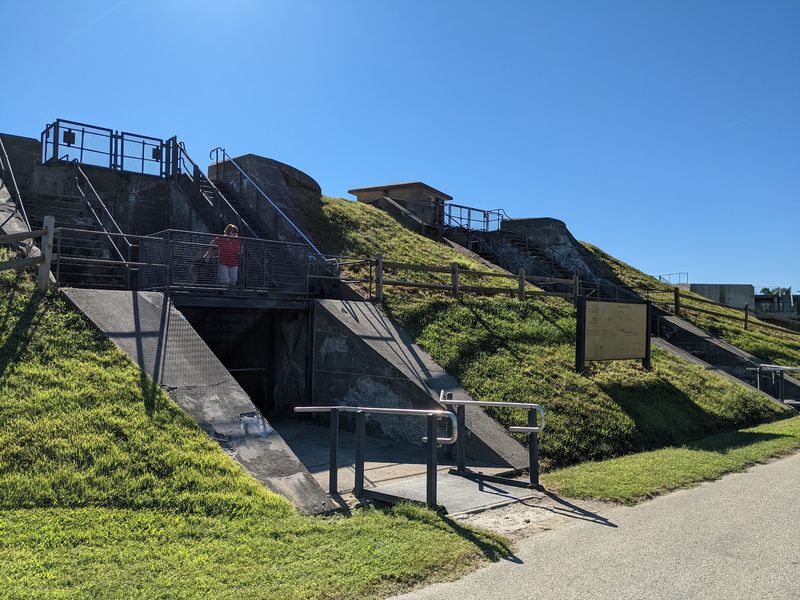
Grass grows right over the gun batteries here, like the fort is wearing a green sweater. Fort Mott sits along the Delaware River in South Jersey.
The fort was built to help protect the river approach to Philadelphia. Today its massive concrete walls stand open to curious visitors.
You can wander through the open parts of the old fort and read about its past. Trails are wide and beginner-friendly, and some are packed with history.
Wide fields along the river are great for flying kites or setting up a volleyball net. There’s a small beach area too.
Families get a playground with slides and swings. Picnic tables, grills, and two pavilions you can rent make cookouts easy.
Want to add a boat ride? A seasonal ferry runs from the park to Pea Patch Island and its own historic fort.
Leashed dogs are welcome, and the park is known for being clean and well cared for. Go on a weekday if you want the fields mostly to yourself.
Address: 454 Fort Mott Rd, Pennsville, NJ 08070
11. Clinton Furnace
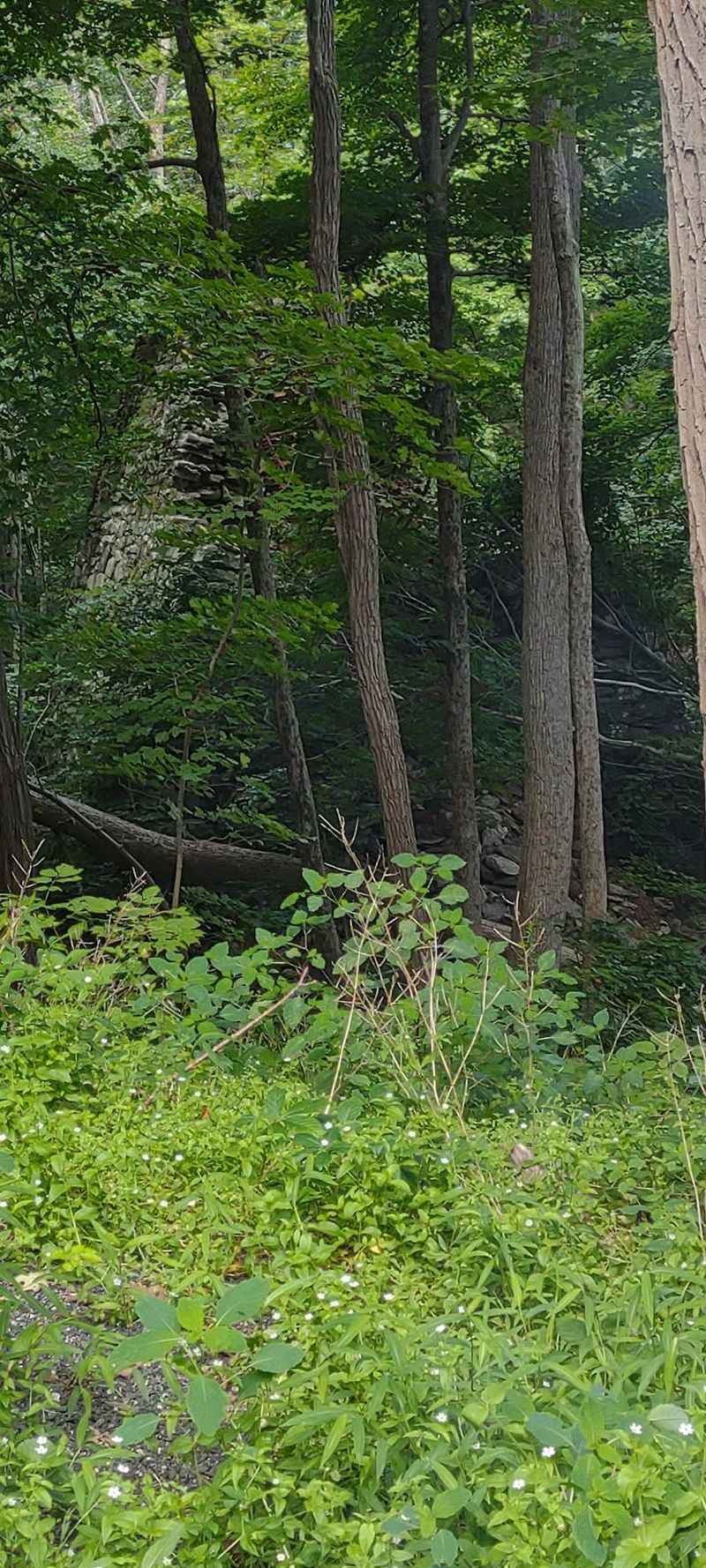
Clinton Road has a spooky reputation, but its oldest resident is just a stone furnace. Built in 1826, it was once the heart of a busy iron-making village called Clinton.
Workers here turned local ore into iron, using the forest for fuel. The village bustled for a time, then faded as the industry moved on.
Now the stone furnace stands alone in the northern New Jersey woods. Trees crowd in close, and moss settles into the old stonework.
It’s a short, easy stop rather than a big hike. That makes it perfect if you’re exploring the area and want a quick dose of history.
The site is open around the clock. Still, daylight is your best bet for actually seeing the details of the furnace.
Bring the kids and challenge them to imagine fire roaring inside those stones. It’s a fun way to make old history feel real.
Stay respectful of the ruin and keep off the walls. Old stonework is tougher than it looks, but it isn’t indestructible.
Address: 154 Clinton Rd, Newfoundland, NJ 07435
12. Jungle Habitat Lion Enclosure
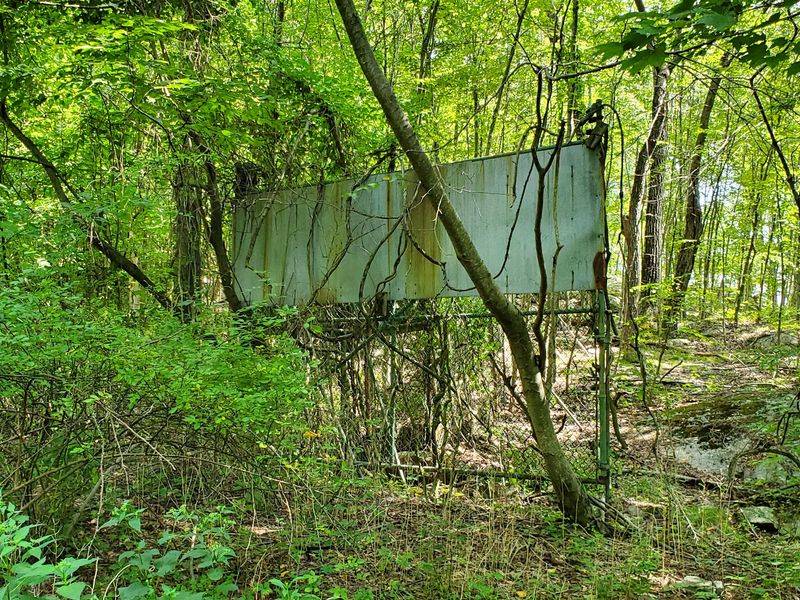
Lions once lounged in West Milford, which still sounds made up. Warner Bros. opened Jungle Habitat as a drive-through safari park in 1972.
Visitors drove past animals from around the world until the park closed in 1976. The state later bought the land, and the woods got to work.
Today the old lion enclosure and other pens sit in the forest. Vines, brush, and young trees are swallowing fences and gates.
Hikers and mountain bikers now use trails that wind across the former park. Spotting the leftover enclosures feels like a real-life treasure hunt.
Fair warning, though. Poison ivy grows thick here, so wear long pants and watch where you step.
Bug spray is a must in warmer months too. The forest has new residents, and plenty of them bite.
Go with a buddy and a trail map, since the paths branch in many directions. It’s the wildest way to end a tour of places nature is winning back.
Address: 4MG7+F5, West Milford, NJ 07480
