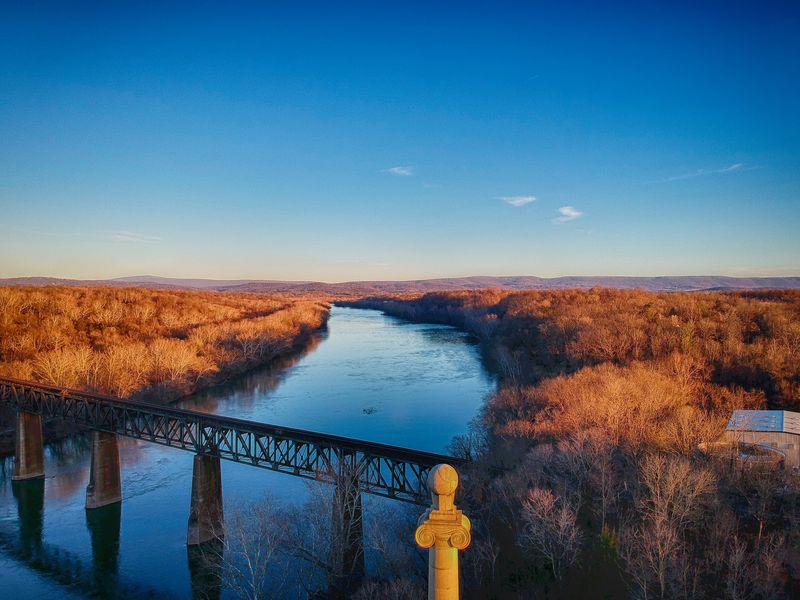
Some of the best stories in West Virginia hide behind quiet streets and shady trees, and you only find them if you slow down. Picture a small hilltop park above the Potomac River with a few picnic tables, a stone column, and a view that makes you want to sit a spell.
Most folks would guess it is just a pretty place to eat a sandwich. The truth is that the hills around it helped launch one of the earliest working steamboats in America, years before the name most of us learned in school.
A Hilltop Park Hiding a Big Secret
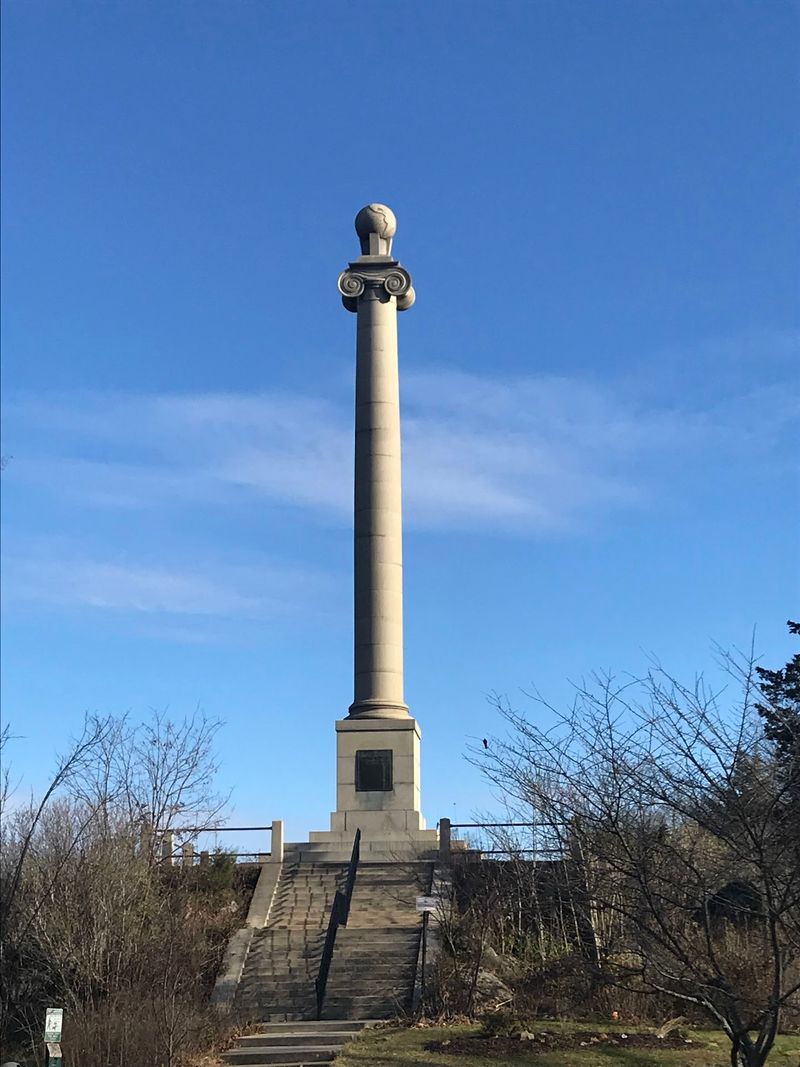
Blink on the way into town and you would miss it. A short lane, a handful of parking spaces, and a stone column peeking over the treetops are about all a passing driver sees.
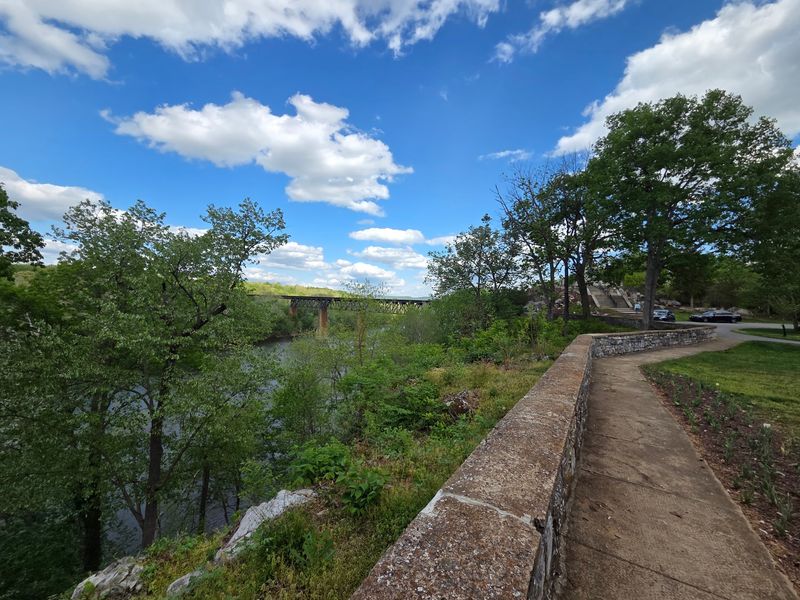
Up top, though, the ground opens into a tidy little park perched high above the Potomac River in West Virginia’s Eastern Panhandle. Visitors describe it as clean, peaceful, and well kept, the kind of spot where the loudest noise is often a passing train or the wind in the leaves.
So why write a whole article about it? Because the monument at the center of this park honors a local mechanic who reportedly sent a steam-powered boat churning up this very river back in 1787.
That was roughly twenty years before Robert Fulton’s famous Clermont made headlines.
For a lot of us who grew up in the Mountain State, that is a surprise. We heard plenty about coal, railroads, and glass factories, but steamboats were somebody else’s story.
Turns out they were ours first.
The coming sections walk through the man, the boat, the first run on the water, and then the park itself, with all the practical details you will need before you pull in.
The Mill Builder Behind the Machine
Long before anybody called him an inventor, James Rumsey was a working man with calloused hands. Born in Maryland in 1743, he made his living as a mill builder and blacksmith, the sort of practical trades a frontier community could not do without.
His path eventually led him to the warm springs town then called Bath, Virginia, which today we know as Berkeley Springs, West Virginia. Folks came there to soak in the mineral waters, and Rumsey ran a boarding house that kept him in steady contact with travelers from all over.
Here is a fun bit to share at the next family supper. Before steam ever entered the picture, Rumsey reportedly tinkered with a pole boat, a mechanical rig meant to push vessels upstream against the current.
It never quite worked the way he hoped, and he set it aside.
That failure did not slow him much. Mill work had taught him how gears, water, and pressure behave, and he kept turning the problem over in his head.
Plenty of people in the 1780s thought moving a boat upstream without sails or oars sounded like a tall tale. Rumsey seems to have taken that as a dare.
When George Washington Came to Stay
Imagine running a little boarding house and finding out your next guest is George Washington. That is reportedly what happened to Rumsey in 1784, when the general stopped in Bath.
Washington was deeply interested in opening up the Potomac for trade, so a local fellow with a working model of a mechanical boat caught his attention fast. According to historical accounts, Rumsey showed off his design and Washington came away impressed enough to put his support in writing.
That certificate of commendation was worth more than gold to a self-taught tinkerer. A good word from the most respected man in the young country opened doors, calmed doubters, and helped Rumsey find backers.
It also tied him into bigger projects. In 1785 he was named superintendent for the Patowmack Company, a Washington-backed venture to make the river navigable for commerce, and he is credited with work on locks at Great Falls.
Small-town West Virginians tend to love a story like this one. A hardworking local gets his shot, a famous visitor notices, and suddenly a backcountry idea is on a national stage.
Those are the moments that make a place proud for centuries.
Building a Boat Piece by Piece
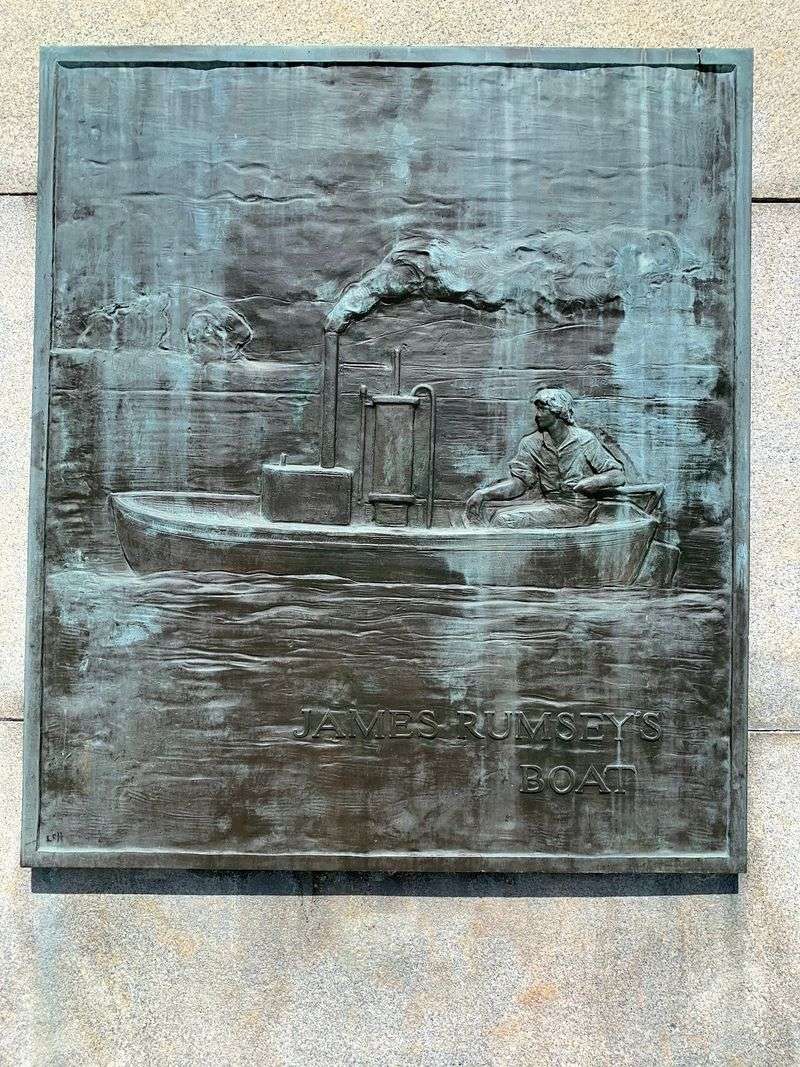
Nothing about this boat came out of a big factory. Instead it was pieced together across a scattered network of farms, shops, and foundries, which is exactly why the farmhouse idea in our title is not so far-fetched.
Historians say the hull was first laid down back in Bath. It was then hauled to a river town on the Potomac, where Rumsey moved his operation around 1785, and the heavy work of fitting it out began.
Parts came from all over. Valve castings and cylinders were made in Baltimore and Frederick, then carried west by wagon on rough roads, a trip that must have tested everybody’s patience.
Much of the hands-on assembly is credited to Joseph Barnes, Rumsey’s brother-in-law and right-hand man. While Rumsey worked out the mechanics, Barnes did a great deal of the fitting and fastening.
Where exactly did all that happen? Accounts suggest a modest work setting, perhaps a barn or simple outbuilding on rural property rather than anything grand.
The details are fuzzy after more than two centuries, but the picture is clear enough: a country workshop, a few determined men, and one big idea.
She Moves on a Cold December Day
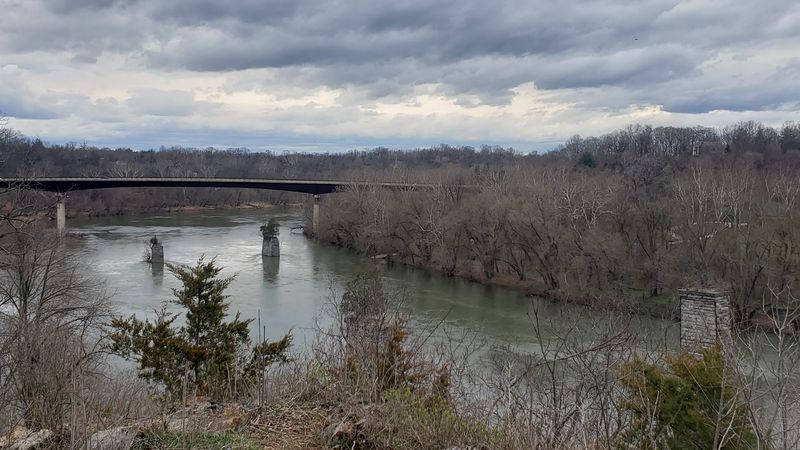
December 3, 1787. Cold air, gray water, and a crowd of curious neighbors lined up along the riverbank, many of them fully expecting to go home disappointed.
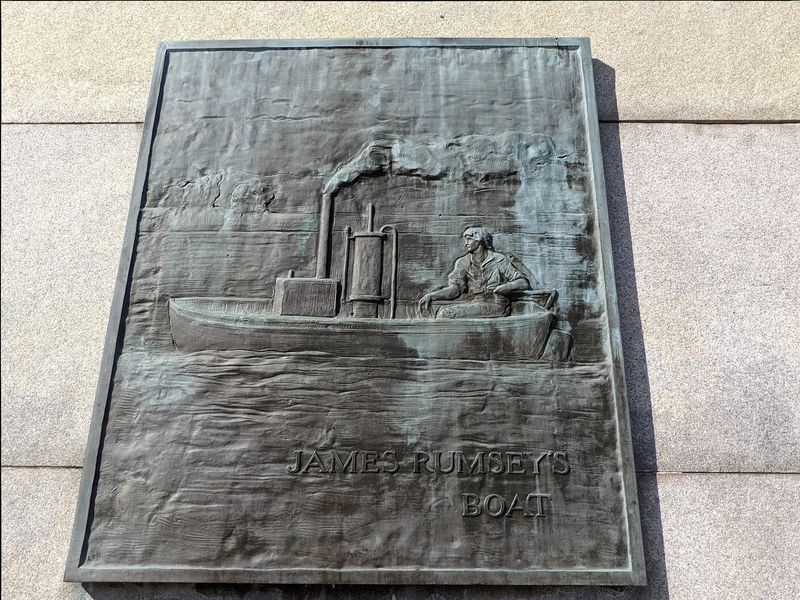
Out on the Potomac sat a boat roughly 50 feet long, loaded with about two tons of rock and eight passengers. No sails, no oars, just a boiler and Rumsey’s unusual water-jet system that pulled water in and pushed it out the back.
Then it started moving. Upstream.
Against the current.
Local lore says somebody hollered that she moves, she really moves, and the shout has been repeated around town ever since. The boat reportedly traveled about half a mile upriver before turning back, and in a later trial it is said to have reached around four miles per hour.
Four miles an hour does not sound like much from the seat of a pickup truck. In 1787, though, watching a heavy boat glide upstream under its own power must have felt like seeing the future.
Rumsey’s water-tube boiler, said to be more compact and efficient than earlier designs, helped make it possible. That run proved steam navigation was more than a daydream, and it happened right here in West Virginia.
Why Fulton Got the Headlines
Ask most people who invented the steamboat and you will hear one name: Robert Fulton. His Clermont is the boat in the textbooks, and it did not show up until 1807.
Rumsey’s run came two decades earlier. So what happened?
Money, mostly. After his success on the Potomac, Rumsey went searching for investors in Philadelphia and then sailed all the way to England, where he worked on a much bigger vessel, reportedly about 100 feet long.
He never got to see it finished. Rumsey passed away in London in December 1792, just as his work seemed close to wider acceptance, and the momentum faded without him.
Fulton later built the boat that turned steam travel into a paying business, and commercial success tends to win the history books. Many folks back home feel Rumsey laid much of the groundwork that others built on.
Is that fair to Fulton? He earned his place, no doubt.
But there is a special kind of West Virginia satisfaction in knowing the first practical demonstration happened on our river, built by a blacksmith from our hills, long before the big-city version came along.
Shepherdstown and Its Stone Tribute
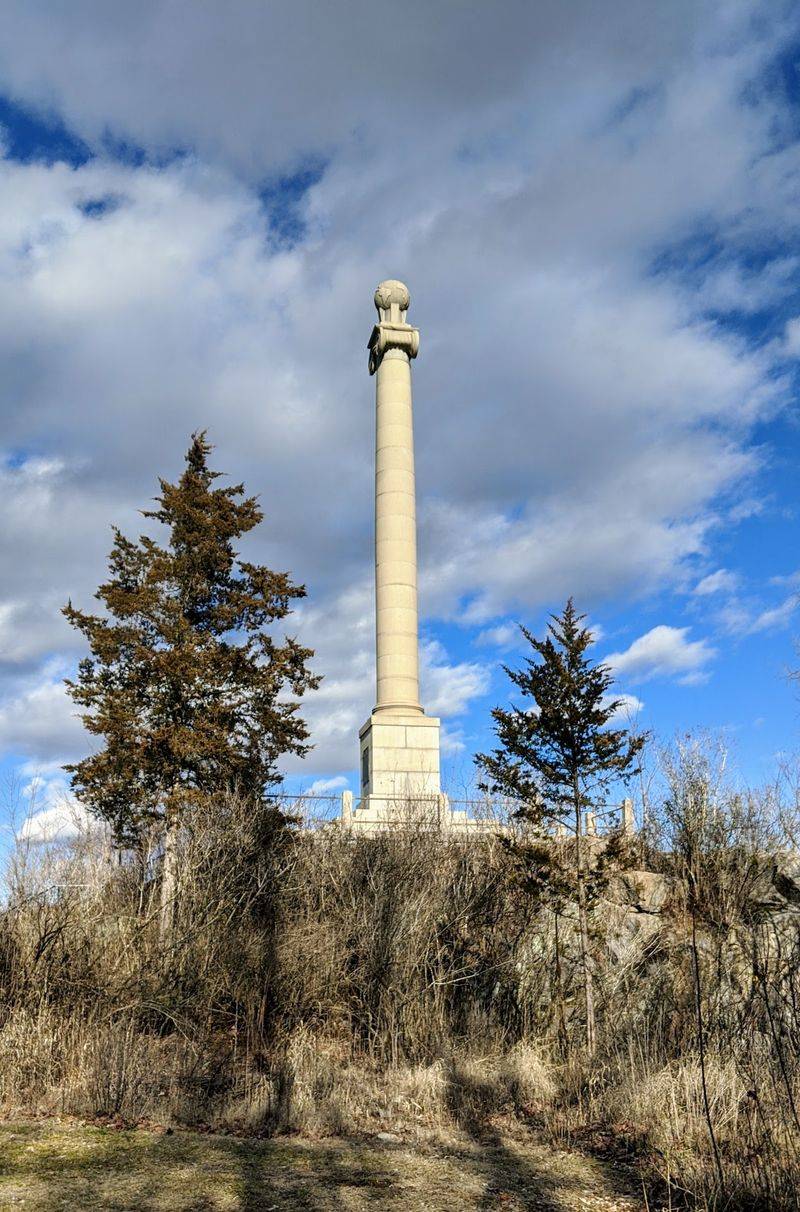
Time to let the cat out of the bag. The river town where all of this happened is Shepherdstown, known as the oldest town in West Virginia, and the hilltop park is the James Rumsey Monument.
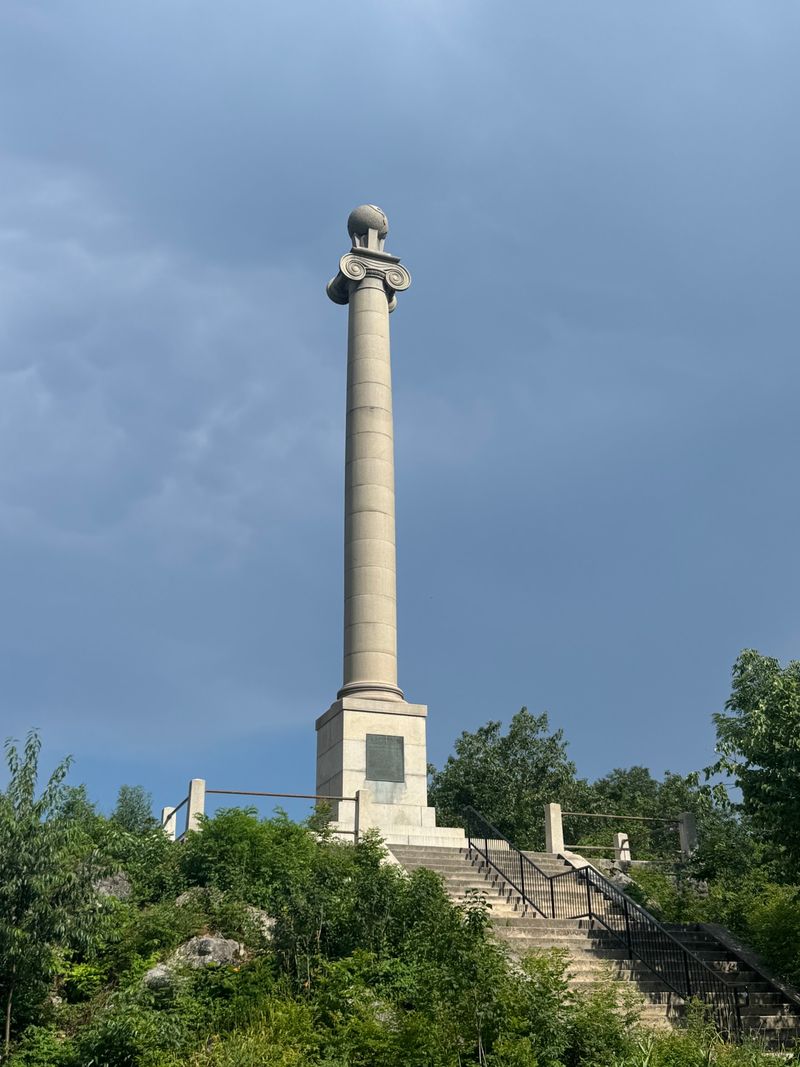
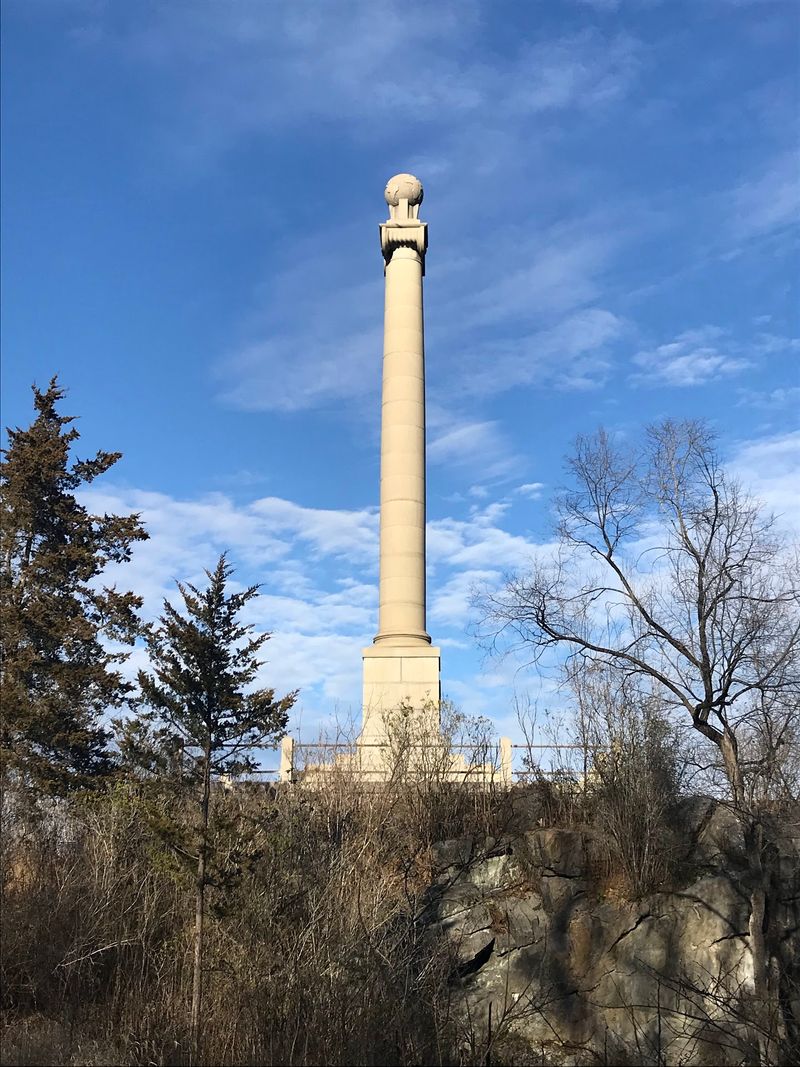
Overlooking the stretch of the Potomac where the boat made its famous run, the monument was put up in 1915 through the efforts of the Rumseian Society and the State of West Virginia. Historical sources describe it as a towering granite column, around 75 feet tall, capped with a globe.
Visitors who look closely notice extra details. One describes it as a stone obelisk pierced by three oval openings, resting on an arched base, which gives it a lighter, almost airy look against the sky.
Steps lead up to the base, and folks say the climb is easy enough for kids. Some regulars even jog those steps for a bit of extra exercise.
Inscriptions on the monument tell Rumsey’s story, and more than one visitor admits they arrived without knowing a thing about him and left having learned who built that early steamboat. That is the best kind of roadside history lesson, quick and unforgettable.
Bridges, Water, and Maryland Hills
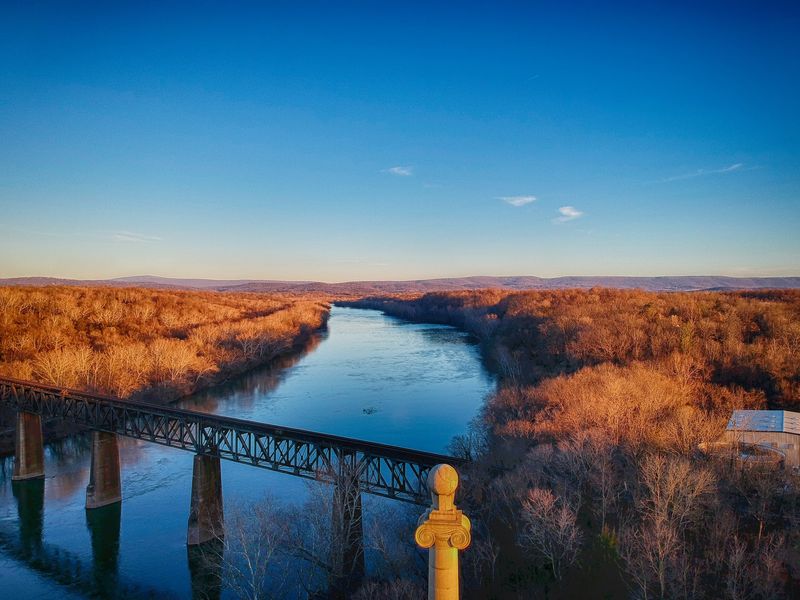
Bring a camera, or at least a fully charged phone. The view from this hilltop is the thing people talk about most, and for good reason.
Below the park, the Potomac bends wide and slow, and across the water you can take in the rolling Maryland countryside from the West Virginia side. Visitors also mention catching a long look toward the Shenandoah Valley on clear days.
Bridge lovers get a treat too. Folks point out the old structures of the railroad bridge and the remains of the former covered bridge crossing, a reminder of how many ways people have tried to get across this river over the years.
Fall seems to be a favorite season up here. When the leaves along the riverbanks turn gold and red, the whole scene looks like something off an old postcard.
There is something fitting about it, really. You stand above the same water Rumsey’s boat pushed against in 1787, and the river just keeps rolling along as if nothing much ever happened.
Sit for ten minutes and you may start daydreaming about that crowd on the bank, waiting to see if the strange contraption would move.
An Almost Heaven Swing With a View
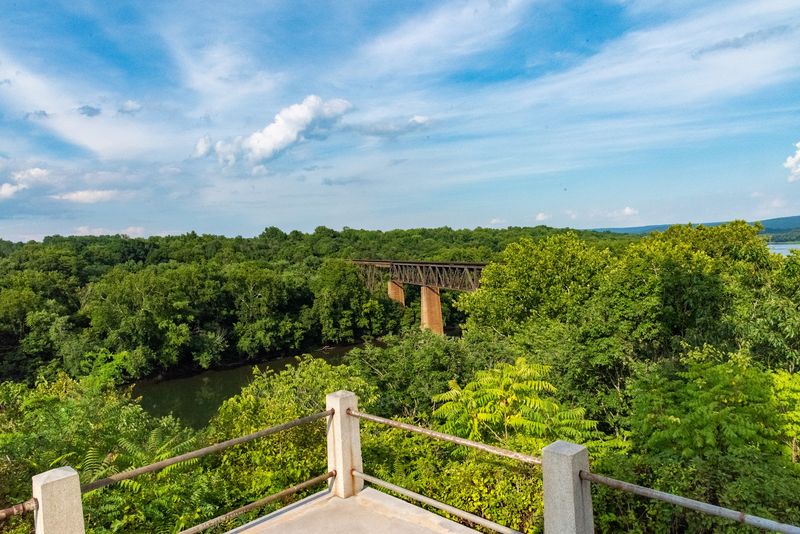
Here is a newer reason to stop. The park recently picked up one of West Virginia’s Almost Heaven swings, those sturdy wooden benches that have been popping up at scenic spots all over the state.
For some visitors, the swing is the whole reason they came. Several folks say they drove out just for a photo on it, then ended up staying to wander, read the monument, and soak in the river view.
The setting does a lot of the work. Flowers bloom nearby, the river stretches out below, and if you line things up right, the Rumsey Monument rises in the background of your picture.
Grandkids visiting from out of town? This is the kind of shot that ends up on the refrigerator door.
Collecting Almost Heaven swings has turned into a happy little hobby for plenty of West Virginians, a way to see corners of the state they might otherwise skip. This one pairs a bit of history with the photo, which makes it stand out from the pack.
Just remember that you may have company. On a pretty weekend afternoon, a short wait for your turn is part of the fun.
Picnic Tables, a Big Rock, and Passing Trains
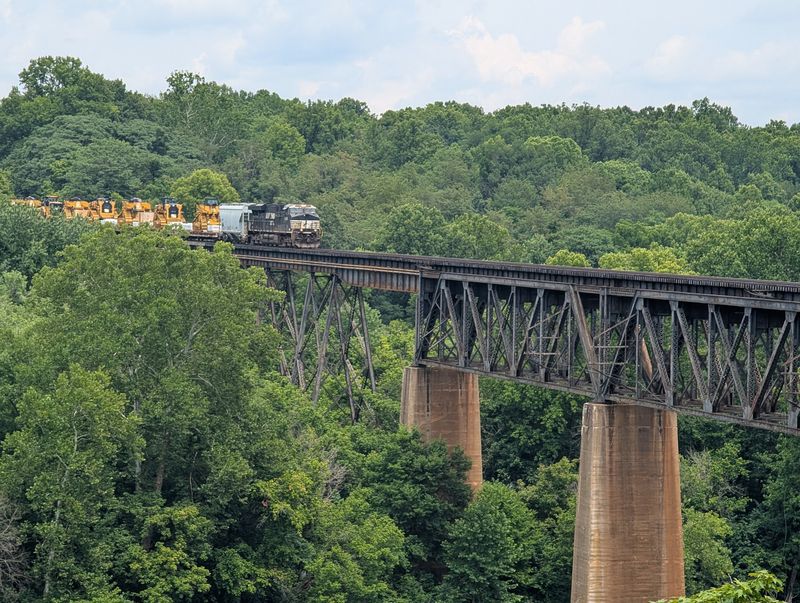
Pack a lunch. That is the advice you will hear again and again from people who know this spot.
Picnic tables sit under shade trees, and there is a good mix of sunny and shady seating depending on your mood and the season. A few benches and a patch of open grass round things out, so there is room to spread a blanket or just stretch your legs.
Then there is the rock. A big boulder near the wall is easy to climb, and both kids and grown-ups seem to enjoy perching on top of it to relax or survey the river.
Railroad tracks run nearby, and train watching is a genuine pastime here. One regular says they love hearing a train coming, then hurrying over for a closer look as it rumbles by.
Short, pleasant trails loop around and connect toward a nearby playground with equipment for all ages. It is a fine spot to let little ones burn off energy after a history lesson.
None of it is fancy. That is the charm, honestly.
It feels like the kind of hometown park where families spent Sunday afternoons back in the good old days.
Who Will Love a Slow Afternoon Here
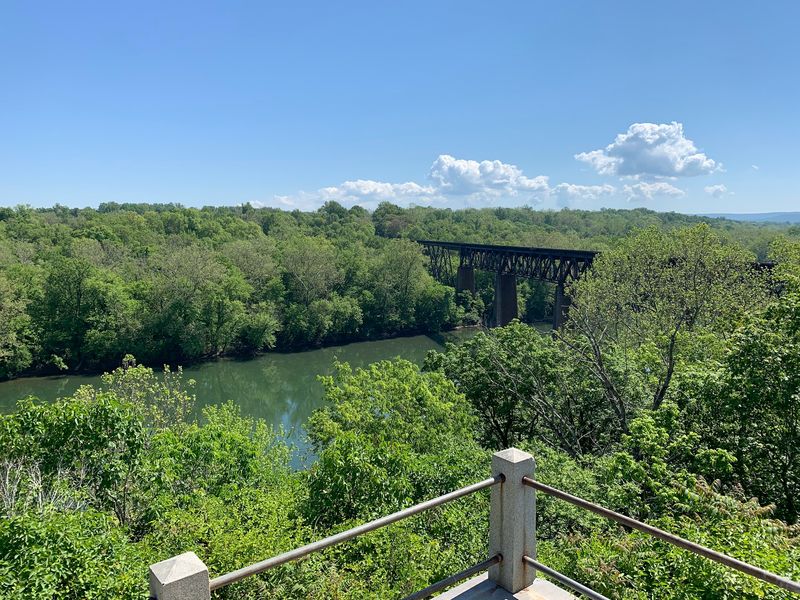
Not every outing needs a ticket booth and a gift shop. Sometimes the best afternoon is a quiet bench, a good book, and a river view, and this park delivers exactly that.
Visitors keep using the same kinds of words: quiet, peaceful, pretty. One person summed it up as a place to take a moment, breathe, and appreciate the scenery.
Retirees looking for an easy, free outing will feel right at home. The walk is short, the steps are manageable, and nobody is rushing you along.
Families do well here too. There is a rock to scramble on, trains to wave at, and a playground within reach on the trails.
Dog owners, take note, as visitors describe the park as pet friendly. Just be a good neighbor and clean up after your pup.
History buffs get a bite-sized lesson without committing a whole day. Photographers get bridges, water, and a striking stone column all in one frame.
Honest expectations help, though. One visitor pointed out there is not a whole lot to do up there.
If you want a busy attraction, look elsewhere. If you want calm, you have found it.
Hours, Parking, and Small Details
Good news for anyone watching a fixed budget: visitors describe the park as free. You can enjoy the view, the swing, and the history without spending a dime.
Hours run from 6 AM to 8 PM every day of the week, so early risers can catch morning light over the river and evening folks can linger toward sunset.
Parking is the main headache. People report only a few spaces, around three or four plus a disabled spot, and some have found them blocked off at times.
Other options exist. Visitors mention parking along the street leading into the park, and one noted paid meter parking near the park entrance.
Plug the address into your map app before you go. More than one person said the spot is not well marked until you reach the entrance: 206 N Mill St, Shepherdstown, WV 25443.
A couple of practical warnings help too. Visitors have not spotted restroom facilities, so plan accordingly.
During warmer months, spotted lanternflies sometimes show up in good numbers, so do not be startled.
Updates and news are shared on the monument’s Facebook page, which is worth a quick look before you head out.
A Small Park Worth the Detour
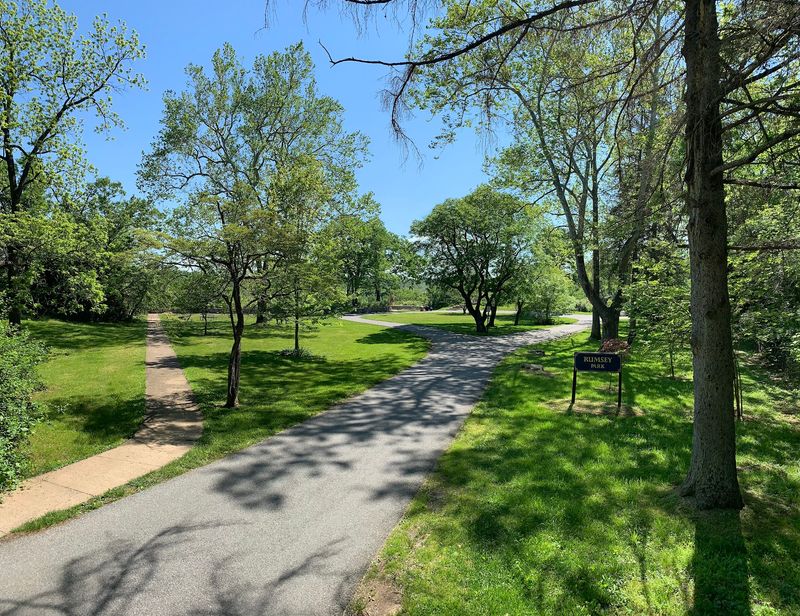
Some places shout for attention. This one barely whispers, and maybe that is why it sticks with you.
On the surface, it is a modest hilltop with a few tables, a swing, and a stone column. Underneath, it marks one of the proudest and most overlooked chapters in West Virginia history, when a blacksmith and mill builder sent a steam-powered boat up the Potomac in 1787.
If you want more of the story, historical sources point to the Historic Shepherdstown Museum in the old Entler Hotel, where a half-scale replica is reportedly displayed. The James Rumsey Boathouse Museum is said to house a working replica built for the bicentennial in the 1980s.
Pairing those stops with the monument makes for a lovely, low-cost day in the state’s oldest town.
Would we send a friend here? Absolutely, as long as they come ready to slow down.
Bring a sandwich, wait for a train, and sit long enough to picture that December crowd along the riverbank.
And if your granddaddy ever told you West Virginia never got credit for much, you can tell him about James Rumsey. He beat the textbook version by twenty years.
