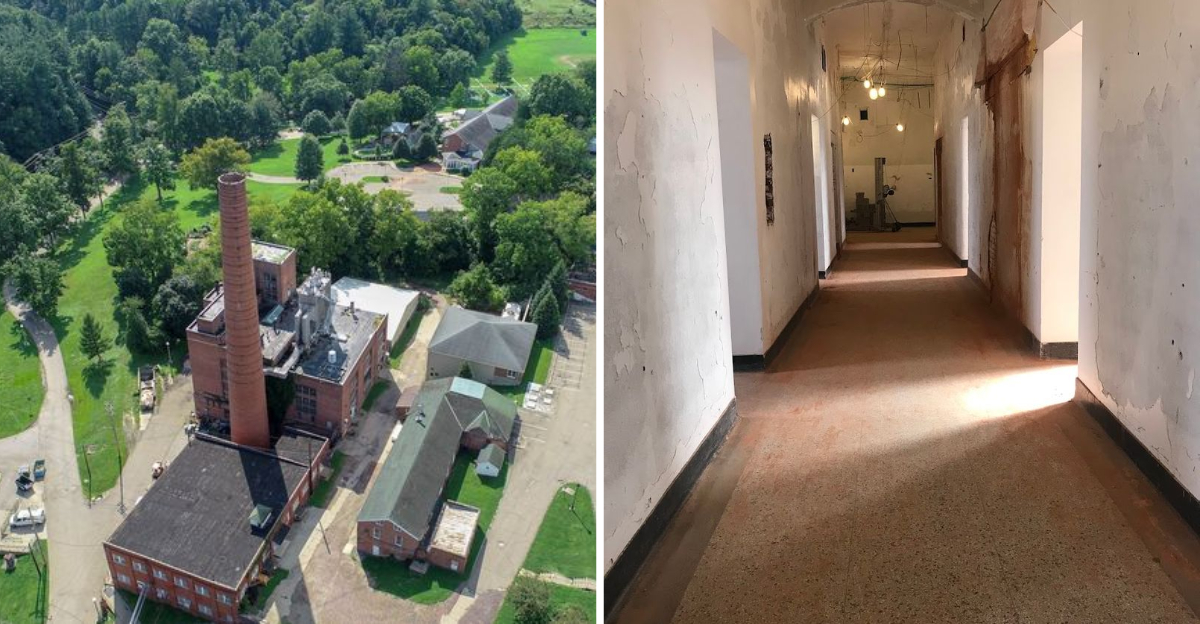
Ohio has a place where the past refuses to stay quiet, and once you hear about it, it is nearly impossible to forget. A former asylum that has been standing since 1874, its brick walls hold more history than most people are ready for.
Somewhere inside one of its abandoned wards, there is a stain on the floor in the shape of a human body, and it has been there for decades.
Nobody ever really knew her patient number, but the story of the woman who left that mark has traveled far beyond the borders of this town.
I first heard about this place from a friend who described it with wide eyes and a lowered voice, the way people talk about things that genuinely unsettle them.
That conversation sent me down a rabbit hole that eventually led me straight to the campus, and what I found there was equal parts haunting, fascinating, and unexpectedly moving.
The History Behind the Walls of The Ridges
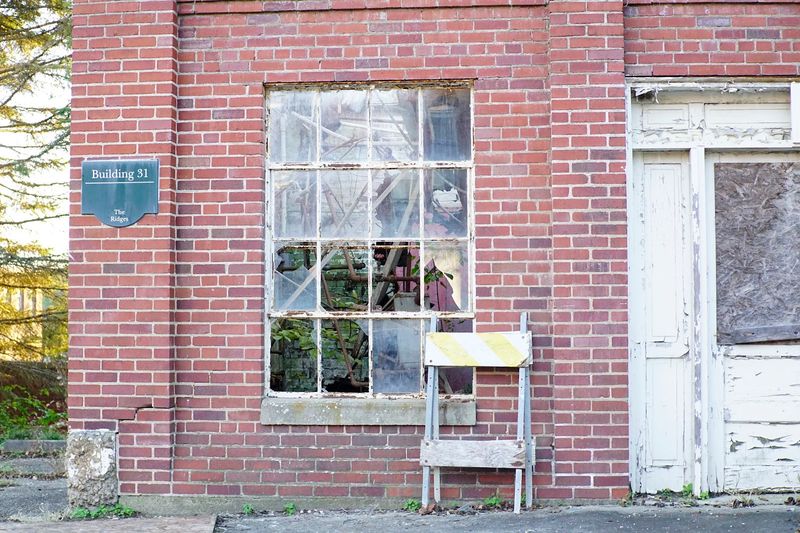
Few buildings in Ohio carry a weight quite like the one you feel the moment you see The Ridges up close. The institution opened in 1874 under the name Athens Lunatic Asylum, and it was built during an era when society treated mental illness very differently than it does today.
The sprawling campus was designed according to the Kirkbride Plan, a 19th-century model that believed a calming environment could help patients recover.
At its peak, the asylum housed over 1,800 patients, far beyond what it was originally designed for. The campus grew to include farms, a cemetery, and dozens of buildings spread across the hillside.
Patients worked the land, tended livestock, and participated in daily routines meant to bring structure and purpose to their lives.
The institution operated under several different names over the decades, eventually becoming the Athens Mental Health Center before closing in 1993. Ohio University acquired the campus shortly after, and while some buildings have been carefully renovated, others remain vacant and silent.
The main building now houses university offices and a small gallery, but the older wards still stand as reminders of a complicated and often painful chapter in American psychiatric history. Walking through the grounds, even casually, you get the sense that the place remembers everything.
Margaret Schilling and the Mystery That Shook Athens
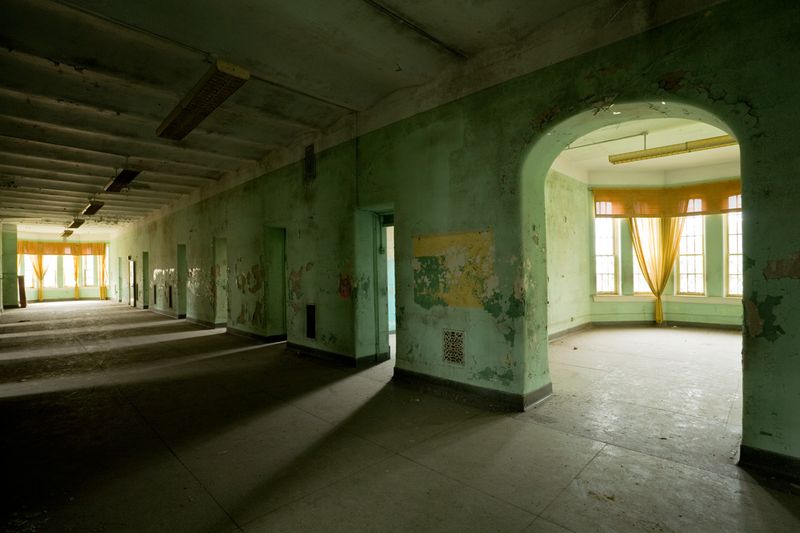
On December 1, 1978, a patient named Margaret Schilling went missing from the active ward at The Ridges. She was a patient at the facility, and her disappearance triggered a search across the campus.
Nobody could find her, and as days turned into weeks, the trail went cold.
It was not until January 11 or 12, 1979 that her body was discovered in the attic of an abandoned ward, a section of the building that was rarely visited. She had been there for an estimated four to five weeks.
Her clothes were found neatly folded beside her, and the official c.o.d. was listed as heart failure due to natural causes.
What made the discovery even more unsettling was what she left behind on the concrete floor. A faint outline of her body had formed where she lay, pale and chalky against the darker surface.
The image was clear enough to identify the shape of a human form, and it has never faded despite numerous attempts to clean or remove it. Her patient number was never widely circulated or remembered by the public, but her story became one of the most talked-about mysteries in Ohio history.
The stain is not just a curiosity. For many people, it is a reminder of someone who deserved far better than to be forgotten in an empty room.
What Science Says About the Stain on the Floor
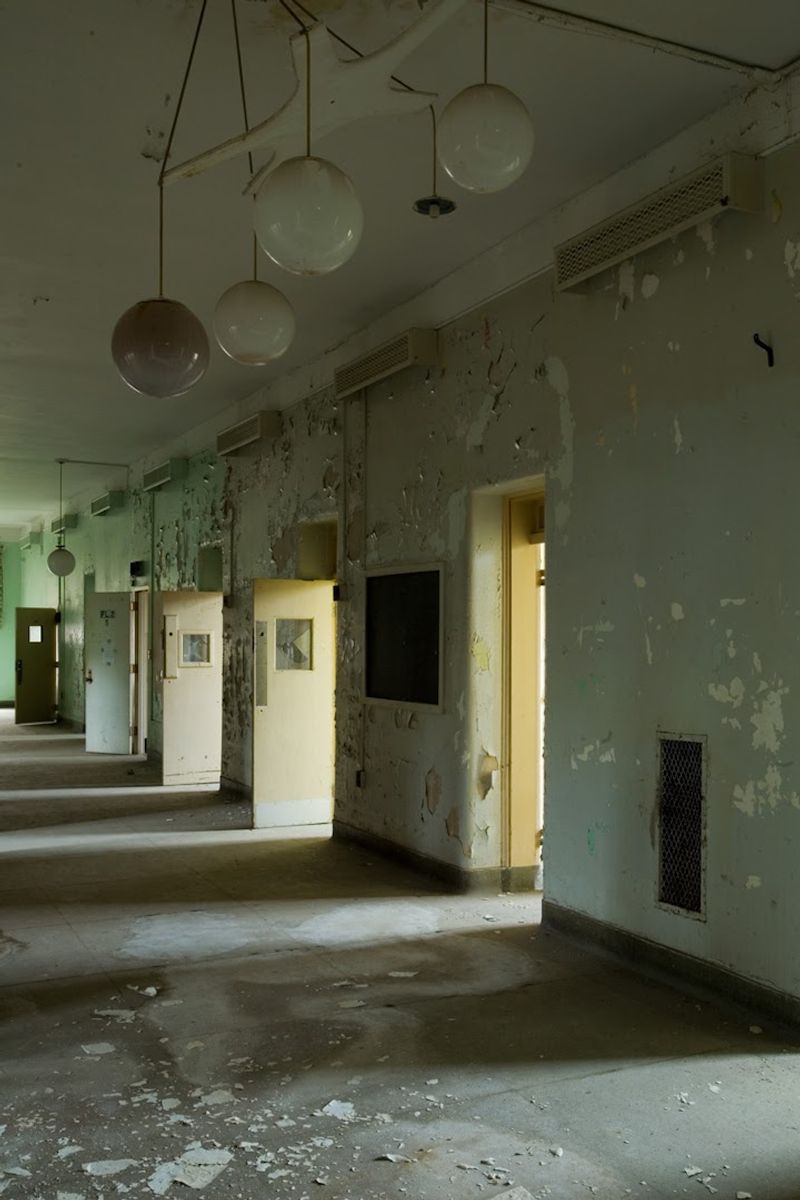
The stain left by Margaret Schilling is one of those things that sounds paranormal until you look at the science behind it. In 2007, forensic analysis was conducted to better understand what caused the lasting impression on the concrete floor of the abandoned ward.
The findings pointed to a process called adipocere formation.
Adipocere, sometimes called corpse wax or grave wax, occurs when body fat breaks down into a soap-like substance during decomposition. This process happens more readily in cold, damp environments with limited airflow, which matches the conditions of the unheated attic where Schilling was found.
The waxy residue seeped into the porous concrete and chemically altered the surface, making it lighter in color than the surrounding floor.
That chemical change is why the stain has resisted every cleaning attempt. It is not sitting on top of the concrete.
It has become part of it. The outline appears as a chalky white shape ringed by a slightly darker border, closely mirroring the position of her body.
Forensic experts concluded the stain was not paranormal in origin, but that explanation does little to reduce the eerie effect of seeing it in person. Science can explain the how, but the why, meaning why she was alone in that attic for over a month, is a question that still lingers uncomfortably in the air around The Ridges.
The Cemetery Nobody Talks About Enough
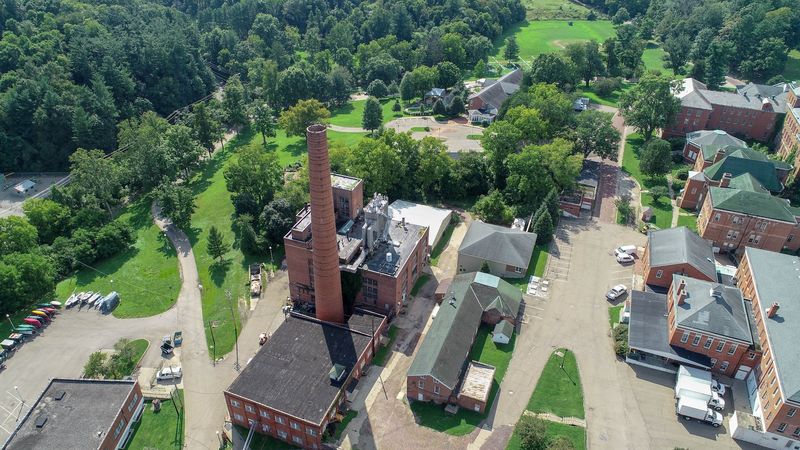
Most people who visit The Ridges focus on the stain, but the cemetery tucked into the hillside behind the main buildings deserves just as much attention. It is a quiet, somewhat hidden space, easy to miss if you are not looking for it.
Rows of simple numbered markers stretch across the grass, most of them without names.
For much of the asylum’s history, patients who passed on the grounds were buried with only a number to mark their place. This practice was common in institutions of that era, where privacy policies, stigma, and limited resources meant that families were often not notified or did not claim their loved ones.
The result is a cemetery full of people who lived real, complicated lives but were reduced to digits in a ledger.
In recent years, volunteers and researchers have worked to match some of the numbers to actual names, giving back a small piece of identity to those who were buried anonymously. The project is ongoing and deeply personal for many who participate.
Visiting the cemetery feels different from visiting a typical historic graveyard. There is a stillness there that is hard to describe.
It is not frightening exactly, but it is heavy in a way that stays with you long after you leave the grounds. The numbered markers are a quiet, sobering symbol of how the mentally ill were once treated in America.
Ohio University and the New Life Given to Old Walls
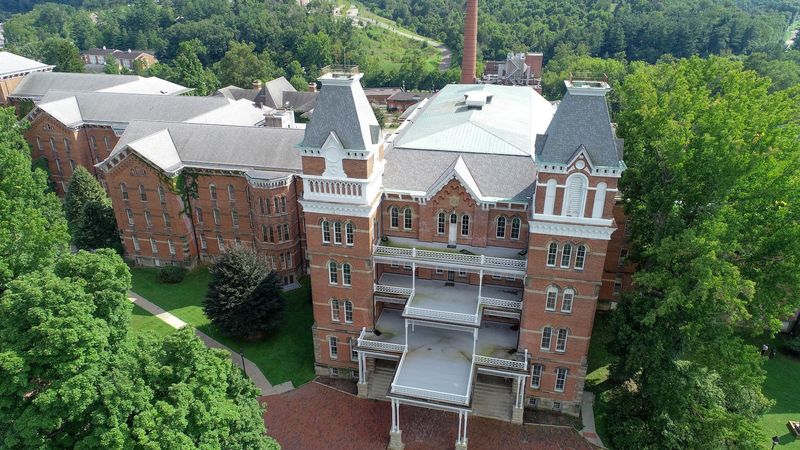
Ohio University took ownership of The Ridges campus in the 1990s, and the relationship between the university and the old asylum buildings has been an interesting one to watch unfold. Some structures have been carefully restored and now serve as offices, studios, and gallery spaces.
Others remain untouched, their windows dark and their interiors frozen somewhere around the early 1990s.
The main building, sometimes referred to as Ridges Building 4, now houses university departments and an art exhibit that visitors can explore during open hours. The gallery is small but thoughtfully arranged, and the staff inside are friendly and genuinely enthusiastic about sharing the history of the place.
It is a strange and surprisingly effective combination, contemporary art displayed inside a building that once held people against their will.
The Kennedy Museum of Art also operates on the campus, adding another layer of cultural purpose to a space with such a heavy past. There is something intentional about filling these halls with creativity and color.
It feels like a form of acknowledgment, a way of saying that beauty can exist in the same space as sorrow. Not every building on the campus has been renovated, and some remain off-limits to visitors, but the portions that are open give a real sense of the scale and ambition of the original institution.
The Ridges is open Monday through Saturday from 10 AM to 5 PM, which gives plenty of time to explore at a comfortable pace.
Visiting The Ridges Today: What to Expect
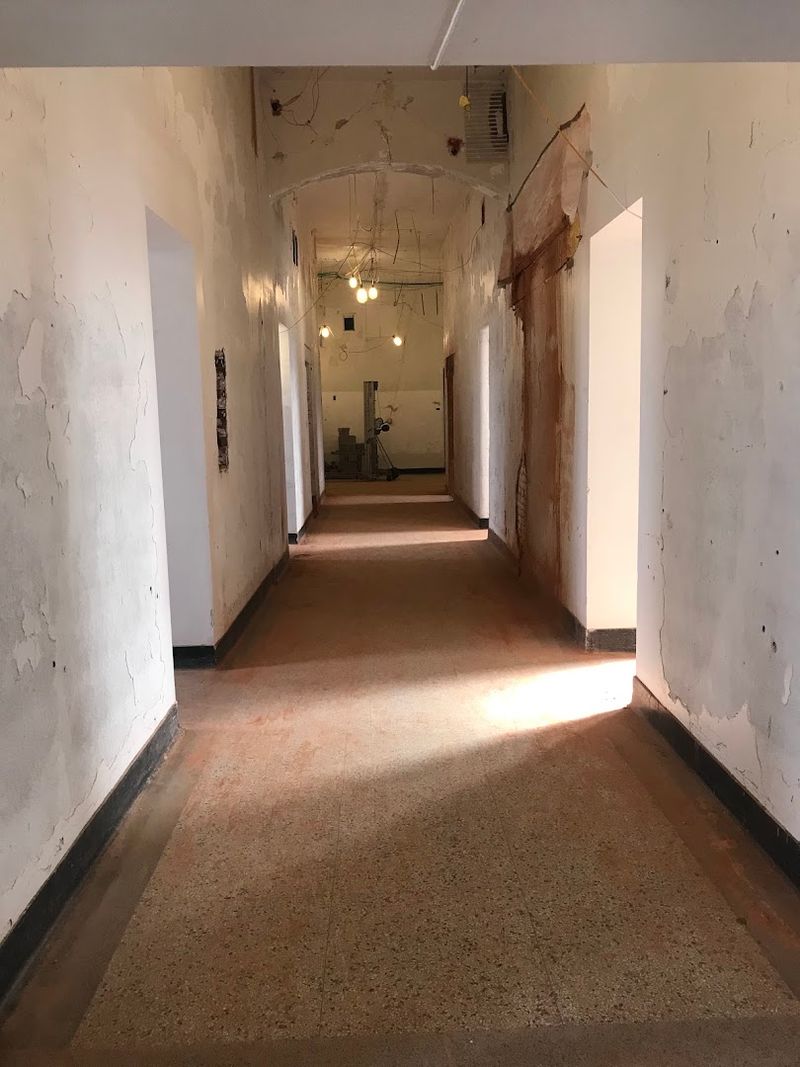
Getting to The Ridges is straightforward once you are in Athens, and the campus itself is large enough that you will want to give yourself a solid chunk of time to explore. The grounds are open to visitors, and the main building with its gallery and university offices is accessible during regular hours.
The surrounding landscape is genuinely beautiful, with mature trees and sweeping views of the Ohio hills.
The vibe on the grounds is a mix of the academic and the atmospheric. You might pass a graduate student heading to an office in one building and then turn a corner to find a row of boarded-up windows on another.
That contrast is part of what makes the place so memorable. It does not try to be a haunted attraction, but it does not pretend its past was simple either.
If you are hoping to see the stain, it is worth doing some research before your visit, since access to the specific ward where it is located is not always available to the general public. Guided tours and special events have been offered in the past, so checking the Ohio University Ridges website ahead of time is a smart move.
The cemetery is generally accessible on the grounds and worth a respectful visit. Whether you come for the history, the architecture, or the mystery of Margaret Schilling, The Ridges will leave you thinking about it long after the drive home.
Address: 100 Ridges Cir, Athens, OH 45701
