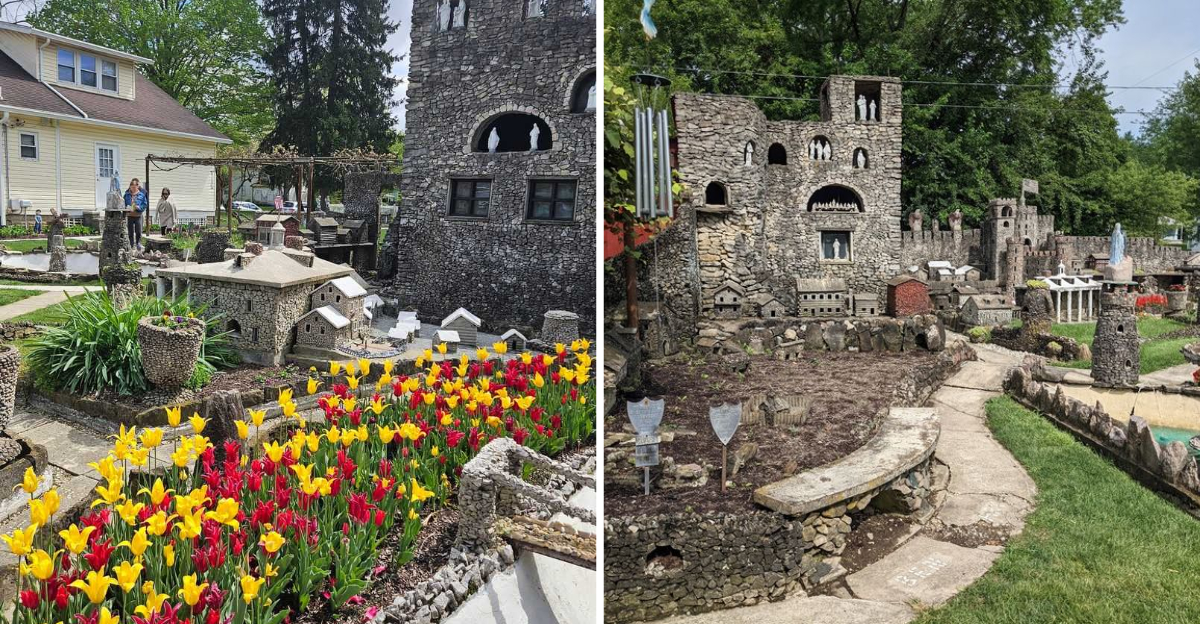
When an Ohio foundry worker lost his job during the Great Depression, he began building a small fishing pond in his backyard. What followed was a remarkable twelve-year project that transformed an ordinary residential property into a miniature world of castles, churches, historical landmarks, and handcrafted figures.
I have to admit, the scale of Ben Hartman’s work is difficult to imagine. Using concrete, stones, glass, and discarded materials, he created dozens of detailed structures without formal architectural training.
His creations included a towering cathedral, a castle with 107 tiny windows, and miniature versions of famous American landmarks. But the story didn’t end when he passed away in 1944.
His wife Mary spent the next 53 years caring for the garden, preserving the unusual world her husband had built. Today, visitors can walk through the restored property for free and see what one family’s determination left behind.
1. A Fishing Pond That Accidentally Started Everything
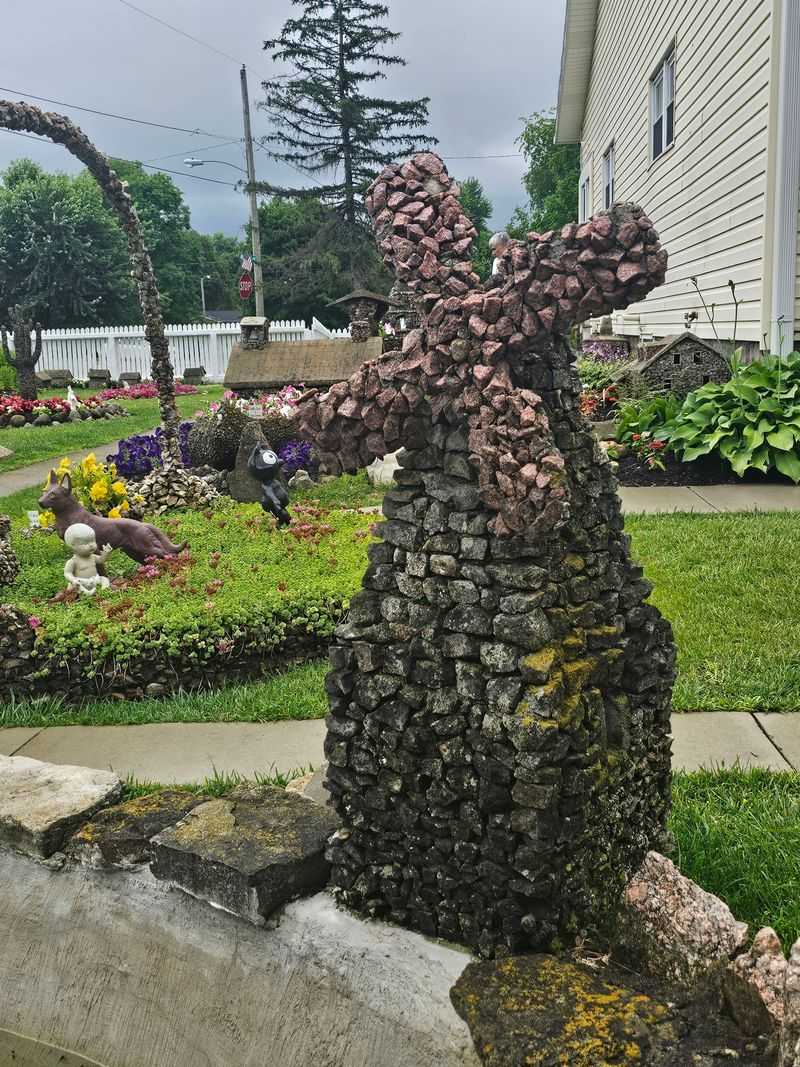
Nobody plans to build a landmark. In 1932, Ben Hartman was 48 years old and newly laid off from his job as an iron molder at the Springfield Machine Tool Co. foundry, with the Great Depression pressing down on every family on the street.
Rather than sit still, he mixed cement and dug out a fishing pond in his own backyard. That was supposed to be the whole project.
The pond got goldfish and water lilies, plus a cement bird bath along the edge. He added figurines too, including the Three Little Pigs and a tiny North Pole, which tells you something about the kind of mind he had.
Standing near that spot now, I found it hard to picture the garden as just one modest water feature. But every enormous thing starts small, and this is the proof.
What struck me most was how ordinary the beginning was. A man with time on his hands and no paycheck coming picked up a shovel.
By 1939, Hartman had created more than 50 structures, and he continued working on the garden at a slower pace after returning to his foundry job that year.
2. The Tree of Life and Its Three Small Promises
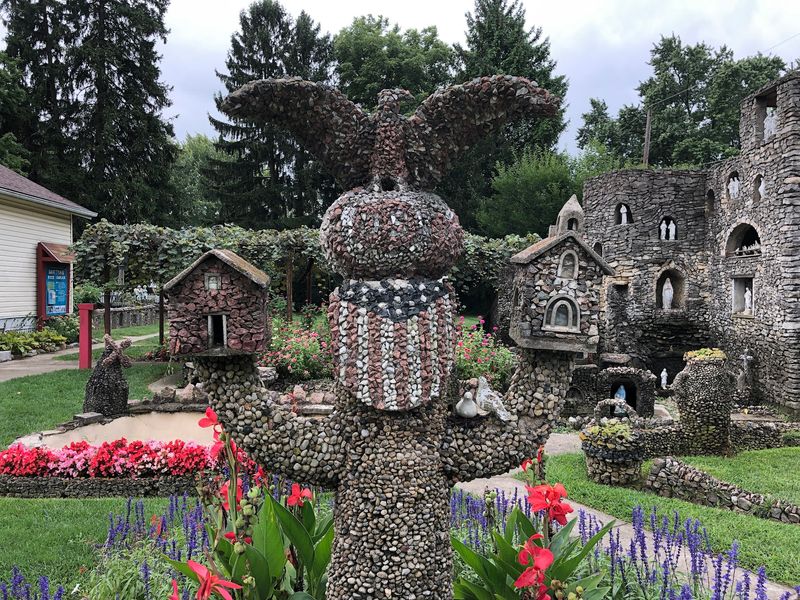
Of everything in the yard, the Tree of Life is the piece I kept circling back to. It stands about seven feet tall and is shaped like a two-armed cactus, which sounds odd until you see it holding its cargo.
One arm supports a schoolhouse. The other carries a church with two cement doves resting on it.
At the very top, an eagle perches on a globe stamped with the letters U.S. Country, school, and church, all balanced on one strange concrete trunk.
Sources say it was one of Hartman’s own favorites, and I can understand why. It is basically his values pressed into cement, no explanation required.
I liked that he did not overthink the symbolism. There is no plaque insisting you feel something.
You just look up, notice the eagle, notice the doves, and figure out the rest for yourself. Bring a phone or camera with a decent zoom, because the small details near the top are easy to miss from ground level, and they are the details worth catching.
3. Fourteen Feet of Cathedral in a Springfield Backyard
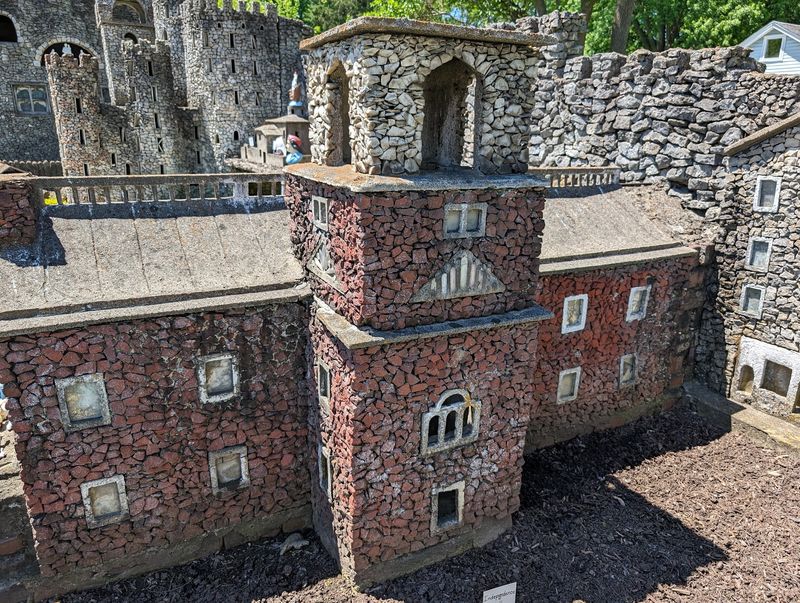
The cathedral is the piece that made me stop mid-sentence. Fourteen feet of hand-laid stone, built with arches and alcoves that echo medieval Italian architecture, sitting a few steps from a residential driveway.
It has no business being this good.
Look into the openings and you find religious iconography tucked inside, including a miniature version of The Last Supper and small Madonna statuettes. Each one is protected in its own little alcove like a shrine within a shrine.
Hartman had no formal training in architecture or sculpture. He worked with concrete, stone, glass, and whatever he could gather from creek beds and rubbish dumps around Springfield.
Somehow he translated a European building tradition into Ohio fieldstone, one handful at a time.
I spent longer here than anywhere else in the garden, mostly because the closer you get, the more appears. Tiny windows.
Careful mortar lines. Stones sorted by color and size.
If you visit with kids, this is the structure that usually gets the biggest reaction, since it genuinely looks like something out of a storybook set down in a backyard.
4. A Castle With a Drawbridge and 107 Windows
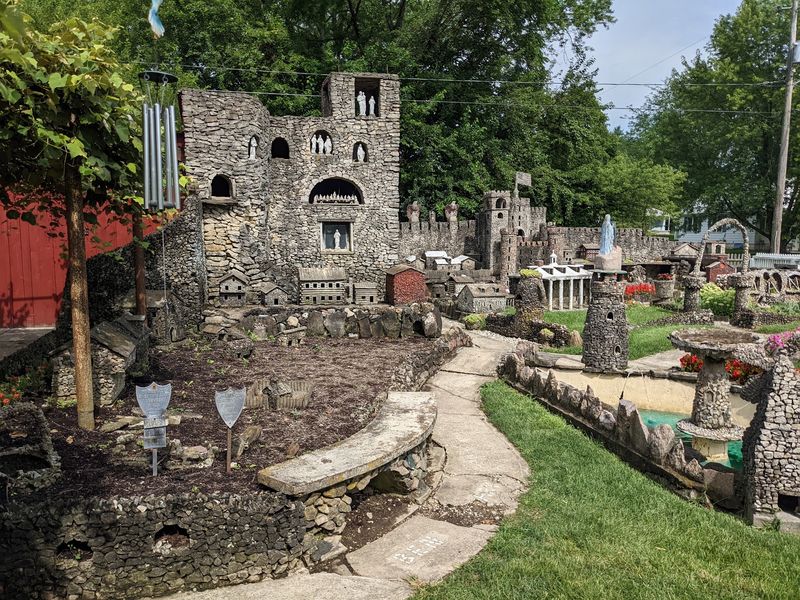
Hartman’s twelve-foot-tall castle features exactly 107 small windows, along with a drawbridge and moat, all inspired by a postcard of a building in West Virginia.
Its design is believed to have come from a postcard of a castle in Berkeley Springs, West Virginia.
A postcard. That is the whole reference library, as far as anyone knows.
Hartman looked at a small printed image and then spent untold hours turning it into stone in his backyard, adding towers and openings and a bridge that a child could imagine lowering. Visitors mention the castle more than almost anything else, and it is easy to see why.
Scale does something funny to your brain here. The castle is taller than a person, but every element on it is doll-sized.
I caught myself leaning in like I might spot movement inside.
Weather has worn some surfaces over the decades, which honestly adds to the effect. It looks ancient, even though the mortar was mixed during the Depression by a man who lived twenty feet away.
5. America in Miniature, From Mount Vernon to Independence Hall
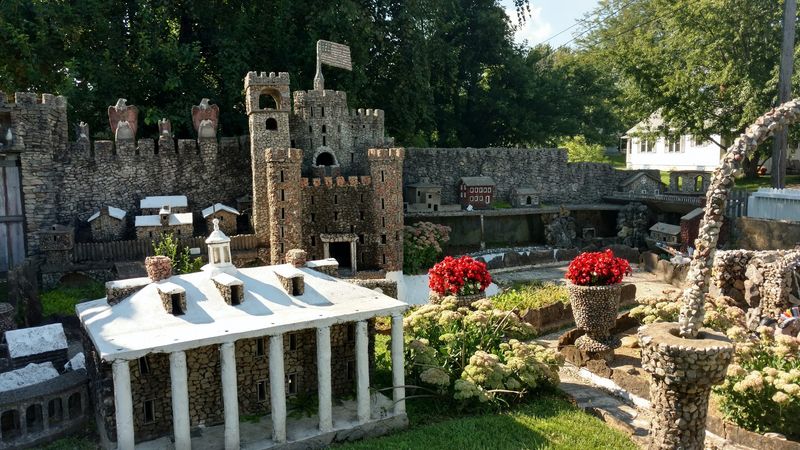
Patriotism runs all the way through this yard, but never in a loud way. Hartman built small versions of the White House, Mount Vernon, and Independence Hall, then added Lincoln’s Cabin, Lincoln’s Tomb, and the Betsy Ross House.
Together they form a walking tour of American history at knee height.
One of his earliest miniature buildings was the Little Church Around the Corner, modeled on New York City’s Church of the Transfiguration. He furnished the inside, added stained glass windows, and placed a tiny bride and groom within.
Furniture. Inside a church the size of a bread box.
What gets me is the research this required in the 1930s, long before anyone could pull up a photo in seconds. He worked from postcards, magazines, and memory, and the proportions still hold up.
Walking the loop, I started treating it as a scavenger hunt, trying to identify each building before reading the signage.
The self-guided booklet available on site helps enormously here, especially if American history is not your strong suit. It turns a pretty garden into an actual lesson.
6. Walkways That Whisper Advice Underfoot
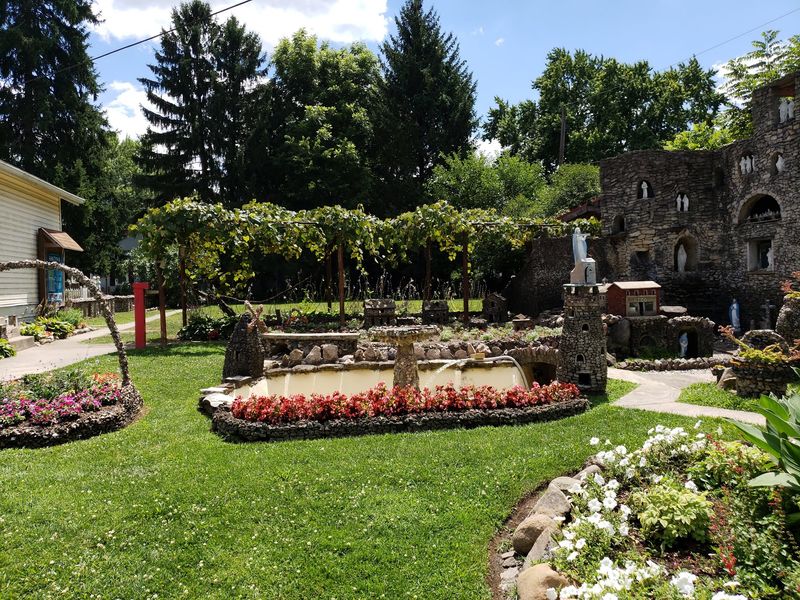
Watch your feet, or you will miss half the garden. The concrete paths winding between the structures are embedded with tiny stones, broken tile, and colored glass, and many of them spell out short messages.
Seek the Good in Life. Let us smile.
Others read Lead, Kindly Light, No Place Like Home and Mother, Love Honor and Obey All Laws, and Baby your mother. Hartman also pressed the names of his immediate family into the walkways, which turns the ground itself into a kind of family record.
Reading them one at a time felt oddly personal, like flipping through someone’s notebook.
Much of the glass came from neighbors and visitors who dropped off discarded bottles and broken ceramics. His children helped by hunting for unusual stones in creek beds and along gravel roads.
So the paths are literally made of the community that surrounded him.
My advice is simple: walk slowly, and glance down often. The big structures grab your attention immediately, but the sayings underfoot are where the man’s personality actually lives.
7. Mary Hartman’s Fifty-Three Year Watch
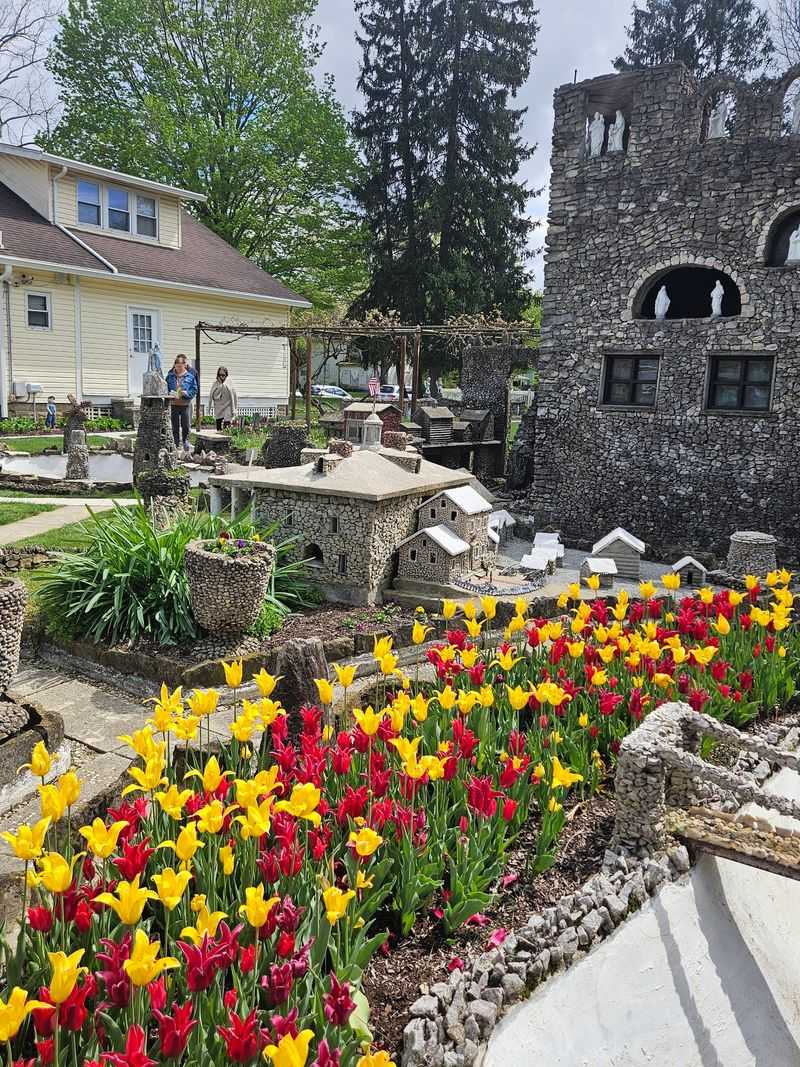
The garden should not have survived, statistically speaking. Ben Hartman passed in 1944 at 61 from silicosis, a lung disease he developed after years of foundry work, and folk art built from concrete tends to crumble quietly once its maker is gone.
His wife, Mary, had other plans.
She looked after the garden for 53 years, right up until her own passing in 1997. Fifty-three years of sweeping paths, tending plants, and welcoming strangers who wandered in to see what her husband had made.
That is longer than he spent building it, by a wide margin.
After she passed, the site slipped into disrepair. The Kohler Foundation stepped in and funded a serious restoration between 2008 and 2009, and today the Friends of the Hartman Rock Garden, a collaboration of local foundations, keeps it running.
Knowing that history changed how I looked at the place. Every clean surface and steady structure represents somebody’s decision to care about a stranger’s dream.
There is a donation box on site if you want to help, and I would encourage it.
8. Planning a Stop on Russell Avenue
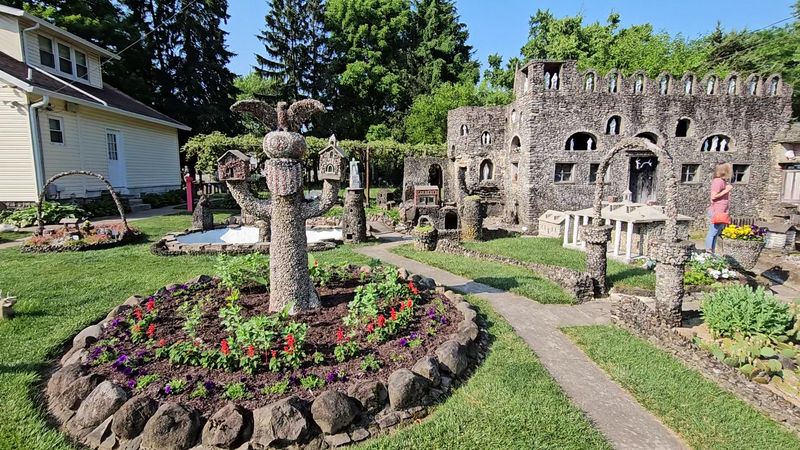
Here is the practical part, because this visit takes almost no planning. The garden sits behind a house at 1905 Russell Avenue in a quiet Springfield neighborhood, and parking is on the street out front.
Admission is free, and it is open daily from dawn to dusk.
Grab a self-guided tour booklet when you arrive. There is also a scavenger hunt option that works well for kids, turning the whole yard into a game of spotting Noah’s Ark with its 14 small animals or the icicles on the Valley Forge cabin roofs.
Look for the replica of Reco Sporting Goods too, the local shop where Hartman bought his fishing gear.
Most people finish in twenty minutes to an hour, depending on how closely they look. I would budget more rather than less.
During special events, figures of Depression-era icons like Joe Louis, Mae West, Felix the Cat, Pinocchio, and the Lone Ranger come out on display, which is worth timing a trip around if you can.
Address: 1905 Russell Avenue, Springfield, Ohio 45506.
