A fire destroyed a public market in 1948, but the merchants weren’t ready to give up. They pooled their money, bought a surplus military hut, and kept their businesses alive beneath its curved metal roof.
What was supposed to be a temporary solution lasted nearly half a century.
I can’t imagine walking into that metal building year after year, knowing the city’s other public markets had gradually disappeared. Yet the vendors kept opening their stalls, and customers kept coming back.
By the 1980s, even that unusual arrangement was in trouble. The building was aging, the future was uncertain, and the market faced another possible ending.
What caught my attention is how this Ohio institution survived both disasters and changing times. Today, the city’s last historic public market operates inside a restored warehouse, with food stalls from around the world.
This Food Hall Has Been Feeding The City Longer Than The Light Bulb
Thomas Edison patented his famous light bulb in 1879. North Market Downtown had already been selling food in Columbus for three years by then.
The market opened in 1876 on the city’s north side, close to where it still operates today. Farmers brought fresh produce, meat, eggs, and dairy straight to shoppers who lived in the surrounding blocks.
Back then, Columbus relied on more than one public market to keep families fed. The large Central Market downtown was the best known, and others served different neighborhoods.
Most of them eventually disappeared as grocery stores and highways changed how people shopped. Central Market came down in the 1960s, and its stalls became a memory.
North Market kept going, which is why it now holds a rare title. It’s the last historic public market still running in Columbus, Ohio.
That matters more than it sounds. A public market lets small, independent sellers reach customers without building a whole store of their own.
A Fire Sent The Whole Market Into A Metal Hut For Decades
Some comebacks start in a garage. This one started in a Quonset hut, one of those curved metal buildings left over from military use.
After a fire destroyed the original market building in 1948, merchants pooled their money to purchase a surplus Quonset hut, reopening in the temporary structure in 1949.
The temporary Quonset hut became the market’s home for approximately 47 years, from the 1948 fire until its move into a historic warehouse in 1995.
Consider what that meant for the vendors. They kept serving customers through steamy summers and cold Ohio winters under a rounded metal roof.
Shoppers kept coming too, and that loyalty is a big part of this story. A market only survives when people keep showing up to buy things.
Over time, the hut aged, and the area around it changed. By the 1980s, the market’s future looked shaky, and its tired building did not help.
That odd chapter gives the market a personality you won’t find in shiny new food halls. It survived on grit and patience long before it ever looked polished.
Merchants Refused To Let Their Market Slip Away
Saving a market takes more than good intentions. It takes people willing to organize, show up to meetings, and keep pushing when the odds look bad.
That’s what happened here in the late 1980s. Merchants and community supporters rallied around the market as its old hut wore down and its future grew uncertain.
Their efforts helped create the North Market Development Authority, a nonprofit group formed to run the market. Its job was simple to describe and hard to pull off.
The group needed to keep the market alive and give it a proper home. That meant finding a building, gathering support, and convincing the city it was worth the effort.
It worked beautifully. In 1995, the market moved out of the Quonset hut and into a historic brick warehouse close by.
I believe that’s the heart of this whole place. The vendors weren’t just renting space, they were protecting a piece of the city’s daily life.
The nonprofit still manages the market today, which keeps the focus on small businesses. Many stalls are run by local owners rather than giant chains.
Next time you buy a snack here, give a quiet nod to those determined shopkeepers. Your lunch exists partly because they refused to quit.
An Old Farm Equipment Warehouse Got A Delicious Second Life
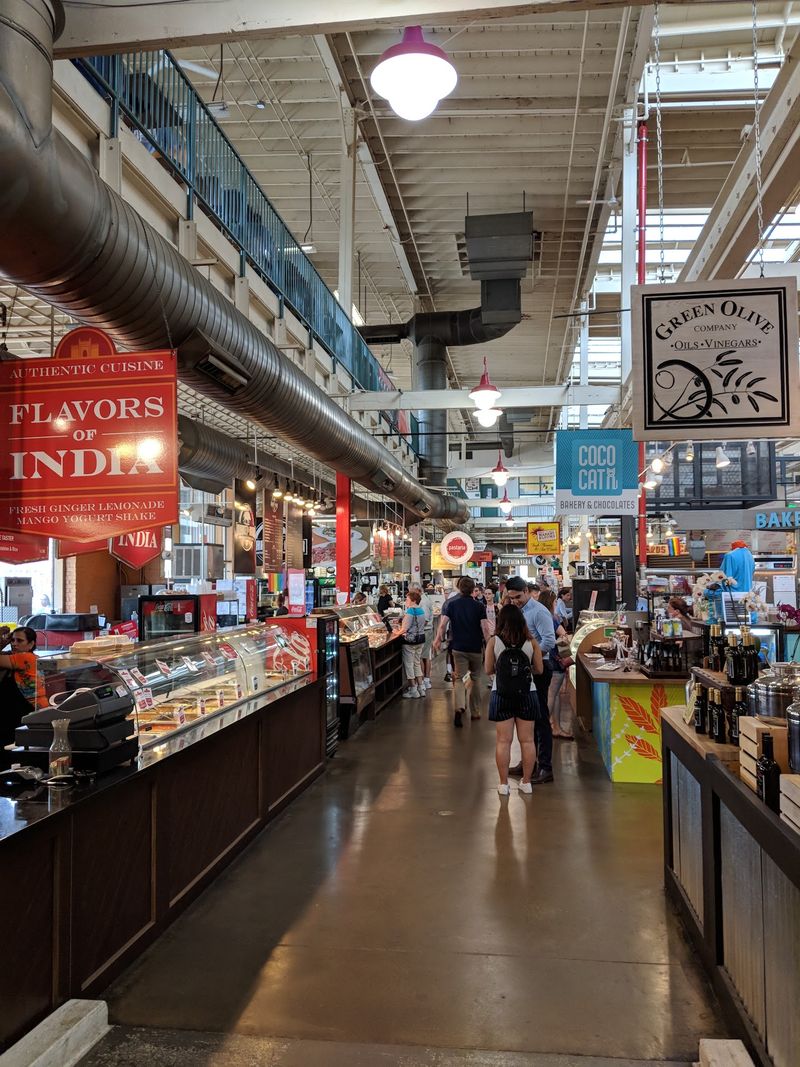
Long before food stalls filled the building, its warehouse space was used for commercial storage. The market’s current home is a historic warehouse once used by the Rosenberger Wallpaper Company, giving the building an industrial past before its transformation into a public market.
That history fits nicely. A building that once served farmers now helps local food makers sell their goods.
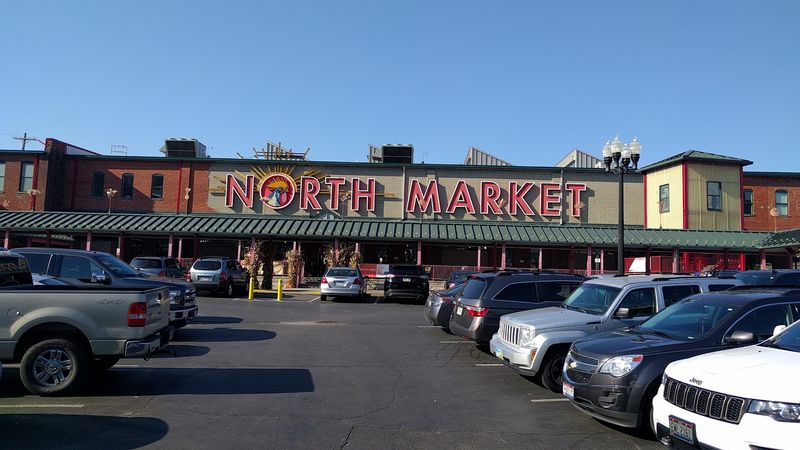
You’ll find it at 59 Spruce St, Columbus, OH 43215, just steps from High Street. The brick exterior gives it an old-school look that matches its long story.
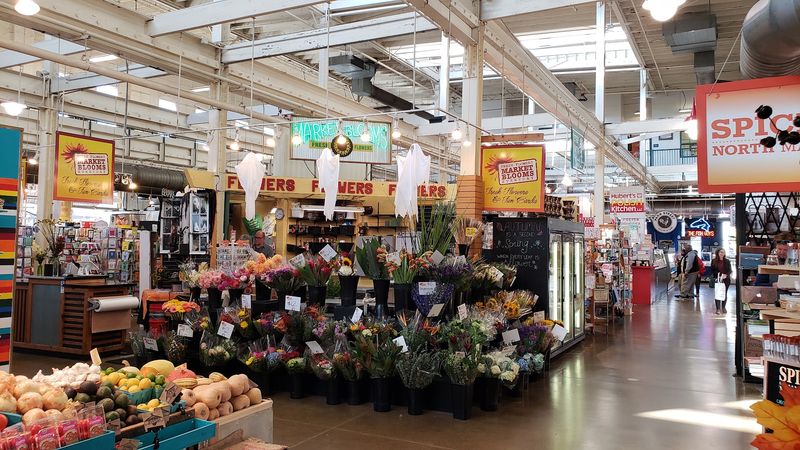
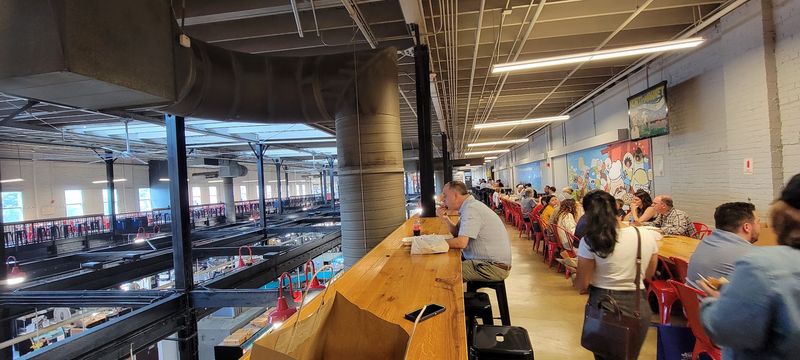
Inside, big windows pull in natural light across the main floor. A sturdy wood and steel structure keeps the industrial feel front and center.
Head upstairs to the mezzanine, and the view changes completely. It’s a seating area where you can eat while looking down over the market floor.
I like how the space feels lived-in rather than staged. It earned its character the hard way, one move and one rescue at a time.
Look up before you leave. The beams and windows tell you this place was built for hard work long before it was built for lunch.
Your Group Can Finally Stop Arguing About Where To Eat
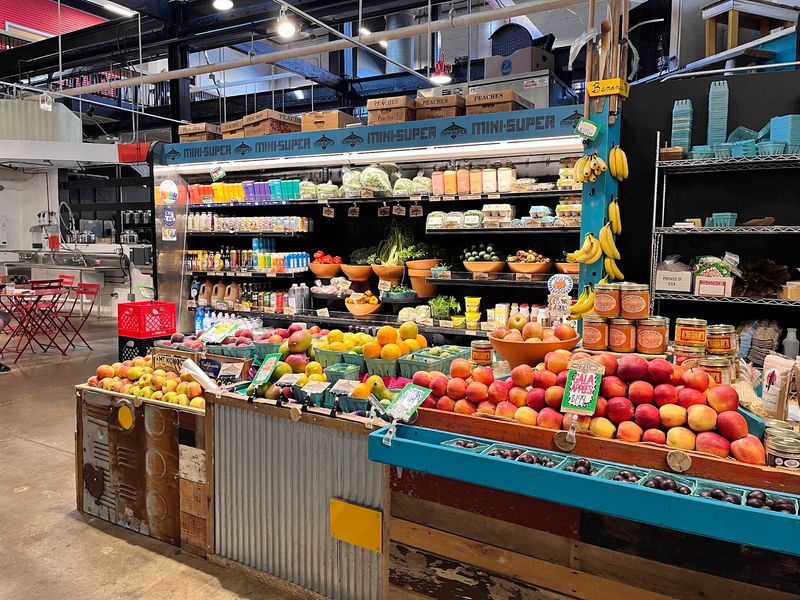
Five people, five different cravings, one building. That’s the daily magic trick here, and it saves a lot of debating in the car.
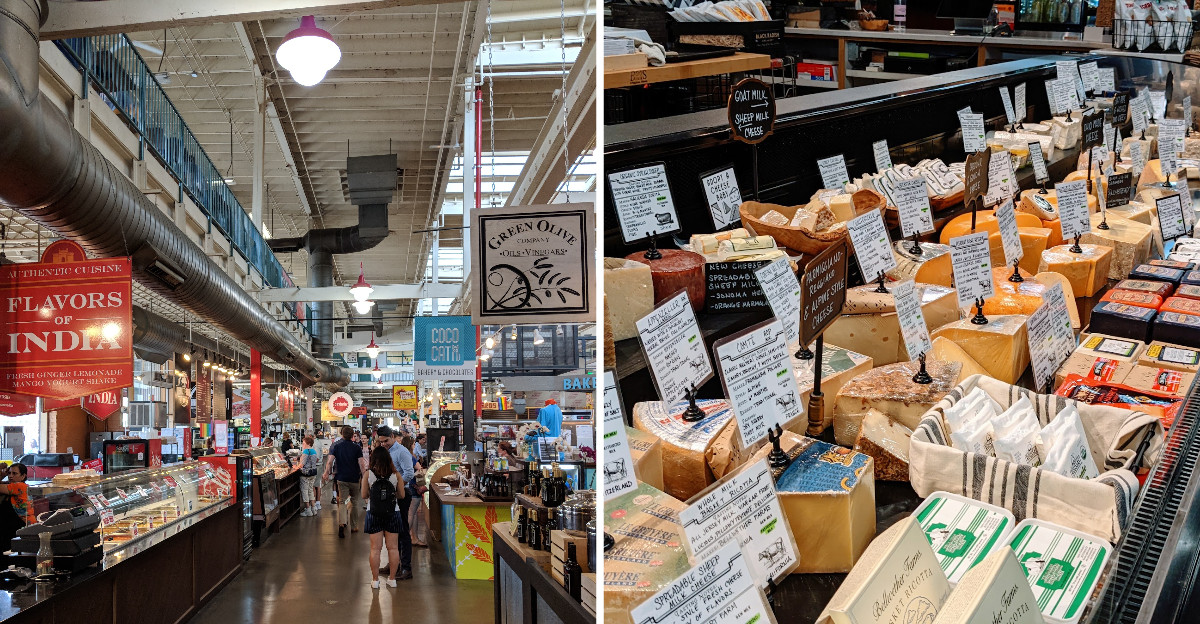
The market packs in food from around the world. You can find Indian dishes, Vietnamese food, ramen, Thai plates, and pierogi without walking more than a few steps.
Hoyo’s Kitchen serves Somali-inspired bowls, which adds a flavor you won’t spot in every food hall. Nida’s Sushi adds Japanese-inspired choices to the lineup, alongside other vendors serving cuisines from around the world.
Vendors change over time, so the lineup may look a little different when you visit. That’s part of the fun, since there’s often something new to try.
My advice is to do one lap before ordering anything. Peek at every stall first, then decide what you actually want.
Splitting plates works well here too. Order a few smaller items from different counters, then share them at the table like a tasting party.
Lunchtime tends to be the busiest stretch, especially on weekdays near downtown offices. Arriving a little early can make choosing feel less rushed.
Picky eaters and adventurous eaters can both leave happy. Honestly, that might be the rarest kind of peace a family outing can offer.
Cheese Lovers Should Probably Clear Their Afternoon
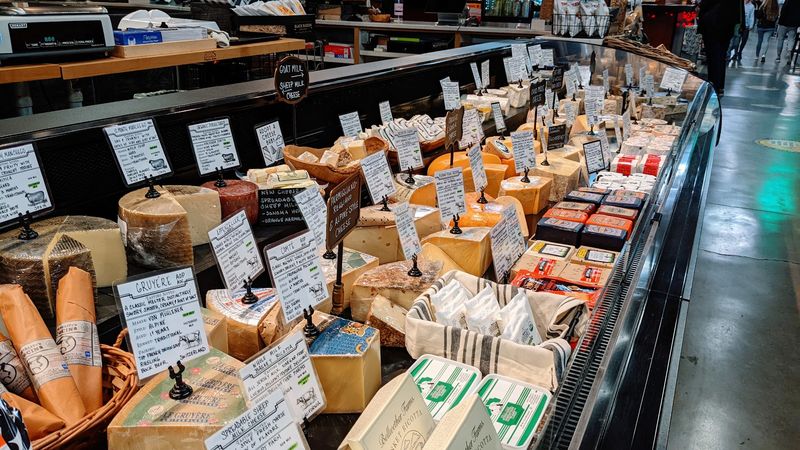
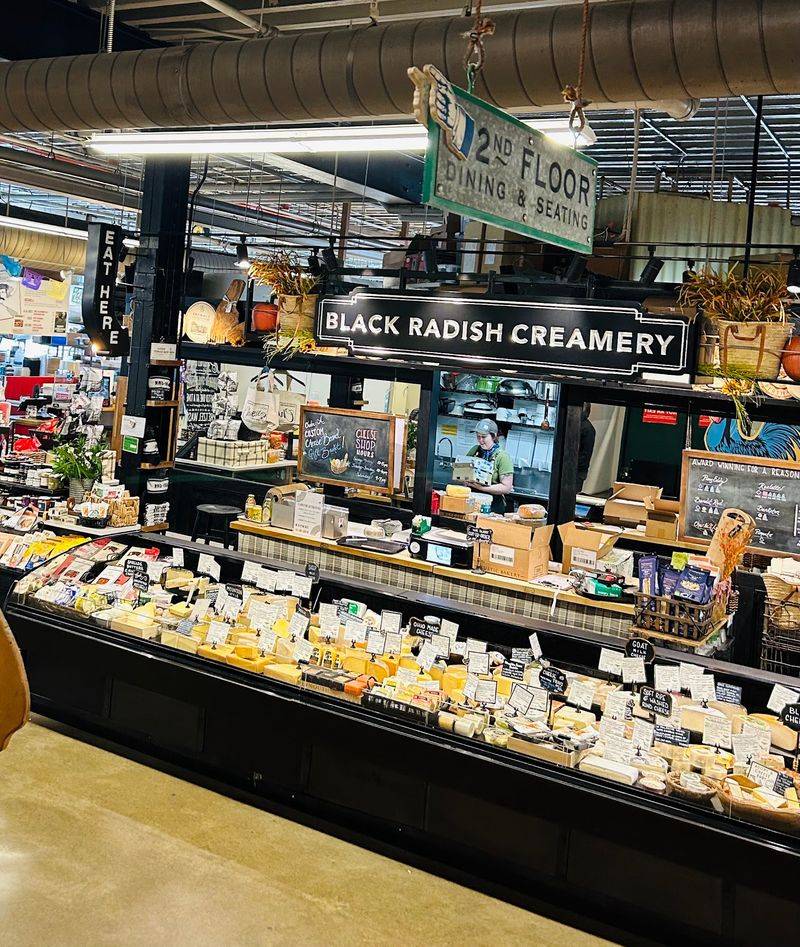
A huge case of cheese can stop anyone in their tracks. Black Radish Creamery stocks a wide selection, making it a must-stop for anyone who loves a good wedge.
Seafood fans have their own reason to linger. COLO Burger & Oyster Bar gives seafood lovers another reason to visit, with oysters and other seafood-focused selections.
The market also has a butcher counter for meats and sandwiches. It’s a handy stop if you want to bring something home for dinner.
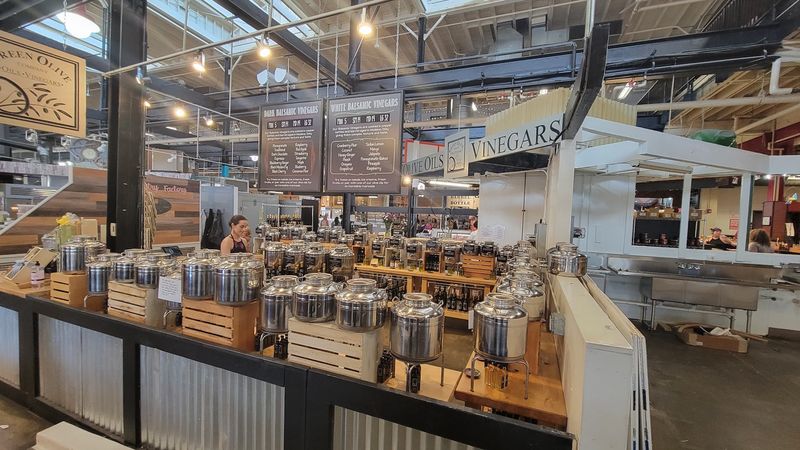
Specialty shops round things out nicely. You’ll find an olive oil and vinegar stand, a seasoning stop, and other grocery-style booths.
That shopping side is easy to overlook if you only come for lunch. Bring a small bag, because these shops make it tempting to stock your kitchen.
Asking questions pays off at these counters. Many vendors specialize in one thing, so they make a great source of tips.
I like how the grocery stalls keep the original market spirit alive. Back in 1876, this place was all about buying fresh food to carry home.
That tradition still holds strong under a newer roof. Lunch is great, but a fridge full of market finds lasts much longer.
Save Room, Because A Famous Ice Cream Brand Started Here
A national ice cream favorite has hometown roots under this roof. Jeni Britton sold ice cream at the market in the 1990s, and Jeni’s Splendid Ice Creams opened its first scoop shop here in 2002.
Jeni’s still scoops at the market today, so you can visit the brand’s starting point. That’s a fun bit of food history to taste in a cone.
Donuts rank among the market’s most talked-about treats. Buckeye Donuts offers another sweet option for visitors looking for a treat before or after lunch.
Pretzels show up on the snack list too. They’re an easy pick when you want something to carry while you browse.
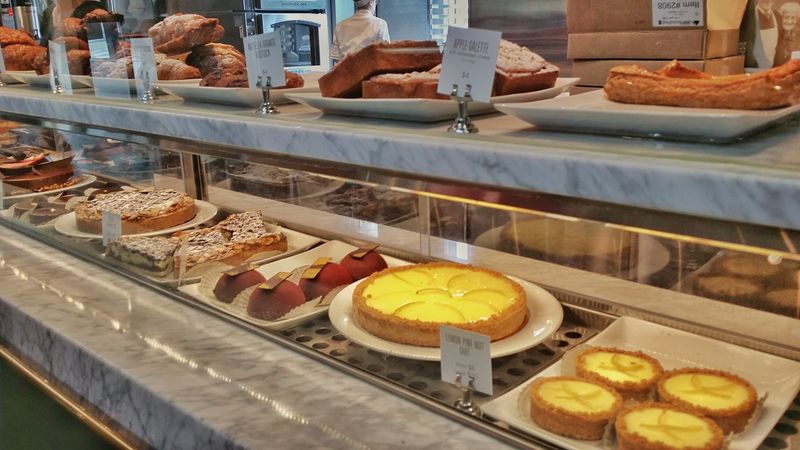
Bakery cases add pastries and biscuits to the mix. Sweet and savory baked goods make a great breakfast if you arrive early.
My strategy is simple: dessert first, then decide on lunch. Sugar makes every other choice feel easier, at least in theory.
Buying a few treats to go is smart, too. They make a sweet souvenir from Ohio that won’t sit in a drawer collecting dust.
Just don’t be surprised if the box is empty before you reach the car. Self-control gets a serious workout here, and nobody will blame you for losing.
Convention Crowds Can Practically Walk Here For Lunch
The Greater Columbus Convention Center sits just a few minutes away on foot. That makes the market an easy lunch break during a busy conference day.
The Short North Arts District begins right nearby along High Street. Once you finish eating, you can stroll past galleries, murals, and shops.
Hours run 9 a.m. to 7 p.m. Tuesday through Saturday.
On Sunday and Monday, the doors open at 10 a.m. and close at 5 p.m.
Parking can get tricky downtown, especially at busy times. Leaving a little extra time to find a spot will keep the trip relaxed.
Walking, biking, or riding a bus can also save headaches. Downtown hotels and the convention area are close enough to make that easy.
Big events nearby can bring extra crowds through the doors. Checking the downtown calendar before you go is a smart move.
Plan for a relaxed visit rather than a speed run. Even a quick stop deserves time for a full lap around the stalls.
The location also connects you to the market’s past. You’re standing in the same part of town where shoppers gathered back in 1876.
Few lunch spots in Columbus, Ohio, can claim that kind of history and convenience at once. Grab a table and enjoy it.
The Rescue Story Keeps Growing Beyond Downtown
A market that once lived in a metal hut now has a sibling. North Market Bridge Park opened in Dublin, a Columbus suburb, in November 2020, initially welcoming four merchants before expanding its lineup.
That expansion shows how far the brand has come since its rescue. Back in the 1980s, survival was the goal, not growth.
Downtown, the original spot still serves as the heart of it all. It’s where the history lives and where the comeback story began.
Big changes are happening around the downtown market too. A new mixed-use tower called The Merchant Building has been rising right beside it.
The project brings fresh energy to a block that once held a humble Quonset hut. It marks one more chapter for a place that refuses to stand still.
Both market locations focus on local, independent vendors. That small-business spirit traces straight back to the merchants who fought for the original.
I believe the real lesson is about community. Places like this last when people decide they’re worth keeping.
So when you visit North Market Downtown, you’re doing more than eating lunch. You’re helping write the next part of its story.
Not bad for a market that almost faded away. Honestly, it’s hard to think of a happier ending in Ohio’s food scene.
