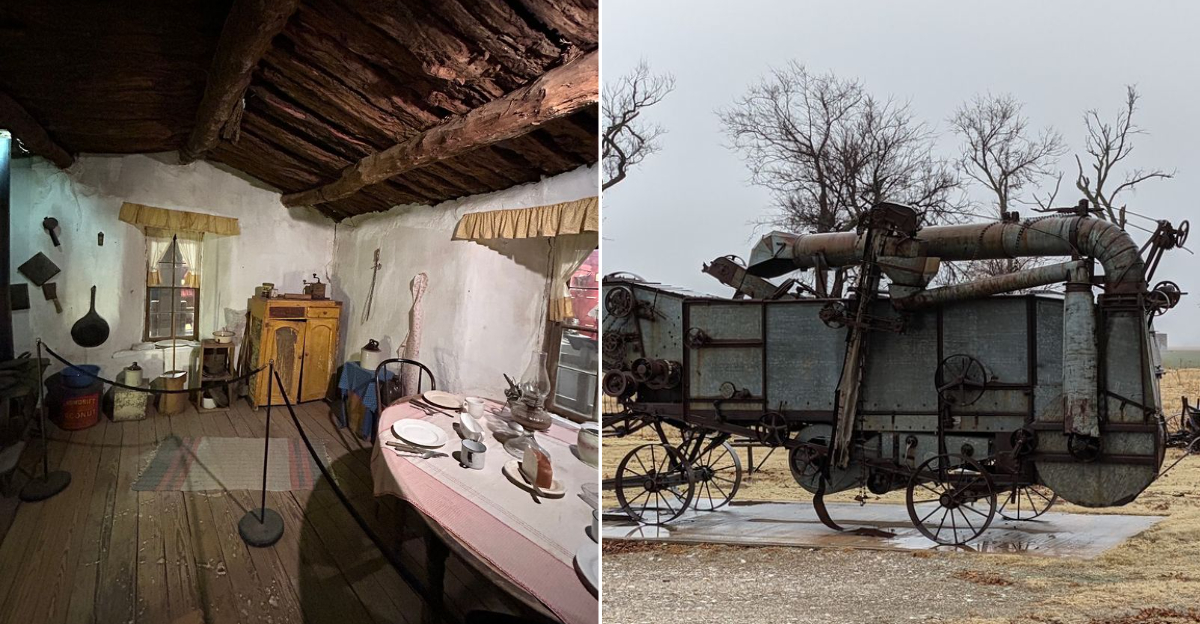
It looks like a low mound of earth from a distance, a grass-covered bump on the prairie that barely registers as a building. Up close, the walls reveal their true nature.
Blocks of sod, cut from the buffalo grass that once covered the plains, are stacked two feet thick. A wooden roof and a stone chimney complete the structure.
This two-room soddy was built in eighteen ninety-four by a homesteader who had raced into the Cherokee Outlet during the land run of eighteen ninety-three.
It is the last surviving sod house in the state, a relic of a time when settlers built homes from the land itself.
A museum now surrounds it, protecting the fragile walls from the elements. Visitors can walk inside and see the cramped space where a family once lived.
They can touch the walls and imagine the prairie wind howling outside. It is a direct connection to Oklahoma’s homesteading past.
The House That Got Its Own Building
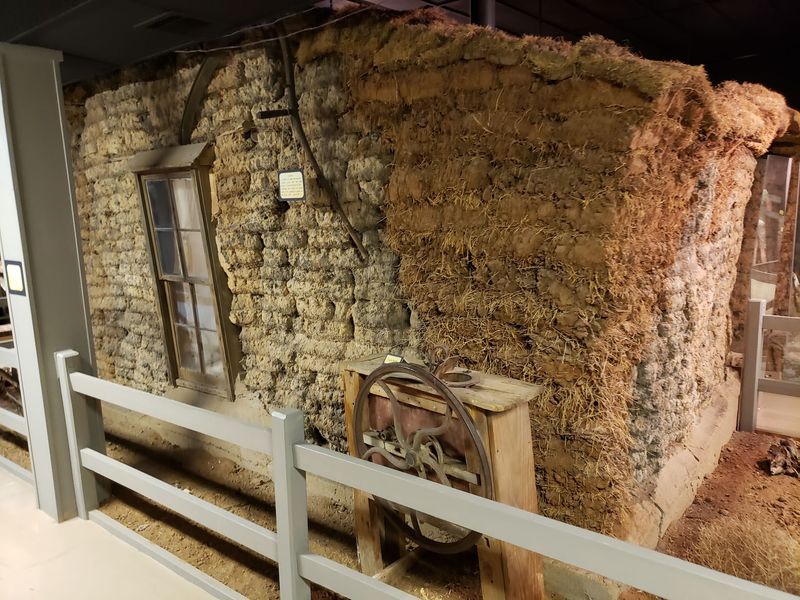
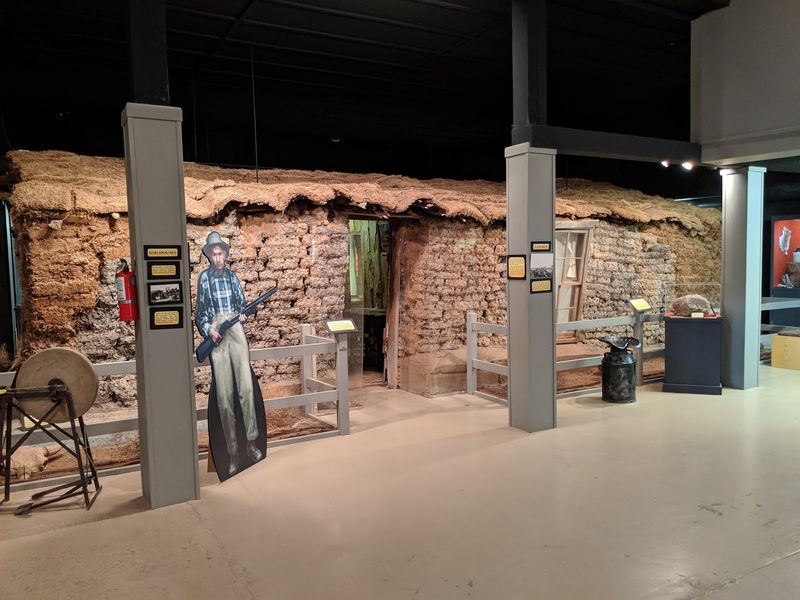
Most museums put artifacts inside glass cases, but here they went ahead and built the entire structure around the artifact itself. The sod house sits in its original spot, and the protective building came later, wrapping around it like a giant shell to keep the weather off those fragile earthen walls.
Walking in feels a little strange in the best possible way, because you are technically indoors and yet you are looking at the outside of somebody’s home. The roof over your head is protecting a roof that once protected a family, which is a funny little layered thing when you stop and think about it.
Sod dissolves in rain and crumbles in wind, so almost every soddy on the Great Plains melted back into the ground within a generation or two. That is exactly why this one needed rescuing, and why Oklahoma decided it was worth the trouble of constructing a whole shelter just for it.
You get to walk around the entire thing, seeing the walls from angles nobody would have seen back when it stood out in the open prairie. It is preservation done in a very practical, very no-nonsense way, and honestly it works beautifully.
Where To Point Your Car
Finding the place is part of the fun, because you will be driving through farm country long before you see any sign of a museum. The address is 4628 State Highway 8, Aline, OK 73716, and once you plug that in you will understand just how rural this corner of the state really is.
Aline is a tiny community, so do not expect a big parking complex or a row of gift shops leading up to the entrance. What you get instead is a modest building sitting near the road with plenty of open sky around it, which honestly suits the subject matter perfectly.
My advice would be to fuel up and grab snacks in a larger town before you head out, since services thin out quickly once you are rolling through this part of Oklahoma. The drive itself is pleasant though, with wheat fields and grain elevators breaking up the horizon.
Give yourself a little extra time in case you take a wrong turn, because cell service can get spotty out here. Honestly, wandering a bit down these back roads is not the worst thing that could happen to your afternoon.
Marshal McCully Started All Of This
Behind every old building there is usually one stubborn person who decided to stay put, and in this case that person was Marshal McCully. He came into the area during the Cherokee Outlet land run, claimed his piece of ground, and then had to figure out how to build a house on land where trees were basically nonexistent.
So he did what plenty of plains settlers did, which was to look down instead of up and use the prairie itself as his building material. The difference is that his house never got torn down or abandoned to the elements, and that stroke of luck is the reason you can visit it today.
Living in a soddy was never meant to be permanent for most families, since the goal was usually to upgrade to a frame house once money allowed. Knowing that makes the survival of this particular home even more surprising and kind of touching.
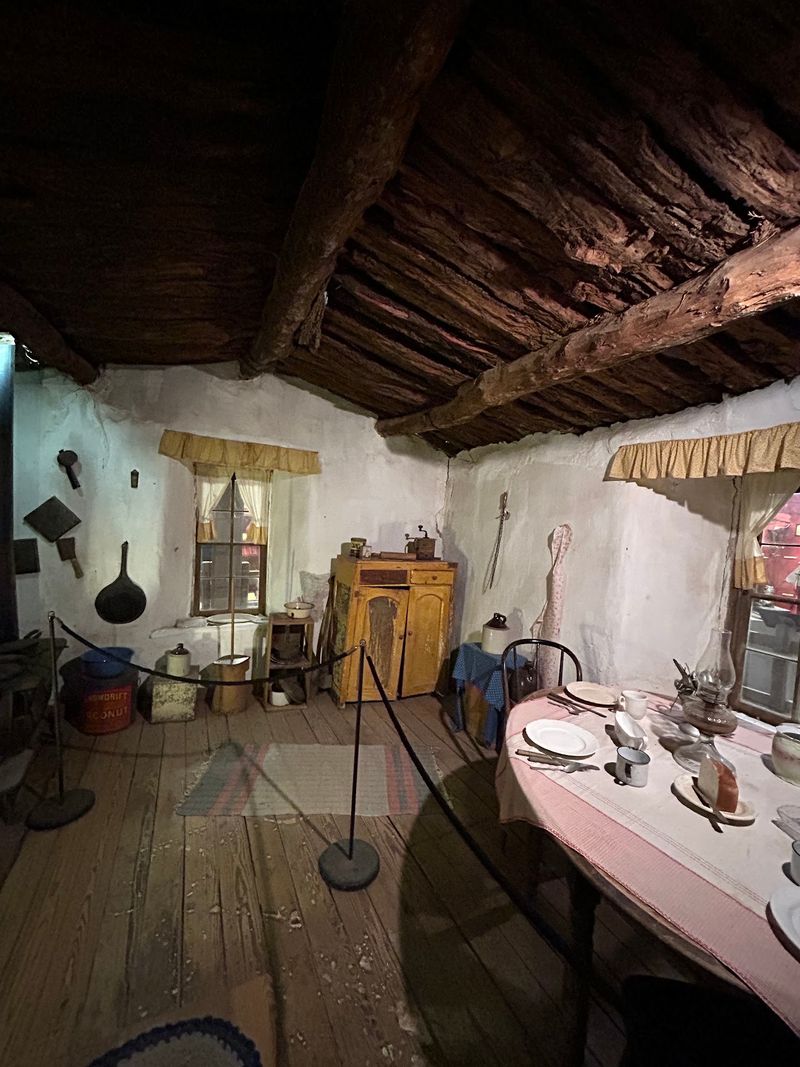
When you stand inside, you are standing in a space where a real family cooked, slept, argued, and waited out storms. That connection to one specific homesteader gives the whole visit a personal weight that a general history exhibit could never match.
Walls Made From The Ground Itself
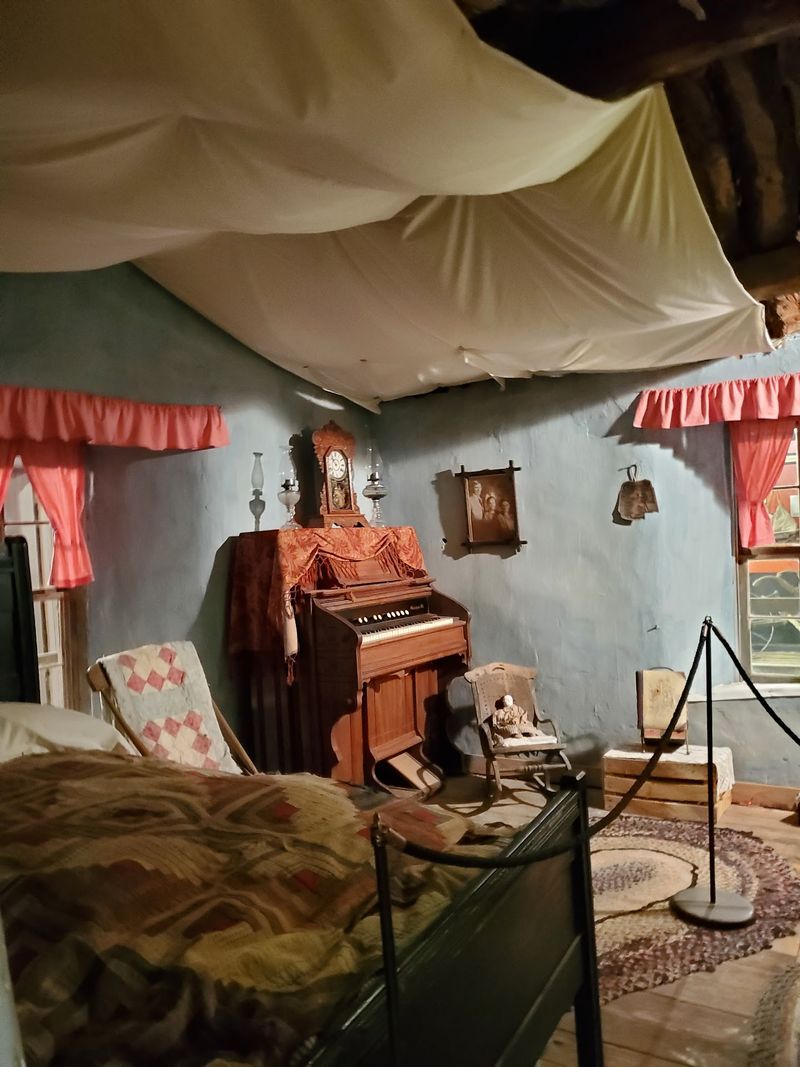
Ever wondered what a sod house actually is, beyond the storybook version? Settlers cut thick rectangular chunks out of the prairie, roots and dirt and all, then stacked them like heavy bricks until they had walls that could hold up a roof.
The grass roots on the plains were dense and tangled, almost like a natural netting, and that tangle held each block together so it would not fall apart when lifted. Pioneers figured this out through trial and error, and it turned out to be one of the smartest building tricks the Great Plains ever produced.
Those walls ended up being remarkably thick, which meant the inside stayed cooler during blistering summers and held warmth through the kind of winter wind that cuts right through you. No lumber deliveries, no sawmill, no money required beyond sweat and a good plow.
Standing next to the walls, you can really see the layers and get a sense of how much weight went into each section. It is one thing to read that people built houses out of dirt, and a completely different thing to stand there looking at the actual dirt still holding its shape after all this time.
Pioneer Problem Solving On Full Display
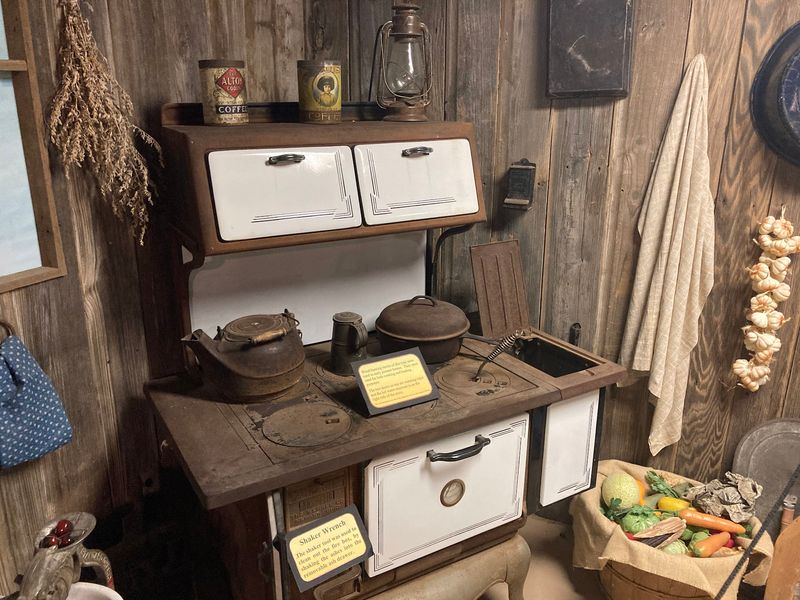
There is something humbling about seeing how creatively people made do when they had almost nothing to work with. Every single choice inside this home came down to what the land could provide and what a family could carry with them on a wagon.
Windows were small and precious, floors were often packed earth, and ceilings had to be reinforced so the whole thing would not sag under the weight of wet sod after a storm. Nothing was decorative for the sake of being decorative, and yet people still found ways to make their homes feel like homes.
Insulation was the unexpected bonus of all that earth, so a soddy stayed surprisingly comfortable compared to a thin wooden shack. The tradeoff was dealing with dust sifting down, the occasional bug, and mud dripping through during heavy rain.
Seeing that balance of clever and uncomfortable side by side really shifts how you think about frontier life in Oklahoma. These were not helpless people scraping by, they were problem solvers who read their environment carefully and used it.
That kind of practical intelligence deserves a lot more credit than it usually gets.
Kitchen Gear From Statehood Days
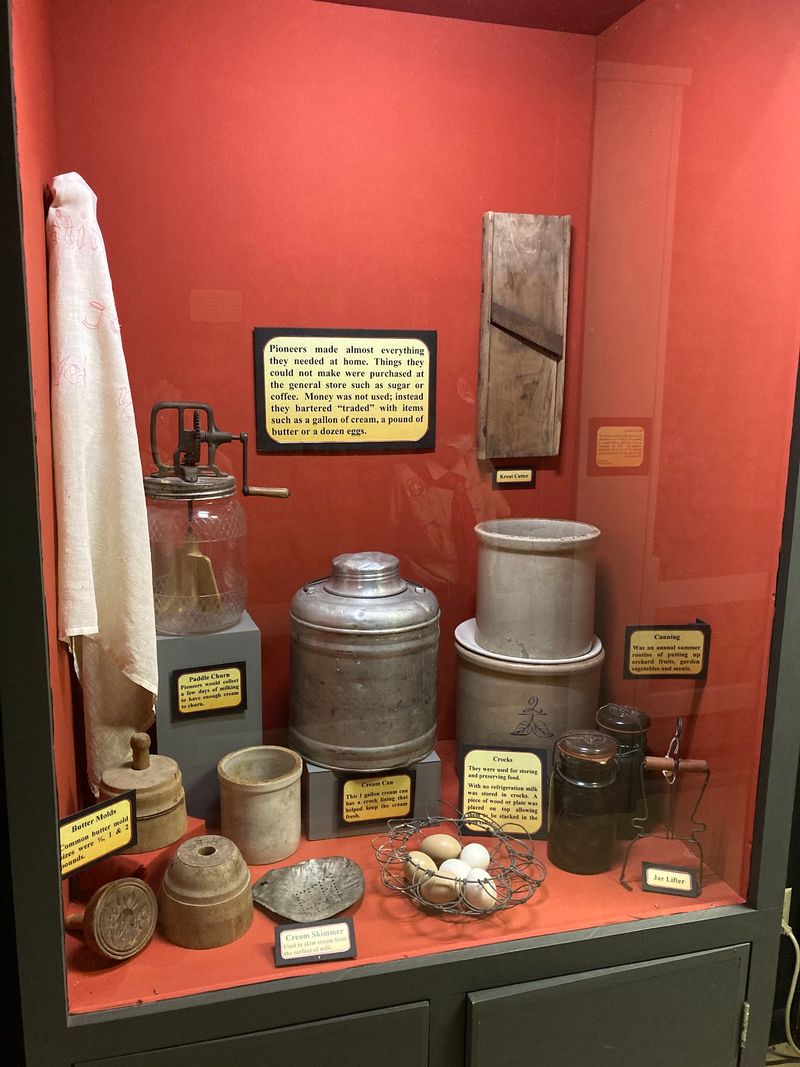
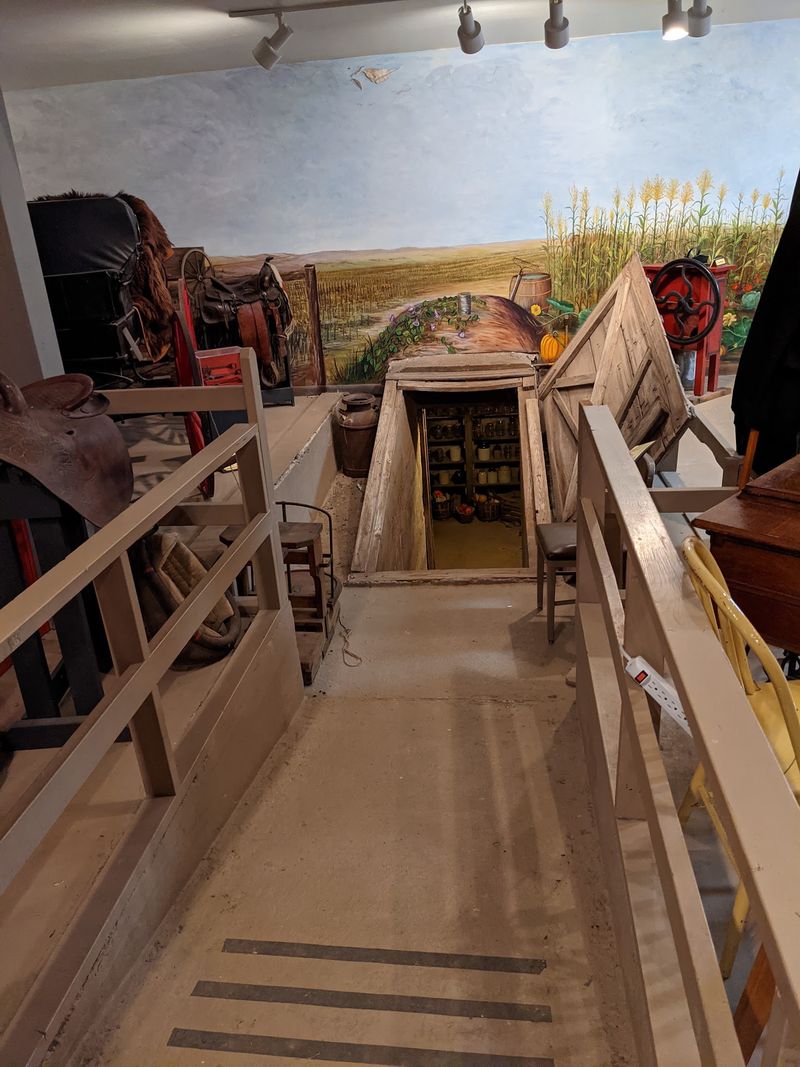
The sod house may be the headliner, but the surrounding museum space holds plenty that will slow you down. Displays of period kitchenware fill a good chunk of it, and there is something oddly fascinating about looking at the tools people used to feed a family without electricity or running water.
You will spot heavy iron cookware, hand-cranked gadgets, storage tins, and utensils that look familiar until you realize how much muscle each one required. Cooking was a full day commitment rather than a quick task squeezed between other things.
What I find interesting is how these objects show what mattered to households around the time Oklahoma became a state. Nothing was disposable, everything got repaired, and items were built heavy enough to be passed down.
Take a slow lap through this section rather than breezing past it, because the small stuff often tells the story better than the big stuff does. A worn wooden handle or a dented pot says a lot about the hands that used it every single day.
Kids tend to love this part too, mostly because so much of it looks like mysterious equipment from another planet.
Photographs That Fill In The Blanks
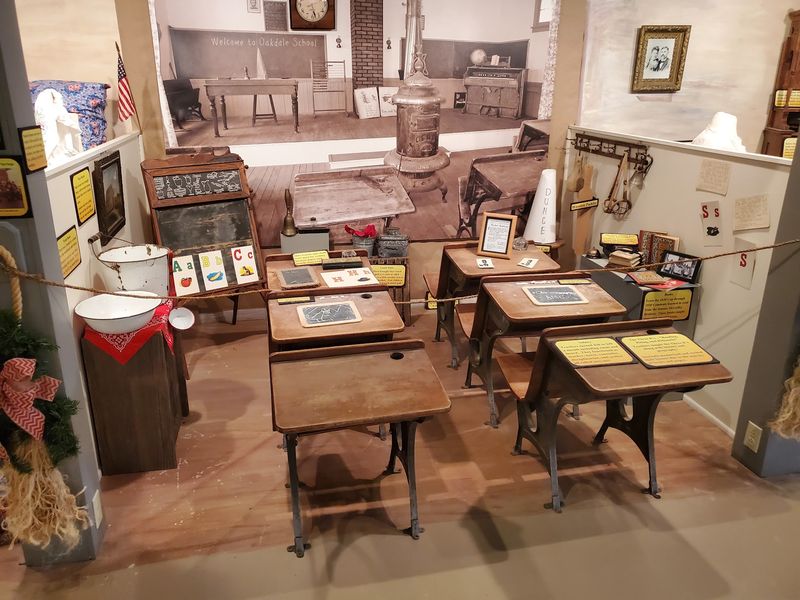
Old photographs have a way of stopping people in their tracks, and the ones here do exactly that. Faces stare back at you from a time when getting your picture taken was a rare event, and everyone dressed in whatever good clothing they owned.
Paired with the artifacts, the images help you piece together what an ordinary day actually looked like out on the claim. You see the fields, the animals, the makeshift outbuildings, and the sheer flatness of the land stretching behind every family portrait.
What comes through is not just hardship but also a lot of ordinary living, like children playing and neighbors gathering and people finding reasons to smile. Frontier life was hard, sure, but it was also just life, with all the regular moments folded in.
Reading the caption panels is worth your time because they tie the pictures to real families in this part of Oklahoma. Suddenly the sod house behind you is not an abstract idea anymore, it is one home among many that once dotted these plains.
That shift in perspective is really what the whole visit is built around.
Big Iron Out On The Grounds
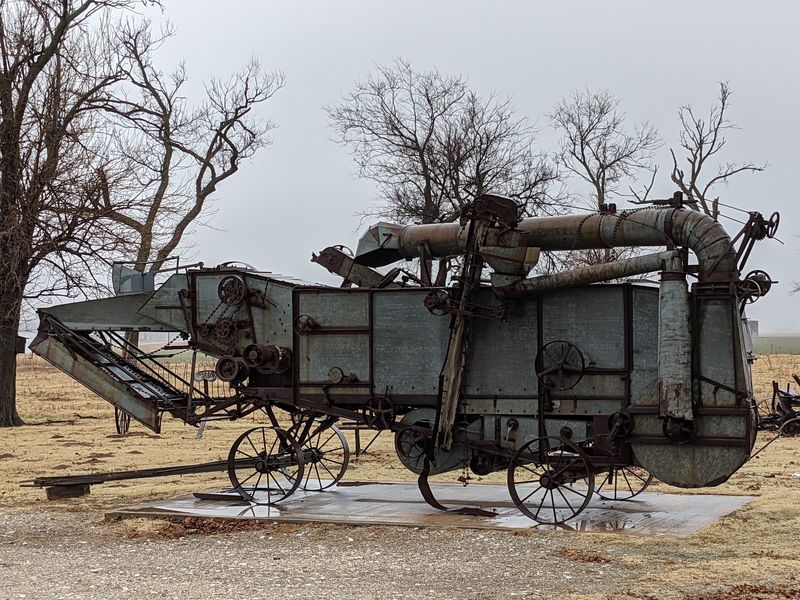
Do not head back to your car the moment you finish inside, because there is more waiting on the grounds. A separate building holds the larger equipment, the kind of heavy machinery that would never fit through a doorway.
A sod plow sits among the collection, and seeing one in person explains a lot about how those wall blocks got cut so evenly. Horse-drawn implements round out the display, showing just how much of early farming depended on animal muscle and human patience.
Standing next to these things really drives home the physical scale of the work involved. Nothing about breaking prairie ground was quick or easy, and every acre took real effort from both the farmer and the team pulling behind him.
Farm equipment might sound like a niche interest, but even if tractors normally do you nothing, these older tools have a sculptural quality that is hard to ignore. The craftsmanship is genuinely impressive when you look at how the pieces fit together.
It also rounds out the story nicely, connecting the house to the fields that made building it worthwhile in the first place.
Worth The Detour Through Northwest Oklahoma
So here is my honest take on whether you should go out of your way for this one. If you enjoy places that are quiet, specific, and unlike anything else you have seen, then absolutely point the car toward Aline and make the drive.
The whole visit is manageable in a single stop, which makes it easy to fold into a longer road trip through the northwest part of the state. Salt Plains and other spots in the region pair well with it if you want a full day of wandering.
Bring your curiosity more than your camera, because the real reward here is standing in a room that a homesteader built with his own hands out of the ground beneath his feet. Photographs never quite capture that feeling.
Come with a little patience for the drive and a willingness to slow down once you arrive, since rushing through would waste the whole point. Small museums reward people who read the signs and look closely.
You will leave thinking differently about what a house is and what people can build when they have almost nothing to build with.
