Some of the best stops in Oklahoma don’t announce themselves. You pull up to a modest stone building on a hill, figure you’ll poke around for ten minutes, and then a staff member starts telling you a story you’ve never heard in any classroom.
An hour later you’re still standing in front of a wall of old photographs, asking questions. That’s exactly what happens to people who wander into this small museum on a quiet hilltop campus, and it has been happening since 1938.
A Stone Building On A Hilltop Campus
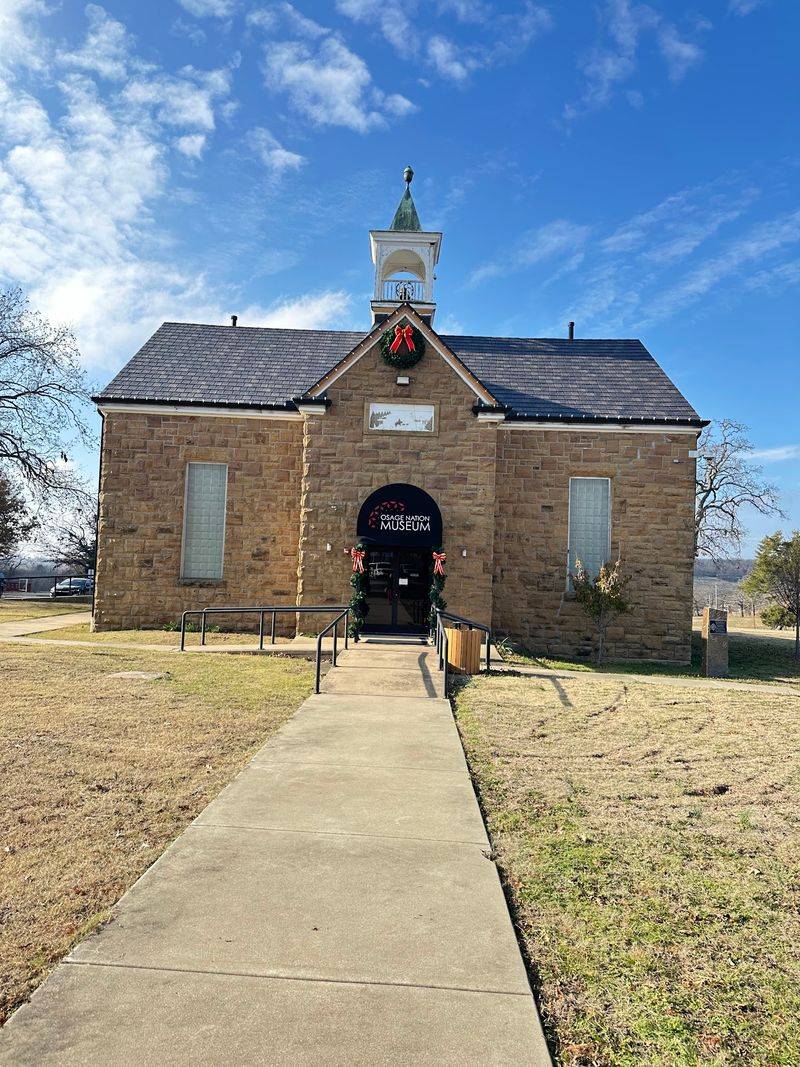
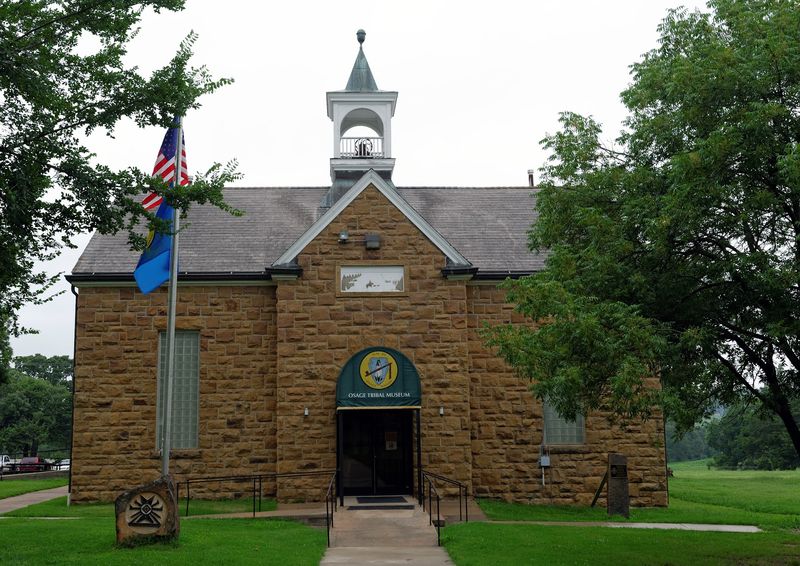
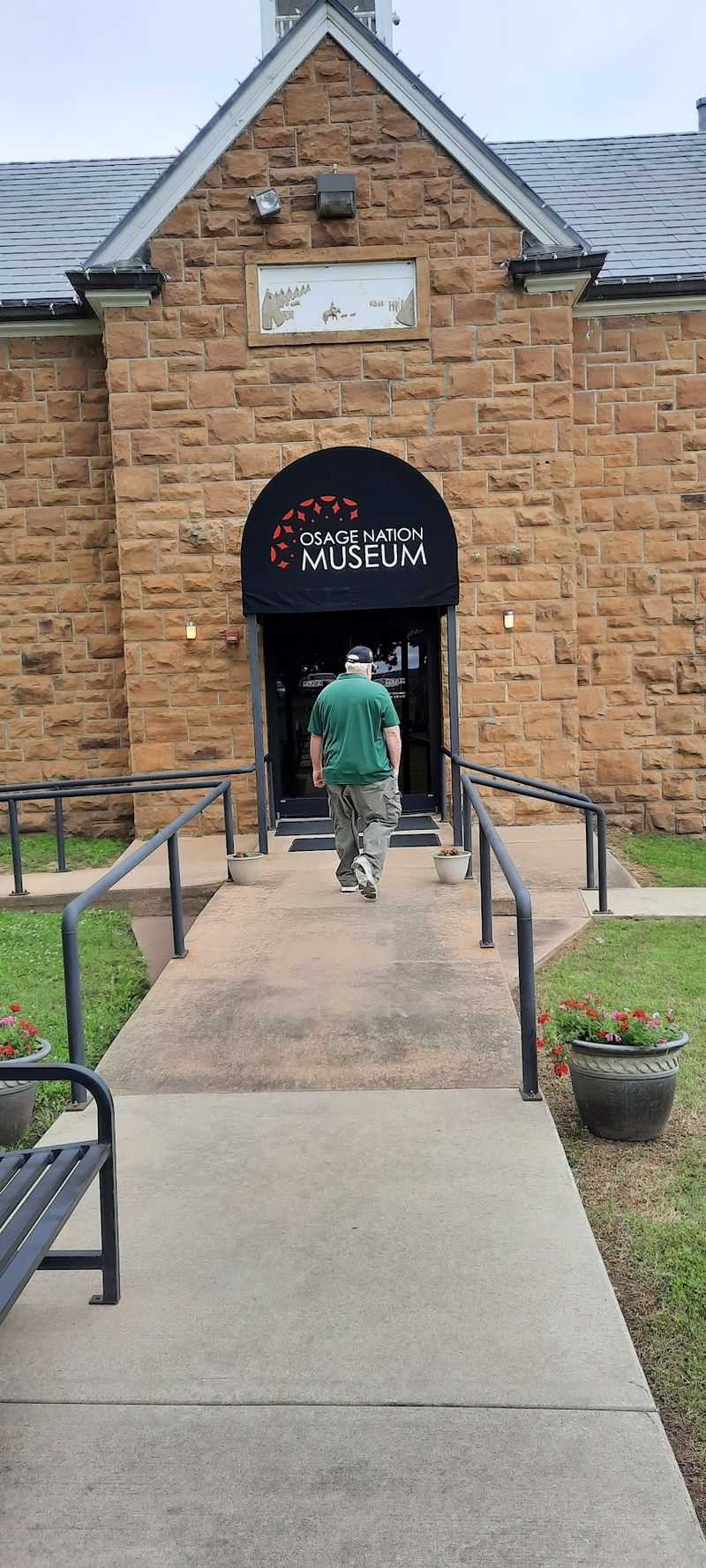
Grandview Avenue in Pawhuska climbs away from the old brick downtown and lands you on the Osage Nation campus, where a sturdy stone building sits among tribal offices, the council house, and a medical center. The address is 819 Grandview Ave, and the museum shares the hill with shade trees and wide lawns.
What you’re looking at is the Osage Nation Museum, opened in May 1938 and recognized as the oldest tribally governed museum in the United States. The structure itself carries history too, having begun life as a chapel dating back to 1872.
Size can fool you here. Visitors often describe two rooms and a small footprint, then admit in the same breath that they stayed far longer than planned because of how much is packed inside.
Parking sits right there, free and easy, with no meters or lots to puzzle over. From Tulsa you’re looking at roughly an hour of driving, which makes this an uncomplicated half-day trip rather than a production.
Approach it the way regulars do. Walk the grounds first, then step inside and let the building slow you down.
How A Councilman And A Chief Built It In 1938
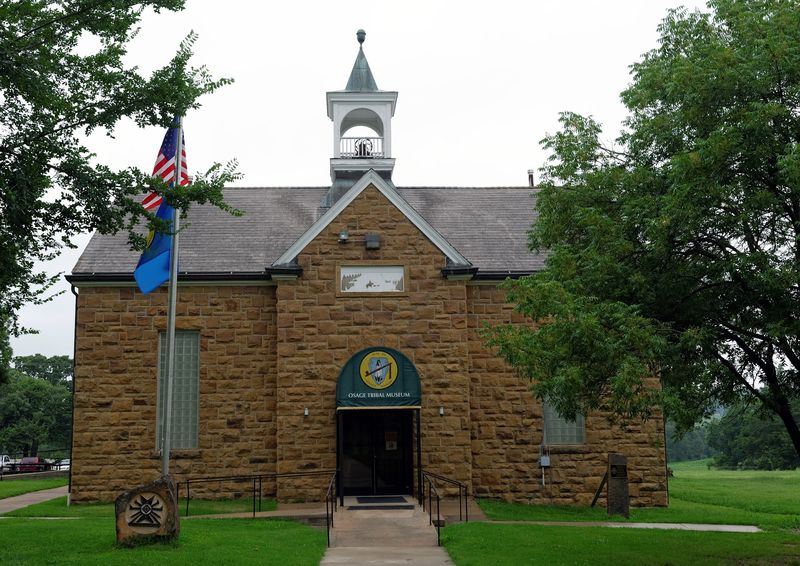
Back in the 1930s, Osage art and belongings were scattering fast into private hands and outside collections. Osage Tribal Councilman and writer John Joseph Mathews pushed hard for a solution, working alongside Chief Fred Lookout to establish a permanent home for the Nation’s material culture.
Their idea was simple and radical for its era. Rather than letting outsiders interpret Osage life, the Nation would gather, keep, and explain its own story on its own terms.
Doors opened in May 1938, which means the place has been running longer than most state museums out here. The collection’s roots actually stretch back further, to a 1927 purchase of the John L.
Bird collection, assembled by a trader who had been acquiring Osage materials since 1883.
Fun detail worth carrying with you: Chief Fred Lookout’s descendants are still connected to the museum, and guests have mentioned learning Osage history directly from his great-granddaughter on staff.
Institutions founded in the Depression rarely survive nine decades. That this one did, under continuous tribal governance, is arguably the most impressive artifact on the property.
Wah-Zha-Zhi Spirit And The Permanent Collection
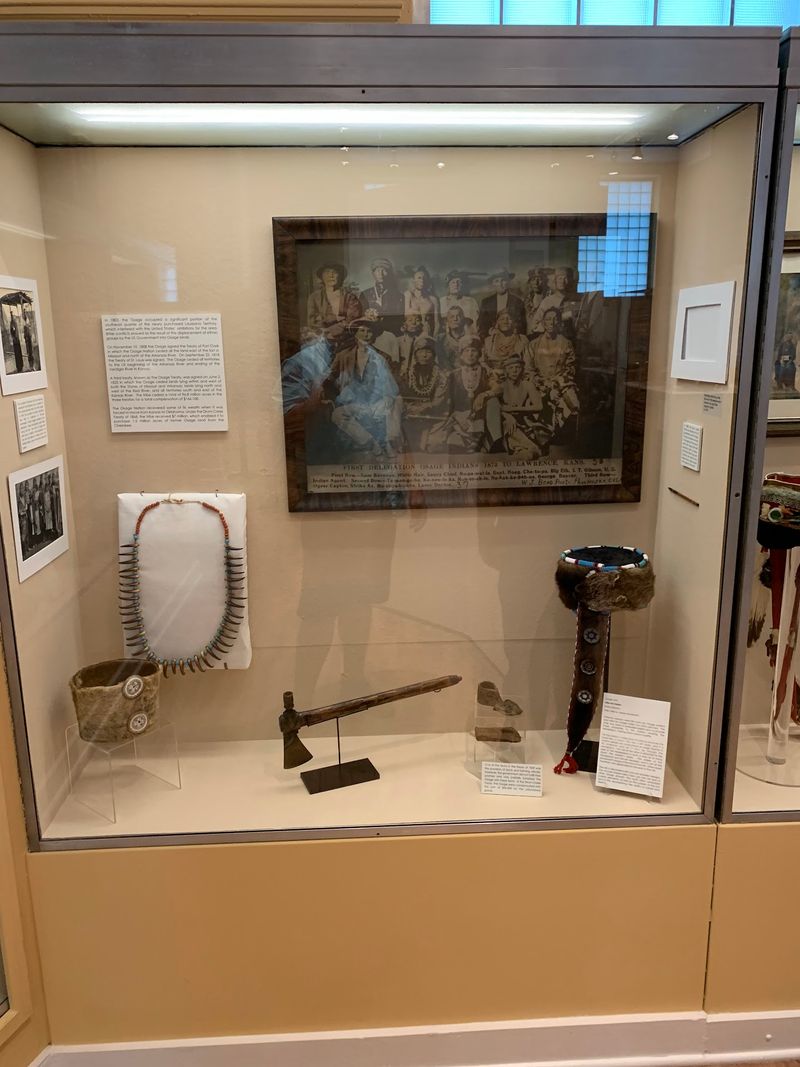
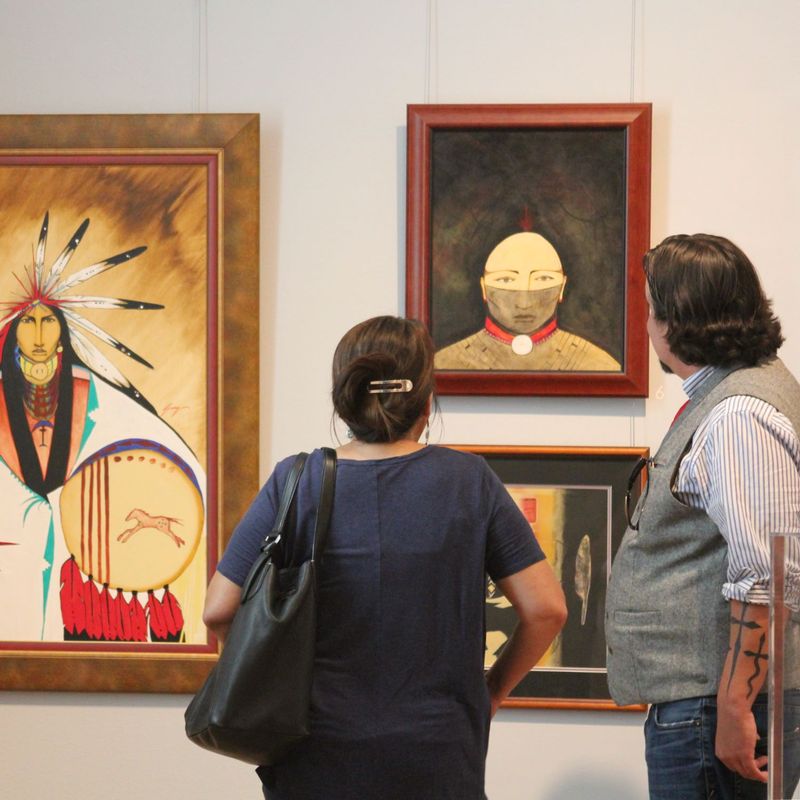
Ask staff what anchors the galleries and you’ll hear about “Wah-Zha-Zhi Spirit: A Celebration of Osage History and Culture,” the permanent exhibit that walks through history, government, traditional arts, and the long thread connecting generations. A rotating Artist Spotlight keeps contemporary Osage creators in the conversation rather than treating culture as something finished.
The broader holdings run wide. Traditional and contemporary Osage art share space with ethnographic objects, archival materials, and historical artifacts pulled from nearly a century of careful collecting.
Guests consistently point to the quality of what’s displayed, describing pieces as authentic and meticulously cared for. Several mention reading every sign because the labels were more interesting than expected, which is high praise for exhibit writing.
A year-long lecture series digs into single items from the collection, including Osage cradleboards, ribbonwork blankets, Code Talker medals, and treaty pens. If you time a trip around one of those talks, you’ll get depth no display case alone can deliver.
One practical heads-up: photography and video are not permitted inside the building. Leave the phone in your pocket and actually look at things, which is arguably the better deal anyway.
Four Walls Of Allotment Photographs
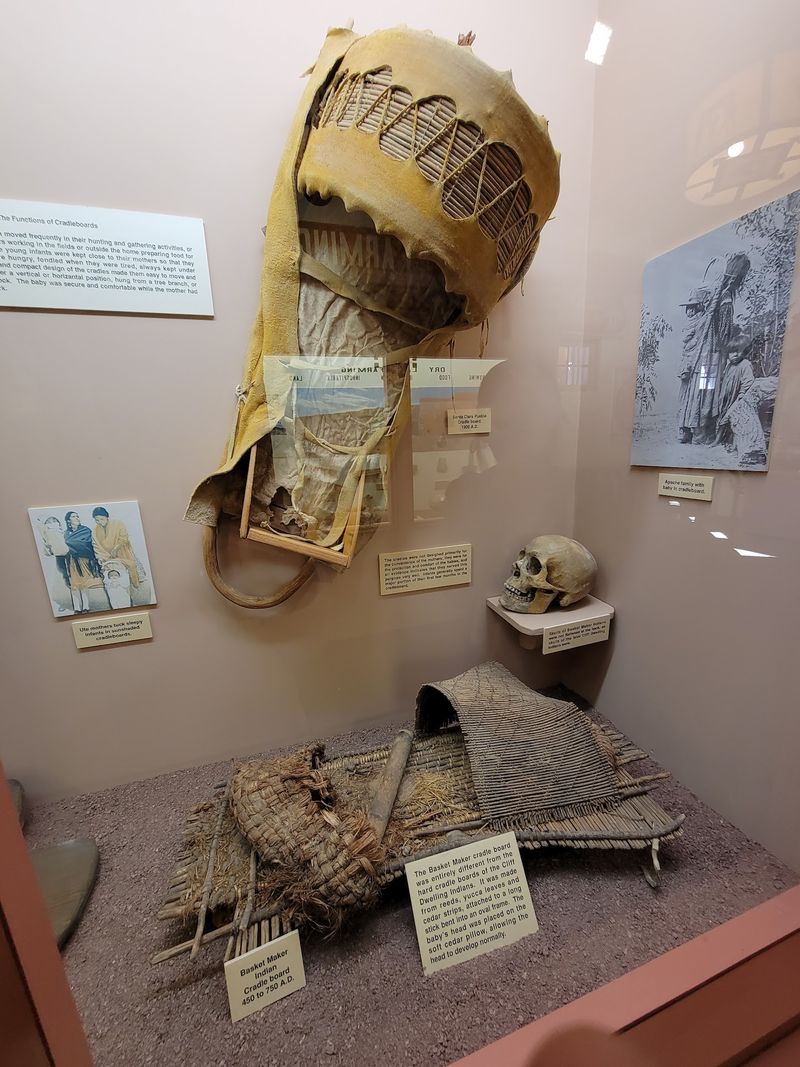
Step into the second room and the walls stop you cold. Historical portraits cover them, floor to near-ceiling, faces of Osage people photographed during the allotment era when tribal land was divided into individual parcels.
Guests describe it as four walls of photographs, and it functions as more than decoration. The Allotment photo and stories project invites visitors to help identify people whose names were never recorded, with a book on hand where you can add what you know about someone you recognize or are related to.
Families with Osage ancestry have found relatives here. One visitor recounted spending several hours with staff tracing their own family line through the images, which turned a museum stop into something closer to a homecoming.
Even without a personal connection, the sheer accumulation of faces does something a timeline cannot. You start noticing clothing, posture, the way a photographer’s studio backdrop repeats across dozens of portraits taken in the same decade.
Give this room more time than you think you need. Most people come in planning a quick look and end up quietly working their way along every wall.
The Veterans Memorial And Outdoor Grounds
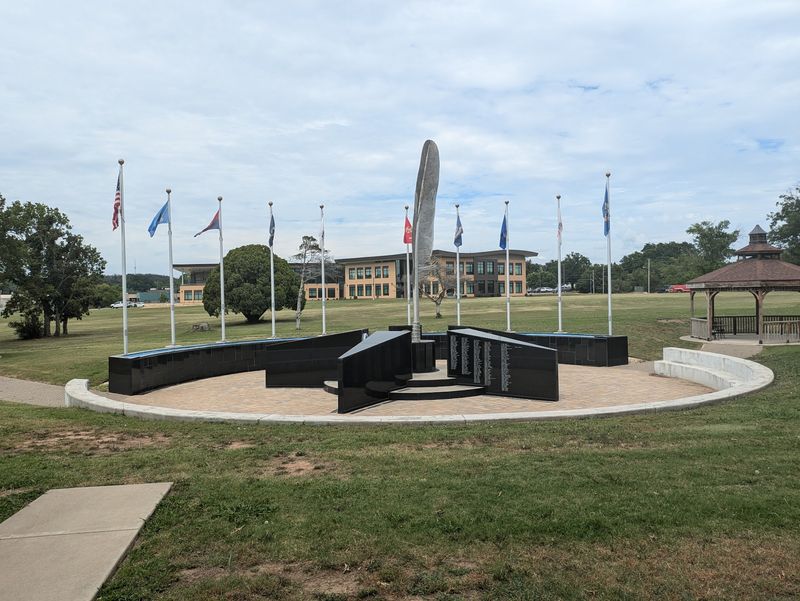
Plenty of folks show up for the exhibits and leave talking about the grounds instead. Outside the museum sits a veterans memorial honoring Osage service members, and guests repeatedly call it one of the most moving tributes they’ve come across.
The landscaping is kept sharp, with enough mature shade to make a July walk bearable when Oklahoma decides to sit at 95 degrees. Benches and open lawn give you room to slow down.
There’s more out here than the memorial. A statue of Chief Claremore stands on the grounds, along with a stone placard explaining the Osage Nation’s connection to oil, plus a handful of other markers worth reading.
Visitors mention feeling a distinct calm the moment they walk up, describing the campus as peaceful before they’ve even reached the door. That quality shows up again and again in what people say about the place.
Worth knowing: the grounds stay accessible and pleasant even when the museum itself is closed, so an evening or Monday drive-by still gives you something. Just save the interior for a day the doors are open.
Staff Who Turn Ten Minutes Into An Hour
Here’s the thing nobody expects from a two-room museum: the guides are the main attraction. Roughly two dozen guests have gone out of their way to mention how welcoming the staff are, and another handful specifically praise how much they know.
Stories get shared freely. Visitors describe walking in for a quick look, getting pulled into conversation, and emerging an hour later with a completely reframed understanding of Osage history.
One staff member comes up by name over and over in visitor accounts, a great-granddaughter of Chief Fred Lookout who has spent long stretches helping families trace ancestors and answering every question thrown at her. People leave genuinely grateful.
Private tours occasionally run through, and guests have been invited to tag along on the spot. If a group happens to be starting when you arrive, it’s worth asking whether you can join.
The takeaway is practical. Don’t treat this as a silent self-guided walk-through, even though you certainly can do that.
Ask a question at the front, and the visit changes character entirely.
Free Admission, Open Hours, And Getting There
Cost first, because that’s what usually decides a road trip. Admission is free and so is parking, with donations gratefully accepted at the door, and longtime visitors tend to encourage dropping something in.
Doors are open Tuesday through Saturday from 10:00 a.m. to 5:00 p.m., closed Sunday, Monday, and federal holidays. Calling ahead at 918-287-5441 is a reasonable move, since hours at small institutions can shift without much notice.
Pawhuska sits about an hour northwest of Tulsa and roughly two hours from Oklahoma City, which puts it comfortably in easy-yes territory for a day trip. Osage County roads are straightforward, and the museum is signed on the tribal campus.
Budget anywhere from twenty minutes to a few hours. Guests report both extremes honestly, and the difference usually comes down to whether you engage with staff and the photo project.
Photography inside is not allowed, so plan your pictures for the grounds. Pair the stop with the Tallgrass Prairie Preserve north of town or lunch downtown, and you’ve built a full day without spending much at all.
Why This Hilltop Stop Earns The Drive
Nine decades of continuous tribal stewardship is not a small thing, and you feel it in how carefully this place tells its own story. Nothing here is filtered through an outsider’s assumptions.
Families do fine, with activities aimed at all ages and staff happy to talk about interactive art experiences if you ask at the desk. The quiet, unhurried rooms suit grandparents and grandkids equally well.
Fair warning about expectations: a few guests wish it were bigger, and expansion has been discussed. If you arrive expecting a sprawling complex, you’ll be recalibrating.
Arrive expecting depth over square footage and you’ll leave satisfied.
Readers who came to Osage history through recent books and films will find the events they know addressed directly, presented by the Nation whose ancestors lived them.
My honest read is that this ranks among the more worthwhile free stops in northeastern Oklahoma, particularly on a cool fall afternoon when the Tallgrass Prairie is turning and Pawhuska feels wide open. Bring curiosity and a few dollars for the donation box.
That’s the whole price of admission.
