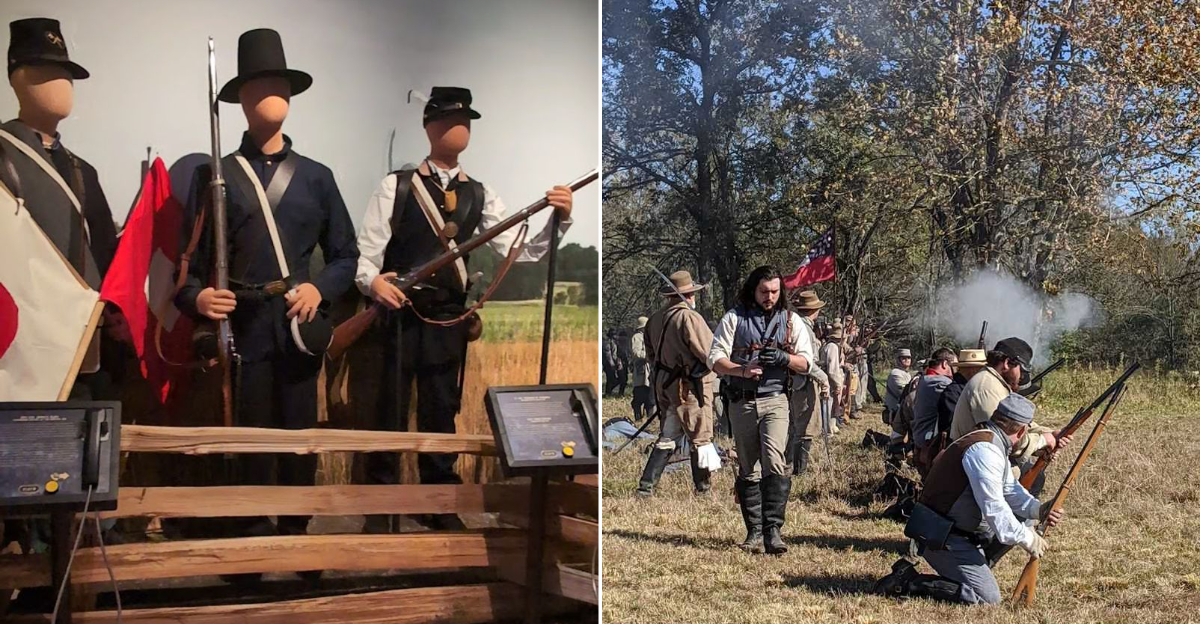
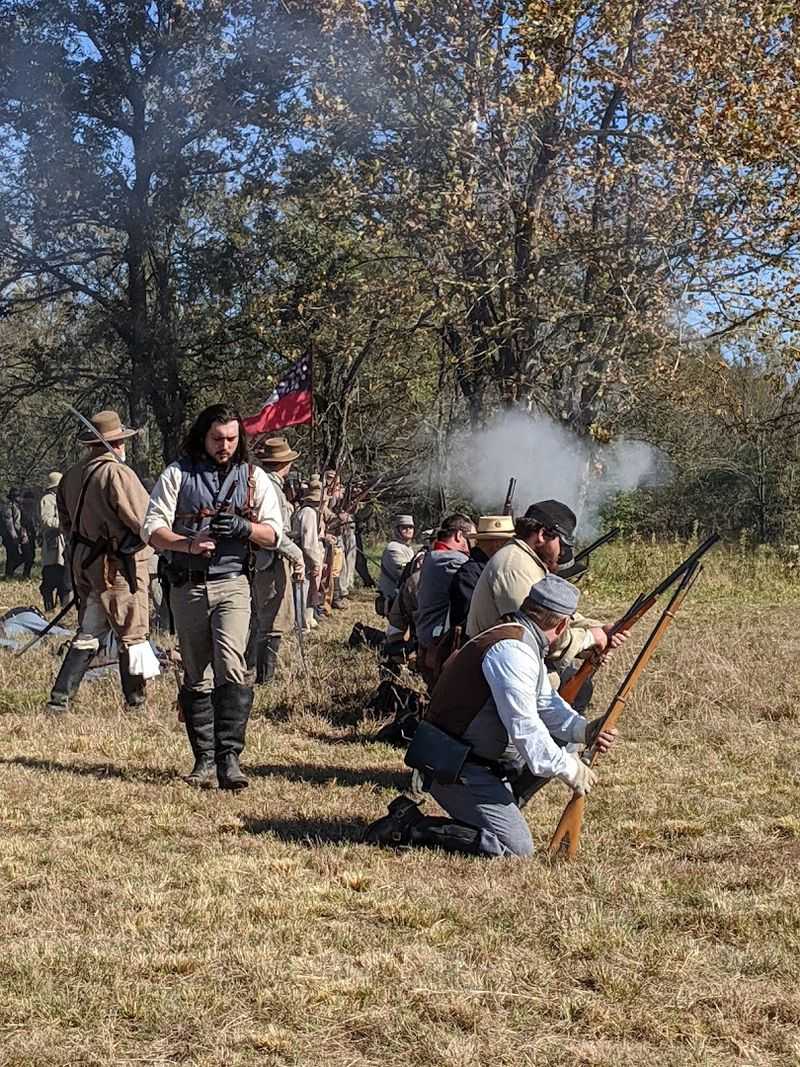
The mud was deep. The rain was steady. And on a single day in July, more than nine thousand soldiers met on this quiet Oklahoma field.
It was the largest military engagement ever fought in the state, a clash that involved Native American regiments and the First Kansas Colored Volunteers.
Today, the battlefield is still and open. Walking trails wind through the same ground where cannons fired and soldiers made their stand.
Interpretive signs mark the spots where regiments held their ground. A small visitor center holds artifacts that make the history feel real.
This is not a polished museum with velvet ropes. It is a place where history sits out in the open, waiting for anyone who wants to stop and listen.
A stop here is a journey into a story that deserves to be remembered.
The First Quiet View
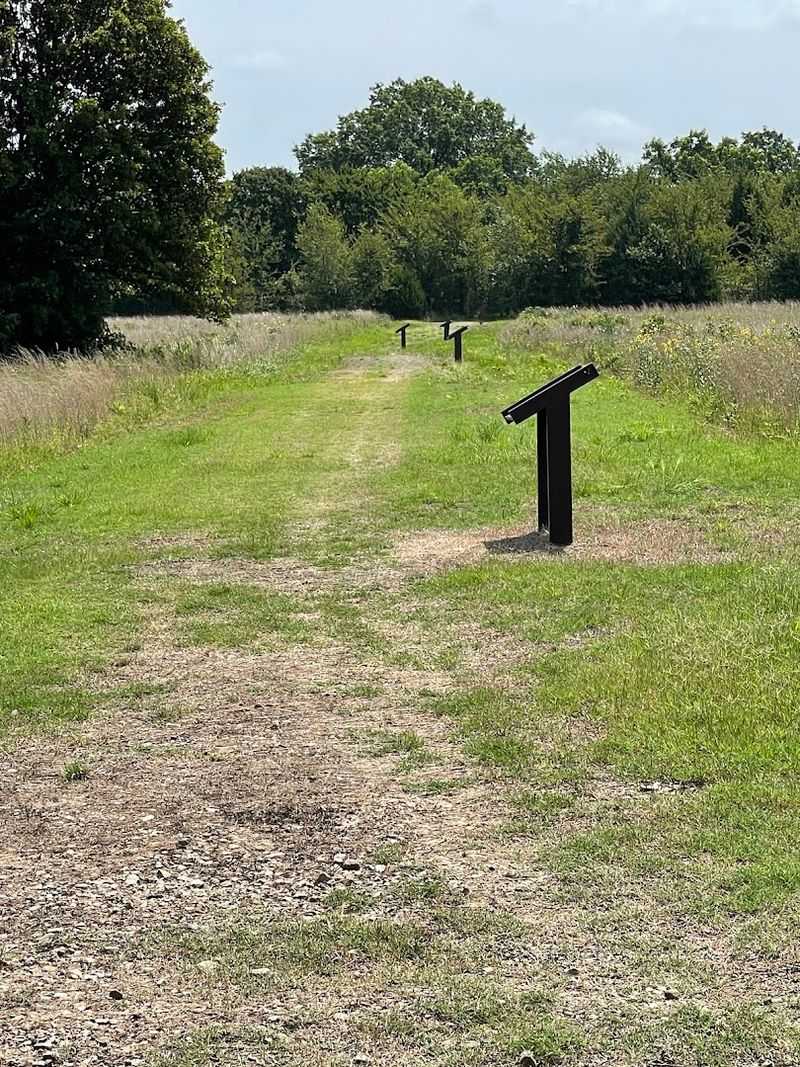
The first thing that got me was how calm the entrance feels, because nothing about Honey Springs Battlefield tries to push itself at you, and that makes the whole place more affecting once you remember what happened here. You roll into this part of Oklahoma and see open land, trees, and sky, and your brain almost expects an ordinary country stop instead of a battlefield that carries this much weight.
That contrast is really the point, though, because the quiet gives you space to notice details you might miss in a louder setting, like the shape of the ground, the long sightlines, and the way the breeze moves through the grass. I liked that I could ease into the visit instead of getting hit with a wall of information before I had even looked around properly.
If you are the kind of traveler who wants a place to reveal itself slowly, this is a good beginning, because the stillness works almost like an introduction before the harder history starts settling in. It felt less like checking off a landmark and more like stepping into a conversation with the land itself.
By the time you take those first few minutes seriously, the site already feels bigger, deeper, and more personal than you expected.
Where The Story Starts
Once you know where you are, the place settles into focus a little differently, and I think it helps to say it plainly: Honey Springs Battlefield sits at 423159 E 1030 Road, Checotah, OK 74426, out in the countryside where the quiet still feels genuine. The drive in matters here, because it strips away the noise and gives the site room to meet you on its own terms.
I always appreciate when a historic place is not buried under a bunch of distractions, and this one really is about the land, the interpretation, and the feeling of being present. You are not being rushed from one flashy feature to the next, which means the story has a chance to unfold at a pace that feels human instead of staged.
That sounds simple, but it changes the whole mood of the visit in a way you can really feel.
That slower rhythm worked on me almost immediately, especially once I realized how much this battlefield says without raising its voice. In Oklahoma, where big skies can make everything feel both close and far away at once, the setting adds something words alone cannot quite carry.
It is one of those rare places where the road in already feels like part of the history.
The Open Ground Changes Everything
Here is what surprised me after the first look around: the open ground is not empty at all, and once you start paying attention, it becomes one of the most expressive parts of the battlefield. The broad fields let you imagine movement, distance, confusion, and all the split-second choices that mattered when the fighting spread across this landscape.
I found myself stopping a lot, not because there was too little to see, but because the space makes your mind work in a very specific way. You start measuring tree lines, noticing rises in the land, and wondering how different everything would feel if the air were full of noise instead of birds and wind.
It feels almost physical, like your eyes are doing the work of history before your thoughts catch up. That stayed with me long after leaving.
That is where Honey Springs really gets under your skin, because the terrain itself becomes part of the storytelling without needing any theatrical help. Plenty of historic places tell you what happened, but this one lets the land show you why location mattered so much in the first place.
By the time you stand still for a minute and look outward, the battlefield begins to feel vivid, complicated, and strangely immediate.
The Depot Area Pulls You In
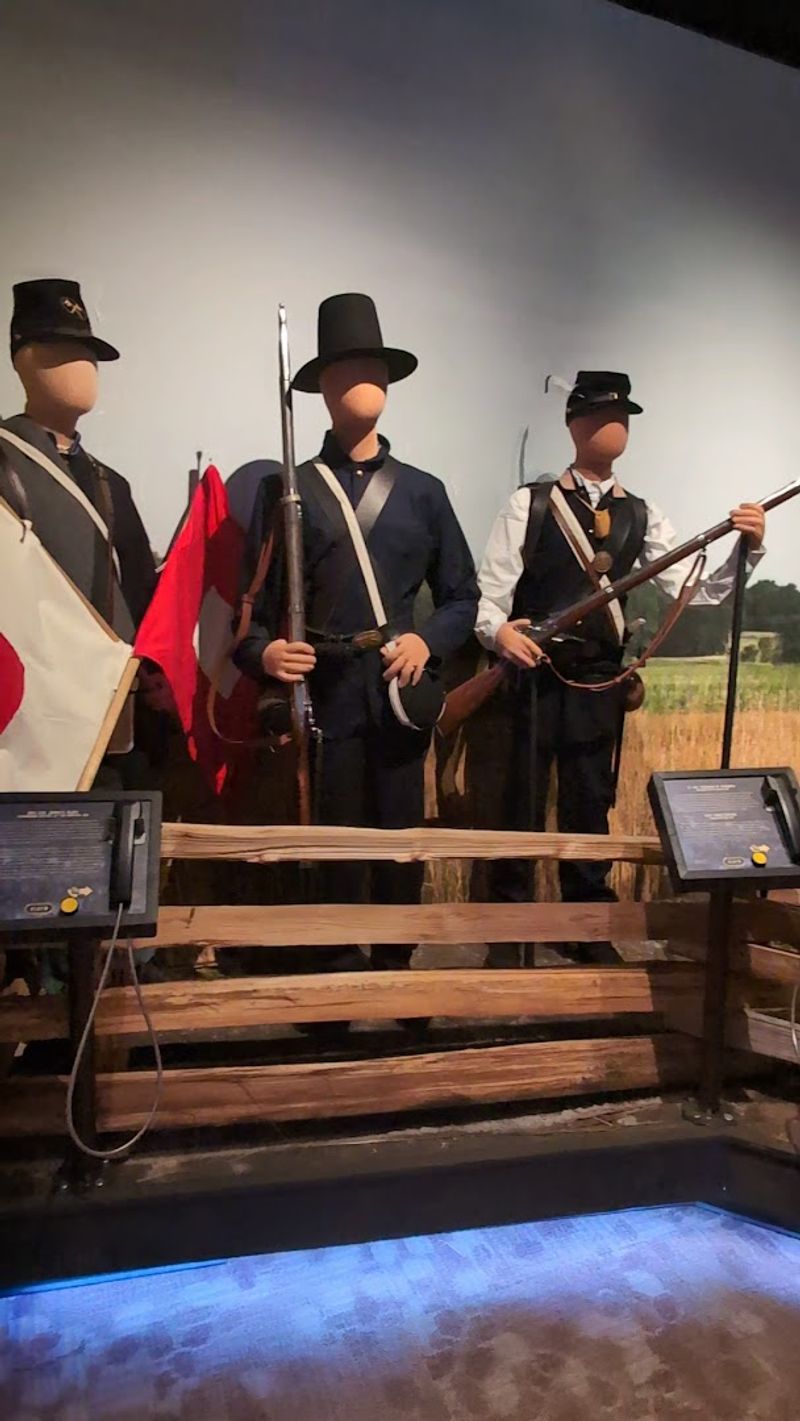
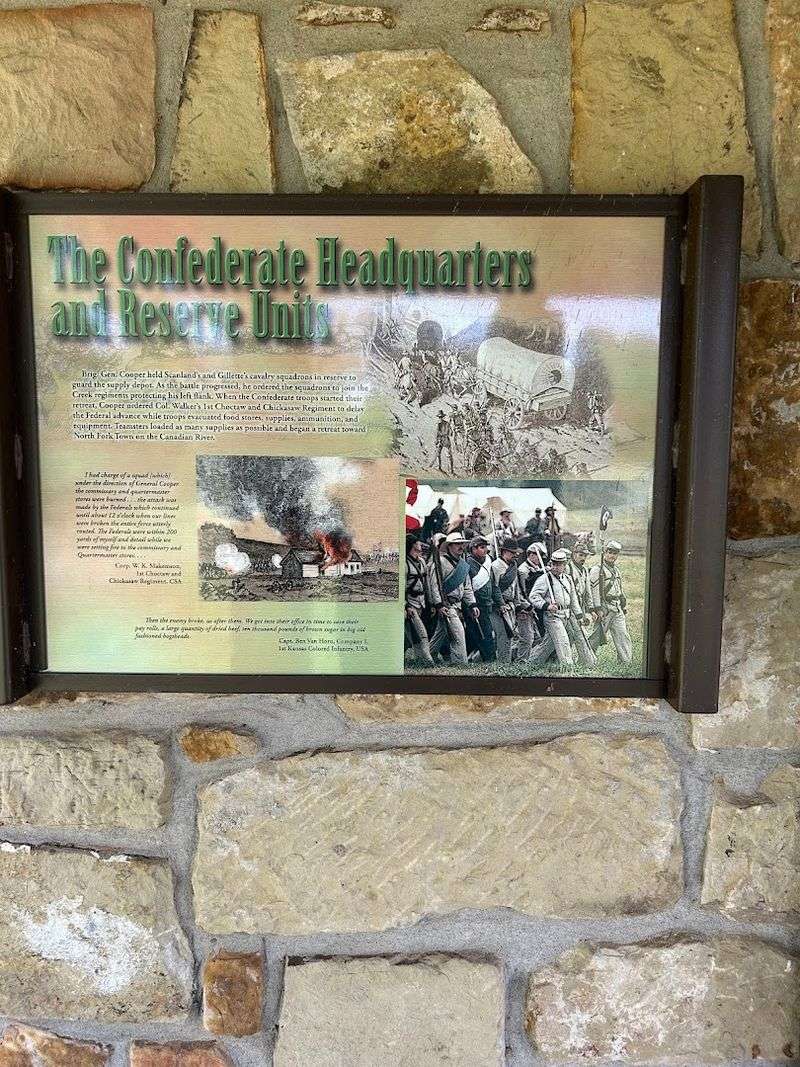
If you drift toward the depot area, the story suddenly feels less abstract, because this was not just open prairie where armies collided and disappeared again. This was a place tied to movement, supply, communication, and everyday life, which makes the battlefield feel connected to a larger world instead of sealed off in one dramatic moment.
That context makes the battlefield feel lived in, not distant.
I like spots like this because they remind you that major events do not happen on a blank stage, and Honey Springs carries that truth in a very grounded way. The historic markers and preserved setting help you picture people arriving, leaving, waiting, and worrying, all before the fighting turned the area into something much harsher.
There is also something especially moving about seeing a battlefield through the lens of ordinary activity, since it keeps the history from turning into pure spectacle. It made me slow down and imagine the ordinary routines that once filled this ground before everything changed so suddenly then.
That shift, from daily life to chaos and back to silence, gives this part of the site a pull that is hard to shake.
Why The Landscape Feels So Honest
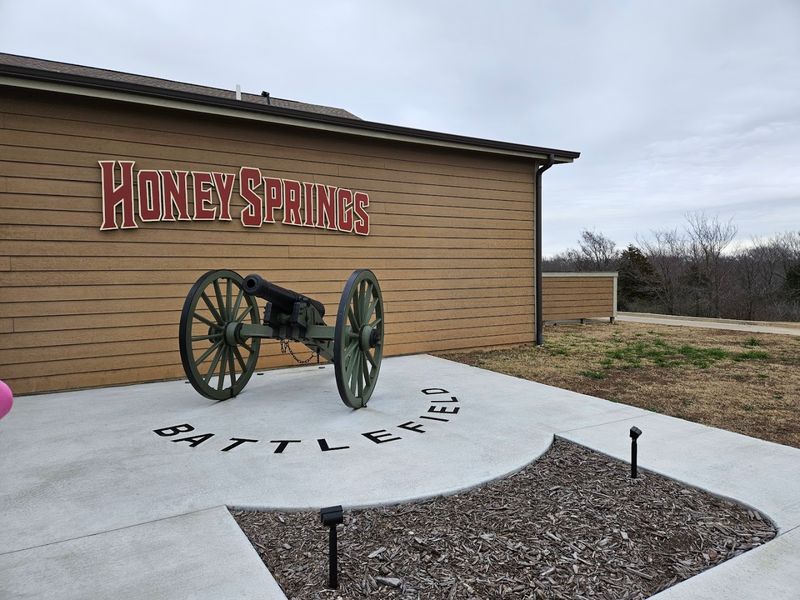
What I kept coming back to was how honest the landscape feels, and that is harder to fake than any museum display or dramatic retelling. The fields are fields, the trees are trees, and the sky stays wide over everything, which means the place never loses its connection to the world it came from.
I appreciated that immediately.
That plainness is exactly what gives Honey Springs its force, because nothing is dressed up enough to distract you from the facts of the ground. You can see how weather, visibility, mud, heat, and basic geography would have shaped every decision made here, and that makes the history feel physical instead of distant.
You do not have to stretch your imagination very far.
I think some sites become easier to admire than to feel, but this one does the opposite in a way that stayed with me. It felt real in a way that is not always easy to find at sites.
The lack of fuss leaves room for your own reaction, whether that is curiosity, sadness, or just the strange quiet that comes when you realize how much happened in a place that now seems so still. For me, that is what made the visit memorable long after the drive back.
The Deep Story Of Indian Territory
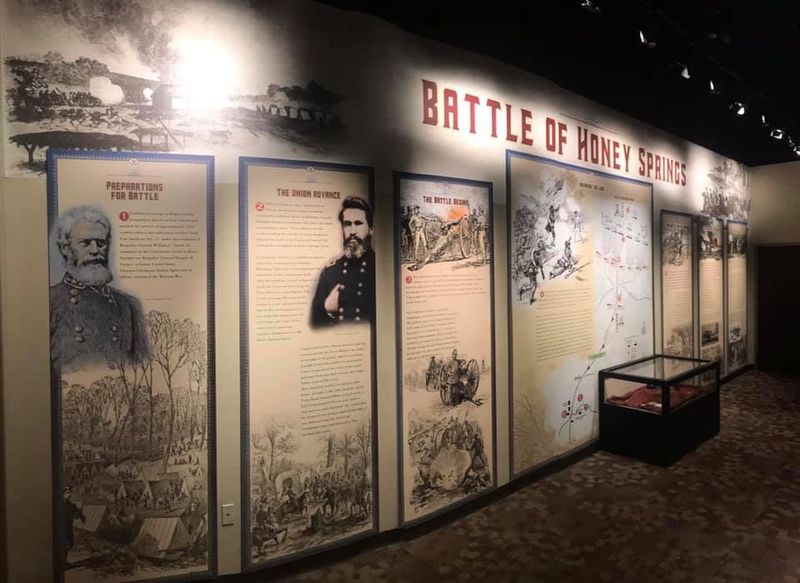
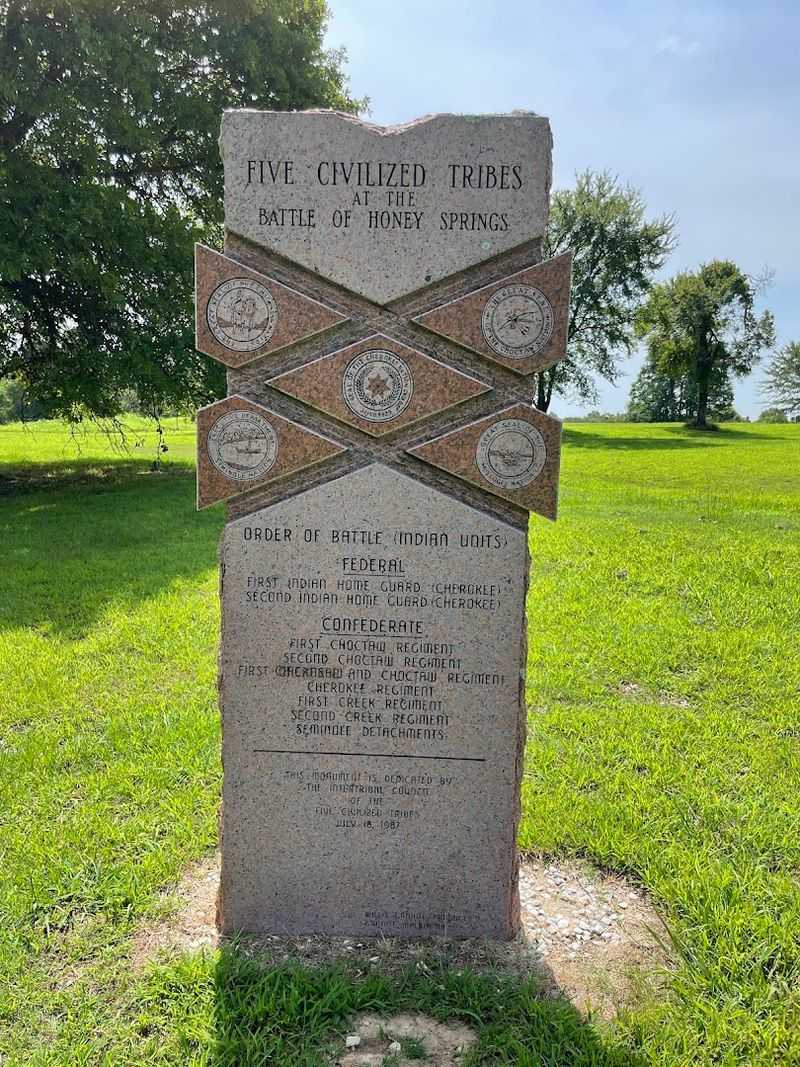
This part of the story matters a lot, and I really think it deserves your full attention while you are here, because Honey Springs was fought in Indian Territory and involved Native troops along with Union and Confederate forces. That alone makes the battlefield feel more layered than the simplified Civil War version many of us grew up hearing.
It changes the whole conversation around this place entirely too.
Standing in Oklahoma and reading that history on the ground where it happened gives the whole thing a different kind of gravity. You are not just looking at one side against another in a neat, familiar frame, because the realities of allegiance, community, and survival were far more tangled here than a quick summary can ever show.
You can feel that complexity more than you can summarize it.
I appreciated that the site opens the door to those harder, more complicated truths without turning them into a lecture. The landscape keeps you grounded while the interpretation reminds you that this battle belongs to several histories at once.
That stayed with me for the rest of the day. If you come ready to listen instead of rushing through, Honey Springs can expand the way you understand both Oklahoma and the war itself.
A Good Place To Slow Down
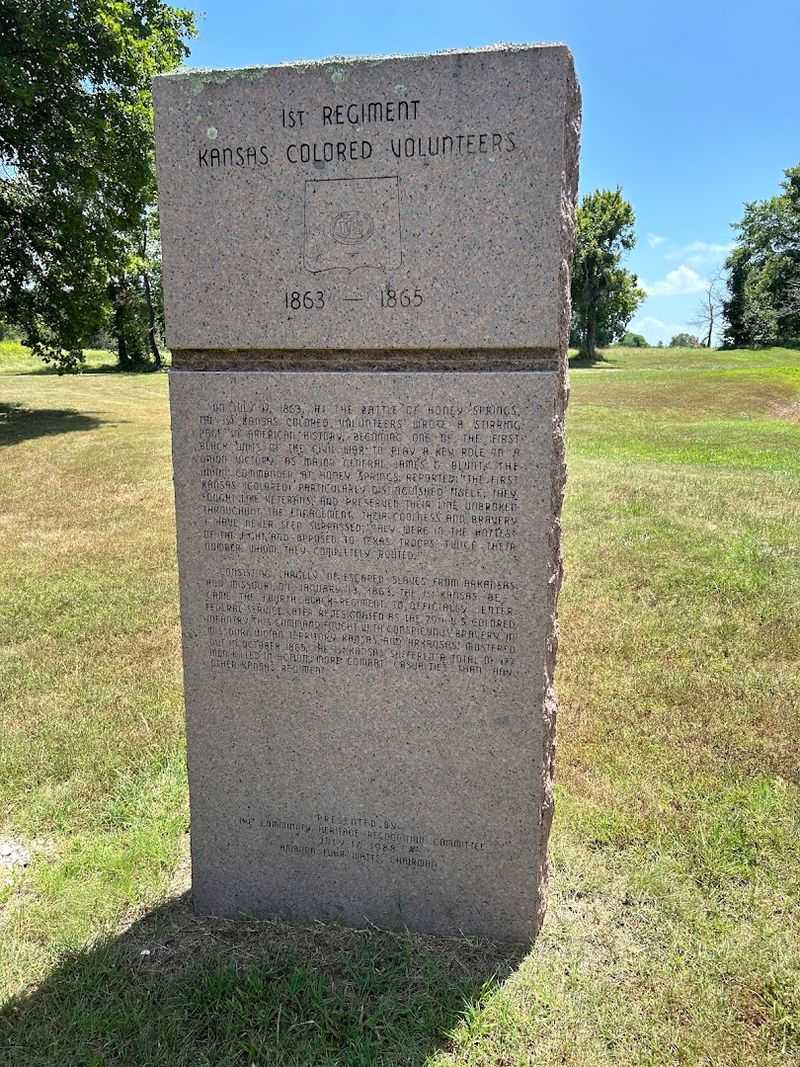
Some historic places make you feel like you should hurry, absorb everything, and move on, but Honey Springs has the opposite effect. Almost without noticing it, you start walking more slowly, reading a little more carefully, and giving yourself time to sit with what the site is asking you to consider.
I liked that more than I expected. It feels natural, not performed at all here.
I think that slower pace matters because this is not a story that benefits from being skimmed. The battlefield is large enough, quiet enough, and open enough that you can step away from your usual travel brain for a while and let the place do its work without forcing a reaction.
There is room for your thoughts to catch up with your eyes. Not every stop gives you that.
If you have been craving somewhere that feels thoughtful without feeling stiff, this is where the site really shines. You can wander, pause, circle back, and notice things differently the second time around, which is honestly how meaningful places tend to work anyway.
That is a rare feeling now. By the end, it feels less like you visited an attraction and more like you spent time somewhere that asked for your attention and earned it.
What Stays With You After
Long after you leave, what lingers is not one dramatic feature or one perfectly framed view, and I think that says a lot about the place. Honey Springs stays with you as a feeling first, built from quiet roads, open land, steady wind, and the strange weight that gathers when a peaceful landscape holds hard history.
That is harder to pull off than it sounds. Very few places do.
That stays with me personally these days.
That kind of memory sneaks up on you later, maybe when you are driving home or maybe when somebody asks how the site was and you realize a simple answer will not quite cover it. You end up talking about atmosphere, scale, and the way Oklahoma can make a story feel huge without making anything flashy.
It stays a little tangled, which feels right.
I love places that trust you enough to meet them halfway, and this battlefield really does that. It gives you the facts, the setting, and the room to think, then lets the experience settle naturally instead of trying to choreograph your emotions.
I appreciated that. For me, that made Honey Springs feel less like a checked box and more like a place I would genuinely want to return to and walk again.
