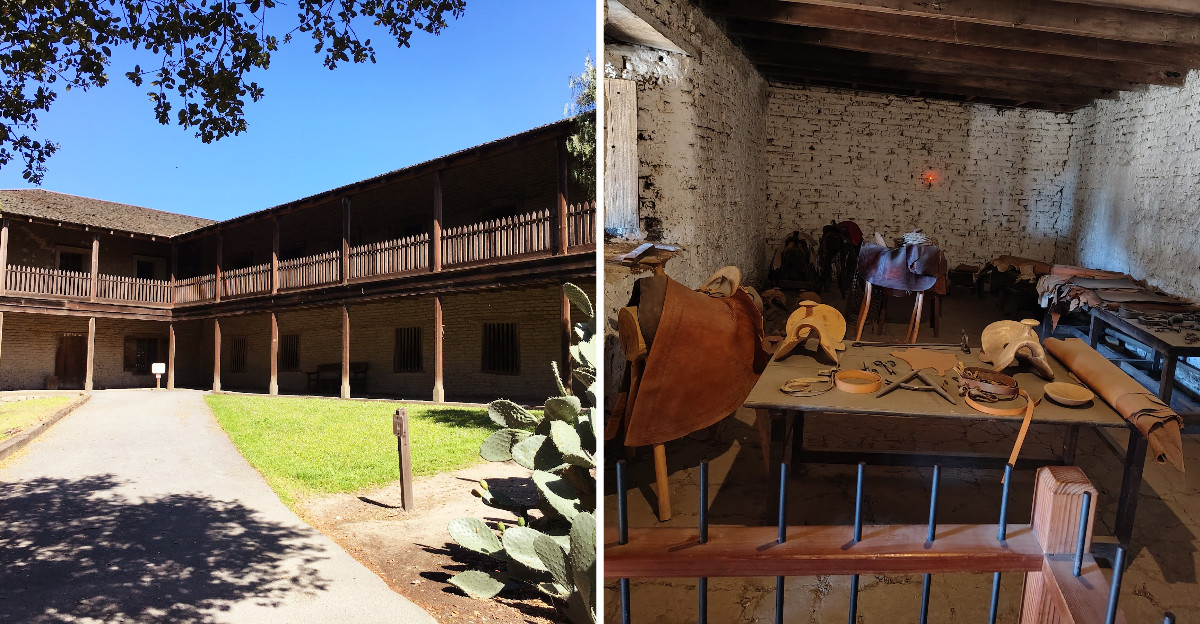
Two-story mud-brick giants sitting on grassy knolls in California do not usually appear where a small roadside marker is expected. Warm morning light, dry grass, and old redwood greet anyone who walks the grounds.
Land around this building once belonged to a working empire of roughly 66,000 acres granted to a Mexican military commander in the 1830s and 1840s, stretching across the valley and beyond. Footsteps echo under the wide wooden balcony.
Lizards dart across the walkway, prickly pear cactus lines the fence, and the valley rolls out below in long golden folds. Forty minutes were planned, but two hours disappeared while wandering, completely absorbed.
The adobe walls hold their shape after nearly two centuries, and the rooms still carry the quiet weight of the people who lived and worked here. California history often hides in plain sight, and this building proves it.
A Land Grant So Big It Needed Its Own Map
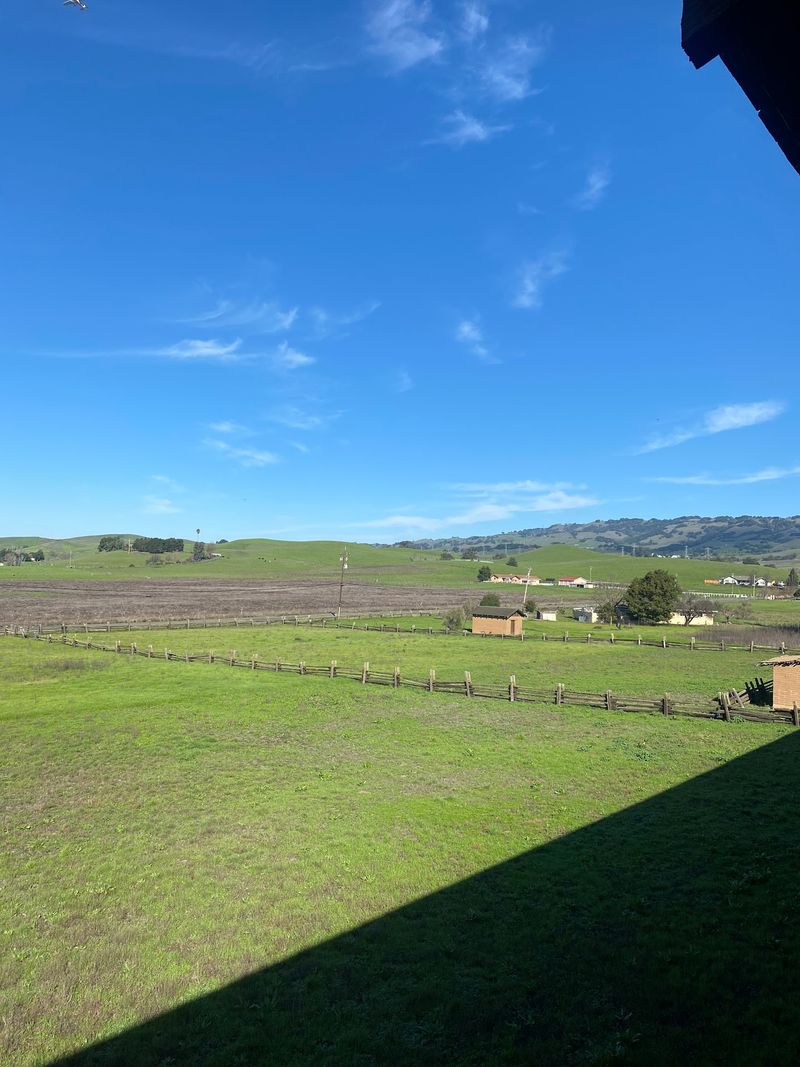
Sixty-six thousand acres is one of those numbers that slides right past you until you put it in context. That is roughly one hundred square miles, an area bigger than many modern cities.
Governor Jose Figueroa granted Vallejo about 44,000 acres in June 1834, then another 22,000 followed in 1843. The property ran from the Petaluma River across to Sonoma Creek, from the bay’s marshy edge north toward what we now call Glen Ellen.
Standing on the knoll outside the adobe, I tried to guess where the boundaries might have been and gave up almost immediately. Every ridge I could see was probably inside the line somewhere.
The grant was not simply a reward. Mexico wanted Vallejo to secularize Mission San Francisco Solano, bring settlers north, and keep a careful eye on the Russian outpost at Fort Ross.
Land was the currency of the moment, and a soldier with a rancho this size became a regional power almost overnight. Understanding that changes how the building reads.
It stops being a pretty old house and becomes the office, warehouse, and command post of a small frontier operation. I found myself looking at the valley differently on the drive home, imagining fence lines that no longer exist.
Mud, Straw, and Redwood aka How the Building Came Together
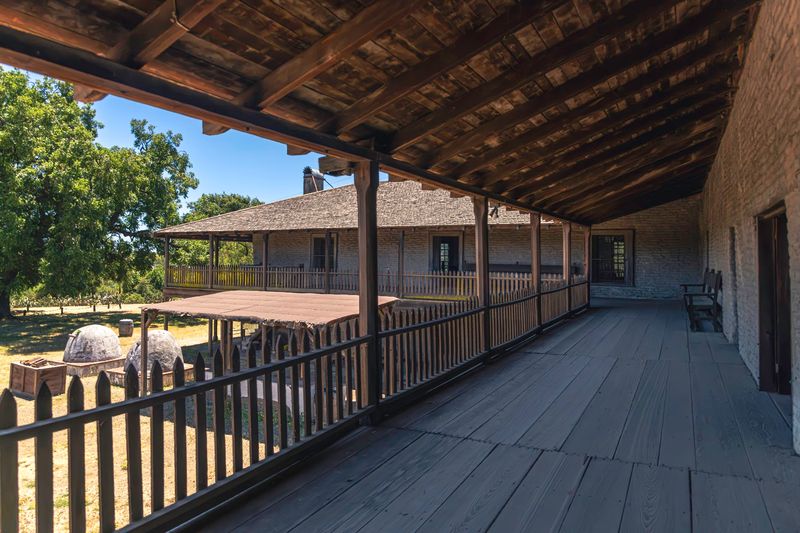
Touch the wall in one of the unplastered rooms and you feel exactly what it is: clay and straw, pressed into bricks and dried in the sun right here on the property. Nothing was shipped in a box.
Construction started in April 1836 and dragged on for years, overseen largely by Vallejo’s younger brother Salvador. Even by 1846, when California’s Mexican era ended, the building was not finished.
The plan called for a full two-story quadrangle wrapped around a central courtyard, with a covered balcony running around the upper floor. What survives is a portion of that ambition, and it is still enormous.
Hand-hewn redwood timbers came down from Mendocino County, hauled by oxen over terrain that had no real roads. That detail stuck with me longer than any statistic.
Those wide verandas were not decoration either. Adobe melts in heavy rain, so the overhanging roof acted as an umbrella for the walls beneath.
Some surfaces were plastered and whitewashed, which is why parts of the exterior glow softly in afternoon light while other sections show their earthen bones. Vallejo reportedly poured around eighty thousand dollars of the era’s money into the project.
It remains the largest privately built adobe in California and the biggest Monterey Colonial structure in the country.
Hides, Tallow, and Herds That Reached 60,000 Head
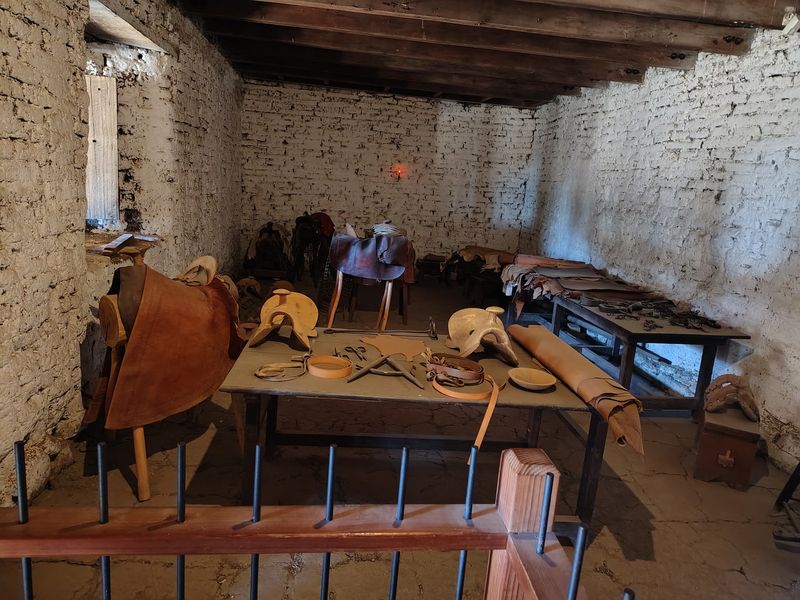
Cattle were the engine here, and not in a romantic postcard way. At its peak the rancho ran as many as 60,000 head, plus roughly 24,000 sheep and a serious number of horses.
Hides and tallow were the products that mattered. Hides became leather for shoes and belts far away, while tallow was rendered into candles and soap, and both traveled out by ship.
Walking through the leather room, I could still catch a faint dusty, animal smell in the timber. The displays of stacked hides make the scale of it suddenly obvious.
Crops filled out the rest of the operation. Wheat, barley, corn, beans, peas, and lentils grew across the valley floor, some for the people living here and some for trade.
A grist mill powered by Adobe Creek ground grain, while a tannery and a smithy handled leather and iron on site. Self-sufficiency was not a lifestyle choice, it was the only option.
What I appreciated most was how the exhibits connect these pieces into one working system rather than scattered antiques. You start to see the building as a factory floor with a balcony.
Seasonal matanzas, the large cattle slaughters, set the rhythm of the year, and everything else revolved around them.
The Workers Who Actually Ran the Place
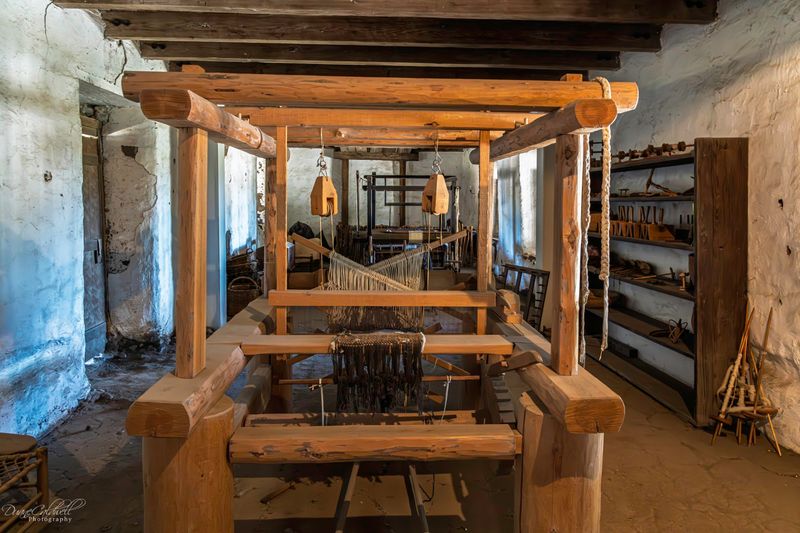
Here is the part that deserves the most attention, and to the park’s credit, it does not get glossed over. Somewhere between 600 and 2,000 indigenous people worked at Rancho Petaluma, including Coast Miwok, Pomo, and Wappo individuals.
Many had been trained at the missions and brought real skill with them. They worked as vaqueros, carpenters, blacksmiths, weavers, and farmers, and they were compensated with food, clothing, and goods rather than wages.
The weaving room stopped me for a while. Wool dyeing, spinning, and cloth production happened in these rooms, alongside candle making, saddle making, and grain grinding.
Interpretive panels explain labor practices honestly, including the married servants’ quarters and the daily routines that filled the ground floor. It is a more complete picture than I expected from a small state park.
Daily management fell to a mayordomo named Miguel Alvarado, who kept the whole operation moving while Vallejo was elsewhere. There is a room dedicated to that role.
Reading through the displays, the adobe stopped feeling like one man’s monument. It became a place where hundreds of people cooked, sweated, and built a working community.
If you visit with kids, these rooms tend to hold their attention better than any grand furniture.
Upstairs Rooms, Fandangos, and a Family Who Lived Elsewhere
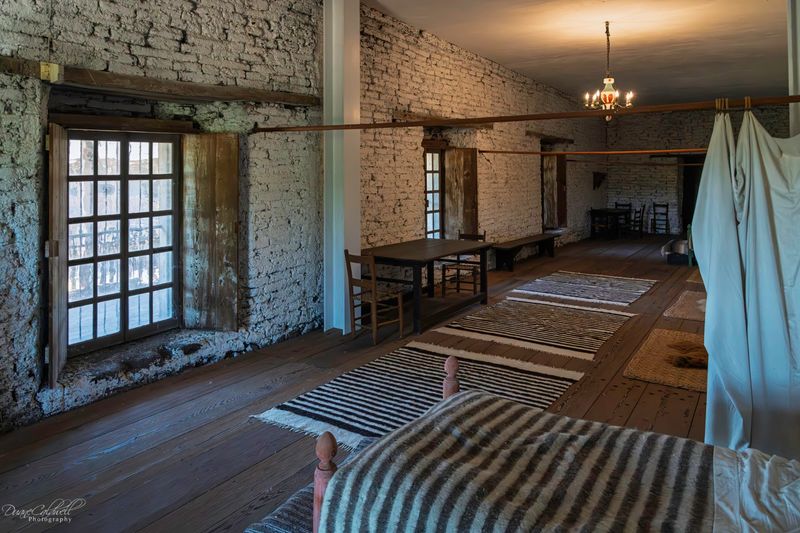
Funny thing about this grand headquarters: the Vallejo family did not really live in it. Their main home was over in Sonoma, and the adobe served for visits, business, and entertaining.
The upper floor still holds their dining room and bedroom, furnished with period pieces that make the space feel paused rather than empty. Guest rooms and quarters for supervisory staff filled out the rest.
My favorite stop was the fandango room. Harvests were celebrated with Californio-style dances, and imagining music bouncing off thick clay walls made the whole floor feel warmer.
The balcony wrapping the second story is worth lingering on. From up there the valley opens wide, and the breeze moves through the wooden posts in a way that photographs never quite capture.
One practical heads up: bats roost in parts of the upper structure, so the walkways sometimes need cleaning. It is a working historic building, not a sealed museum case, and that is part of its charm.
Ground floor rooms below include kitchens, storerooms, and the granary, which creates a nice contrast between labor and leisure. Climbing between the two levels is the fastest way to understand the social order of the rancho.
From Bear Flag Revolt to Slow Ruin, Then Rescue
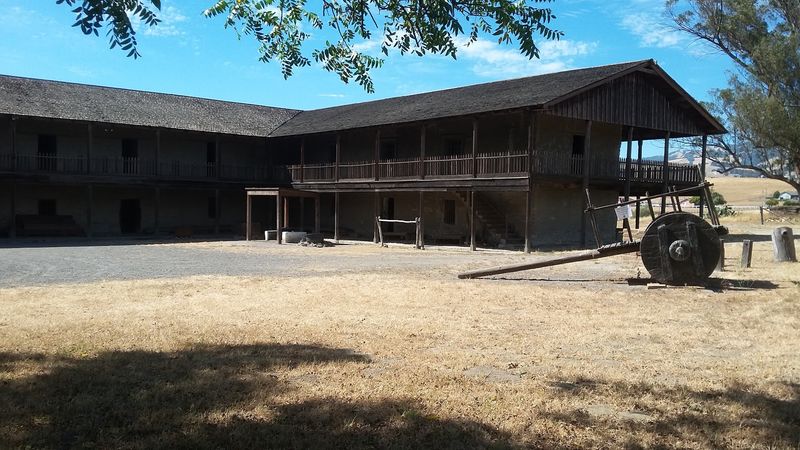
Everything changed in 1846. The Bear Flag Revolt and the Mexican-American War hit the rancho hard, Vallejo was imprisoned, and the property was stripped of livestock and supplies.
Workers scattered. Without them, an operation built on hundreds of hands simply could not keep running.
Squatters moved onto the land and legal battles drained whatever was left. In 1857 Vallejo sold the adobe along with 1,600 acres, and by the 1880s the building was sagging badly.
I find that stretch of the story oddly moving. A structure that took a decade to build nearly dissolved back into the hillside within a generation.
The turnaround came in 1910, when the Native Sons of the Golden West bought the surviving portion and kept it from collapsing entirely. That purchase saved what you walk through today.
California recognized it as State Historical Landmark number 18 in 1932, and the state acquired the property in 1951, with restoration beginning the following year. National Historic Landmark status arrived in 1970.
Knowing all that, the creaky floorboards and patched walls feel less like flaws and more like evidence. Preservation here has been a long relay race, and the building is still in the middle of it.
Planning Your Own Visit to the Knoll
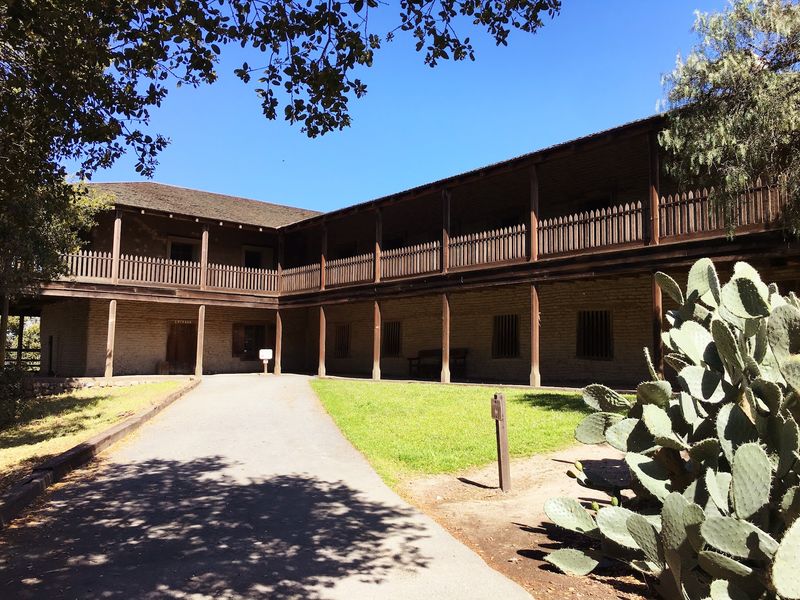
Forty-one acres surround the building now, which is a sliver of the original rancho but plenty for a relaxed morning. A prickly pear cactus hedge still functions as a living fence along one edge.
The park opens daily from 10 am to 4:30 pm, and most visitors find one to two hours is about right. Self-guided touring with history panels works well, though a docent-led walk adds layers you would never get from reading alone.
Docents here have a reputation for patience and genuine enthusiasm, and mine happily answered questions long past where I expected the tour to end.
Bring a hat. The knoll sits exposed, lizards love the sunny walls, and shade is mostly limited to the verandas and the grove near the entrance.
Picnic tables sit close to the parking area, which makes a nice finish after wandering the rooms. Dogs are not permitted inside the historic grounds, so plan accordingly.
Check the events calendar before you go. Living history days, sheep shearing demonstrations, and fandangos turn the quiet courtyard into something genuinely lively, usually with volunteers in period clothing.
Address: 3325 Adobe Road, Petaluma, California
