That big boomerang sign rose out of the California desert flatness like something the heat had dreamed up, and I spotted it miles off, floating above the shimmer long before I reached the buildings.
I had been driving with the windows down and nothing but creosote bushes and telephone poles for company, so seeing that shape genuinely made me sit up straighter.
The place is tiny, quiet, and gloriously stuck somewhere around the early 1960s, and it is the reason people keep pulling off the highway to look.
The sign went dark for decades before it was relit not long ago, which somehow makes it feel even more precious now, a beacon in a stretch of road that most people treat as a line on a map rather than a destination.
I stayed longer than I planned, walking the gravel, peering into the old lobby windows, and chatting with the person behind the counter about the road ahead. The buildings are faded and sun-bleached, and the whole scene feels like a movie set that never got struck.
This is the stop that sticks with you, the one you keep thinking about long after the highway has carried you on.
The 50-Foot Sign That Doubles as a Desert Lighthouse
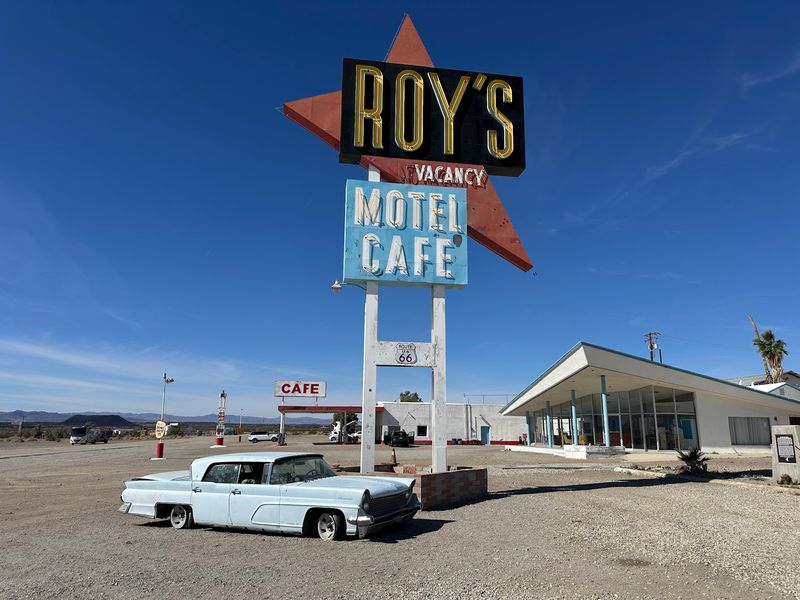
Nothing else on this stretch of highway comes close to it. Erected in 1959, the sign at Roy’s stands about fifty feet tall, shaped like a giant boomerang, and painted in that cheerful mid-century palette that instantly says road trip.
Googie is the architectural style, all sharp angles and space-age optimism, and out here in the flat Mojave it reads like a signal flare.
I could see it long before I could see the buildings, which I think was exactly the point back when drivers needed a reason to slow down.
The neon stayed dark for over three decades before being restored and relit in 2019, and locals still talk about that night with real affection. If you time your visit for dusk, you get the best of both worlds: warm light on the desert floor, then that glow flickering to life above you.
Photographers, bring a wide lens and plan for golden hour. The sign is accessible from the outside at any hour, so even if the shop is closed, you can still stand beneath it and take your picture.
Honestly, it photographs better in person than any postcard suggests.
How a Gas Pump in 1938 Turned Into a Full Desert Oasis
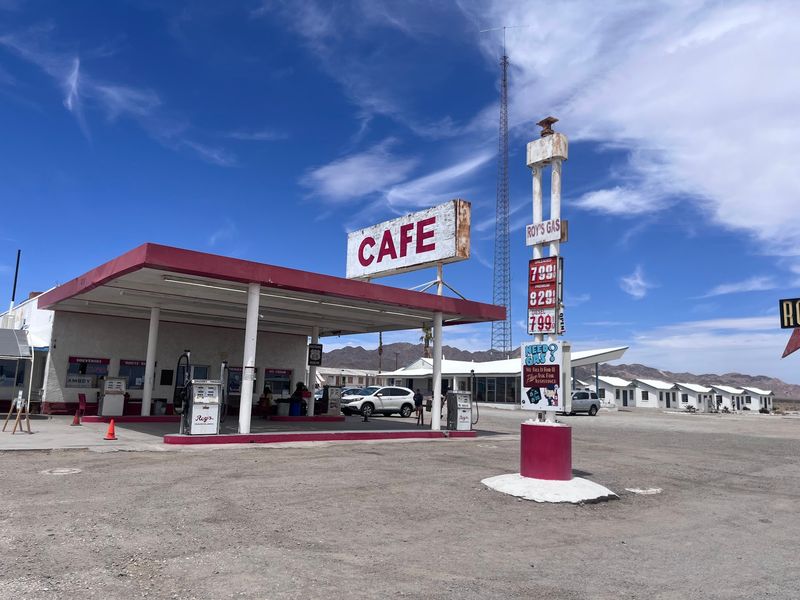
Roy Crowl opened the place in 1938, and back then it was simply gas and service, the kind of stop that kept engines alive across a brutal stretch of nowhere.
Things grew from there. In the 1940s, Crowl and his son-in-law Herman Burris, known to everyone as Buster, added a cafe, an auto repair garage, and small cabins where tired drivers could sleep.
By the 1950s, the operation had swelled to employ as many as seventy people, which sounds almost unbelievable when you stand in Amboy today and count the buildings on one hand.
I find that detail sticks with me more than anything else. A town this small once hummed with cooks, mechanics, and housekeepers, all because the Mother Road funneled traffic straight past the door.
Reading the history before you visit makes the walk around the property far richer, because you start noticing what each structure was for. That low building with the wide glass front was the cafe.
Those little cottages lined up behind it held travelers who had crossed the desert on tires that were nowhere near as reliable as ours.
When Interstate 40 Opened and the Traffic Simply Vanished
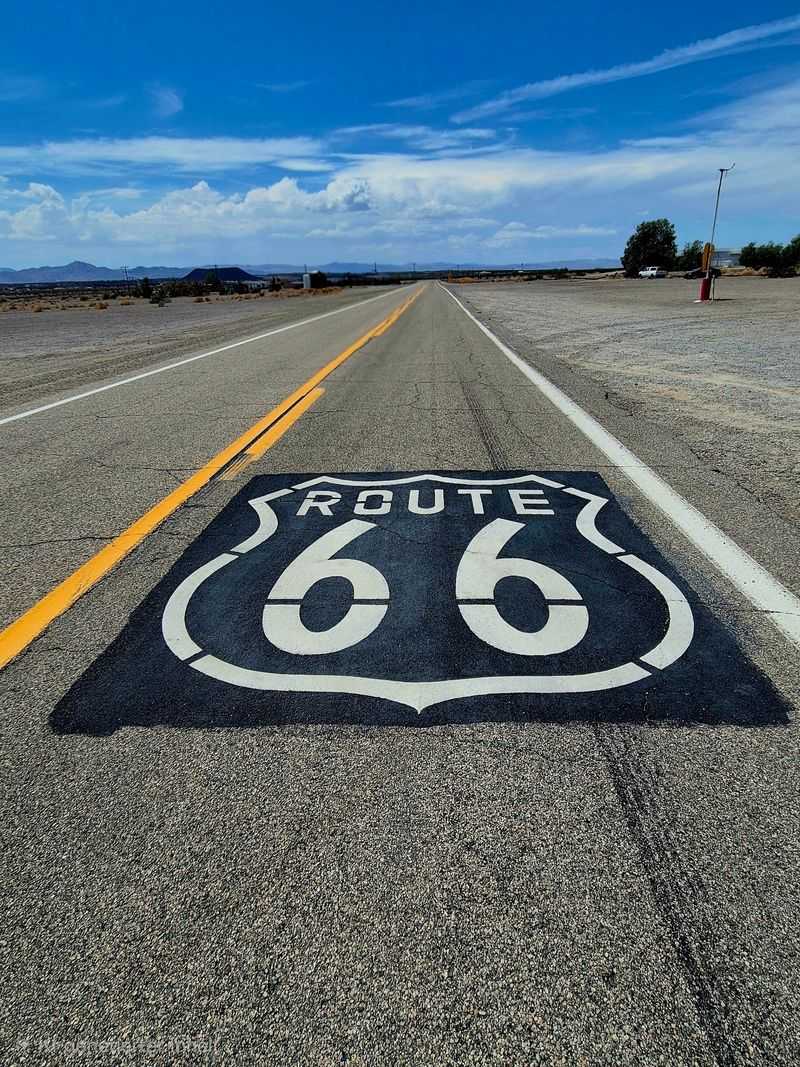
Few places show the cost of a new highway as plainly as Amboy does. Interstate 40 opened in 1972, pulling traffic north and leaving Route 66 with a fraction of what it once carried.
Buster Burris described the drop in blunt terms, saying business went down to zero the day the interstate opened.
Whole towns along the Mother Road faded that way, and Amboy became one of the quietest examples in California.
Walking the property, you can still feel that pause in time. Paint has weathered, glass has cracked, and the desert has done what deserts do to anything left alone for long.
Rather than making the place sad, I think it gives Roy’s its weight. You are not looking at a theme park version of the past, you are looking at the actual thing, still standing because people decided it mattered.
The site changed hands and sat dormant for stretches before preservation efforts took hold. Knowing that backstory changed how I looked at every peeling surface, and I would recommend reading a little before you go.
It turns a photo stop into something closer to a history lesson.
The Gift Shop, the Cold Drinks, and the Friendliest Counter in the Mojave
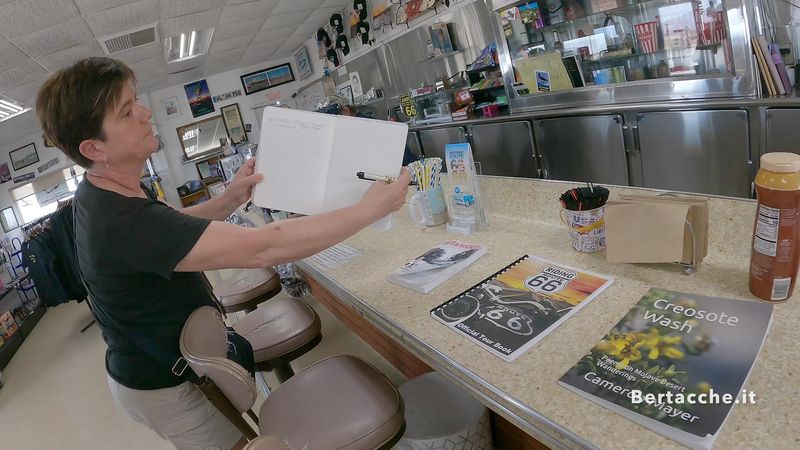
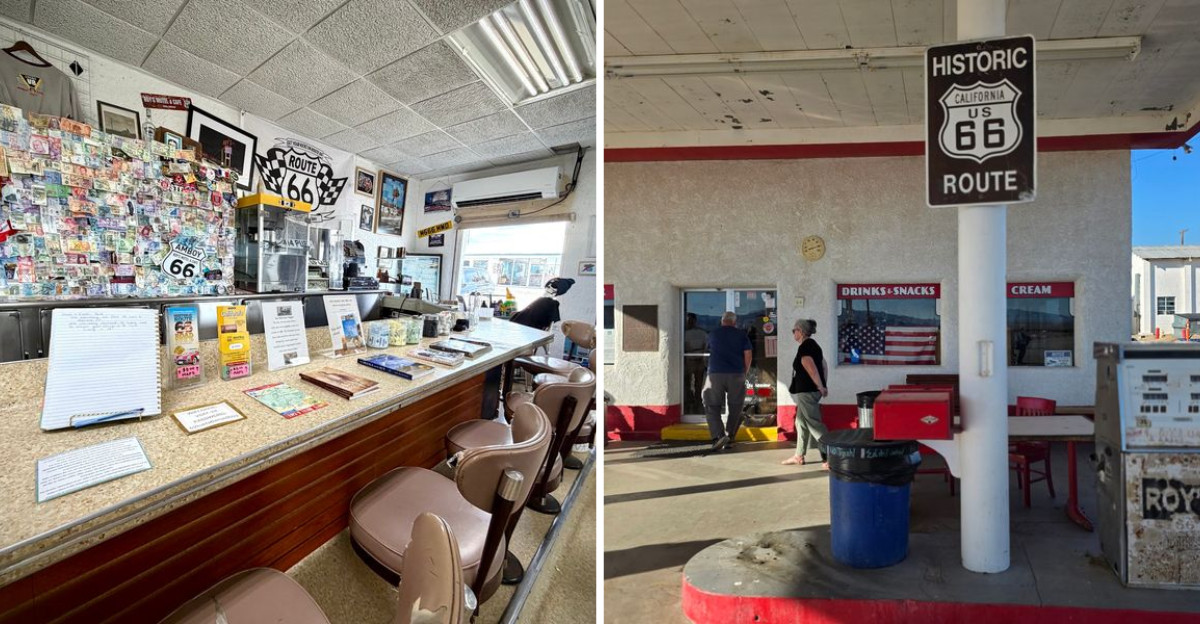
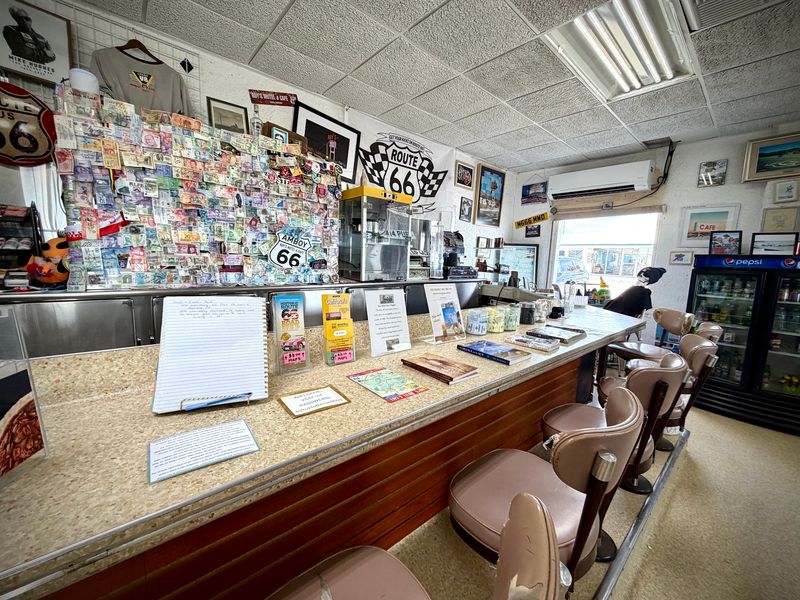
My favorite surprise at Roy’s was how welcoming the inside feels. What used to be the cafe now works as a gift shop and small store, with a cooler full of cold drinks, packaged snacks, candy, and shelves of Route 66 souvenirs.
Shirts, patches, magnets, stickers, the usual road trip haul, plus Route 66 passport stamps for travelers collecting them.
Staff here get mentioned constantly in reviews, and after my visit I understand why. They answer questions about road conditions, point people toward nearby sights, and generally treat strangers like guests rather than transactions.
Fuel is available too, though it is worth remembering how remote this is. Gas out here costs more than it would in town, and an attendant handles the pump for you rather than a card reader doing the work.
The full restaurant has not returned yet, since a reliable drinking water supply is the sticking point, but ownership has been working on septic systems and utilities toward that goal.
Grab a drink, browse a bit, and buy something small. Supporting the shop is what keeps the lights on here.
A Movie Set Hiding in Plain Sight
Directors figured out this location long before Instagram did. The combination of empty horizon, retro geometry, and that unmistakable sign has drawn film crews here for decades.
Scenes from The Hitcher in 1986, Kalifornia in 1993, and Southbound in 2015 all used the area, and the Enrique Iglesias video for Hero was shot here as well.
Commercials and photo shoots roll through regularly too, which is why the place can feel oddly familiar even on a first visit.
Standing in the parking area, it clicked for me why filmmakers keep coming back. There is nothing modern in the frame to break the spell, no chain signage, no traffic noise, just sky and asphalt and mid-century lines.
Car enthusiasts have adopted it as well, and Roy’s has hosted car shows that fill the lot with chrome and paint jobs worth staring at.
If you enjoy spotting locations from screen to real life, bring up a few stills on your phone before you arrive. Lining up the same angles is genuinely fun.
Just be patient, because other visitors will be doing exactly the same thing.
The Art of Standing Still in a Town That Time Passed By
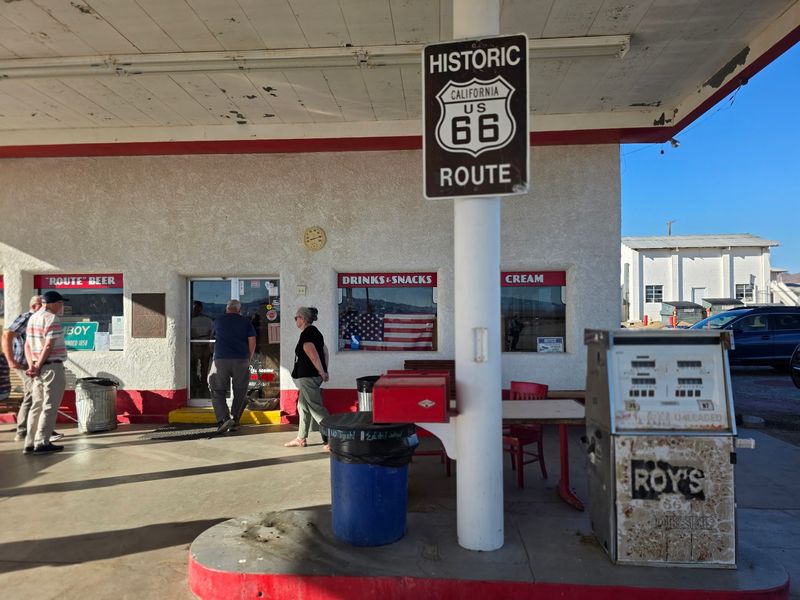
There is something about standing in a place that once hummed with seventy workers and now holds a handful of visitors that makes you slow down without meaning to. The quiet in Amboy is not empty.
It is filled with the weight of all those years, the conversations that once echoed in the cafe, the engines that pulled up for gas, the families that stretched their legs before crossing the rest of the desert.
I found myself walking the gravel slowly, peering into windows that had not been washed in decades, and trying to imagine the noise that used to fill this space.
The gift shop feels like a lifeline thrown to the present, and the staff behind the counter keep the spirit of the place alive with their warmth and knowledge. But the real experience is outside, standing beneath that fifty-foot sign and watching the light change across the desert floor.
It is easy to rush through a place like this, to snap a photo and move on. I would suggest the opposite.
Give yourself time to sit on the steps, watch the shadows lengthen, and let the silence settle around you. Roy’s is not just a stop.
It is a reminder that some places are worth preserving simply because they refuse to disappear. And in a world that moves too fast, that quiet refusal feels like a small act of resistance.
Desert Smarts, What to Pack, When to Go, and What Waits Nearby
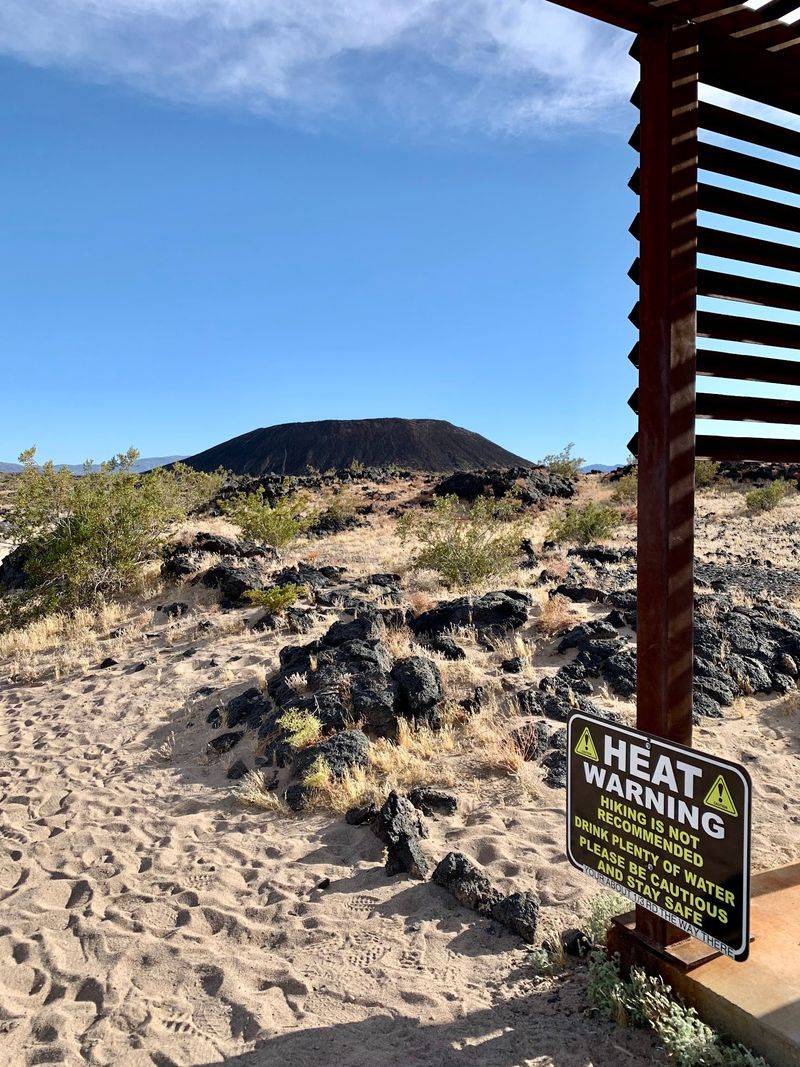
Preparation matters more here than at almost any other Route 66 stop in California. Cell service in Amboy is spotty at best and often nonexistent, so download your maps before you leave pavement with signal.
Summer temperatures climb ferociously, with triple digits being routine, and shade is in short supply.
Carry far more water than you think you need, keep a hat and sunscreen within reach, and start your engine check before you commit to the drive.
Timing helps enormously. Early morning and late afternoon bring softer light and gentler heat, and cooler months make wandering the grounds far more comfortable.
The store keeps daily hours from 8 in the morning until 8:30 in the evening, though the sign and exterior can be photographed anytime.
Outdoor restrooms are available, which counts as a real luxury this far out. Amboy Crater sits just down the road, a volcanic cinder cone with a trail worth exploring if you have time and water to spare.
Check road closures ahead of your trip, since sections east of town have been shut in the past.
Address: 87520 National Trails Highway, Amboy, California
