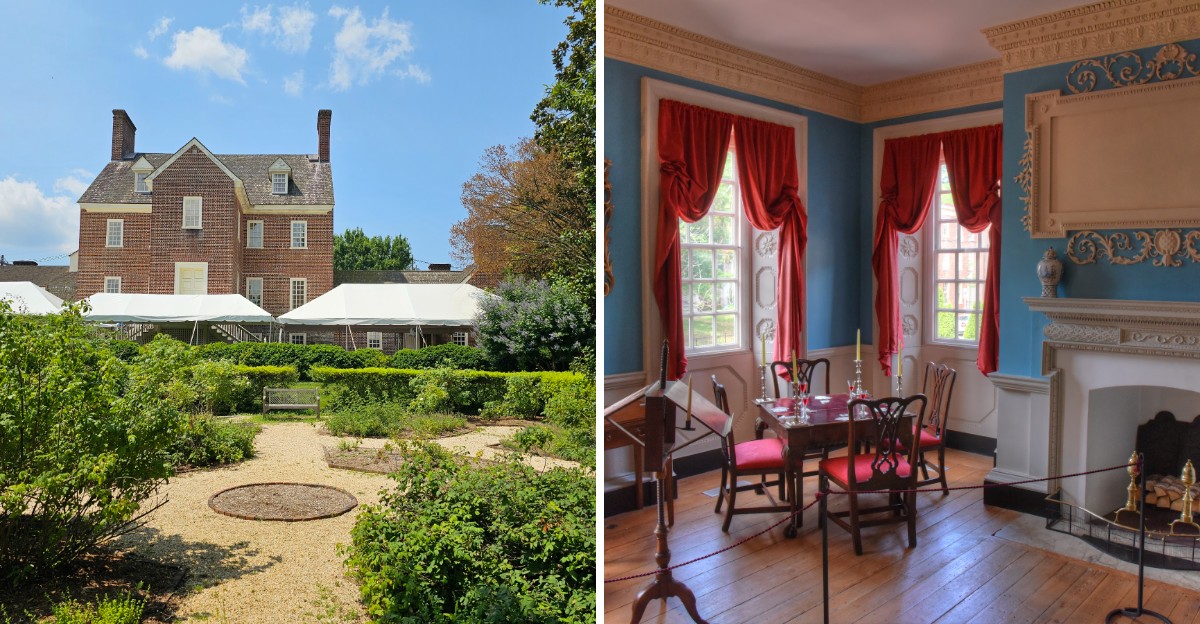
A narrow white bridge leads to a domed summerhouse in the restored garden behind this colonial mansion. It’s an unexpectedly delicate detail for a property whose brick walls have survived since the 1760s.
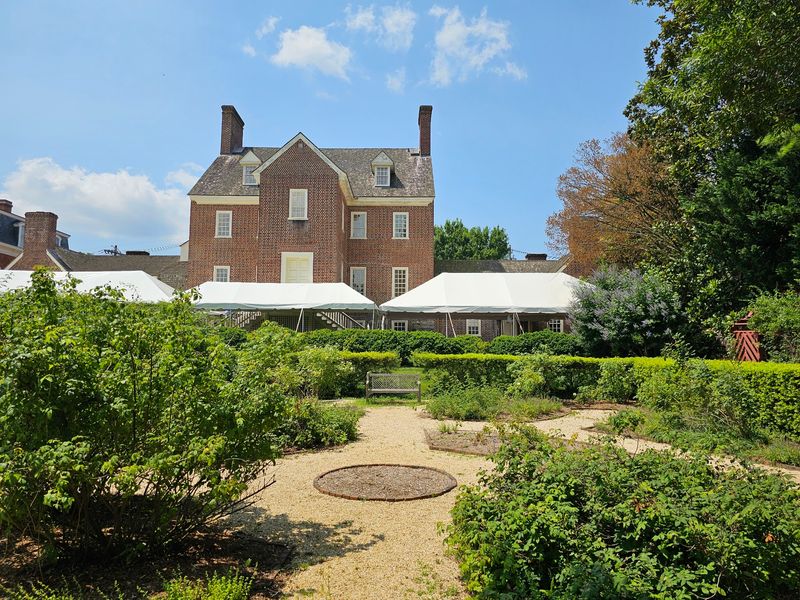
The house was built for a signer of the Declaration of Independence and follows a five-part Georgian design. Outside, the formal garden features terraces, planted beds, and carefully arranged paths.
Together, these spaces reveal how wealthy households once displayed status and how much work went into maintaining that lifestyle.
What interests me most is how the grounds give you more to consider than architecture alone. The home’s interpretation also addresses the enslaved people whose labor supported the household.
Visiting this Maryland landmark means encountering a beautiful setting and a complicated history, both of which deserve your attention.
A Founding Father Drew Up These Plans Himself
Lawyers don’t usually moonlight as architects. William Paca did, and the results still stand proudly in downtown Annapolis.
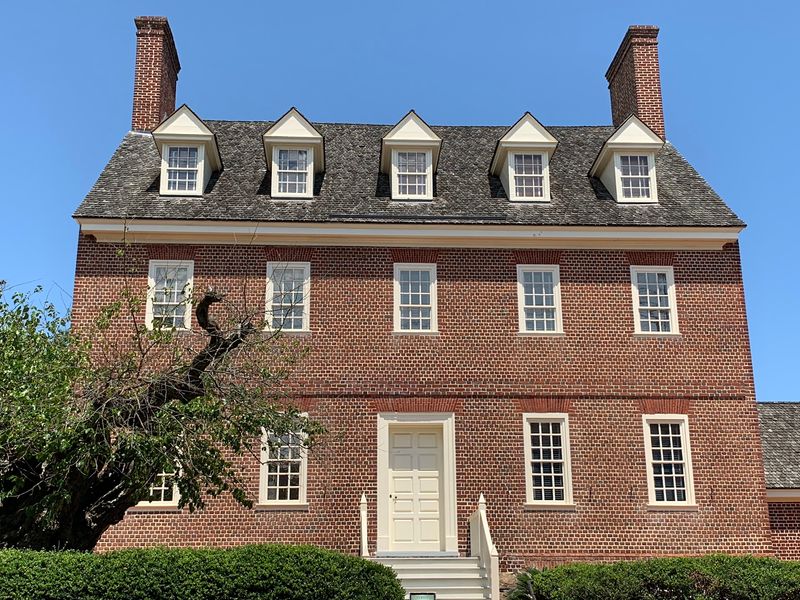
The William Paca House and Garden began as his personal project between 1763 and 1765. Paca was a gentleman architect who borrowed ideas from popular English design books of that era.
He wasn’t just any homeowner, either. Paca signed the Declaration of Independence and later served as Maryland’s third governor, from 1783 to 1784.
The house was his main home from its construction until he sold it in 1780. That’s roughly fifteen years of a future governor walking these floors.
The design was meant to show off his wealth and status. In colonial times, a grand house worked a bit like a fancy resume you could live inside.
Today, the mansion is considered one of the finest 18th-century homes in the United States. It’s also a National Historic Landmark, a title it earned in 1971.
I like knowing the building reflects one person’s taste and ambition. Every wall feels like a choice he made on purpose.
So when you look at it, you’re really seeing Paca’s big idea. And honestly, it still looks pretty great.
Five Parts, One Very Confident Mansion
Count the pieces and you’ll land on five. The mansion follows a five-part Palladian form, a layout that screamed sophistication in the 1700s.
Picture a central main block with connecting sections and wings stretching out on each side. The balance is the whole point, and it’s very Georgian.
Now look closer at the brick. The street side uses header bond, where the short ends of bricks face out.
The side walls switch to Flemish bond, which mixes long and short brick faces. It’s a small detail, but brick nerds will absolutely notice.
Then there’s the foundation. The fieldstone base features galleting, with small colored stones tucked right into the mortar.
Out front, a one-story wooden porch adds a classic touch. It has a pediment in a modified Roman Doric style, framing the entrance nicely.
My tip is simple. Spend a few minutes outside before your tour starts.
Walk slowly along the front and sides. Once you know what to look for, the craftsmanship really jumps out at you.
It turns a quick photo stop into a mini lesson in colonial building. Not bad for a little sidewalk time.
The Staircase Inside Deserves Its Own Fan Club
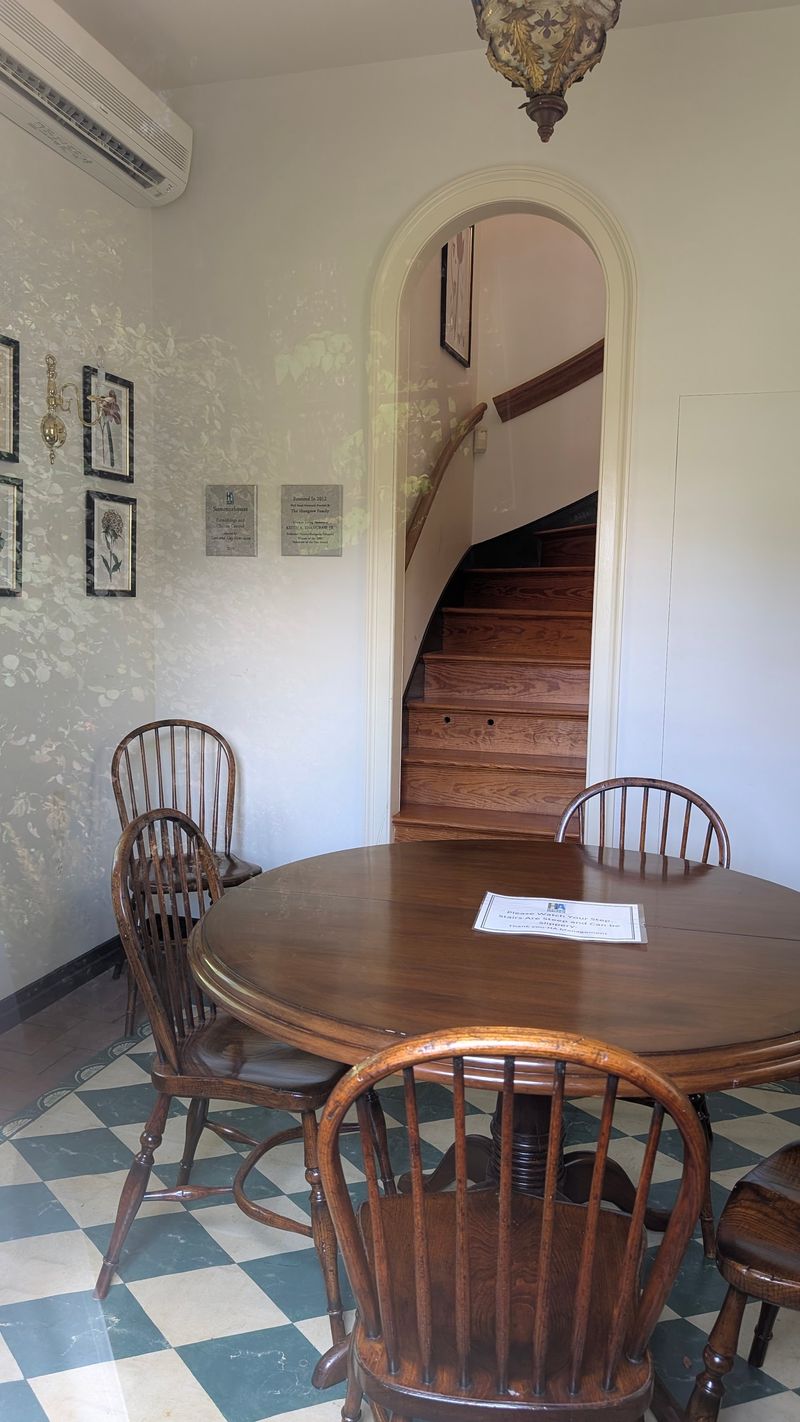
Original woodwork from the 1760s still survives in parts of the house. The star is a Chinese Chippendale balustrade along the main stair.
That style uses geometric lattice patterns that look almost like delicate puzzle work. It was fashionable among wealthy colonists who wanted their homes to feel worldly.
You’ll also find original woodwork in the central hall, stair hall, and west parlor. The house is built around a central passage, a common Georgian layout.
Guided tours cover two floors and run about 40 to 45 minutes. They’re offered hourly on the half-hour, so timing your visit is easy.
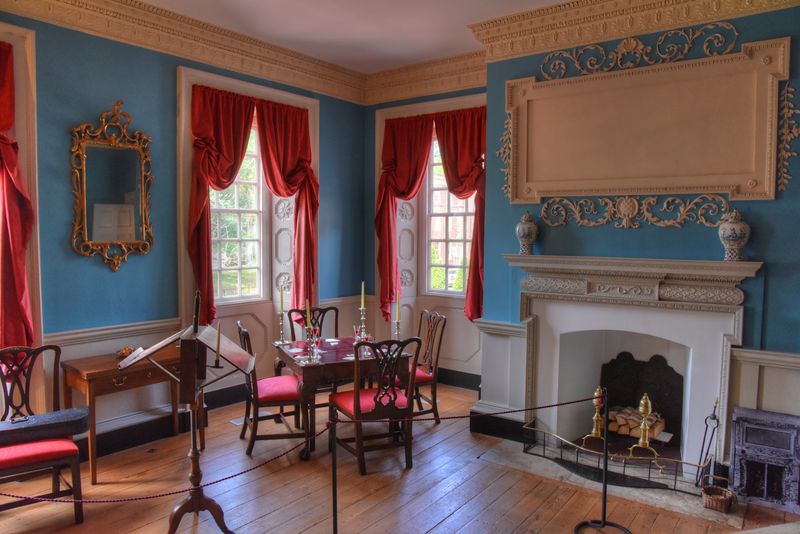
Rooms are filled with period furnishings and paintings. Together, they show how a powerful family arranged daily life in Revolutionary-era Annapolis.
Keep in mind that the rooms were restored to their 18th-century look. Not every object belonged to Paca himself, but the setting tells his era’s story clearly.
Here’s a little advice. Look up, look down, and look at the edges of doorways.
Old woodwork hides in those spots. Once you start noticing it, you might become the person on the tour asking about molding.
The Tour Tells the Whole Household Story
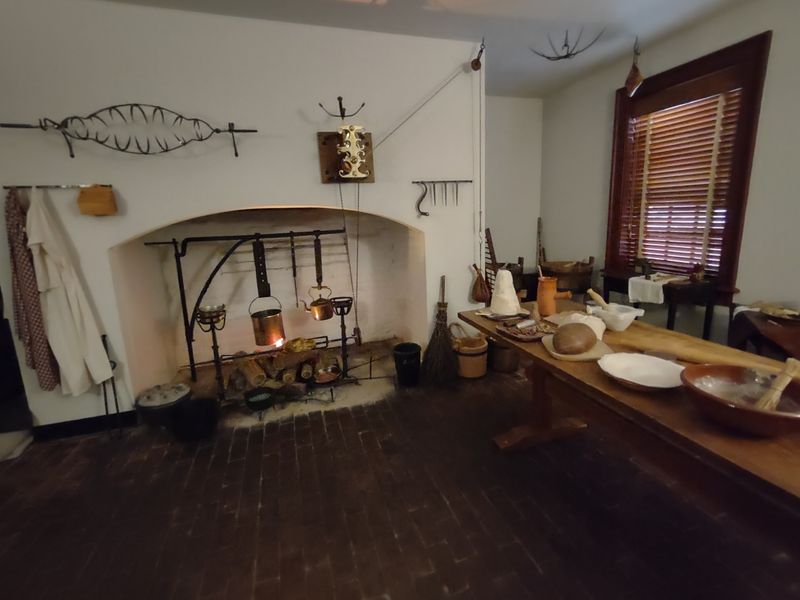
Fancy rooms are only half the picture. The tours here explore the daily lives of both the Paca family and the enslaved people who worked in the household.
That second part matters a lot. Grand colonial homes like this one depended heavily on enslaved labor to run each day.
Guides connect those stories to life in Annapolis during the Revolutionary period. You get a fuller view of who lived here and how the household actually functioned.
I believe that honesty makes the visit stronger. A mansion feels more real when you understand everyone inside it.
The tour is set up for thoughtful learners rather than hands-on play. Older kids and adults who enjoy history conversations will likely get the most from it.
Bring questions with you. Ask about how rooms were used, who cooked, or how the family entertained guests.
Those details help the past stop feeling like a textbook. Suddenly, the parlor becomes a place where real people talked, worked, and made decisions.
It’s the kind of tour that keeps you thinking on the walk home. And that’s a good thing.
Maryland’s Declaration Signers Get Their Own Spotlight
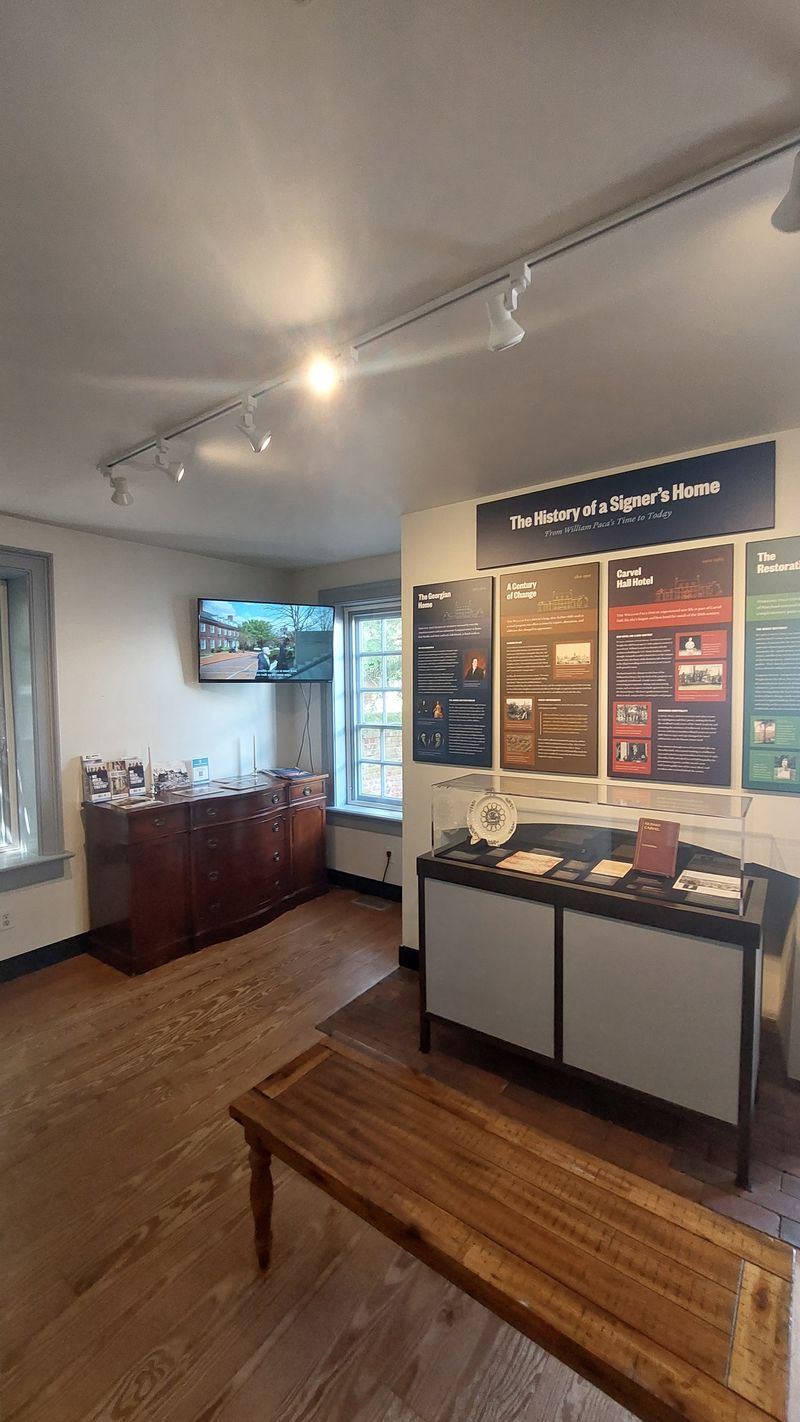
Four Marylanders signed the Declaration of Independence. Annapolis is the only city in the nation where the surviving homes of all of a state’s signers can still be found.
That fact alone makes this a fun stop for history fans. The house builds on it with a permanent exhibition inside.
It’s called We Hold These Truths: Maryland’s Signers and the Declaration of Independence. The exhibit looks at the lives of the men from Maryland who put their names on that famous document.
Paca was one of them, of course. Seeing his story next to the others helps you understand the bigger moment they shared.
Here’s a fun idea for your day. Use the exhibit as a starting point for a self-made signers walk around town.
Since all of their surviving homes are in Annapolis, you can connect the dots on foot. It turns sightseeing into a bit of a treasure hunt.
Kids who like quests may especially enjoy this. Give them a list of names and let them lead the way.
Suddenly, the Declaration feels less like a dusty paper. It becomes a story with addresses.
From Hotel Parking Lot to Colonial Garden Again
In 1901, the property took a very different turn. It became part of the Carvel Hall Hotel.
The hotel covered the back garden with additions and parking lots. For decades, Paca’s beautiful landscape sat buried out of sight.
Then came 1964, when the property faced demolition for a new development. Things looked grim for the old house.
Historic Annapolis stepped in and partnered with the State of Maryland. Together, they purchased and saved the house and garden in 1965.
Restoration took about a decade of careful work. Crews removed tons of dirt and rubble and reopened a natural spring.
Archaeologists dug into the grounds to find clues about the original layout. Old artwork helped too, which I’ll explain in the next section.
I like how this story proves that lost things can sometimes be found. A parking lot is not usually where colonial history gets a second chance.
When you stroll the garden, remember what used to sit there. It makes every flower bed feel like a small victory.
And honestly, it beats circling for a parking space.
A 1772 Portrait Helped Rebuild the Backyard
Charles Willson Peale painted William Paca in 1772. Hidden in the background were clues that later helped restore the garden.
The portrait showed key landscape features, including garden architecture. Restorers paired those hints with archaeological digs to rebuild what had been lost.
Think of it as the world’s fanciest reference photo. Without it, the garden might look a lot less accurate today.
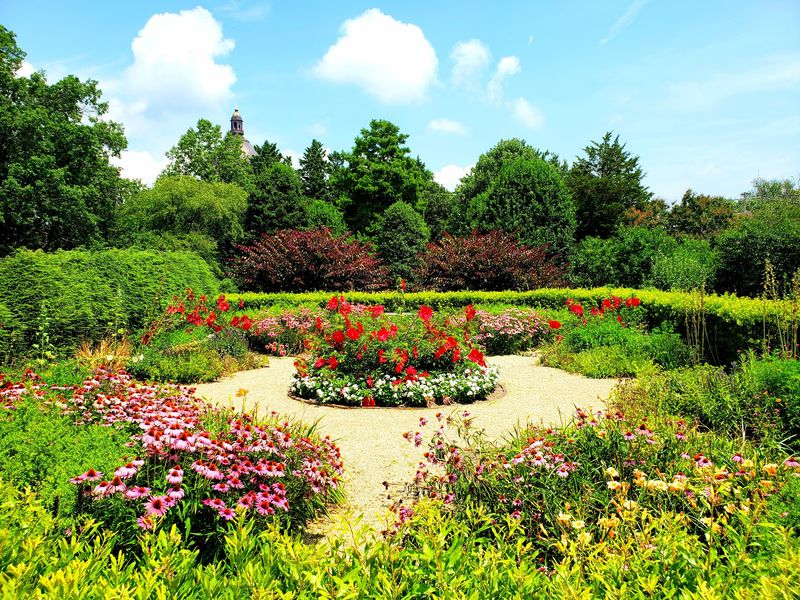
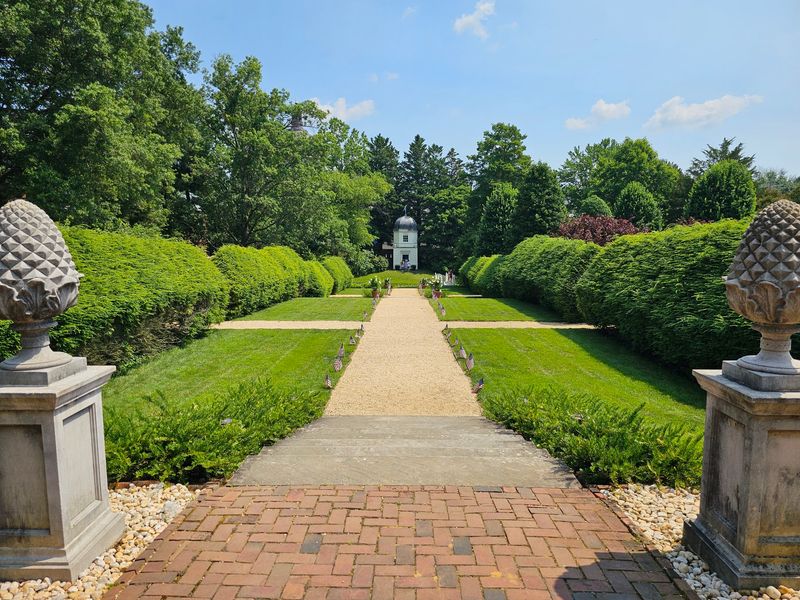
The result is a two-acre walled garden returned to its 18th-century style. It’s terraced, so the land steps down in levels as you explore.
Formal sections are called parterres. They include Rose, Flower, Boxwood, and Holly areas, each with its own neat layout.
Beyond those, a naturalistic wilderness area offers a looser, wilder feel. A practical kitchen garden shows the useful side of colonial growing.
Plants here are native and heirloom types that fit the colonial period. Fruit appears in parts of the garden too, which adds a fun surprise.
My advice is to compare the portrait online before you go. Spotting matching features in person feels like solving a 250-year-old riddle.
Cross the Lattice Bridge and Find the Summerhouse
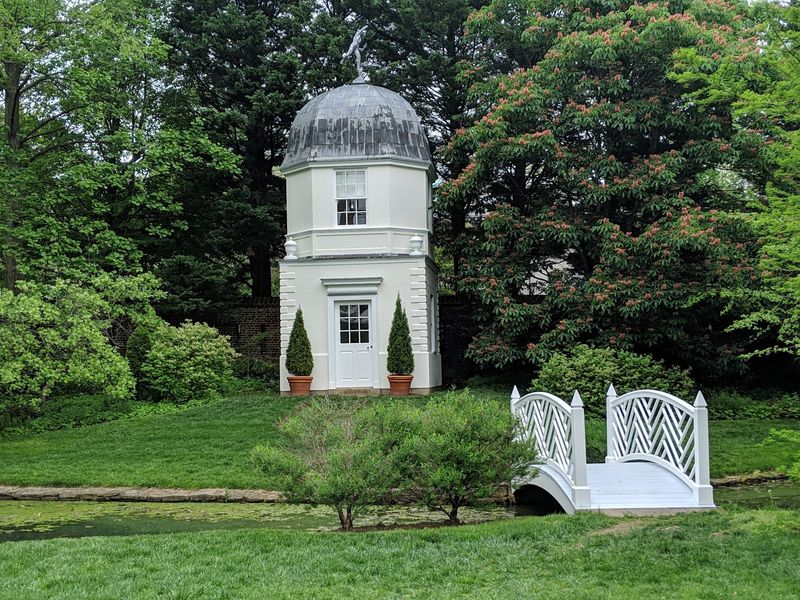
Down at the bottom of the garden, things get storybook pretty. A spring-fed pond sits waiting, crossed by a latticework bridge.
The bridge follows the Chinese Chippendale style. It echoes the stair balustrade inside the house, which is a clever design connection.
Follow it across and you reach the Summerhouse. It’s the garden’s focal point, and it’s easy to see why.
Remember that natural spring restorers reopened? It feeds this pond, bringing the whole scene back to life.
Photographers love this area for good reason. The site often hosts weddings, receptions, and special events, and this corner makes a lovely backdrop.
Look for the trained pear trees in the back section too. The garden staff has shared that they’re one of their favorite spots.
A quick timing tip helps here. Gardens change with the seasons, so blooms won’t always be at their peak.
Spring tends to be a great bet if flowers are your main goal. Even so, the bridge and Summerhouse look charming any time you visit.
Plan Your Visit Like a Savvy Colonial Guest
Finding it is the easy part. The William Paca House and Garden sits at 186 Prince George St, Annapolis, MD 21401, right in the historic downtown.
It’s part of the Colonial Annapolis Historic District. That means plenty of old streets and buildings surround you on the way.
You can choose how deep to go. Guided house tours cover the mansion, while the garden is open for self-guided wandering.
Hours change with the seasons and can shift for weather, group tours, or events. The house closes to tours in January, so plan around that.
Checking the schedule before you leave is smart. Weddings and private events sometimes affect access, especially on weekends.
A gift shop is on site too. It’s a handy place to grab a souvenir that isn’t a refrigerator magnet.
Comfortable shoes help, since the garden is terraced. You’ll be stepping between levels as you explore.
Pair your stop with a stroll through downtown Annapolis afterward. With so much history nearby, this Maryland landmark makes a perfect anchor for a full day of exploring.
