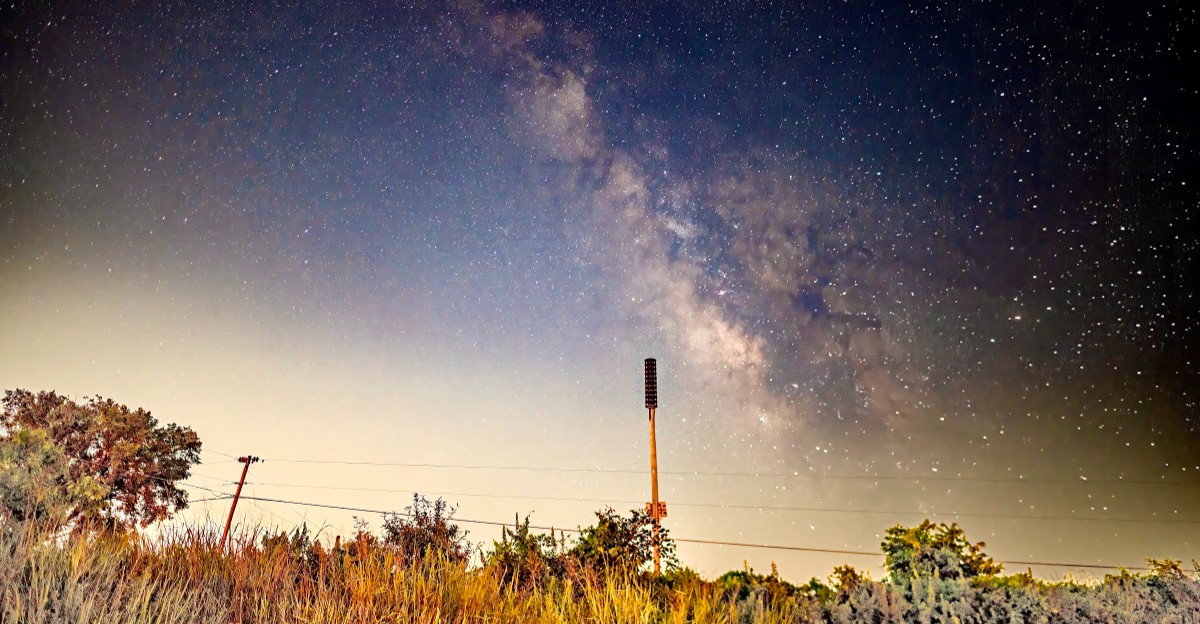
A free night out gets a lot more interesting when a giant telescope is involved. This Missouri park has a dedicated astronomy area where visitors can look up at planets, stars, and deep-sky objects without paying admission.
The setup includes a massive telescope used during public viewing events, along with plenty of open sky away from the brightest city lights. You do not need to know much about astronomy to enjoy it, either.
Volunteers are often there to help point out what is visible and explain what you are seeing. On a clear night, the experience can turn a simple park visit into something completely different.
It is casual, easy to enjoy, and one of those Missouri outings that feels like a much bigger deal than the price tag suggests.
The 32-Inch Dobsonian That Started All The Fuss
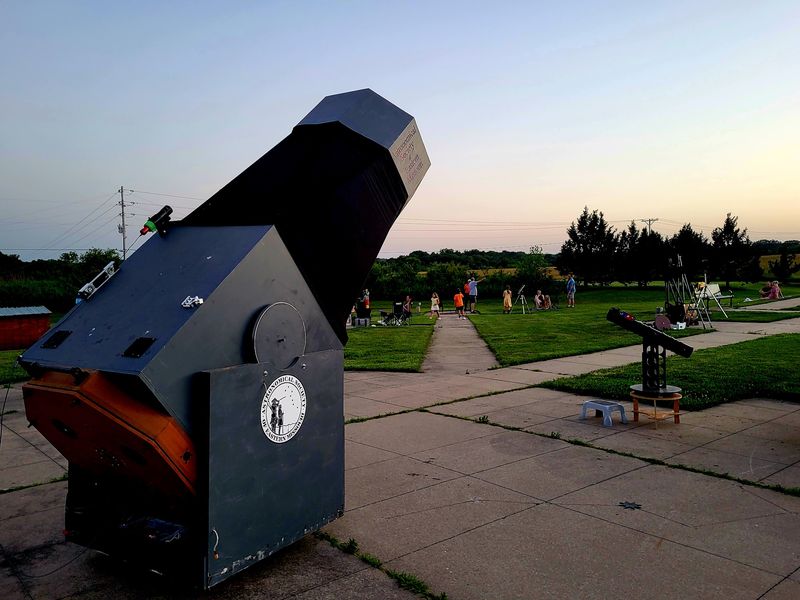
Most public telescopes you run into are small enough to carry in one hand, which is exactly why this one turns heads. The main attraction here is a 32-inch Dobsonian, and it holds the title of the largest public-viewing telescope anywhere in Missouri.
What that big mirror actually does is gather light, and a whole lot more of it than a backyard scope ever could. The practical result is that faint smudges of deep space suddenly look brighter, sharper, and far more detailed than you expected when you stepped up to the eyepiece.
It went into service at the start of a January not too long ago, and it has been the centerpiece of the viewing area ever since. There is a ladder involved, because the eyepiece sits high enough that you climb a bit to reach it, which honestly adds to the fun of the whole thing.
Volunteers from the Astronomical Society of Eastern Missouri run the scope during public nights, so you are never left guessing which knob to turn. You simply wait your turn, step up, and look.
That is the entire process, and it works beautifully for people who have never touched a telescope in their lives.
Friday Nights Belong To The Astronomy Club
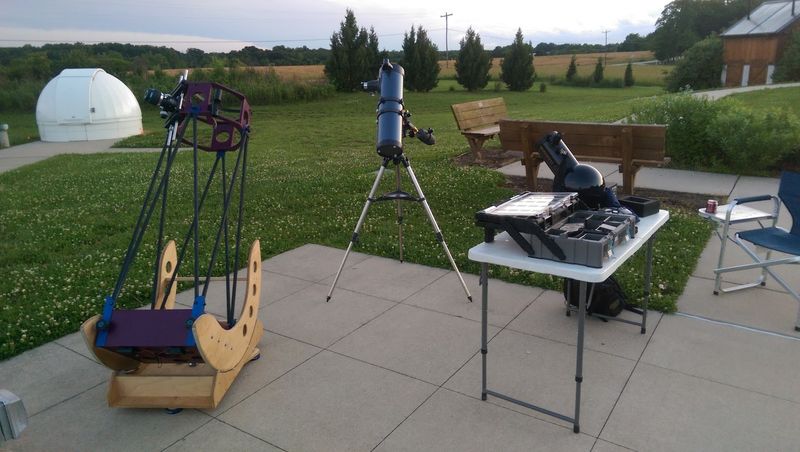
Here is the part that surprises people the most, and it is worth repeating out loud. Every Friday night, weather permitting, members of the Astronomical Society of Eastern Missouri show up and open the sky to anybody who drives out to 1615 Schwede Rd in Wentzville.
They are not just babysitting the big Dobsonian either. Club members bring and operate other serious instruments as well, including scopes in the 14-inch and 16-inch range, so there are usually several eyepieces pointed at different targets at the same time.
The whole program is educational and completely free, which makes it one of the friendliest introductions to astronomy in this part of Missouri. If you have a kid who keeps asking about space, this is the kind of night that sticks with them for years.
Clear skies are the one condition you cannot argue with, so cloudy Fridays mean the session gets scrapped. Checking the club or park info before you leave home saves you a wasted drive, and it takes about a minute.
Come with questions, because the volunteers genuinely enjoy explaining what you are looking at while you stand there.
Galaxies, Nebulae, And Star Clusters You Can Actually See
Let me set expectations honestly, because that matters when you are looking at objects millions of light years out. Through the big scope you can expect distant galaxies, the Great Orion Nebula, globular star clusters that look like spilled sugar, and even leftover wreckage from exploded stars called supernova remnants.
Nothing looks like a glossy space photograph, and that is fine, because the feeling of seeing real photons with your own eye beats any picture on a screen. Your brain does something funny when it registers that the light hitting your retina left its source long before humans existed.
Different seasons bring different targets, so a visit in the colder months looks nothing like a warm-weather night in Missouri. Orion dominates winter skies, while summer swings the dense heart of the galaxy into view along with a pile of clusters and nebulae.
The volunteers choose what to aim at based on conditions and what is riding high overhead. That means repeat visits genuinely show you new things rather than the same tour twice.
Give your eyes a solid stretch of time to adjust to the dark, and you will notice far more detail than you did in your first few minutes.
Height And Age Rules For The Big Scope
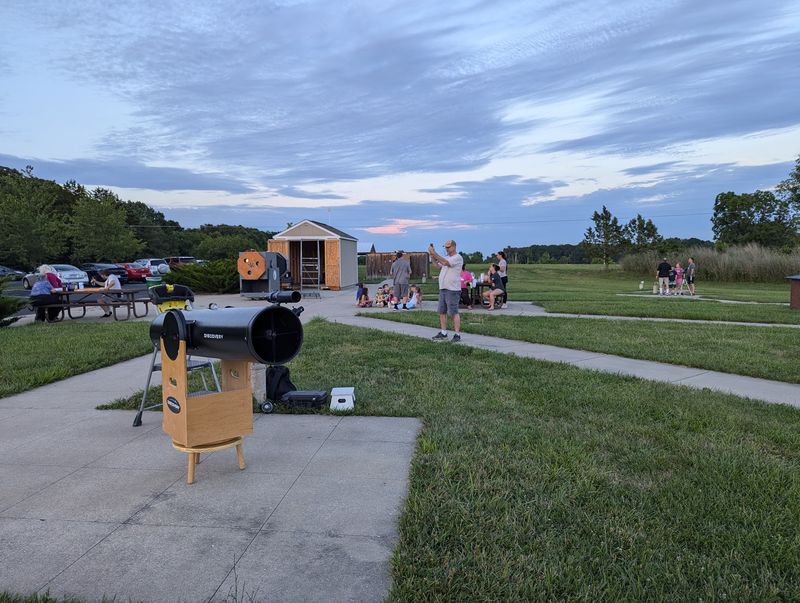
Before you load up the whole family, there is one detail worth knowing so nobody feels let down. To look through the 32-inch telescope, a visitor needs to be at least seven years old and at least 48 inches tall.
The reasoning is pretty practical rather than picky. Reaching that eyepiece involves climbing a ladder, and the rule exists so smaller kids stay safe and steady while they are up there looking at something enormous and far away.
Younger children are not shut out of the evening though, which is the good news. The other telescopes on site sit lower and are much easier for little ones to peek through, so a five-year-old can still walk away having seen the Moon or Saturn.
If your kid is right on the edge of that height line, measuring at home saves some disappointment in the dark. Kids also tend to do better at these events when they are warmly dressed and not already exhausted.
Honestly, the rule fades into the background once the night gets going, because there is plenty to look at from ground level too.
Ten Concrete Pads Waiting For Your Own Telescope
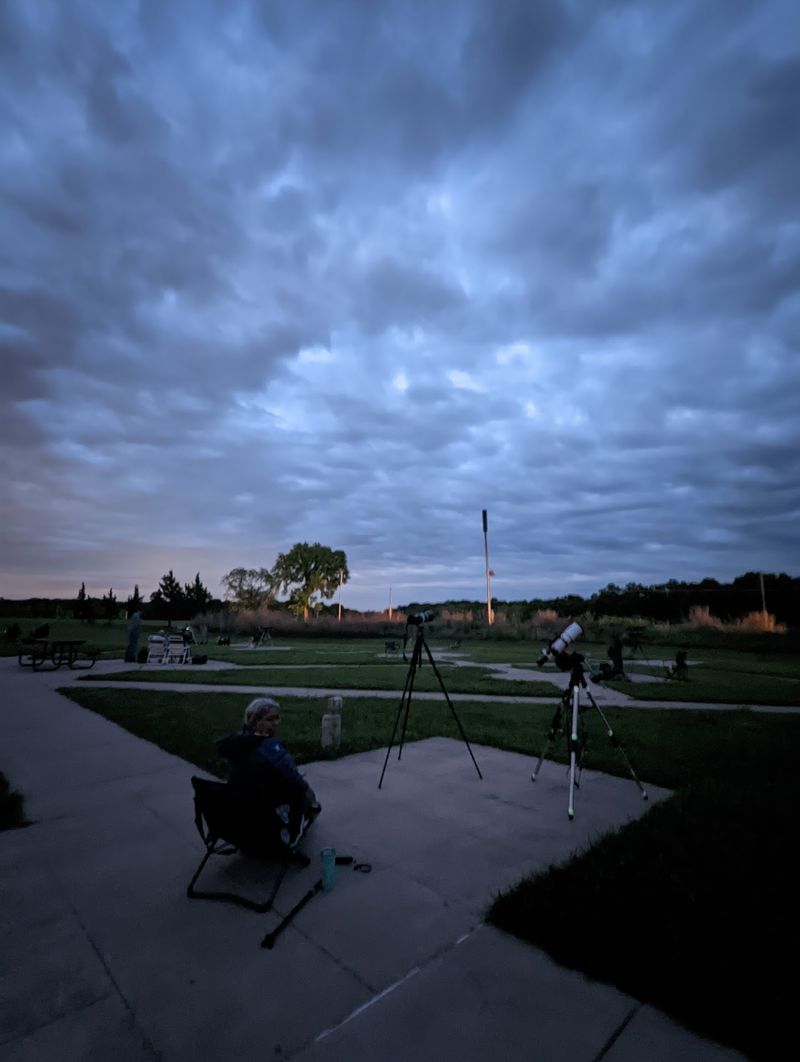
If you already own a telescope that mostly lives in a closet, pay attention to this part. The viewing area includes ten concrete viewing stations, and every single one of them has electrical service run right to it.
Solid concrete matters more than beginners realize, because grass and soft ground let a scope wobble and shake with every footstep nearby. Power access matters too, since tracking mounts, dew heaters, and laptops all drink electricity over the course of a long session.
Amateur astronomers around eastern Missouri treat the setup as a serious observing site rather than a novelty, which tells you something about the sky quality out there. You are welcome to haul your gear out and claim a pad.
Beginners sometimes feel shy about setting up next to experienced observers, but astronomy clubs tend to be some of the most helpful people you will meet. Ask someone about their mount and you will probably get a full explanation.
Arriving while there is still daylight makes assembling everything much simpler, and it lets you get your bearings before the dark settles in completely.
Dark Skies Are The Real Luxury Here
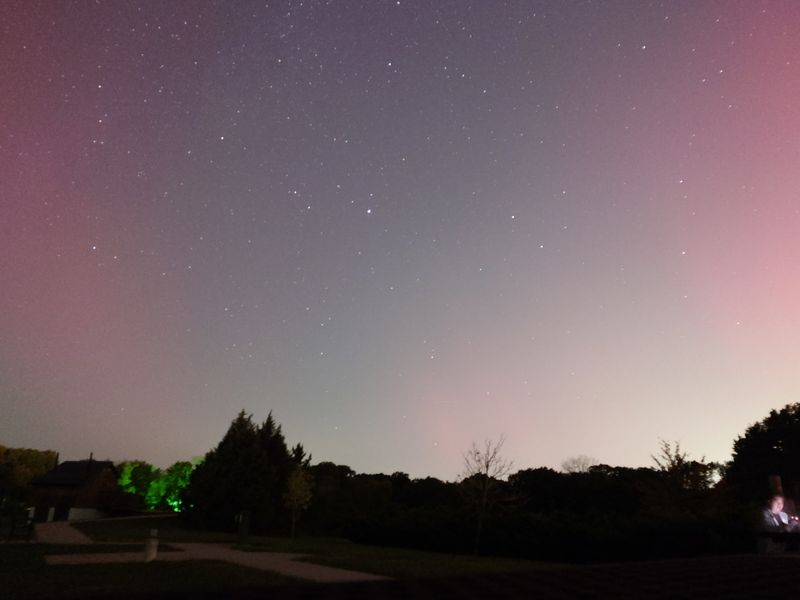
Ask any stargazer what they want most and the answer is almost never a bigger telescope. Darkness wins every time, and the astronomy viewing area sits in a remote corner of the park specifically because light pollution is limited out there.
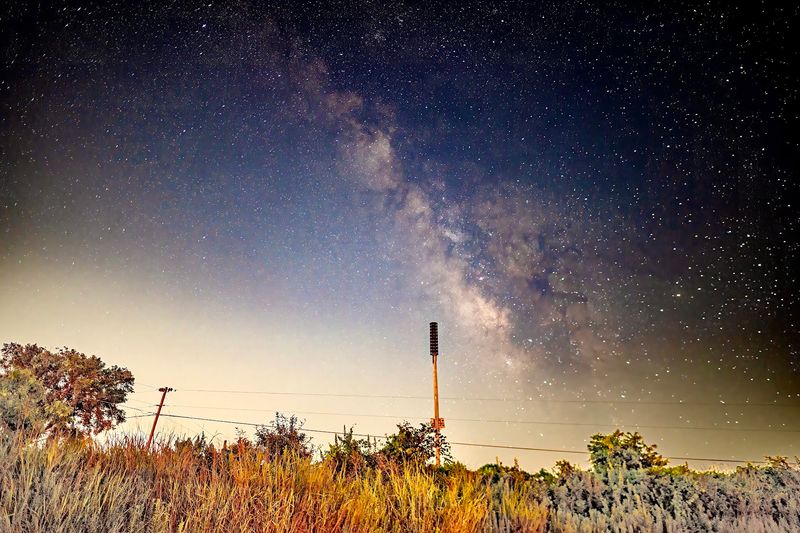
City glow washes the sky into a dull orange soup where only the brightest stars punch through. Drive far enough from that glow and the same sky suddenly fills in with thousands of faint points, plus the pale band of the Milky Way stretching overhead on good summer nights.
The viewing area is open all day, every day, so you are not locked into club nights if you just want to sit out under the stars. Plenty of people come simply to look up without any equipment at all.
Protecting the dark is a shared job, which is why red flashlights are the standard out there instead of white ones. White light wrecks everybody’s night vision for a good twenty minutes, including your own.
Watching the moon phase also pays off, since a bright full moon drowns out the faintest deep-sky targets across Missouri and everywhere else.
What Else Fills The Rest Of Those 500 Acres
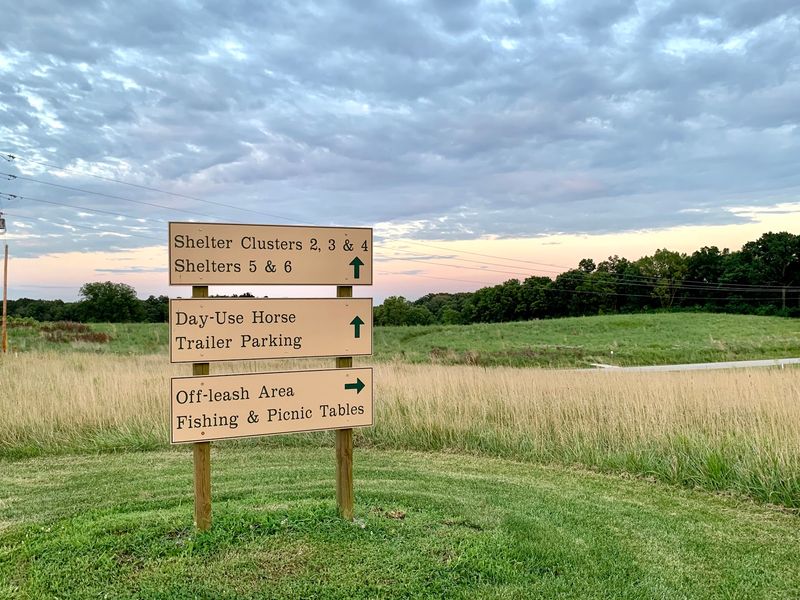
Something people miss is that the telescopes are only one slice of a much bigger property. Broemmelsiek Park covers close to 500 acres, so there is a full day of outdoor stuff available long before the stars come out.
Multi-use trails wind through the grounds, there are fishing lakes to work along, a large playground for the kids, and an off-leash area where dogs get to run without a rope holding them back. That combination makes a whole afternoon easy to fill.
Restrooms and paved parking sit right at the astronomy viewing area, which sounds boring until you are standing outside in the dark and very glad both exist. Practical details like that separate a pleasant evening from a rough one.
My honest suggestion is to treat the drive out to 1615 Schwede Rd, Wentzville, MO 63385 as a full trip rather than a quick errand. Hike or fish while the sun is up, let the kids burn energy at the playground, then settle in as the sky darkens.
Bring layers no matter the season, because standing still under open Missouri sky gets chilly faster than walking around ever does.
