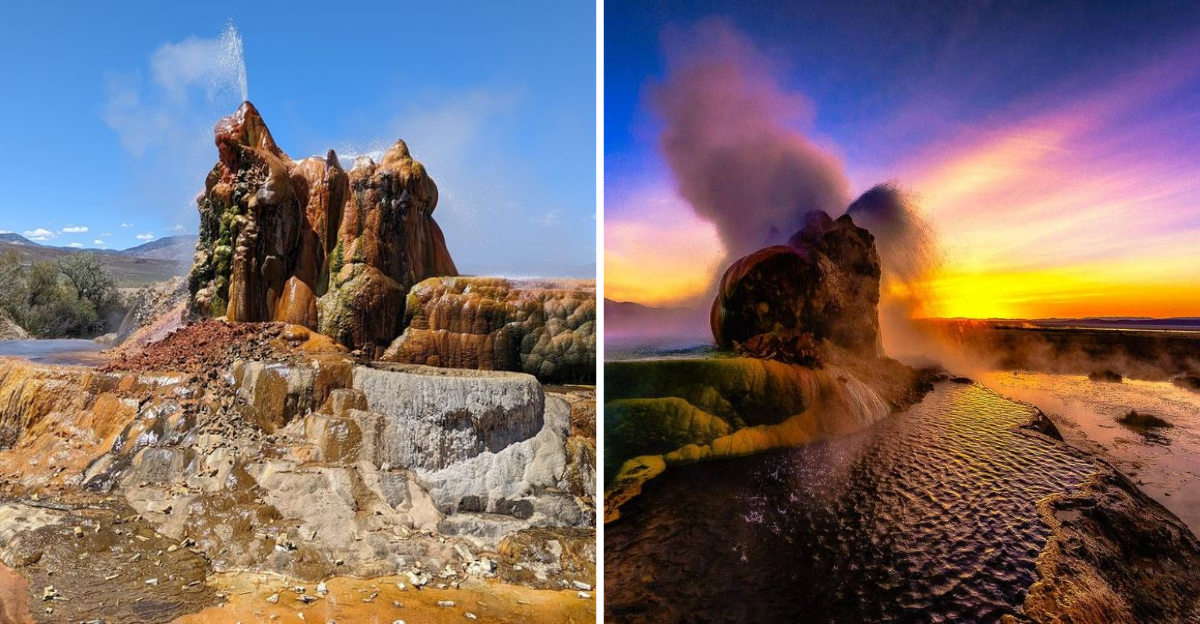
A technicolor geyser erupts in the Nevada desert, shooting hot water and steam into the air. Its cone shaped mounds are coated in greens, reds, and turquoise, colors that come from thermophilic algae thriving in the mineral rich water. I first saw a photo and thought it was digitally altered.
Getting there takes planning, but the moment you see it in person, every mile feels justified. The water is scalding, the colors are unreal, and the whole thing sits in the middle of nowhere like a forgotten art project. No signs point the way.
No crowds gather to watch. Just you, the desert, and this accidental masterpiece.
This place reminds you the natural world is far stranger than anything we could dream up.
The Accidental Origin Story That Makes Fly Geyser Even More Fascinating
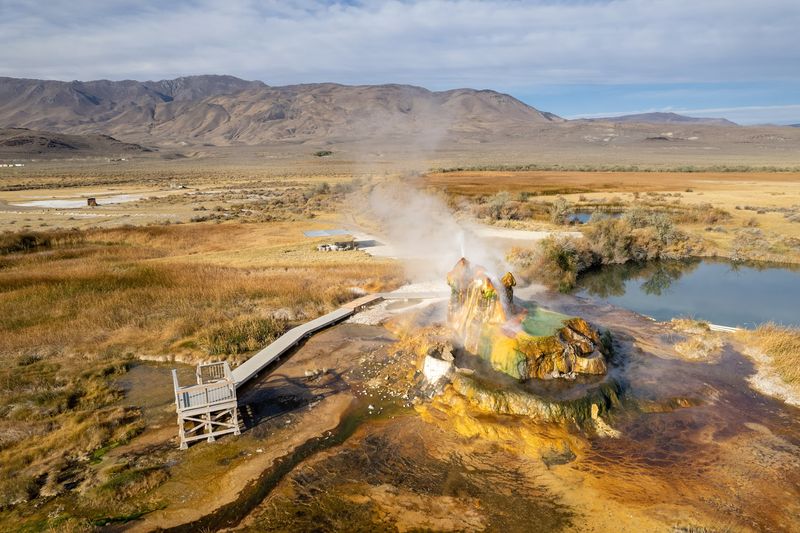
Most natural wonders take millions of years to form. Fly Geyser took a drilling mistake and a few decades of neglect to become one of the most visually striking things in the American West.
The story starts in 1916 when a well was drilled on the property to find irrigation water. That well accidentally struck a geothermal source, and things got interesting fast.
Then in 1964, a geothermal energy company drilled a second well and either left it improperly capped or abandoned it without sealing it at all.
Scalding hot water began pushing up through the opening continuously, depositing minerals and building the cone-shaped mounds over time. The geyser was not designed, not planned, and not engineered.
It is the result of human error meeting geothermal pressure, and the outcome is genuinely breathtaking. That accidental quality is part of what makes it so compelling to visit.
Knowing that this otherworldly structure grew because someone forgot to close a well properly adds a layer of weird, wonderful irony that sticks with you long after you leave the Black Rock Desert behind.
The minerals keep depositing, the cones keep growing, and the water keeps flowing. It never stops.
The geyser is alive in a way that feels almost intentional, even though it was never meant to be. You stand there and watch it hiss and steam, and you cannot help but smile at the sheer absurdity of it all.
What Fly Geyser Actually Looks Like Up Close
Nothing fully prepares you for seeing Fly Geyser in person. Photos help, but they cannot capture the movement, the heat radiating off the mounds, or the sound of water continuously pushing skyward.
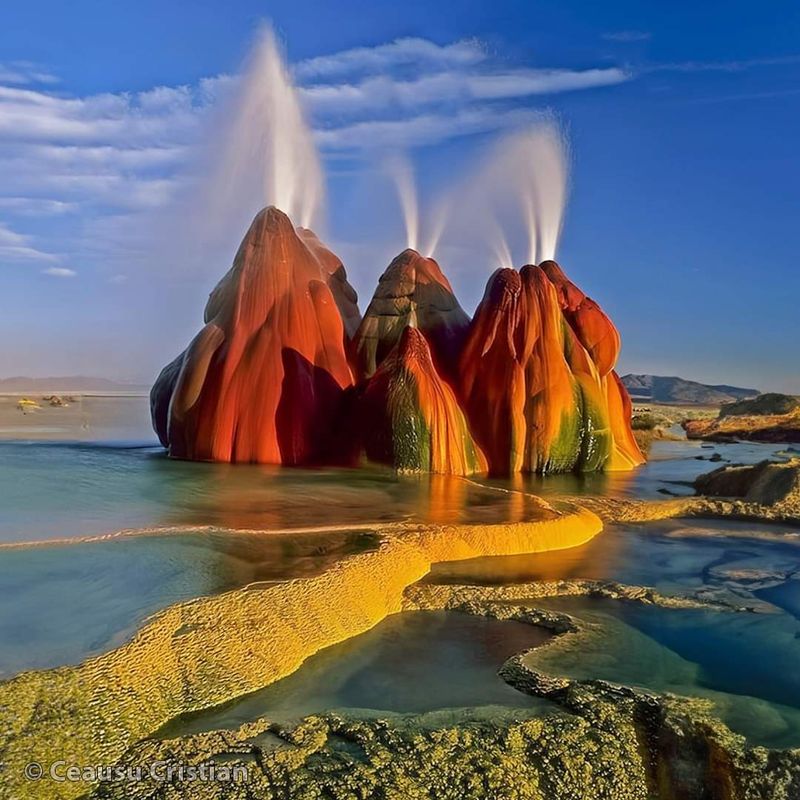
The geyser features multiple cone-shaped openings sitting on top of a larger mound that reaches somewhere between 25 and 30 feet high. Water shoots about 5 feet into the air from those openings, and the temperature of that water can exceed 200 degrees Fahrenheit.
The cones themselves are only around 6 feet tall, but they feel much more dramatic because of the vivid colors covering every surface.
Those colors come from thermophilic algae and bacteria that absolutely love the hot, mineral-rich, moist environment. The calcium carbonate and silica deposits combine with the living organisms to produce a palette that looks almost neon in the right light.
I kept thinking it looked like something growing on another planet entirely. The mound is also still growing, slowly building itself upward year after year as minerals continue to deposit.
Every season, the geyser looks slightly different from the last time someone visited.
You notice new ridges, fresh deposits, and subtle shifts in color that were not there before. The water hisses and sputters, sending steam drifting across the desert floor.
You walk around it slowly, trying to take in every angle, but the scale keeps tricking your eyes. It is smaller than you imagined and somehow larger all at once.
How to Actually Get Access to Fly Ranch
Fly Ranch is private land, and you cannot simply pull up and walk in. The Burning Man Project purchased the 3,800-acre property in June 2016, and since May 2018 they have been offering limited public access through guided tours managed by Friends of Black Rock-High Rock.
Reservations are required, and they fill up. The tours typically run from April through October, so timing your visit matters.
Visitors meet at the Friends of Black Rock-High Rock visitor center in Gerlach before caravanning out to the ranch together as a group.
The walk itself covers roughly 1.5 to 2 miles of flat terrain, making it accessible for most people. If walking is not an option, a guided caravan directly to the geyser is available.
The tour lasts around three hours total, and guides are knowledgeable volunteers who genuinely love sharing the history of the land. Planning ahead is the single most important thing you can do before attempting this trip.
Show up without a reservation and you will be turning around at a locked gate, which has happened to more than a few disappointed visitors who made the long drive out.
Check the weather before you go because the desert can be brutal even in spring. Bring water, sunscreen, and a hat.
The guides will have extra supplies if needed, but it is better to come prepared. Leave your drone at home because the ranch strictly prohibits them.
And give yourself extra time for the drive because the road to Gerlach is long and empty.
The Surrounding Landscape Is Just as Wild as the Geyser Itself
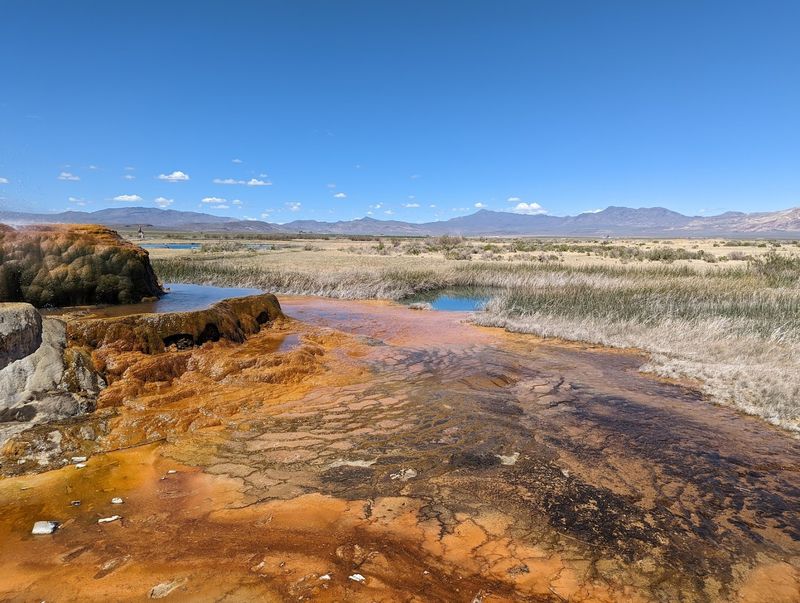
The geyser grabs all the attention, but Fly Ranch itself is a genuinely remarkable place to spend a few hours. The property sits near the edge of the Black Rock Desert, and the landscape shifts in ways that feel almost theatrical as you move through the tour.
Wetlands appear where you least expect them, fed by the same geothermal activity that created the geyser. Hot springs and cold springs both exist on the property, sometimes within surprising proximity to each other.
Wild horses roam the land freely, and the variety of desert flora and fauna along the walk is something the guides take real pride in explaining.
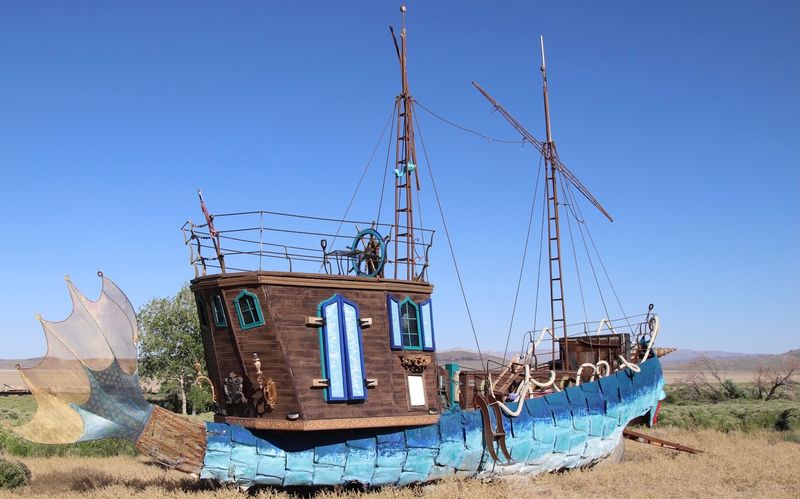
Art installations from Burning Man also dot the property, giving the whole experience a slightly surreal gallery-in-the-desert quality. The combination of geothermal features, wildlife, wetland ecosystems, and sculptural art makes the tour feel layered in a way that a simple geyser visit never could.
By the time the actual geyser comes into view at the end of the walk, you have already experienced enough to fill a travel journal. The geyser is the headline, but the ranch is the full story worth reading.
The Geology Behind the Rainbow Colors Is Genuinely Surprising
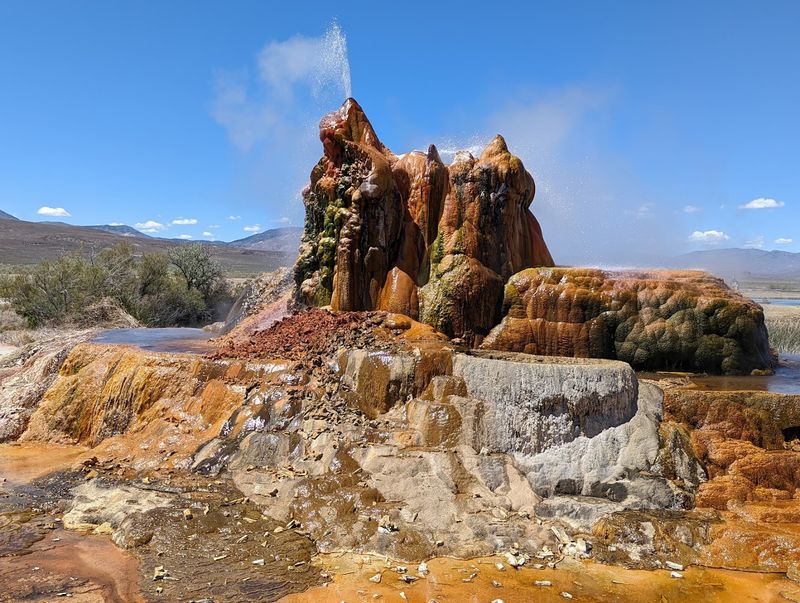
The colors on Fly Geyser are so vivid they almost look artificial, and the science behind them is one of the more interesting geology lessons you will ever get standing in the middle of a Nevada desert.
Thermophilic algae are organisms that thrive in extremely hot environments. They coat the mineral-rich mounds in shades of green, red, orange, and turquoise depending on the specific species and conditions present.
The algae work alongside mineral deposits like calcium carbonate and silica to create the layered, textured appearance you see on every surface of the geyser.
The silica content in the water is also responsible for something geologically remarkable. Quartz formation inside the mounds is happening at a pace that would normally take up to 10,000 years in other geothermal environments.
The high temperature and mineral concentration are accelerating a process that geologists find genuinely fascinating to study. Fly Geyser is not just a pretty sight.
It is an active, evolving geological event happening in real time, which is part of why researchers and curious travelers alike keep finding reasons to make the trek out to this remote corner of Washoe County.
Tips for Making the Most of Your Visit to Fly Geyser
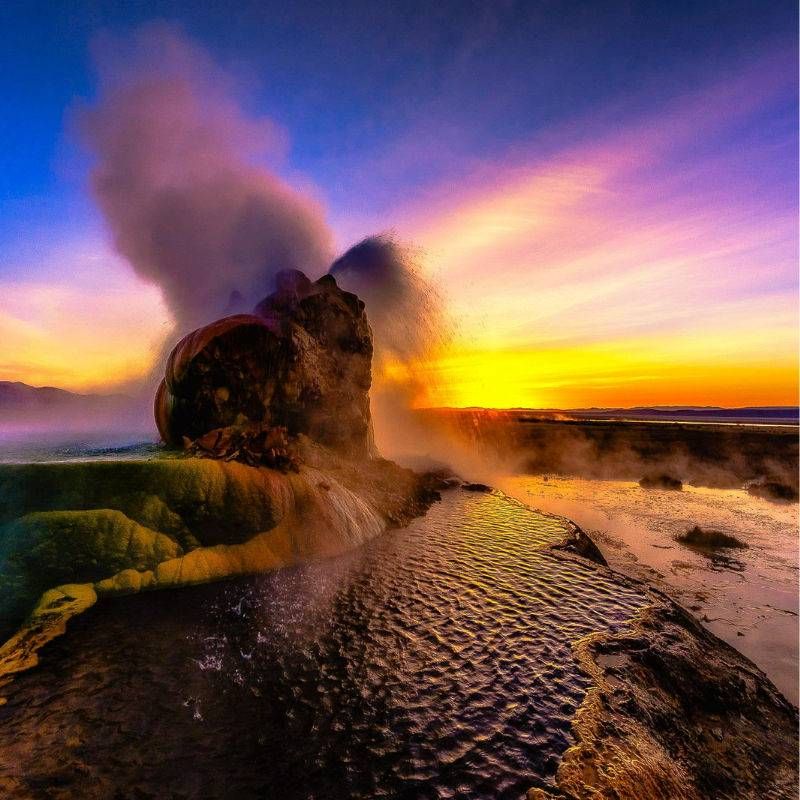
Getting to Fly Geyser takes effort, and a little preparation goes a long way toward making the experience genuinely enjoyable rather than frustrating. Book your reservation as early as possible, especially if you are planning a spring or early summer visit when spots fill quickly.
Wear a hat. There is no shade along the walk, and the Nevada sun in the desert is not subtle.
Comfortable sneakers are all you need since the terrain is flat, but open sandals will leave you regretting the choice by the first mile. Bring plenty of water and dress in layers because desert temperatures can shift more than you expect between morning and midday.
Photography is generally allowed at the geyser itself near the end of the tour, though restrictions apply during the nature walk portion of the route. The tour encourages a device-free mindset along the way, which honestly makes the experience better.
Looking up instead of at a screen lets you notice the wild horses, the unexpected wetlands, and the quiet strangeness of the landscape. Fly Geyser rewards visitors who show up ready to be present, patient, and genuinely curious about what they are about to see.
Address: Gerlach, NV 89412
