They say you cannot have your farm and park it too. But at this New Jersey spot, you get both.
A 1753 farmhouse that once hid runaway slaves, now a peaceful public park where kids run free and walkers follow trails through the woods.
The 16-room farmhouse still stands, its walls holding stories of the Underground Railroad.
An arts center now fills the old tractor barn with music and performances. Trails wind around the pond and through the trees, and the whole place hums with a calm that makes you want to linger.
It is a reminder that some of the best parks are the ones that used to be something else entirely. History and peace, all in one spot.
The Kay-Evans Farmhouse And Its Three Centuries Of Additions
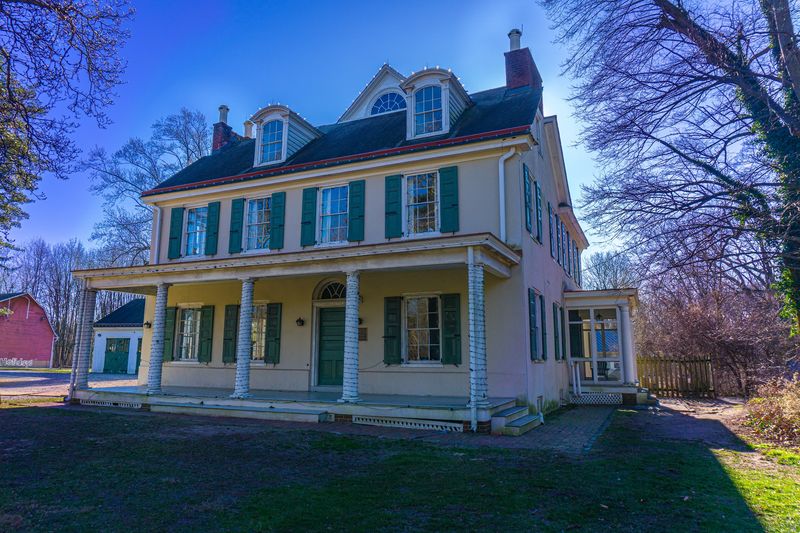
Sixteen rooms, three centuries, and one house that never quite stopped changing. The oldest section was built in 1753 by Isaac Kay, and you can still see that first footprint in the present dining room.
An open-hearth fireplace anchors the space, along with a narrow tight winder staircase and original glass window panes that ripple the daylight in a way modern glass never does.
Later, Thomas Evans expanded things considerably, adding a four-bay, three and a half story section and turning the house to face the newly built roadway instead of the old approach.
Walk the exterior slowly and the seams between eras become obvious. Different stonework, different rooflines, different ideas about what a farmhouse should be.
Preservation work continues here, supported in part by the New Jersey Historic Trust, so the building stays standing for the next set of curious visitors.
My advice is simple. Circle the whole structure before you head for the trails, because the back angles tell you more about the layers than the front door ever will.
An Octagonal Icehouse You Will Not Find Anywhere Else In The County
Eight sides. One little building.
And nothing else quite like it anywhere in Camden County.
The octagonal icehouse at this farm was one of three outbuildings added by Thomas Evans, and it remains the only structure of its kind in the county, which makes it a genuine oddity worth pausing for.
Beside it sit a frame smokehouse and a brick springhouse, and together the trio tells a very practical story about how families ate before electricity existed.
Meat was cured in the smokehouse. The springhouse, built directly over a localized spring, worked as a natural refrigerator that kept food cool through every season.
Kids tend to love this part, mostly because the shapes are strange and the purpose is easy to explain in one sentence.
Stand close enough to the springhouse and the temperature shift is noticeable, which is a fun thing to point out to anyone who thinks refrigeration was invented in a factory.
Small buildings, big lesson in resourcefulness.
Underground Railroad History Woven Into The Land
Some places hold history lightly. Not here.
The Evans family were Quaker abolitionists, and the property served as a station on the Underground Railroad, sheltering and assisting freedom seekers traveling north.
Records show that Josiah Evans purchased the freedom of two enslaved people, Joshua Sadlar and Jefferson Fisher, both of whom then worked at the mill on this land.
Sadlar later became a leader of a settlement for formerly enslaved people known as Sadlartown, located in what is now Haddon Township.
Knowing that changes how the walk feels. The fields stop being scenery and start being testimony.
I would suggest reading the interpretive signage before wandering off toward the water, because context makes the quiet hit differently.
What strikes me most is how ordinary the setting looks. No monument, no grand gesture, just a working farmstead where people took real risks for other people.
It is one of the most meaningful pieces of African-American history preserved in this corner of the state, and it deserves unhurried attention.
Six Connected Trails That Earned National Recognition
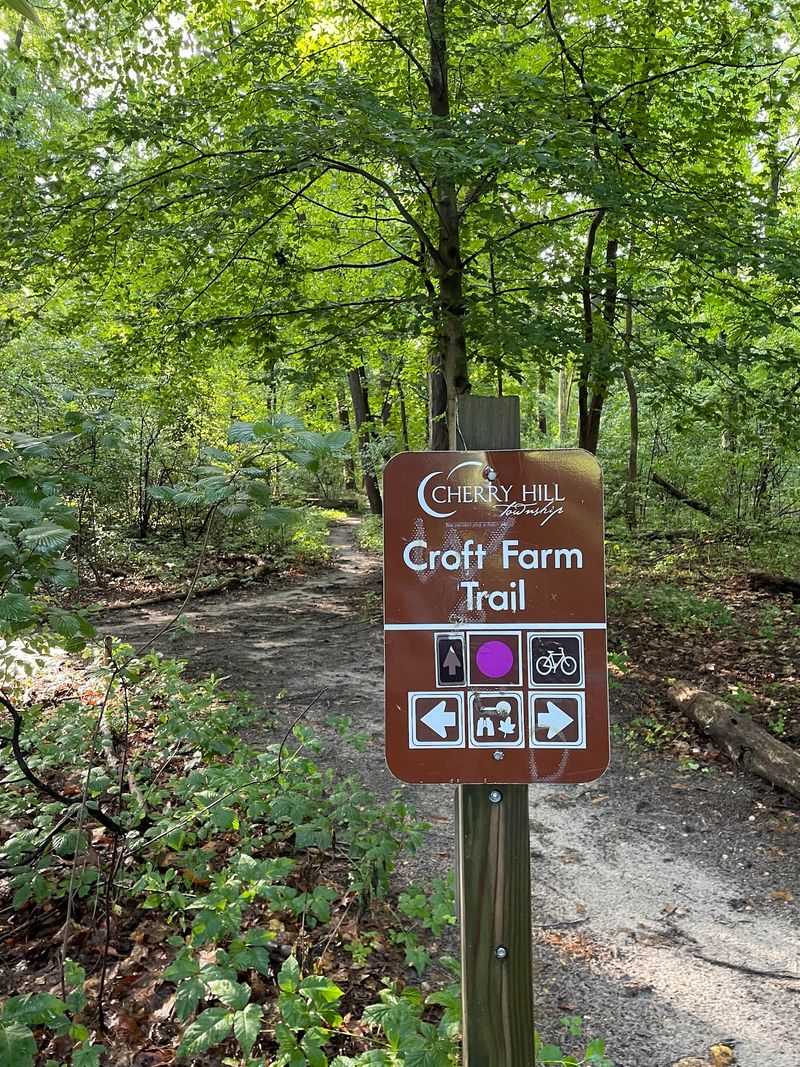
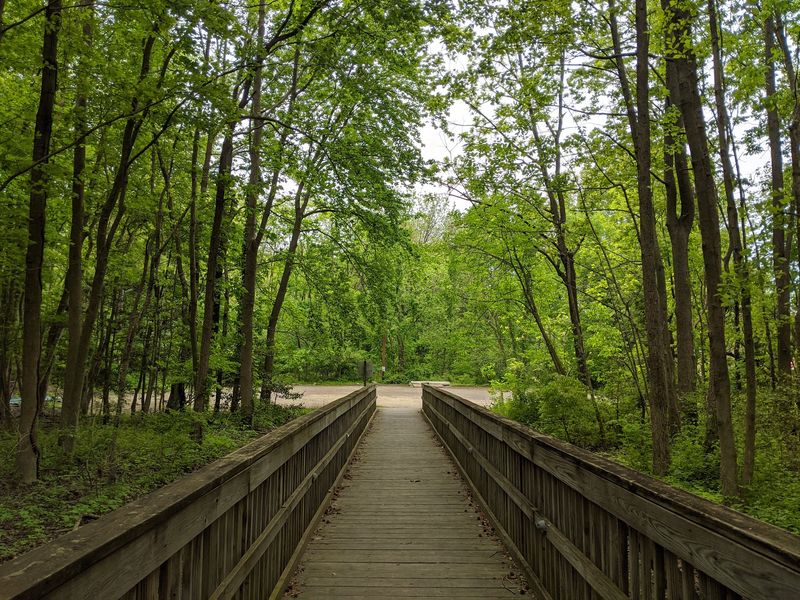
Nearly a mile and a half of footpath, split across six interconnected trails, and every one of them signed clearly enough that getting lost takes real effort.
The system was designated a National Recreation Trail in 2011, which is a solid endorsement for a network this compact.
Terrain shifts constantly as you walk. Meadow gives way to scrub-shrub, then early successional woods, then mature forest with taller canopy and cooler air.
Meadow and scrub-shrub habitats have become scarce across New Jersey, so seeing them protected and accessible here matters more than the modest mileage suggests.
Surfaces vary between packed dirt and gravel, with a few grassier stretches, so closed shoes beat sandals.
Kiosks with posted maps sit at key junctions, and signposts keep the loops straightforward for beginners and families.
My favorite approach is to walk the loop once briskly, then repeat it slowly to notice everything missed the first time.
Bikes work on the easier sections, though walking suits the pace of the place best.
Evans Pond And The Slow Pleasure Of Watching Water
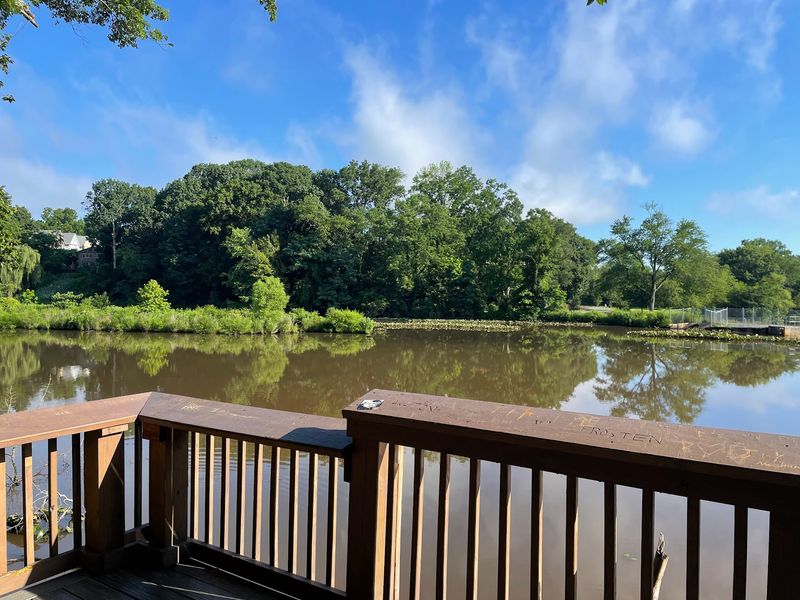
Water has a way of making people stop talking, and this pond does it reliably.
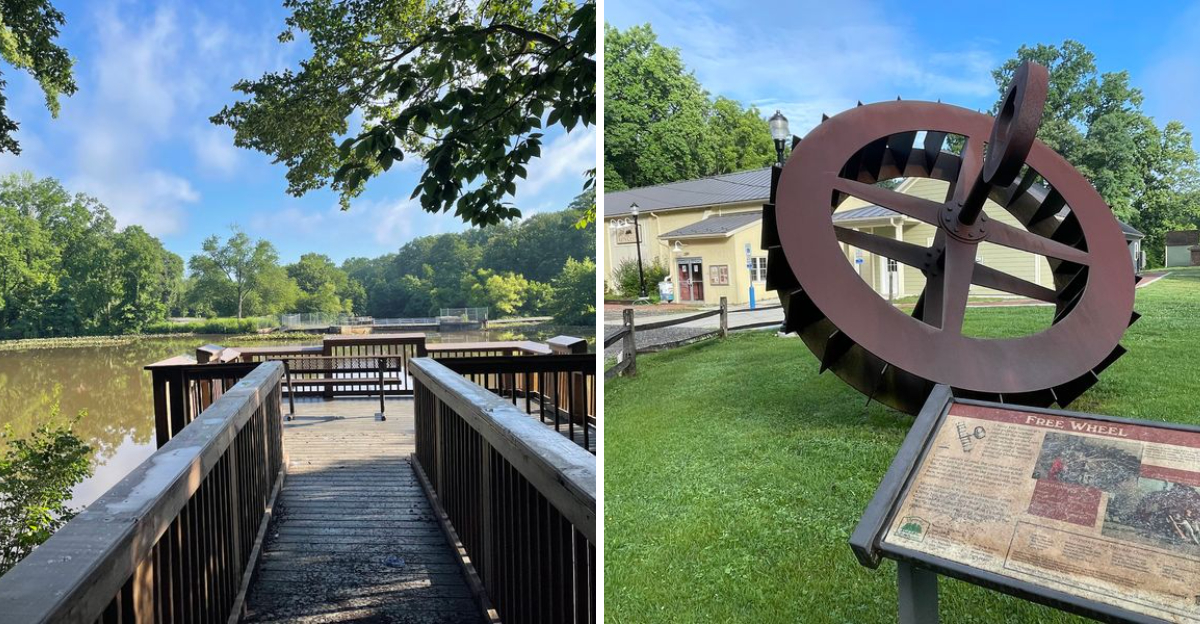
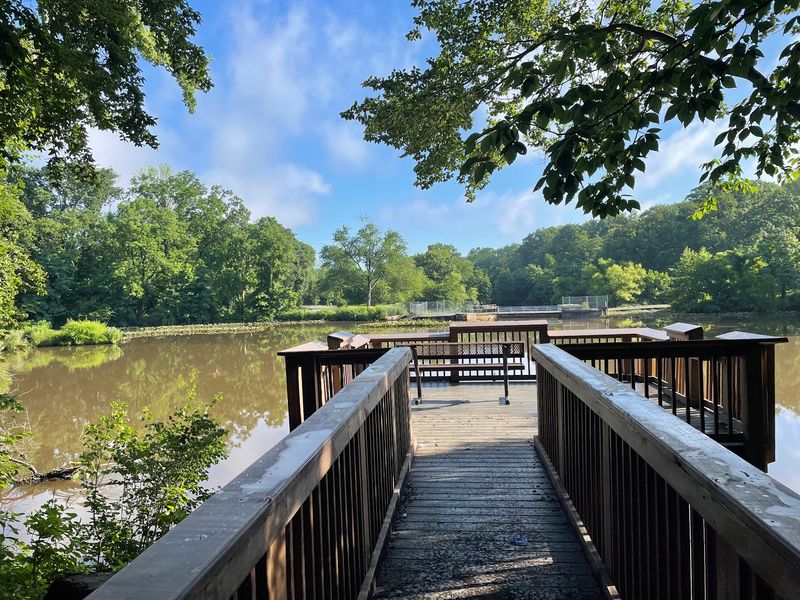
Evans Pond sits shared between Cherry Hill and Haddonfield, bordered by one of the property’s nature trails, and it functions as the calm center of the whole park.
Reeds line the edges, and in summer dragonflies and damselflies cling to them in numbers that make the shoreline feel busy without being loud.
Fish, frogs, and turtles are plentiful in both Evans Pond and nearby Wallworth Lake, so patient watchers usually get rewarded.
A fishing and wildlife observation platform gives you a stable spot to stand, which helps enormously if you brought binoculars or a camera.
Come early and the surface holds a mirror finish before wind picks up.
Bring water and a hat in warmer months, since shade near the open bank is limited.
Honestly, the best thing to do here is nothing at all. Sit, look, listen, and let the pond do the talking for a while.
Birding Stops Recognized By The New Jersey Audubon Society
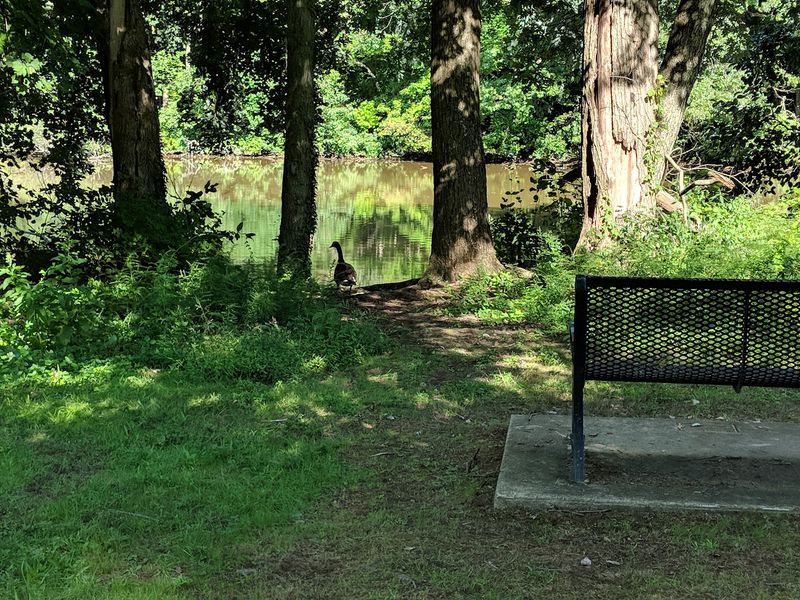
Birders already know about this place, which tells you something.
The New Jersey Audubon Society includes the farm among stops on its statewide Birding and Wildlife Viewing Trails, and the varied habitats explain exactly why.
Spring brings migrants through the canopy, including Red-eyed Vireos and Wood Thrushes whose songs carry surprisingly far along the wooded stretches.
Winter flips the roster entirely, with over-wintering songbirds like Juncos and White-throated Sparrows working the brushy edges near the fields.
Fall opens up the water views, when ducks and cormorants settle onto the lakes and give you something to scan through binoculars.
Field edges matter here more than the deep woods do. That transition zone between meadow and forest is where most of the action happens.
Move slowly, stop often, and stay quiet near the shrubby borders.
Even without any birding knowledge, the layered soundtrack alone is worth the walk. I usually pick up more by ear than by sight, and that suits me fine.
The Arts Center Inside A Converted Tractor Barn
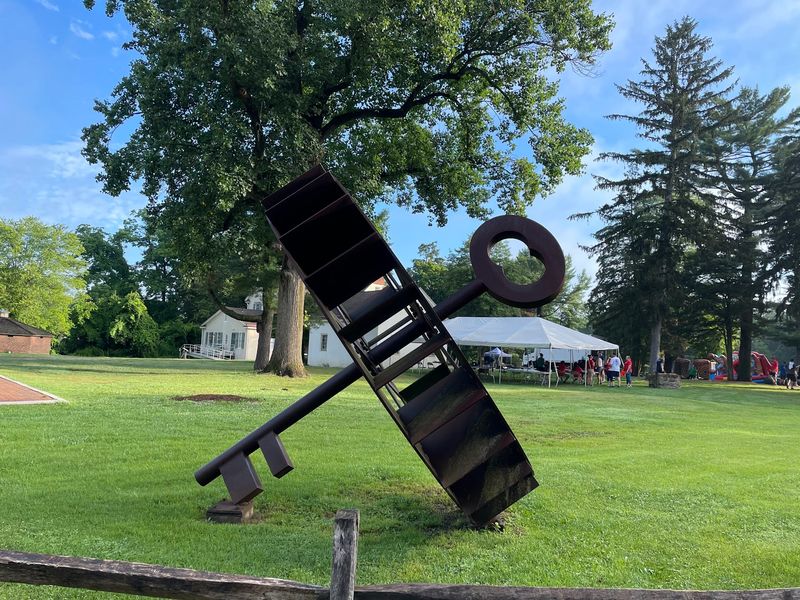
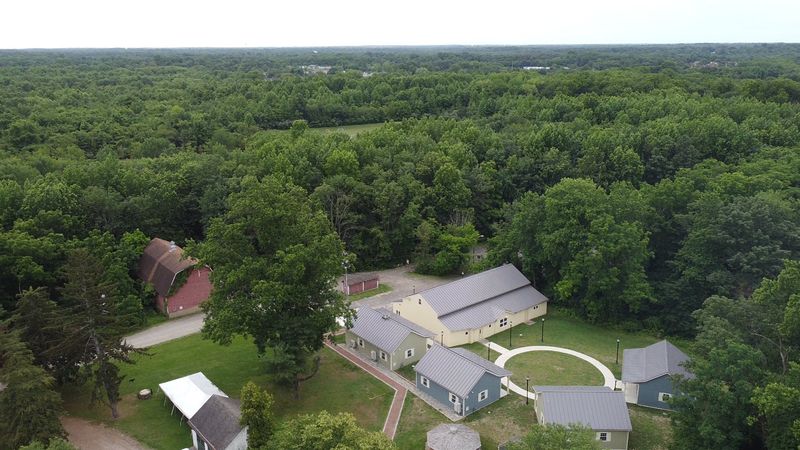
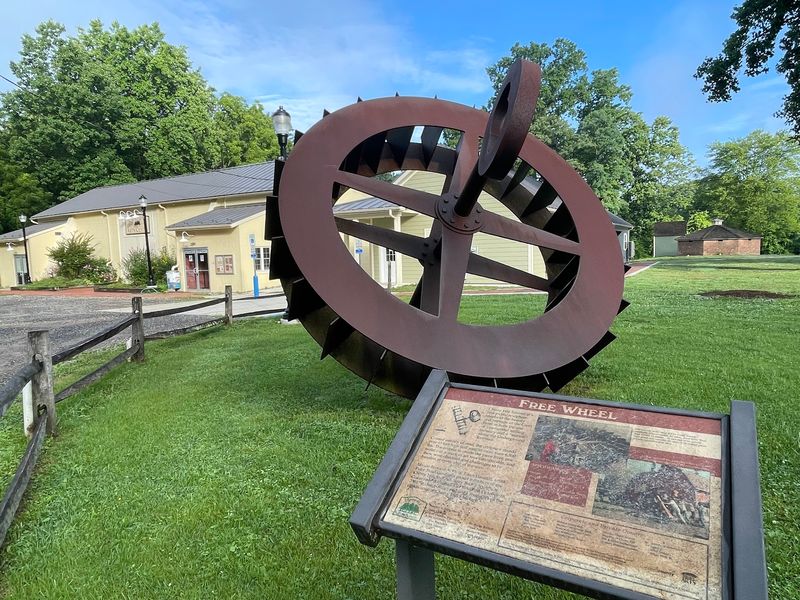
A post-World War II tractor barn became the Cherry Hill Arts Center in 1995, and the conversion kept enough barn character to feel completely unlike a typical gallery space.
Classes run here, along with concerts and cultural events scattered through the calendar, which gives the property a creative pulse alongside its natural one.
Art shows featuring work by local kids turn up periodically, and the energy at those is genuinely fun to walk through.
What I appreciate is the contrast. You can finish a muddy trail loop and walk straight into a room full of paintings without changing clothes.
Open gallery events make dropping in easy, and the setting stays casual rather than precious.
Checking the schedule before visiting is smart, since programming shifts and not everything runs year round.
Barns rarely get second lives this useful. This one traded tractors for paintbrushes and somehow kept its dignity intact, which feels very much in keeping with how the rest of the property has been handled.
Festivals, Food Trucks, And Story Times Under Open Sky
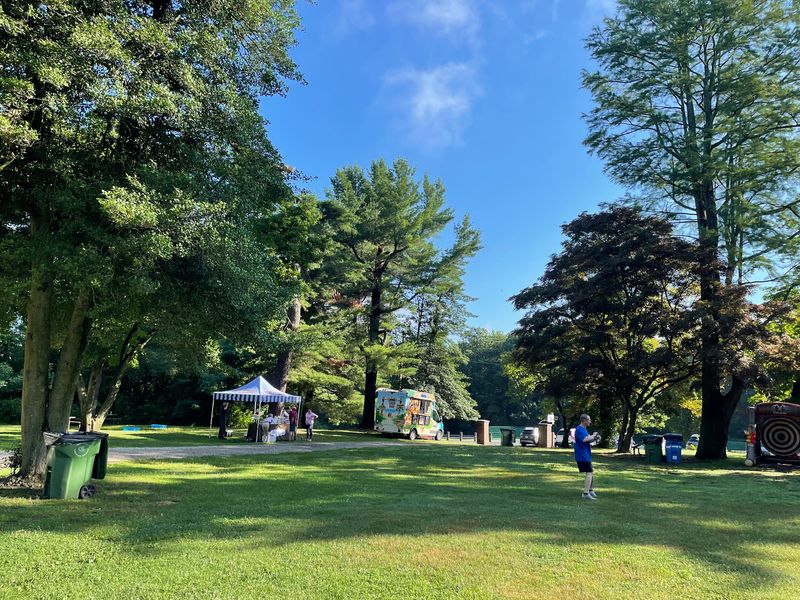
Quiet is the default here, but not every day.
The Cherry Hill Fall Festival takes over the grounds with live music, a pumpkin patch, and food trucks parked along the open lawn, and the whole property fills with noise in the best possible way.
A food truck series runs at other points in the year, giving people a reason to linger past their usual walk.
Pop-up story times bring local librarians outdoors to read with families, which is a lovely use of a shaded patch of grass.
There is also a Martin Luther King Day of Service for Nature, when volunteers pitch in on the grounds themselves.
Picnic areas, soccer fields, a playground, and a dog park round out the everyday amenities, so the space works whether you came for an event or just for an hour outside.
Parking rarely becomes a headache, since there is a generous amount of it across the property.
Plan around a festival if you like crowds, or skip it entirely if you prefer stillness.
Archaeologists Still Pulling Stories Out Of The Soil
Digging continues on this property, and the findings keep reshaping what people understand about it.
Recent excavations have turned up extensive quantities of low-value meat cuts and inexpensive crockery, an unusual combination for a household of the Evans family’s size.
Archaeologists read that pattern as evidence the family regularly fed many more people than lived under their roof, likely freedom seekers passing through on their way north.
That kind of detail is quietly powerful. Broken dishes and butchered bone become proof of hospitality offered at real personal risk.
Visitors have been invited to observe the digs, examine artifacts, and talk directly with the archaeologists working the site.
Catching one of those opportunities is worth planning around, because seeing history emerge from a trench beats reading about it on a plaque.
The research connects the property firmly to African-American history across the region, and the story is still being assembled piece by piece.
Not many parks let you watch the past get uncovered in real time.
A Farm That Reads Differently In Every Season
Four visits, four completely different places. That is the honest summary of this property across a year.
Spring wakes the trails with migratory birds while cottontail rabbits and woodchucks feed along the field edges, easy to spot if you walk early.
Summer belongs to the water, when aquatic life crowds the lakes and butterflies work the gardens in bright, erratic loops.
Autumn turns the foliage golden and rust colored, and the lakes fill with ducks and cormorants that make birdwatching almost effortless.
Winter strips everything back to bare branches and cold air, which sounds bleak until you realize how far sound travels and how visible overwintering birds become.
Trails stay walkable in every season, though footwear matters more once the ground softens.
The land itself has held roots stretching back to a 1683 commission for Richard Matthews, with John Kay purchasing it in 1710, so the seasons have been turning here a very long time.
Croft Farm sits at 100 Bortons Mill Rd, Haddonfield, NJ 08033.
