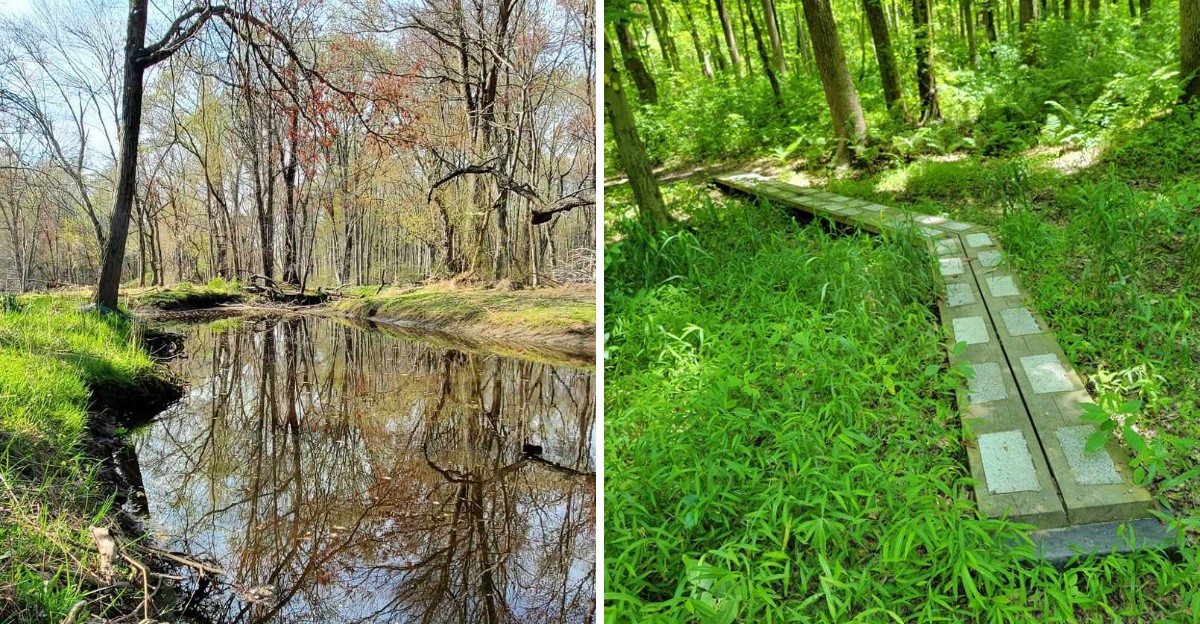
Sometimes the best hike is the one that does not feel like a workout at all.
You leave the traffic behind, find a quiet trail, and suddenly the only sounds are birds, rustling leaves, and your own footsteps.
New Jersey has a surprisingly peaceful corner where trails wind through forests, open meadows, and wetlands, with a brook adding another layer of scenery along the way.
The landscape keeps changing as you go, so the walk never feels like the same view on repeat.
There is something wonderfully unhurried about this kind of place. No dramatic summit is required.
No heroic hiking story needs to happen. You can simply wander, watch for wildlife, enjoy the changing scenery, and let the surrounding woods do what they do best: slow everything down.
And perhaps that is the real luxury here. In a state known for busy roads and busy schedules, a quiet trail can feel like a little rebellion against the rush.
Sometimes, getting nowhere fast is exactly the point.
The Yellow Blazes That Tie Everything Together
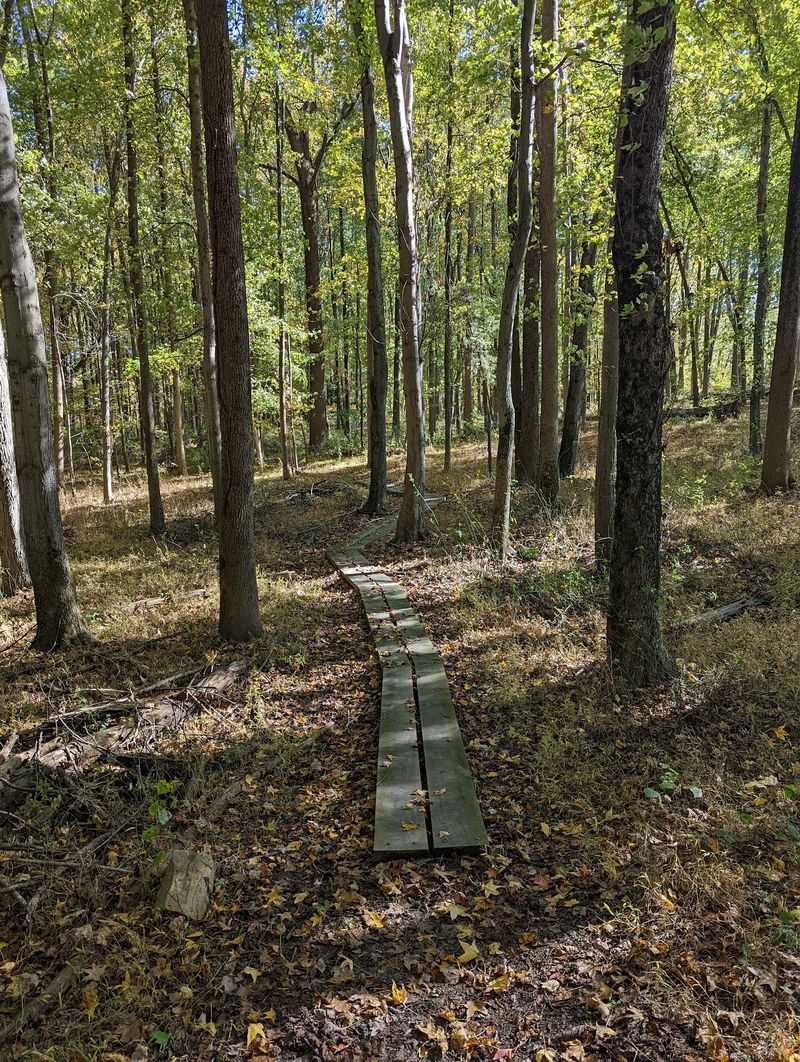
Yellow paint on tree bark becomes your best friend here. The main Ireland Brook Trail runs close to two miles and acts as the spine of the whole property, linking woods, clearings, and damp low ground into one loop that never feels repetitive.
Most of the walking stays flat, with only small rises that barely make you breathe harder. That makes it friendly for families, casual walkers, and anyone easing back into hiking after a long winter indoors.
Trail markers appear regularly, though a quick look at the county trail map before you set out saves confusion, since a few paths branch off toward other roads. Screenshot it.
Cell service can get spotty under thick canopy.
What keeps this route interesting is the constant change in scenery. One stretch feels enclosed and shadowy, the next opens to sky and tall grass, and then you are crossing planks over standing water.
Ireland Brook Conservation Area covers hundreds of acres, and the yellow trail gives you a generous sample of nearly all of it.
Old Beech And Oak Shade Along The Woodland Stretches
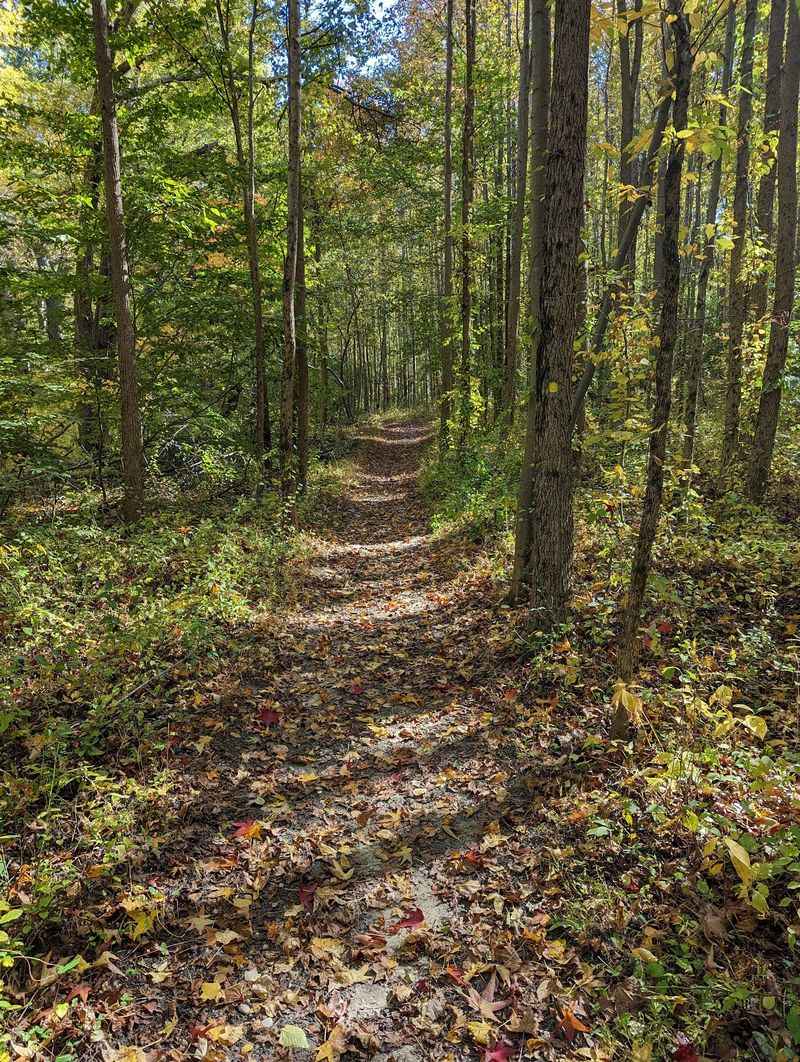
Step under the canopy and the temperature drops a few degrees almost immediately. Beech, red maple, sweetgum, and several types of oak grow thick through the upland sections, and their leaves filter the light into soft patches on the trail.
Leaf litter crunches underfoot in autumn, and in spring the ground turns green with low growth before the branches fill in above. The smell is earthy and slightly sweet, the kind that sticks with you after the hike ends.
Tree roots do cross the path in places, so watch your footing rather than your phone. Sturdy shoes help more than fancy gear here.
Smooth gray beech trunks are worth pausing for, since they catch light differently than the rougher oaks around them. Photographers tend to linger in these sections, especially in late afternoon when the angles get dramatic.
Birdsong carries well through the trees, and the quiet between calls is genuinely restful. For a woodland walk close to towns and highways, this feels remarkably removed.
Wide Open Meadows Where The Sky Takes Over
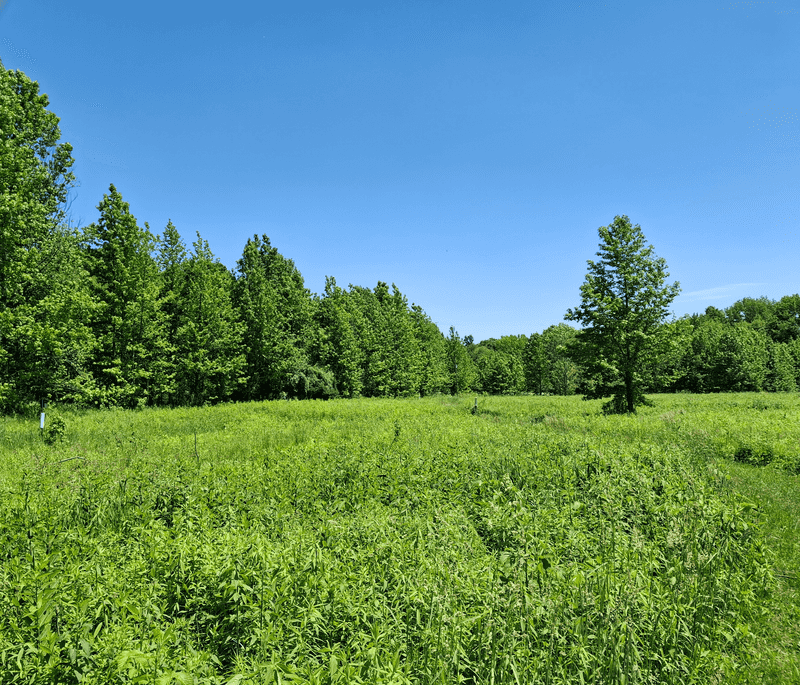
Leaving the shade for a sunlit clearing always feels like a small event. The trail spills out into broad grassy fields where the horizon opens up and the breeze pushes ripples across the tops of the grass.
Grass paths cut through these sections, wide enough to walk side by side with a friend. In warmer months the fields hum with insects, and butterflies bounce along the edges where wildflowers grow.
Sunscreen matters out here. There is almost no shade once you step into the open.
Birdwatchers do well in the meadows, since sparrows, swallows, and raptors all use this kind of habitat differently. Bring binoculars if you have them, and give yourself permission to stand still for a few minutes.
Light changes quickly in these clearings, which is why early morning and the last hour before closing tend to be the prettiest windows. The contrast between shadowed woods and glowing grass is one of the things that makes a walk here memorable rather than routine.
Boardwalks Over Marshy Ground
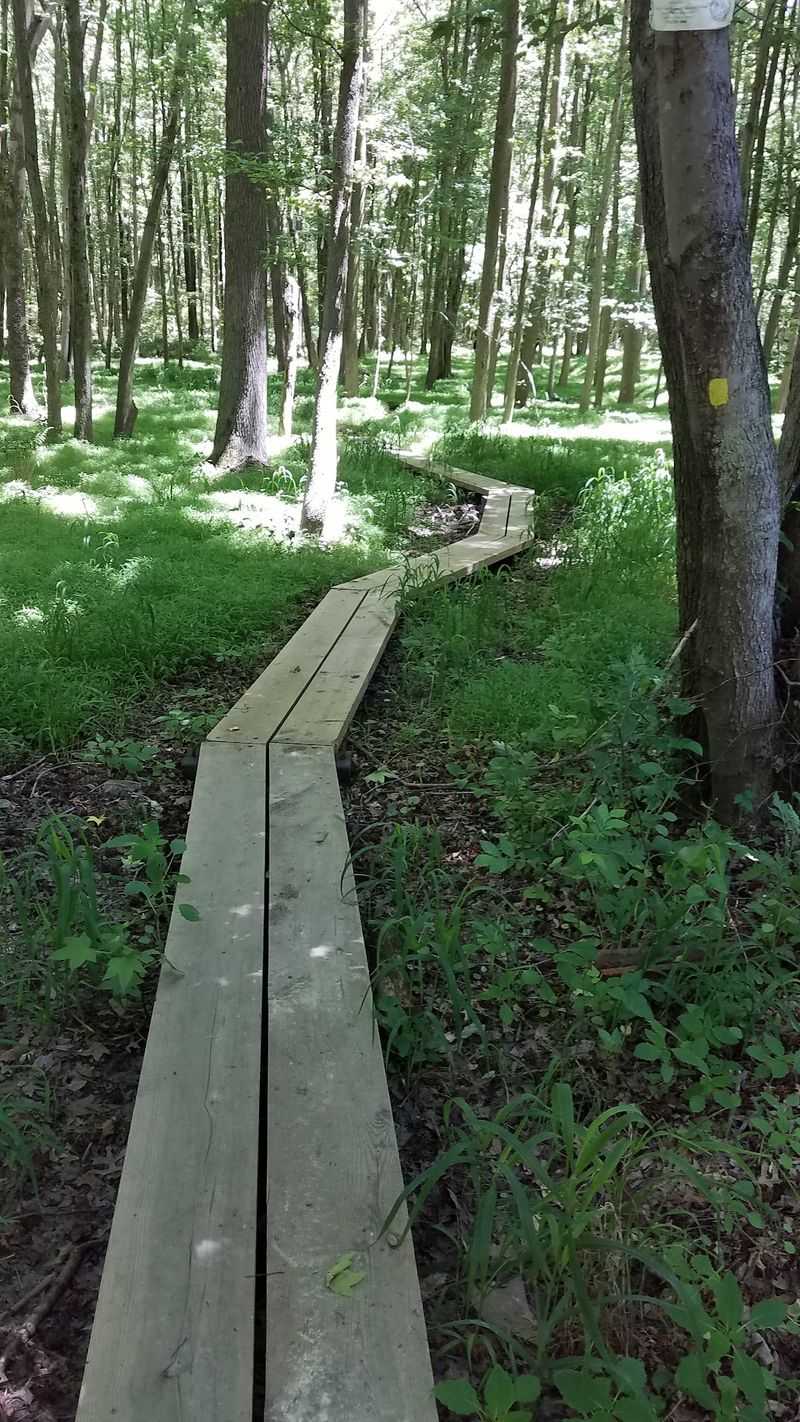
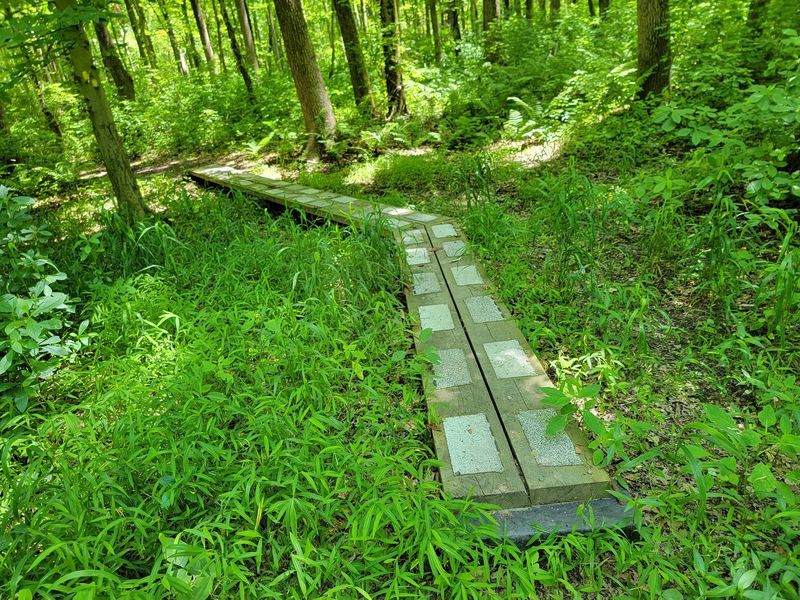
Plank boardwalks show up right where you need them, carrying the trail over soft, wet ground without churning it to mud. They are simple wooden walkways, not polished structures, and that plainness suits the setting.
Standing water often sits still enough to mirror the sky and the branches overhead. Reeds and moisture-loving plants crowd the edges, making the whole section feel green and dense even in early spring.
Wetlands here connect to Ireland Brook itself, a tributary of Lawrence Brook, which keeps the system fed and alive. The vegetation along the banks grows thick because of it.
Boards can turn slick after rain, so slow down and take shorter steps on damp days. Waterproof shoes are a smart call any time of year, since a few spots stay damp long after the weather clears.
Pausing on a boardwalk is one of the best things you can do here. Stay quiet for a minute and the wetland starts revealing small movements you would otherwise walk right past.
Vernal Pools Along Pseudacris Way
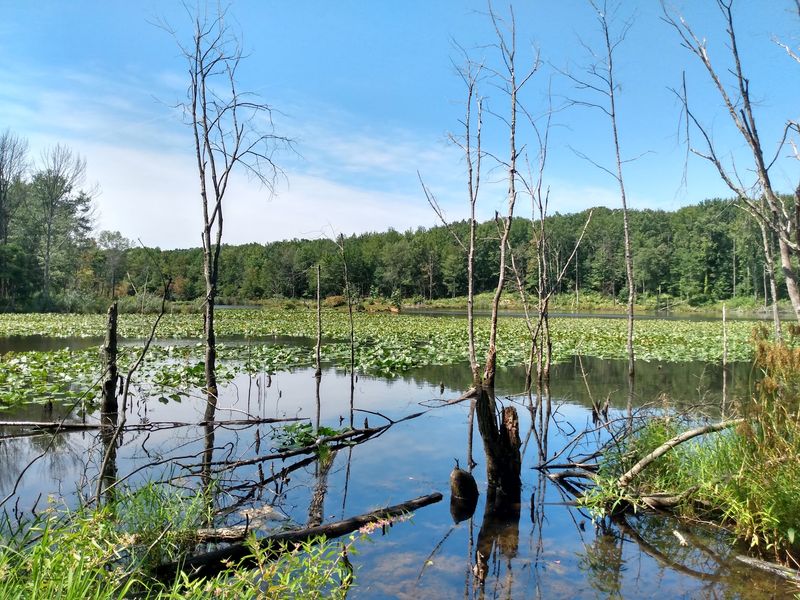
Tiny seasonal ponds do some of the heaviest ecological lifting in these woods. The red-blazed Pseudacris Way is a short trail that loops near vernal pools, which are temporary wetlands that fill with water in late winter and dry out as the year warms.
Amphibians depend on them completely. Because the pools dry up, fish never move in, which gives frog and salamander eggs a fighting chance.
An interpretive sign near the pools explains the local frog life cycle, including how males return in March to call for mates and how tadpoles hatch in April. Reading it makes the surrounding quiet feel a lot more crowded than it looks.
Spring evenings bring the loudest chorus, though the trail closes before full dark, so plan around the posted hours.
Keep to the path and out of the water, since these pools are fragile and easily disturbed. Being a respectful visitor costs nothing and keeps the whole system working the way it should.
Water Views Toward Farrington Lake
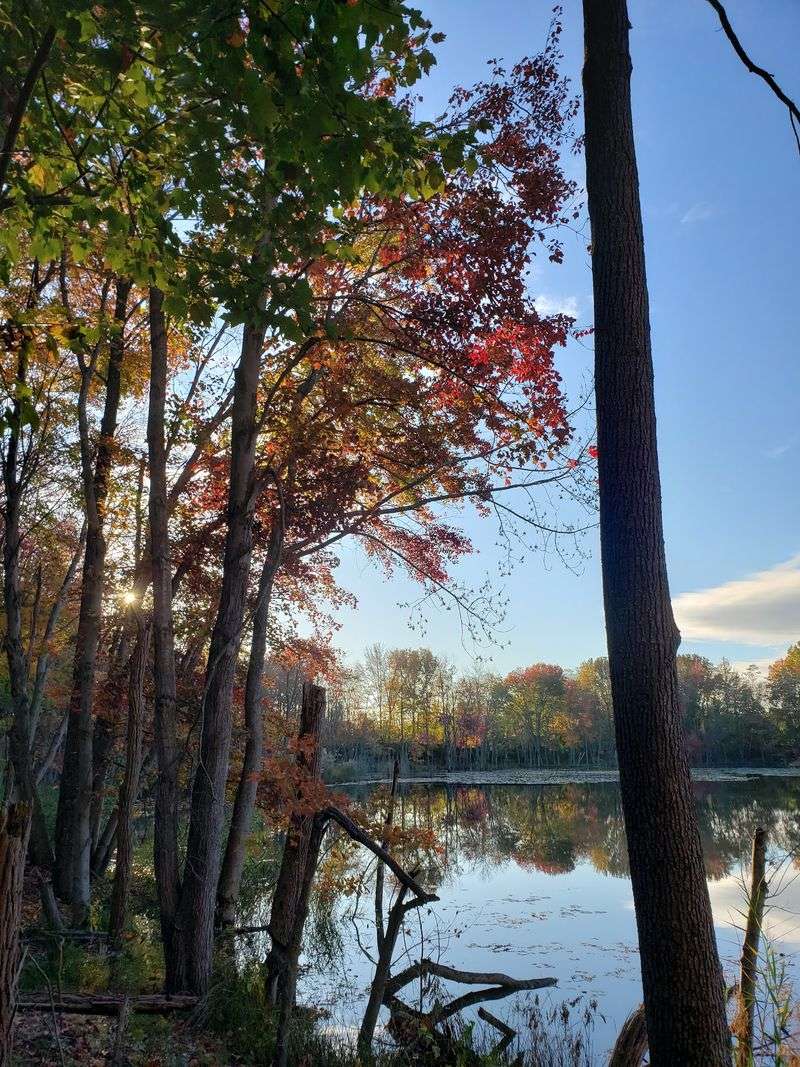
Big water changes the mood of a hike, and the orange-blazed Farrington Lake Trail delivers exactly that. Running about 1.1 miles, it traces the shoreline of Farrington Lake and the banks of Lawrence Brook.
Reflections on the surface can be almost perfect on still mornings, doubling the tree line and the clouds above it. On breezy days the water breaks into ripples and the whole view shifts.
Rock formations along this stretch add something unusual for the county. They are part of a diabase intrusion marking the boundary between the Piedmont and Coastal Plain regions, which is a lot of geology packed into a short walk.
Benchless as much of it is, you will probably just find a dry rock and sit anyway.
Wading birds favor the shallows, so scan the edges before you make noise. Combining this trail with the yellow route makes for a longer outing with genuinely different scenery at each end.
Herons, Kingfishers, And Other Regulars
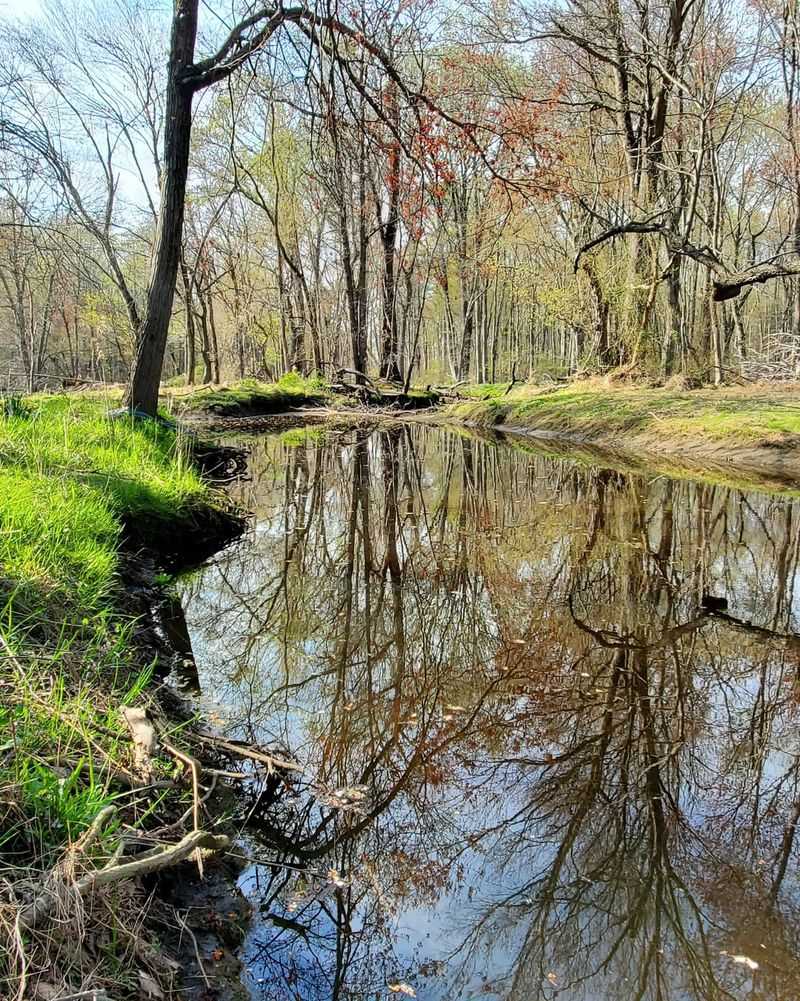
Patience pays off near the water. Great blue herons, belted kingfishers, and great egrets are commonly spotted along the lake edges, either standing motionless in the shallows or perched above the bank waiting for movement below.
Kingfishers usually announce themselves with a rattling call before you ever see them. Herons do the opposite and simply appear, looking like they have been there for hours.
Spring and fall bring migrating songbirds through the woodlands and connecting preserves, which turns an ordinary walk into something closer to a treasure hunt. Warblers move fast, so listen more than you look.
Beaver activity has been noted in parts of the property, and signs of it show up in chewed stumps and altered water levels near ponds.
Deer rustle through the underbrush often enough that you stop jumping at it. Move slowly, keep voices low, and your odds of a good sighting climb noticeably compared to marching through at full speed.
A Quiet Gravesite Tucked Beside The Trail
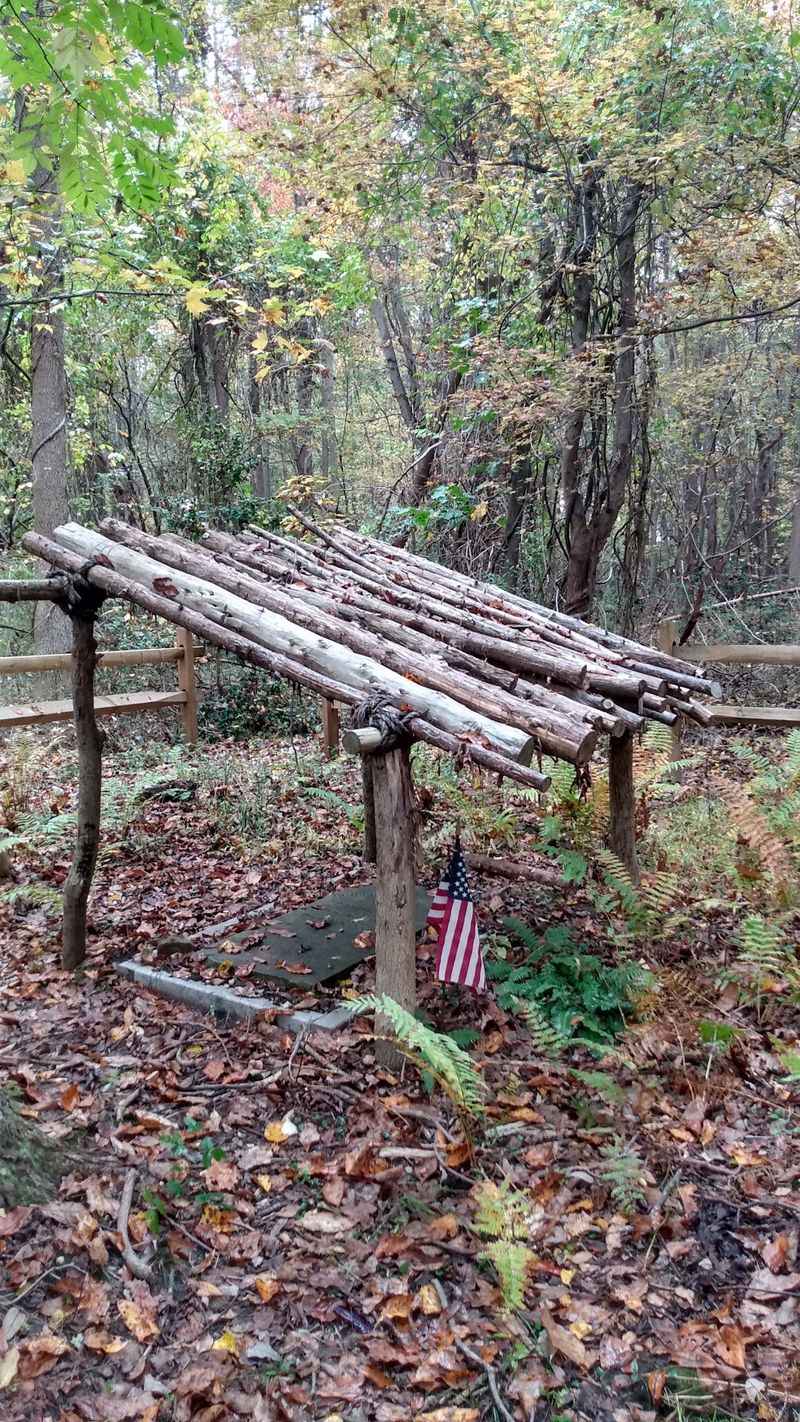
Not everything out here is leaves and water. Along the yellow-blazed route sits a small fenced enclosure holding a sheltered gravestone for Gertrude Provost, dated 1808 to 1839, along with a few smaller headstones.
Coming across it mid-hike is genuinely unexpected. The forest keeps growing around it, and the fence marks off a patch of human history that the woods have otherwise reclaimed.
Some of the wider paths through the property have the feel of old farm roads, which fits a landscape that was worked long before it was protected. That layered past gives the walk a different weight.
Take a moment, then move on. There is nothing to touch or climb, and leaving it undisturbed is the whole point.
Little discoveries like this are part of why Ireland Brook Conservation Area rewards repeat visits. You notice different things depending on the season, the light, and how much attention you are willing to give the edges of the trail.
Connections To Neighboring Preserves
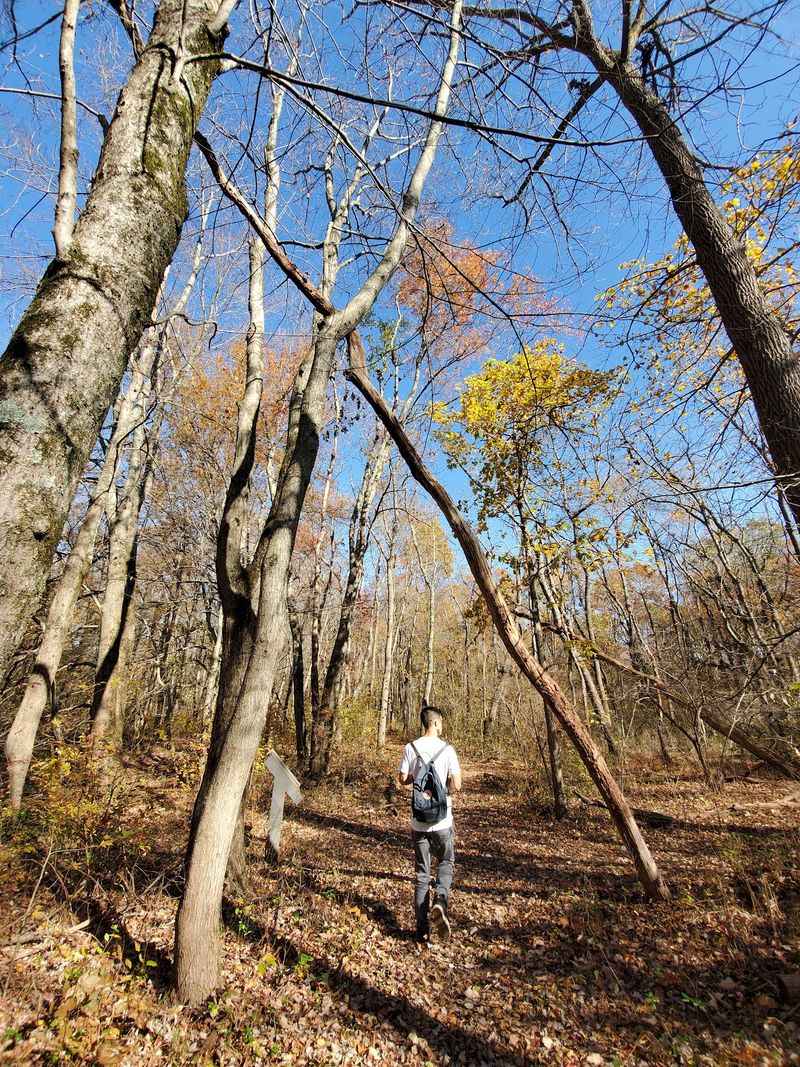
The property does not stop where you might expect. It links up with Davidson’s Mill Pond Park, Tamarack Hollow Preserve, and the Tamarack Golf Course, and together those lands form close to 1600 acres of connected open space across neighboring townships.
That connectivity matters for wildlife, which needs room to move rather than isolated islands of habitat. It also matters for hikers who want mileage.
Using the trailhead near Parkview Court, walkers can string together well over six miles without repeating much. Shorter loops are easy to carve out if you would rather be back in an hour.
The Forest Brook Trail, roughly a mile long, starts from the Riva Avenue Trailhead and gives you yet another entry option.
Parking is limited at the access points, so arriving early on weekends is the practical move. Knowing which trailhead you want before you drive out saves a lot of circling, since the entrances sit on opposite sides of the preserve.
Practical Tips For A Smooth Visit
A little preparation turns a decent walk into a great one. Gates open at 7 AM daily and close in the evening, so an early start gives you the best light and the quietest trails.
Long pants tucked into socks are wise from spring through early fall, since ticks are common in grassy and brushy areas here. Check yourself and any dog before getting back in the car.
Bug spray earns its place in your bag during warmer months. Water does too, because there are no facilities along the trails.
Footwear should handle mud, as low sections stay damp well after rain.
Download or photograph the county trail map ahead of time, and note that the trailhead itself can be easy to drive past.
Leashed dogs are a common sight, and carrying out everything you bring in keeps the place pleasant for the next group.
Ireland Brook Conservation Area is located at Parkview Ct, North Brunswick Township, NJ 08902, with an additional entrance at 581 Riva Avenue in East Brunswick, New Jersey.
