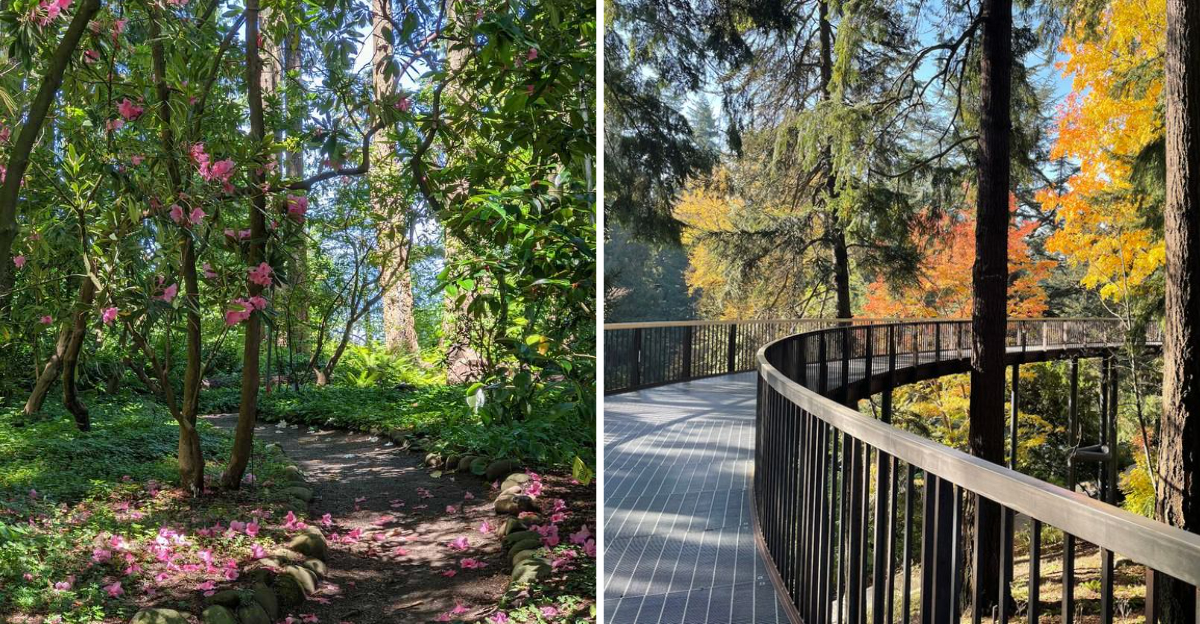
Most people drive right past this place without ever knowing it exists. A stunning botanical garden hides just minutes from the city, yet hardly anyone in this state seems to have discovered it. I promise you’ll feel like you’ve stumbled into a secret paradise the moment you step through the entrance.
The collection here is absolutely remarkable, with rare plants, towering trees, and vibrant blooms that change with every season. A gentle stream meanders through the property, wooden bridges cross peaceful ponds, and shaded benches invite you to sit and soak it all in.
Bring your camera and plenty of time to wander aimlessly through this green sanctuary. Oregon’s best-kept botanical secret is waiting, and trust me, you’ll wonder why it took you so long to find it.
The Remarkable Story of Lilla and John Leach
Before there was a garden, there was a woman with muddy boots and an extraordinary eye for plants. Lilla Leach was a botanist, teacher, and plant explorer who is credited with discovering five plant species previously unknown to Western science.
That kind of legacy does not happen by accident.
Her husband John was a pharmacist and civic leader, and together they made a genuinely remarkable team. In 1932, they purchased a former pig farm along Johnson Creek in outer Southeast Portland and slowly transformed it into something breathtaking.
They called it Sleepy Hollow, which honestly suits it perfectly.
One of Lilla’s most celebrated discoveries is the Kalmiopsis leachiana, a rare flowering shrub named in her honor. After decades of cultivating their beloved property, the Leaches donated the entire estate to the city of Portland in the early 1970s.
The Historic Stone Cabin and Manor House
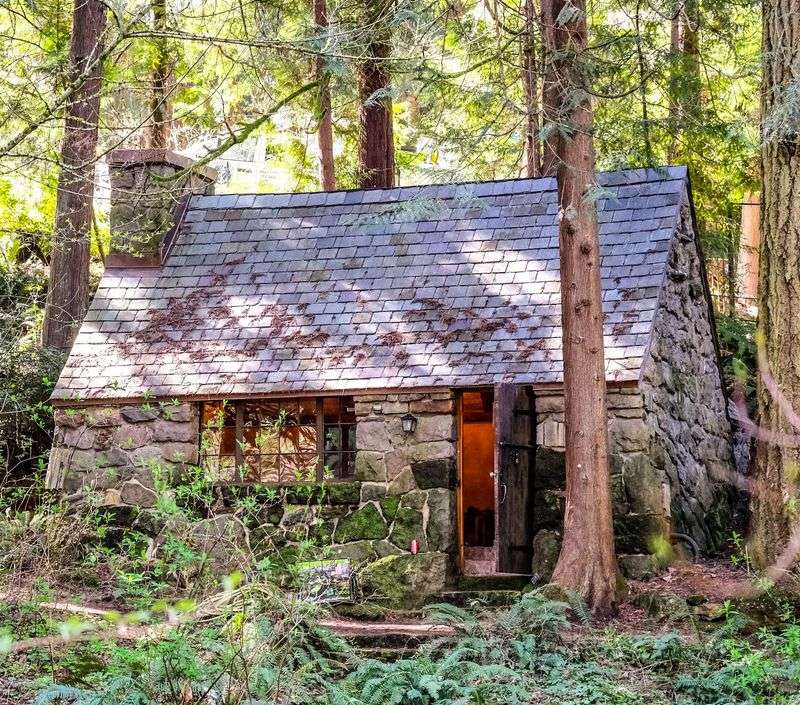
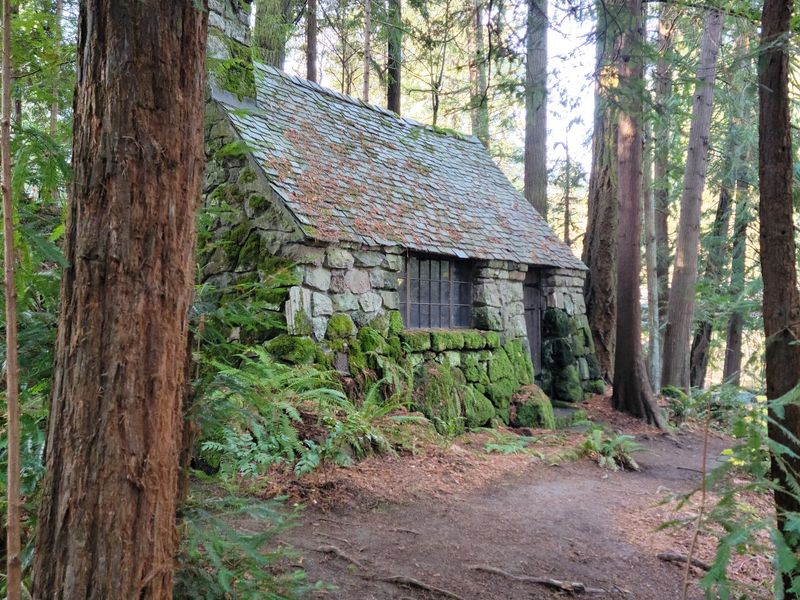
There is something genuinely special about visiting a garden that still has the original home of its founders standing right in the middle of it. The Stone Cabin, built in 1932, was where Lilla and John Leach first lived when they moved onto the property. It is small, mossy, and full of quiet character.
The Manor House came a few years later in 1936, built in the Arts and Crafts style that was popular at the time. It is a beautiful structure, and today it serves as an event venue and houses a gift shop. Seeing it nestled among towering Douglas-firs and flowering plants feels like discovering a storybook estate.
Touring these buildings adds a deeply human layer to the garden visit. You are not just looking at plants; you are walking through someone’s home and life’s work. The Leach Garden Friends organization works hard to preserve both structures and keep the founders’ story alive.
The Aerial Tree Walk Above the Forest Floor
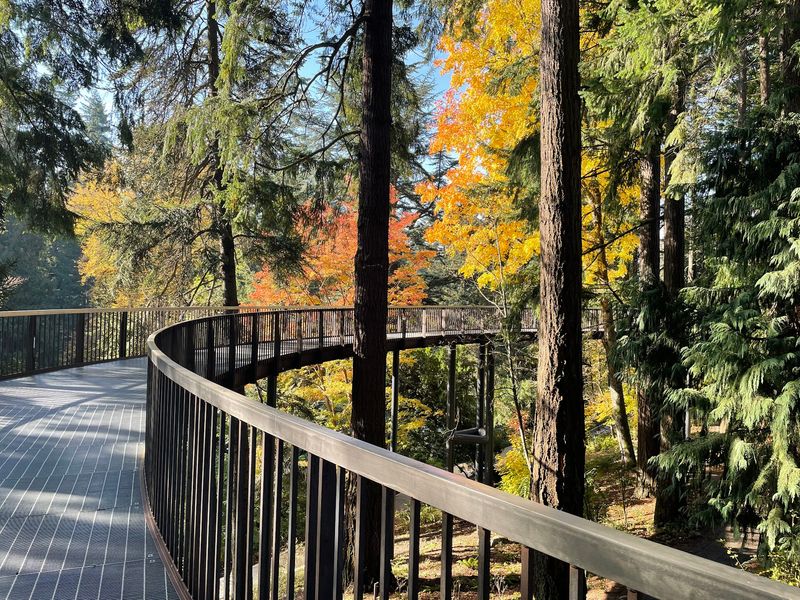
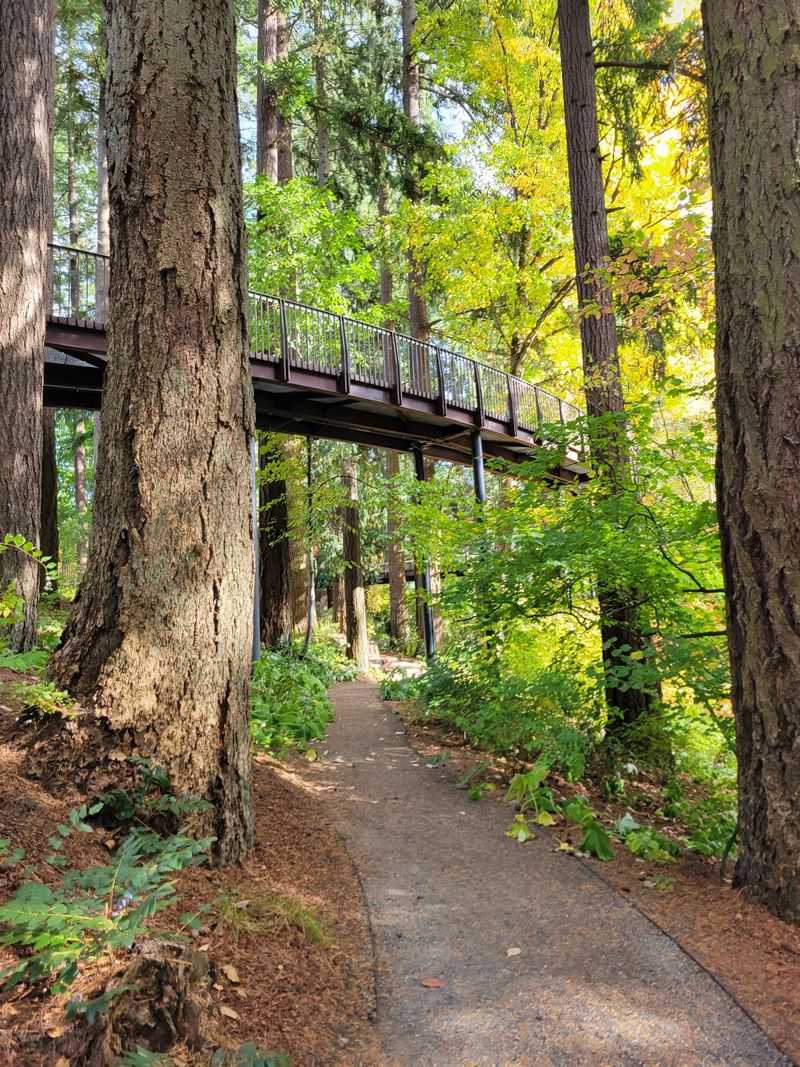
Getting up into the treetops without any climbing gear is not something most botanical gardens offer, but Leach does it beautifully. The Aerial Tree Walk stretches between 350 and 400 feet and sits roughly 30 to 36 feet above the forest floor.
It gives you a completely different perspective on the garden below.
From up there, you can see the canopy from the inside rather than just looking up at it from the ground. The light filters through the Douglas-fir branches in a way that feels almost cinematic. It is the kind of view that makes you stop mid-step just to take it in.
Parts of the walkway are wheelchair accessible, which is a thoughtful touch for a garden that still has plenty of uneven terrain elsewhere. Whether you are visiting with kids, a partner, or just on your own, this elevated path delivers one of the most memorable moments the garden has to offer.
Johnson Creek and the Riparian Pathways
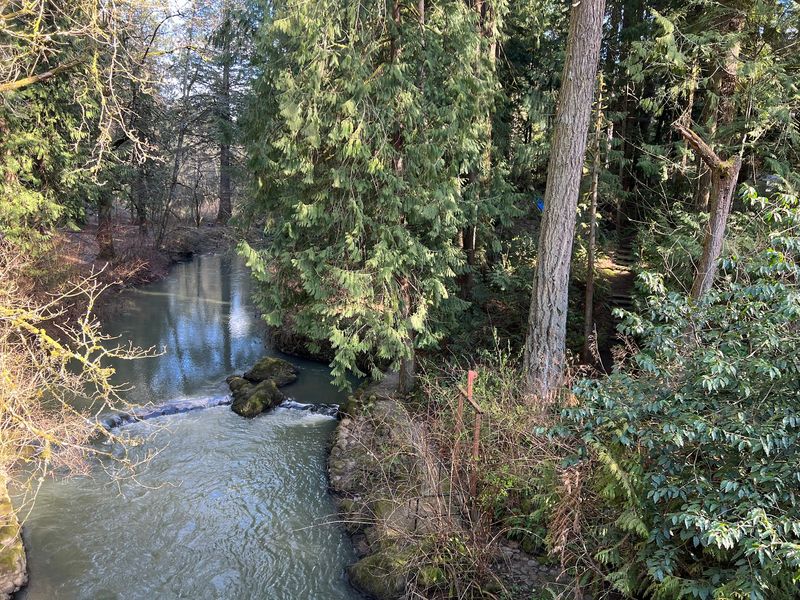
Johnson Creek runs right through the heart of Leach Botanical Garden, and its presence changes the entire mood of the place. The sound of moving water follows you along the lower garden paths, creating a natural soundtrack that is genuinely calming. Some days, that alone is worth the visit.
The creek is not just pretty scenery. It provides vital habitat for coho salmon, steelhead, and coastal cutthroat trout, which is remarkable for a waterway running through a city neighborhood. The riparian area along its banks is dense with native plants and feels far wilder than you would expect.
Pathways wind through this lower section of the garden, crossing the creek via a pedestrian bridge and connecting to quieter wooded trails. The combination of moving water, towering trees, and soft gravel underfoot creates a sensory experience that is hard to find in most urban parks.
It feels genuinely restorative in a way that is difficult to put into words.
A Plant Collection That Covers an Entire Region
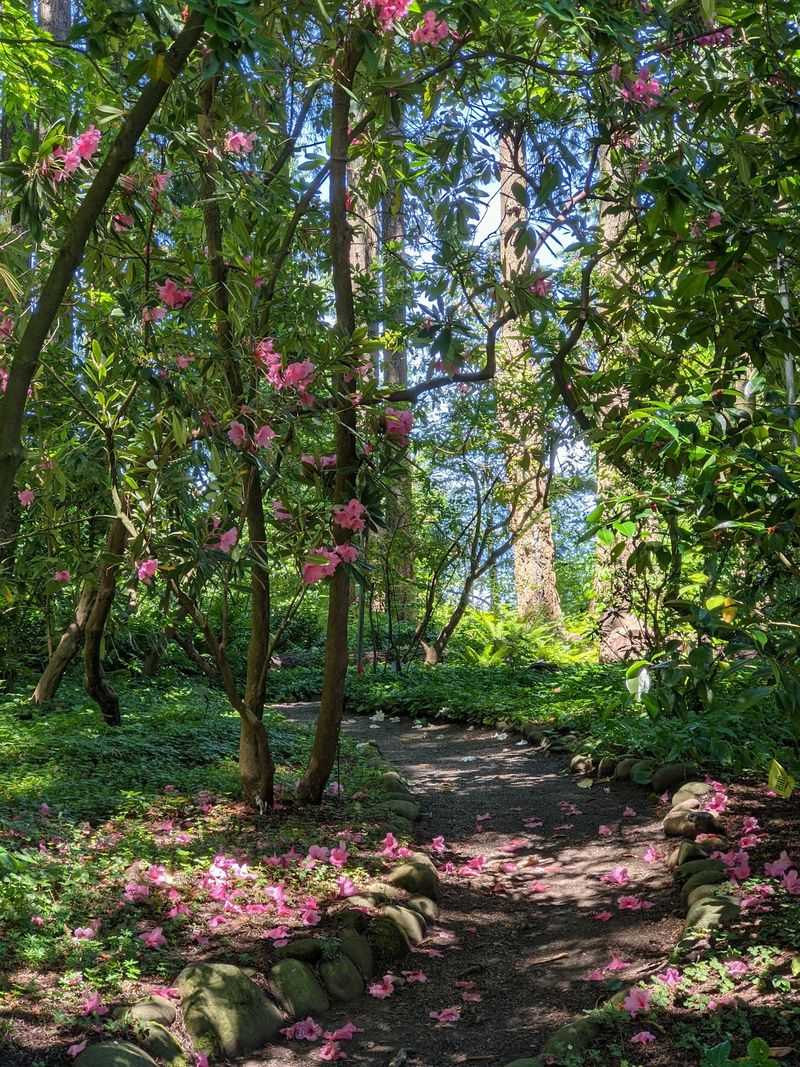
More than 2,000 plant varieties call this garden home, and the range is genuinely impressive for a space of this size. The collection has a strong focus on the flora of Cascadia and the Siskiyou Mountains, which reflects the regions where the Leaches did most of their plant collecting.
It is a living record of their field work.
Specialized collections include ferns, camellias, trillium, azaleas, rhododendrons, spring ephemerals, and a bog garden that feels wonderfully strange and ancient.
There are also native plant sections on the hillside, a coniferous woodland, and a Garry oak savanna that gives the upper garden a completely different character from the creek-side areas below.
The garden also features plants from the Southeast United States, which adds an unexpected layer of variety. Four heritage trees anchor the landscape alongside stately Douglas-firs and Western cedars that have been here far longer than the garden itself.
For plant lovers, this collection is a genuine discovery that rewards slow, attentive exploration at any time of year.
The Half-Acre Pollinator Garden and Meadow
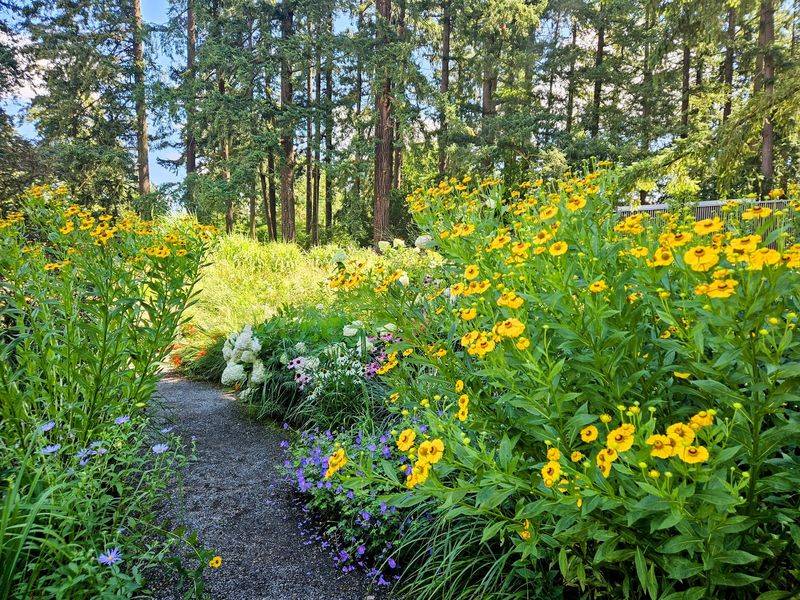
Buzzing with life in the best possible way, the Pollinator Garden and Meadow is one of the most energetic spots in the entire garden. It covers about half an acre and contains 240 unique plant varieties specifically chosen to attract pollinating insects and birds.
On a warm afternoon, the activity in this section is constant and fascinating to watch.
There is something deeply satisfying about a garden space designed not just for human visitors but for the broader ecosystem. Bees move efficiently between blooms, and the whole area hums with a kind of purposeful energy. It feels alive in a way that a purely ornamental garden sometimes does not.
The meadow also looks spectacular across the seasons, shifting from early spring blooms through summer abundance and into the quieter textures of autumn. It is a four-season space, which means a visit in January looks completely different from one in July.
For anyone curious about native planting, pollinators, or just beautiful garden design, this section is an easy favorite.
The Children’s Garden and Environmental Sculptures
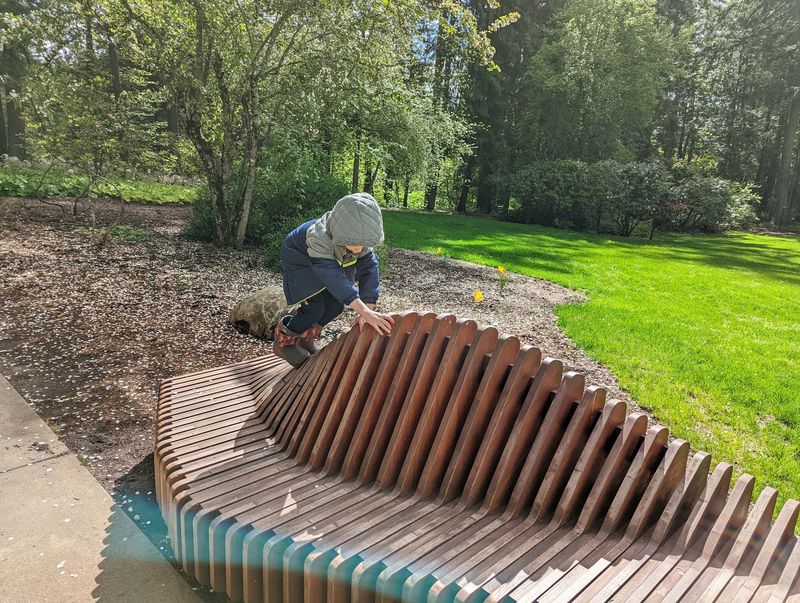
Not every botanical garden manages to be genuinely fun for kids, but Leach pulls it off without feeling forced. The Children’s Garden includes hands-on activities, environmental sculptures, and a grass maze that younger visitors seem to love.
There is even a sculpture that resembles a dinosaur tucked into the landscape, which tends to get a strong reaction from small visitors.
The playful elements do not feel out of place here. They are woven into the garden in a way that encourages curiosity rather than just entertainment. Kids who might otherwise lose interest in plants quickly find themselves drawn deeper into the space.
For families, this section transforms the visit from a nature walk into something more interactive and memorable. Parents get to enjoy the garden’s calmer sections while kids burn energy in a space that is genuinely designed for them.
It is a thoughtful balance that makes Leach Botanical Garden work for multiple generations at once, which is not as easy to pull off as it sounds.
The Contemplative Place by Michihiro Kosuge
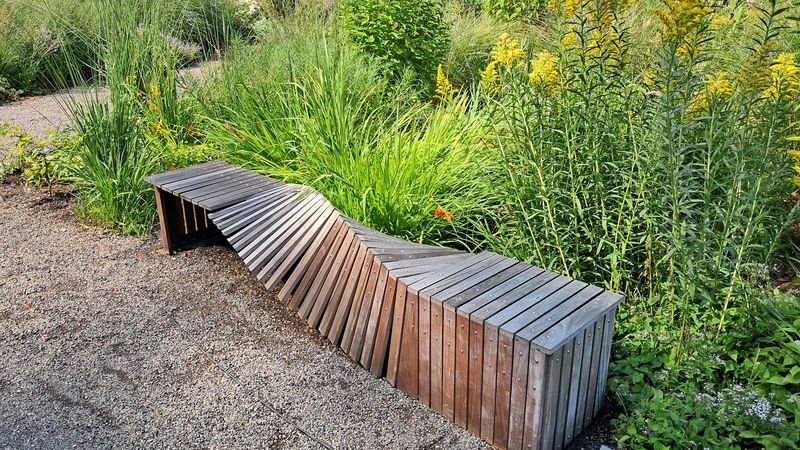
Tucked within the garden is a space that operates on a different frequency from the rest. The Contemplative Place, designed by artist Michihiro Kosuge, is a sculptural and botanical sanctuary that invites visitors to slow down and simply be present. It is the kind of space that rewards quiet attention.
The design blends art and nature in a way that feels intentional without being heavy-handed. Kosuge’s work creates a sense of enclosure and stillness that separates this corner of the garden from the more open pathways. Sitting there for even a few minutes has a noticeably calming effect.
Gardens like this often include a contemplative area as an afterthought, but at Leach it genuinely earns its place. The surrounding plantings complement the sculptural elements beautifully, and the overall effect is one of considered harmony.
If you visit during a busy weekend, this spot offers a reliable refuge from the movement elsewhere in the garden. It is easy to linger here longer than planned, and that is not a bad thing.
Forest Bathing, Guided Tours, and Garden Events
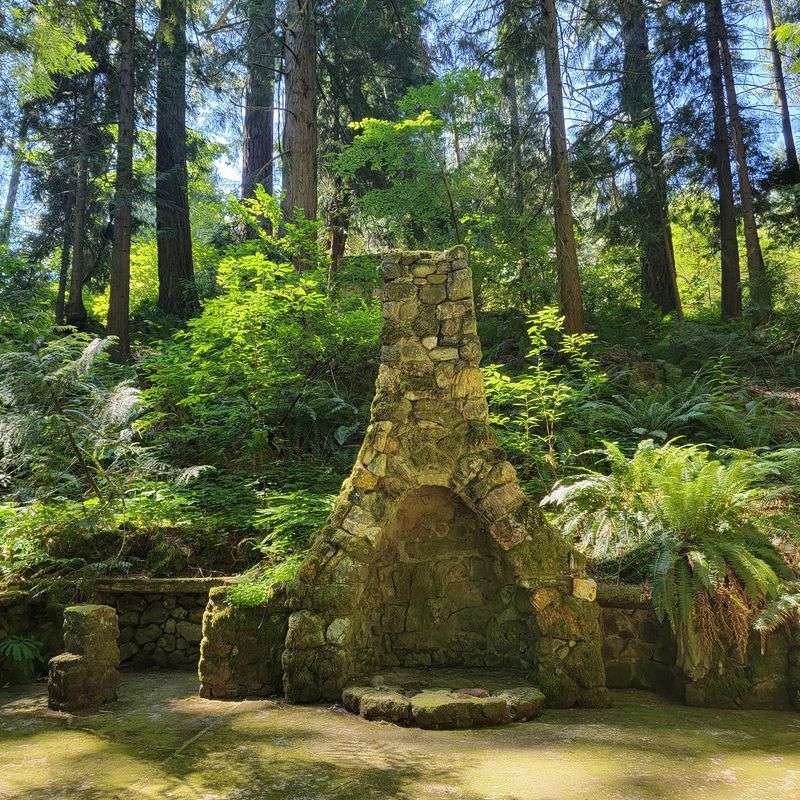
Leach Botanical Garden is not just a place to wander through on your own, though that is a perfectly good option. The garden offers guided tours, specialized plant and history tours, and forest bathing walks that give visitors a much richer experience of what they are seeing.
Forest bathing, for anyone unfamiliar, is simply the practice of spending slow, intentional time in nature. It is more effective than it sounds.
Workshops like watercolor sessions and art activities are also part of the programming, which makes the garden feel like a genuinely active community space rather than just a pretty backdrop. Children’s concerts and soundbaths round out an events calendar that changes with the seasons.
Picnic spots near the Fireside Arbor and Terrace, which features a granite fire element, make it easy to extend a visit into a full afternoon. The gift shop in the Manor House is worth a browse too. There is almost always something happening here that adds an extra layer to the experience.
A Peaceful Urban Escape Hiding in Plain Sight
The thing that surprises most first-time visitors is not any single feature of Leach Botanical Garden. It is the feeling of the whole place. Despite sitting just east of a busy main road and a short drive from downtown Portland and the airport, the garden manages to feel genuinely secluded.
The noise of the city fades quickly once you are on the paths.
Moss-covered stones and branches line the trails, and the light through the Douglas-firs has that particular Pacific Northwest quality that is hard to describe but immediately recognizable. Deer, squirrels, raccoons, and foxes have all been spotted moving through the property.
The garden supports real wildlife, not just decorative plantings.
Recent improvements including a new Main Entry and expanded Upper Garden trails have made the space more accessible and easier to navigate. The garden has grown from its original 4-plus acres to around 16 to 17 acres, and there is always something new to discover.
For anyone living in Portland who has not yet visited, this is the nudge you needed.
Address: 6704 SE 122nd Ave, Portland, Oregon
