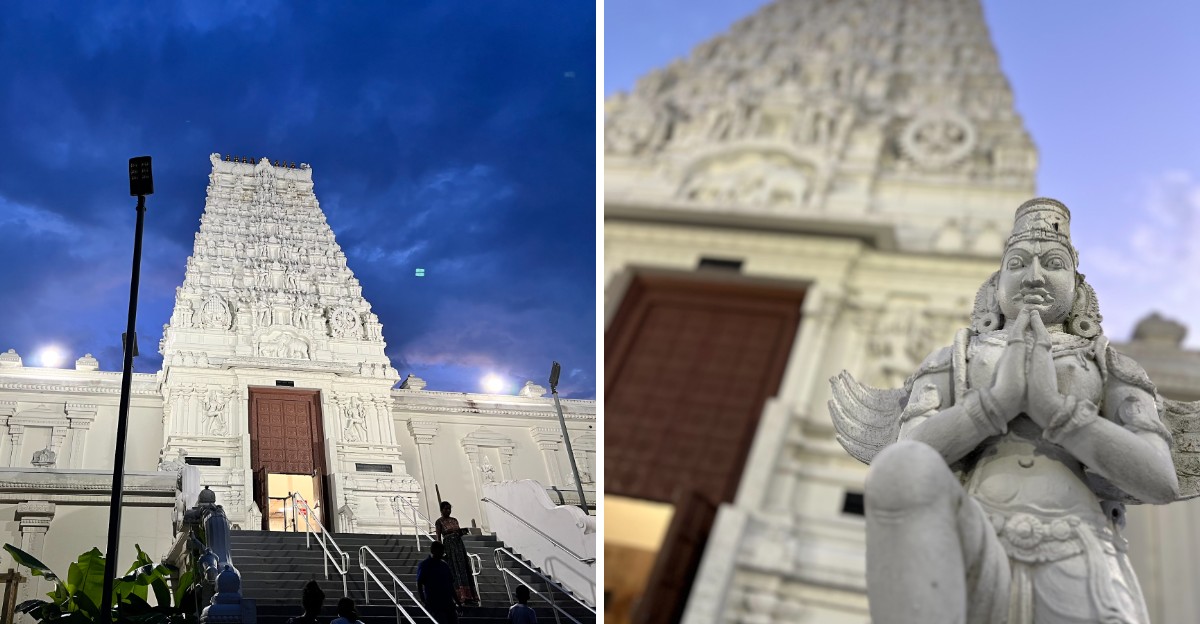
An intricately carved white entrance tower rises above a broad staircase, with sculpted figures covering its tiers. It is a striking introduction to a Maryland Hindu temple that brings several South Indian architectural traditions together in one building.
Inside, shrines honor Shiva, Vishnu, and other Hindu deities, while the complex also has spaces for music, dance, and community events. This is an active place of worship, not simply an architectural attraction, and that matters when visiting.
I am especially interested in the craftsmanship behind the tower and the care that went into creating a shared space for different traditions. You can take time to admire the exterior details and learn about the temple’s religious and cultural role while respecting ongoing prayers.
The more closely you look, the more details appear.
A Friendship Idea Turned Into a Landmark
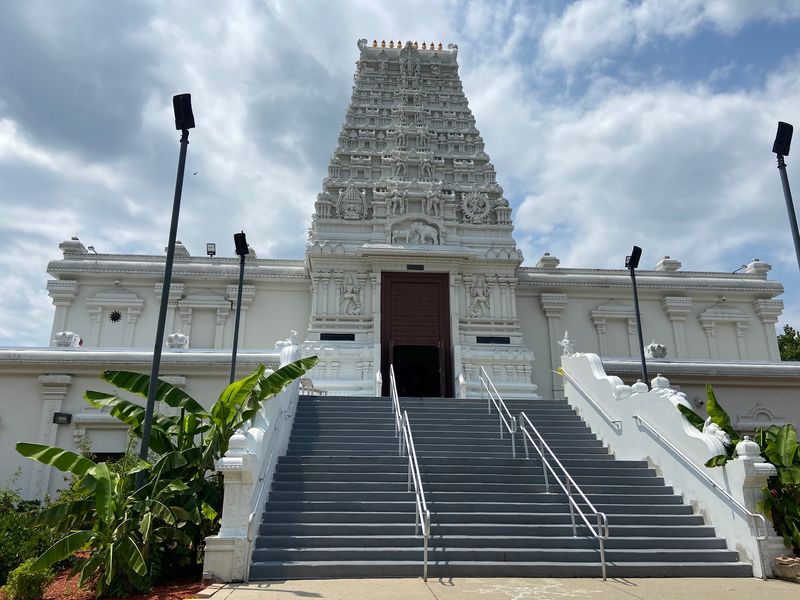
Back in 1976, a handful of friends shared a big idea. They wanted a Hindu temple near the nation’s capital.
That conversation became the Sri Siva Vishnu Temple, now one of the largest Hindu temples in the Western Hemisphere. Not bad for a chat among pals.
Most friend group plans barely survive picking a restaurant.
The Sri Siva Vishnu Temple Trust formed in 1980. Four years later, the group bought land in Maryland.
A small building called the Balalaya came first, and the earliest shrines were installed there.
Construction on the main temple started in 1988. Shrines were consecrated in stages between 1990 and 2002.
The first Kumbabhishekam, a sacred consecration ceremony, took place in 1991.
Patience clearly paid off here. Each step added something new, and the complex kept growing year after year.
You can almost read that steady effort in the finished building.
Knowing this backstory makes a visit feel richer. You aren’t just looking at a pretty structure.
You’re seeing decades of planning, fundraising, and devotion from a community that dreamed big.
Keep that in mind as you take in the scale of the place. Every tower and shrine started as a hope shared between friends.
That 56-Foot Tower Deserves a Long, Slow Look
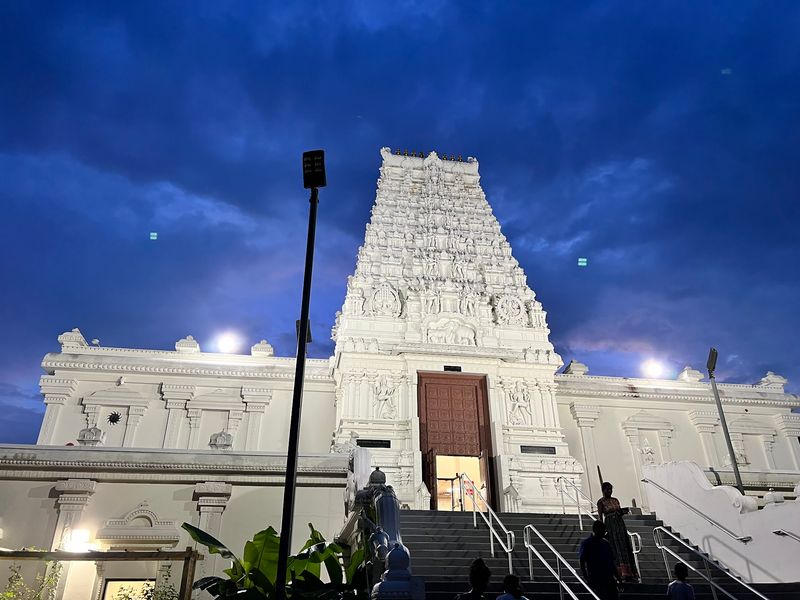
Hundreds of deities cover the Rajagopuram, the multi-tiered tower that greets visitors. It stands 56 feet tall.
Your neck will notice before your brain catches up.
The tower arrived during a major expansion in 2002, called the Mahakumbabiskem. That same project added a spacious hall known as the Vasantha Mandapam.
Together, they changed the whole look of the complex.
Here’s a fun detail to hunt for. Shiva and Vishnu get equal representation across the carvings.
That balance mirrors the temple’s big mission of honoring both traditions together.
Then there’s the quirky part. Somewhere in the design, a bull and an elephant appear merged into one image.
Finding it feels like a sacred version of a hidden picture puzzle.
Bring patience and maybe a friend with sharp eyes. The detail packed into each tier rewards a slow walk around the base.
Rushing past would be like skimming the last page of a great book.
Gopurams for Venkateswara and Ayyappa followed in July 2003. All deities were re-consecrated that year too.
So the skyline you see today took shape fairly recently, even though the dream began decades earlier.
Two Traditions Share One Roof Here
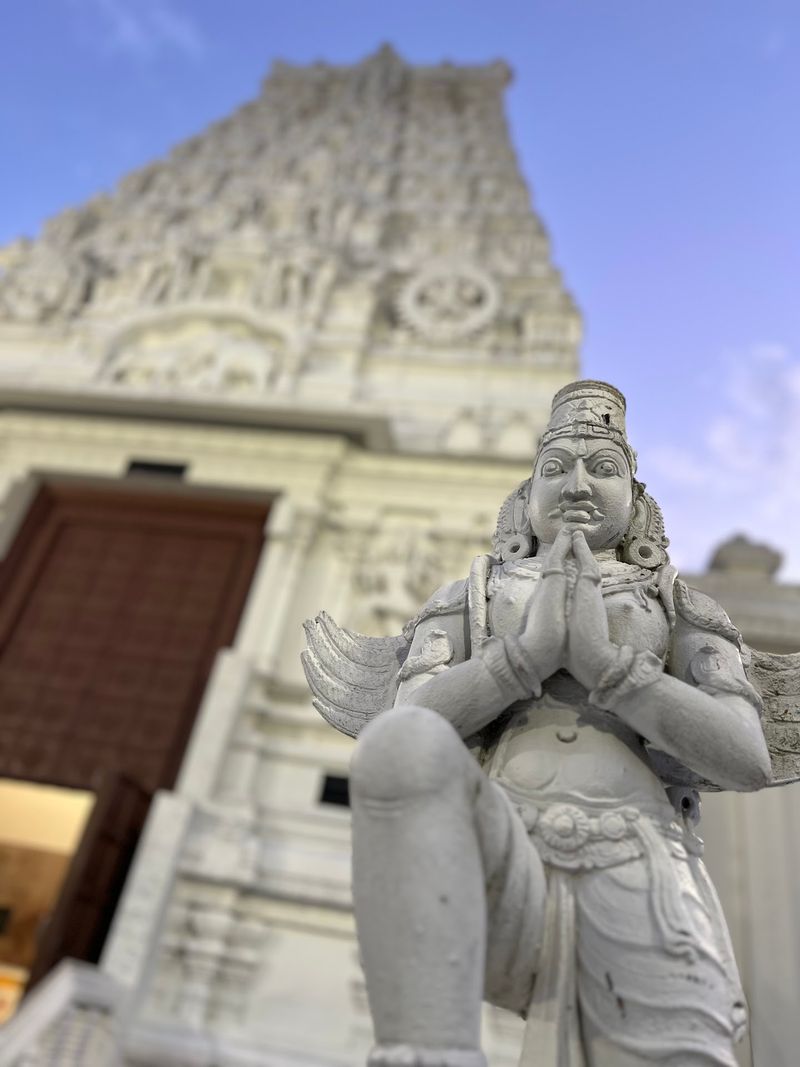
Shaiva and Vaishnava traditions often have their own separate temples. At this Maryland landmark, they share the same space.
Shiva appears as Ramanathaswamy. Vishnu appears as Ananthapadmanabha, resting on the great serpent.
That combination reflects the wide range of Hindu families the temple serves.
The roster of shrines keeps going. You’ll find Ganesha, Parvati, Lakshmi, Saraswathi, Durga, Rama, Krishna, Subrahmanya, Andal, Hanuman, and the Navagrahas.
It’s a lot of divine company in one building.
The Ananthapadmanabha shrine is the one that stops many visitors in their tracks. Reclining Vishnu images like this aren’t common in the United States.
Seeing one in suburban Maryland feels genuinely surprising.
A few friendly tips help here. Move quietly around active worship and give space to people praying.
Photos and videos aren’t allowed inside, so let your memory do the work.
Honestly, that rule is a gift. Without a phone in hand, you actually look at things.
The colors, lamps, and decorated deities get your full attention instead of your camera roll.
Take your time going from shrine to shrine. Each one has its own character and story worth discovering.
Six Architectural Styles Somehow Live in Harmony
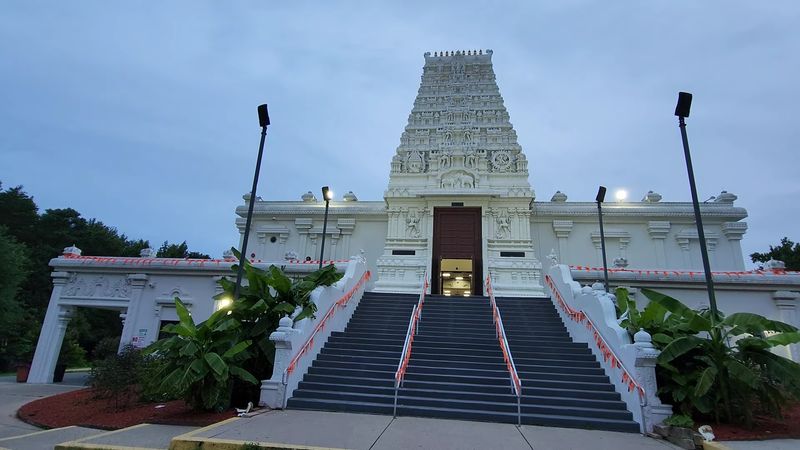
Most buildings pick one style and stick with it. The Sri Siva Vishnu Temple went bigger and blended six.
The design pulls from Mayan, Pallava, Vijayanagara, Kerala, South Canara, and Chola styles of South Indian temple architecture. Each one comes from a different region or era.
Mixing them sounds risky, yet it works beautifully here.
The master behind the plans was Dr. Ganapati Sthapati of Tamil Nadu, India. He was a noted temple architect.
His guidance gave the Maryland temple real roots in ancient building traditions.
Think of it like a great playlist. Different artists, different moods, but everything flows together.
Your eyes keep moving from one detail to the next without getting bored.
You don’t need an architecture degree to enjoy it. Just notice how the shapes, layers, and decorations change as you walk around.
Some areas feel grand and towering, while others feel more intimate.
History buffs will love comparing features to famous temples in India. Casual visitors can simply admire the craftsmanship.
Either way, you get a crash course in South Indian design without buying a plane ticket.
That’s a pretty good deal for a trip down Cipriano Road.
A Peaceful Corner Honors Sai Baba
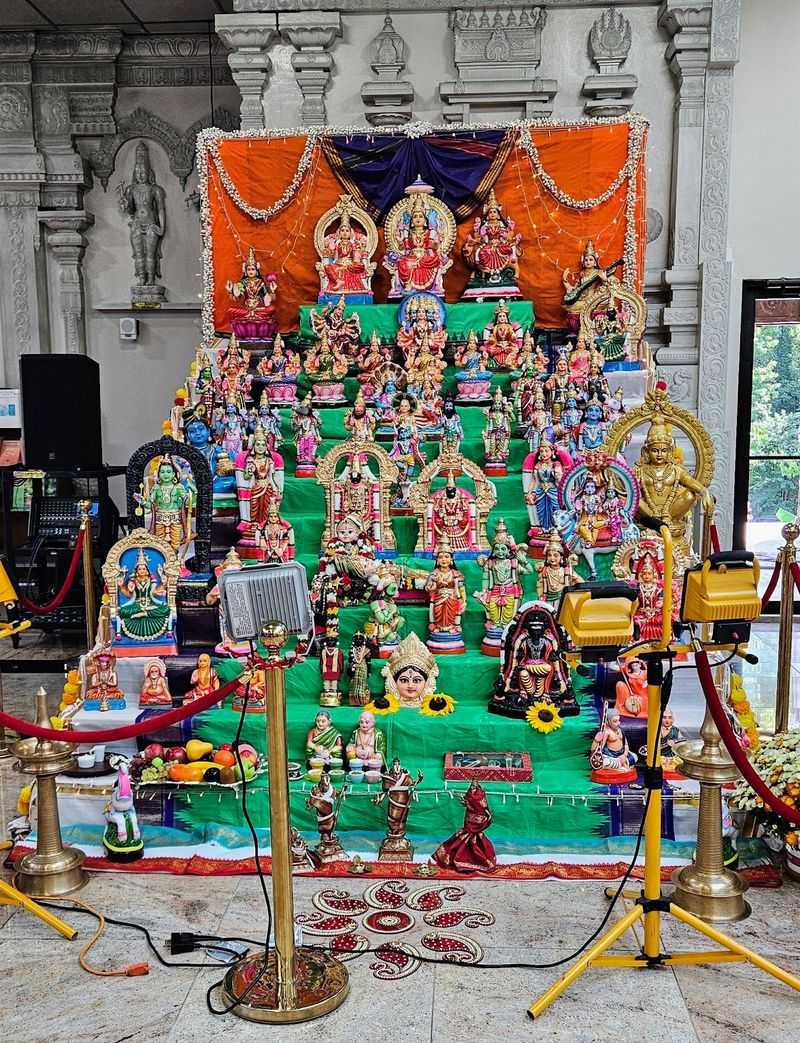
Repurposed buildings don’t usually become sacred spaces. Yet a former guest house on the grounds turned into a Sai Baba temple in the 1990s.
The ground level features a prominent Vigraham area for Sai Baba of Shirdi. A Vigraham is a sacred image of a deity.
It gives devotees a focused, quiet place to pray.
Head upstairs and the mood shifts again. The second level holds a meditation area along with the Sri Vasavi Shrine.
It’s a calmer spot for reflection away from the main temple’s energy.
I love the creativity behind this space. Instead of tearing something down, the community gave an ordinary building a whole new purpose.
That feels very fitting for a place built on shared effort.
Don’t skip it just because it’s smaller. Many visitors focus on the giant tower and miss the quieter corners.
This one adds another layer to your visit.
Bring a few minutes of stillness with you. The meditation area works well for anyone who wants a pause.
Even a short sit can reset a busy day.
Plus, it shows how the campus keeps evolving. New chapters keep getting added to this remarkable story.
Eighteen Steps Bring a Piece of Kerala to Maryland
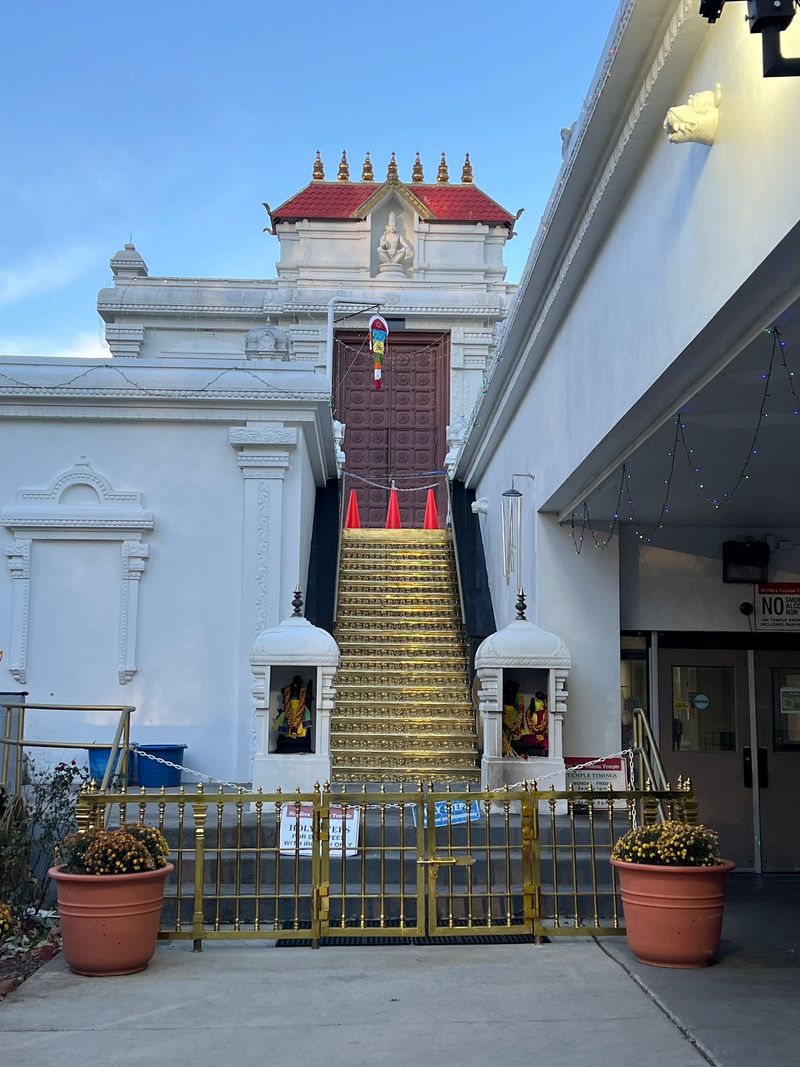
Eighteen sacred steps lead up to the Sri Ayyappa Shrine. They’re modeled after the famous Sabarimala Temple in Kerala, India.
In the Sabarimala tradition, those steps carry deep meaning. Devotees climb them after completing a period of spiritual discipline.
Having that tradition recreated near Washington is a big deal for many families.
The shrine has become a landmark of its own. The temple is a gathering place for South Indian festivals and ceremonies throughout the year.
People travel from across the region to take part.
For first-timers, the steps are a fascinating sight. They show how carefully the temple honors specific customs from different parts of India.
Nothing here feels generic.
A quick bit of etiquette goes a long way. The steps hold special significance, so watch respectfully rather than treating them like a photo spot.
Follow posted guidance and ask temple staff if you’re unsure.
Ayyappa also received his own gopuram in July 2003. That tower marks the shrine from outside, making it easy to spot.
Look for it as you circle the complex.
It’s a reminder that this Maryland temple keeps many traditions alive, not just one. Every corner tells its own regional story.
Festivals, Music, and Dance Fill the Calendar
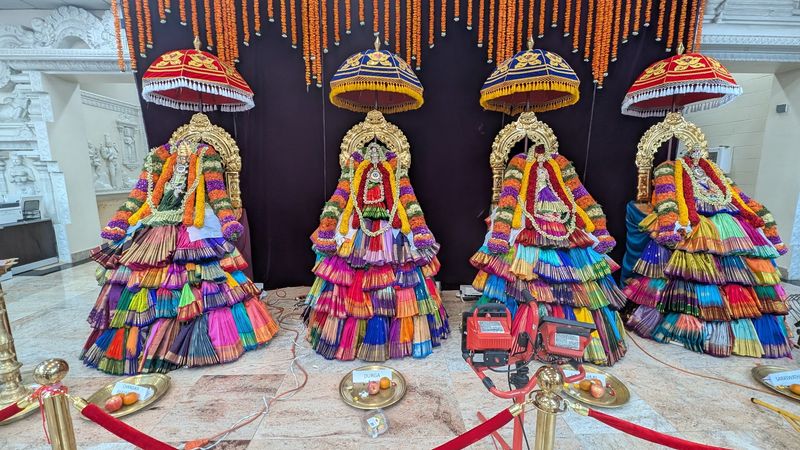
Quiet days are lovely, but festival days bring the whole place to life. The temple hosts South Indian festivals and ceremonies throughout the year.
Celebrations draw people from across the region. Onam, the harvest festival from Kerala, is one example that has been celebrated here.
These events show off the community’s deep cultural roots.
Traditional music and dance performances also take place at the temple. They reflect the many different styles of Hindu worship.
For newcomers, it’s a wonderful window into living traditions.
The temple’s role reaches beyond worship too. It runs educational programs, cultural events, and outreach initiatives.
That makes it a true community center for Maryland and the wider Washington area.
Planning tip time. Check the temple’s event calendar before heading over.
Festival days can feel very different from an ordinary weekday visit.
Two homakundams also sit on the grounds. A large one serves temple ceremonies, while a smaller one is set aside for personal use.
Priest services are available for families who want special rituals.
Whether you come for a festival or a normal afternoon, there’s always something meaningful happening. This calendar rarely sits still for long.
Know These Tips Before You Pull Into the Lot
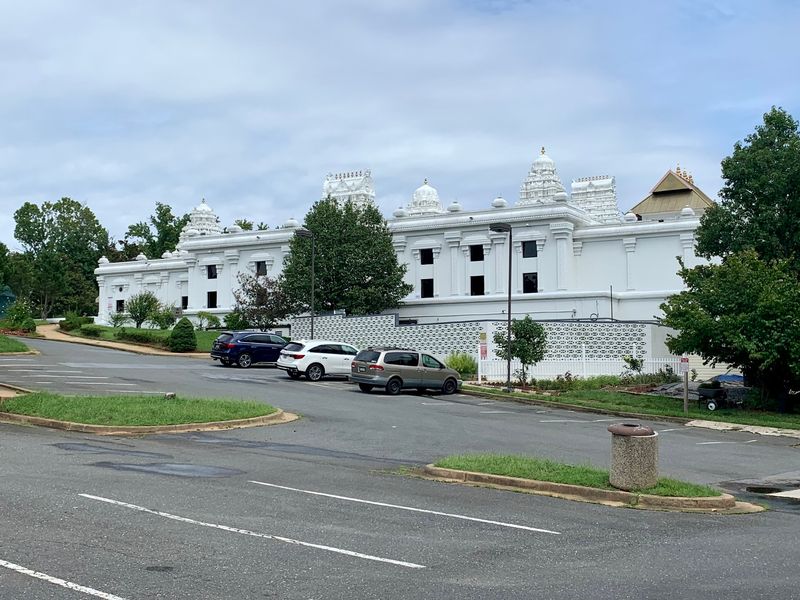
Getting there is easy. You’ll find the temple at 6905 Cipriano Rd, Lanham, MD 20706, about 12 miles from Washington, D.C.
Hours are fairly simple to remember. On weekdays, it’s open 9 AM to 1 PM and again 5 PM to 9 PM.
Weekends and holidays run straight from 9 AM to 9 PM.
That midday weekday break catches people off guard. Plan around it, or you’ll be admiring the tower from the parking lot.
Not the worst view, but still.
Dress matters here. Modest clothing that covers shoulders and knees is recommended.
Shoes come off before entering, and shoe storage is provided.
Parking is available on site. The temple is also wheelchair accessible, which helps families with older relatives or mobility needs.
Everyone can enjoy the visit.
Remember the no-photos rule inside the temple. Snap your pictures of the exterior, then tuck the phone away.
Your full attention is the best souvenir.
Finally, come curious. The Sri Siva Vishnu Temple welcomes visitors who want to learn and experience its calm atmosphere.
Few places in Maryland let you feel like you’ve crossed an ocean while staying this close to home.
