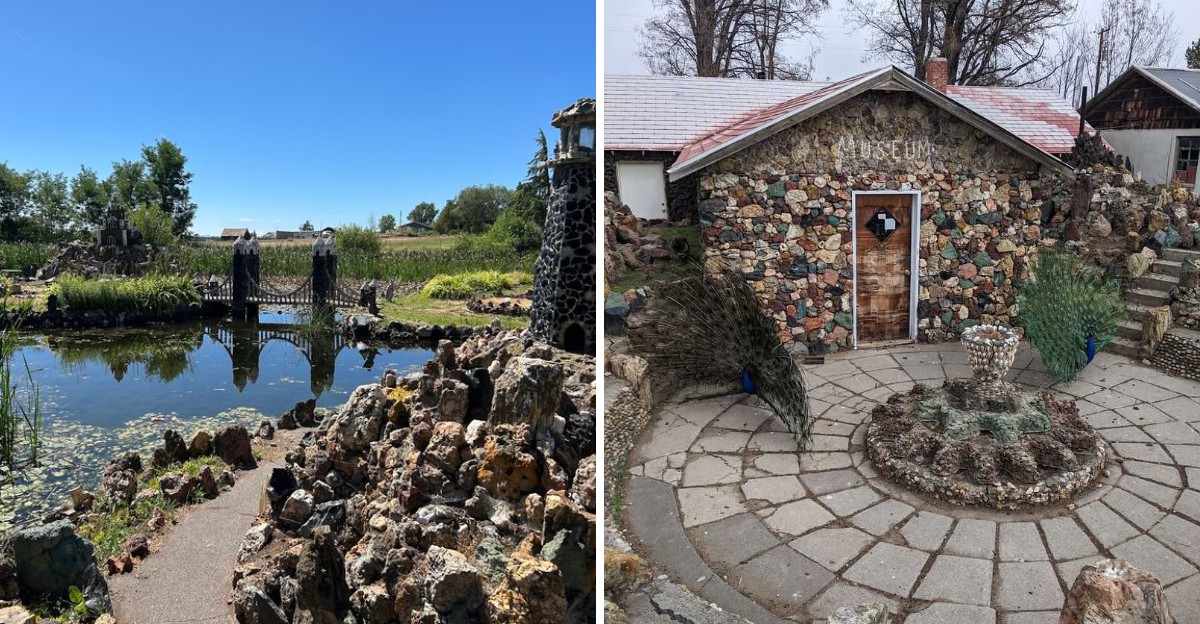
Miniature worlds don’t usually take decades to build, yet someone clearly didn’t mind the wait here.
Tiny castles rise no taller than a knee, bridges arch delicately over equally small ponds, and entire villages sit crowded together across the property. All of it made from stone, stacked piece by piece over years by someone who apparently never ran out of patience or ideas.
Nothing about the scale prepares visitors for how detailed everything turns out to be up close. Kids crouch down immediately, adults end up doing the same thing minutes later, both equally drawn into a world built small enough to overlook at first glance.
Oregon holds onto plenty of strange, handmade attractions built purely from obsession rather than profit. This garden ranks among the most patient examples, one tiny stone at a time.
The Miniature Castles That Started It All
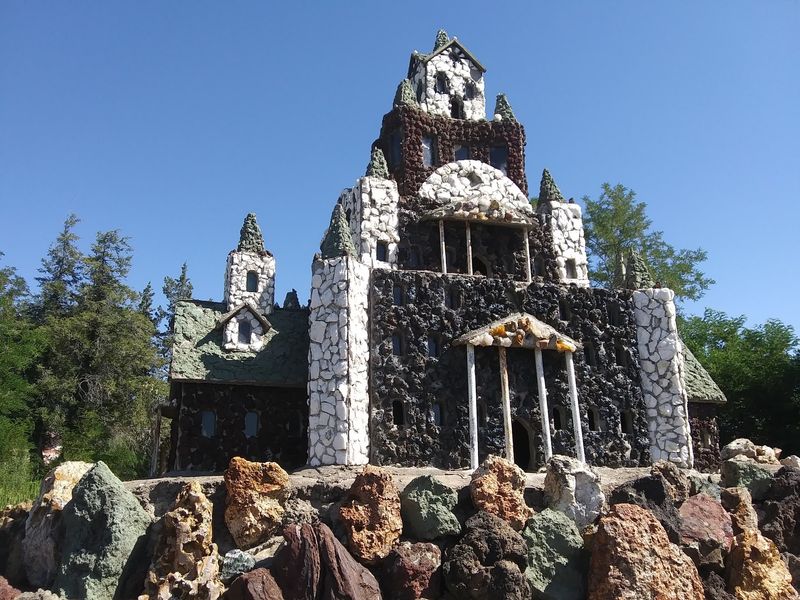
Crouching down beside one of the little castles is when the whole place clicked for me. Each tower is built from stacked lava rock, glinting agate and slabs of petrified wood, all set in concrete by hand.
Some rise only knee-high, while others reach past the shoulder with turrets, tiny staircases and arched windows that frame a slice of desert sky.
Rasmus Petersen, a Danish immigrant farmer, began building them in 1935 using stone he collected from within roughly 85 miles of his property. He kept going for more than two decades.
The detail is what surprises visitors most. Look closely and you will spot little windows fitted with colored glass, miniature drawbridges and rock chosen for its exact color and sparkle.
Climbing on the structures is not allowed, and for good reason, since the mortar has weathered plenty of desert winters. Restoration work has been steadily underway. Bring a camera that focuses close. The best photos here are the small ones, taken at castle height rather than standing up.
Tiny Bridges Crossing Even Tinier Ponds
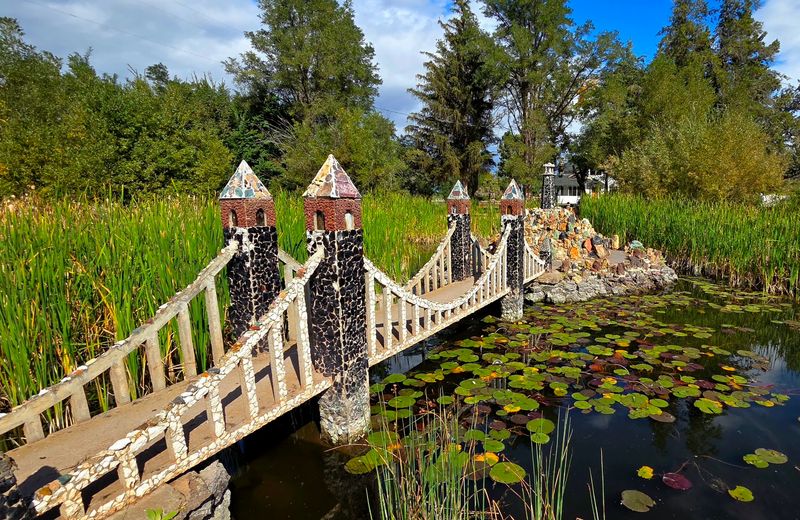
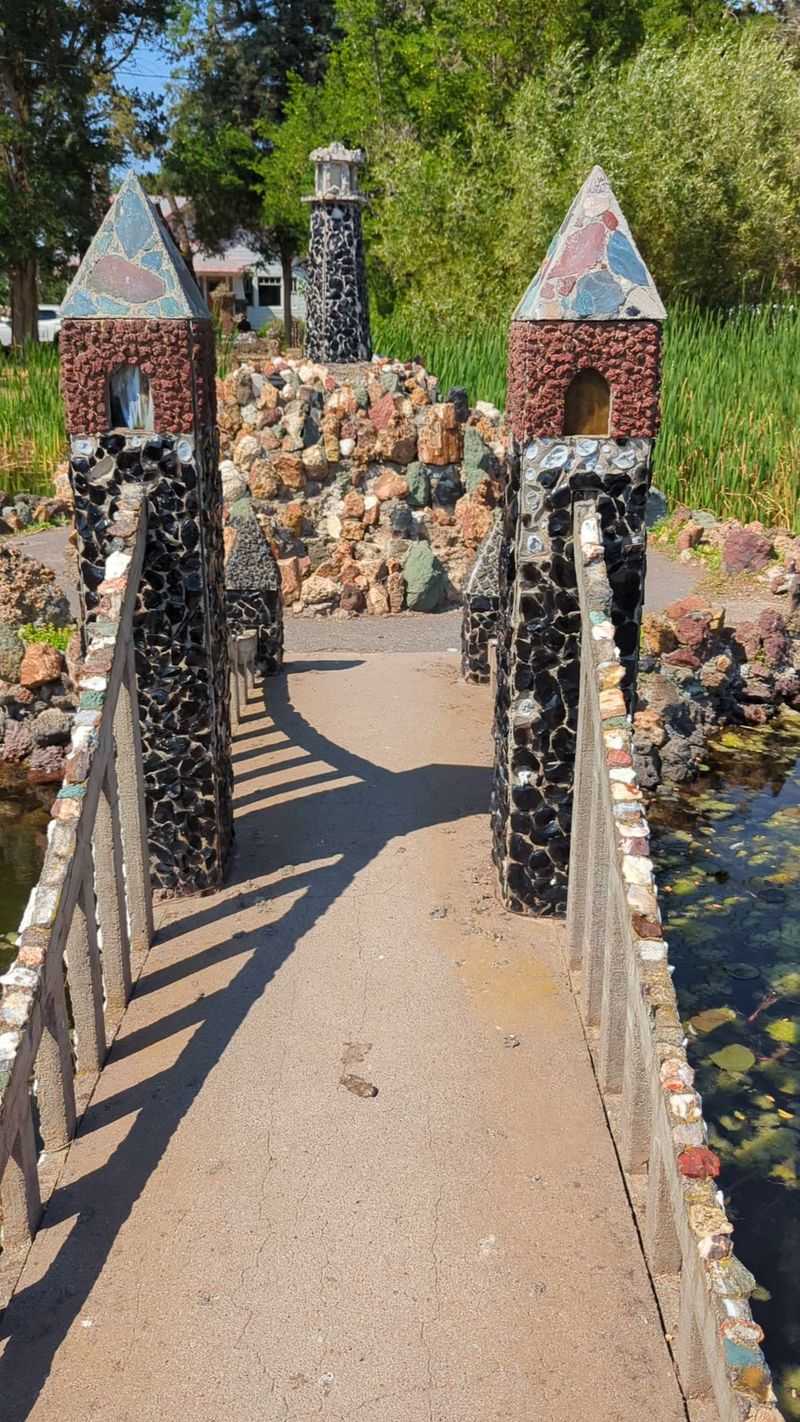
Half the fun is following the little waterways that thread between the displays. Arched bridges span ponds barely wide enough for a duck, and each one is built from a different mix of stone.
Water lilies bloom in the warmer months, and when the fountains are flowing the whole garden takes on a cooler, greener feeling that seems impossible in the high desert.
Water levels change with the season and with ongoing repair work, so late spring and summer tend to show the ponds at their best.
What I liked was how deliberately the bridges were placed. They are not decoration alone. Petersen built pathways that make you slow down, curve around a pond and approach each structure from a specific angle.
Chickens and peacocks wander the same paths, occasionally pausing mid-bridge for no reason at all. Watch your footing near the edges, especially with small kids. The stone can be uneven, and the ponds are shallow but muddy.
Whole Villages Built at Ankle Height
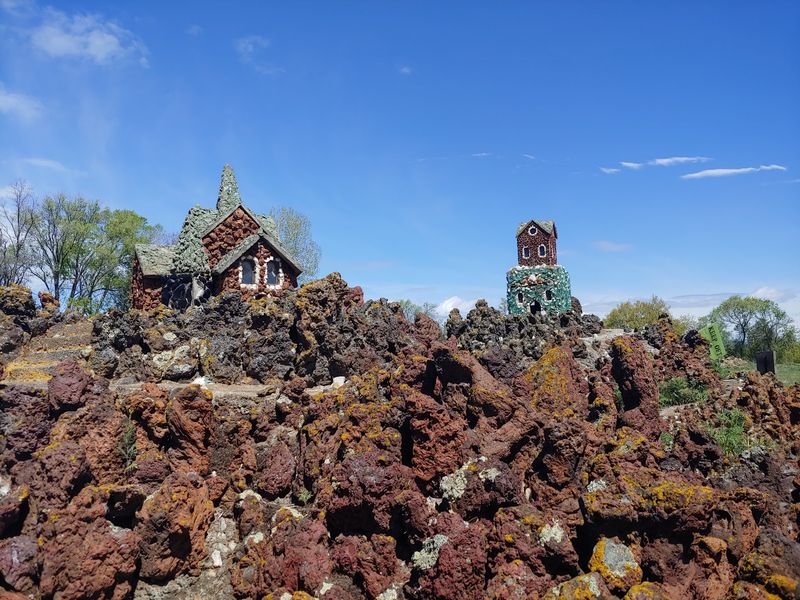
Clusters of miniature buildings appear along the paths like small towns dropped into the sagebrush. Houses, chapels and towers sit together with little roads running between them.
One grouping suggests a European village, complete with a church steeple, while another leans toward something closer to a frontier settlement. Petersen worked without blueprints, shaping each scene from memory, imagination and whatever stone he had hauled home that season.
Give yourself time to circle each village twice. From one side you see the front doors and window glass, and from the other you notice the rougher construction and the sheer volume of hand-placed stone. Kids tend to love this section because everything sits at their eye level for once.
Fun detail worth knowing: new rock creations are still being discovered on the property as volunteers clear overgrown areas. The garden is, in a small way, still revealing itself decades after its builder finished working.
Peacocks With Serious Opinions
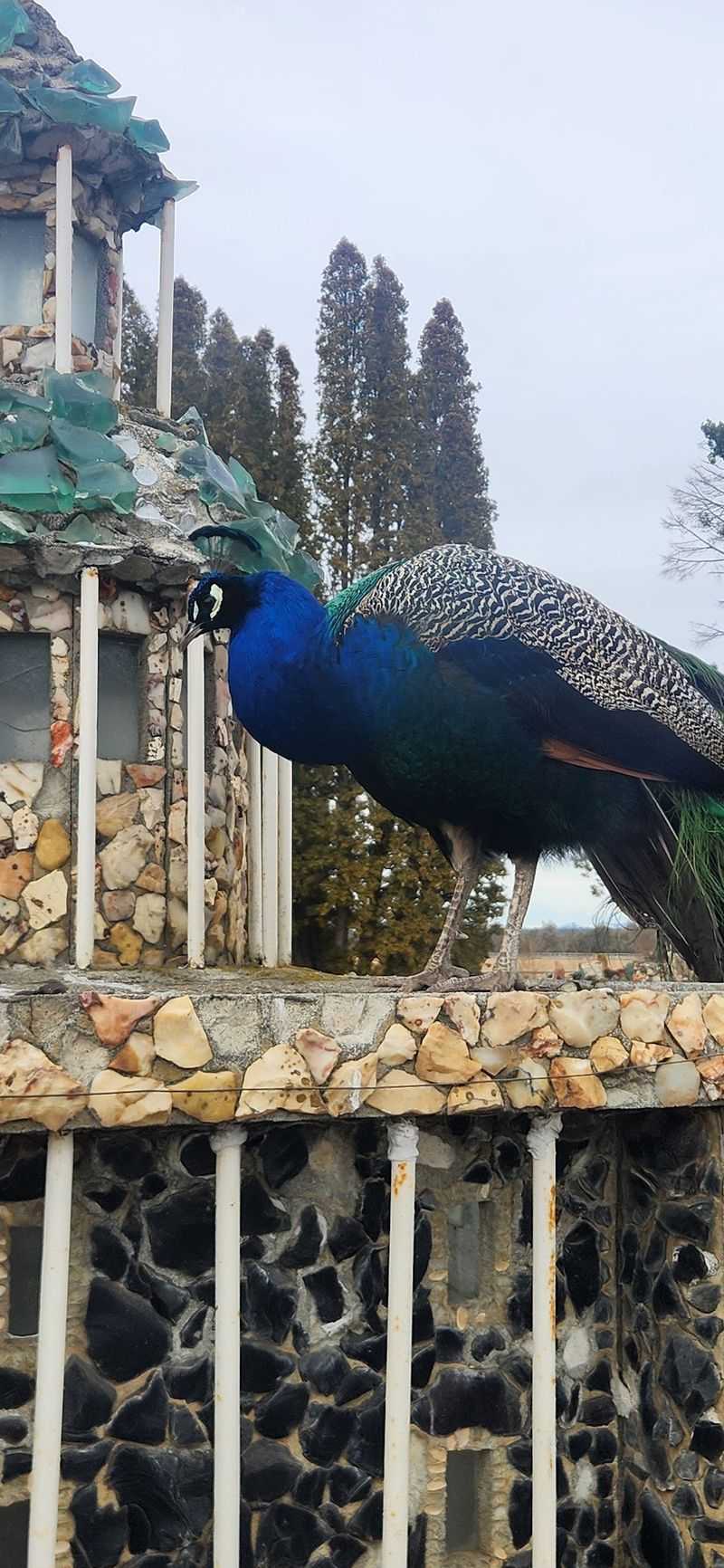
Nobody warns you about the noise. Peacocks roam the grounds freely, and their calls carry across the property like something out of a dinosaur movie. They are also genuinely beautiful, perching on stonework and fanning their tails against the backdrop of gray lava rock.
Small cups of feed are sold at the gift shop, and feeding the birds is easily the highlight for younger visitors. Peafowl are bolder than expected. They will walk right up, tilt their heads and decide whether you are worth their attention.
Spring is the loudest and most dramatic season, when the males display constantly and argue with each other across the garden. Chickens share the grounds too, weaving between the sculptures and generally ignoring everyone.
One practical note: dropped feathers help support the garden financially, so ask at the gift shop before collecting any. Staff are usually happy to help visitors who return their feed cups.
Inside the Rock Museum
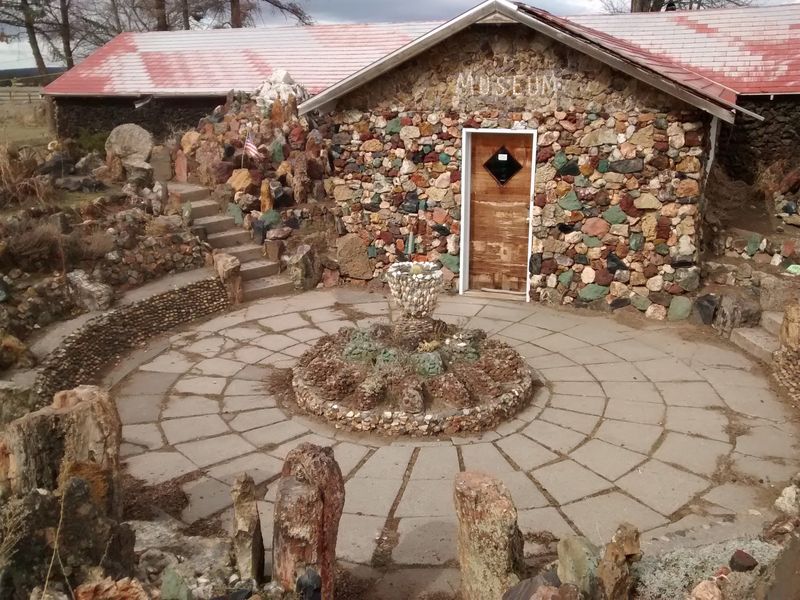
Stepping out of the sun and into the museum feels like opening a treasure chest. Wooden cases hold agates, thundereggs, obsidian, arrowheads and mineral specimens from across the region and around the world.
Many of the stones came from within a short drive of Redmond, which makes the Central Oregon landscape outside look completely different on the way home. Volunteers here know their geology and enjoy explaining how thundereggs form or where petrified wood turns up locally.
Take your time reading the labels. Some pieces have been on display for generations, and the older handwritten cards are part of the charm. There is also a fossil and artifact section that connects the rocks to the deeper history of the high desert.
Museum hours can shift with the season, so checking ahead is smart. Recent years have brought real improvements to the building and displays.
The Black Light Room Glow
Tucked inside the museum is a small dark room that turns ordinary rocks into something wild. Under ultraviolet light, dull gray specimens flare into electric green, hot pink and burning orange. It takes a few seconds for your eyes to adjust, and then the whole wall seems to switch on.
Fluorescence happens because certain minerals absorb invisible light and release it as visible color, which sounds technical until you actually see it happen.
Volunteers sometimes bring thundereggs into the room to show how the same rock looks completely different depending on the light hitting it. That demonstration alone is worth asking about. Kids usually want to walk through twice, and honestly, so did I.
Practical tip: visit the black light room before heading back outside. Going from bright desert sun straight into darkness means missing the best of the glow while your eyes catch up.
Patriotic Monuments and Replicas in Stone
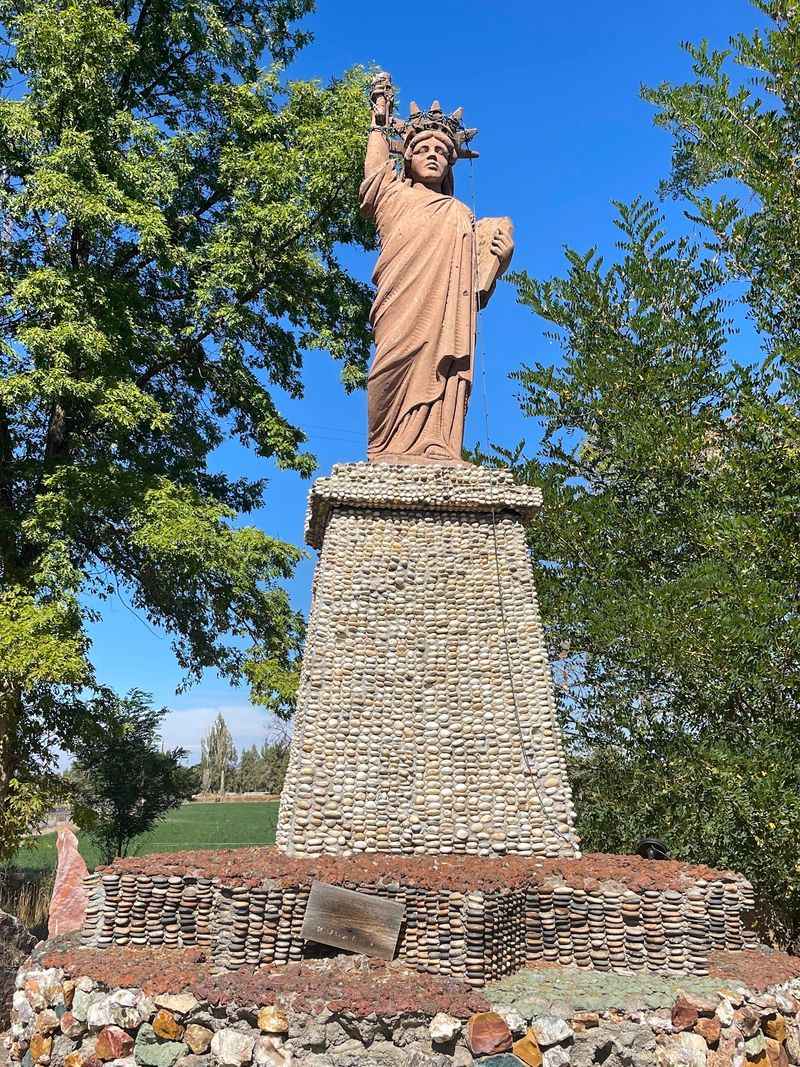
Among the castles sit structures with a very different mood. Petersen built stone tributes to his adopted country, including replicas and monuments honoring American landmarks and history.
Flags appear here and there, and one section carries a distinctly ceremonial feeling compared to the fairy-tale corners. Having arrived from Denmark, he poured that pride into rock rather than paint or paper, which makes the whole thing feel unusually personal.
Some replicas are recognizable right away, while others take a moment to identify. Reading the small plaques helps, and a few have faded enough that guessing becomes part of the experience.
The mix is what makes this garden hard to categorize. Folk art, patriotism, geology and pure obsession all sit side by side on the same acre. Walk this area slowly. It is easy to breeze past the smaller monuments while chasing peacocks or heading toward the ponds.
The Overlooked Section Across the Driveway
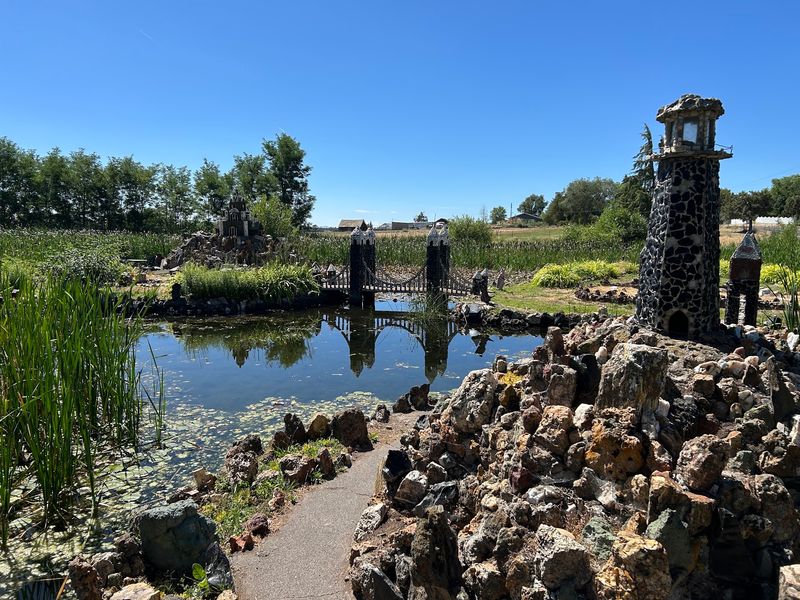
Plenty of visitors miss an entire half of the property, and I nearly did too. Across the entrance driveway sits another section with water features, small stone islands and additional structures that are not clearly signposted.
Fewer people wander over there, which means quieter photos and a stronger sense of discovery. Look for the pathways heading away from the main cluster of buildings, then just follow them until they run out.
Because this area sees less foot traffic, it also feels a bit rougher around the edges. Weathered mortar, overgrown corners and half-hidden rockwork give it a lost-garden atmosphere. Sturdy shoes help, since the ground is uneven and dusty.
Worth asking at the gift shop where the boundaries are before exploring. Part of the property includes a private residence, and staff can point out exactly which paths are open to visitors so nobody wanders somewhere unintended.
Picnic Tables, Slow Time and Desert Quiet
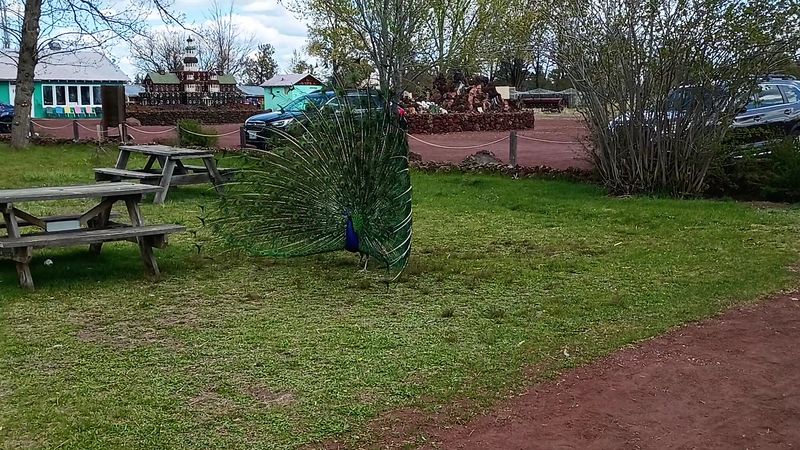
Somewhere between the third castle and the second pond, the pace here changes. Picnic tables are scattered around the grounds, and sitting down for a while turned out to be the best decision of the visit.
Bring lunch. Nobody rushes you, and the tables sit close enough to the sculptures that you can eat while peacocks patrol nearby. Mountain views stretch out past the property line, framing the rock creations against wide Central Oregon sky.
Many visitors plan a quick thirty minute stop and end up staying two hours. The garden rewards lingering, especially in the softer light of late afternoon. Shade is limited, so a hat and water make a real difference in summer.
Dogs and strollers manage the main paths fine. It is the kind of place where an afternoon quietly disappears without anyone minding much at all.
Planning the Visit and Supporting the Garden
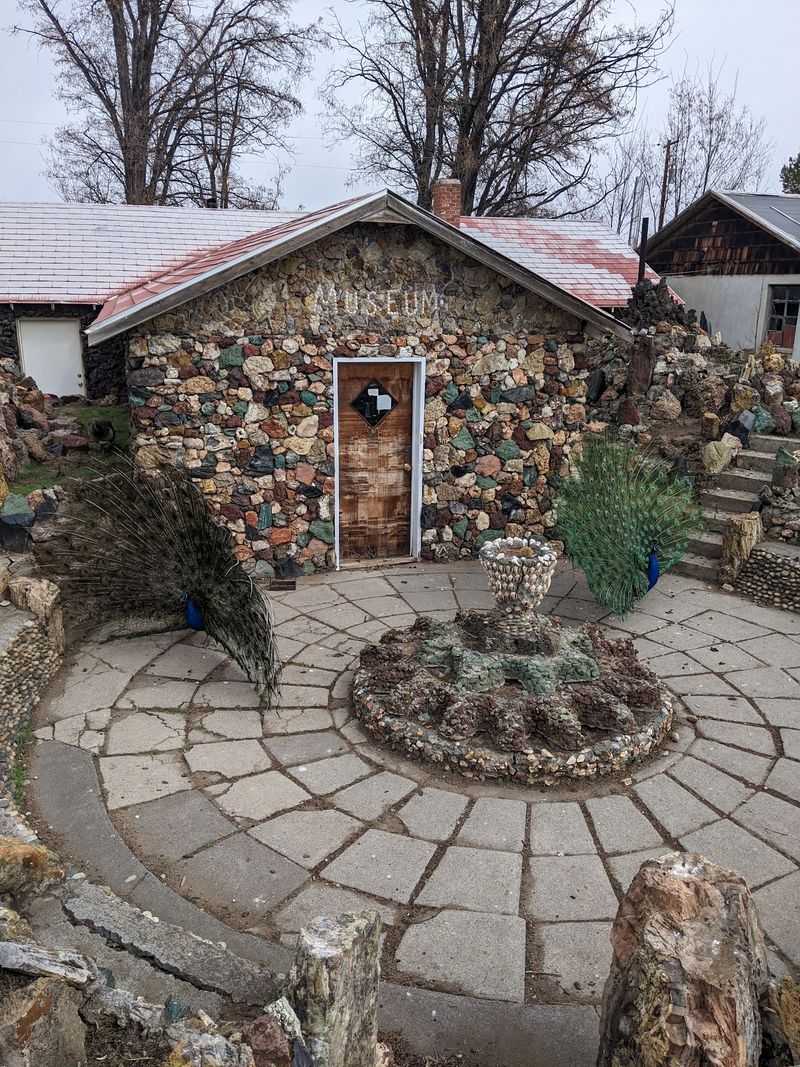
Getting here is easy once you know it exists. The garden sits between Redmond and Bend on a quiet side road, and the gravel drive in looks modest enough that first-timers sometimes wonder if they took a wrong turn.
Admission runs on a suggested donation system, which goes directly toward keeping the place open and restoring the aging stonework. Opening days shift with the season, so a quick call ahead saves disappointment.
The gift shop is a genuine stop rather than an afterthought. Polished stones, raw specimens and small mineral finds fill the shelves, and volunteers happily share history about the garden’s builder. Peacock feed is sold there too, along with cold drinks.
Restoration continues year by year, funded largely by visitors who show up curious. Find this one of a kind Oregon landmark at 7930 SW 77th St, Redmond, OR 97756, United States.
