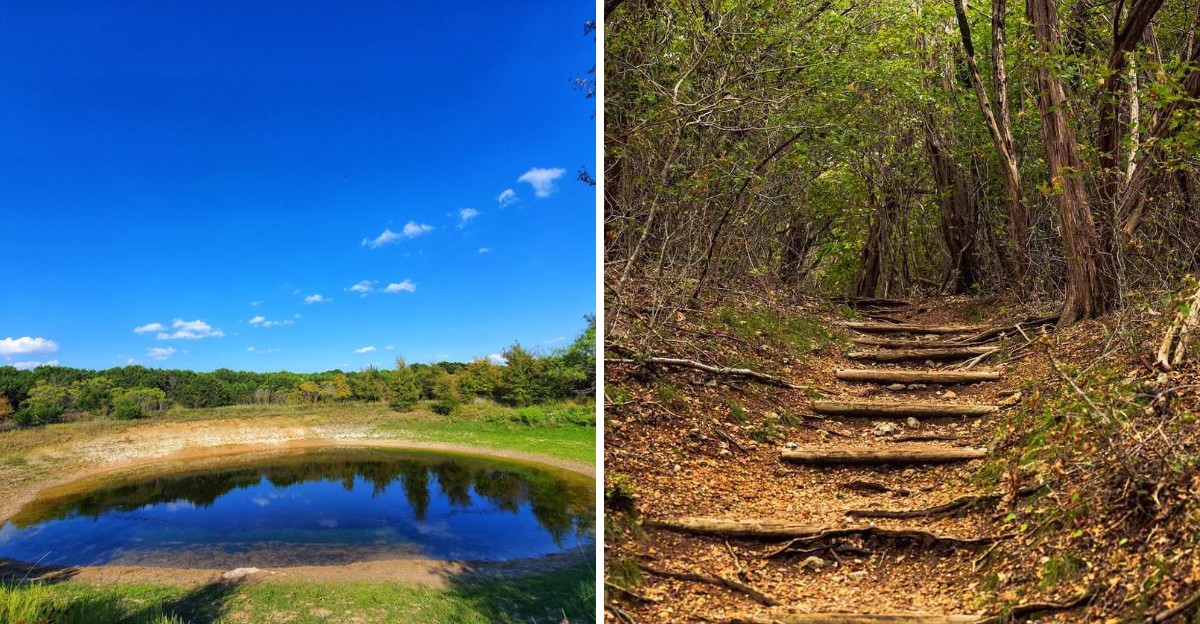
Texas state parks exist because of one woman’s vision. She saw the land, loved it, and decided it should belong to everyone.
That land became Mother Neff State Park, the very first state park in Texas. It was a simple act of generosity, but it sparked something much bigger.
Today, Texas has over 80 state parks, all thanks in part to her decision to give back. You can still visit the original park, a quiet, beautiful spot with winding trails, towering trees, and the same peaceful energy it has always had.
It is a reminder that big things can start with small gestures. A walk through this park feels like stepping into history.
And a chance to appreciate the legacy she left behind.
Isabella Neff And The Six Acres That Changed Everything
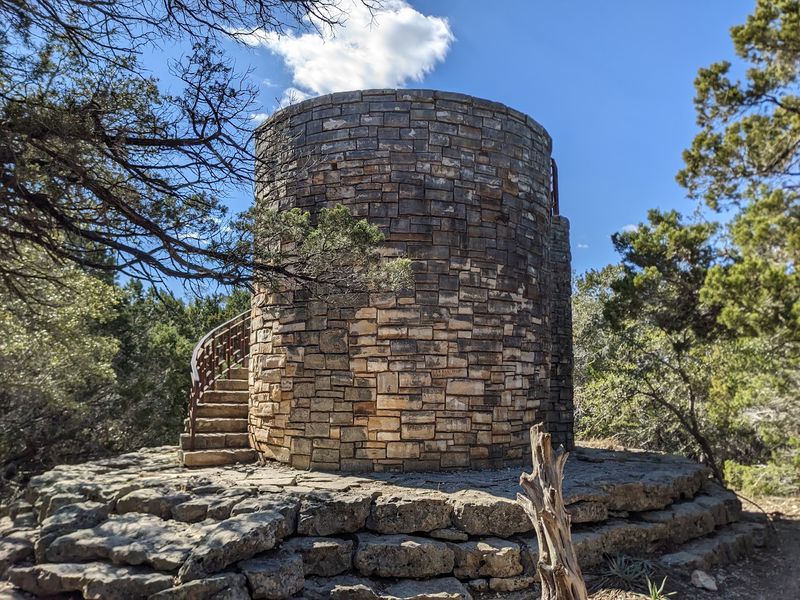
Six acres. That is all it took to plant the seed of something that now stretches across more than 640,000 acres of Texas.
Isabella Eleanor Shepherd was born in Virginia in 1830 and married Noah Neff in 1854. The couple moved to Texas and eventually held around 900 acres along the Leon River in Coryell County, a landscape of pecan bottoms, limestone, and open sky.
What made her special was not the size of the ranch. It was what she did with it.
Neighbors, friends, and even cowboys passing through on the Chisholm Trail were welcomed onto her riverfront land for picnics, swimming, and fishing. People started calling her Mother Neff, and the nickname stuck for good reason.
When she died in 1921, her will set aside six acres of that beloved riverfront for the State of Texas, meant for public use in religious, educational, fraternal, and political gatherings. At the time, Texas had no official state park system to receive such a gift.
Think about that for a moment. She donated land to a system that did not yet exist.
Standing on that ground today, the scale feels almost comically small compared to what grew from it. Yet the intention behind it was enormous, and it never really changed.
Land meant for gathering, for shade, for kids yelling in the shallows of a river on a hot afternoon.
Her gift remains the quiet heartbeat of the park.
Governor Pat Neff Turned A Family Gift Into A Statewide Idea
Plenty of politicians inherit money. Pat Morris Neff inherited a riverbank and a responsibility.
He served as Governor of Texas from 1921 to 1925, taking office the same year his mother passed away. Her small donation landed on his desk without a system to hold it, and rather than shrug, he built the system.
In 1923, Neff established the Texas State Parks Board. He imagined a network of parks spread across the state so travelers would never be far from a shady place to stop, rest, and stretch their legs.
The board began accepting privately donated land into the state system that same year, which opened the door for landowners statewide to follow Isabella’s example.
Neff did not stop at policy. He personally worked on developing his mother’s six acres into what was first called Neff Memorial Park, adding campgrounds, picnic areas, and walking trails.
In 1934, he handed over another 250 acres of family land. A neighbor, F.P.
Smith, added 3.5 acres, and suddenly the park had real room to breathe.
What strikes me most is the sequence of events. A mother’s generosity nudged a son with political power, and that son turned a private act into public policy for millions of people.
Walking the shaded loop near the park headquarters, it is easy to picture him pacing the same ground, sketching out where a road might go.
The park exists because he took a small inheritance seriously.
The CCC Rock Tower That Still Steals The Show
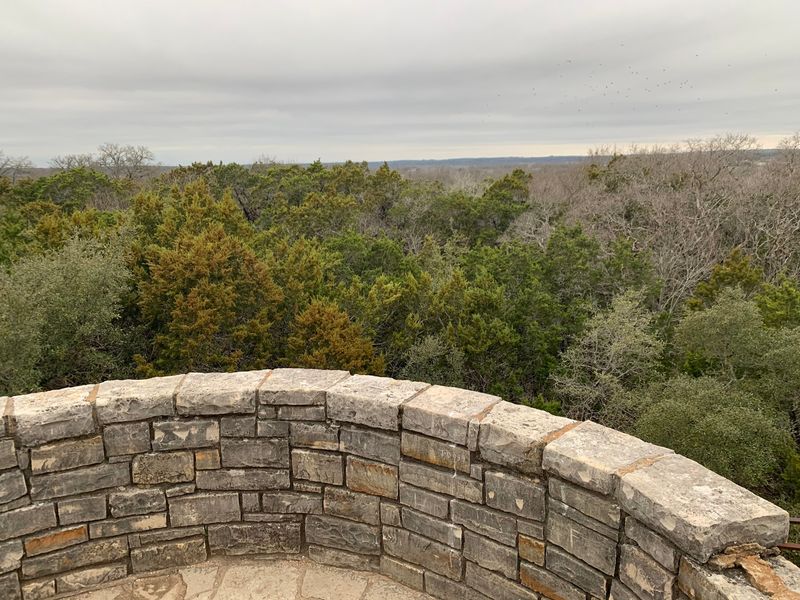
Rough limestone, thick walls, and a squat little silhouette that looks like it grew out of the hillside. The CCC tower at Mother Neff State Park is the kind of structure that photographs beautifully without trying.
Built during the 1930s by the Civilian Conservation Corps, it belongs to a wave of Depression-era construction that shaped state parks all over Texas. Young men earned wages while quarrying stone by hand and stacking it into buildings meant to blend into the landscape rather than fight it.
Run a palm along the stonework and the tool marks are still there.
The tower once served as a water tower and observation point, and it sits close enough to the main park areas that visitors stumble on it almost immediately. Kids tend to circle it like it is a castle, which honestly is not far off.
Nearby, the rock work continues in picnic shelters, culverts, and the old concession building, all cut from local stone in that same sturdy style.
Photographers show up in late afternoon when the light turns gold and the limestone glows warm against dark oak trunks. Bring a wide lens if you have one.
What makes the tower more than a pretty ruin is the connection it draws between two ideas. One woman gave the land, and a national work program gave it form.
Together they produced a park that still functions almost a century later. Not bad for stacked rocks and good intentions.
Wandering The Leon River Bottomlands
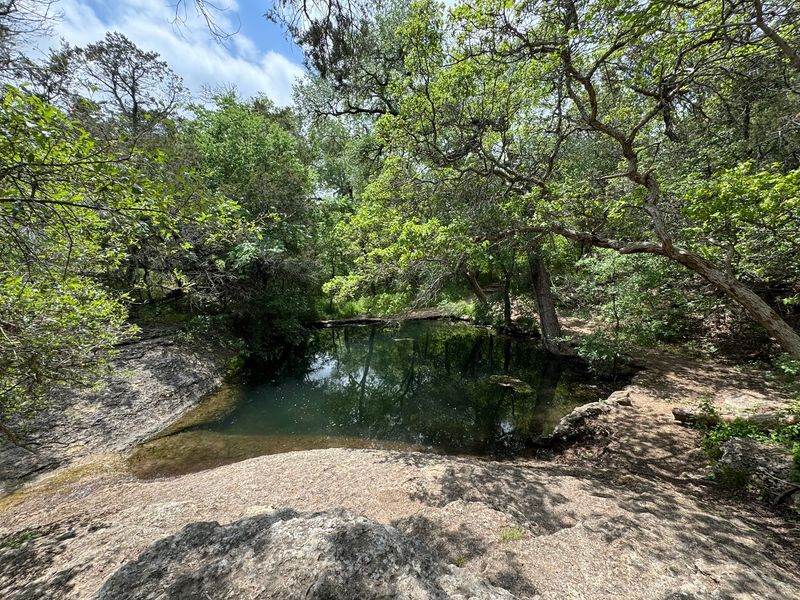
Down in the bottomlands, the temperature drops a few degrees and the noise level drops with it.
The Leon River carved this part of Coryell County long before anyone thought to draw a property line across it. Towering pecans, cottonwoods, and oaks form a canopy that filters sunlight into soft patches on the trail.
Mud, moss, and the faint smell of river water. That combination tells you exactly where you are.
This is the very stretch that drew Isabella Neff’s neighbors out for picnics and swimming generations ago, and the appeal has not faded. Flood events have reshaped parts of the floodplain over the years, so trail conditions shift and rangers occasionally reroute paths.
Check at headquarters before heading down if recent rain has been heavy.
Wildlife activity picks up near the water, especially early and late in the day. White-tailed deer slip between the trunks, armadillos rustle through leaf litter with zero stealth, and woodpeckers hammer away overhead.
Birders do well here during spring and fall migration, when the canopy fills with warblers and vireos passing through Central Texas.
Footwear matters more than you might expect. The bottomland trails can hold moisture long after the uplands dry out, and slick clay has embarrassed plenty of confident hikers.
Take the walk slowly. This landscape is the reason the park exists at all, and it rewards anyone willing to stop moving and simply listen for a while.
Prairie Views, Wildflowers, And Big Central Texas Sky
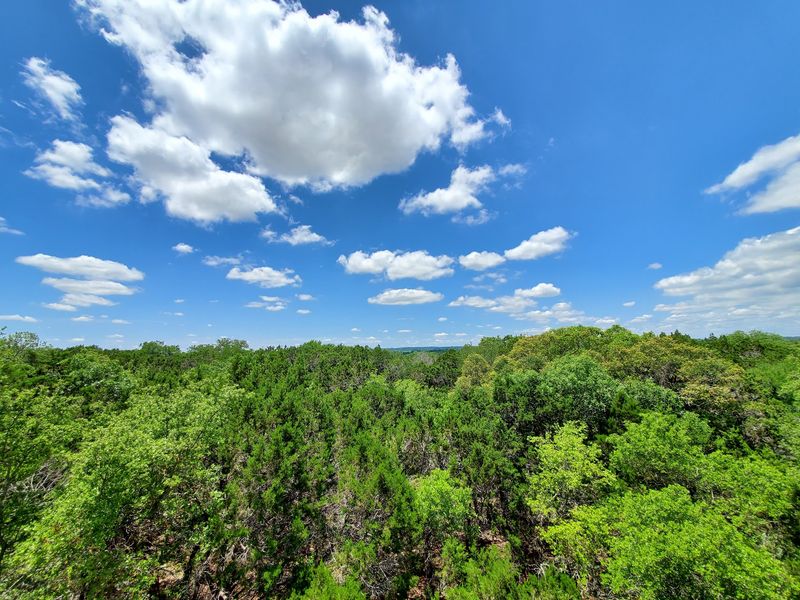
Climb out of the river bottom and the whole mood flips. Grass replaces canopy, the horizon opens, and the sky takes over completely.
Restored prairie makes up a good chunk of the park’s upland acreage, and spring turns it into a color show. Bluebonnets, Indian blanket, coreopsis, and evening primrose appear in waves depending on rainfall, usually peaking somewhere between late March and early May.
Photographers plan entire trips around that window.
Prairie restoration is slower and less glamorous than building trails, but it matters. Native grasses hold soil, feed pollinators, and support the birds and small mammals that make a walk out here feel alive rather than empty.
Grasshoppers scatter with every step in summer. Meadowlarks perch on fence lines and sing that unmistakable liquid whistle.
Shade is scarce up top, so a hat and plenty of water are non-negotiable from May through September. Central Texas heat has no sense of humor about it.
The contrast between prairie and bottomland within one small park is part of what makes the place feel bigger than its 399 acres. Two landscapes, two temperature zones, two soundtracks, all within a short hike of each other.
Sunset on the prairie is the quiet highlight. Light stretches long across the grass, the wind usually settles, and the whole place goes gold for about fifteen minutes.
Stay for it if the schedule allows.
Trails Short Enough For Kids, Interesting Enough For Adults
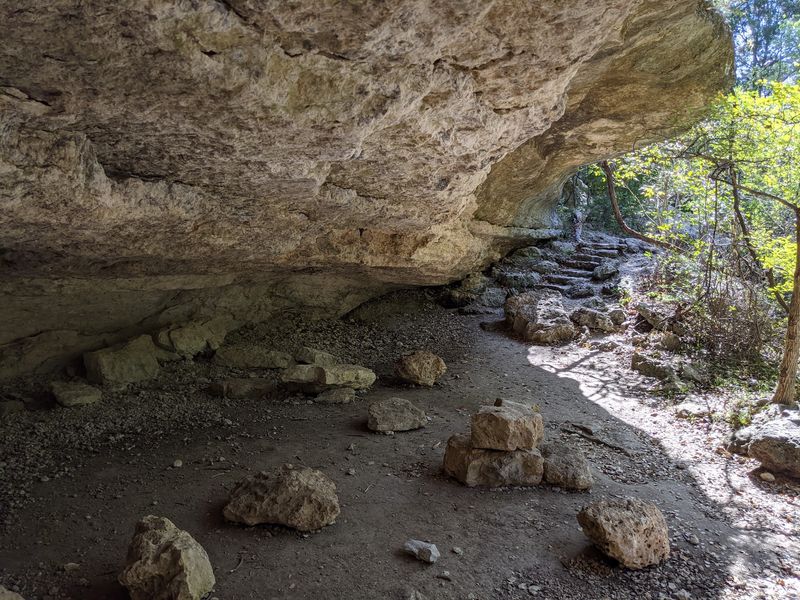
Roughly three miles of trail wind through the park, which sounds modest until you actually walk them.
Loops connect the prairie, the wooded uplands, and the river bottom, and none of them demand serious fitness. Families with small children manage them fine, and older visitors appreciate the gentle grades.
Short does not mean boring here.
The Rock Wall Trail passes stone work built decades ago, while other segments lead past a natural cave-like overhang and limestone outcrops that kids treat as personal climbing gyms. Interpretive signs fill in details about the plants, geology, and history along the way.
Cedar and juniper scent hangs in the air on warm afternoons.
Trail markers are clear, and the compact size means getting genuinely lost is nearly impossible. That makes Mother Neff a solid choice for anyone easing into hiking or introducing children to it.
Morning walks tend to be the best call. Wildlife is more active, the light through the trees is softer, and the heat has not settled in yet.
Sturdy shoes beat sandals on the rocky sections, and a small backpack with water and snacks turns a quick outing into a proper little adventure.
What surprised me was how much variety fits into such a small footprint. One moment the trail feels like deep East Texas woods, the next it opens onto grassland.
Pack a picnic and stretch the visit into a full afternoon rather than rushing through.
Camping Under Oaks With A Side Of History
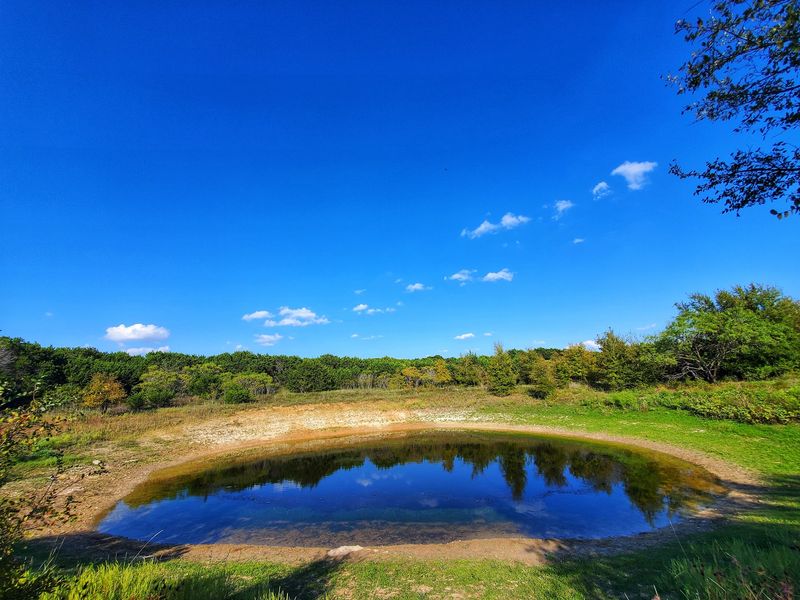
Sleeping in a park that started as a will and a wish gives camping a slightly different flavor.
The park currently offers 20 full-hookup campsites, along with a historic CCC cabin; some lower camping areas remain closed because of flood damage. Screened shelters provide a middle option for people who like a roof but still want the outdoor sounds.
Reservations through Texas Parks and Wildlife are strongly recommended, especially in spring and fall.
Nights out here get properly dark. Light pollution is limited compared to the Austin and Waco corridors, so stargazing from a picnic table is genuinely worthwhile on clear evenings.
Coyotes call from the distance now and then. It is more charming than alarming, promise.
The campground sits close enough to the trailheads that morning hikes require zero driving. Roll out of the tent, grab coffee, and be walking through prairie grass within minutes.
Facilities include restrooms with showers, and the compact layout means nothing is a long trek away. Firewood should be purchased locally rather than transported, since moving wood spreads tree pests.
Weekday nights are noticeably calmer if flexibility allows. Weekend crowds are friendly but livelier, with families claiming picnic tables and kids running the loop road on bikes.
Something about the setting encourages slowing down. Maybe it is the oaks, maybe it is knowing that people have been gathering on this exact riverfront for well over a century.
Either way, one night usually is not enough.
How A Small Park Grew To 399 Acres
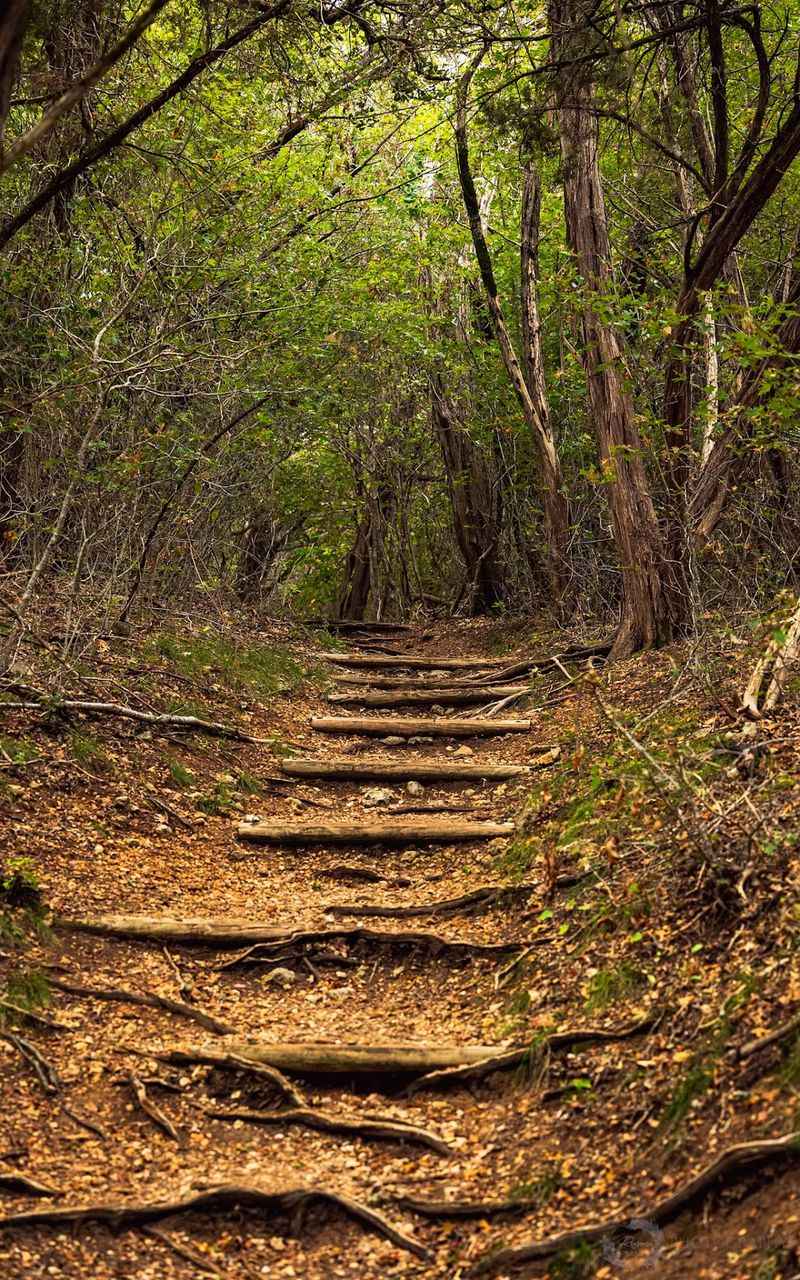
Math tells the story better than words. The original six-acre gift grew through later donations and acquisitions, and Mother Neff State Park now covers about 399 acres.”
Each addition came with its own reasoning. Isabella’s original bequest set the tone, and Pat Neff’s 1934 donation gave the park enough land to actually function as a destination rather than a roadside stop.
F.P. Smith’s 3.5 acres might seem like a footnote, yet it filled a gap that mattered.
Texas Parks and Wildlife acquired additional acreage in 2012, bringing the park to its current size and adding room for the newer headquarters and improved facilities.
Growth like that rarely happens quickly. Nearly a full century passed between the first gift and the most recent expansion, which says something about patience in conservation work.
Standing at the visitor center, the layout makes sense once the timeline clicks. Older CCC structures cluster near the original core, while newer amenities sit on land added much later.
It reads almost like tree rings, each layer marking a different era of care.
For visitors, the practical upside is variety. More acreage meant space for the prairie restoration, better parking, and trails that connect rather than dead-end.
The park officially opened in 1937 and stands among the first official state parks in Texas. Watching how it assembled itself piece by piece makes the whole place feel earned rather than simply designated.
The Ripple Effect Across Almost 90 Texas Parks
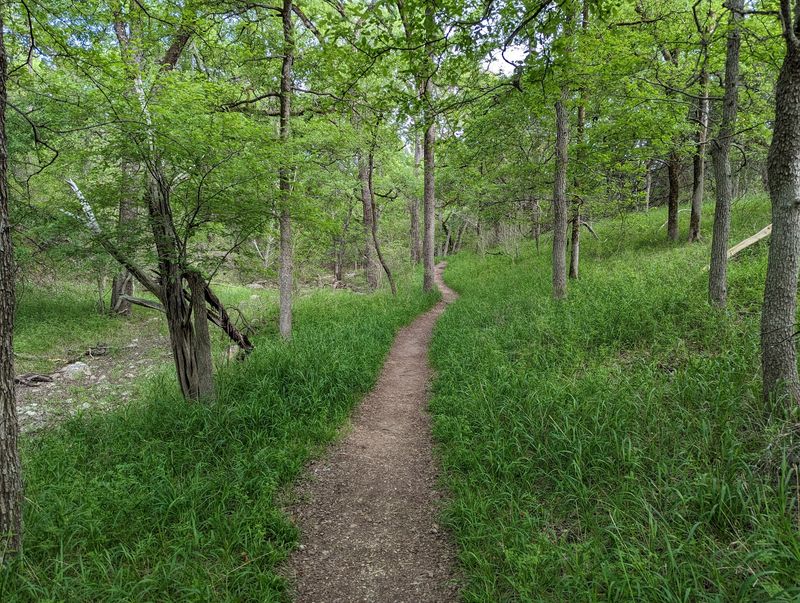
Here is the part that reframes the whole visit. Texas State Parks currently manages 89 state parks, historic sites and natural areas covering more than 640,000 acres.
Palo Duro Canyon, Garner, Enchanted Rock, Caddo Lake, the coastal parks, the desert parks. All of them trace back to a system created in 1923, and that system was prompted in large part by six donated acres nobody knew what to do with.
Cause and effect rarely lines up this neatly.
Once the Texas State Parks Board began accepting privately donated land, other landowners followed. That donation model built much of the early network, long before large budgets existed for buying property.
Isabella Neff never saw a single one of those parks. She died before the board existed.
Yet her instinct, that good land should be shared rather than fenced off, became the operating principle for an entire state agency. That is a remarkable legacy for someone whose name most Texans have never heard.
Visiting other parks after seeing Mother Neff changes the experience a little. The picnic tables, the trails, the ranger stations all start to feel connected to one riverbank in Coryell County.
Consider making it the first stop on a broader Texas parks road trip. Waco sits close by, Austin is a reasonable drive, and the Hill Country opens up to the south.
Start at the beginning, then go see what grew from it.
Planning A Visit To Mother Neff State Park
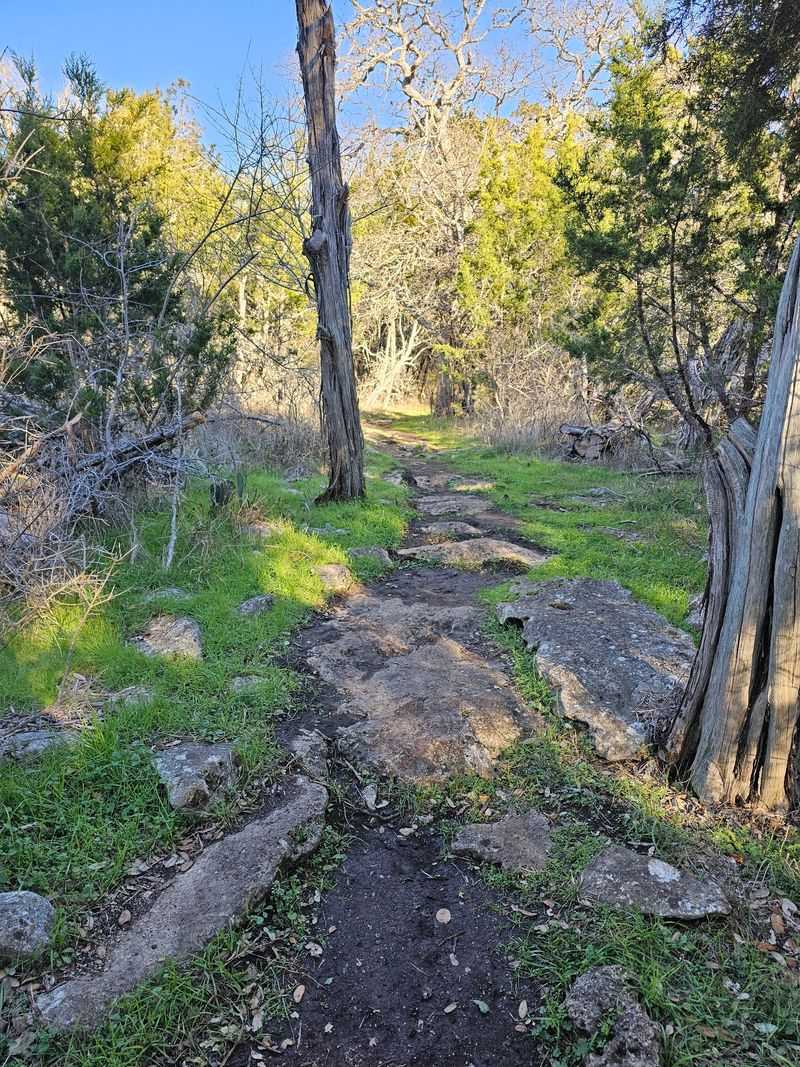
Practical details make or break a day trip, so here are the ones worth knowing.
The park sits near Moody in Coryell County, roughly a half hour southwest of Waco and within easy reach of Temple and Killeen. Austin and Dallas both work as day trips if the early alarm does not scare you.
Fall and spring bring the most comfortable weather by a wide margin.
Stop at the headquarters first. Staff there share current trail conditions, flooding updates, and wildflower reports, which change quickly depending on rainfall.
Day passes and camping reservations can be arranged through Texas Parks and Wildlife, and booking ahead is smart during wildflower season and holiday weekends.
Bring more water than seems necessary, plus sun protection and insect repellent in warmer months. Cell service can be spotty in the river bottom, so download maps in advance.
Picnic areas near the CCC structures make a great lunch spot, and shaded tables fill up fast on pleasant Saturdays. Arriving before mid-morning usually solves that.
Leash rules apply for dogs, and pets are welcome on trails but not inside buildings.
Allow at least three hours to see the main features without rushing, or a full day if camping or picnicking is on the agenda. Photographers should aim for the last hour before sunset.
Small park, big backstory, and a genuinely pleasant place to spend an afternoon in Central Texas.
Address: 1680 Texas 236, Moody, Texas
