You might roll past a plain stretch of old Main Street in northeast Oklahoma and never guess what waits behind one carved front door. Step inside, though, and the air turns cool, the lights glow gold, and a giant organ starts to rumble like a whole orchestra hiding in the walls.
It feels like finding a treasure chest someone forgot to lock. Better yet, the people who care for it are happy to show you around.
A Movie Palace on Old Route 66
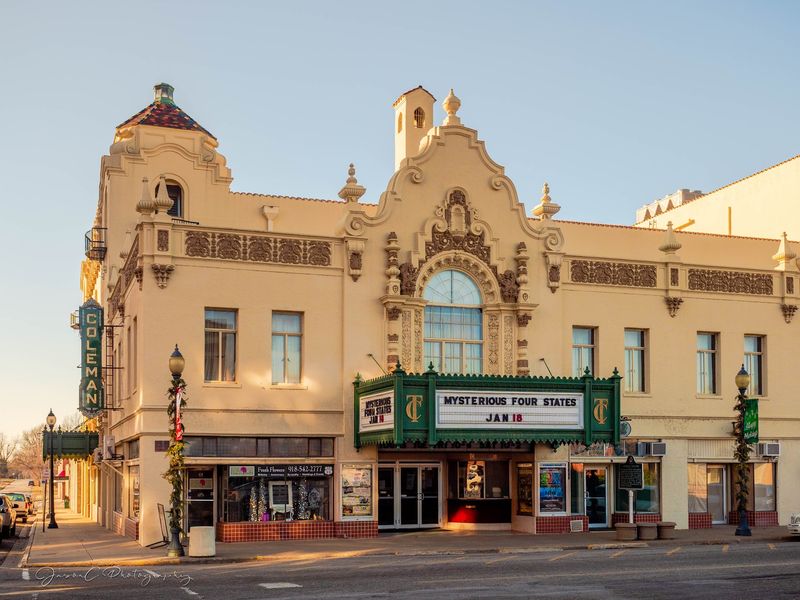
Picture a small Oklahoma downtown, quiet storefronts, a few pickups parked along the curb, and then a building that looks like it wandered in from a Spanish fairy tale. That’s the Coleman Theatre Beautiful, a performing arts theater standing proudly on historic Route 66.
Folks driving the Mother Road often pull over just to snap photos of the front. Others plan a whole day around it.
Either way, the place has a way of turning a quick stop into a long, happy visit.
Opened in 1929, the theater was built as both a vaudeville stage and a movie palace. Back then, that meant live acts one night and flickering films the next, all under one fancy roof.
Today, it still hosts musicals, plays, concerts, and silent movie nights.
The real star, many visitors say, is the Mighty Wurlitzer pipe organ. It was installed before the theater even opened its doors, and it still plays for crowds today.
Hearing it fill the room is the kind of moment people talk about on the drive home.
So where exactly is this beauty? Hang tight.
First, let’s meet the man who dreamed it up and the town that saved it.
George L. Coleman and a $600,000 Dream
Six hundred thousand dollars. In the late 1920s, that was a jaw-dropping sum, and George L.
Coleman Sr. spent it on one building. He wanted his town to have a theater as grand as anything in a big city.
On April 18, 1929, his wish came true. The doors swung open to a full house of 1,600 seats, and every ticket cost just $1.00.
Imagine paying a single dollar to sit inside a palace on its very first night.
Stars soon followed. Will Rogers, Tom Mix, Bing Crosby, Sally Rand, Jim Thorpe, magician Harry Blackstone, and ballerina Moscelyn Larkin all passed through.
For a small Oklahoma community, that was a pretty amazing guest list.
Timing makes the story even sweeter. The theater opened just months before hard times hit the whole country.
Somehow, it kept going, and one visitor points out that it has never stopped doing business since 1929.
Fun fact for history buffs: tour guides sometimes let guests try to crack Coleman’s personal safe. Guess the combination, and you’ll have quite a story to share.
Nobody has bragging rights yet, as far as we know, so maybe you’ll be the lucky one.
Gargoyles, Dolphins, and Cherubs Out Front
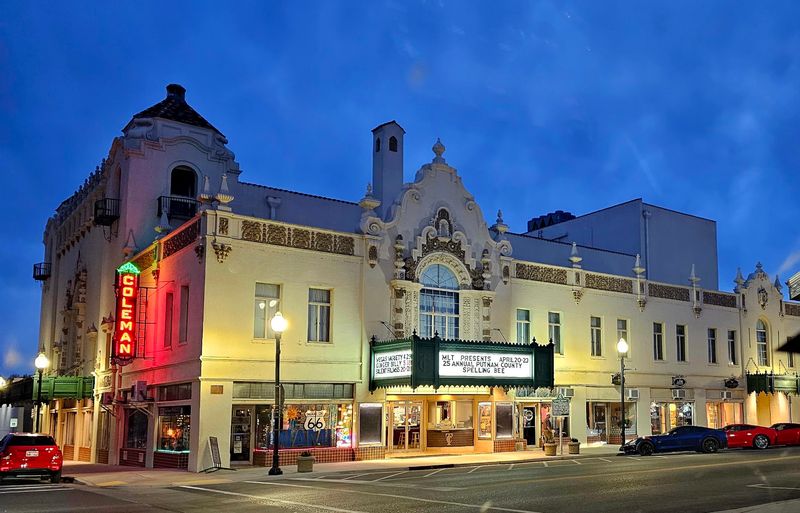
Look up before you walk in. Seriously, crane your neck a little, because the outside of this building is covered in tiny surprises.
The exterior shows off Spanish Mission Revival style, with clay-colored walls and curved details. Terra cotta gargoyles peer down from above.
Dolphins, cherubs, and other hand-carved figures dot the facade like characters in a storybook.
Kids especially love this part. Turn it into a game and see who can spot the most creatures.
Grandparents might remember when downtown buildings all had this kind of fancy trim, and it’s a sweet chance to share those memories.
Not everyone has time for a full visit, and that’s okay. Some travelers simply stop, admire the building, and take pictures of the front before heading down Route 66.
Even a quick look feels worth it, they say.
Photographers, a tip: morning or late afternoon light tends to bring out the warm tones in the terra cotta. Midday sun can be harsh, especially during an Oklahoma summer when the heat bounces off the sidewalk.
Plan your photo stop around the weather if you can, and bring water. Once you’ve got your shots, the cool, dim lobby will feel like a welcome hug.
Gold Leaf and Silk Inside the Doors
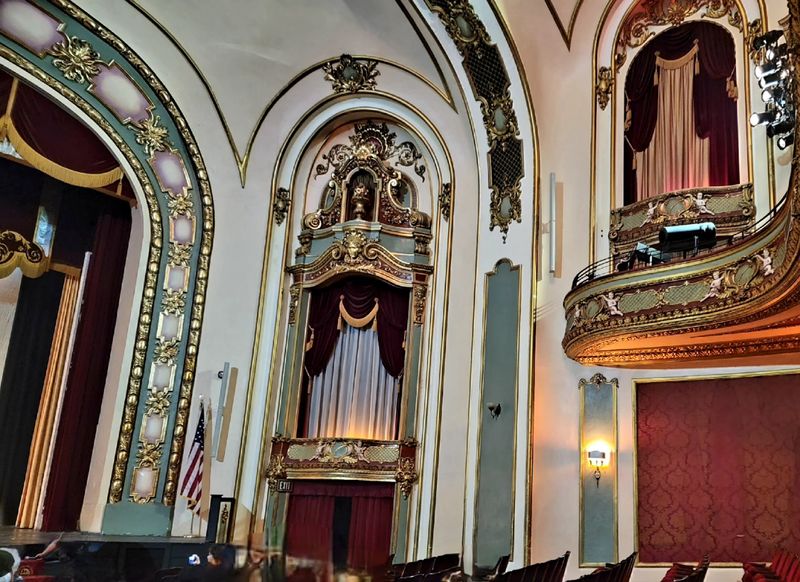
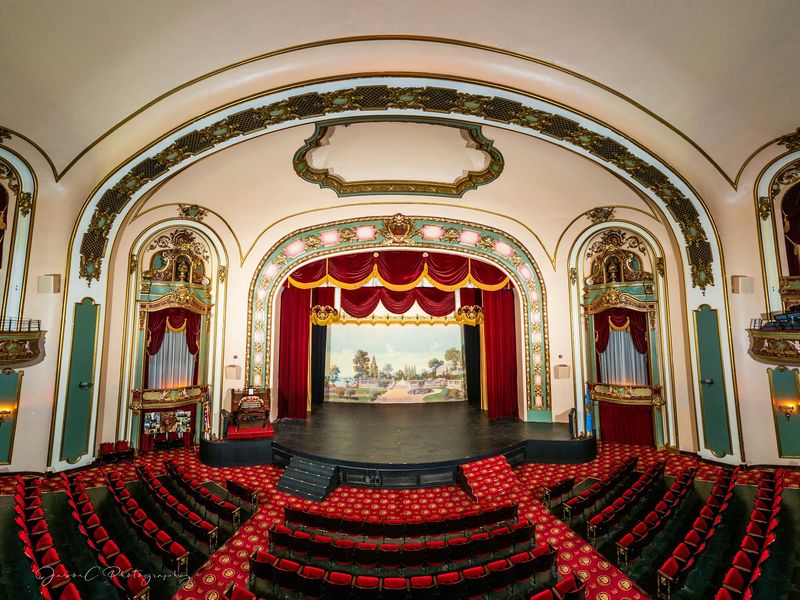
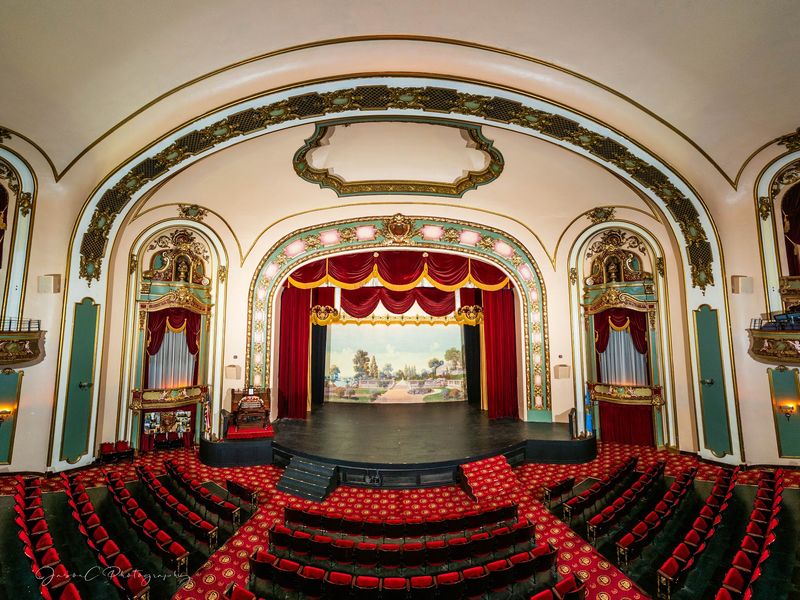
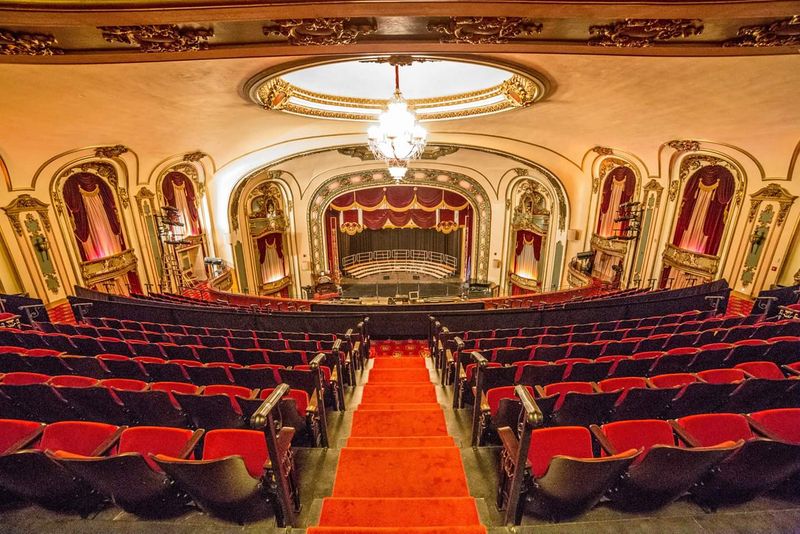
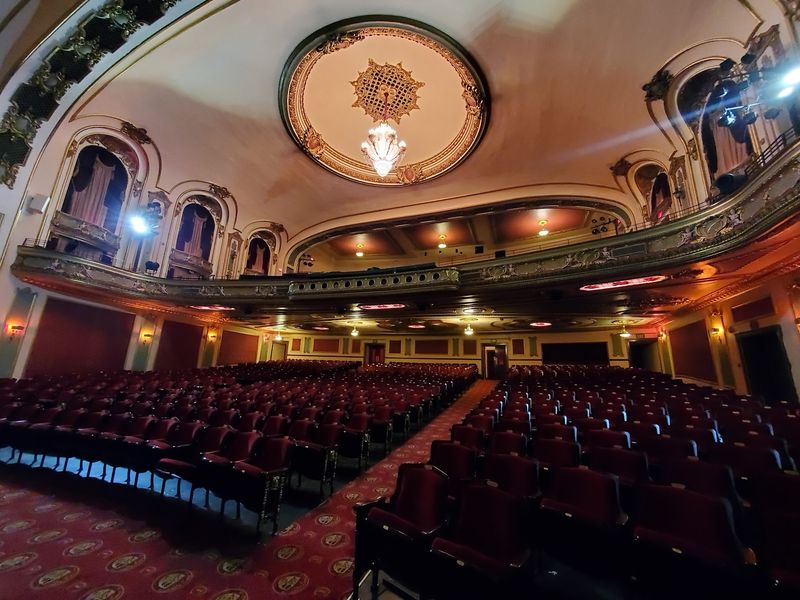
Step through the doors, and your eyes won’t know where to land first. The inside is designed in the elegant Louis XV style, which basically means fancy French details everywhere you turn.
Gold leaf trim sparkles along the walls. Silk damask panels add soft color and pattern.
Carved mahogany staircases lead upward, and decorative plaster moldings frame nearly every surface.
Visitors often say they can’t stop staring at the ceiling. One guest described feeling like they stepped back into another era.
Another said pictures just don’t do it justice, and honestly, that seems true.
The chandelier gets plenty of love too. People mention the beautiful lamps, the glowing light fixtures, and the custom carpets beneath their feet.
Even the woodwork earns praise for its detail and care.
Don’t miss the stained glass under the balcony. It’s backlit, so the colors shine like little windows into the past.
It’s an easy spot to overlook if you’re rushing, so slow down.
What makes all this extra special is that it still feels lived in. The space isn’t roped off like a museum.
It’s a working theater, and you get to sit right in the middle of all that history.
The Mighty Wurlitzer Comes Home
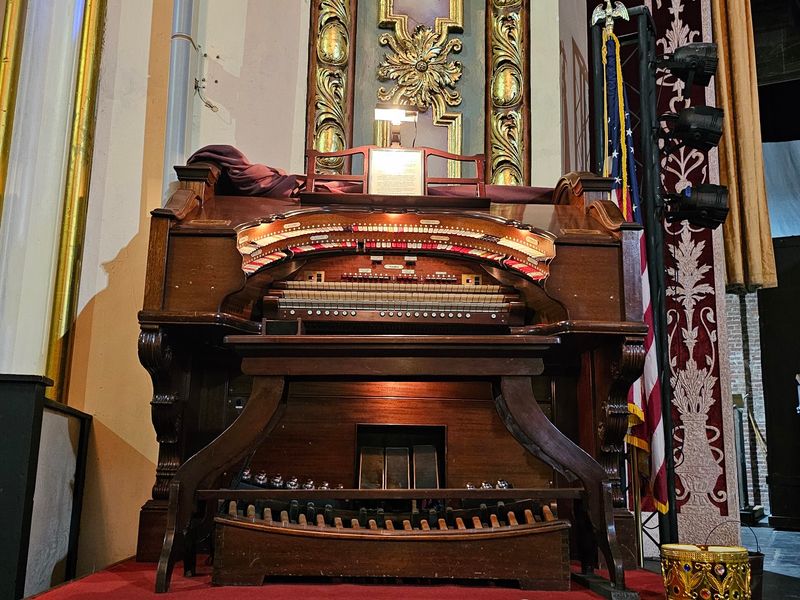
Here’s a record few theaters can claim. The Mighty Wurlitzer, an Opus 2026 Model 160 special, was built in 1928 and installed on February 21, 1929.
It’s the only Wurlitzer built in 1928 still living in its original home.
Of course, the story had a twist. The organ eventually left the building.
Years later, it was tracked down, and plans were made to bring it back.
The community stepped up in a big way. Local donors raised $85,000 to buy back and repair the instrument.
Then the J. T.
Peterson Organ Company of Fort Worth, Texas, restored and reinstalled it in 1996.
During the work, crews added digital switching and three extra ranks of pipes. Today it’s a 3-manual, 10-rank organ.
The original tones are sweet and lush, while the new pipes add some spicy flavor.
Its estimated value now sits around $300,000. That’s quite a jump from the donation drive, and a nice reward for everyone who chipped in.
Where do the pipes hide? On either side of the stage, tucked into what look like box seats.
You’d never guess unless someone told you, which is half the fun.
Thunder, Birdsong, and Car Horns From One Instrument
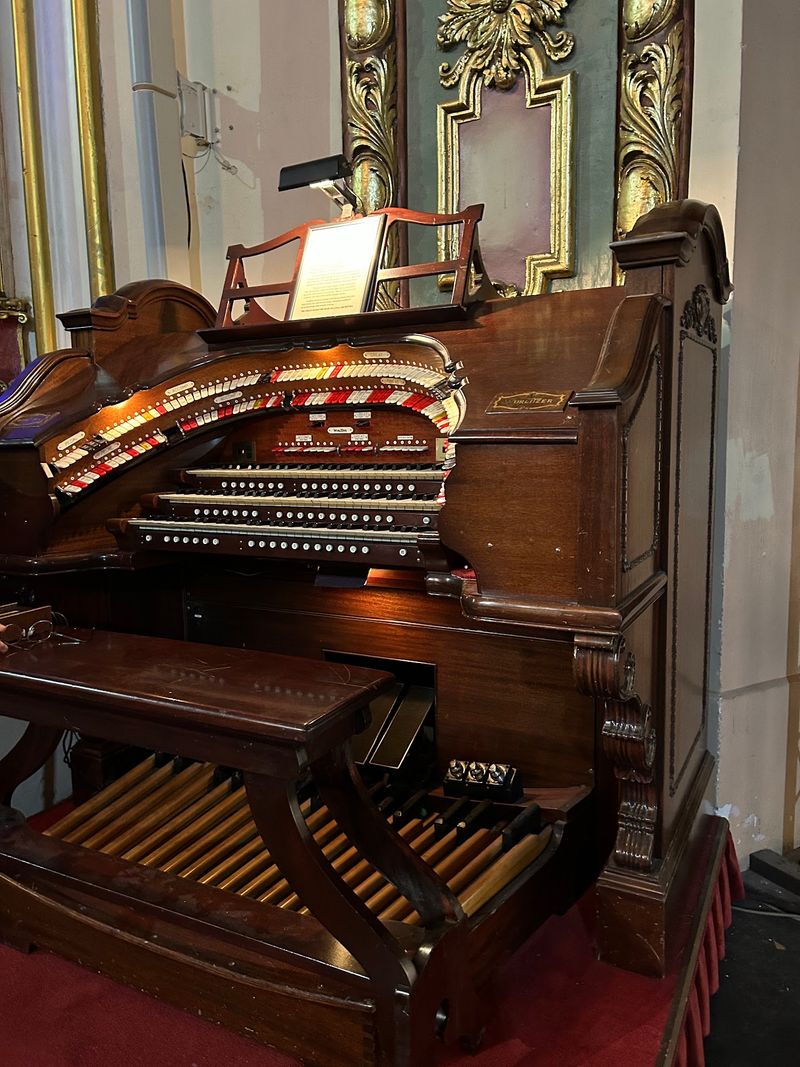
Ever heard a church organ? Forget that for a minute.
A theater organ is a whole different creature.
Built to copy a full orchestra, the Wurlitzer can sound like strings, clarinets, trumpets, and flutes. It also has real percussion, including a xylophone, marimba, drums, and cymbals.
Then come the goofy extras: thunder, bird whistles, and even automobile horns.
Why all the noise makers? Back in the 1920s, movies had no sound.
An organist sat below the screen and played along, adding music and effects to match the action.
That tradition lives on here. The Mighty Wurlitzer still accompanies silent movie screenings, so you can laugh at a slapstick chase while the organ honks and crashes right on cue.
Former locals remember watching these shows growing up, and they say the magic hasn’t faded.
Kids who have only known streaming tend to be amazed. Watching a person create every sound live feels like a magic trick.
Grown-ups often end up just as delighted.
Keep an eye on the theater’s calendar for silent film nights. They make a terrific family outing and a fun way to share a piece of old-time entertainment with the next generation.
Free Tours With Storytelling Guides
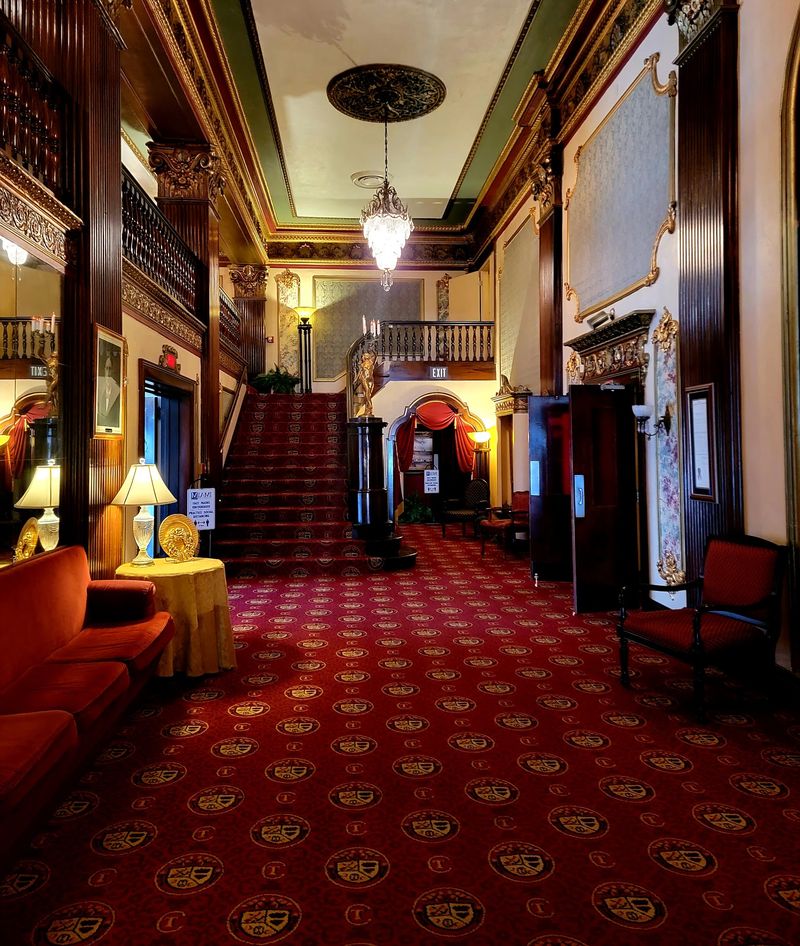
Good news for budget travelers: tours here are free, according to recent visitors. Donations are welcome, and plenty of guests happily drop a few dollars in to help keep the lights on.
Guides get high marks across the board. People describe them as friendly, enthusiastic, and full of stories.
One traveler said their guide explained not just what happened but why, and called it the best guided tour they had ever taken anywhere.
Expect to see the imported silks, carved woods, and plenty of glowing fixtures. Some tours even head backstage, which guests describe as extremely cool.
You’ll learn how the building came together and how the town brought it back.
And yes, the organ usually plays. Several visitors mention hearing it during their walk-through.
One even advised newcomers to make sure they ask for a song.
How long does it take? A self-guided wander can run about 30 minutes, based on one guest’s visit.
A full guided tour may take a bit longer, depending on questions and how chatty the group gets.
Fun tip: summer visitors noted the theater felt dark and cool on a scorching day. That makes it a smart midday break from the Oklahoma heat.
Shows That Feel Like a Living Room Concert
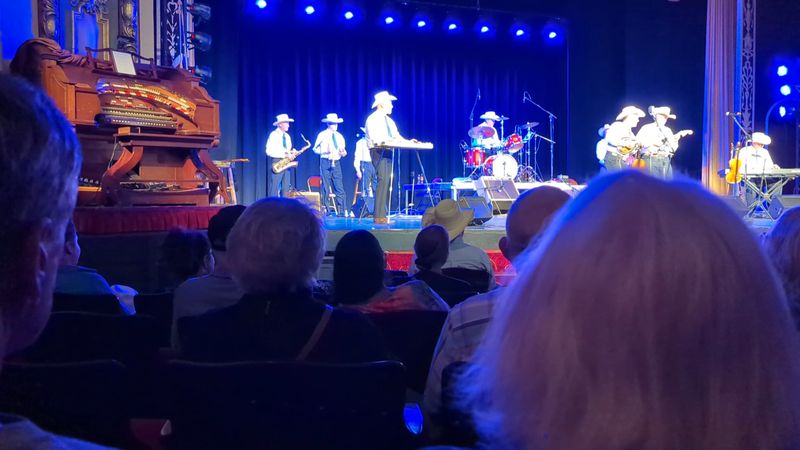
Walking in for a show feels a bit like being invited to a fancy party. Then the lights dim, and the room shrinks in the best way.
Concertgoers often call it intimate. One said it felt more like sitting in a performer’s living room than at a big concert.
Because the room isn’t huge, nearly every seat offers a solid view.
Sound quality wins plenty of praise too. Guests at recent comedy and music shows called the acoustics excellent.
A visitor six rows from the stage said the view was great, and planned to try the upper level next time.
Programming runs wide. Over the years, the stage has welcomed ballet, opera, country and western acts, jazz, dance bands, plays, and band concerts.
Comedian Tim Hawkins and pianist Jim Brickman are among the recent names fans mention.
A few honest notes help set expectations. Some parts remain old-fashioned, like a tiny upstairs ladies room and tricky faucets.
Raised flooring sits under a few back seats as well.
Still, most folks shrug those off. As one fan put it, go see something here and enjoy the theater as much as the show.
Check the website for upcoming events and ticket prices.
A Hometown Rescue Story
Old buildings don’t save themselves. People do, and the folks in this town proved it.
The theater landed on the National Register of Historic Places in 1983. Then in 1989, the Coleman family gifted the building to the city.
From there, restoration became a community project.
According to visitors, the work relied on private donations and volunteer time. Neighbors gave money, sweat, and plenty of patience.
One guest who grew up nearby remembers the restoration happening during childhood and playing in band concerts on that very stage.
That kind of pride shows. People notice the care in every corner, from polished woodwork to fresh carpets.
One visitor said the whole effort helped revitalize the town.
There’s something touching about a local who lived in the area 27 years before finally stepping inside. They came away amazed, praising the staff and the production.
Sometimes the best treasures sit right under our noses.
Reading this from Tulsa or OKC? Tag someone who might remember the old days here.
Chances are, a friend or grandparent has a story about a school concert, a silent film night, or an opera that stuck with them for decades.
Planning Your Trip to 103 N Main Street
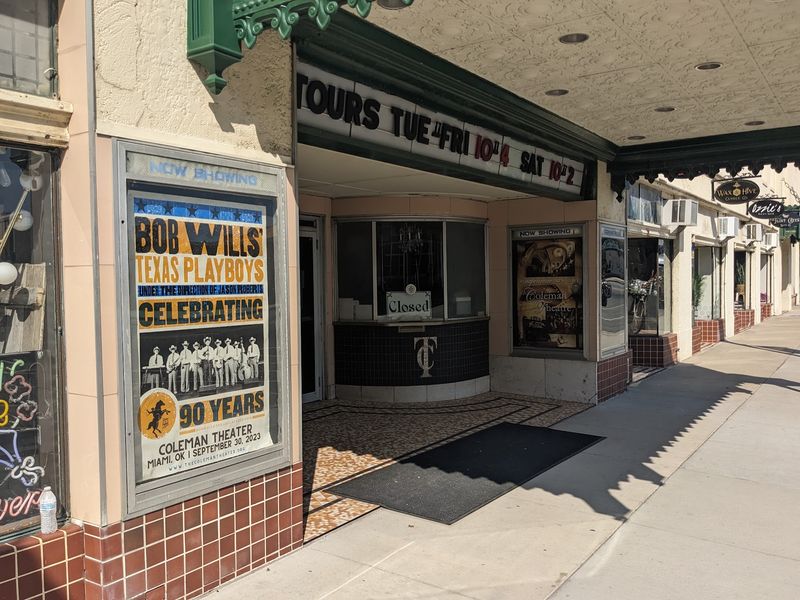
Ready for directions? The theater sits at 103 N Main St in Miami, Oklahoma, right on Route 66.
Miami is up in the far northeast corner of the state, close to Kansas and Missouri.
From Tulsa, the drive usually takes around 90 minutes, depending on traffic and stops. Coming from Oklahoma City adds a few more hours, so many folks make it a weekend road trip.
One concertgoer happily drove 90 minutes each way and said they’d do it again.
Tour times and show schedules can change, so call ahead at 918-540-2425. You can also check thecolemantheatre.org for upcoming events and ticket info.
Prices vary by show, and tours have been free based on recent visits.
Bring a few dollars for a donation if you take a tour. Every bit helps maintain the organ, the chandeliers, and those delicate silk walls.
Weather matters around here. Summer heat can be intense, while spring brings storm season.
Luckily, the theater is indoors, making it a solid year-round plan.
Families with kids will find plenty to keep little eyes busy. Just remind young ones that the gold trim is for looking, not touching.
Why the Drive Pays Off
Some places are pretty. Others make you feel something.
The Coleman manages both, and it does it without charging a fortune.
For history lovers, it’s a time machine with velvet seats. Route 66 travelers get a perfect excuse to stretch their legs.
Music fans get great sound, and families get a free tour plus an organ that honks like a car.
What sticks with people most, though, is the heart behind it. A town raised money to bring its organ home.
Volunteers gave their time, and guides still greet visitors with real excitement.
One traveler said that if they were back in the area, they’d pick a show here over any other experience they’d had in the state. That’s high praise from someone just passing through.
Is it fancy? Sure, in the gold-leaf sense.
But it never feels stuffy. It feels like a hometown treasure that’s happy you showed up.
So next time you’re mapping out a weekend, add this stop to the list. Sit in a seat that once cost a dollar, listen as the Mighty Wurlitzer rumbles to life, and let the rest of the world wait outside for a little while.
