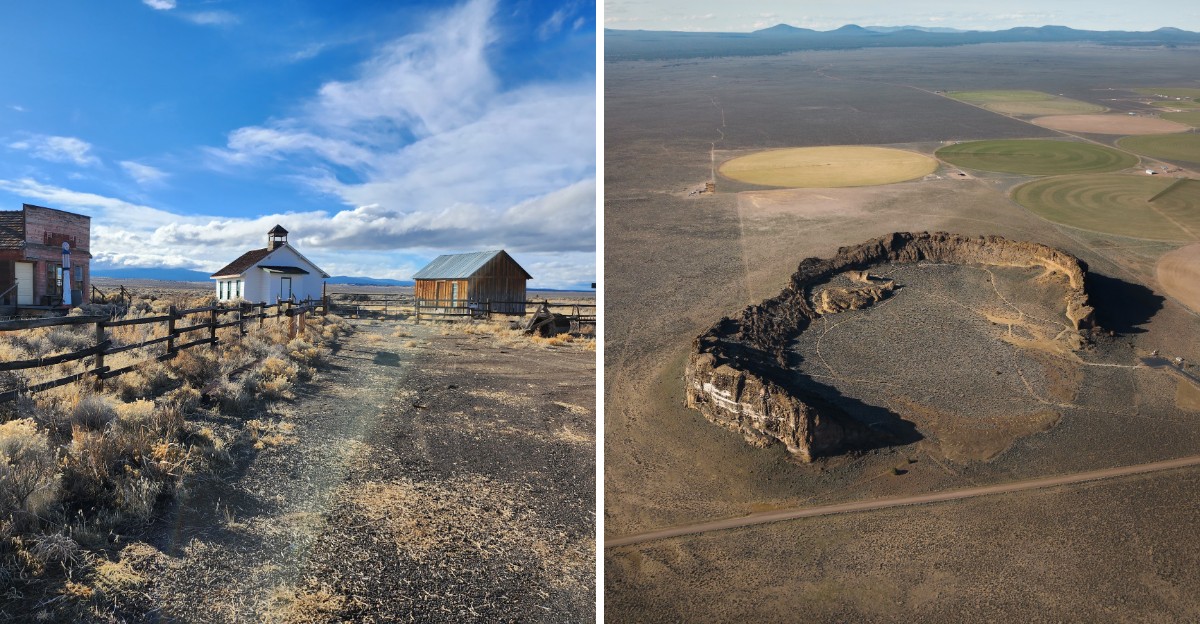
Some of the oldest known shoes on Earth were found near a giant volcanic wall in the desert. They’re made of sagebrush bark, and they’re thousands of years old.
That wall still stands today. It rises straight out of a flat, dusty plain in Oregon, curved like a horseshoe. Its tall cliffs look so much like fort walls that a settler named it for them back in 1873.
I like how the whole thing feels like a castle nobody built. Nature handled the job with lava, ash, and an ancient lake. Then waves chewed away one side and left a doorway.
I can’t imagine driving past it without pulling over. Falcons nest in the cliffs, and the night sky gets wildly dark out here. So why does a place this strange stay so quiet?
Those Fortress Cliffs Earned Their Name Honestly
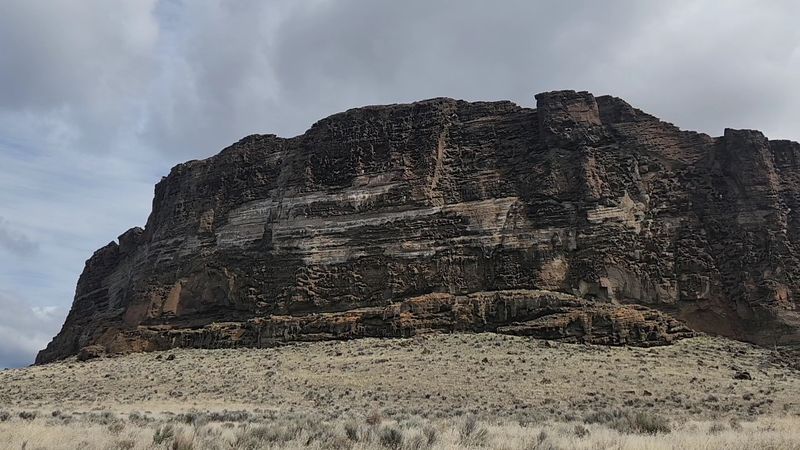
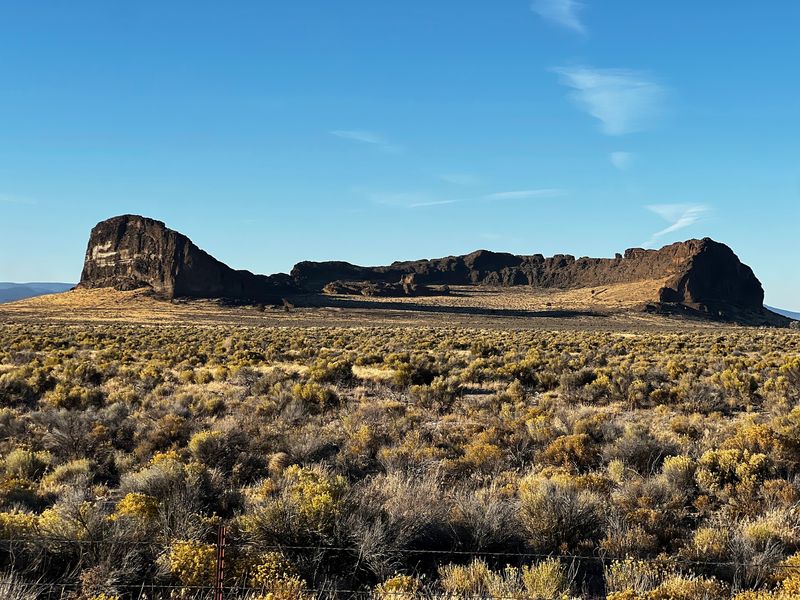
Straight, tall, and stubborn, the walls look ready to hold off an army. Early settler William Sullivan named the formation Fort Rock in 1873. One look at those sheer sides explains his choice.
The cliffs resemble the palisades of an old frontier fort. They rise in steep layers that catch shadows as the sun moves. In the morning, the rock can look completely different than it does by late afternoon.
Photographers get plenty to work with here. The textures in the volcanic tuff show bands, cracks, and odd shapes carved by wind and water. Every section of wall seems to have its own personality.
Fort Rock earned national attention too. It was named a National Natural Landmark in January 1976. That honor goes to places that show off important natural history in the United States.
Pack a camera with a wide lens if you have one. The formation is huge, and squeezing it into a phone frame takes some backing up. You might need to walk farther away than you expect.
Give your eyes time to scan the upper ledges. Something feathered could be watching you back.
You Can Stroll Right Inside The Giant Stone Ring
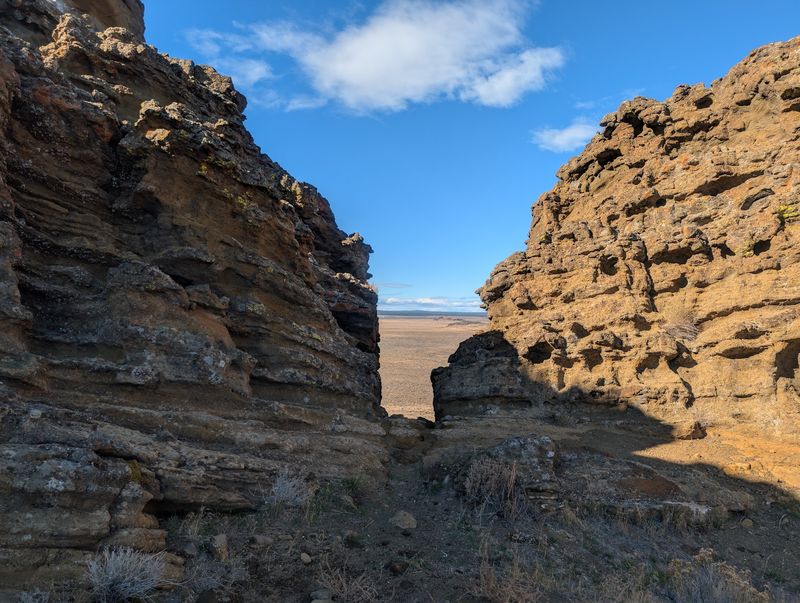
Hiking inside a volcano sounds intense, but this one plays nice. An easy one-mile loop trail circles the interior of Fort Rock. You get towering walls on the sides and open sky above.
Need something even shorter? A 0.1-mile trail leads to a viewing point. It’s a great pick for a quick leg stretch on a long road trip through Oregon.
The loop lets you see how big the ring really is. From the parking lot, the walls seem close. Once you start walking, the scale gets much more impressive.
Visitors can also climb on the rocks. That freedom adds fun for curious kids and adventurous adults. Still, pick your footing carefully, since volcanic rock can be crumbly and uneven.
Wear sturdy shoes instead of flip-flops. The high desert sun can feel strong, and shade inside the ring is limited. A hat and sunscreen make the walk far more pleasant.
Carry plenty of water, especially in summer. You can fill up at faucets near the picnic area before heading out. Your future self, halfway around the loop, will thank you for that small bit of planning.
The Shoes That Rewrote Footwear History Came From Nearby
In 1938, a University of Oregon archaeologist made a discovery that still amazes people. Luther Cressman found woven sandals made of sagebrush bark in Fort Rock Cave. Radiocarbon dating placed them at roughly 9,000 to 13,000 years old.
That makes them among the oldest known footwear in the world. Think about that the next time your sneakers fall apart after one year. These sandals survived for thousands.
Fort Rock Cave sits about a half-mile west of the big volcanic ring. It’s part of the story of Fort Rock State Natural Area. The cave helped prove people lived in this region very long ago.
You can’t just wander in, though. The cave is open only through guided tours offered by Oregon State Parks. Reservations are required, so plan well ahead.
Tours usually run from late April to mid or late June each year. Spots can be limited, which makes early booking smart. Check the Oregon State Parks reservation system when the season opens.
A guided visit adds real depth to the trip. Standing where those sandals rested connects the giant rock to the people who once lived around it.
A Volcano Built These Walls Inside An Ancient Lake
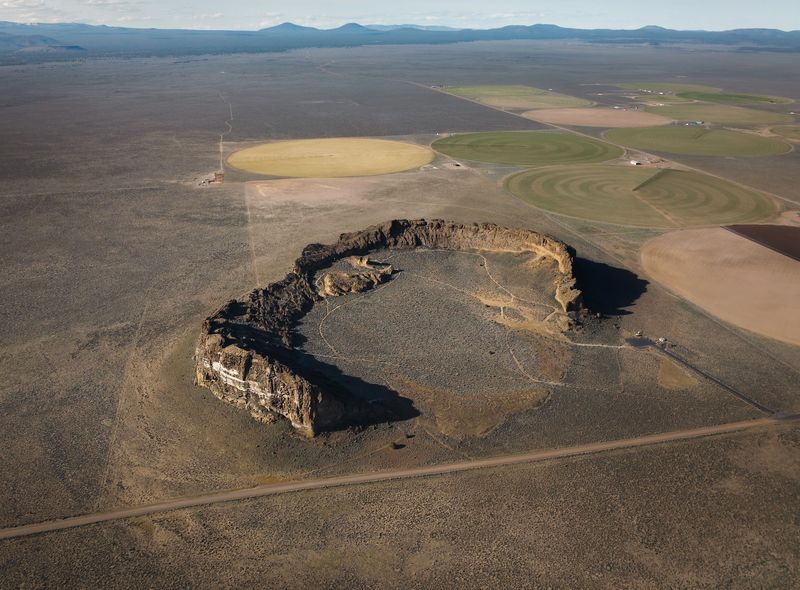
Lava met water, and the result was Fort Rock State Natural Area. Somewhere between 50,000 and 100,000 years ago, hot basalt magma pushed up through the bottom of a lake. The water flashed into steam and blasted out ash, mud, and molten rock.
All that debris piled up in a ring around the vent. Geologists call this kind of formation a tuff ring. Fort Rock is one of the best examples you can visit in the whole country.
The ring measures roughly 4,460 feet across. Its walls stand about 200 to 325 feet above the surrounding plain. That’s taller than many city buildings, and it sits in the middle of nearly nothing.
Later, the lake kept working on the rock. Waves wore away the southern walls over time. That erosion gave Fort Rock its famous crescent shape with a wide opening.
Here’s a fun detail for trivia night. The rock was once an island in that big Ice Age lake. Today the lake is long gone, and you walk across its dry old bed to reach the walls.
Read the interpretive signs near the parking area first. They make every cliff you see afterward more interesting.
People Gathered Here Long Before Anyone Called It A Fort
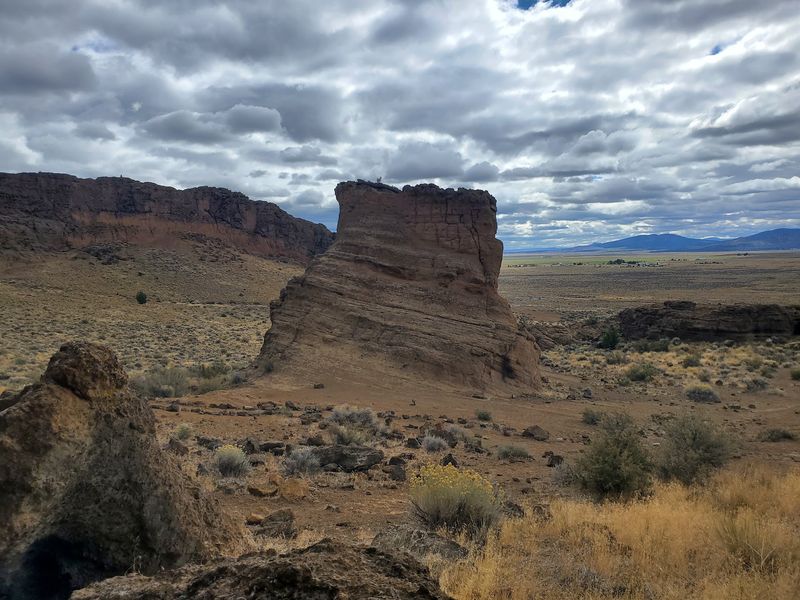
Long before road trips and parking lots, Native American tribes knew this place well. The semicircular wall served as a gathering spot thousands of years ago. It also offered natural shelter from desert weather.
The curved cliffs block wind from certain directions. That kind of protection mattered a lot in open country. It’s easy to see why people chose this spot to meet.
Evidence of pictographs and petroglyphs has been found on the rock walls. These ancient markings connect modern visitors to very old stories. They deserve care and respect from everyone.
Please never touch, scratch, or chalk any markings you might spot. Oils from hands can damage ancient art over time. Looking and learning is the best way to honor it.
The human story here stretches back further than most history books cover. Combine that with the cave sandals, and Fort Rock becomes more than a geology lesson. It turns into a timeline you can walk through.
Take a quiet moment inside the ring. The setting invites you to slow down and think about who stood here first. Few places in Oregon pack this much history into one view.
Bring Binoculars Because The Cliffs Have Tenants
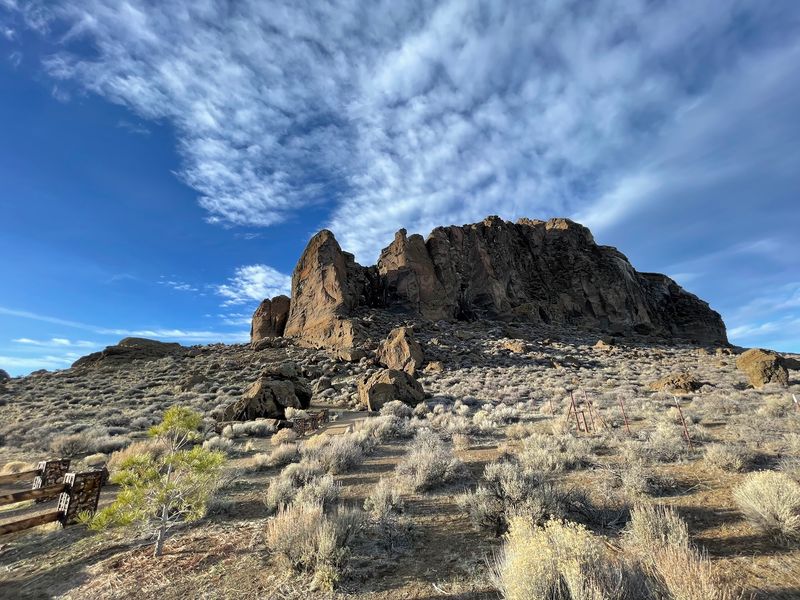
Falcons got the penthouse suites. Prairie falcons, swifts, and owls nest in the cliffs of Fort Rock State Natural Area. Those high ledges make perfect homes for birds that like a view.
A pair of binoculars turns a nice walk into a wildlife hunt. Scan the upper walls slowly. Movement often gives birds away before their shape does.
Protecting these nesting birds is a big deal here. Certain small areas close each year from February 15 to August 15. The closures help raptors raise their young without stress.
Respect any posted signs during that window. A disturbed nest can fail, and nobody wants that on their conscience. The rest of the park stays open for exploring.
Drones are banned year-round for the same reason. Buzzing machines can scare birds off their ledges. Leave the drone in the car and enjoy the old-fashioned way of looking up.
Early morning and evening can be pleasant times to watch the sky. Light gets softer, and the desert feels calm. Kids especially love spotting a bird of prey circling above the ring like it owns the place.
Pack A Lunch And Claim A Shady Table
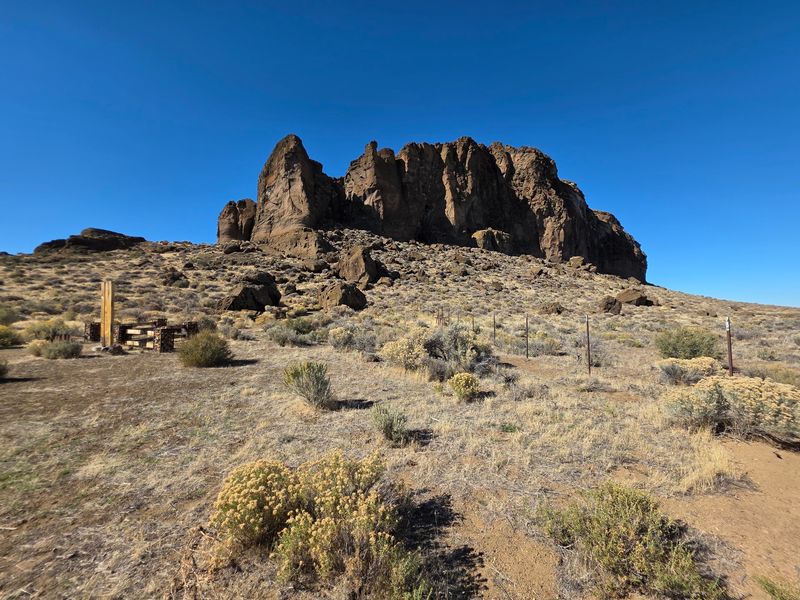
Good news for snack lovers. Fort Rock comes with covered picnic benches, so lunch doesn’t have to happen in full desert sun. The view behind your sandwich is pretty hard to beat.
Paved parking makes arriving simple. Clean flush restrooms are also available, which feels like luxury this far out. Fresh water faucets sit near the picnic area for refilling bottles.
Visiting costs nothing. No parking pass is required either, so you can spend that money on gas and snacks. Out here, both matter.
The park is open year-round as a day-use area. Hours generally run from dawn to dusk. Plan your visit around daylight so you get the most from the trails.
Services in the surrounding area are limited, so pack food before you come. A cooler with drinks and simple meals works great. Fill your gas tank in a bigger town on the way in.
Interpretive signs around the site add a little learning to your break. Read a few while you eat. By dessert, you’ll know more about tuff rings than most of your friends, and you’ll probably tell them anyway.
Stay Past Sunset And The Sky Steals The Show
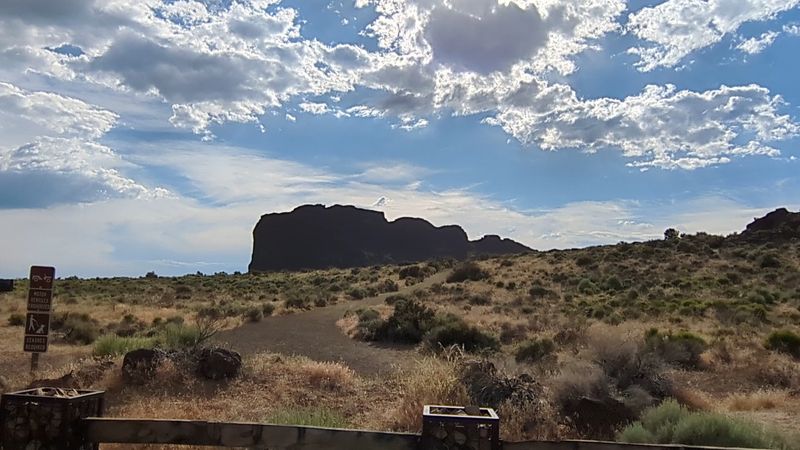
Darkness is one of the best features here. Fort Rock sits far from big city lights, and the area is known for dark skies. On a clear night, stars seem to pile on top of each other.
The park normally closes at dusk. However, Oregon State Parks offers a stargazing permit. It lets you stay up to two hours after closing time.
Those extra hours make a huge difference. You get time to watch the sky fill in as twilight fades. The silhouette of the rock walls adds drama to every view.
Astrophotographers will find a great foreground here. The jagged rim against a starry sky makes a memorable shot. A tripod helps a lot with long exposures.
Desert nights can get chilly, even after warm days. Bring layers, a blanket, and a red flashlight to protect your night vision. Folding chairs make sky watching much comfier on the neck.
Check moon phases before planning a trip. A new moon gives the darkest skies and the most stars. Get your permit arranged ahead of time, then let the universe handle the entertainment.
Getting There Is Easier Than The Middle Of Nowhere Suggests
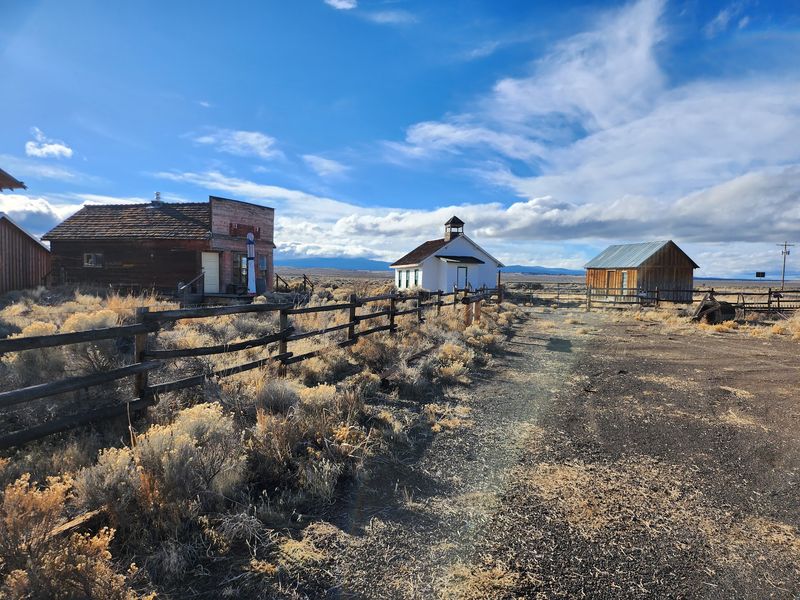
Remote doesn’t have to mean rough. Fort Rock State Natural Area is reached by paved roads. That’s welcome news for anyone driving a regular car.
You’ll find it at Fort Rock Rd, Fort Rock, OR 97735. The site sits near the small unincorporated community of Fort Rock in Lake County. It’s part of central Oregon’s high desert region.
From Bend, the drive takes about an hour. From Lakeview, plan on roughly two hours. Either way, the rock appears on the horizon long before you arrive.
The surrounding Fort Rock Valley is full of volcanic history. It holds around 40 similar tuff rings and maars. Fort Rock is the largest remaining tuff ring of the bunch.
The park land itself has a generous backstory. In 1962, it was acquired through gifts and lease or deed arrangements. Reuben A. and Norma Long, Lake County, and the Bureau of Land Management all played a part.
Download maps before leaving town, since cell signal can be spotty. Then enjoy the wide-open drive. Watching a stone fortress slowly grow out of flat desert is half the fun of the trip.
