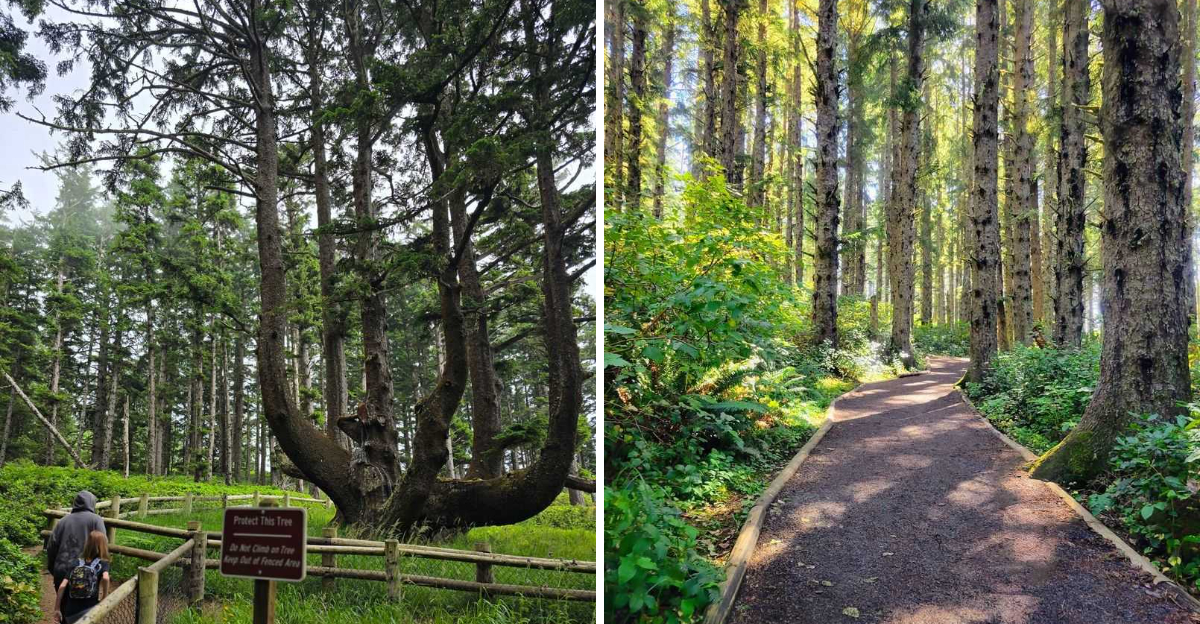
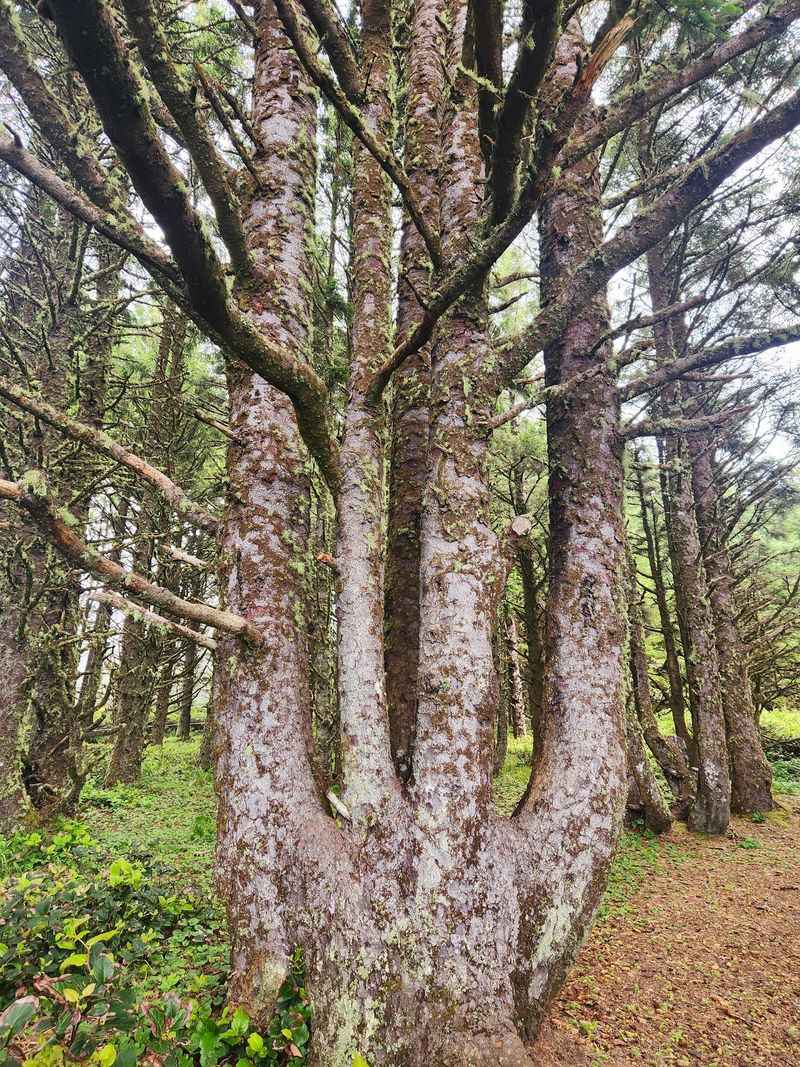
Trees aren’t supposed to look like this. Multiple trunks spread outward from a single base, twisting in directions that seem to defy whatever rules trees normally follow.
Scientists have theories, storms, early damage, unusual growth patterns responding to coastal wind. None of them fully explain what’s standing here though, leaving visitors staring up trying to piece together how something this strange occurred naturally.
Oregon’s coastline hides plenty of oddities, but few compare to this one visually. Photographers linger for hours trying to capture every angle, and honestly, none of the photos quite match seeing it in person.
Kids climb between the trunks while adults just stand back, phones out, still trying to understand what they’re looking at.
Oregon keeps surprising people who think they’ve seen every strange landmark already. This tree refuses easy explanations, and maybe that’s exactly the appeal.
The Shape That Started All the Arguments
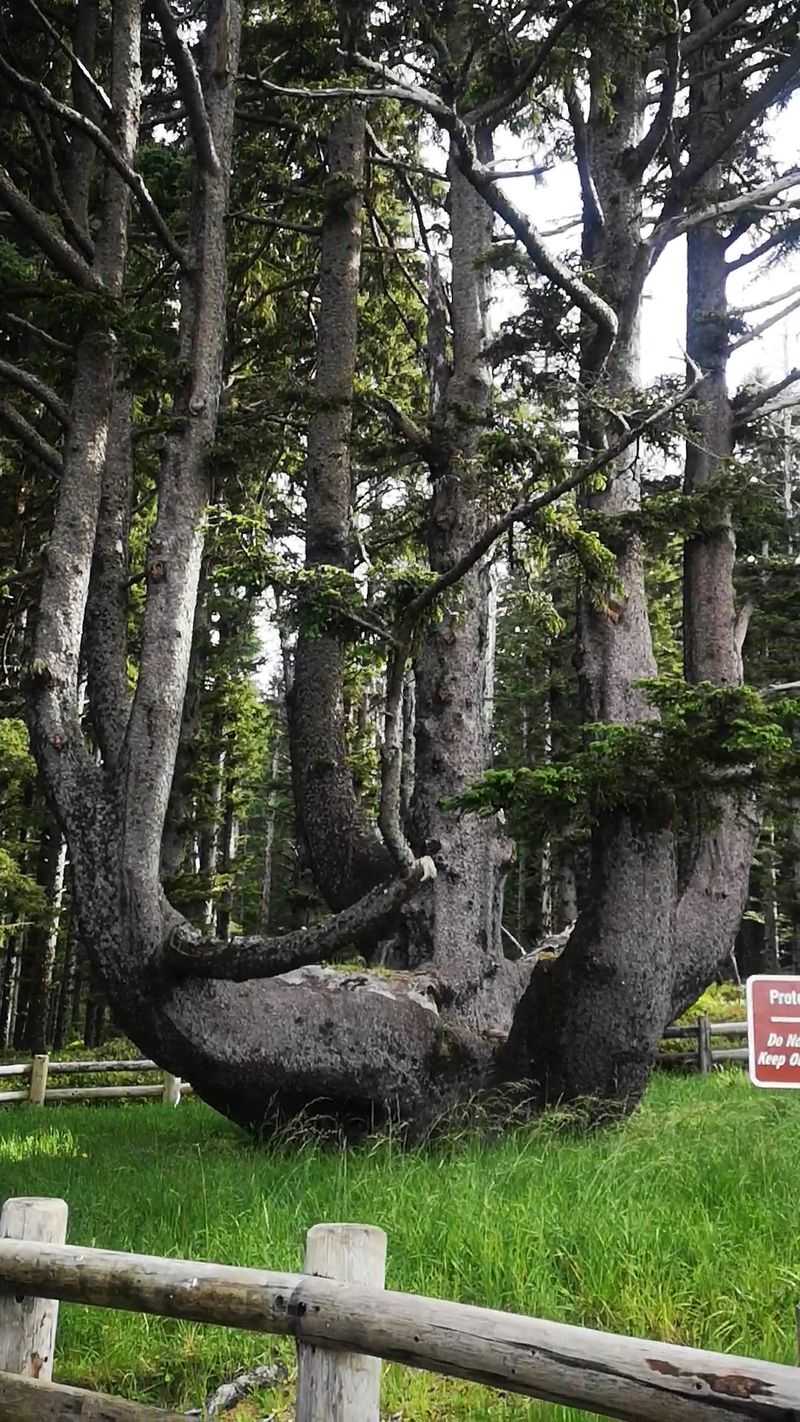
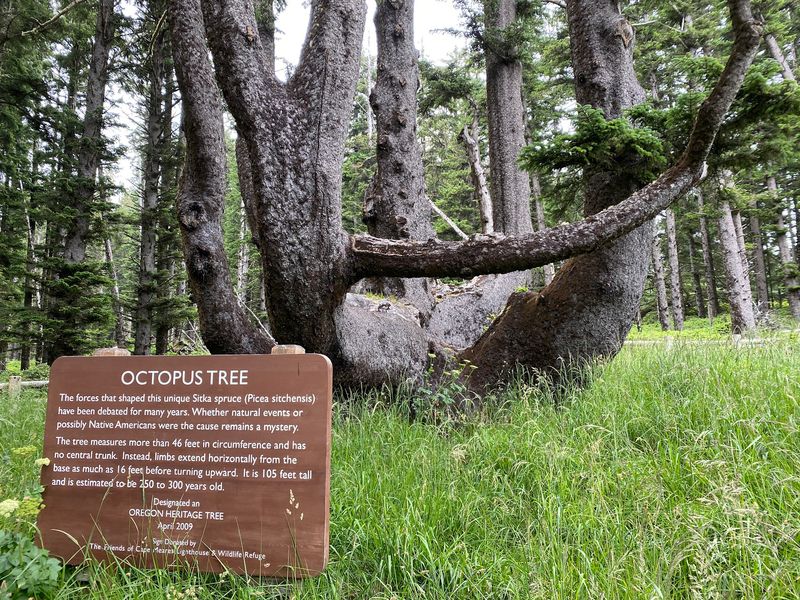
Most spruces grow like arrows. This one grew like a hand opening up. The base spreads wide and low, then six or more candelabra limbs bend outward before turning upward, each one thick enough to be its own tree.
Botanists have suggested wind damage, snow load, or an early injury to the leading shoot. Others point to deliberate shaping by Native peoples of the region, a theory repeated on interpretive signs nearby.
Nobody has proven any single explanation, which is honestly part of the fun. Standing beneath it, the arms look almost intentional, like something arranged rather than grown.
Estimates place the tree at somewhere between 250 and 300 years old, which means it was already unusual long before roads reached this headland.
Photos never do the scale justice. Several visitors mention being surprised by how much bigger it is in person, and I felt exactly the same way when the branches came into view through the trees.
The Ocean Overlook Hiding Right Behind It
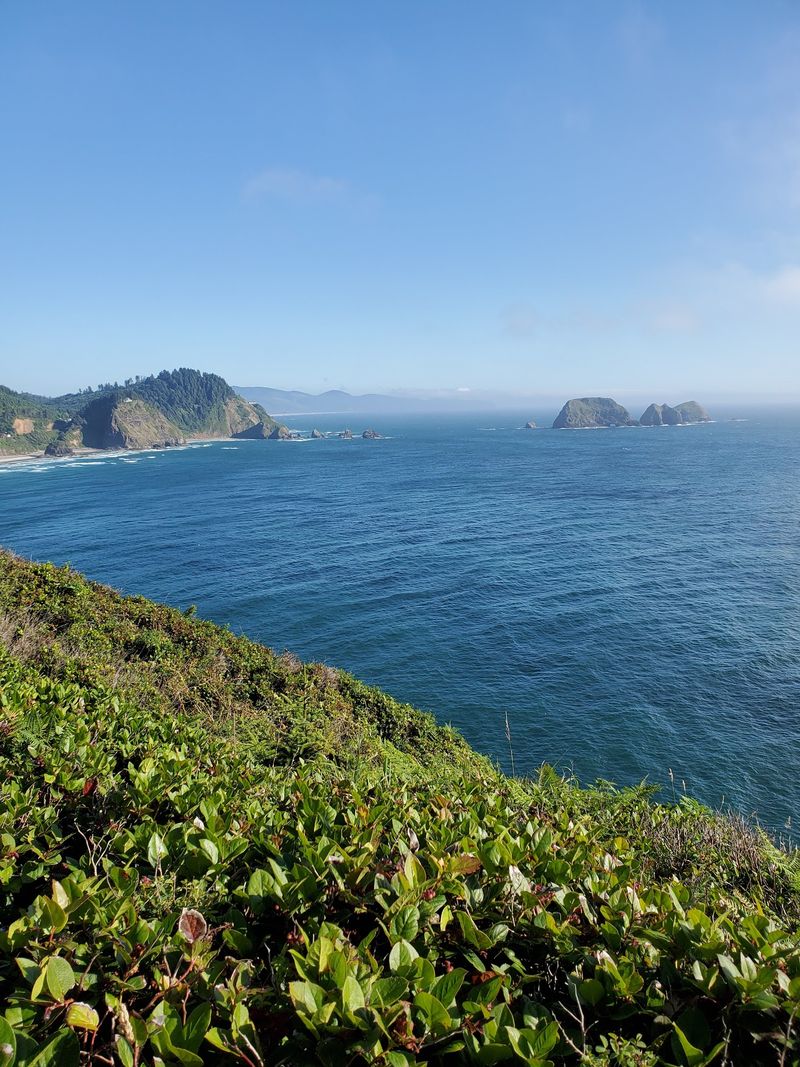
Turn away from the tree and the payoff doubles. A short continuation of the path opens onto a cliff-edge viewpoint where the Pacific stretches out below in long grey-blue bands.
Sea stacks break the surface offshore. On clear afternoons the coastline curves away in both directions, and the drop is steep enough to make the railing feel very welcome.
Photographers gravitate here for the combination of twisted branches in the foreground and open water beyond. Wind can whip across this spot without warning, so a jacket earns its place in the backpack even in July.
I lingered longer than planned, mostly because the sound of surf hitting rock far below is weirdly hypnotic. It muffles conversation and makes the whole headland feel remote.
Fog rolls in often along this stretch of coast. Rather than ruining the view, it turns the spruce trunks into silhouettes and gives the place a hushed, storybook atmosphere that plenty of visitors say they preferred.
Cape Meares Lighthouse Sits Just Across the Path
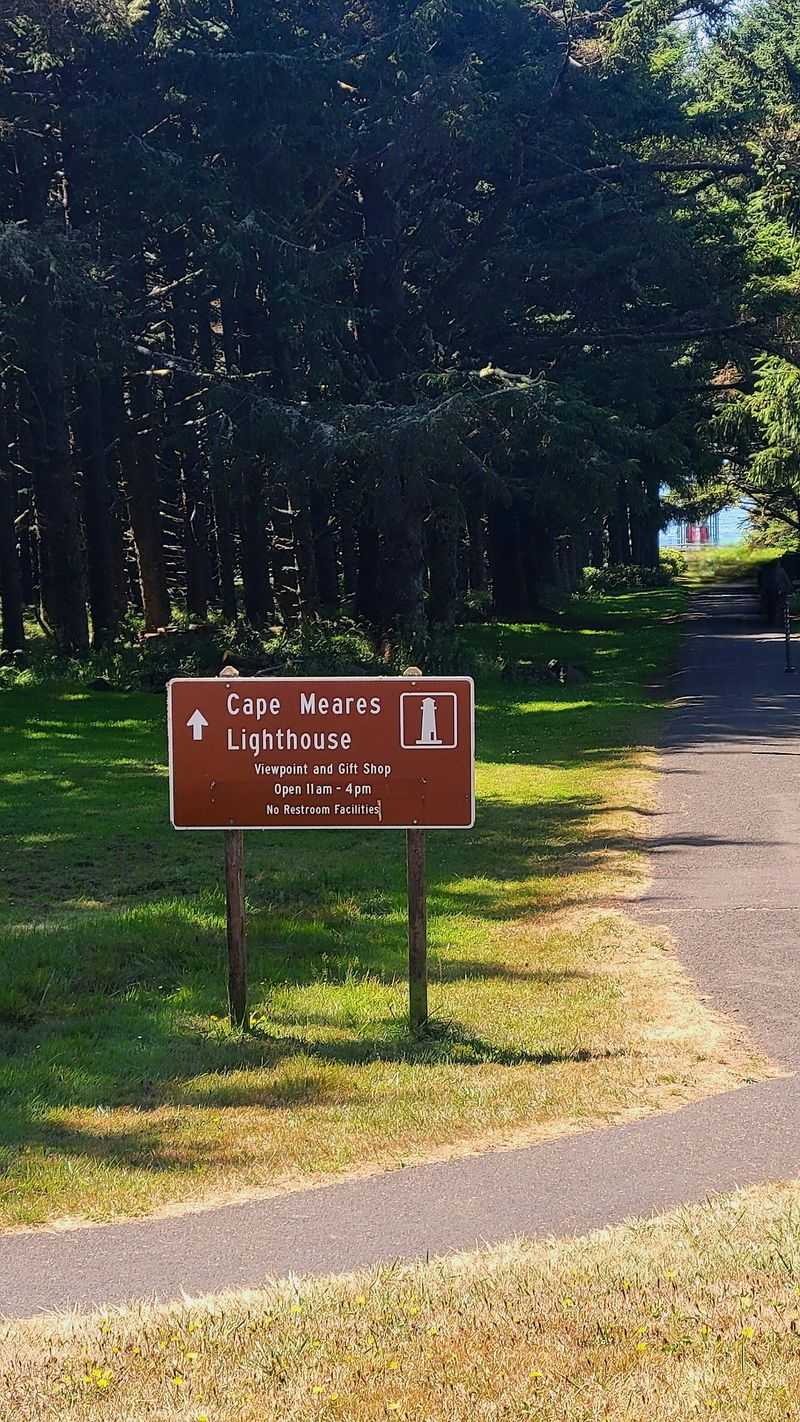
Two attractions for one parking spot is a rare deal. From the same lot, a paved path drops down the headland toward Cape Meares Lighthouse, the shortest lighthouse on the Oregon coast at roughly 38 feet tall.
First lit in 1890, it guided ships past this rocky point for decades before automation changed how the coast was watched.
The walk down is easy. Coming back up is where legs start complaining, since the return climb is steep enough that people often stop for a breather partway. Seasonal tours and a small gift shop operate at the lighthouse, though hours vary through the year.
Combining both stops turns a fifteen-minute detour into a genuine half-day outing. Bring water for the uphill return and take it slowly.
The lighthouse and the tree tell completely different stories about this headland, one built by hand and one shaped by forces nobody has fully identified.
A Walk So Short It Barely Counts as a Hike
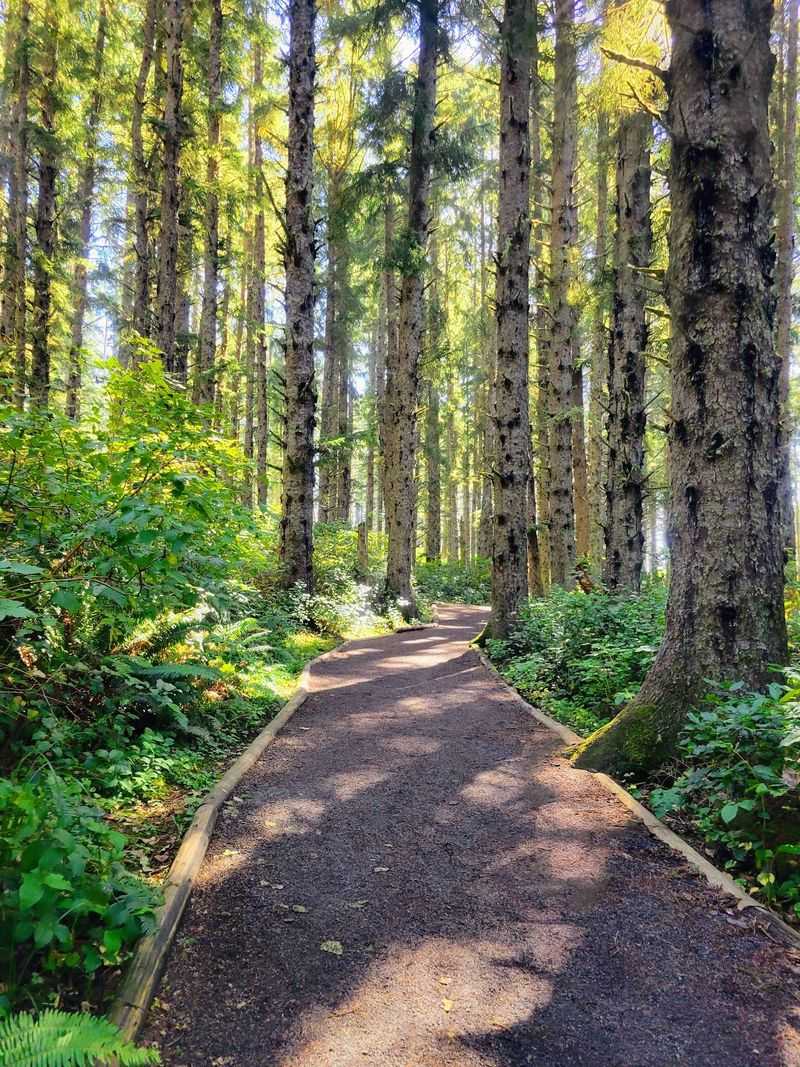
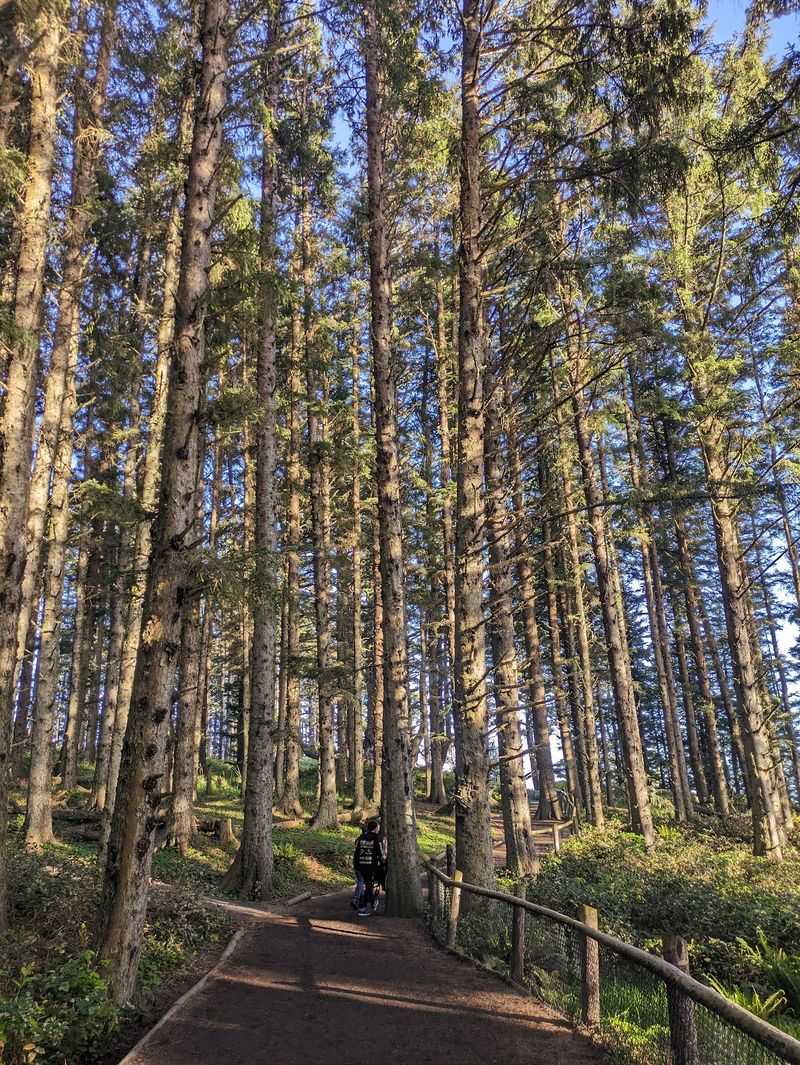
Do not pack for an expedition. The path from the main parking lot to the tree runs only a few hundred feet, and much of it is paved and gently graded.
Families with young kids handle it easily. Visitors have noted that the route works reasonably well for wheelchairs, though a push chair may need a helping hand on the slope back up.
Ferns crowd the edges of the trail, and spruce needles carpet the ground where the pavement thins. On damp mornings the whole corridor feels muffled and quiet. An overflow lot sits a bit further back, adding maybe five extra minutes of walking if the closer spaces are full.
Because the effort is so low, groups with mixed energy levels can all reach the tree together. That matters more than it sounds. Nobody gets left sitting in the car while everyone else takes photos. Benches and picnic tables appear along the way, making it easy to pause.
Reading the Signs Before Guessing the Answer
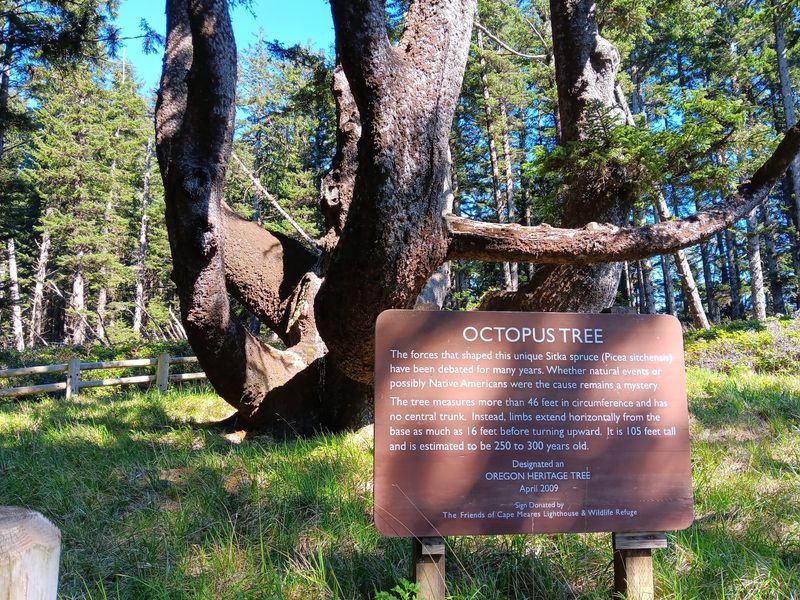
Interpretive panels near the fence line save visitors from wild speculation. They lay out the leading theories about the tree’s shape, including the possibility that Indigenous peoples of the Tillamook region shaped it as a ceremonial or burial tree.
Other panels cover the wider ecology of the headland, from old growth spruce to the seabirds nesting on the offshore rocks. Kids tend to skip the reading and go straight to counting limbs, which is its own kind of learning.
Several reviewers mention how much the signage added to the visit, turning a quick photo stop into something closer to an outdoor classroom. Give the panels five minutes before circling the tree again. Details land differently once the possible history is in your head.
What I appreciated is that the wording admits uncertainty rather than picking a tidy answer. The mystery stays intact, and the tree keeps its secret for another generation of curious visitors standing at the rail.
Whale Watching From the Headland Edge
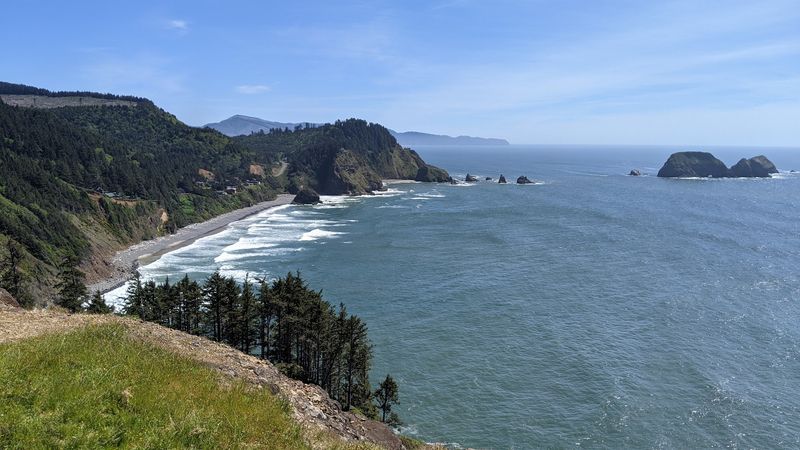
Grey whales pass this stretch of coastline twice a year, heading south in winter and back north in spring. The elevated headland makes Cape Meares a solid place to scan for spouts. Binoculars help enormously. Without them, a distant blow can look like nothing more than a whitecap.
Late December through January covers the southbound migration, while March through June brings the return trip, often with calves alongside. Patience is the whole game here. Find a spot along the railing, pick a section of horizon, and watch it steadily rather than sweeping back and forth.
Even on quiet days there is plenty to see. Seabirds wheel around the offshore rocks, and the water changes colour constantly as clouds move across it.
A friend of mine spent twenty minutes convinced she saw nothing, then caught three spouts in a row. That is pretty much how it goes on this coast.
Why the Drive From Tillamook Is Half the Fun
Roughly 25 minutes separates Tillamook from the cape, and the route earns every one of those minutes. The road hugs Tillamook Bay before climbing into dense coastal forest. Curves come often. Speeds stay low, which is fine because the scenery keeps changing.
Sections of the Three Capes Scenic Loop pass through here, linking Cape Meares with Cape Lookout and Cape Kiwanda further south. Watch for elk in the low fields near the bay, especially in early morning or toward dusk.
Cell service gets patchy once the road climbs, so download directions before setting out. Nothing dramatic, just easier. Anyone coming from Portland should budget around two hours each way, and the Oregon Coast Highway approach adds its own string of viewpoints.
Honestly, the drive shifted my mood before I even arrived. Trading farmland for forest tunnels does something to your sense of distance, and the cape feels genuinely tucked away once you park.
Timing Your Visit Around Crowds and Weather
Summer weekends fill the lot fast, and visitors regularly report circling for a space during peak afternoons. Early mornings solve most of that. The park gates open at 7 AM and stay open until 8 PM daily, which leaves generous room on either end of the busy middle hours.
March visits tend to be wonderfully quiet, with mist hanging in the branches and hardly anyone on the path. Friday evenings can feel nearly empty too, especially outside the summer stretch.
Rain here is not a dealbreaker. The canopy blocks a fair amount, and wet bark deepens the colour of the trunks in photos.
Layers beat a single heavy coat. Coastal weather flips between sun and drizzle within an hour, and the headland catches wind that the sheltered forest does not. Golden hour before closing gives the best light on the branches, plus a decent shot at having the overlook to yourself.
Bringing Kids Without Losing Your Mind
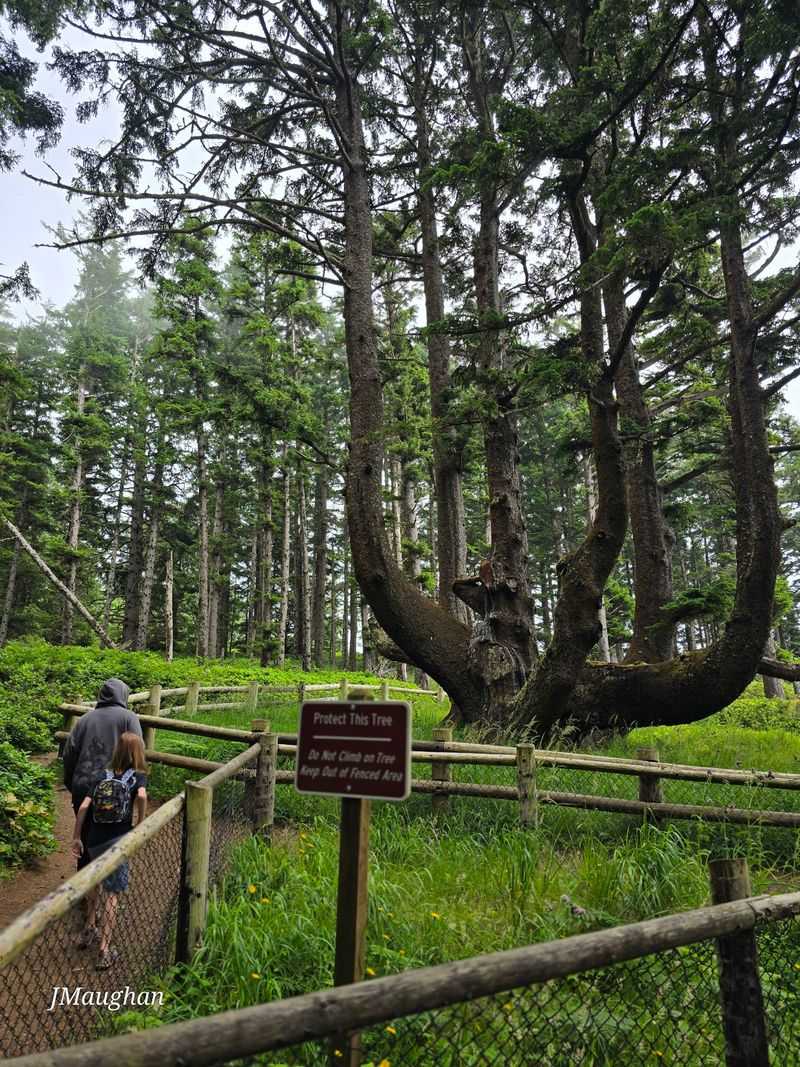
Counting the limbs becomes a game almost immediately. Kids tend to argue over how many arms the octopus really has, and the answer depends on where you stand.
A protective fence rings the base to shield the shallow root system, so climbing is off limits. Worth explaining before anyone gets ideas. The short distance means little legs manage fine, and picnic tables scattered through the park make lunch simple.
Pack snacks and a camera. That is genuinely all the gear required. Nearby, a separate trail leads to the Big Spruce, another giant worth adding if energy allows, though the surface gets uneven in places and strollers struggle.
Restrooms are available in the day use area, which any parent will tell you matters more than scenery. What sold my group was how quickly wonder kicked in. One look at those curling branches and the usual are-we-there-yet chorus stopped completely.
What Makes the Whole Stop Worth Remembering
Some landmarks impress once and fade. Others stick, and this one belongs firmly in the second group. Part of it is the unanswered question. A tree that has outlived every explanation offered for it carries a quiet kind of authority.
Part of it is the setting, where old growth spruce, a working headland, and an open Pacific horizon all sit within a few minutes of each other. There is no entry fee, no ticket line, no complicated planning. Park, walk, look, wonder.
Pairing the tree with the lighthouse and the overlook fills a couple of hours easily, and most people find they stay longer than intended. Find it at Cape Meares Lighthouse Dr, Tillamook, OR 97141, United States, open daily from 7 AM to 8 PM.
Bring a jacket, bring curiosity, and give yourself permission to stand there a while doing absolutely nothing.
