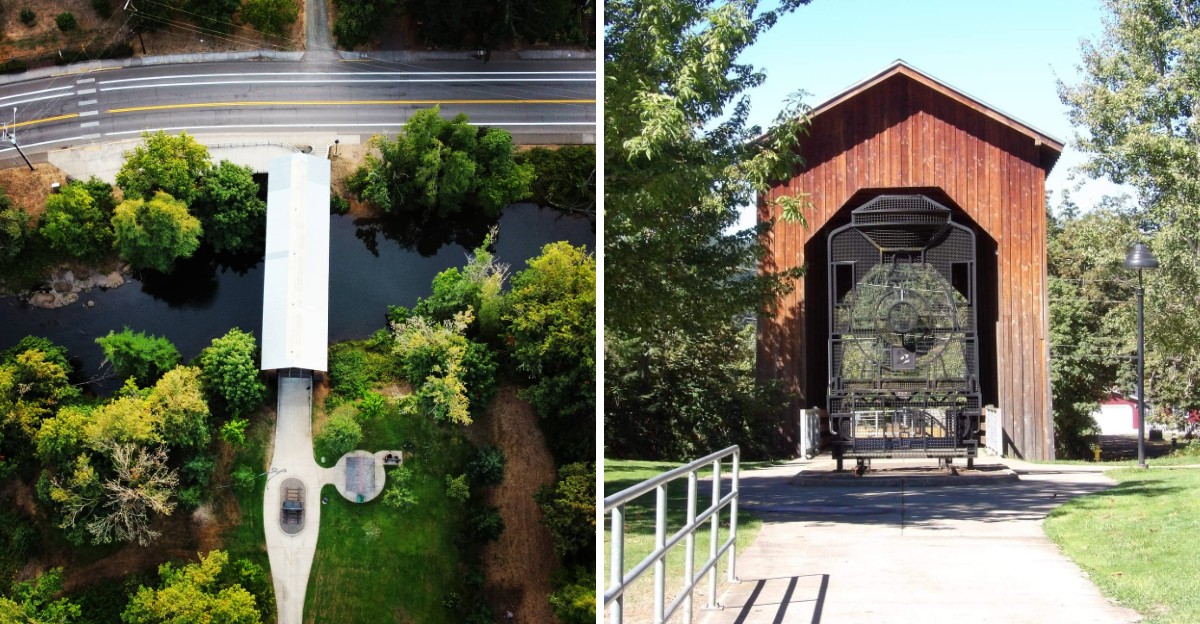
Railroad bridges built like this one used to be more common. Now, an entire category of ordinary engineering ends here, permanently, with this bridge as the last surviving example anywhere west.
Wooden beams still hold everything together decades after construction finished, engineering choices considered outdated the moment more modern materials took over everywhere else.
Trains no longer cross it regularly, though the structure itself remains intact enough to demonstrate exactly how these bridges once worked.
Preserving something this specific and technical takes dedicated effort most historical sites never commit to fully. This bridge survived anyway, maintained carefully enough to remain standing long after every comparable structure elsewhere disappeared completely.
History rarely gets this literal to walk through. Oregon holds onto this one example, a stubborn piece of engineering refusing to become extinct like everything similar around it.
A Wooden Giant Built for Log Trains
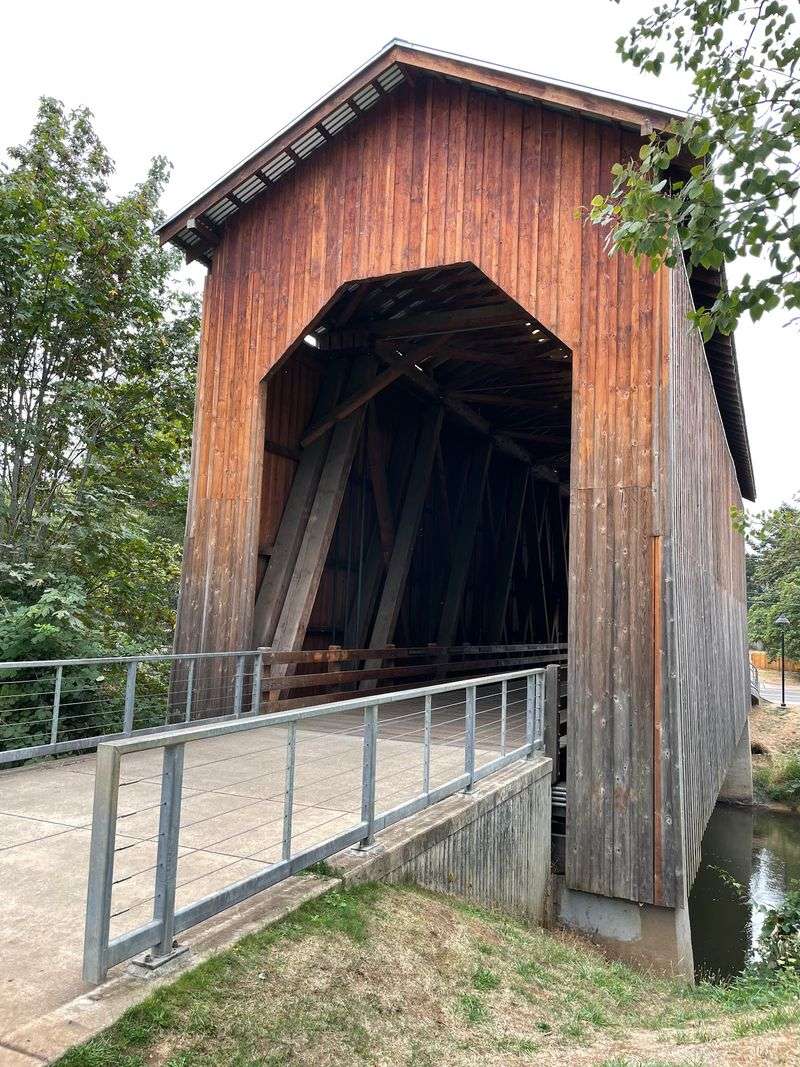
Most covered bridges feel dainty. Not so here. Built in 1925 for the Chambers Lumber Company, the structure had one job, and that job was carrying heavy log trains across the Coast Fork of the Willamette River.
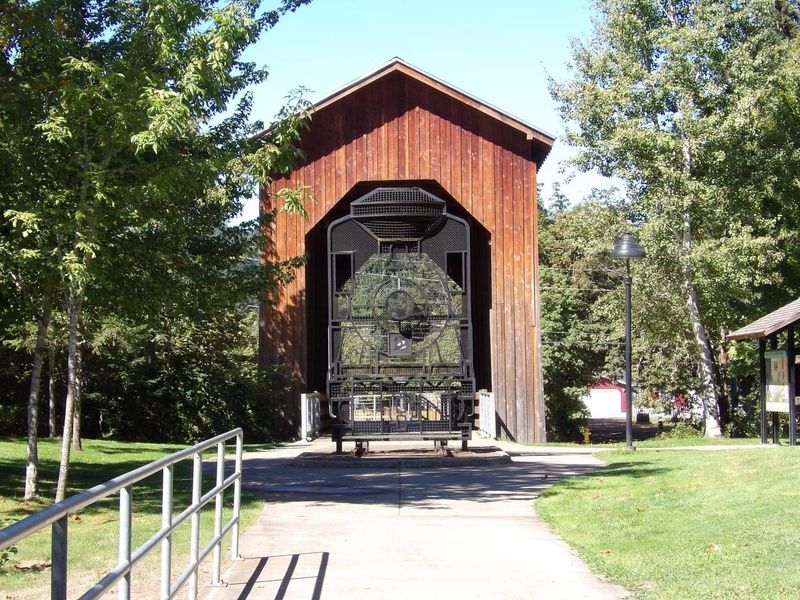
That purpose shows in every dimension. The portal opening rises high enough to swallow a steam locomotive and its smokestack, and the trusses are made from beams so wide that modern mills rarely cut anything like them anymore.
Standing beneath the roofline, the scale really lands. Road bridges of the same era were built for wagons and early cars, while trains demanded something far stronger, so the timbers here carry a weight most covered bridges never had to bear.
The bridge stretches roughly 78 feet across the water, short by railroad standards but remarkably tall. Visitors often comment that photos flatten it out completely.
Seeing it up close changes the impression fast, and I would recommend walking to the far bank just to appreciate the height from a distance.
Howe Truss Craftsmanship You Can Actually Study
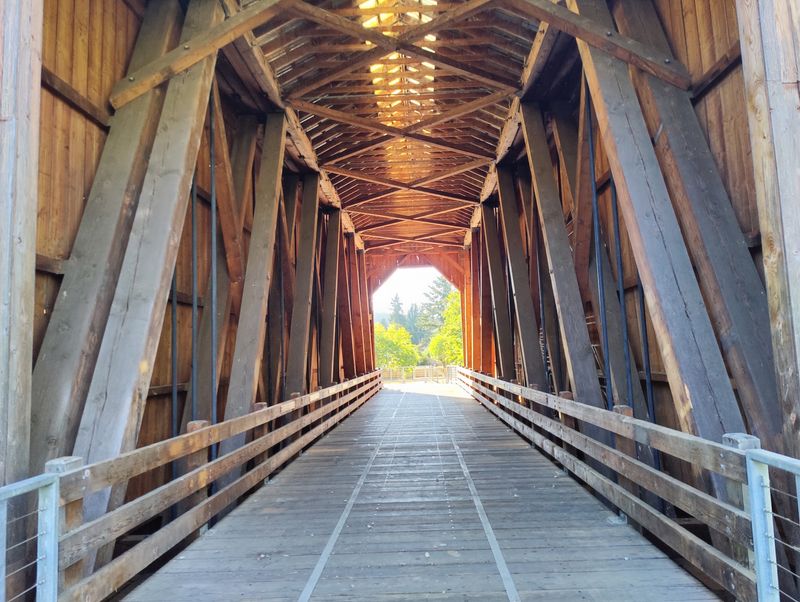
Bridge nerds have a favorite detail here, and it is the Howe truss. Inside the covered span, diagonal wooden braces cross in tidy triangles while vertical iron rods tie the whole frame together, a design patented back in the 1840s.
Looking up at that geometry, the logic becomes obvious even without an engineering degree. Wood handles the pressing forces, iron handles the pulling ones, and together they hold enormous loads steady.
Very few Howe truss railroad bridges survive anywhere, which makes this one a genuine teaching tool. Model railroad builders have used it as a reference for replica construction.
The carpentry deserves a slow look. Joints fit tight, iron rods run clean through the beams, and the repetition of angles creates a rhythm that photographs beautifully in low light.
Bring a curious kid and point out how the triangles never change shape under pressure. It is one of those rare landmarks where the how and the why sit in plain sight, waiting to be noticed.
Train Tracks Still Set Into the Floor
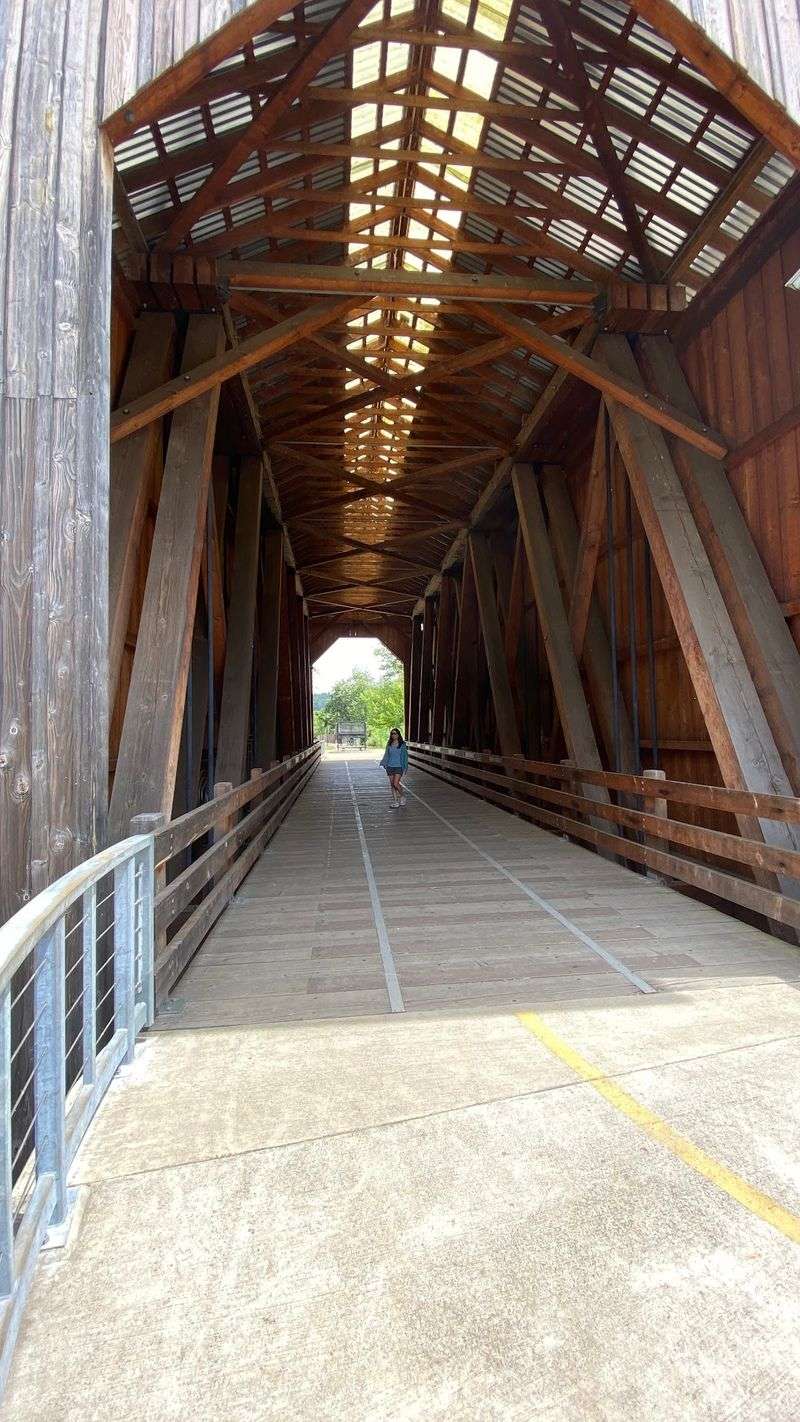
Look down while crossing and the history gives itself away. Steel rails sit flush in the plank decking, a deliberate nod to the decades when this was working railroad infrastructure rather than a walking path.
Little touches like that do more than any sign could. Feet naturally follow the rails, and suddenly the imagination fills in the noise, the smoke, and the groan of a loaded train easing across the water.
Restoration crews chose to keep those elements visible instead of paving over them. There is also a painted silhouette of a locomotive on one interior wall, sized to show exactly how the equipment filled the space.
Kids tend to spot it before adults do. Mine of a friend’s group raced the rails end to end, which felt like the right way to experience it.
The deck is smooth and level now, with accessible approaches on both ends, so wheelchairs and strollers roll through without trouble. Small design decisions, big payoff.
Plaques and Panels That Tell the Whole Story
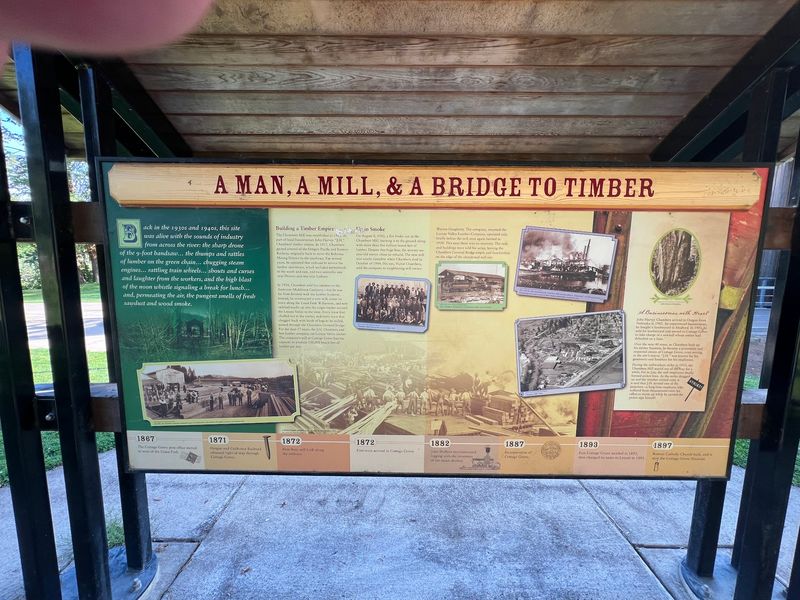
Plan on reading. Small plaques line the railings through the bridge, each carrying a short fact about construction, timber sourcing, or the lumber operation that made the crossing necessary.
The pacing works surprisingly well. Instead of one giant wall of text, information arrives in bite-sized pieces as you walk, which keeps younger visitors engaged far longer than expected.
On the east side sits a covered pavilion with larger interpretive panels covering local logging history, the mill era, and the long campaign to rescue the structure. Benches nearby make it easy to sit and absorb it all.
Homeschool groups and road-trippers both treat the spot as an unofficial outdoor classroom. Photos of the original railroad in operation appear on some displays, which helps connect the quiet present to the loud past.
Give the reading twenty or thirty minutes. Skimming past the panels means missing the most interesting part, because the bridge itself only makes full sense once the surrounding story fills in.
The Fire, the Fight, and the Rebuild
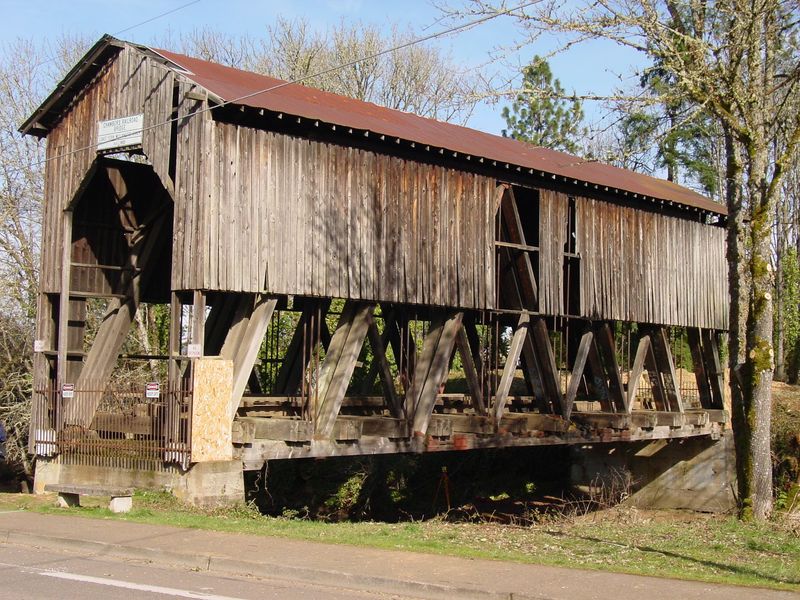
Survival was never guaranteed. Years of neglect left the span sagging and unsafe, and a 2011 arson fire damaged the structure badly enough that demolition seemed like the likely ending.
Cottage Grove had other plans. A community effort combined city support, grants, and local fundraising to reconstruct the bridge using massive timbers, some sourced regionally because few mills still handle beams that size.
Reopened in 2011 after the rebuild, the bridge now serves people on foot instead of trains. The fresh wood and careful detailing show real respect for the original design rather than a quick patch job.
Knowing that backstory shifts how the place feels. What could have been a parking lot is instead a landmark, and the difference came down to residents who cared enough to organize.
Restoration details appear on the interpretive signs, including notes about the craftsmanship involved. Honestly, that stubborn local pride ended up being my favorite part of the visit.
A Metal Train Kids Are Allowed to Climb
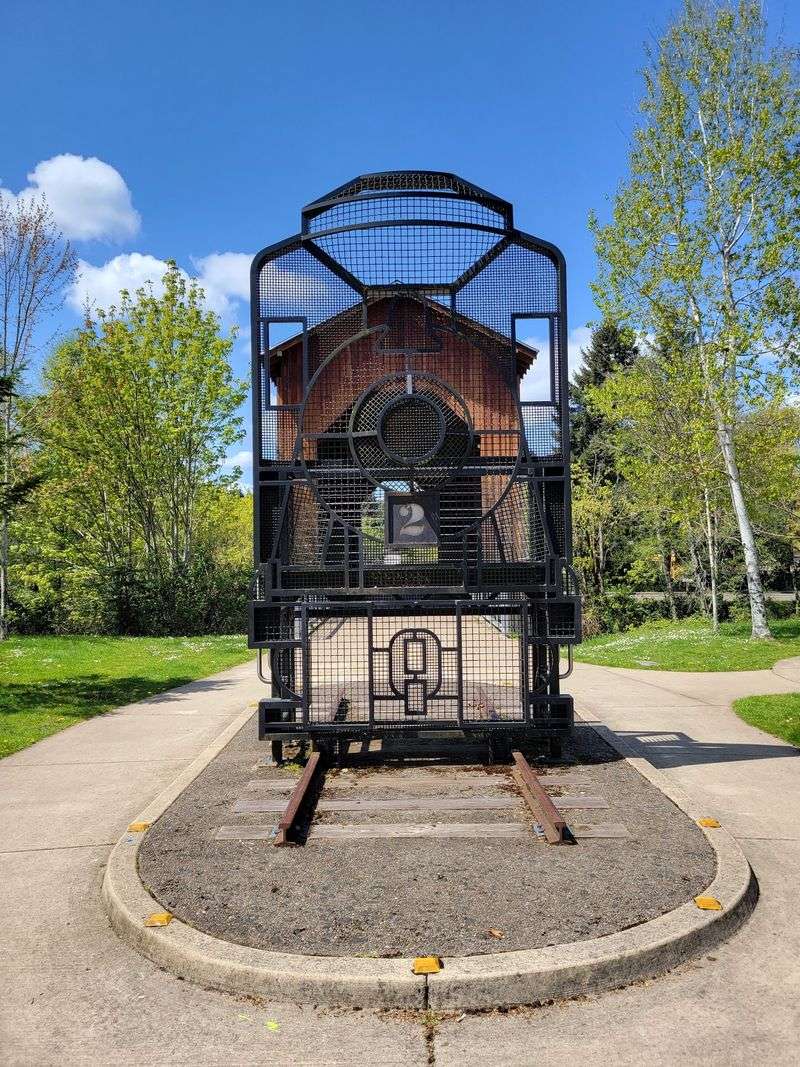
Right outside the bridge sits a clever surprise: a train sculpture welded from steel rails and plates, built sturdy enough for climbing. Kids find it within about four seconds of arrival.
Playground equipment at a historic site could feel random, yet this fits perfectly. The sculpture echoes the locomotives that once crossed the span, turning a history lesson into something hands-on.
Grassy open areas surround it, giving room for running, tag, or a quick picnic while grown-ups read the panels in peace. Families with restless children will appreciate that balance.
A few visitors have wished for an actual steam engine on display, which would be something. For now, the metalwork version does the job with charm to spare.
One caution worth repeating: the path down toward the river gets steep and the drop-off is real, so keep younger kids in sight. Otherwise, let them climb. The sculpture was built for exactly that.
River Sounds, Herons, and a Surprisingly Peaceful Park
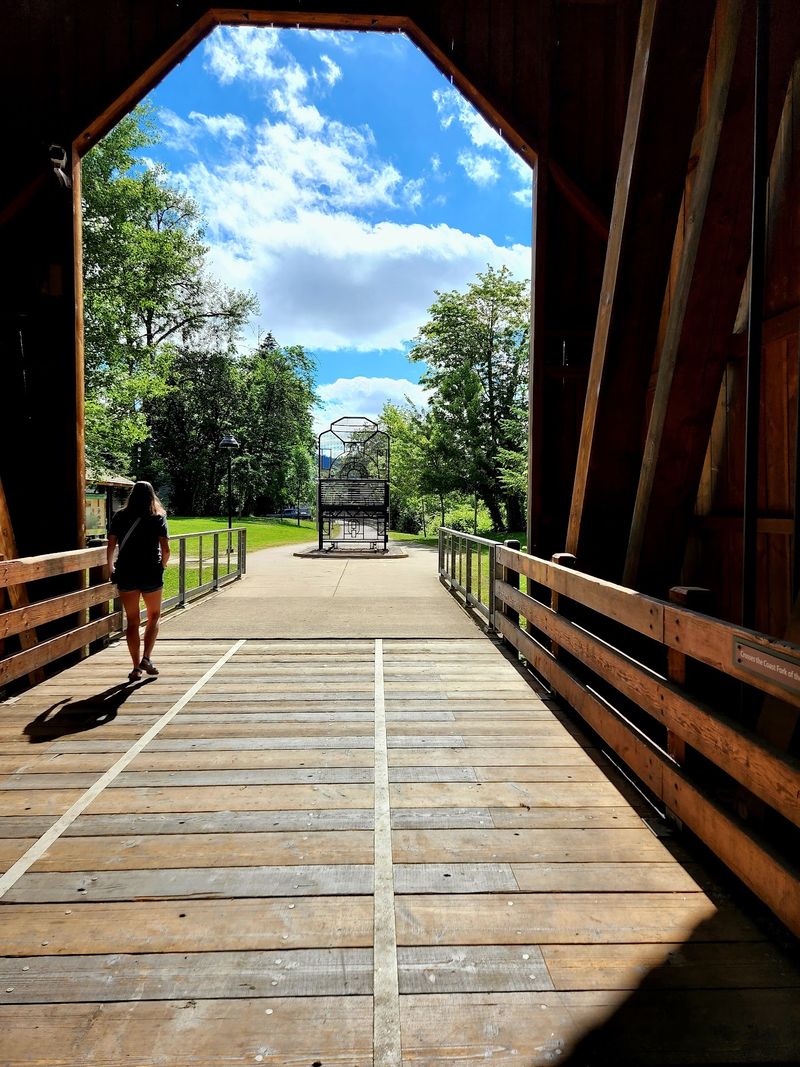
The water does something to the mood here. The Coast Fork of the Willamette runs fast and clear under the span, and the sound carries into the covered interior like a natural soundtrack.
Wildlife shows up regularly. Great blue herons stalk the shallows, swallows dart around the rafters, and the riverbanks stay green through most of the year.
Benches near the pavilion invite lingering, and plenty of people treat the shade inside the bridge as a reading spot. On a warm afternoon, it is noticeably cooler under that roof.
During a downpour, the covered span becomes an instant shelter, which is a very Oregon kind of convenience. Rain drumming on the roof while the river rushes below is a memory worth collecting.
Walking trails connect the site to the wider river corridor, making it easy to stretch a five-minute stop into a proper stroll. Locals jog through, dogs on leashes get their morning laps, and nobody seems to be in a hurry.
Parking Takes a Little Strategy
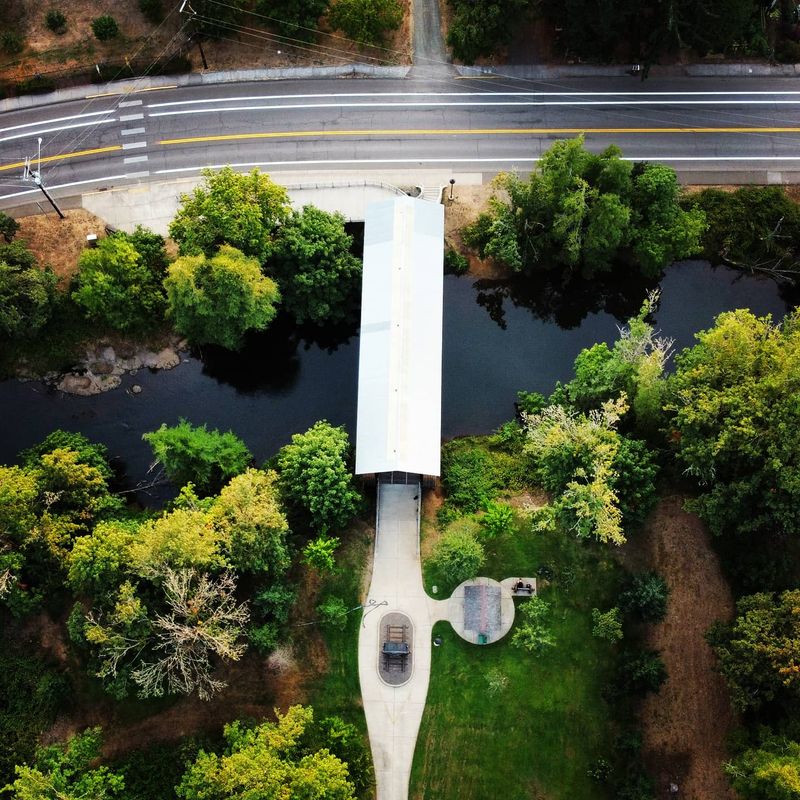
Here is the honest heads-up: there is no dedicated lot. The bridge sits inside a residential neighborhood, and the nearest streets are narrow enough that pulling over takes some thought.
Several visitors recommend parking on the east side of the river and walking in from there. Pull-outs along S River Road work, and Tyler Avenue has been mentioned as another option.
Approach it like a short neighborhood stroll rather than a drive-up photo stop. Leaving the car a block or two away costs almost nothing in time and spares residents a blocked driveway.
Be courteous, avoid mailboxes, and keep the road clear for through traffic. Simple stuff, but it matters in a tight neighborhood. The walk in has its own reward, since the bridge appears gradually between houses instead of all at once. That slow reveal is genuinely fun.
Access is open around the clock, so early mornings offer both quiet streets and softer light for photos.
Part of the Covered Bridge Capital of the West
Cottage Grove holds a nickname worth knowing: the Covered Bridge Capital of the West. Lane County has more of these wooden crossings than anywhere else in the region, and several sit within a short drive.
That context makes the railroad bridge feel less like an isolated oddity and more like the headliner of a larger collection. Driving between them turns into a pleasant loop through farmland and timber country.
Comparing designs is half the fun. Road bridges nearby show lighter framing and different window patterns, which highlights just how overbuilt a railroad version had to be.
Maps and route information are available through city resources, and the interpretive pavilion helps orient first-timers. Plenty of travelers stitch together a half-day of bridge hunting.
Downtown Cottage Grove sits minutes away with murals and small shops, including artwork honoring local author Opal Whiteley. Pair the two stops and the afternoon fills itself without much planning.
Why the Stop Is Worth the Detour
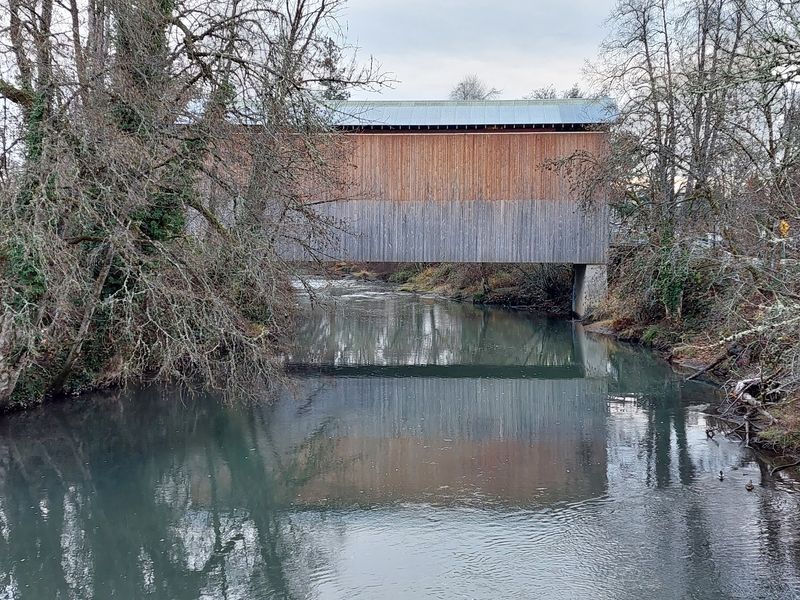
Some landmarks reward a long visit. Others land in fifteen focused minutes, and this one manages both depending on the mood you bring. Photographers get dramatic geometry and river reflections. History fans get plaques, panels, and a rebuild story with real grit.
What sticks with me is the combination of size and silence. A structure built for roaring machinery now sits in near quiet, holding its shape while a neighborhood goes about its day around it.
Open 24 hours and free to walk, it fits easily into a drive along Interstate 5 without derailing any schedule. Ten minutes off the freeway, maybe less.
Bring a picnic, watch your footing near the steep riverbank, and give the interpretive signs real attention. You will find Chambers Covered Railroad Bridge at 1231 S River Rd, Cottage Grove, OR 97424, and the last covered railroad bridge in the West is absolutely worth the small detour.
