Some places feel like they were designed for the big screen, even if the cameras never actually showed up. Oregon has no shortage of abandoned towns, crumbling buildings, and rusting relics that look straight out of a Hollywood script. The good news? They’re real, and you can actually visit them.
Deep in the forest, an old mining camp sits frozen in time, with intact structures and an eerie silence that makes you feel like you’ve stepped onto a film set. An abandoned schoolhouse stands empty and haunting, the kind of place Hitchcock would have loved.
Along the coast, the remains of a shipwreck rise from the sand like a ghost frozen in time, its skeletal frame slowly surrendering to the sea.
Bring your camera, your sense of curiosity, and maybe a friend. Oregon’s abandoned places are ready for their close-up.
1. Shaniko Ghost Town
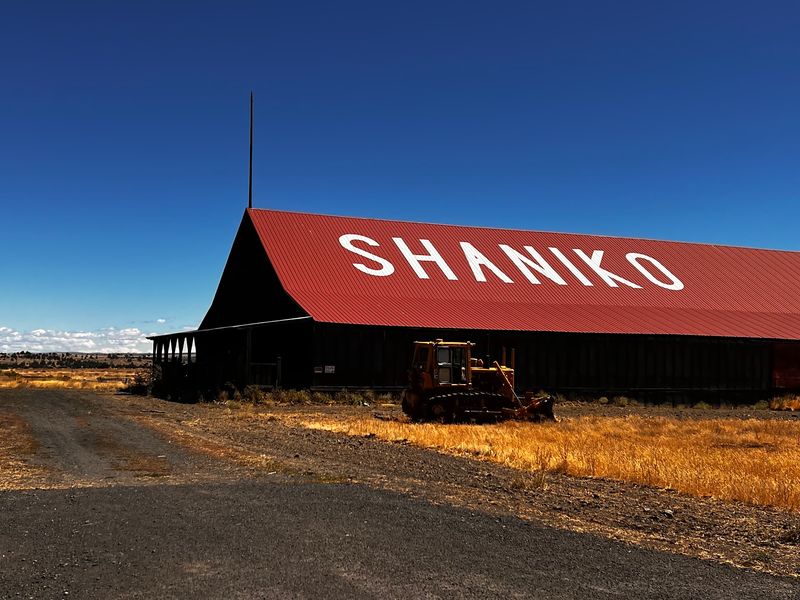
Shaniko looks like someone hit pause on 1901 and never came back to press play. The wooden storefronts still line the main street, their paint curling away in long strips under the high desert sun. You almost expect a horse to clip-clop around the corner at any moment.
Once called the Wool Capital of the World, Shaniko thrived because of the railroad and the massive sheep industry that surrounded it. When the railroad rerouted and wool prices collapsed, the town simply emptied out. What remained was eerily preserved by the dry eastern Oregon climate.
The old hotel still stands. The jailhouse still has its iron bars. Wandering through feels genuinely surreal. Photographers absolutely love this place. The surrounding landscape, wide open and almost brutally quiet, makes the whole scene feel even more cinematic and strange.
2. Astoria Column and Cannery Ruins
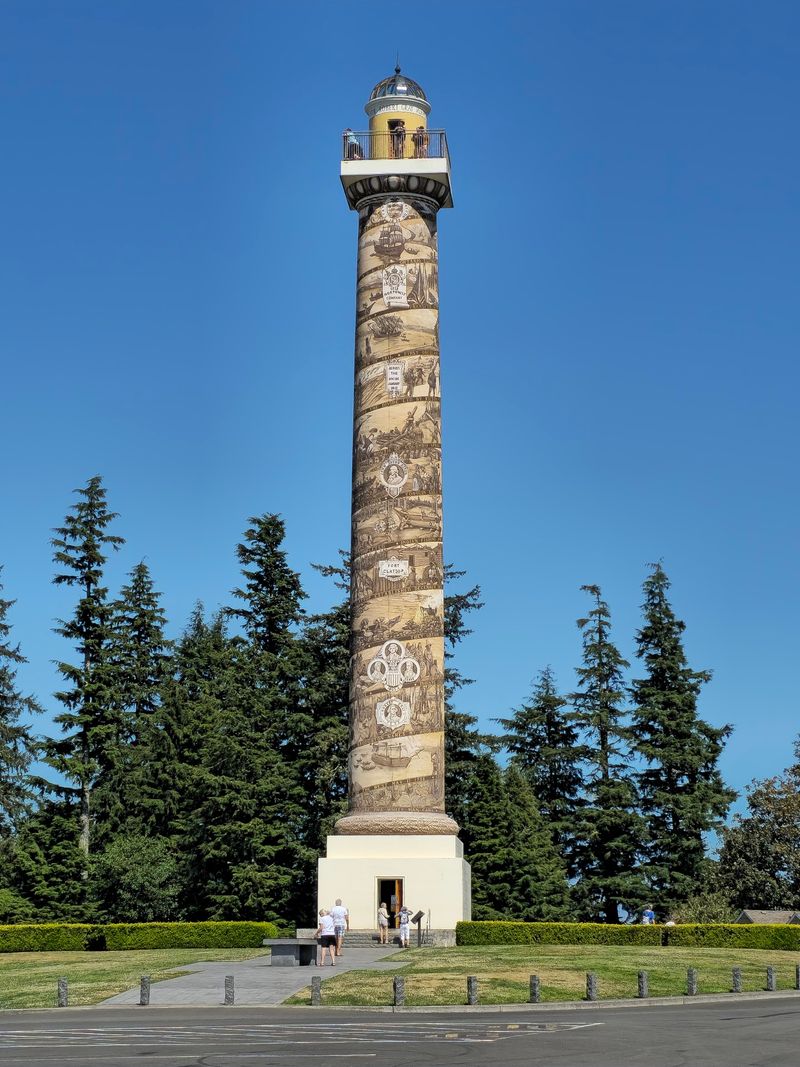
Astoria sits where the Columbia River meets the Pacific Ocean. Tucked around its waterfront are remnants of an industry that once fed the world. The old cannery ruins along the riverbank are extraordinary.
Massive timber frames rise out of the water like the bones of something ancient, draped in moss and salt air.
At peak production, Astoria was the salmon canning capital of the world. Hundreds of canneries lined these shores, processing millions of fish every season. When the industry collapsed in the mid-20th century, many of those buildings were simply left to the river and the weather.
What remains is genuinely breathtaking in a melancholy kind of way. The structures that still stand look like they belong in a post-apocalyptic film, all dark timber and fog and the sound of water lapping underneath. I found myself standing there longer than planned, just listening.
The light on cloudy days is particularly dramatic, turning everything silver and grey in the most beautiful way possible.
3. Galesville Dam and Reservoir
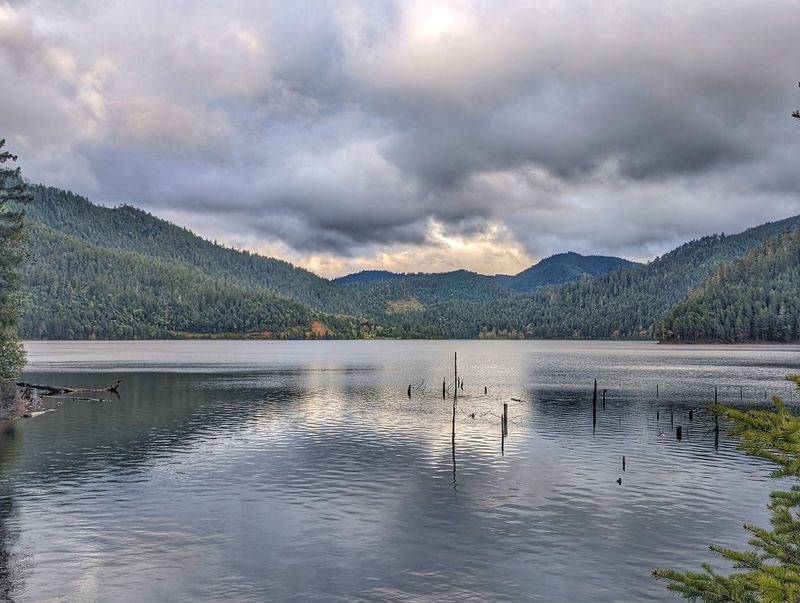
There is a particular kind of quiet that settles over places where water used to roar and machinery used to hum. Galesville Reservoir in Douglas County has that quality in abundance. The dam infrastructure sits surrounded by dense Oregon forest that presses in from every direction.
The surrounding area holds remnants of old homesteads and logging operations that once made this valley productive and busy. Nature has been thorough in reclaiming those spaces. Ferns push through old foundations, and moss covers everything that holds still long enough.
Getting out here requires a bit of driving on rural roads, and that sense of effort makes the arrival feel earned. The reservoir itself is stunning, especially in early morning when mist sits on the water and the tree line reflects perfectly on the surface.
It genuinely looks like a location scout chose it for a moody thriller. The combination of industrial remnants and wilderness feels completely unique, and the whole valley carries an atmosphere that is hard to shake once you have experienced it.
4. Bourne Ghost Town
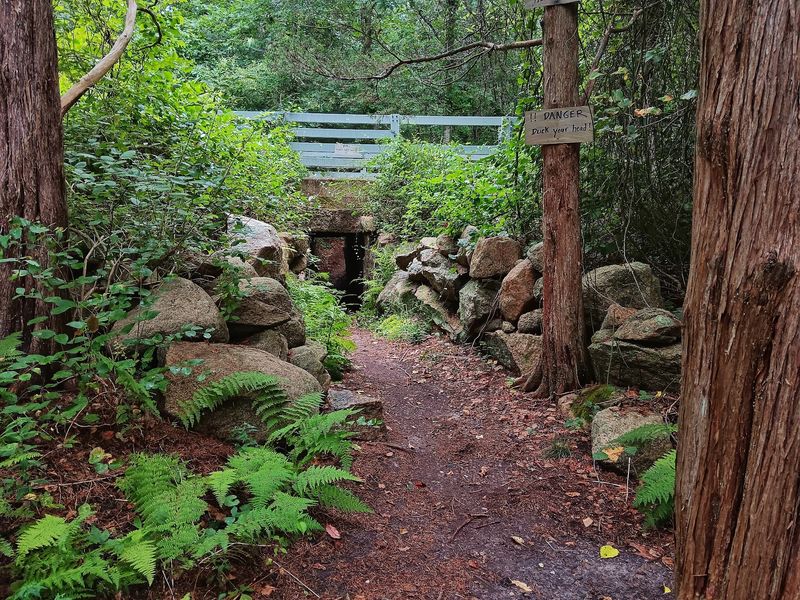
Buried deep in the Elkhorn Mountains near Baker City, Bourne is the kind of place you have to really want to find. The road in is rough and the signage is minimal, which somehow makes the whole experience feel more authentic.
This was once a gold mining town with hundreds of residents, a post office, and enough ambition to fill a whole era.
By the early 1900s, the gold was mostly gone and so were the people. What remains are stone foundations, scattered rusted machinery, and the occasional timber structure that has somehow survived over a century of mountain weather.
The creek running through the canyon adds a constant soundtrack that makes everything feel alive despite the obvious abandonment.
I genuinely felt like I had walked onto a Western film set, minus the cameras and the crew. The surrounding forest is gorgeous. Tall pines shade the canyon floor, and wildflowers push through cracks in old stone walls during summer months.
Bourne rewards curious travelers who do not mind a bit of adventure getting there, and the solitude is remarkable for a place with such a rich history.
5. Lonerock
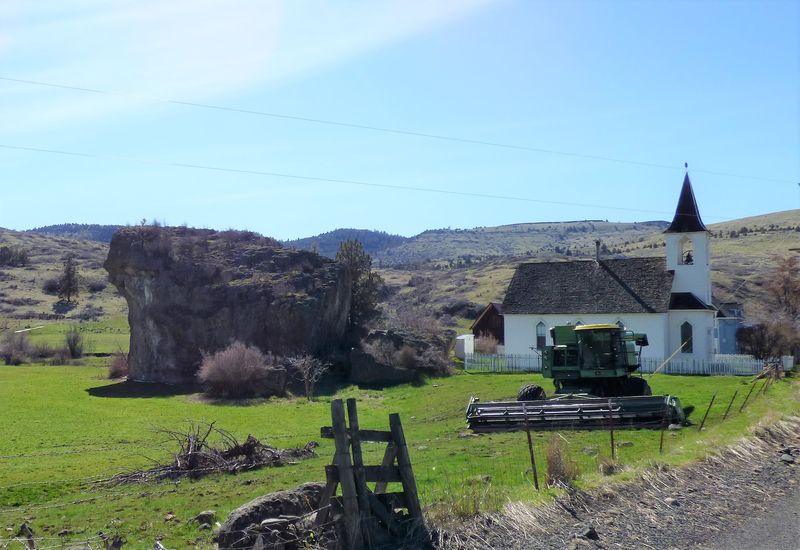
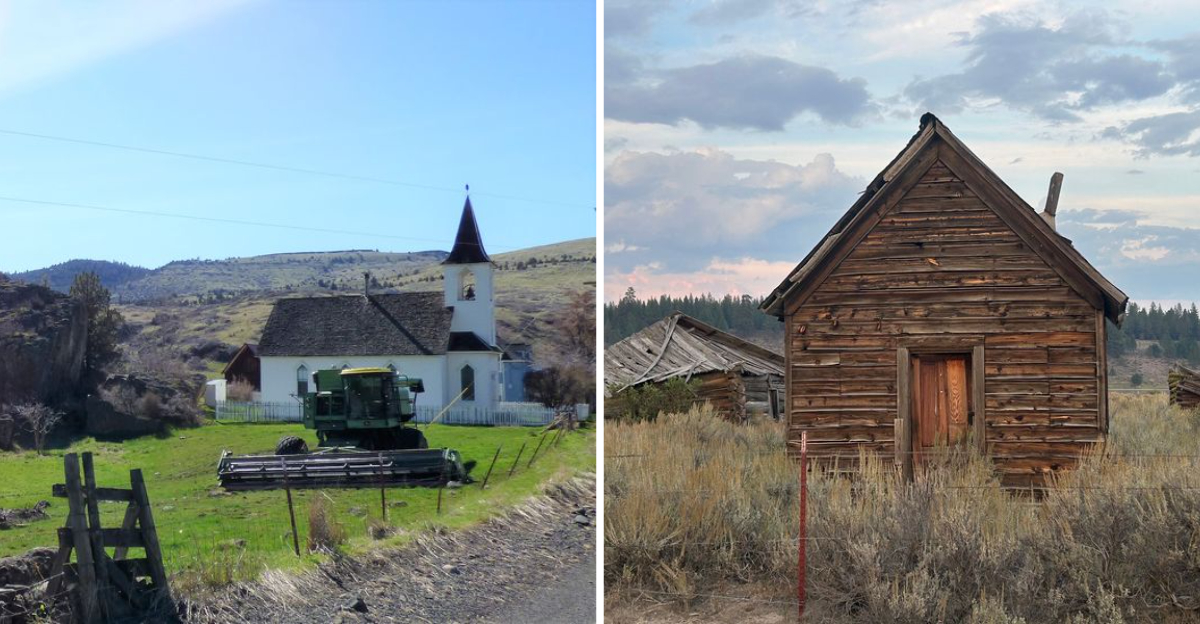
Lonerock might be the smallest and most overlooked ghost town in all of Oregon. Perched on a hillside in Gilliam County, this little cluster of weathered buildings sits surrounded by rolling sagebrush and a sky so enormous it feels almost theatrical.
The population today hovers somewhere around five people, which tells you everything.
The old church is the star of the scene. Its white paint has faded to a pale ghost of its former self, and the steeple leans just slightly, as if it has been listening to the wind for so long it has started to tilt toward it.
A small cemetery nearby holds the names of families who tried to build something lasting out here.
What strikes me most about Lonerock is how genuinely cinematic the landscape is. The light in eastern Oregon does extraordinary things in the late afternoon, turning the hills amber and the old buildings into something that looks painted rather than photographed.
There is no tourist infrastructure here, no gift shop, no interpretive signs. Just the town, the sky, and the sound of wind moving through dry grass. That rawness is exactly what makes it unforgettable.
6. Frenchglen Hotel and Sod House Ranch
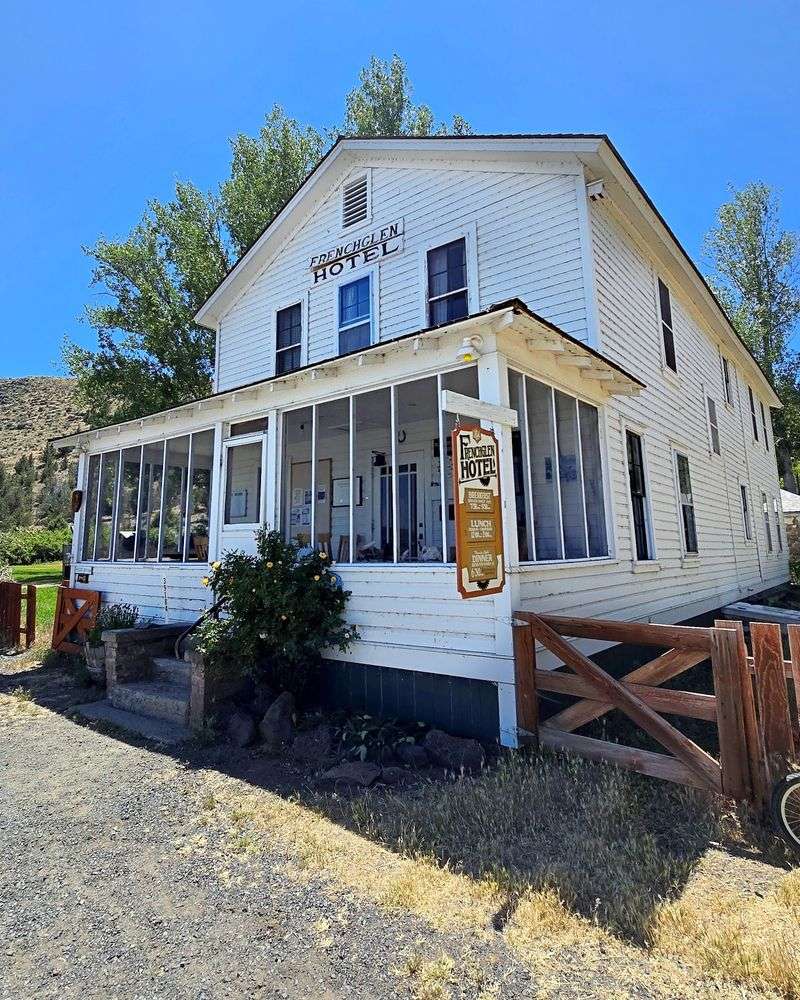
The Frenchglen Hotel is technically still operating as a state heritage site, but the surrounding landscape of the old Sod House Ranch feels suspended in another century entirely. This corner of southeastern Oregon looks like the backdrop of every Western ever filmed.
The Sod House Ranch was part of the massive cattle empire built by Peter French in the late 1800s. At its peak, the operation covered hundreds of thousands of acres.
The remnants of that era are scattered across the landscape, old corrals, weathered outbuildings, and irrigation channels that nature has slowly been absorbing back into the earth.
Driving through this area on a quiet morning, with the mountain rising to the east and the Malheur Wildlife Refuge spreading out to the north, the whole scene feels almost too dramatic to be real. The light out here is extraordinary.
Clouds cast moving shadows across the sagebrush flats, and the silence is so complete it becomes its own kind of sound. For anyone who loves wide open spaces and layered history, this corner of Oregon is genuinely hard to beat.
7. Finn Rock and Blue River Historic Sites
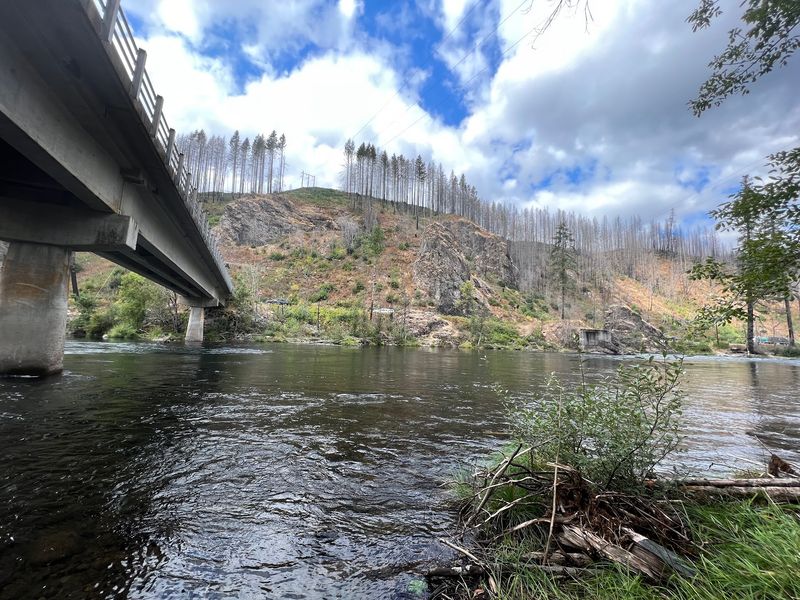
The McKenzie River Valley holds more layers of history than most people realize. Around Finn Rock and Blue River, old homestead sites and logging camp remnants are tucked into the forest in ways that make them feel genuinely hidden.
The area saw waves of Finnish settlers in the early 20th century, and their presence left marks that the forest has been slowly covering ever since.
Some of the old cabin foundations are visible from the roadside, barely. Moss and ferns have done thorough work over the decades, turning what were once functional buildings into green mounds that you might mistake for natural formations if you were not looking carefully.
The towering Douglas firs overhead filter the light into something soft and cathedral-like.
Exploring this area feels less like visiting a ghost town and more like reading a story written in the landscape itself. The McKenzie River runs alongside much of the route, cold and impossibly clear, adding a soundtrack of rushing water to the whole experience.
After the 2020 Holiday Farm Fire burned through parts of this valley, some areas took on an additional layer of eerie beauty. All with burned snags rising above recovering undergrowth in patterns that look almost deliberate.
8. Antelope, Oregon
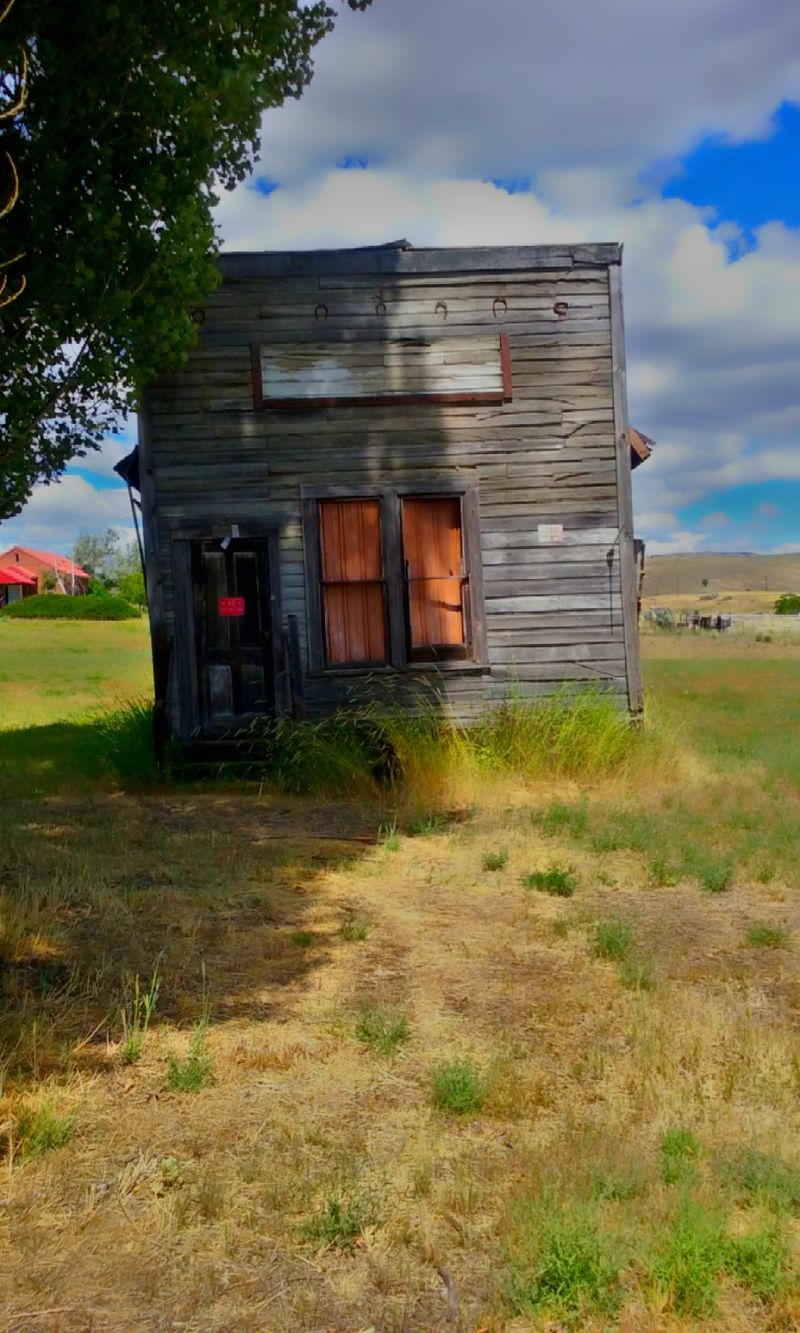
Antelope is a town that carries a strange double history, and that layering gives it an atmosphere unlike anywhere else in Oregon.
Founded in the 1870s as a ranching community, it nearly disappeared before gaining unexpected notoriety in the 1980s. That chapter ended, but the echoes remain.
Today Antelope is very small, very quiet, and genuinely fascinating to walk through. The old storefronts along the main street look like they belong in a film about small-town American life in the mid-20th century.
A handful of residents still live here, which gives the place a slightly surreal quality, occupied but barely, like a set that someone forgot to strike.
The surrounding landscape is classic central Oregon high desert, juniper and sagebrush stretching out under a wide pale sky. The light in this part of the state has an almost cinematic quality in the late afternoon, warm and slightly golden, making even ordinary buildings look dramatic.
Antelope rewards slow, curious visitors who enjoy places with complicated histories and the kind of quiet that actually makes you think.
9. Bayocean Peninsula Ghost Town
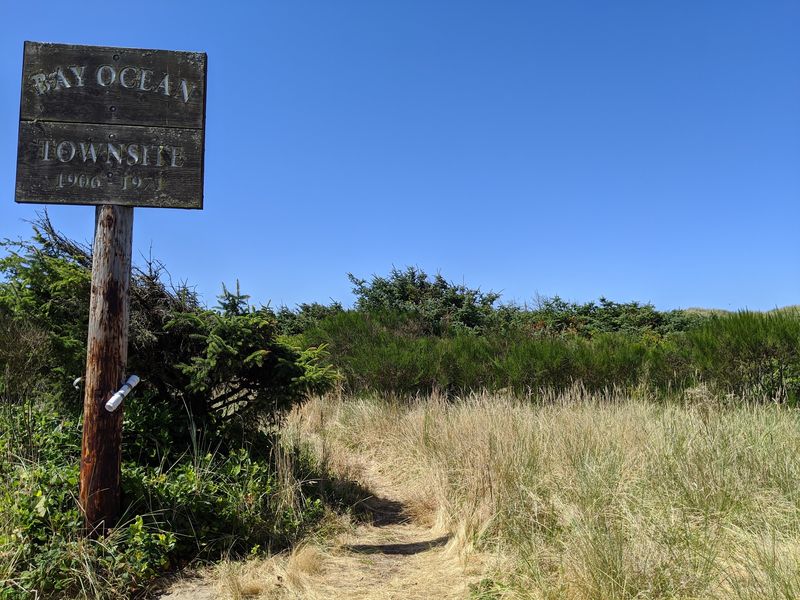
Bayocean was supposed to be the Atlantic City of the Pacific Northwest. Developers in the early 1900s built an entire resort community on a narrow peninsula at the mouth of Tillamook Bay, complete with a natatorium, hotel, and hundreds of lots for sale. The Pacific Ocean had other plans.
Erosion, accelerated by jetty construction that altered the bay’s natural flow, began eating the peninsula from the west side. Houses slipped into the surf one by one over several decades. By the 1960s, Bayocean was gone, swallowed entirely by the sea and the sand.
What remains today is a wild, beautiful strip of coastline that gives almost no indication of what once stood there.
Hiking the Bayocean Dike Trail gives you access to the peninsula, and if you know what to look for, you can still find fragments of old foundations and pipes emerging from the sand at low tide. The whole place feels genuinely haunted in the best possible way.
The wind comes in hard off the ocean, the waves are dramatic, and the sky over Tillamook Bay is almost always doing something extraordinary. It is one of the most unusual stories in Oregon history.
10. Whitney and Bates, Eastern Oregon Ghost Towns
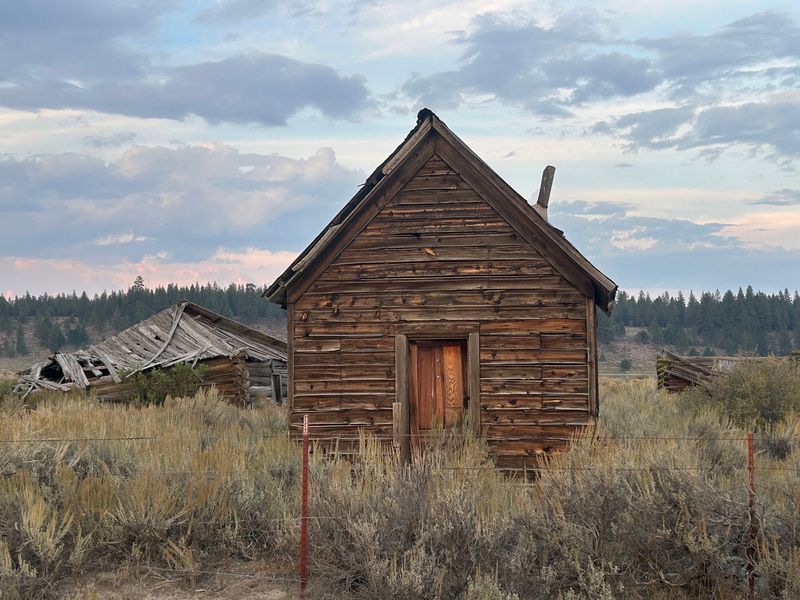
Out in the Elkhorn Mountains of Baker County, the twin ghost towns of Whitney and Bates sit close enough together that you can visit both in a single afternoon.
These were logging and railroad communities that thrived in the early 20th century and then faded quickly when the timber ran out and the rails went quiet. Bates had a mill that employed hundreds of workers at its peak.
What remains at both sites includes wooden building frames, rusted machinery, and the faint outlines of streets that once had names and addresses and neighbors. The forest has moved in steadily over the decades, and in some spots the trees are growing directly through old structures.
It creates a visual that is genuinely striking, almost theatrical in its drama.
The drive through this part of eastern Oregon is itself worth the trip. The Elkhorn Scenic Byway winds through mountain scenery that shifts from sagebrush flats to alpine meadows to dense pine forest in the span of a few miles.
Whitney and Bates feel like natural punctuation marks along that route, places to stop and sit with the strange, bittersweet reality of what booms and busts leave behind. Bring good boots and plenty of time.
