Some stops along a route barely register beyond a quick photo. Others clearly deserve more attention than a passing glance ever gives them.
A handful scattered across Oregon fall firmly into that second category, each one carrying enough character or history to justify slowing down rather than treating it as a quick pit stop.
Building an entire story around a single stop takes finding something genuinely worth telling, not manufacturing significance where none exists. These particular places earn that treatment honestly, offering more depth than their brief mention on a map ever suggests.
Slowing down occasionally changes an entire trip completely. A few stops here prove that some detours deserve to become the actual story, not just a footnote along the way.
1. Crater Lake National Park
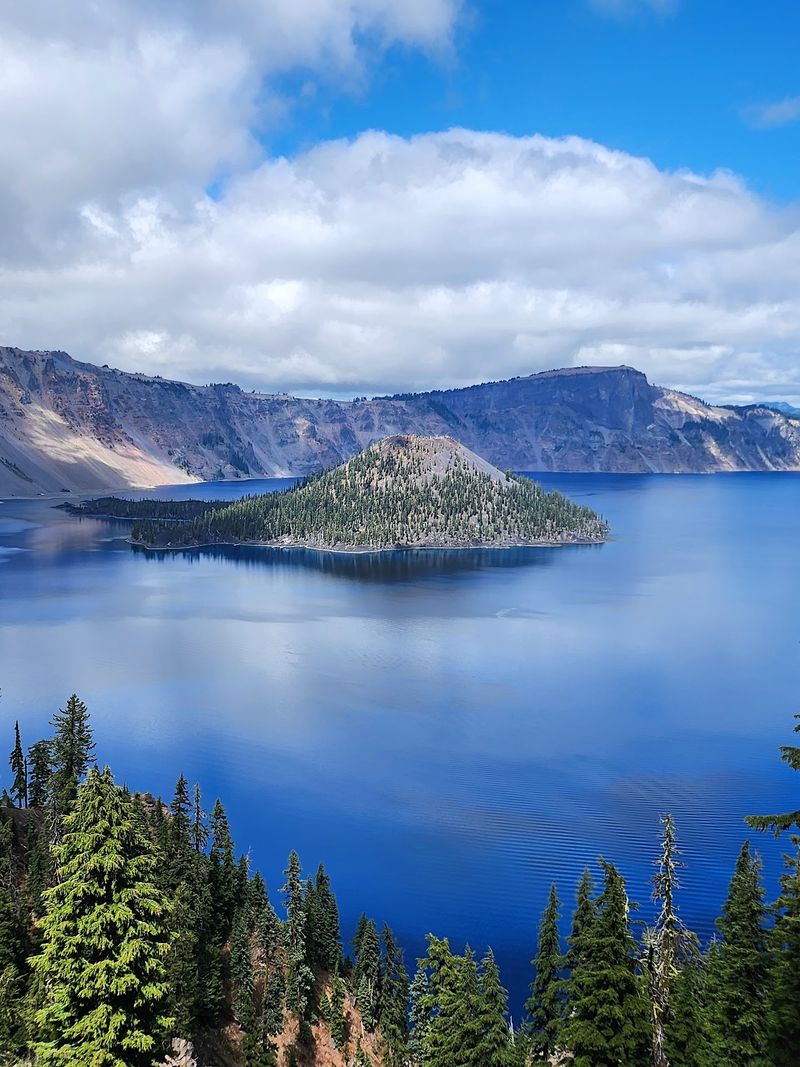
Nothing quite prepares you for the first glimpse of Crater Lake. You hike or drive to the rim, and then suddenly there it is, a pool of blue so vivid it looks digitally altered.
Formed more than 7,000 years ago when a massive volcano collapsed in on itself, this is the deepest lake in the United States and one of the most geologically fascinating places on the continent.
The Pinnacles Trail takes hikers through a surreal landscape of volcanic spires rising from the canyon floor. It is eerie and beautiful in equal measure, and the contrast with the lake’s calm surface could not be more dramatic.
Crater Lake Lodge sits right on the rim, offering views that stretch across the water at every hour of the day.
Picnic tables are scattered throughout the park, dogs are welcome on leashes, and restrooms are available at key stops. The park is open year-round, though snow can limit road access in winter.
Mornings are the quietest time to visit, and the park gets especially busy on weekend afternoons. If you can catch the lake at sunrise, that particular shade of blue is something you will not forget.
2. Timberline Lodge
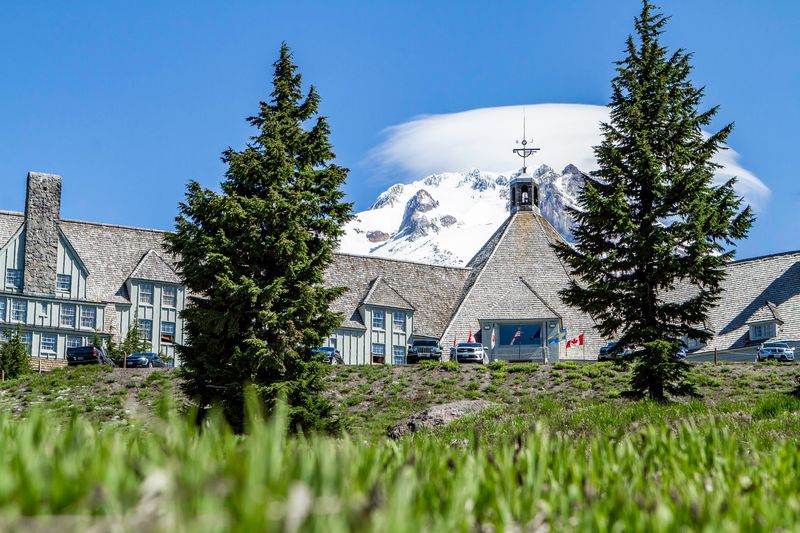
Perched more than halfway up Mount Hood, Timberline Lodge is the kind of place that makes you stop and stare before you even walk through the door. The lodge is a masterpiece of American craftsmanship, featuring massive old-growth timber beams and hand-forged ironwork.
The architecture alone justifies the drive. Every detail inside was made by hand, from the carved wooden furniture to the woven rugs and painted murals.
It is a reminder of what skilled labor can produce when given time and purpose. The mountain setting amplifies everything, with views stretching across the Cascade Range on clear days.
Skiing is available for much of the year thanks to the glacier above, and the outdoor pool offers a genuinely memorable experience in colder months. Dining options inside the lodge lean toward hearty, satisfying mountain fare.
The surrounding terrain is ideal for hiking in summer, with wildflower meadows opening up as the snow retreats. This is not a place you pass through quickly. Most people find themselves lingering far longer than they originally planned.
Address: 27500 E Timberline Road, Government Camp, OR 97028
3. Sea Lion Caves
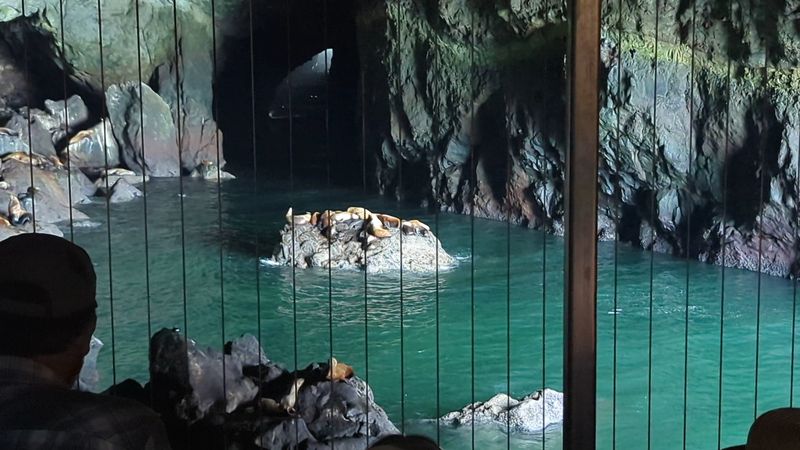
Somewhere along US-101 south of Florence, there is a sign for Sea Lion Caves that does not fully communicate what you are about to experience. You take an elevator down through solid rock, several stories below the clifftop, and the doors open into the largest sea cave in America.
The sound hits first, a deep, rolling chorus of barks and calls that echoes off every surface.
Steller sea lions use this cave as a natural haul-out, gathering here in significant numbers, especially in fall and winter. The cave itself is enormous, larger than a football field, with ocean swells pushing in through the open mouth and sea lions draped across every available ledge.
It is wild in the most literal sense of the word.
The preserve also functions as a bird sanctuary, and the rocky outcroppings outside the cave attract nesting seabirds throughout the year. A viewing area near the cliff’s edge offers a different perspective before you head underground.
The facility is privately owned and has been operating for decades as a wildlife preserve open to the public. It is one of those rare places where the animals are genuinely in charge, and humans are simply guests passing through.
Address: 91560 US-101, Florence, OR 97439
4. Painted Hills
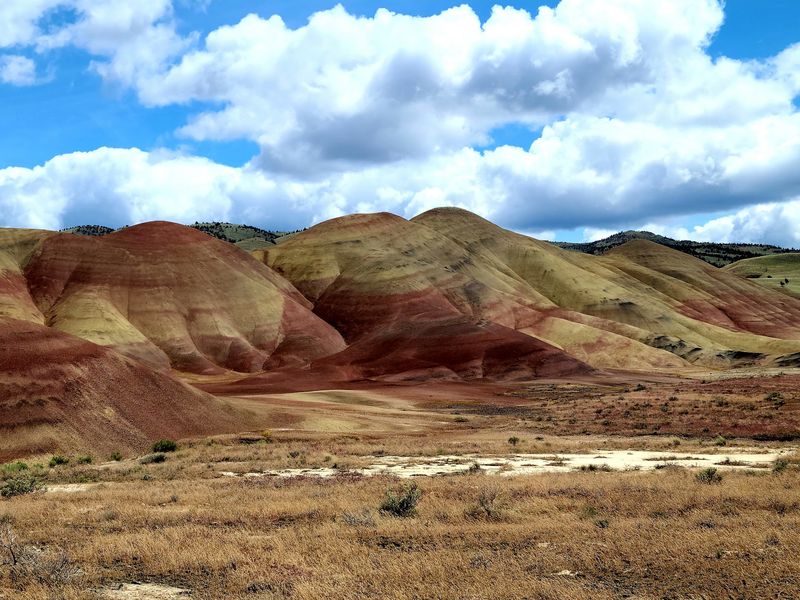
The Painted Hills do not look real. That is the most honest way to describe them.
Layers of red, gold, tan, and black sweep across rounded hillsides in bands so distinct and vivid that the landscape feels more like a painting than a geological formation. The colors shift noticeably depending on the time of day and whether the hills are wet or dry.
Part of the John Day Fossil Beds National Monument, this area preserves a record of ancient ecosystems going back tens of millions of years. The hills themselves formed from volcanic ash and ancient soils that were laid down layer by layer over enormous stretches of time.
Each stripe represents a different chapter in the earth’s history, and that context makes the colors feel even more significant.
Several short trails wind through and around the formations, including the Painted Hills Overlook Trail, which gives a sweeping elevated view of the most colorful section. The trails are easy enough for most fitness levels, and the whole area can be explored in a few hours.
Late afternoon light is particularly flattering, deepening the reds and bringing out the warmth in the golden tones. It is the kind of place that looks good in every direction you point a camera.
5. Multnomah Falls
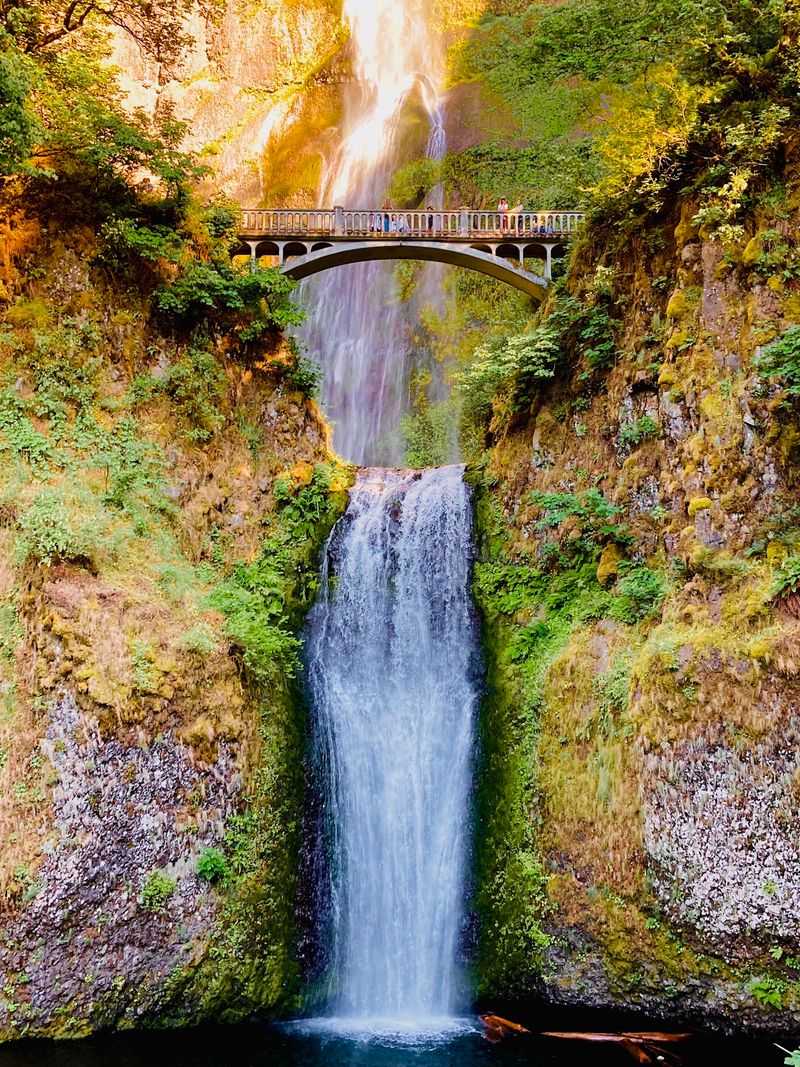
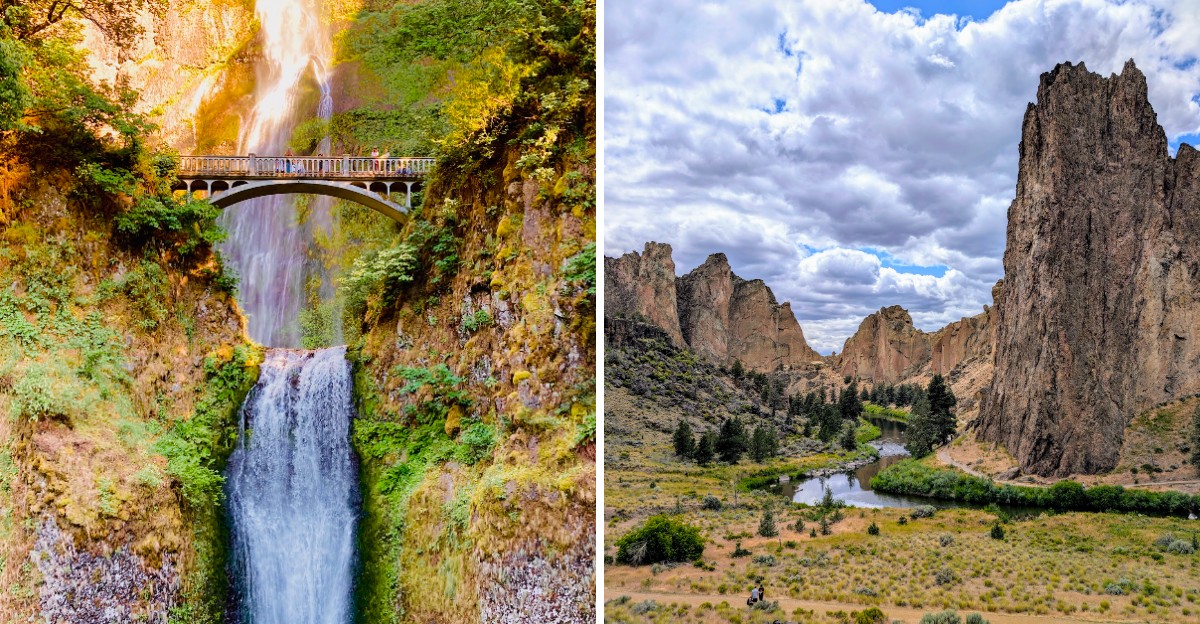
There is a mist that hits you before you even see the falls. It drifts through the trees and settles on your skin, and then you round the corner and Multnomah Falls comes into full view.
At over 620 feet, it is Oregon’s tallest waterfall, dropping in two dramatic tiers through walls of dark, moss-covered basalt.
The lower viewpoint is accessible to almost everyone and gives you the full picture of both drops at once. For those who want more, the trail climbs to a bridge that arches right across the upper tier, putting you close enough to feel the spray and hear the full force of the water.
Keep going and the path continues higher, rewarding the effort with quieter views and a sense of genuine wilderness.
The surrounding forest is thick with ferns and old-growth trees, and the Columbia River Gorge frames the whole scene with the kind of grandeur that makes you slow your pace automatically. It tends to get crowded by midday, especially on weekends.
Rain or shine, the falls are worth it. The weather actually adds something to the atmosphere rather than taking away from it.
6. Tillamook Creamery
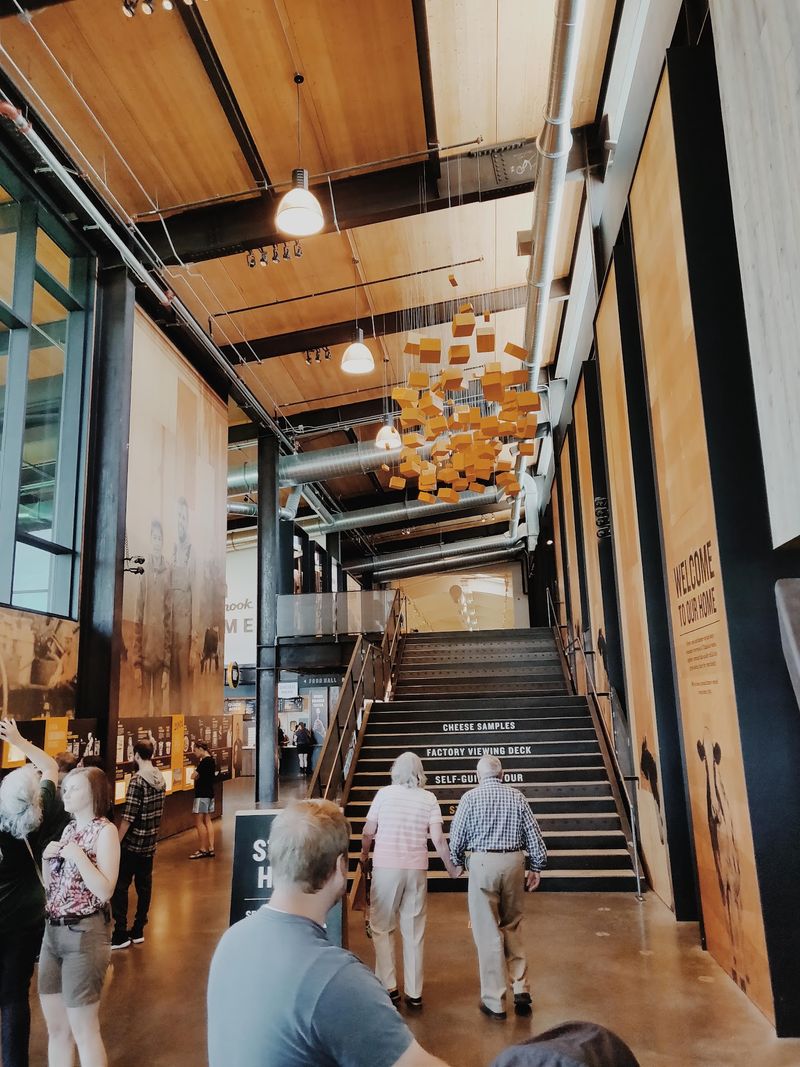
Few food stops on the Oregon coast carry as much genuine enthusiasm as Tillamook Creamery, and the enthusiasm is earned. The creamery offers a surprisingly engaging look at how milk becomes some of the most recognized cheese in the Pacific Northwest.
The process is visible from a viewing walkway, and watching the factory floor in action gives the whole visit a sense of authenticity.
The tasting opportunities are the real draw for most visitors. Sharp cheddar, pepper jack, and a rotating selection of seasonal varieties are available to sample before you commit to anything.
The ice cream counter draws its own crowd, and for good reason. The flavors are rich and generous, and eating a scoop while standing in the middle of Oregon’s coastal farmland is a small but satisfying pleasure.
The diner inside serves breakfast and lunch dishes built around the creamery’s products, with classics that lean into the cheese in straightforward, satisfying ways. The surrounding Tillamook Bay area is scenic enough to justify a longer stop, and the creamery itself is open daily.
It is a lighter, more playful stop compared to the dramatic landscapes elsewhere on this list, but that contrast is exactly what makes it work so well in a longer road trip.
Address: 4165 N Hwy 101, Tillamook, OR 97141
7. Oregon Caves National Monument & Preserve
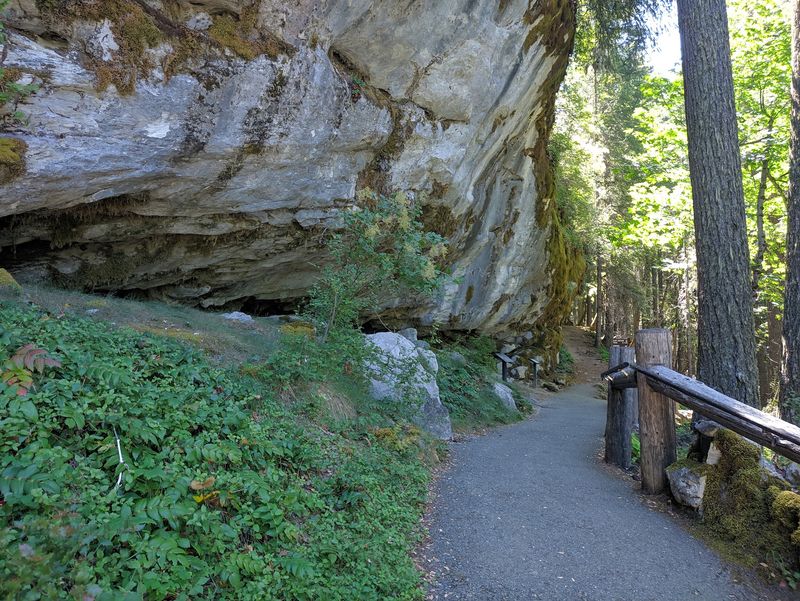
The drive to Oregon Caves already feels like an adventure, winding up into the Siskiyou Mountains through dense conifer forest with the road narrowing as the elevation climbs. By the time you reach the visitor center and check in for your tour, there is a genuine sense of anticipation.
The caves themselves do not disappoint.
These are marble caves, which makes them unusual. The rock was transformed over millions of years by heat and pressure, and the result is a cave system with an almost architectural quality to it.
Stalactites hang in dense clusters from the ceilings, stalagmites rise from the floors, and columns form where the two have met after centuries of slow growth. The guided tour runs about 90 minutes and covers roughly a mile of underground passage.
The temperature inside stays around 44 degrees year-round, so a jacket is genuinely necessary rather than optional. Park rangers lead every tour, and the commentary covers both the geology and the human history of the caves in accessible, interesting detail.
Picnic tables are available near the trailhead, and the surrounding forest has hiking trails worth exploring after the cave tour. It is a full afternoon easily, and a stop that tends to surprise people who were not expecting to be quite so impressed.
Address: 21000 Caves Hwy, Cave Junction, OR 97523
8. Smith Rock State Park
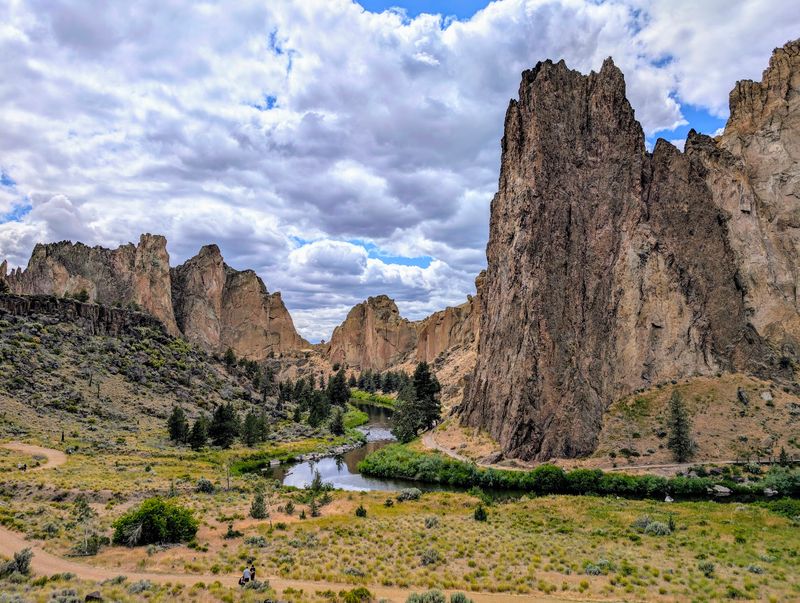
The high desert of Central Oregon is already striking on its own, but Smith Rock takes that landscape and cranks it up several notches. Towering columns of volcanic tuff and basalt shoot up from the canyon floor, and the Crooked River wraps around their base in wide, lazy bends.
The whole scene has a cinematic quality that is hard to shake.
Rock climbers come from around the world to test themselves on these walls, and the routes range from beginner-friendly to seriously technical. Hikers who prefer to keep their feet closer to the ground have plenty of trail options.
Monkey Face, a distinctive rock formation that genuinely resembles its name, is a landmark worth identifying from the trail.
The park spans around 650 acres and includes primitive camping for those who want to stay close to the scenery. Dogs are welcome on leash, and there are picnic tables and restrooms near the trailhead.
Mornings here are especially good. The light hits the orange rock in a way that makes the whole canyon glow, and the crowds have not yet arrived to fill the trails.
Address: Crooked River, OR 97760
9. Haystack Rock
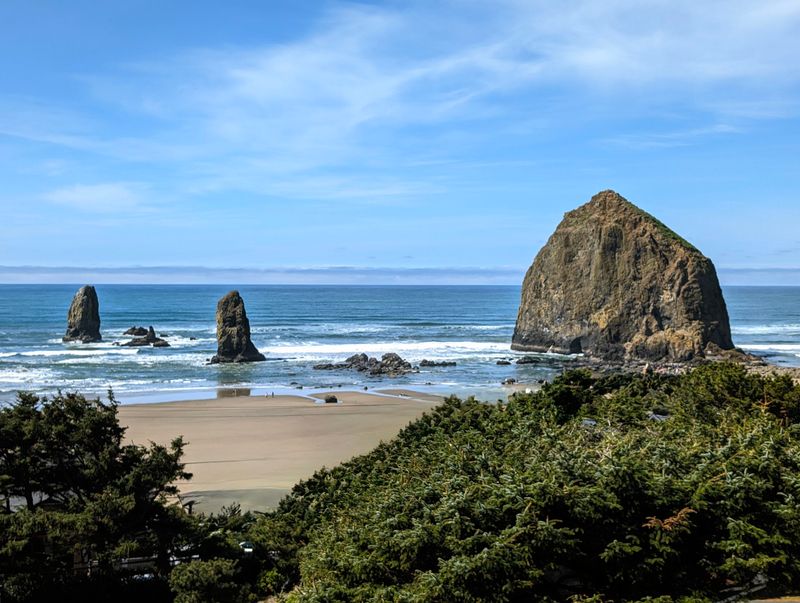
Haystack Rock earns its reputation simply by existing. Rising 235 feet straight out of the beach at Cannon Beach, it is one of the most photographed landmarks on the entire Oregon coast, and seeing it in person explains exactly why.
No zoom lens, no filter, and no carefully chosen angle is required. It is just there, massive and unhurried, with the Pacific rolling around its base.
Low tide is the best time to visit if you want to explore. The tide pools that form around the rock’s base are teeming with life, including sea anemones, hermit crabs, purple sea urchins, and the occasional starfish clinging to a rock face.
Volunteers from the Haystack Rock Awareness Program are often on the beach during low tide to help visitors understand what they are looking at without disturbing the ecosystem.
The surrounding beach at Cannon Beach is wide and well-suited for long walks, kite flying, or simply sitting with the view. Puffins nest on the rock seasonally, and watching them come and go adds an unexpected wildlife element to an already impressive visit.
Sunset here is particularly worth planning around. The rock catches the last light in a way that shifts from gold to deep amber, and the reflection on the wet sand doubles the whole effect beautifully.
10. Thor’s Well
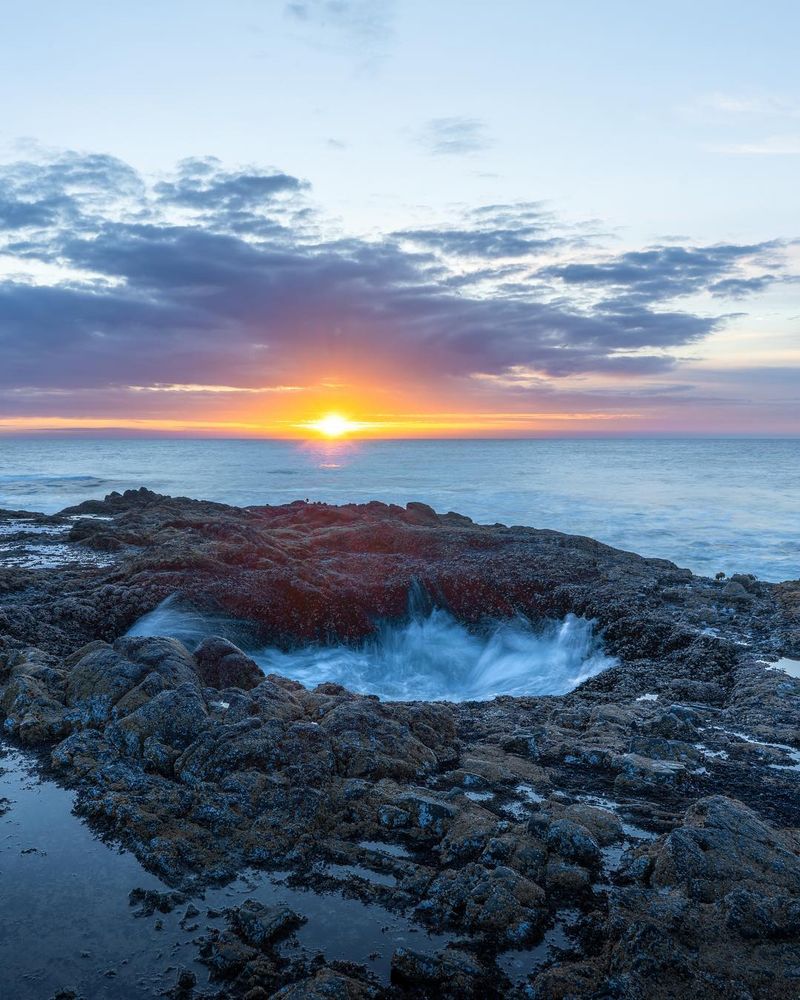
Thor’s Well is the kind of place that rewards patience. At first glance, it looks like a rough, circular hole in the basalt shelf along the Cape Perpetua coastline, maybe ten feet across and not immediately dramatic.
Then a wave rolls in, fills the well from below, and surges upward in a column of white water that can reach impressive heights. Then it drains back down, and the cycle starts again.
The best time to witness the full effect is around high tide, ideally on a day with some wave action. The water fills from a submerged opening at the base, so the well appears to both swallow and spit the ocean at the same time.
The nickname, the Drainpipe of the Pacific, captures the illusion perfectly. Photographers tend to gather here in the late afternoon when the light is warm and the waves are cooperative.
Access is straightforward, with parking areas along US-101 and a short walk across the rocky coastal shelf. The terrain requires some care, especially when waves are active, and staying back from the edge is genuinely important rather than just cautionary advice.
The broader Cape Perpetua area has additional trails and viewpoints worth exploring before or after. Yachats itself is a small, unhurried coastal town that makes an ideal base for the surrounding scenery.
11. Powell’s City of Books

Powell’s City of Books occupies an entire city block in Portland. The store is divided into color-coded rooms, each dedicated to a different subject, and the map they hand you at the entrance is not decorative. You will use it.
New and used books share the shelves throughout the store, and the mix creates a browsing experience that feels genuinely unpredictable. A first edition might sit next to a paperback from last month, and the pricing reflects the condition and rarity rather than any particular formula.
There is a rare book room for serious collectors, and the staff recommendations posted throughout the store are worth reading as you move through each section.
The gift section near the entrance carries items for readers who want something beyond a book, and the whole atmosphere leans into a kind of organized chaos that feels entirely intentional. It is one of those rare retail spaces that functions more like a cultural institution than a shop.
A quick visit is technically possible, but most people find that the place has its own gravitational pull. Arriving with extra time is strongly recommended.
Address: 1005 W Burnside St, Portland, OR 97209
