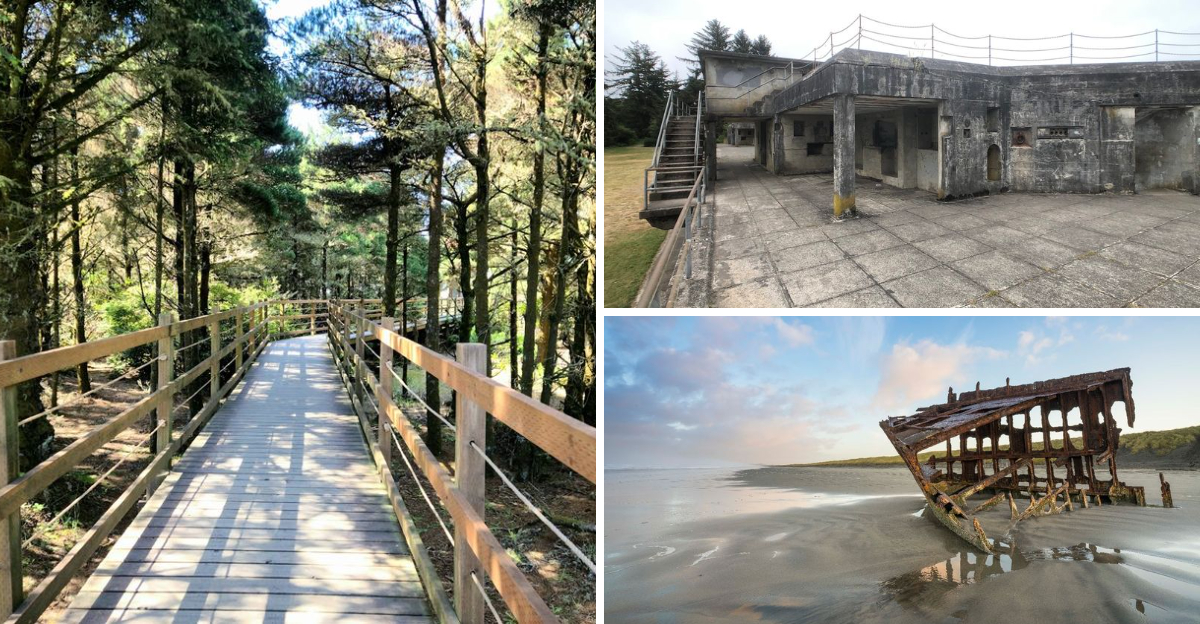
The wind carries the roar of the Pacific, but it’s the heavy silence between the waves that really gets under your skin. This isn’t your typical Oregon nature walk.
The hike winds through a coastal forest where massive concrete bunkers emerge from the undergrowth like forgotten tombs. You can step into the dim, damp corridors of a World War II battery, the only mainland military site in the U.S. to be fired upon by a foreign enemy during that war.
The thick walls and echoes of history make it feel like the past is never far away.
Then, the trail opens to the beach. There, you find the skeletal remains of a shipwreck, which has been slowly rusting into the sand since 1906. It is a ghostly, breathtaking monument to the power of the sea.
This Oregon hike is an unforgettable journey through history, mystery, and one of the state’s most spine-chilling landscapes.
The Trail Itself, A Mossy and Mysterious First Impression
The first few steps onto Fort Stevens Ridge Trail feel less like the start of a hike and more like crossing a threshold into another time. The path is narrow, softened by years of fallen needles and coastal rain, and the canopy above filters the light into something almost dreamlike.
It is quiet in a way that makes you slow down without meaning to.
The trail stretches through a mix of Sitka spruce, shore pine, and dense undergrowth that makes the surrounding forest feel genuinely ancient. You get the sense that not many people come this way, which only adds to the appeal.
Muddy patches after rain are common, so waterproof boots are a smart call.
The loop covers a manageable distance that suits hikers of most fitness levels. It rewards a slow pace far more than a fast one. Every section has something worth pausing for, whether it is a strange shadow between the trees or the distant sound of ocean waves breaking just out of sight.
The Columbia River Mouth, Where the River Meets the Ocean
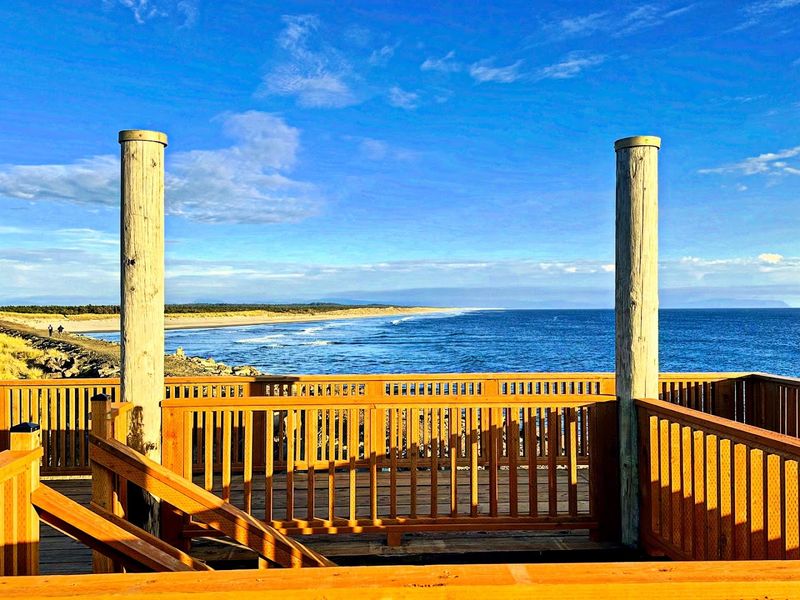
Few geographical features on this trail hit with the same quiet force as the view toward the Columbia River mouth. This is one of the most treacherous river mouths in the world, historically known as the Graveyard of the Pacific, and standing near it makes that reputation feel entirely believable.
The water moves in unpredictable, churning patterns where the river current collides with ocean swells, creating a stretch of water that has claimed hundreds of ships over the centuries.
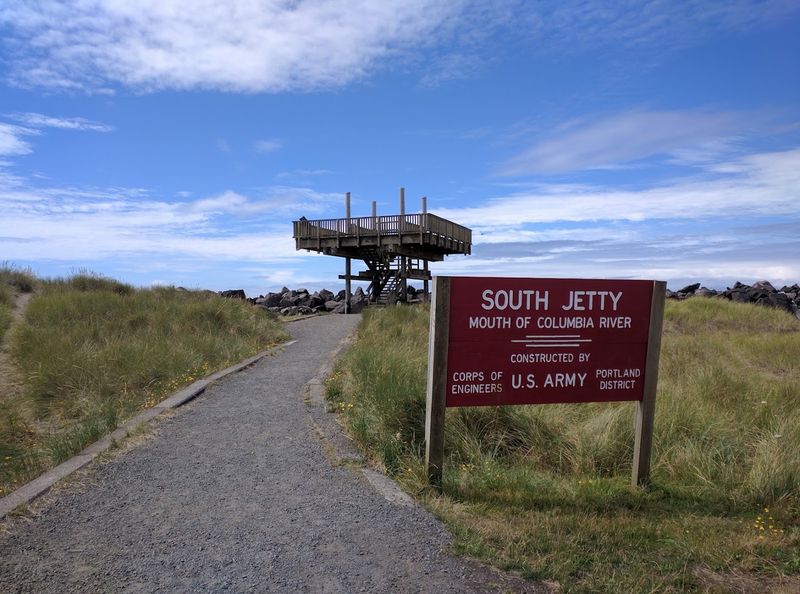
On a clear day, you can see the South Jetty stretching out into the water, a long concrete arm built to tame the chaos of that crossing. On a stormy day, the whole scene is raw and dramatic in a way that feels primal.
This spot gives the trail a sense of scale and consequence that most hiking trails simply do not have. You are not just walking through pretty scenery here. You are walking through a place that shaped the entire history of the Pacific Northwest in ways that still echo today.
Fort Stevens State Park, The Largest Campground in Oregon
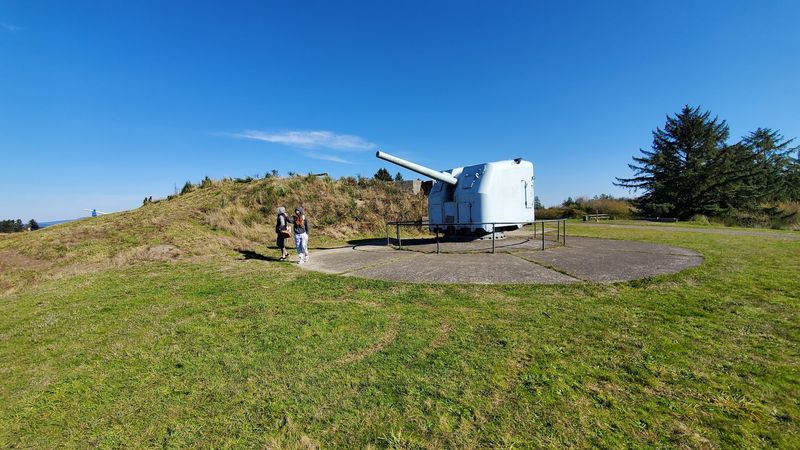
The trail sits within Fort Stevens State Park, which is the largest campground in Oregon and one of the most historically rich state parks in the entire country.
The park covers over 4,000 acres and includes beaches, lakes, hiking trails, bike paths, and the ruins of a military fort that was active from the Civil War through World War II.
Camping here overnight is an experience in itself. The sounds shift dramatically after dark, wind through the trees, distant surf, and an occasional foghorn from the river. It feels isolated in the best possible way, like the rest of the world has genuinely stepped back for a while.
The park is open year-round, and each season brings a completely different mood. Summer fills it with families and beach visitors. Fall and winter strip it back to something quieter and more atmospheric, which is honestly when the trail feels most alive with character.
Reservations for campsites fill up fast in summer, so planning ahead saves a lot of frustration.
The Peter Iredale Shipwreck, A Rusting Skeleton on the Sand
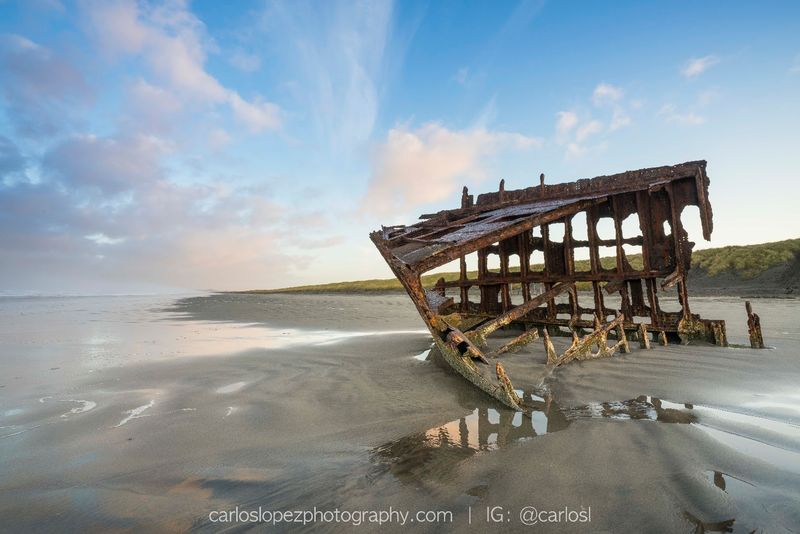
Nothing quite prepares you for the moment the trees open up and you see it sitting there on the beach, half-buried in sand, rusting quietly into the Pacific. The Peter Iredale ran aground in October 1906 and has been slowly dissolving into the Oregon coast ever since.
What remains are the iron ribs of the hull, jutting out of the sand like the bones of something enormous.
At low tide, you can walk right up to it and touch the corroded metal. The ship has a ghostly presence, especially on foggy mornings when the mist rolls in off the water and softens everything around it. It is one of the most photographed shipwrecks on the West Coast, and for good reason.
Timing your visit around low tide gives you the best access and the most dramatic view. Early morning light hits the wreck in a way that feels almost cinematic. Bring a camera, because no phone description does it justice when you are actually standing next to it.
Battery Russell, The Forgotten Bunker That Time Left Behind
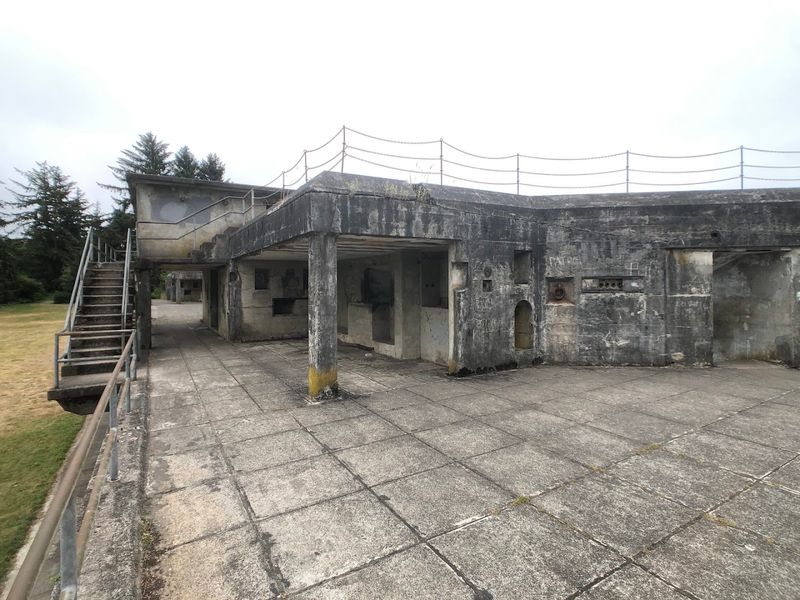
Battery Russell is one of those places that stops you mid-step. Massive concrete walls rise out of the forest floor like something the earth itself pushed up, cracked and covered in lichen and spray paint, completely overtaken by decades of Pacific Northwest weather.
It is both unsettling and oddly beautiful.
Built in the late 1800s and used through World War II, this coastal defense battery was designed to protect the mouth of the Columbia River from naval attack.
It was actually fired upon by a Japanese submarine in 1942, making it one of the only military installations on the continental United States to be attacked by enemy fire during the war. That fact alone makes the hair on the back of your neck stand up a little.
Wandering through the dark concrete corridors feels genuinely eerie. I kept my phone flashlight on the whole time. The tunnels are open to explore, but wear shoes you do not mind getting dirty and bring a light source you trust.
The Military History Museum, Stories Carved in Concrete and Steel
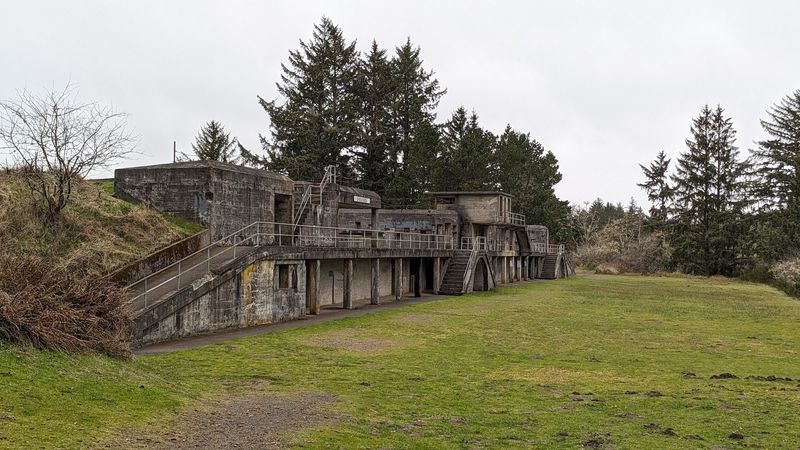
Just off the main trail route sits the Fort Stevens Military History Museum, a small but genuinely fascinating stop that fills in all the context the ruins themselves cannot fully tell.
The exhibits cover the fort’s history from its Civil War-era origins through its role as an active coastal defense installation during World War II. It is the kind of museum that makes you linger longer than you planned.
Artifacts, photographs, and detailed maps paint a vivid picture of what life was like for the soldiers stationed here, guarding a stretch of coastline that felt very far from the action but was closer to real danger than most people realized.
The 1942 Japanese submarine shelling gets its own dedicated section, and it is riveting.
The museum is modest in size but not in depth. I found myself reading almost every placard, which is not something I usually do. It is a great stop before or after the hike to give the landscape around you a richer layer of meaning while you walk.
The Ridge Trail Views, Coastal Forest Canopy and Hidden Clearings
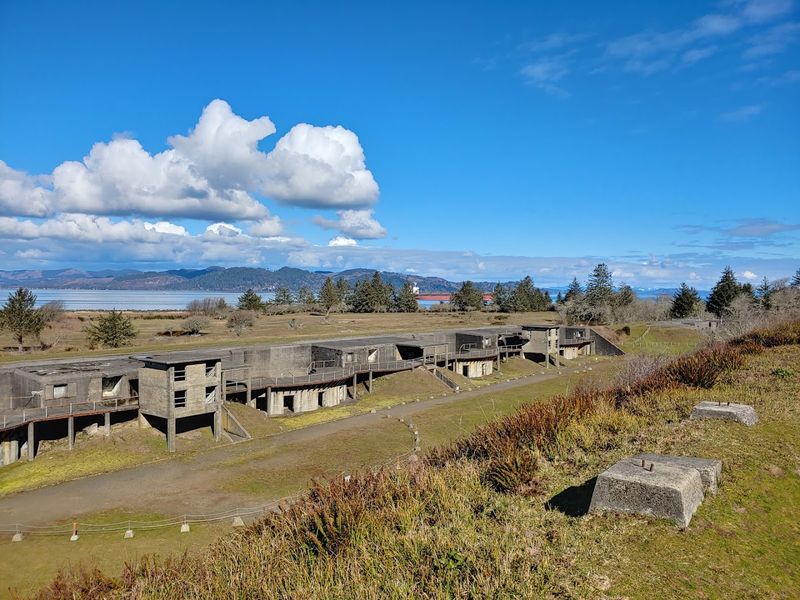
The ridge sections of the trail offer the kind of views that reward patience. You spend a good stretch walking through dense forest before the path rises slightly and the canopy thins enough to show you what is around you.
Glimpses of the ocean appear between the trees, gray and glittering depending on the weather, and the sudden openness feels like a gift after all that green shadow.
Small clearings appear occasionally along the route, perfect spots to catch your breath and take in the scale of the landscape. On clear days, you can see across to Washington State on the far side of the Columbia River.
That kind of view resets something in your brain in a way that is hard to explain but easy to feel.
The ridge trail section is also where wildlife sightings tend to happen. Deer move quietly through the undergrowth. Osprey and bald eagles are regular visitors to the skies above the tree line.
Keeping your noise level down and your eyes open dramatically increases your chances of spotting something worth remembering.
Coffenbury Lake, A Calm Contrast to the Eerie Ruins
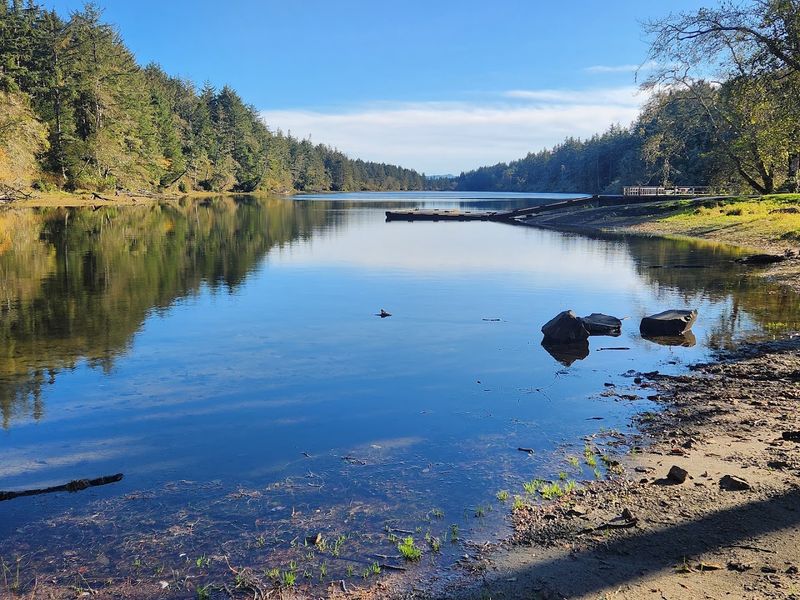
Coffenbury Lake sits within the park boundaries and offers a striking contrast to the bunkers and shipwreck that define the trail’s more dramatic moments. The water is dark and still in a way that feels almost mirror-like on calm days, and the shoreline is ringed with trees.
There is a loop trail around the lake that is short and easy, popular with families and anyone who wants a quieter, less historically charged walk. Swimming is allowed in summer, and the lake has a sandy beach area that fills up on warm weekends.
I sat at the water’s edge for a while on my visit, just watching the reflections shift as the wind moved across the surface. It was a good place to decompress after the intensity of the bunker tunnels and the shipwreck.
Sometimes a hike needs a quiet moment to breathe, and Coffenbury Lake provides exactly that.
Wildlife Along the Trail, More Residents Than You Might Expect
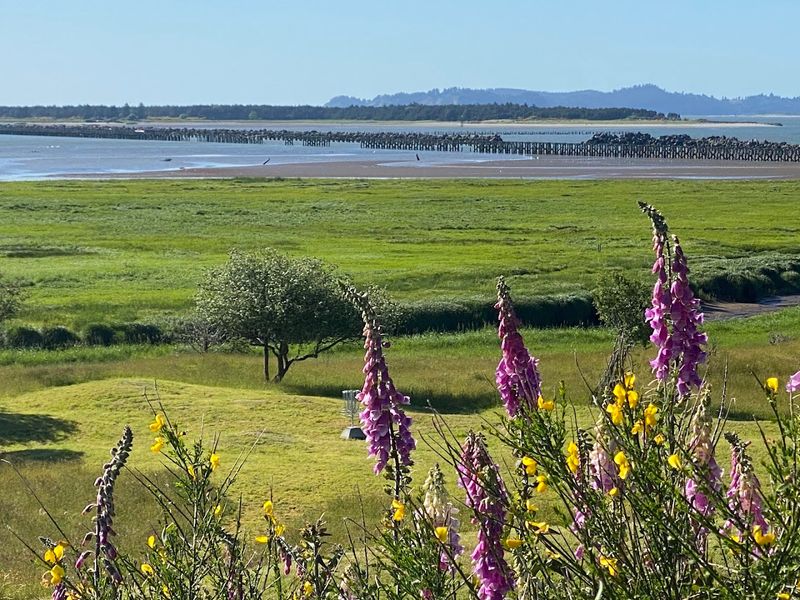
The wildlife presence along Fort Stevens Ridge Trail is one of its quieter pleasures. The park’s mix of forest, wetland, beach, and river edge creates a habitat that supports a surprisingly wide range of species, and the trail puts you right in the middle of it without much effort on your part.
Bald eagles are a regular sight near the Columbia River mouth, often circling low enough to see the white tail feathers clearly. Great blue herons stalk the shallows of Coffenbury Lake with an almost theatrical patience.
Black-tailed deer appear along the forest sections of the trail, usually in the early morning or late afternoon when foot traffic is lightest.
Migratory birds pass through the area in spring and fall, making the park a worthwhile stop for birdwatchers during those seasons. Harbor seals occasionally haul out on sandbars near the river mouth, visible from the beach sections of the park.
Bringing a pair of binoculars adds a whole extra dimension to the experience without adding any weight worth worrying about.
Planning Your Visit, What to Know Before You Go
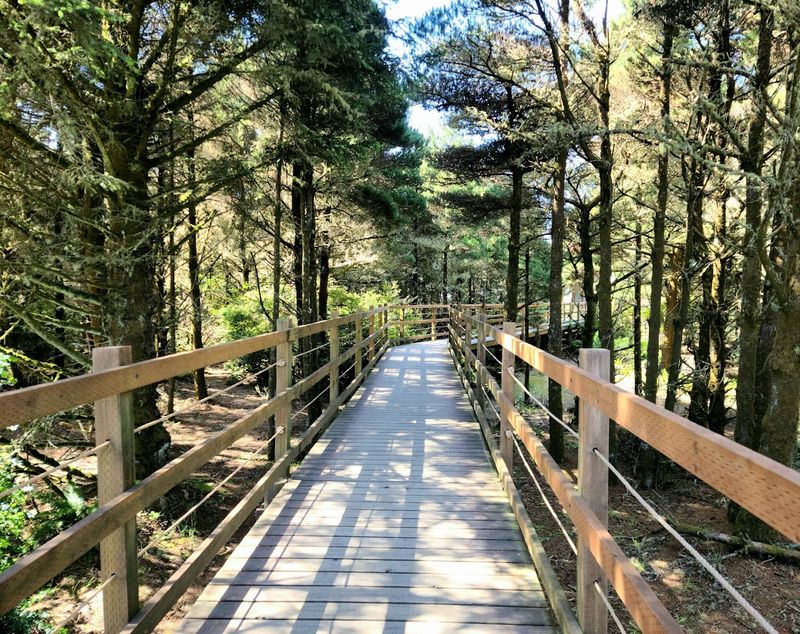
Fort Stevens Ridge Trail is accessible year-round, but the experience changes dramatically depending on when you show up. Summer brings more visitors and longer daylight hours, which makes the trail feel more social and less spooky.
Fall and winter strip the atmosphere back to something rawer and more atmospheric, and the fog that rolls in off the Pacific during those months adds a layer of mood that summer simply cannot replicate.
Waterproof footwear is non-negotiable for most of the year. The Oregon coast is wet, the trail gets muddy, and the beach sections can be soft and damp even on dry days.
A light rain jacket is worth carrying even when the forecast looks decent, because coastal weather changes fast and without much warning.
The park entrance fee applies to vehicles, so check the current fee structure before arriving. Dogs are allowed on leash in most areas of the park.
