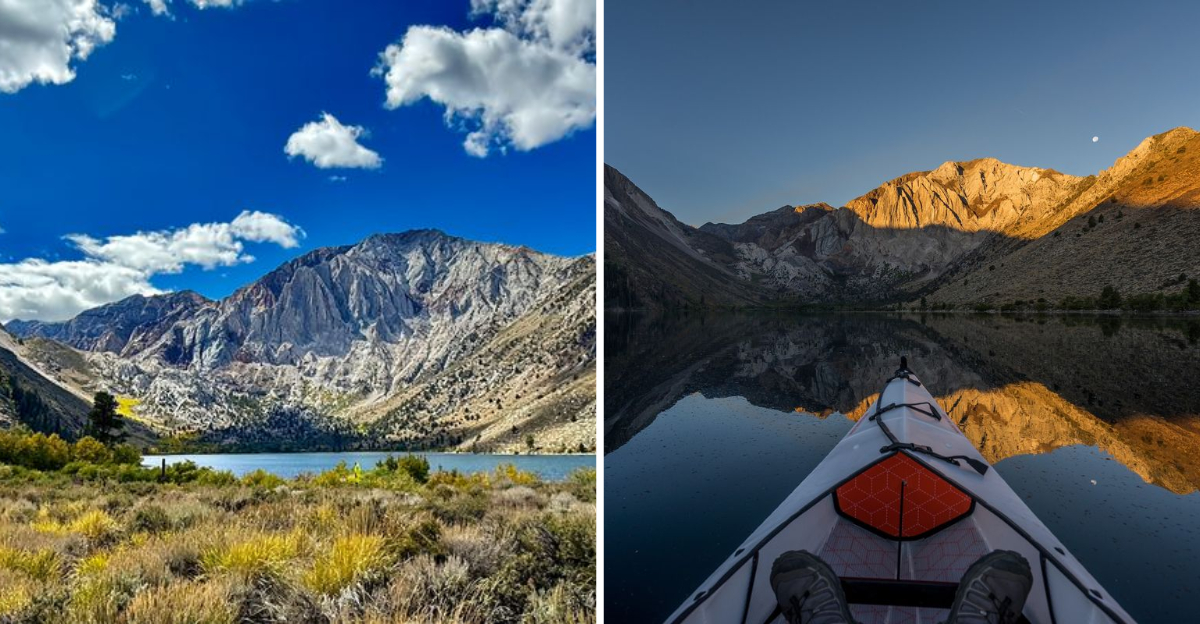
That water was so clear I could see the bottom drop away beneath me like a glass floor. Trout slid past submerged logs about fifteen feet down, and my shadow followed them across pale rocks.
I had pulled off a California highway expecting a quick stop, and instead I found a small alpine lake with water so transparent it felt almost unreal. The mountain at the far end rises with striped cliffs that look painted on, and the lake holds a turquoise color that photos never quite capture.
Convict Lake sits at 7,850 feet of elevation, ringed by granite peaks that were sculpted by glaciers during the last Ice Age. The lake gets its name from a wagon road incident in 1871 that left several prisoners and lawmen dead, and the story still lingers in the air around the shoreline.
I stopped paddling and just floated for a while, watching the light shift across the surface and the shadows of fish move beneath me. I went expecting a quick stop and ended up staying until the wind picked up in the afternoon.
A place like this deserves a full morning of your time.
Water So Clear It Turns Your Board Into a Glass-Bottom Boat
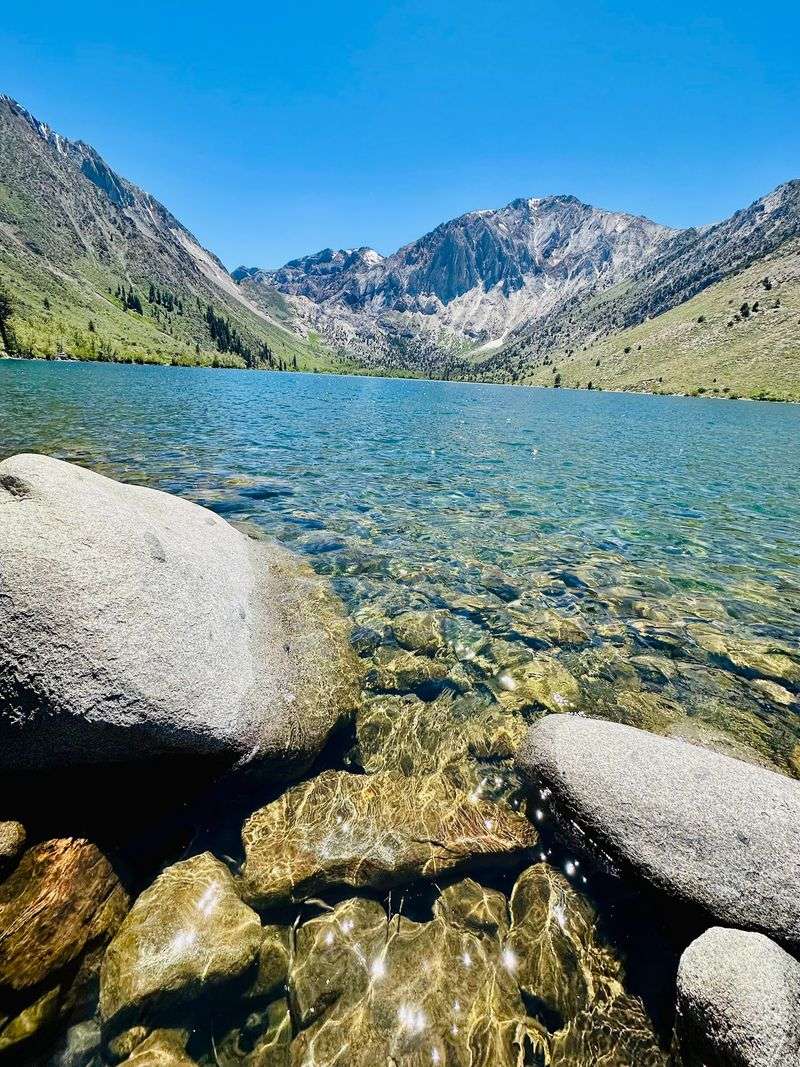
Visibility here can reach roughly 30 feet on a calm day, and that number stops being a statistic the moment you float over a drop-off. Rocks fade from bright tan into deep blue shadow.
The clarity comes from the lake’s glacial past. Glaciers carved this basin thousands of years ago, and today snowmelt keeps the water cold enough that algae struggles to take hold.
Fine glacial silt still hangs in the water, scattering sunlight into that strange turquoise glow you notice from the parking area. Depths reach about 140 feet in places, which explains why the color shifts from pale aqua near shore to a saturated navy in the middle.
I kept leaning over the edge of my board like a kid at an aquarium window, watching light ripple across the bottom.
Spring brings the most intense color, when heavy snowmelt pours in and the blue practically hums. Late summer softens it into something gentler and greener near the shallows.
Bring polarized sunglasses if you have them. They cut the surface glare and let you see far deeper than you’d expect, turning an ordinary paddle into something closer to snorkeling without getting wet.
Sunrise Is When the Lake Goes Completely Still
Afternoon wind is the one reliable thing about this canyon, which is exactly why I set an alarm and dragged myself out before the sun cleared the ridge.
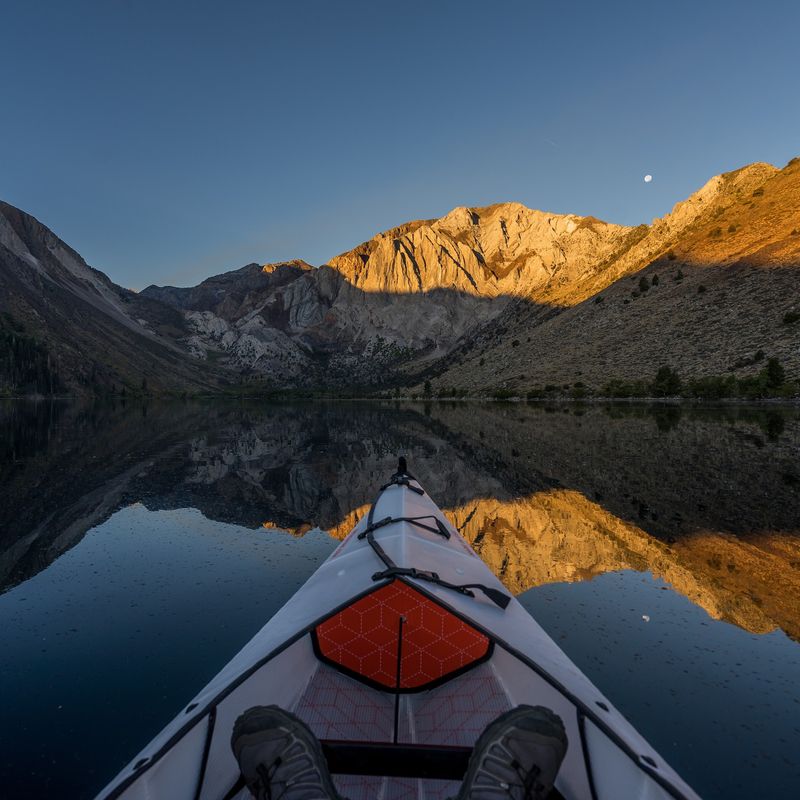
At sunrise the surface turns into a mirror. Mount Morrison and Laurel Mountain sit upside down in the water, and the reflection is so sharp it feels like you could paddle straight into the sky.
Sound behaves differently that early too. A paddle drip carries across the whole basin, birds start up in the aspens, and there’s almost nobody else launching yet.
By late morning, breezes usually begin funneling down from the peaks, and small chop replaces the glass. It’s still perfectly paddleable, just less magical for photos.
Dress warmer than the forecast suggests. At about 7,583 feet, dawn air bites even in July, and the water stays cold year round, so a light layer you can peel off makes the whole thing more comfortable.
My best advice is simple. Launch at first light, paddle the far shoreline while it’s mirror-flat, then be back at the beach with a thermos by the time the wind arrives.
Easy Launch Spots for Kayaks, Boards, and Float Tubes
Getting on the water here takes almost no effort, which I appreciated after a long drive up Highway 395. There’s a public boat ramp near the marina on the north end and a beach on the east shore.
The east shore beach is my pick for paddleboards. You can walk gear a short distance from the parking area, set your board in ankle-deep water, and be paddling within minutes.
Non-motorized boats are popular, so you’ll see kayaks, inflatable boards, and anglers drifting around in float tubes with fishing rods propped up.
The Convict Lake Marina also rents boats, including motorboats and pontoons, and you’re welcome to bring your own craft instead.
Beginners do well here because the lake is compact and sheltered by canyon walls. There’s no current to fight, no boat wake chaos, and shore is never far away if your arms get tired.
One practical note: the shoreline is pebbly and rocky rather than sandy, so water shoes save your feet.
Inflatable boards are handy at this elevation too, since a hand pump beats hauling a hard board over uneven ground.
Trout Cruising Below You Like Exhibit Fish
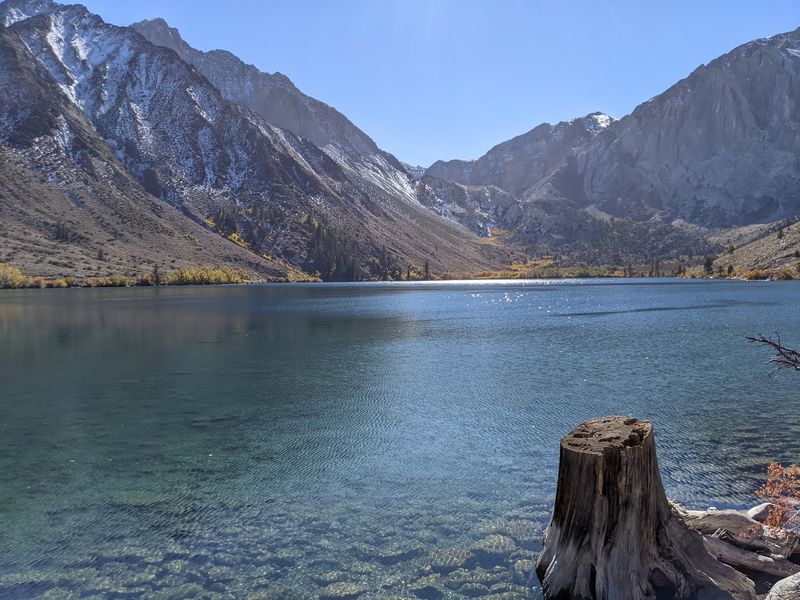
Rainbow, brown, and brook trout all live in this lake, and thanks to the clarity you don’t need a fishing rod to enjoy them. I watched several glide beneath my board without even flinching.
Rainbows are stocked regularly by the California Department of Fish and Wildlife, with reports of tens of thousands added over a season. That keeps the population lively and visible.
Big browns get the local legends going. The lake record for rainbows sits at 13 pounds, 7 ounces, which tells you the fish here grow well beyond pan size.
Submerged logs near the shoreline act like fish furniture. Hover over one quietly and you’ll usually spot shapes drifting in and out of the shadows.
Fishing season generally runs from the last Saturday in April through November 15, and plenty of visitors combine both hobbies by casting from a kayak.
If you’re paddling near anglers, give them a wide berth and avoid crossing their lines. Everyone stays happier that way.
Honestly, the fish-watching surprised me more than the scenery. It’s rare to see wild trout that clearly without diving in.
Those Striped Cliffs Are Older Than You Can Imagine
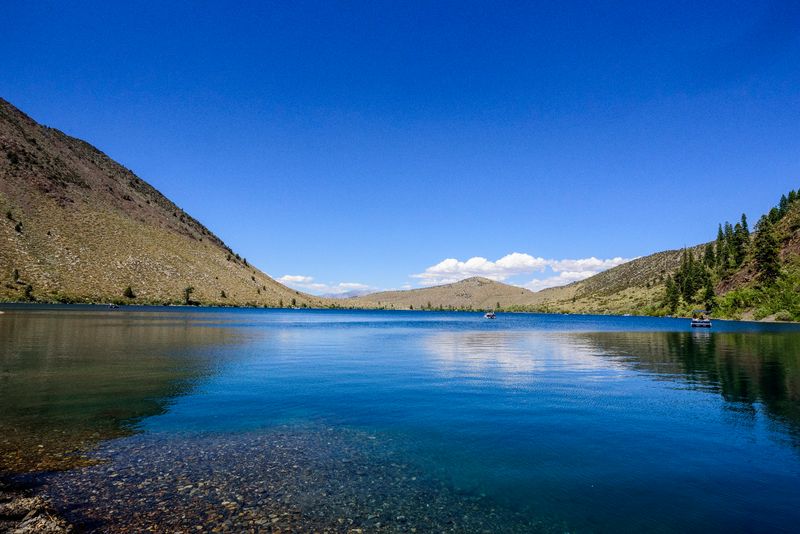
Paddle toward the back of the canyon and the walls start showing off. Bands of red, orange, yellow, white, brown, and even green run across the rock in folded stripes.
Some of that stone is over 350 million years old, made of ancient metamorphic and sedimentary layers that were bent and squeezed long before the Sierra Nevada rose into its current shape.
Mount Morrison anchors the view, climbing past 12,000 feet with a face that looks almost sliced. Laurel Mountain sits nearby with its own tilted layers.
Geologists consider this one of the most visually striking spots in the Eastern Sierra, and from a kayak the scale hits harder than from the parking lot.
Glacial evidence is everywhere once you know what to look for. Moraines ring the basin, and polished cliff surfaces catch the light where ice once ground against them.
The whole lake sits inside a glacially carved box canyon, meaning steep walls wrap around three sides and dead-end the view dramatically.
I found myself drifting with the paddle across my lap, just tracing the rock layers with my eyes and losing track of time entirely.
The Loop Trail Gives You a Second Perspective
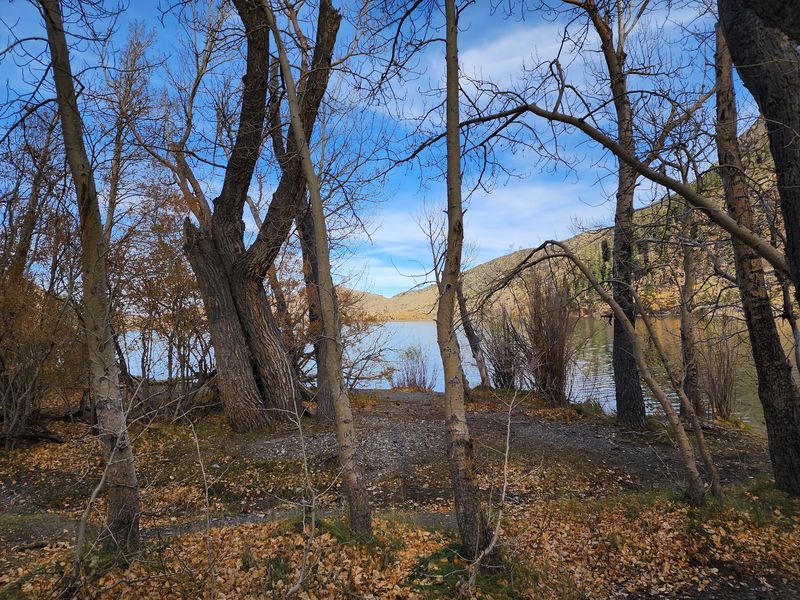
After my arms had enough, I pulled the board out and walked the shoreline loop, which runs roughly 2 to 2.5 miles around the entire lake.
It’s an easy trail by Sierra standards, with mild ups and downs and constant water views. The east side even has a paved nature path, which makes the first stretch accessible for strollers and wheelchairs.
The route shifts character as you go. Open sagebrush gives way to pine, then a lovely aspen grove along the south bank where the trail hugs the base of the cliffs.
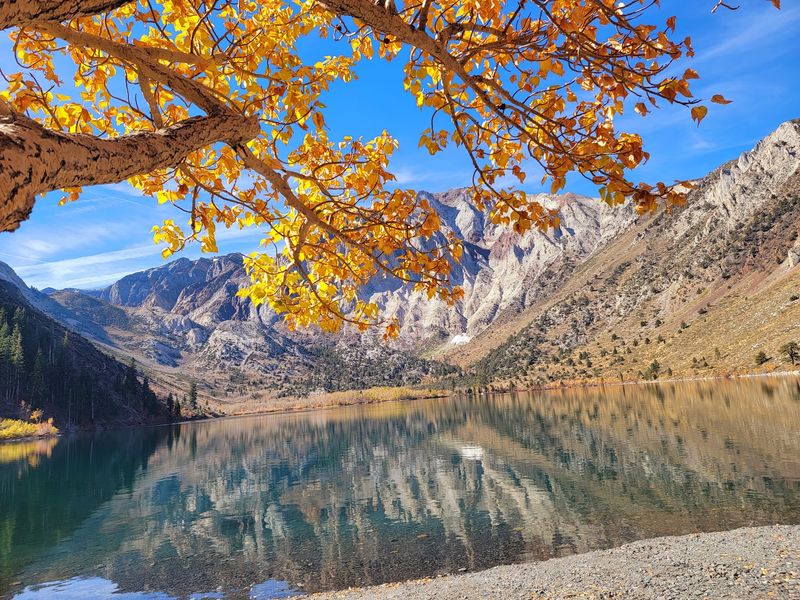
Come in late September or early October and those aspens turn gold. It’s one of the better fall color spots in the region, and the reflection doubles it.
Longer routes head from here into the John Muir Wilderness for hikers wanting real elevation and backcountry lakes.
Walking the loop taught me something about the water. From above, you can see the color gradient shift with depth, which you can’t fully appreciate at eye level.
Wildlife shows up along the way too, from mule deer to plenty of birds, and black bears live in the surrounding forest.
Making a Full Day of It Off Highway 395
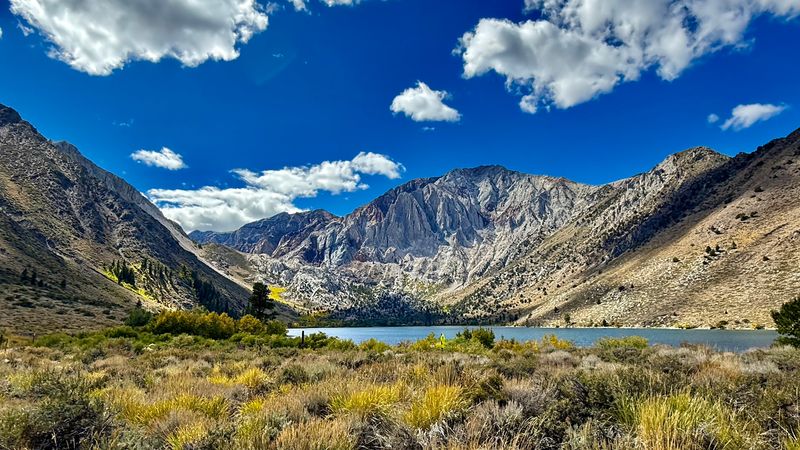
What makes this lake such a good stop is how little driving it demands. Convict Lake Road is paved the whole two miles in from Highway 395, sitting between Mammoth Lakes to the north and Crowley Lake to the south.
Picnic spots dot the shoreline, and several pebbly beaches work well for sunbathing between paddles. Swimming is possible, though the water stays cold even in August, so expect a sharp gasp on entry.
Horseback riding is available in the area, which adds a different way to see the canyon if paddling isn’t your whole plan.
Photographers tend to linger here longer than they intend. Between the clear water, colored rock faces, and Mount Morrison backdrop, almost every angle works.
A few things I’d pack: layers, sun protection for the thin high-altitude air, water shoes, and more snacks than seem necessary. Elevation makes you hungrier than you expect.
Give yourself the morning for water and the afternoon for the trail, and you’ll leave feeling like you actually experienced the place instead of just photographing it.
Address: Convict Lake Road, Mammoth Lakes, California 93546
