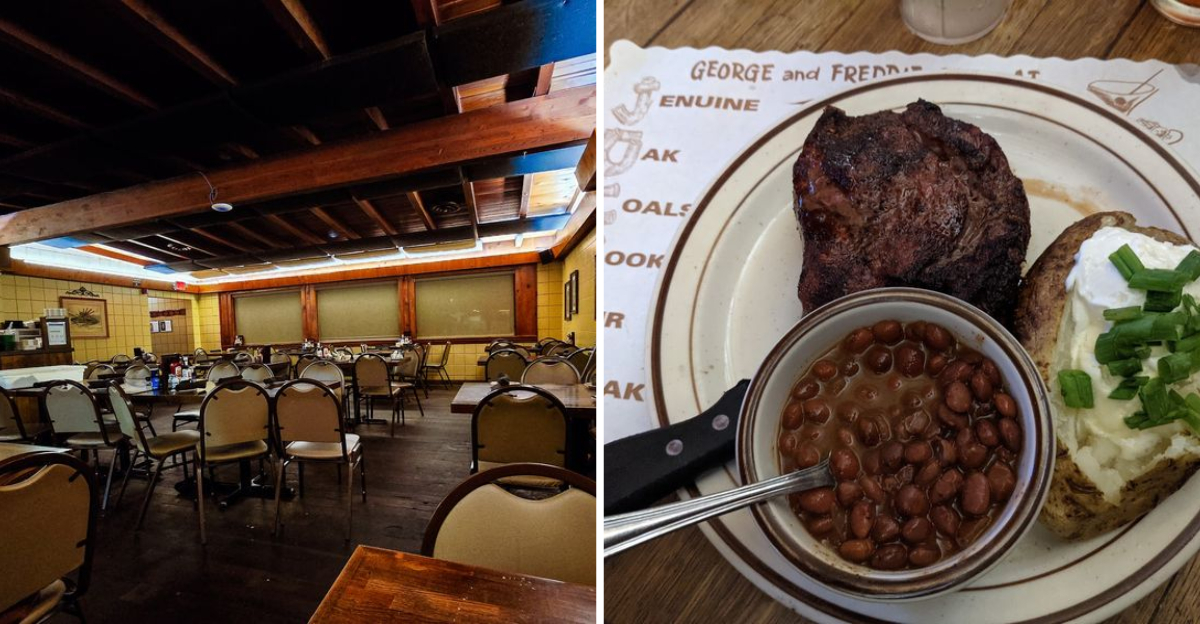
Smoke curled out from the back of that California steakhouse and drifted across the parking lot, reaching me before the sign or the door ever came into view.
I had driven up the coast with a vague plan and an empty stomach, and this small farm town turned out to be exactly the kind of place where a steakhouse can quietly become a landmark.
Inside, the rooms are loud in the best way, packed with families, ranchers, and road trippers who all seem to know something you do not. Cattle brands cover the walls, the floors have seen decades of boots, and nobody is fussing about how anything looks.
The grill hisses in the kitchen, and the smell of charred beef follows every plate that comes out of the pass. What kept me at the table long after my plate was cleared was how genuinely unbothered the whole place feels, like it decided in the 1960s who it was and never wavered.
The dining room hums with the kind of noise that makes you lean in closer to the people you are with, and the staff moves with the ease of people who have been doing this for years.
A Central Coast meal that tastes like the region instead of a trend is exactly what this stop delivers.
A Roadhouse That Grew Out of a Nipomo Saloon
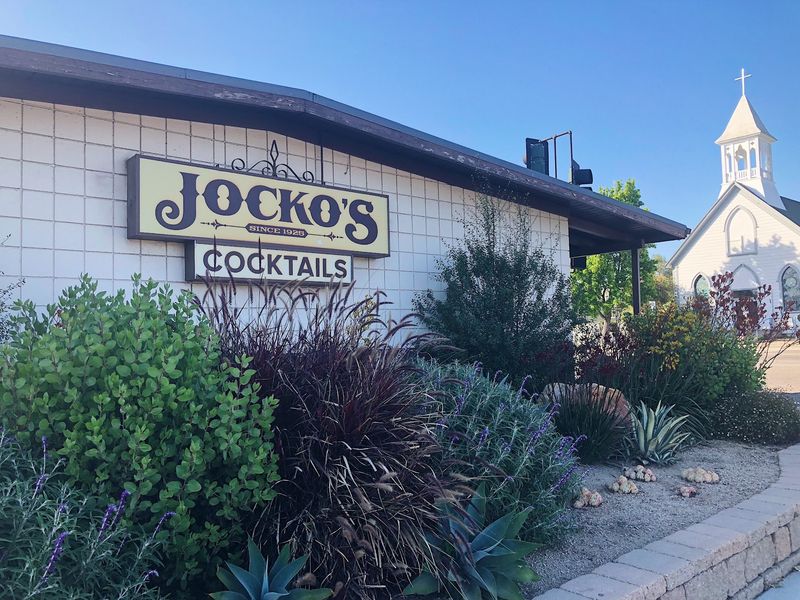
My favorite detail about California’s Jocko’s is how far back the story stretches. Emery Knotts opened a saloon on Tefft Street in 1883, long before Highway 101 carried anyone through here on a weekend trip.
One of his eight sons, Ralph Knotts, went by the nickname Jocko, and that nickname eventually became the name over the door. Starting in 1925 he ran a spot called Jocko’s Cage inside a garage, which is a wonderfully odd origin for a steakhouse.
After Jocko passed away, his sons Fred and George closed the old place and opened a restaurant in 1957, serving barbecue only on weekends at first.
Demand grew fast enough that they needed a bigger home, so in 1962 they moved to the corner of Tefft Street and Thompson Road, where the building still stands. Jocko’s grandchildren run it today, which explains why the place feels lived in rather than designed.
Knowing all that changed how I looked at the dining room. Every scuffed surface is connected to a family that never sold out or slicked things up.
Peanut Shells, Cattle Brands, and a Room With No Pretense
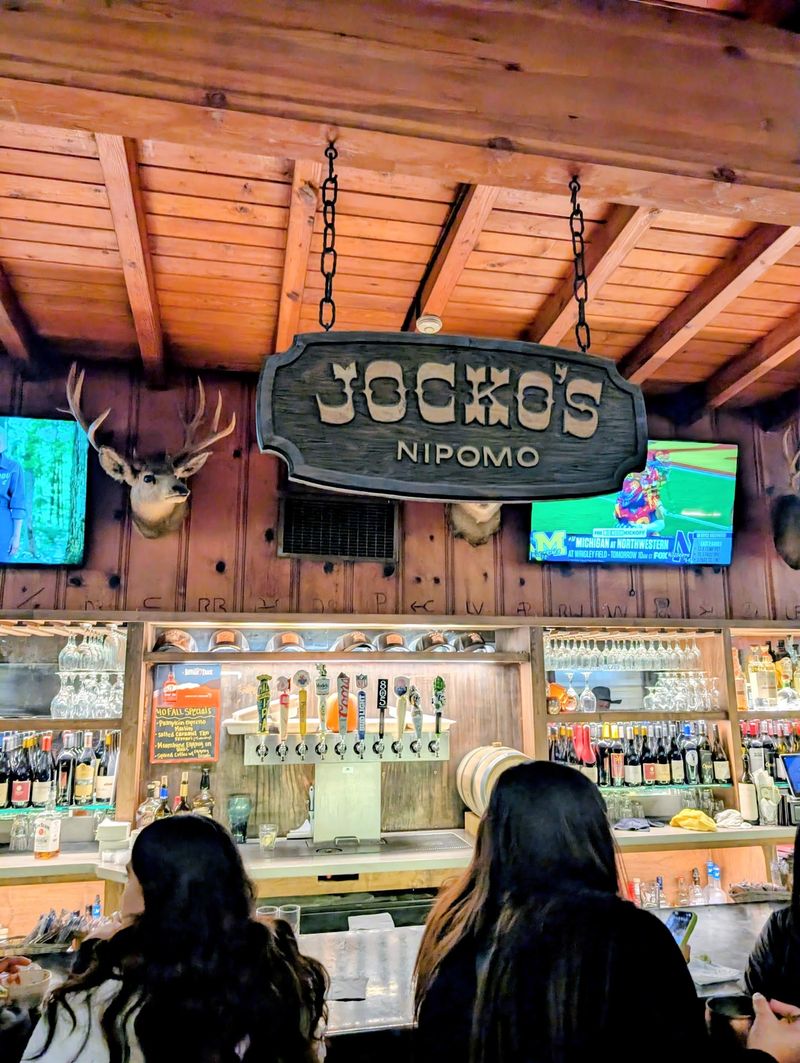
Casual barely covers it. The dining rooms at Jocko’s run on saloon energy, with cattle brands burned into the walls, faded photos of old Nipomo, and mounted animal heads keeping watch near the bar.
Peanuts are part of the picture here, and shells on the floor have long been a hallmark of roadhouses like this one. The restaurant is upfront that peanuts, tree nuts, and other allergens are present, so anyone with a serious allergy should call ahead and ask questions before booking.
What I liked most is that nothing has been styled to look old. It genuinely is old, and the difference shows.
The former motto used to be an invitation to come in and monkey around, which tells you plenty about the mood. Nobody cares if you show up in a dusty work shirt or shorts and sandals.
Sound bounces everywhere, servers move quickly between crowded tables, and conversations overlap. That racket is the charm, and it makes eating alone feel a lot less lonely than it would in a quiet room.
Red Oak Coals and a Pit You Can Actually Walk Up To
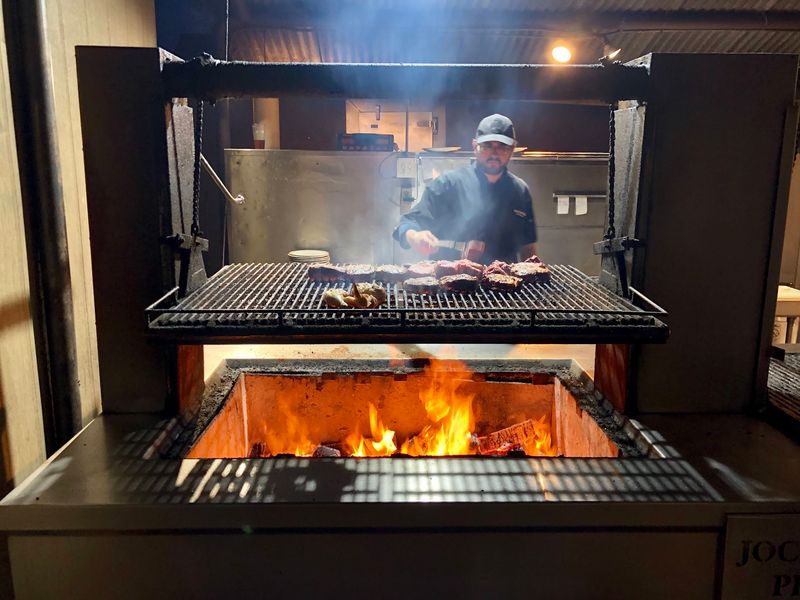
The barbecue pit is the reason this place exists, and you can go see it for yourself. Guests are welcome to walk through the back of the restaurant and step outside to watch the fire work.
Santa Maria style barbecue is a Central Coast tradition built on red oak, and Jocko’s leans into it fully. Meats are aged, hand cut in house, and set over glowing coals on grates that can be raised and lowered by hand.
Standing near that pit for a few minutes taught me more about the food than any menu could.
The smell is thick and sweet, somewhere between a campfire and a backyard cookout, and it clings to your clothes in a way you won’t mind. Heat rolls off the coals even from a few feet back.
What struck me is how physical the cooking still is. There’s no thermostat, no conveyor, just someone reading the fire and moving steaks around based on experience.
Try to catch it before your food arrives, not after. It makes the first bite land differently.
Dinner Arrives as a Whole Parade, Not a Single Plate
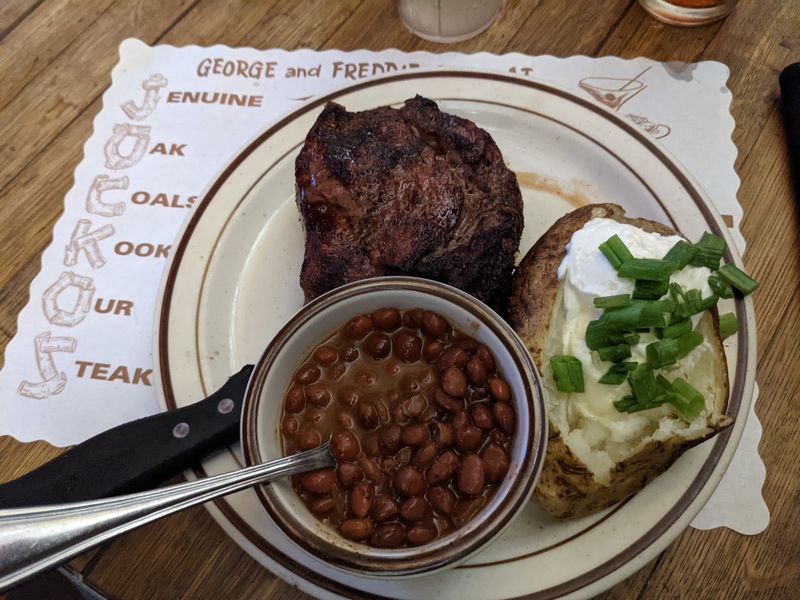
Ordering here comes with a surprise if you’re used to modern steakhouses. Jocko’s runs a no a la carte system, meaning your steak arrives as a full dinner rather than a lonely piece of meat on a bare plate.
A relish tray shows up first, along with crackers and salsa, and the thick pickle slices have a following of their own. Then comes salad, garlic bread, and the pinquito beans that people talk about long after the meal ends.
Those beans are a Santa Maria valley signature, cooked with bits of bacon and sirloin worked through them.
You also pick a side, whether that’s a loaded baked potato, rice, broccoli, or the hash brown casserole that regulars swear by. Dessert and coffee are included too, usually a scoop of spumoni or sherbet.
By my count, I was full before the main event even landed. Plan for leftovers, because portions are genuinely large and nobody will judge you for asking for a box.
Birthdays get a chorus of Zip-a-Dee-Doo-Dah from the staff, which is exactly as fun as it sounds.
The Spencer and Its Neighbors on the Grill
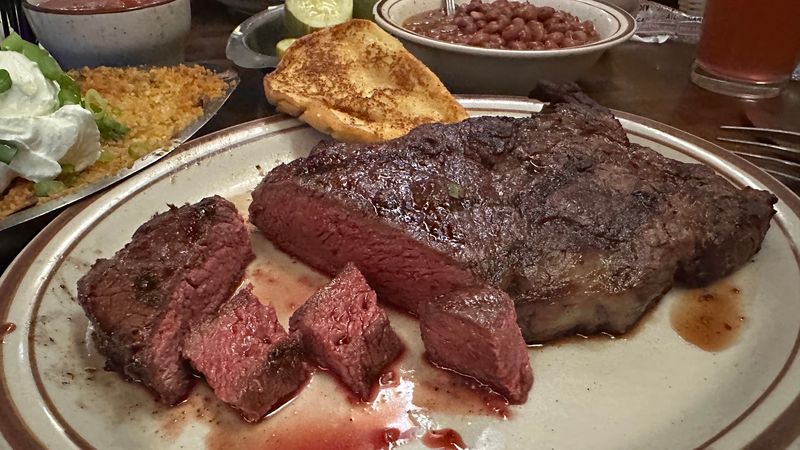
Ask a regular what to get and the Spencer comes up fast. It’s the signature cut here, a ribeye that often lands at a hefty twenty ounces, though smaller sizes exist for people with normal appetites.
Filet mignon, New York, and top sirloin round out the lineup, all cooked over the same red oak coals. Pork chops have their own loyal crowd, and the ribs get plenty of attention too.
That smoky crust is the whole point, and it’s something you cannot fake with gas or charcoal briquettes.
Beyond beef, the kitchen turns out linguica sandwiches, ravioli, enchiladas, seafood, and a burger built from a half pound of ground steak. Appetizers include house made beer battered onion rings, toasted ravioli, and grilled artichokes that arrive smoky at the edges.
Daily specials rotate through comfort food territory with roast pork, chicken fried steak, and meatloaf making appearances.
My advice is to skip the urge to order the biggest thing available. Mid size cuts leave room for the beans, the bread, and the ice cream waiting at the end.
The Wait Is Real, So Come With a Plan
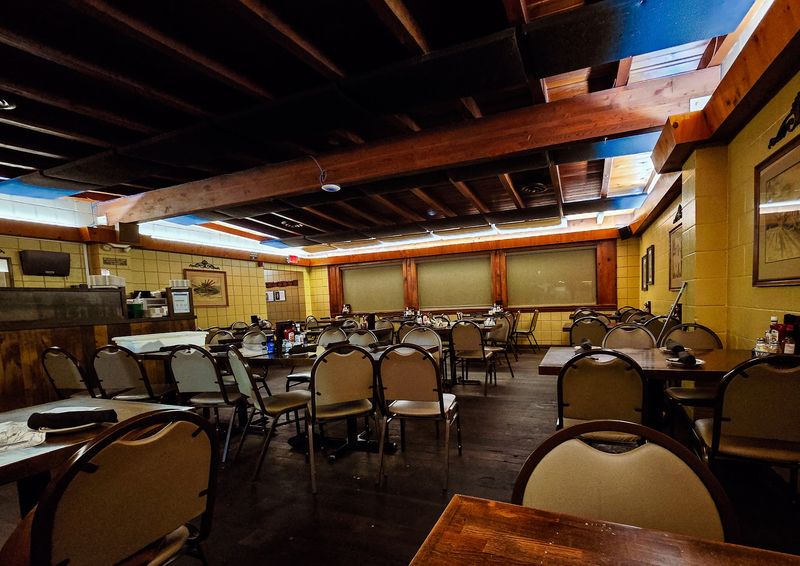
Nobody exaggerates the crowds. Jocko’s fills up nearly every night, and the wait for a table has become part of its reputation across the Central Coast.
Reservations help, but they don’t guarantee you’ll be seated the second you arrive. Many people call ahead to get added to the daily waitlist, which is worth doing even for a weekday visit.
The smartest move I found is aiming for the earliest seating, right around opening.
Doors open at 4 PM most days, with 1 PM starts on Saturday and Sunday, and the kitchen runs until 9 PM. An early table means faster service and a slightly calmer room before the evening rush builds.
Big groups should give as much notice as possible, and calling the restaurant directly at 805-929-3686 beats guessing.
Bring patience and treat the wait as part of the experience rather than an obstacle. The parking lot is roomy, the smell of the pit drifts across it, and standing around out there sharpens your appetite considerably.
Also worth checking payment options when you book, since policies at old-school spots can differ from what you expect.
Why This Detour Off Highway 101 Sticks With You
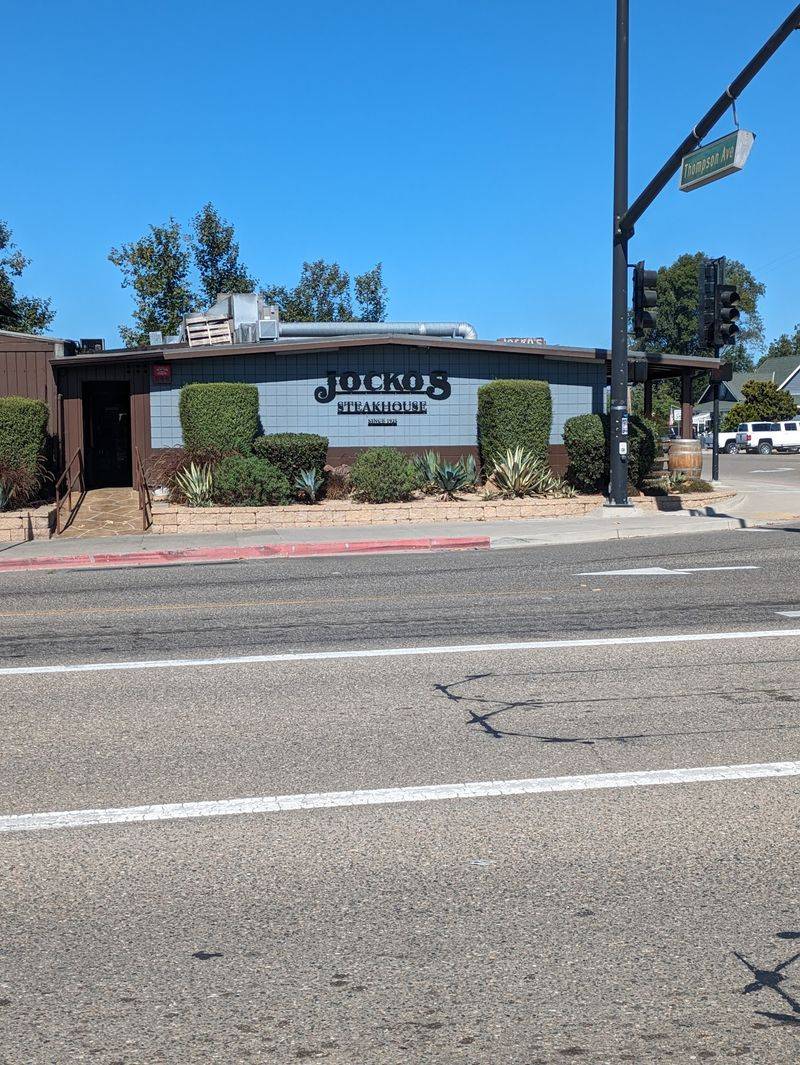
Driving between Los Angeles and San Francisco, most people blow right past Nipomo without a second thought. Pulling off for Jocko’s flips that stretch of road from something to endure into something to look forward to.
Part of the appeal is how firmly rooted the restaurant is in its own place. The red oak comes from the region, the pinquito beans are a local crop tradition, and the barbecue style is named after the valley just down the highway.
Eating here teaches you about the Central Coast in a way a museum plaque never could.
The crowd mixes farmers, ranch workers, families celebrating something, and travelers who read about it somewhere and made the turn. Everyone ends up equally messy and equally full.
I left with the smell of oak smoke in my jacket and a container of leftovers riding shotgun. That’s a pretty good souvenir.
If you’re building a coastal road trip, pencil this in as a real destination rather than a convenient stop. Some places earn their reputation slowly, over sixty plus years, and it shows.
Address: 125 N Thompson Ave, Nipomo, California
