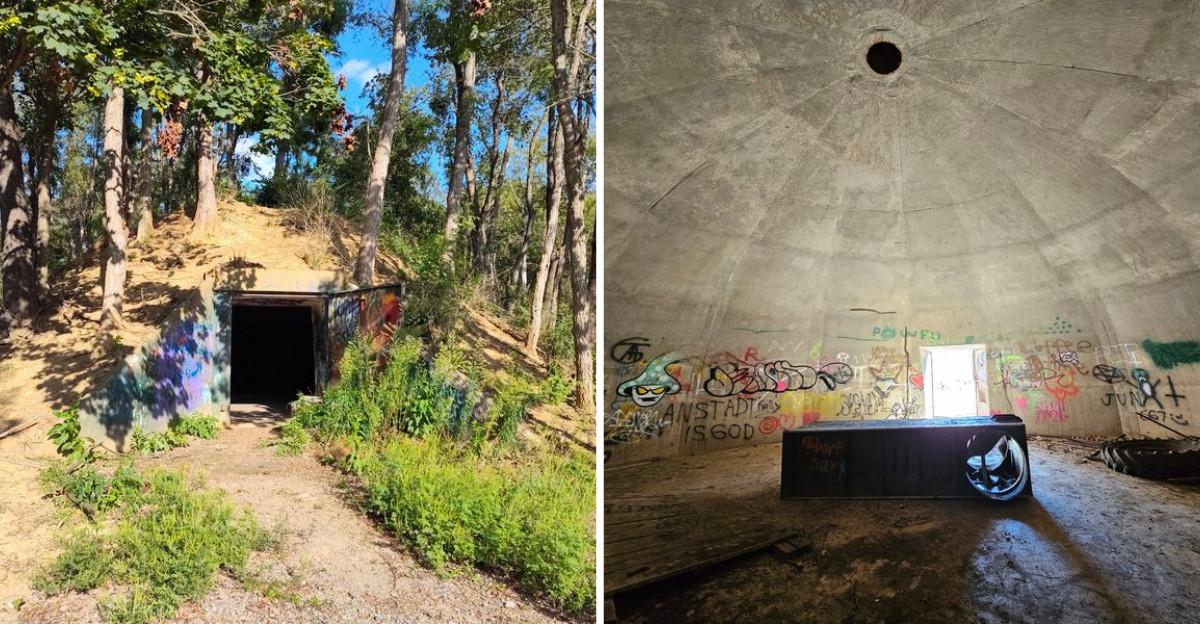
Concrete domes half swallowed by brush appeared on a cool October morning in Pennsylvania, and I had pulled off the highway expecting nothing more than a quiet walk in the woods.
What I found was a strange and silent landscape where an entire village used to breathe, a real place with farms and a church and families who thought they would grow old there, until the government took the land in the 1940s to build a TNT plant.
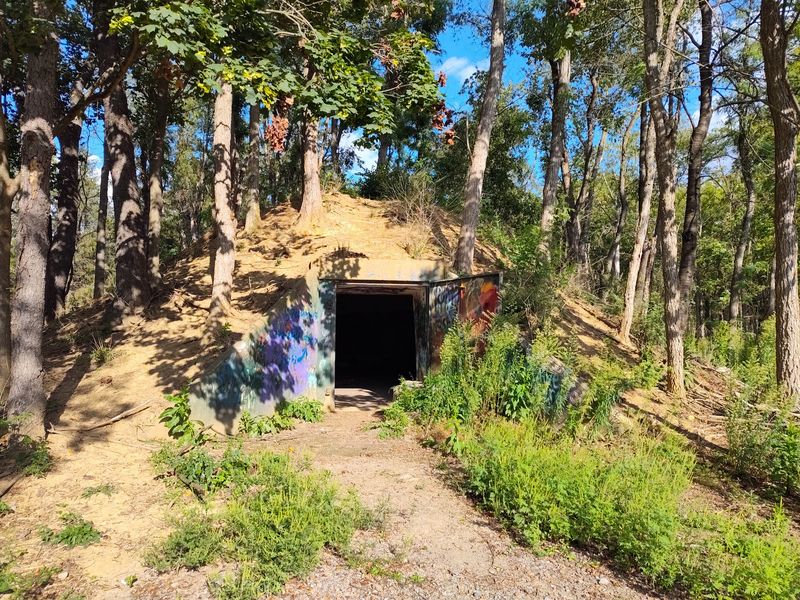
About 150 igloo bunkers went up, the town came down, and the promise to give the land back never really happened. The bunkers stretch across the hillside in rows, their arched doorways dark and empty, and the grass has grown tall enough to hide the foundations of the houses that once stood between them.
The domes are scattered across the hillside, some of them still holding the echo of the work that was done there, others open to the sky and filled with leaves and the occasional footprint of a visitor who wandered in before me.
I poked my head into echoing doorways, ran my hand along the rough concrete walls, and walked among the tilted headstones in a cemetery that outlasted the bulldozers.
Few places I have visited in this state have stuck with me quite like this one.
The Village That Disappeared in a Single Spring
Before the government arrived, this valley in Union County held a small farming community first settled in 1825 under the name Wisetown. By the 1900s it was called Alvira, with homes, businesses, a few cemeteries, and a stone church anchoring everything.
Then came Pearl Harbor in December 1941, and the country suddenly needed explosives faster than anyone had planned for.
In the spring of 1942, federal officials used eminent domain to take more than 8,500 acres, Alvira included. Roughly 100 residents lost their homes, though some accounts count up to 400 people across Gregg Township and nearby land.
Families were told they could buy their property back once the fighting stopped. That promise is the part that stings, because for almost everyone it never came true.
Bulldozers flattened nearly every structure within months. What I find hardest to picture, standing in the tall grass, is how ordinary it all was beforehand: barns, kitchens, fence lines, Sunday mornings.
If you look carefully near the old roadbeds, low stone foundations still poke through the leaf litter. They are easy to miss and worth slowing down for.
Inside the Pennsylvania Ordnance Works Boom
Ten thousand workers. That number stopped me cold when I first read it, because the whole area today feels like the kind of place where you might see two cars in an hour.
The Pennsylvania Ordnance Works cost roughly $50 million and rose out of the cleared farmland with startling speed.
Production of TNT began in February 1943, with U.S. Rubber managing operations.
Output reportedly climbed as high as 360,000 pounds a day, and some records point to figures far higher than that.
Supporting it all were about 300 buildings, 55 miles of roads, and 17 miles of railroad track threading through the woods.
Here is the twist that makes the story so strange. After only about 11 months of production, the plant was decommissioned in April 1944, its purpose either changed or overbuilt from the start.
All that concrete, all those displaced families, for less than a year of manufacturing.
Walking the old service roads now, you can still trace the grid the engineers laid out. The straight lines through the forest are the giveaway, and they make navigation surprisingly simple.
Concrete Igloos and Their Unbelievable Echo
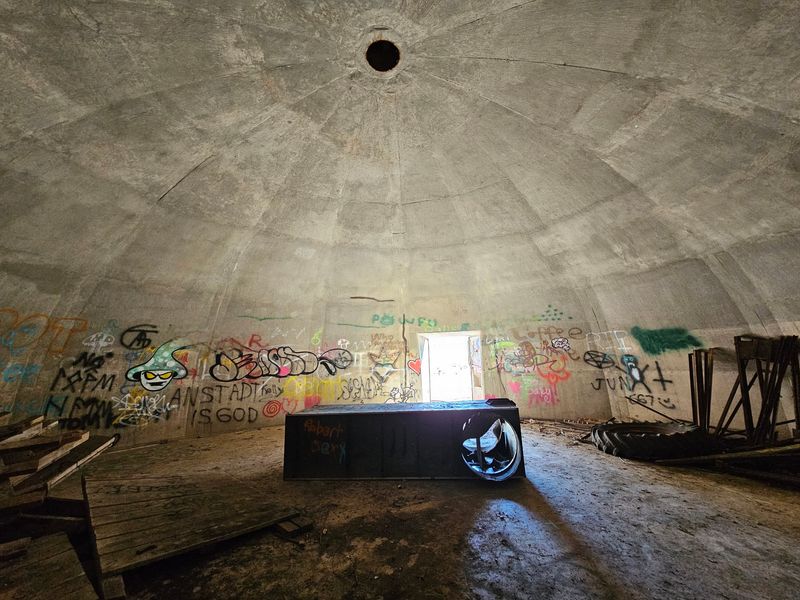
My first bunker looked small from the outside, just a mossy hump in the ground. Then I stepped through the doorway and realized the interior was roughly the size of a small house.
About 150 of these domes were built to store explosives safely, with thick walls designed so any accidental blast would push upward rather than sideways.
The acoustics genuinely surprised me. A single clap comes back layered and stretched, and a quiet word travels farther than it should.
Visitors mention it constantly, and now I understand why.
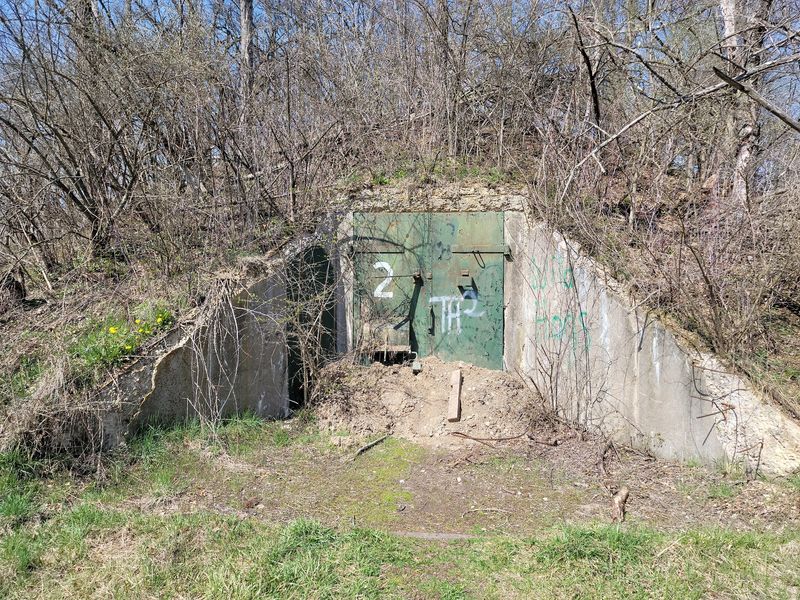
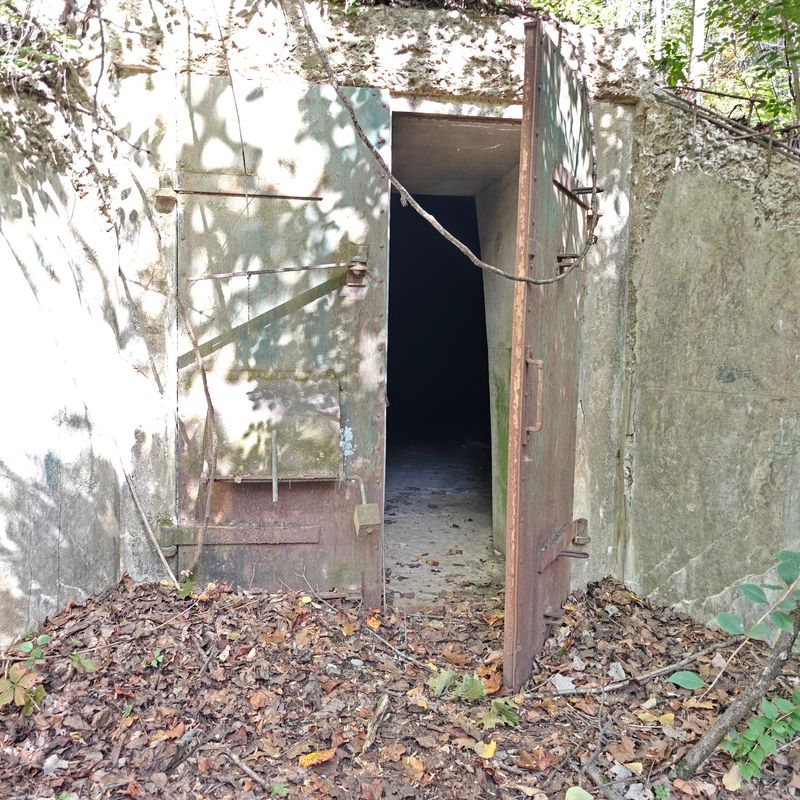
Some bunkers stand wide open. Others are locked, and a number have dirt piled against the doors, something a worker on site explained was done to discourage vandalism.
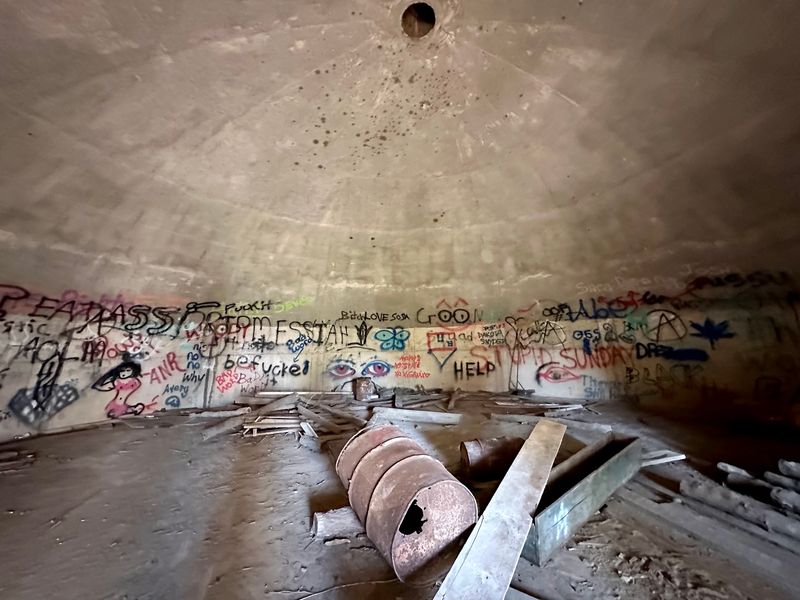
Expect graffiti inside, some of it crude, which is worth knowing if you bring younger kids along.
Bring a flashlight, because natural light fades about ten feet past the entrance. Watch your footing too, since floors collect water and debris.
Honestly, seeing five or six is plenty. After that the walk itself becomes the reason to stay.
A Nuclear Secret Tucked Into the Woods
TNT was not the only thing these igloos held, and the second chapter is far stranger than the first. Declassified Department of Energy records confirm that roughly 100,000 pounds of uranium metal turnings, a byproduct of the Manhattan Project, sat inside four of the Alvira bunkers.
The specific igloos were numbered 112, 120, 137, and 146, used for storage between 1943 and 1944.
Those turnings came from testing work in New Mexico and were moved east in secrecy. Nobody in the surrounding farm country had any way of knowing what was rolling past on the rail lines.
Reading that before my visit changed how I looked at every numbered doorway.
It also explains why the site draws people who normally chase Cold War history rather than ghost towns. A working farm valley became a quiet link in the chain that led to the atomic age.
The bunkers themselves give away nothing. No plaques, no markers, just numbers stenciled and faded on concrete.
That silence is exactly what makes the place feel heavier than it looks.
The Promise Nobody Kept
Losing your farm to a war effort is one thing. Being told you can buy it back, then watching that door close permanently, is another.
When the ordnance works shut down in 1944, the land did not return to the families who had worked it for generations. Only a small handful of owners were ever given the chance to repurchase.
Instead the acreage was divided up. About 4,000 acres went to the Federal Bureau of Prisons, eventually becoming the Allenwood federal prison complex, while roughly 3,000 acres passed to Pennsylvania as State Game Lands 252.
Three cemeteries and scattered stone foundations are essentially all that survives of the village itself.
I spent a while at Alvira Cemetery, and it is the part of the trip I would tell a friend not to skip. There is also a smaller cluster of graves beyond the main plot, easy to find once you know to look.
Standing there, the history stops being trivia and becomes people. Bring a little patience and read the names.
State Game Lands 252 and How to Walk It Smartly
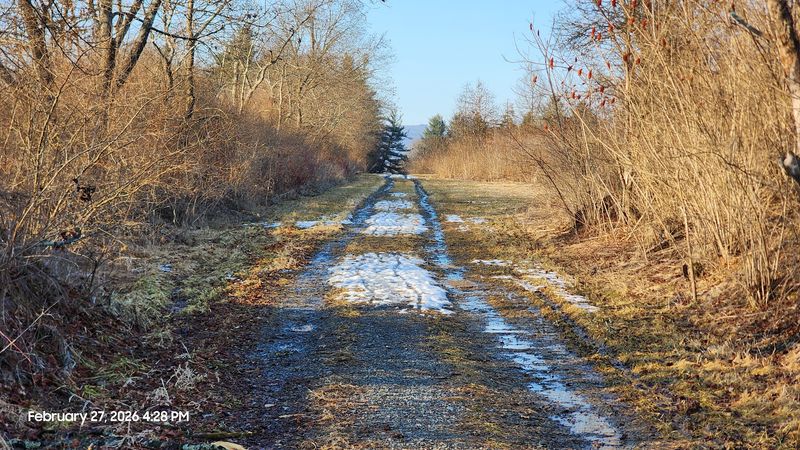
Practical stuff first, because this is not a groomed park with a visitor center. Most people park in a stone lot along Alvira Road, past the Game Commission storage garages, then follow the old dirt roads on foot.
Motorized vehicles are not permitted, and the walking is flat and easy, though distances add up quickly.
Season matters enormously here. Summer brings thick overgrowth, mosquitoes, and ticks, and I would strongly suggest checking yourself thoroughly afterward.
Late fall and winter are the sweet spot, when the brush shuts down and the domes become visible from the road.
Rain turns the low spots into wide puddles, so waterproof boots earn their keep. This is active game land, which means hunting happens, and wearing blaze orange during hunting season is simply the right call.
Do not wander toward the federal prison boundary, and expect to share the area with anglers and hunters.
Downloading a bunker map beforehand helps more than anything else. Turkeys, deer, and songbirds are frequent company, and the birding alone justifies the drive.
The Stone Church Still Standing Watch
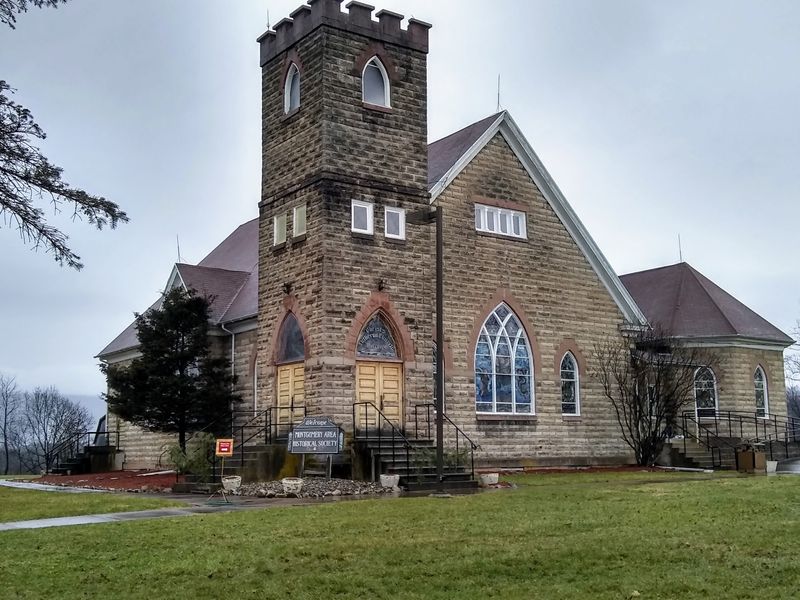
One building refused to go, and it happens to be the one that mattered most to the community. Originally Christ’s Lutheran Church, the structure known simply as the Stone Church served Alvira through the Civil War, World War I, and the Great Depression.
Residents even gathered inside it to voice their objections when the land seizure was announced.
After the takeover, the church ended up within the boundaries of the Allenwood federal corrections property, which is why casual visits are not possible.
The Montgomery Area Historical Society maintains it today, and it occasionally opens for special occasions such as Christmas services or concerts.
Knowing it survived gave my whole trip a different ending. A town can be leveled, its families scattered, its farmland turned into game lands and prison grounds, and still one stone building keeps the address alive.
If you time a visit around one of those rare open events, you will see something almost nobody else does.
Otherwise, the bunkers and cemeteries tell plenty on their own.
Address: 1884-2198 Alvira Rd, Allenwood, PA 17810
