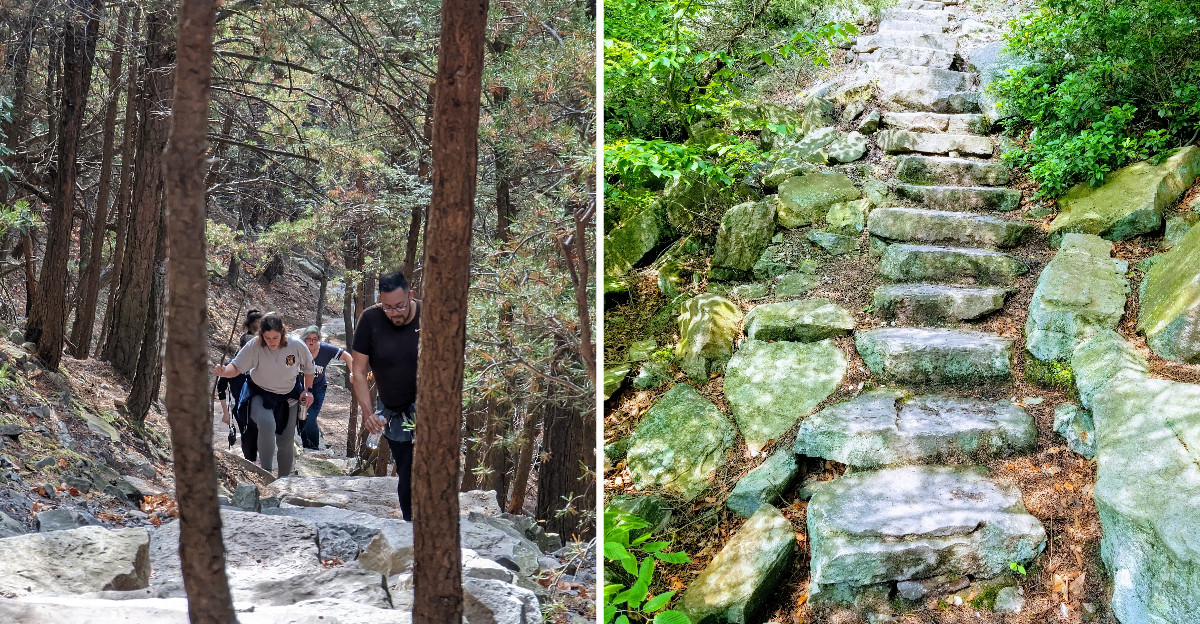
More than a thousand stone steps climb a Pennsylvania mountain, and they were built for a daily commute, not a castle. Quarry workers carved and stacked them in the 1930s so they could reach their jobs at the top.
Driving out to climb them myself, full water bottle and too much confidence, seemed like a good idea. By step five hundred, legs were shaking, but the history kept the mind busy and the views began peeking through the trees.
The stairs rise through hardwood forest, and the only sounds are birdsong and heavy breathing. Stone is uneven underfoot, and every switchback carries the weight of the men who wore it down.
Reaching the top brings a panorama that makes the effort worth it. The trail is free, open most of the year, and busy on weekends.
Hikers who love a real story behind their workout will find this Pennsylvania climb unforgettable.
A Staircase Born From a Flood and a Paycheck
Here is a fun bit of history that surprised me. The Thousand Steps exist partly because of a flood.
In March 1936, the Great St. Patrick’s Day Flood swept along the Juniata River and damaged a lot of the area’s roads, rails, and factories.
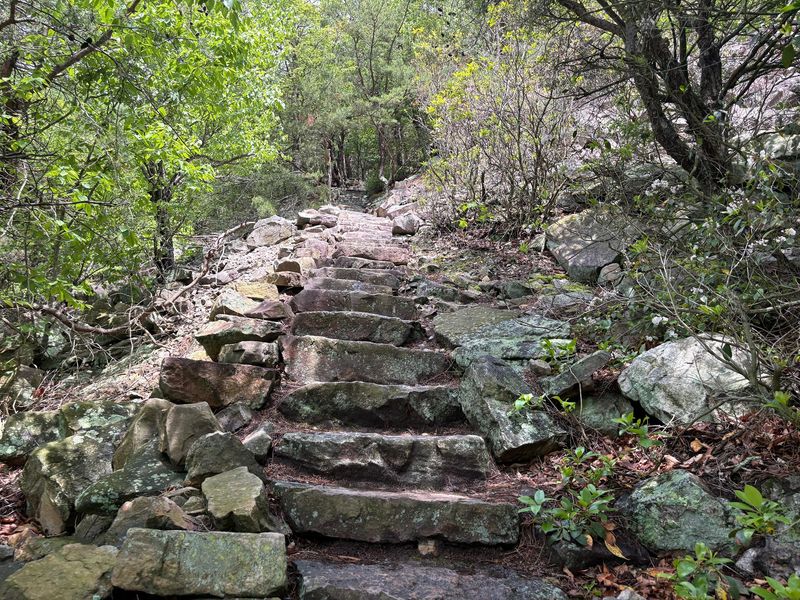
Brick making slowed down after the water rose, so the Harbison-Walker refractory company found a new task for its workers. They built a direct stone staircase up Jacks Mountain to the Ledge Quarry at the top.
Before that, workers had to follow zig-zagging paths and old rail grades, which took longer and were not always safe.
I loved knowing that every stone under my feet was set by hand by people who planned to use it themselves. It changes how you climb.
You stop thinking of it as a trail and start thinking of it as somebody’s daily route to work, carrying tools, lunch, and water in all kinds of weather.
My tip is simple. Before you start, read the history boards near the trailhead and at the top.
They add so much meaning to the climb, and they give you something to think about when your legs start complaining around the second hundred.
Counting Every Step on the Way Up
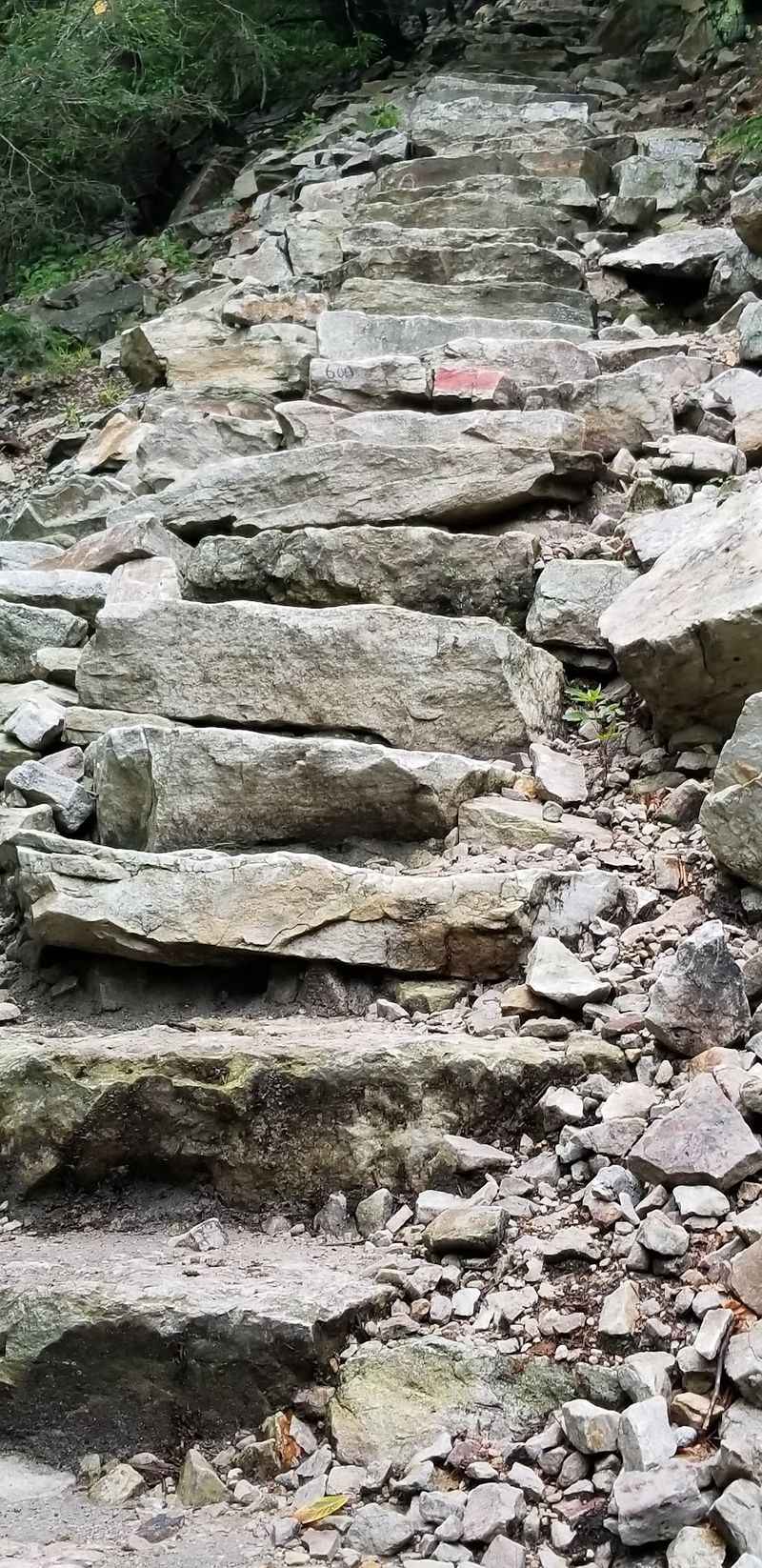
My counting plan lasted about forty steps before I lost track. Luckily, the trail does the math for you, with small black numbers painted on the stones every 100 steps.
Some are easy to spot, and others hide like tiny riddles on the rock.
Hikers usually agree the total sits somewhere between about 1,037 and 1,043 steps, though people love arguing about the exact number. The trail itself is roughly 2.7 to 3 miles out and back.
You gain somewhere around 850 to 1,050 feet of elevation, and most of it happens in a short, steep stretch.
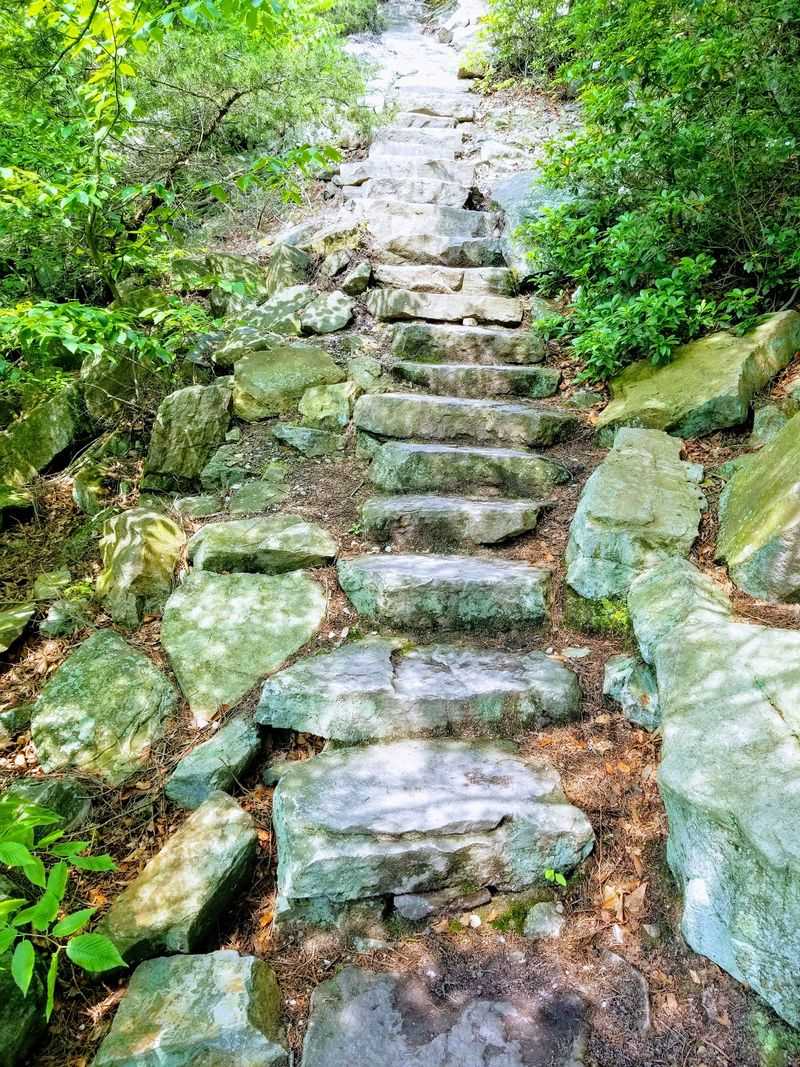
The steps are not neat or even. Some are short and friendly, while others feel like climbing onto a kitchen counter.
That variety keeps you focused, so watch your footing and take smaller steps when you need to.
Here is what worked for me. I treated each painted number like a mini finish line and took a short breather there.
Families do the same thing, and it makes the climb feel like a game instead of a grind. Trekking poles help too, especially if your knees like to complain on uneven ground.
Stone That Helped Build America’s Steel
Picture a rock so tough it could line the inside of a steel furnace. Workers on Jacks Mountain quarried just that, a silica-rich Tuscarora sandstone often called ganister rock.
That stone was turned into heat-resistant silica bricks. Those bricks were a big deal for the steel, iron, glass, and railroad industries, because they could handle extreme heat without falling apart.
Harbison-Walker ran the Ledge Quarry from around 1900 to 1952, which is a long run for one mountaintop.
When I reached the quarry area, I kept touching the pale, gritty rock and trying to imagine it glowing inside a furnace somewhere far away. It is strange and kind of wonderful to think that a quiet ridge in central Pennsylvania helped feed some of the biggest industries in the country.
If you have kids with you, this is a great place for a mini science lesson. Let them feel the sandstone and talk about why some rocks handle heat better than others.
Just remember the land is part of State Game Lands, so leave the rocks where you found them and enjoy the history without taking a souvenir home in your pocket.
The Little Dinkey Shed at the Top
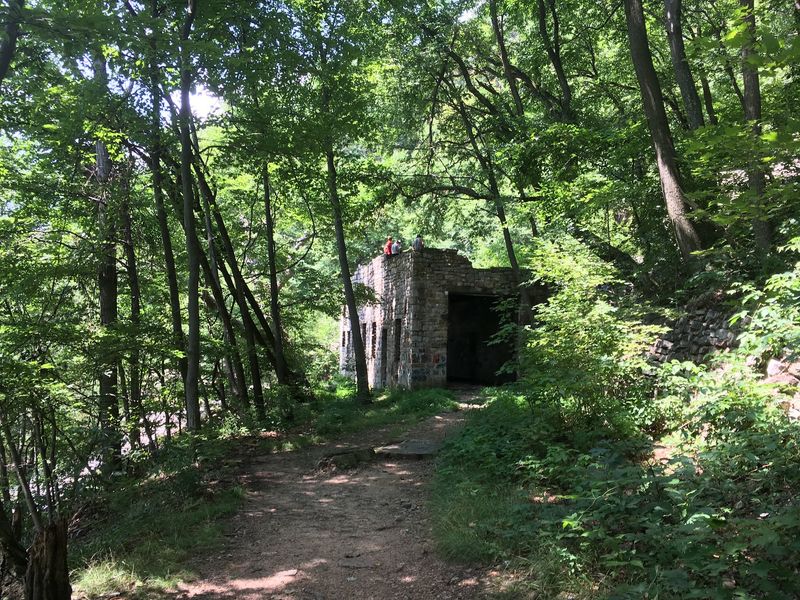
After the last step, I turned left like the locals suggest and found a chunky old structure tucked into the trees. Meet the Dinkey Shed, a former maintenance spot for the small trains that once worked on the mountain.
Workers did not haul the heavy stone down by hand. Instead, the quarry used narrow-gauge railroad tracks with little engines nicknamed dinkey trains, plus inclined planes that helped lower the rock off the ridge.
The shed kept those hardworking machines running, and today it stands as one of the clearest reminders of the quarry days.
You can still see the old railroad bed near the top of the steps too. It makes a nice flat path after all that climbing, and honestly my calves were grateful for the break.
I would say pack a simple lunch and plan to linger here for a while. Some hikers like to climb up on the shed for a better look around, but older kids and adults should be careful and skip it if the surface is wet.
It is a calm, shady place to snack, read the plaques, and picture the clatter of tiny trains rolling across the mountain.
Overlooks That Make You Forget Your Legs
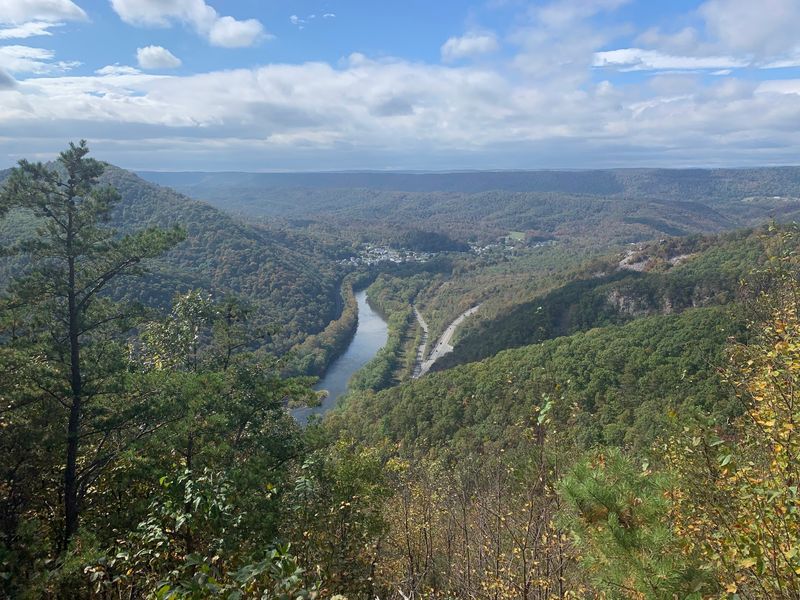
Nobody warned me about the view at the quarry ledge, and now I understand why people keep it a secret. My jaw actually dropped a little.
The Thousand Steps area has several lookouts, including the Ledge Quarry Lookout, the Mapleton Overlook, and the Mount Union Overlook. From up there, the Juniata River curls through the valley, ridges roll off in layers, and the towns below look like model villages.
Cars on the highway become tiny toys you can barely hear.
The best one, in my opinion, sits beyond the Dinkey Shed, roughly a half mile along the ridge. There is a bit more uphill to reach it, but after a thousand steps it feels almost easy.
Make the effort, because the open quarry ledge gives the widest and most dramatic scene of the whole hike.
Then head back the other way and check out the smaller vistas before going down. Each one shows the valley from a slightly different angle.
A clear morning is ideal, since haze can soften the distance. Bring a light jacket too, as the breeze at the top can feel cooler than the parking lot.
Brick Town Below the Mountain
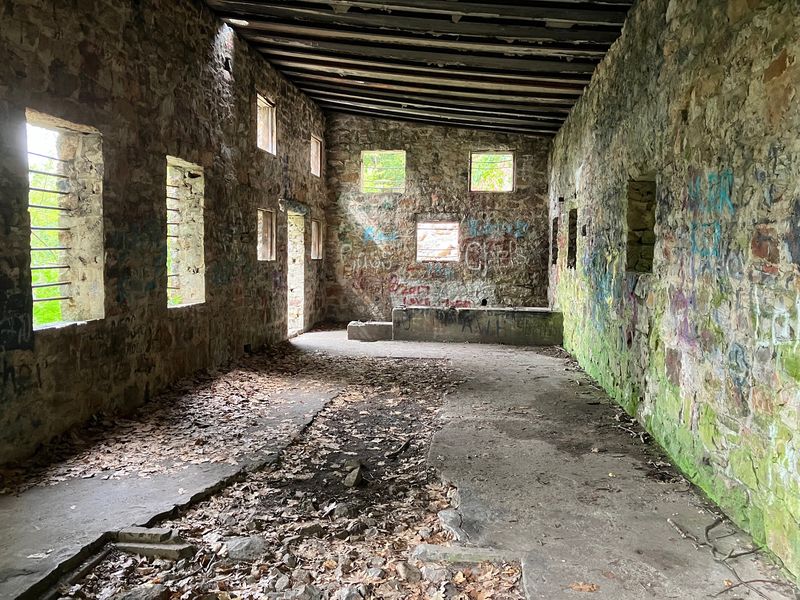
From the overlooks, you can spot Mount Union down in the valley. That modest town once wore a very big nickname, the Silica Brick Capital of the World, sometimes shortened to Brick Town USA.
At its peak, Mount Union had three refractory plants that employed up to 2,000 people. Together they turned out an estimated 500,000 silica bricks a day.
A lot of that raw stone came from quarries like the Ledge Quarry right where you are standing.
Knowing this made the whole landscape click for me. The steps, the rail beds, the plants, and the river all worked like one giant machine.
Families in the valley depended on that machine for decades, and the mountain was a central part of it.
Silica use slowly declined in the 1950s, and the quarries eventually closed. The steps went quiet for years after that.
Looking down at the peaceful town now, it is hard to picture all those busy brick plants, yet the story is still there if you know where to look. Take a moment at the top to connect the dots, because it turns a pretty view into a living history lesson.
Smart Moves for Your Own Climb
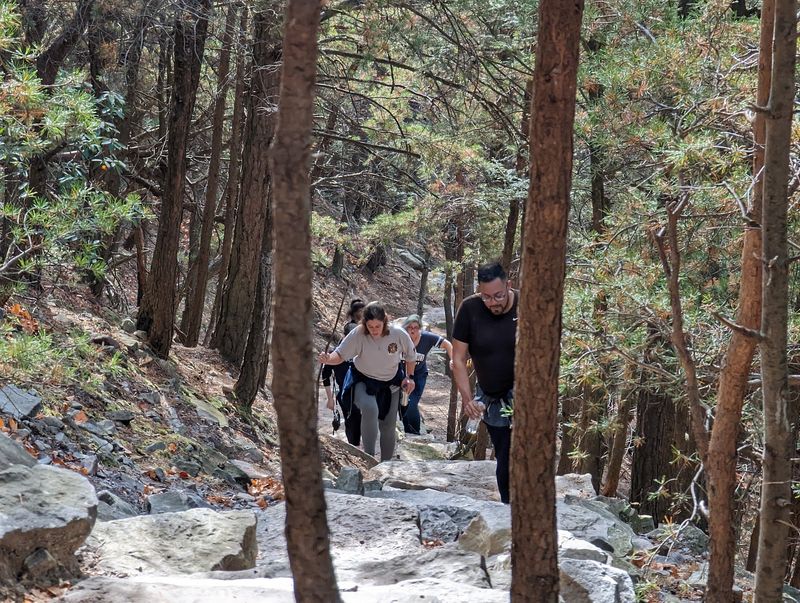
Going down surprised me more than going up. My tired legs felt wobbly, and every big step tested my balance, so plan for the descent as much as the climb.
Parking sits in a simple lot right off Route 22, also called William Penn Highway. Walk past the portable restroom, against traffic, along a protected path to reach the trailhead behind the guardrail.
There is even a small waterfall near the start, which is a nice bonus before the real work begins.
Water is a must. One small bottle will not cut it, especially in summer.
Wear sturdy shoes with good grip, and bring trekking poles if your knees need support. Many hikers take around an hour or more to climb, so start early and give yourself time.
The trail stays open around the clock, but daylight is your friend on these uneven stones. Weekends can get busy, so a weekday morning feels calmer.
This hike is part of the Standing Stone Trail, and the land was protected in the 1990s by the Save Our Steps Committee, so treat it kindly and pack out everything you bring.
Address: William Penn Hwy, Mapleton, PA 17052
